Physical Rehabilitation Advisor: Expert Guidance for Complete Recovery After Injury
In short
Discover how a physical rehabilitation advisor with 10 years of experience and specialized mechanical deep-tissue methodology transforms injury recovery through precision-targeted treatment that addresses root causes, not symptoms.
After working with hundreds of clients over the past decade, I’ve observed a disturbing pattern: most people recovering from injury never fully recover. They reach what I call “acceptable function”—perhaps 70-80% of their pre-injury capacity—and then plateau. Their physical therapist discharges them. Their doctor says they’re “healed.” But chronic tightness remains. Compensatory movement patterns persist. The vulnerability to re-injury stays locked in their tissues.
This happens because conventional rehabilitation stops at symptom management. As a physical rehabilitation advisor with a Bachelor’s degree in Physical Education and Nutrition from Norway and a decade of specialized practice, I approach recovery differently. I don’t treat the injury site in isolation. I investigate the mechanical cascade that created vulnerability in the first place, then systematically dismantle it through advanced deep-tissue intervention.
The difference between my clients and those who plateau at 80% capacity? We pursue complete mechanical restoration. Not comfort. Not pain reduction. Complete functional recovery and optimization beyond their pre-injury baseline.
Understanding What a Physical Rehabilitation Advisor Actually Does
The title “physical rehabilitation advisor” encompasses various practitioners, from physiotherapists to occupational therapists. My specific expertise lies in mechanical soft-tissue rehabilitation—identifying and resolving the myofascial restrictions, adhesions, and compensatory patterns that perpetuate dysfunction long after tissue healing has occurred.
Here’s what distinguishes this approach: when you strain your hamstring, for example, the muscle fibers tear and then repair. This biological process typically completes within 6-8 weeks. Yet many people experience hamstring issues for months or years afterward. Why? Because the injury triggered protective muscle guarding throughout the posterior chain. Your nervous system created new motor patterns to protect the injured area. Fascial planes developed adhesions. The hamstring healed, yes—but it healed into a dysfunctional movement system.
I work at the intersection of biomechanics and soft-tissue manipulation. My role extends beyond passive treatment; I serve as an advisor who educates clients about their body’s mechanical reality, guides them through systematic tissue restoration, and creates customized protocols that address their specific dysfunction patterns.
The Mechanical Approach to Rehabilitation
Traditional massage therapy aims for relaxation and temporary relief. Physical therapy focuses on exercise prescription and functional movement. My methodology occupies a different territory entirely: mechanical reorganization of soft tissue to restore optimal function.
I utilize a specialized mechanical deep-tissue tool that delivers what human hands physically cannot: precise, sustained pressure at depths that access the muscular and fascial layers where chronic dysfunction resides. This isn’t massage as most people understand it. It’s mechanical intervention with therapeutic intent.
The machine I use provides three critical advantages:
Precision: I can target specific fiber directions, fascial planes, and trigger point locations with millimeter accuracy. The tool’s design allows me to follow muscle fiber architecture precisely, working along fascial trains rather than against them.
Power: The device generates consistent pressure that reaches intermediate and deep fascial layers—the tissue depths where chronic restrictions actually exist. Light pressure affects superficial fascia and provides temporary comfort. Deep, sustained pressure creates lasting structural change.
Consistency: Human practitioners have variability. Fatigue affects hand pressure. Technique varies day to day. The machine eliminates this inconsistency, ensuring every treatment session delivers identical precision regardless of external factors.
Why Traditional Rehabilitation Often Fails to Achieve Complete Recovery
I need to address a fundamental misconception: the belief that time alone heals injuries completely. Tissue damage repairs through biological processes, certainly. But functional restoration requires mechanical intervention. This distinction explains why so many people live with chronic post-injury limitations.
Consider the athlete who tears their ACL, undergoes surgical reconstruction, completes six months of physical therapy, receives medical clearance, and then re-tears the same ligament within a year. The standard explanation blames “weakness” or “inadequate conditioning.” The mechanical reality? Compensatory patterns in the hip flexors, IT band, and posterior chain created abnormal loading patterns that overloaded the reconstructed ligament.
The surgery was successful. The ligament healed. Physical therapy restored basic strength and range of motion. But nobody addressed the mechanical dysfunction in the surrounding soft tissue that created vulnerability in the first place.
The Compensation Cascade
Your body is brilliant at compensation. When one structure cannot perform its function, other structures adapt to cover the deficit. This short-term survival strategy becomes long-term dysfunction.
I worked with a runner who developed chronic Achilles tendinopathy. She completed physical therapy, received ultrasound treatment, did eccentric loading exercises—all the standard protocols. The pain decreased but never fully resolved. More importantly, her running mechanics remained compromised.
When I examined her mechanically, the Achilles itself was only part of the story. Her soleus muscle had developed dense adhesions that prevented proper ankle dorsiflexion. This forced her gastrocnemius to overwork during toe-off. The increased gastrocnemius tension overloaded the Achilles insertion. Additionally, restricted hip extension on the same side shortened her stride, further increasing Achilles strain.
We didn’t treat her Achilles. We systematically released the mechanical restrictions throughout her posterior chain—soleus adhesions, gastrocnemius hypertonicity, hamstring tightness, hip flexor restrictions. Within four sessions, her Achilles pain had resolved completely. Three months later, she achieved a personal best in her half-marathon.
The Achilles was never the problem. It was the symptom of a mechanical system operating outside its design parameters.
Evidence-Based Principles for Effective Physical Rehabilitation
Effective rehabilitation rests on understanding how soft tissue responds to mechanical load and how the nervous system organizes movement patterns. These aren’t abstract concepts—they’re the foundation of every treatment decision I make.
Tissue Adaptation Follows Mechanical Stress
Wolff’s Law states that bone adapts to the loads placed upon it. The same principle governs soft tissue. Apply appropriate mechanical stress, and fascia reorganizes. Muscle fibers realign. Adhesions release. The key word is “appropriate”—too little pressure produces no structural change, while excessive force triggers protective guarding.
This is where machine-assisted treatment provides crucial advantages. I can calibrate pressure precisely to stay within the therapeutic window: deep enough to access restricted tissue layers, controlled enough to avoid triggering defensive muscle contraction.
The Nervous System Controls Movement Patterns
Your brain doesn’t think in terms of individual muscles. It thinks in movement patterns. When chronic pain or restriction exists, your nervous system creates compensatory patterns to avoid the dysfunction. These patterns persist even after the original tissue damage has healed.
Mechanical intervention alone isn’t sufficient. I educate clients about their compensatory patterns, help them develop body awareness, and guide them through movement re-education as tissue restrictions release. This combined approach—mechanical restoration plus neurological reprogramming—produces lasting results.
Fascia Requires Specific Treatment Protocols
Fascia isn’t just connective tissue wrapping around muscles. It’s a continuous three-dimensional network that transmits mechanical forces throughout the body. Fascial restrictions in one region create tension patterns several segments away.
I work along fascial trains—the connected pathways that link distant body regions. When treating shoulder dysfunction, I might spend significant time addressing restrictions in the lateral rib cage, thoracolumbar fascia, or even the contralateral hip. This seems counterintuitive until you understand fascial continuity. The shoulder is merely where the dysfunction becomes symptomatic, not where it originates.
My Specialized Methodology: Mechanical Deep-Tissue Rehabilitation
Over ten years, I’ve refined a systematic approach that consistently produces outcomes traditional methods cannot achieve. This methodology combines biomechanical assessment, precise mechanical intervention, and progressive functional integration.
Phase One: Comprehensive Mechanical Assessment
Before any treatment begins, I conduct a detailed evaluation that maps your body’s mechanical reality. This isn’t a standard range-of-motion assessment. I’m investigating:
- Fascial restriction patterns and adhesion locations
- Compensatory muscle activation sequences
- Joint movement quality and tissue compliance
- Loading patterns during functional movements
- Historical injury cascade and adaptation patterns
This assessment reveals the mechanical story your body is telling. Where tissues have become restricted. Which areas are overworking to compensate. What movement patterns have been compromised. This information guides every subsequent treatment decision.
Phase Two: Systematic Tissue Release
Using the specialized mechanical tool, I work systematically through identified restrictions. The treatment follows fascial planes and muscle fiber architecture, releasing adhesions and restoring tissue compliance layer by layer.
The depth and intensity adjust precisely to your tissue response. For some areas, moderate pressure suffices. For dense adhesions or chronic restrictions, I work more powerfully. The machine’s consistent output ensures that every square centimeter of tissue receives appropriate mechanical input.
This isn’t comfortable work. I’m frank about that. Releasing chronic restrictions requires pressure that reaches dysfunction at its source. But discomfort during treatment differs fundamentally from pain that indicates tissue damage. I teach clients this distinction and give them complete control over intensity levels.
Phase Three: Functional Integration and Optimization
As restrictions release, I guide clients through movement re-education. Your nervous system needs to learn new patterns now that old mechanical limitations no longer exist. This phase prevents reversion to compensatory patterns and integrates restored tissue function into daily activities.
For athletes, this phase focuses on performance optimization—using newfound mechanical freedom to enhance efficiency, power output, and injury resistance. For office workers, we address ergonomic patterns and develop strategies that maintain tissue health despite sedentary demands.
Real Results: Case Studies in Complete Recovery
Theory matters less than outcomes. Here’s what systematic mechanical rehabilitation actually achieves.
Chronic Low Back Pain: From Daily Limitation to Pain-Free Function
A 42-year-old office professional contacted me after eighteen months of persistent low back pain. He’d tried conventional physical therapy, chiropractic treatment, and massage therapy. Each provided temporary relief but no lasting resolution. His MRI showed mild disc degeneration—”normal for your age,” according to his doctor.
My assessment revealed the actual problem: severe restrictions in his psoas muscles bilaterally, creating anterior pelvic tilt and lumbar hyperextension. His spinal erectors were constantly overworking to stabilize against this faulty positioning. The disc degeneration was secondary to years of abnormal loading.
We worked systematically through his hip flexor complex, releasing chronic adhesions in the psoas, iliacus, and rectus femoris. We addressed compensatory tension in his thoracolumbar fascia and latissimus dorsi. After six sessions over three weeks, his low back pain had completely resolved. Six months later, he remains pain-free and has returned to recreational weightlifting.
His disc degeneration hasn’t changed—but the mechanical stress on his lumbar spine has normalized completely.
Post-Surgical Shoulder Rehabilitation: Beyond Standard Recovery
An amateur triathlete underwent rotator cuff repair surgery following a swimming injury. He completed standard post-surgical physical therapy and regained functional range of motion. But he couldn’t return to competitive swimming—his shoulder fatigued quickly and his stroke mechanics felt “off.”
Mechanical assessment showed the problem: dense adhesions throughout his pectoralis minor and short head of biceps were limiting scapular mobility. His scapula couldn’t upwardly rotate properly during arm elevation, creating impingement at the glenohumeral joint. Additionally, fascial restrictions in his serratus anterior prevented proper scapular protraction.
We focused not on the surgically repaired rotator cuff, but on restoring complete scapulothoracic mechanics. After addressing these restrictions, his shoulder function transformed. He’s now swimming faster than before his injury, with improved stroke efficiency and zero shoulder fatigue.
The surgery repaired torn tissue. Mechanical rehabilitation restored functional movement.
Why Machine-Assisted Treatment Surpasses Manual Techniques
I spent my early years practicing manual deep-tissue work. I developed strong hands and refined palpation skills. But I reached a frustrating limitation: human hands cannot deliver the sustained, precise pressure required to access and release deep fascial restrictions consistently.
The specialized machine I now use exclusively isn’t a massage gun or percussion device. It’s a precision instrument designed specifically for therapeutic soft-tissue work. The difference is fundamental.
| Factor | Manual Treatment | Machine-Assisted Treatment |
|---|---|---|
| Depth of Pressure | Limited by hand strength and endurance | Consistent deep pressure reaching intermediate and deep fascial layers |
| Precision | Variable based on practitioner fatigue | Millimeter-level accuracy maintained throughout session |
| Treatment Consistency | Affected by practitioner’s daily condition | Identical output every session regardless of external factors |
| Sustained Pressure | Difficult to maintain beyond 60-90 seconds | Can sustain therapeutic pressure indefinitely |
| Practitioner Fatigue | Limits session length and intensity | Eliminated completely |
This isn’t about convenience. It’s about clinical efficacy. I can now treat restrictions that were previously inaccessible. I can maintain therapeutic pressure for the duration required to achieve fascial release—sometimes several minutes on a single adhesion. The machine never fatigues, never has an “off day,” never varies in output.
Most importantly, it allows me to focus entirely on assessment, palpation, and treatment decisions rather than dividing attention between technique execution and clinical reasoning.
The Investment Approach to Rehabilitation
I don’t offer single massage sessions or occasional relief treatments. I provide comprehensive rehabilitation partnerships designed to achieve complete mechanical restoration. This requires a different mindset from both practitioner and client.
When someone contacts me seeking “massage for tight shoulders,” I redirect the conversation immediately. Tight shoulders aren’t the problem—they’re the symptom. We need to investigate why your shoulders are tight, what mechanical dysfunctions are creating that tension, and what systematic intervention will resolve the underlying cause.
This approach requires commitment. Releasing chronic restrictions and restoring optimal function takes time. The specific timeline varies based on dysfunction severity, tissue quality, and how long compensatory patterns have been established. But the investment produces returns far beyond temporary symptom relief.
What Complete Recovery Actually Means
I define recovery not as absence of pain but as restoration of complete mechanical function. My clients don’t just return to their pre-injury baseline—they exceed it. Why? Because we identify and resolve mechanical inefficiencies that existed before their injury, vulnerabilities that often contributed to injury occurrence in the first place.
The triathlete with the repaired rotator cuff didn’t just regain swimming ability. He’s now more mechanically efficient than before his injury, with improved scapular mechanics and enhanced shoulder stability. The low back pain client didn’t just relieves pain. He’s moving better at 42 than he did at 30, with optimized hip function and improved posture.
This is what differentiates investment from expense. Expense provides temporary relief. Investment produces lasting enhancement.
Understanding Your Role in the Rehabilitation Process
I provide expertise, systematic treatment, and precise mechanical intervention. But complete recovery requires your active participation. This isn’t a passive process where you lie on a table while I “fix” you.
You need to understand your mechanical dysfunction patterns. I explain the biomechanical reality of your condition, show you how compensatory patterns developed, and educate you about tissue response to treatment. This knowledge empowers you to participate actively in your recovery.
You need to modify activities that perpetuate dysfunction. If your hip flexor restrictions stem from sitting eight hours daily, treatment alone won’t produce lasting change. We develop strategies to interrupt destructive patterns and integrate mechanical improvements into your daily life.
You need to embrace temporary discomfort during treatment. Releasing chronic adhesions requires pressure that reaches dysfunction at its source. I’m direct about this reality. The work can be intense. But intensity during treatment differs entirely from the chronic pain you’re experiencing daily.
The Partnership Model
I travel to your location with professional equipment and everything required for comprehensive treatment. This eliminates the barrier of clinic visits and allows me to assess your mechanical function in your actual environment—crucial for addressing ergonomic and lifestyle factors.
We develop a customized treatment protocol based on your specific dysfunction patterns, recovery goals, and timeline requirements. This isn’t a standardized program. It’s a systematic approach tailored to your mechanical reality.
Progress is measured through functional outcomes, not arbitrary timelines. We advance when your tissue quality, movement patterns, and mechanical function indicate readiness. Some clients achieve complete resolution in six sessions. Others with complex, long-standing dysfunction require more intensive intervention.
Frequently Asked Questions About Physical Rehabilitation and Deep-Tissue Treatment
How does mechanical deep-tissue work differ from massage therapy?
Massage therapy primarily addresses superficial tissue layers and aims for relaxation and temporary relief. My mechanical deep-tissue methodology targets intermediate and deep fascial layers where chronic restrictions actually reside. The intent is structural reorganization and lasting functional restoration, not symptom management. The pressure depth, sustained duration, and precision far exceed what traditional massage provides.
Is the treatment painful?
“Painful” isn’t the right descriptor. The work is intense. Releasing chronic adhesions requires significant pressure. You’ll experience strong sensation—what I call “good hurt,” distinct from the sharp pain that indicates tissue damage. I teach you this difference and give you complete control over intensity. Most clients describe the sensation as intense pressure with immediate relief as restrictions release.
How many sessions will I need?
This depends on dysfunction severity, how long patterns have been established, and your tissue response to treatment. Acute issues with limited compensatory patterns might resolve in 3-4 sessions. Chronic, complex dysfunction patterns typically require 6-10 sessions for complete resolution. I assess progress continually and adjust the treatment plan based on your tissue response and functional improvements.
Why do you travel to clients rather than maintain a clinic?
Several reasons. First, it eliminates the barrier of clinic visits, making consistent treatment more accessible. Second, it allows me to assess your actual environment—your workspace ergonomics, your sleeping setup, your daily movement patterns. Third, it provides you maximum convenience and privacy. I arrive with professional equipment and create a clinical treatment environment in your space.
Can mechanical treatment address chronic conditions that haven’t responded to other therapies?
Frequently, yes. Many “chronic” conditions persist not because they’re untreatable but because previous interventions didn’t access the actual mechanical dysfunction. If your condition stems from soft-tissue restrictions, compensatory patterns, or fascial adhesions—and most do—then precise mechanical intervention can produce resolution where other approaches failed. I’ve worked with numerous clients who’d tried multiple therapies without success before achieving complete resolution through systematic mechanical treatment.
Do I need a medical referral?
No. I work directly with clients without requiring medical referral. However, if you have recent acute injury, suspected fracture, or significant medical conditions, appropriate medical evaluation should occur first to rule out contraindications. I’m happy to coordinate with your healthcare providers to ensure comprehensive care.
How do I maintain results after treatment concludes?
Complete mechanical restoration, once achieved, is stable. Your tissues don’t spontaneously recreate adhesions. However, if the lifestyle patterns or movement dysfunctions that originally created restrictions continue, dysfunction can redevelop. I provide specific guidance on maintaining tissue health, movement pattern awareness, and strategies for interrupting destructive patterns. Some clients return for occasional maintenance sessions. Many maintain results independently through educated self-management.
What makes your approach superior to standard physical therapy?
Physical therapy and mechanical deep-tissue rehabilitation serve different functions. PT focuses on exercise prescription, functional movement training, and gradual strength progression. My work addresses mechanical soft-tissue restrictions that limit movement quality and create pain patterns. These approaches are complementary, not competing. Many clients work with both simultaneously for comprehensive recovery. The key difference: PT addresses what you can actively control through movement and strengthening. I address what you cannot actively release—deep fascial restrictions and chronic adhesions that resist voluntary relaxation.
Taking the First Step Toward Complete Recovery
If you’re living with chronic pain, movement limitations, or incomplete recovery from injury, understand this: your current state isn’t inevitable. The compensation patterns and restrictions limiting your function can be systematically addressed and resolved.
I’ve spent a decade refining a methodology that consistently achieves what conventional approaches cannot: complete mechanical restoration and functional optimization. Not pain management. Not symptom reduction. Complete resolution and enhancement beyond your pre-dysfunction baseline.
This requires expertise, specialized equipment, and systematic intervention. It also requires your commitment to the process and willingness to invest in long-term health rather than settling for temporary relief.
My practice is limited by the personalized nature of this work. I take on clients selectively based on their commitment to complete recovery and alignment with the partnership model. If you’re seeking quick fixes or passive treatment, we’re not a good fit. If you want to understand your mechanical dysfunction, participate actively in systematic resolution, and achieve lasting results, we should talk.
The question isn’t whether complete recovery is possible. It is. The question is whether you’re ready to pursue it seriously. Your body has remarkable capacity to restore optimal function when mechanical restrictions are properly addressed and compensatory patterns are resolved. I provide the expertise and intervention to make that restoration happen.
Your mechanical dysfunction didn’t develop overnight. Resolution requires time, precision, and expertise. But the investment produces lasting returns: pain-free function, optimized movement, enhanced performance, and freedom from the limitations that have been compromising your quality of life.
This is what a physical rehabilitation advisor with genuine expertise, advanced methodology, and decade of experience delivers. Not temporary relief. Complete restoration. Not symptom management. Lasting resolution. Not passive treatment. Active partnership toward optimal function.
The path to complete recovery starts with accurate assessment of your mechanical reality, continues through systematic tissue restoration, and culminates in functional optimization that exceeds your previous baseline. If that’s the outcome you’re seeking, let’s begin.
Evidence and limits
Massage may help with some symptoms, but benefits and evidence vary by condition. It does not replace medical assessment or treatment. A page update is not evidence of an independent clinical review.
Further reading: Massage therapy: evidence, safety and limitations by US National Center for Complementary and Integrative Health. This is general background reading, not verification of every claim in this article.
How we describe evidence and updates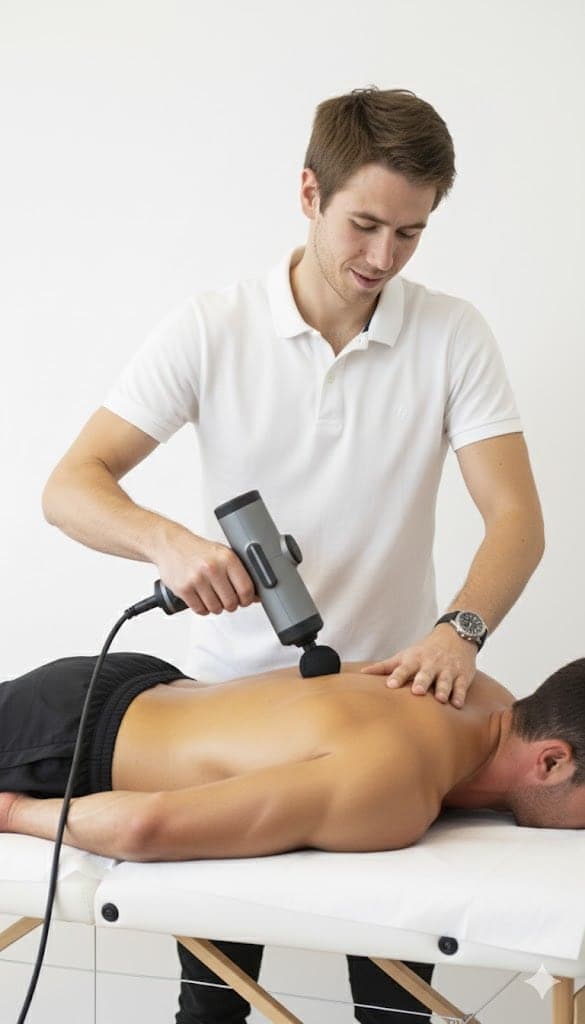
Written by
Chris
Massage therapist, nutrition and exercise physiologist
Norwegian-certified with a Bachelor’s in Physical Education and Nutrition and over ten years of clinical practice, working from a portable table in clients’ homes across the Paphos district.
This article is general information, not a medical diagnosis. If you have severe, worsening or unexplained pain, numbness, weakness, or pain after an accident, see a doctor first.