
Preventing Sports Injuries With Massage: A Clinical Approach to Athletic Longevity
In short
Learn how advanced mechanical deep-tissue massage prevents sports injuries by addressing biomechanical dysfunction at its source—backed by ten years of clinical experience and proven results.
After a decade of working with athletes—from weekend warriors to competitive performers—I’ve witnessed a disturbing pattern. Most sports injuries that sideline athletes for weeks or months weren’t inevitable accidents. They were predictable biomechanical failures waiting to happen. The athlete who tears their hamstring during a sprint? That tissue was already compromised by months of accumulated tension. The runner whose knee suddenly “gives out”? The supporting musculature had been compensating for structural imbalances long before the pain began.
What frustrates me is how preventable most of these scenarios are. Preventing sports injuries with massage isn’t some wellness trend or recovery luxury—it’s a strategic intervention that addresses the mechanical dysfunctions that precede tissue failure. Yet most athletes only seek treatment after they’re injured, not before. This reactive approach costs them training time, performance capacity, and in many cases, their competitive season.
I hold a Bachelor’s degree in Physical Education and Nutrition from Norway, and my approach to preventing sports injuries with massage is rooted in biomechanics, not relaxation therapy. Over ten years, I’ve developed a method using specialized mechanical deep-tissue technology that works deeper than human hands can reach, targeting the root causes of injury before they manifest as pain or dysfunction.
The Biomechanical Reality of Sports Injuries
Let me be clear about something that contradicts popular belief: most sports injuries aren’t caused by a single traumatic event. They’re the culmination of progressive tissue degradation, compensation patterns, and biomechanical inefficiency that compound over time.
When I assess an athlete for the first time, I’m not just looking at where they hurt. I’m analyzing their movement patterns, identifying asymmetries, and locating the fascial restrictions that force their body to compensate. A tight iliopsoas complex doesn’t just reduce hip extension—it alters gait mechanics, shifts load distribution to the hamstrings and lower back, and creates torsional stress on the knee joint. This isn’t theoretical. This is what I see every single week in athletes who thought they were “fine” until they weren’t.
The athletes who come to me after an injury always ask the same question: “Why did this happen?” The answer is usually evident within the first assessment. Their tissue tells a story—restricted fascia, adhesed muscle fibers, trigger points that have been firing compensation patterns for months. The injury was simply the moment when accumulated mechanical stress exceeded tissue tolerance.
Common Injury Patterns and Their Mechanical Origins
Through thousands of hours of clinical work, I’ve identified predictable patterns that precede the most common athletic injuries:
| Injury Type | Biomechanical Dysfunction | Preventive Target Areas |
|---|---|---|
| Hamstring Strain | Anterior pelvic tilt, tight hip flexors, reciprocal inhibition | Iliopsoas complex, rectus femoris, posterior chain fascial release |
| Achilles Tendinopathy | Restricted posterior chain, compensated dorsiflexion, calf hypertonicity | Gastrocnemius-soleus complex, plantaris, posterior tibialis |
| Rotator Cuff Impingement | Scapular dyskinesis, thoracic rigidity, anterior shoulder tightness | Subscapularis, pectoralis minor, serratus anterior, thoracic fascia |
| IT Band Syndrome | Lateral chain dominance, hip abductor weakness, TFL overactivation | Tensor fasciae latae, gluteal complex, lateral thigh fascia |
| Lower Back Strain | Lumbar hyperlordosis, hip extension restriction, core compensation | Erector spinae, quadratus lumborum, hip flexor complex |
Understanding these patterns is why preventing sports injuries with massage requires more than applying pressure to sore muscles. It demands a systematic approach to identifying and releasing the restrictions that create mechanical vulnerability.
Why Traditional Massage Falls Short in Injury Prevention
I need to address something that makes many massage therapists uncomfortable: most traditional massage techniques are insufficient for preventing sports injuries. This isn’t a criticism of practitioners—it’s a recognition of biomechanical reality.
Human hands, no matter how skilled, have limitations. They can’t consistently generate the depth of pressure needed to release chronic fascial adhesions in athletes. They fatigue during treatment, creating inconsistent results. They struggle to maintain sustained compression on trigger points long enough to achieve complete release. And perhaps most importantly, they can’t precisely target the specific tissue layers where biomechanical dysfunction originates.
I’ve worked with athletes who received weekly “sports massage” for months yet still developed injuries. When I assessed their tissue, the restrictions were still there—sometimes even worse because superficial work had created compensation patterns that masked deeper dysfunction.
The Precision Requirements for Injury Prevention
Preventing sports injuries with massage demands three things that manual therapy struggles to deliver consistently:
Precision: You need to access specific tissue layers—not just the superficial fascia, but the deep fascial planes, myofascial junctions, and periosteal attachments where restrictions actually restrict movement. A generalized pressure approach will miss the exact locations where biomechanical efficiency is compromised.
I use a specialized mechanical device that allows me to target tissue with millimeter-level accuracy. When I’m releasing a subscapularis adhesion that’s creating impingement mechanics, I’m not hoping to “get close enough.” I’m applying sustained, controlled pressure to the precise fibers that need release.
Power: Deep fascial restrictions in athletes require significant force to release. I’m talking about pressures that exceed what hands can generate for more than a few seconds. This isn’t about causing pain—it’s about applying enough mechanical force to create plastic deformation in chronically shortened connective tissue.
My mechanical system delivers consistent power throughout an entire session. Whether I’m working on an athlete’s third restriction or their thirtieth, the force remains constant. This eliminates the practitioner fatigue factor that compromises manual therapy effectiveness.
Consistency: For injury prevention to work, every session must deliver the same quality of results. Athletes need to know that the treatment addressing their biomechanical vulnerabilities will be equally effective regardless of when they schedule.
I don’t have “off days” where my technique is less effective. The machine ensures that every treatment session maintains the same therapeutic standard. This reliability is essential for systematic injury prevention.
The Clinical Protocol: How Advanced Massage Prevents Injuries
Let me walk you through how I actually use preventing sports injuries with massage as a systematic intervention, not a random recovery tool.
When an athlete becomes a client, we’re entering a partnership focused on biomechanical optimization. This isn’t about booking occasional massage sessions when they feel tight. It’s a structured approach to identifying vulnerabilities, releasing restrictions, and maintaining mechanical efficiency.
Phase One: Biomechanical Assessment
Every athlete I work with undergoes a comprehensive assessment before any treatment begins. I’m evaluating:
- Active and passive range of motion across all major joints
- Movement quality during sport-specific patterns
- Fascial restrictions and tissue quality through palpation
- Compensation patterns and asymmetries
- Training load, injury history, and performance goals
This assessment tells me exactly where their injury risk lies. The distance runner with 15 degrees less hip extension on their left side? They’re a hamstring strain waiting to happen. The tennis player whose scapula winging during overhead motion? Rotator cuff impingement is in their future unless we address the serratus anterior dysfunction and thoracic rigidity creating that pattern.
I document everything because preventing sports injuries with massage requires tracking progress over time. We need baseline measurements to validate that our interventions are actually changing tissue quality and movement capacity.
Phase Two: Systematic Tissue Release
Based on the assessment findings, I develop a prioritized treatment protocol. This isn’t arbitrary—it’s based on which restrictions are creating the greatest mechanical compromise and injury risk.
My mechanical deep-tissue system allows me to work methodically through each target area with consistent pressure and precision. A typical session might involve:
- Release of primary restriction sites identified in assessment
- Treatment of compensatory tension patterns
- Fascial plane work to restore tissue gliding capacity
- Trigger point deactivation in overactive muscles
- Integration work to restore proper movement patterns
The depth I can achieve with mechanical assistance allows me to address restrictions that manual therapy simply can’t reach. When I’m working on a chronically tight psoas major in an athlete, I’m applying sustained pressure through layers of abdominal musculature to access the tissue against the lumbar vertebrae. This level of work is impossible with hands alone.
Phase Three: Maintenance and Performance Optimization
Once we’ve addressed the primary biomechanical vulnerabilities, the focus shifts to maintenance and optimization. This is where preventing sports injuries with massage becomes an ongoing performance strategy rather than just rehabilitation.
Athletes under my care typically schedule sessions based on their training intensity and competition schedule. A runner building towards a marathon might need more frequent work during high-volume weeks. A CrossFit athlete might increase session frequency before competitions when training intensity peaks.
This isn’t just about preventing injury—it’s about maintaining the mechanical efficiency that allows them to train harder and recover faster. When tissue remains supple and biomechanics stay optimal, training adaptations happen more effectively.
Real-World Results: Case Studies in Injury Prevention
Theory without results means nothing. Let me share specific examples of how this approach has prevented injuries that seemed inevitable.
The Competitive Cyclist With Chronic IT Band Issues
I began working with a cyclist who had battled IT band syndrome for three seasons. Every time he increased training volume, lateral knee pain would force him to reduce intensity. He’d tried foam rolling, stretching, and periodic massage with minimal lasting effect.
My assessment revealed the real problem: his right TFL was chronically hyperactive due to a restricted hip capsule limiting internal rotation. His body was using the TFL to stabilize during the pedal stroke, creating constant tension through the iliotibial band. The knee pain was just the symptom.
I focused our sessions on releasing his hip capsule restrictions and deactivating the overactive TFL with sustained mechanical pressure that hands couldn’t maintain. Within six weeks, his hip internal rotation improved by 20 degrees. More importantly, he completed his highest training volume season without a single episode of IT band pain.
That’s preventing sports injuries with massage in practice—addressing the mechanical cause before it creates tissue failure.
The Masters Swimmer Avoiding Shoulder Surgery
A 45-year-old competitive swimmer came to me with progressive shoulder impingement. Her orthopedic surgeon had recommended surgery if conservative treatment didn’t work within three months. She was frustrated because she’d tried physical therapy, rest, and anti-inflammatories without improvement.
Her issue was textbook scapular dyskinesis. Years of swimming with poor thoracic mobility had created compensation patterns. Her subscapularis and pectoralis minor were chronically shortened, pulling her scapula into anterior tilt. Her serratus anterior couldn’t stabilize properly. Every stroke was grinding her rotator cuff against the acromion.
We worked systematically to release the anterior restrictions and restore scapular mechanics. The mechanical precision I could apply to her subscapularis—one of the hardest muscles to access manually—was crucial. After eight weeks of targeted treatment combined with corrective exercises, her pain resolved completely. Two years later, she’s still swimming competitively without surgery.
The Science Behind Massage for Injury Prevention
Let me ground this discussion in physiological reality. Preventing sports injuries with massage works through several well-established mechanisms:
Fascial Plasticity and Tissue Remodeling
Fascia responds to mechanical load through a process called mechanotransduction. When you apply sustained pressure to fascial tissue, it triggers cellular responses that alter tissue structure. Fibroblasts—the cells that produce collagen—respond to mechanical stress by remodeling the extracellular matrix.
This isn’t temporary. When done correctly, deep-tissue work creates lasting changes in tissue architecture. Shortened fascia lengthens. Adhesions between tissue layers release. This restores the tissue gliding capacity essential for efficient movement.
The key word is “sustained.” Brief pressure doesn’t trigger the mechanotransduction cascade needed for plastic change. This is why my mechanical system’s ability to maintain consistent deep pressure for extended periods produces results that intermittent manual pressure cannot.
Trigger Point Deactivation and Motor Control
Trigger points—hyperirritable spots in taut bands of muscle—create altered motor control patterns that increase injury risk. A trigger point in the gluteus medius doesn’t just cause local discomfort. It disrupts the entire kinetic chain, forcing compensations that overload other structures.
Deactivating trigger points requires sustained ischemic compression until the contracted sarcomeres release. Research shows this requires 30-90 seconds of adequate pressure directly on the trigger point. My mechanical approach allows me to maintain that pressure precisely and consistently—something that’s physically demanding and inconsistent with manual thumb or elbow pressure.
Neurological Reset and Movement Pattern Restoration
Chronic restrictions don’t just affect tissue—they alter neuromuscular patterns. Your nervous system adapts to limited range of motion by reducing motor unit recruitment in lengthened positions. Over time, this creates “learned” restriction even after tissue constraints are removed.
Effective deep-tissue work triggers immediate neurological changes. Golgi tendon organs respond to sustained pressure by reducing muscle spindle sensitivity, allowing muscle lengthening. Mechanoreceptors in fascia send proprioceptive signals that update the brain’s body map. These changes allow movement patterns to reset toward optimal mechanics.
Preventing Specific Athletic Injuries Through Targeted Massage
Different sports create predictable mechanical stress patterns. Preventing sports injuries with massage requires understanding these sport-specific vulnerabilities and targeting treatment accordingly.
Running Injuries: Addressing Posterior Chain Dysfunction
Runners face repetitive loading through the posterior chain—thousands of impact cycles that gradually accumulate restrictions in the calves, hamstrings, and hip extensors. The most common running injuries—Achilles tendinopathy, hamstring strains, plantar fasciitis—all stem from posterior chain dysfunction.
My protocol for runners focuses heavily on restoring posterior chain length and fascial gliding capacity. This means deep work on the gastrocnemius-soleus complex, releasing fascial restrictions in the deep posterior compartment, and addressing hip flexor tightness that limits stride length and forces hamstring compensation.
The mechanical advantage here is significant. The dense connective tissue in a runner’s calves requires sustained deep pressure to release. I can maintain 40-60 pounds of force through the entire gastrocnemius for minutes at a time—impossible with thumb or elbow pressure without practitioner fatigue.
Overhead Athletes: Preserving Shoulder Mechanics
Athletes who repeatedly load their shoulders overhead—tennis players, swimmers, volleyball players, CrossFit athletes—develop predictable patterns of anterior shoulder tightness and posterior weakness. Left unaddressed, this creates impingement, labral stress, and eventual rotator cuff pathology.
Preventing these injuries requires aggressive release of the subscapularis, pectoralis minor, and anterior deltoid. These muscles are notoriously difficult to access manually, especially the subscapularis which sits beneath the scapula and requires working through the axilla or superior shoulder.
My mechanical system allows me to access these structures with controlled precision. The consistent pressure I can apply creates releases that restore proper glenohumeral positioning and scapular mechanics—the foundation of healthy overhead movement.
Power Athletes: Managing High-Force Loading
Athletes who generate explosive force—sprinters, jumpers, throwers, Olympic lifters—place enormous mechanical stress on their musculoskeletal system. Their injury prevention needs center on maintaining tissue resilience under high loads.
These athletes require particularly deep work. Their training creates dense, hypertrophied muscle tissue with significant fascial restrictions. Superficial massage does nothing for them. They need sustained, powerful pressure that reaches the deep fascial planes and myotendinous junctions where restrictions actually compromise performance and create injury risk.
I work with several competitive powerlifters and throwers. The intensity of pressure they require would be impossible to deliver manually for an entire session. The mechanical consistency I can provide allows me to systematically address their restrictions without the treatment quality degrading as I fatigue.
Building an Injury Prevention Program: Beyond Single Sessions
Here’s what athletes need to understand: preventing sports injuries with massage isn’t about getting a massage when you feel tight. It’s about systematic, ongoing biomechanical maintenance that keeps your body functioning optimally.
I don’t offer single-session treatments. I work with athletes through customized programs designed around their training cycles, injury history, and performance goals. This partnership approach ensures we’re not just randomly treating symptoms—we’re strategically addressing the mechanical factors that would otherwise lead to injury.
Program Structure and Frequency
Treatment frequency depends on several factors:
- Training volume and intensity: Higher training loads require more frequent maintenance
- Competition schedule: Peak competition phases need strategic timing
- Injury history: Athletes with previous injuries need more preventive attention
- Biomechanical complexity: Some athletes have more pronounced restriction patterns requiring intensive initial work
Most athletes I work with follow a maintenance schedule of every 1-2 weeks during training phases, with adjustments based on how their bodies respond. We track tissue quality, range of motion, and any developing restriction patterns to ensure we stay ahead of injury risk.
Integration With Training
Effective injury prevention requires coordination with training. I work closely with athletes and their coaches to ensure our treatment timing optimizes recovery without interfering with key training sessions or competitions.
Deep tissue work creates a temporary reduction in force production—usually 24-48 hours—as tissues reorganize. We schedule intensive sessions during lower-intensity training blocks or strategic recovery periods. Before competitions, maintenance sessions use lighter pressure to preserve tissue quality without affecting performance readiness.
The Investment Mindset: Long-Term Health vs. Short-Term Cost
Let me be direct about something that stops many athletes from prioritizing injury prevention: they see massage as an expense rather than an investment.
I understand this perspective. When you’re not currently injured, spending money on prevention feels less urgent than, say, new training equipment or competition entry fees. But this thinking is backwards when you examine the actual economics of athletic performance.
Consider what happens when a serious injury sidelines you for three months. You lose training time—that’s obvious. But you also lose the competitive opportunities during that period. You potentially pay for physical therapy, medical consultations, and rehabilitation services that cost far more than preventive care would have. And you face the risk that you’ll never fully recover to your previous performance level.
I’ve seen athletes lose entire competitive seasons to injuries that were completely preventable. The economic cost—in medical expenses, lost competition opportunities, and reduced performance—dwarfs what they would have invested in systematic preventive care.
The True Cost of Sports Injuries
Beyond direct medical expenses, injuries carry hidden costs:
| Injury Impact | Typical Duration | Performance Cost |
|---|---|---|
| Hamstring Strain (Grade 2) | 6-12 weeks | Missed competitions, reduced training volume, 3-6 months to return to peak performance |
| Achilles Tendinopathy | 3-6 months | Chronic training limitations, potential for re-injury, possible lasting performance reduction |
| Rotator Cuff Impingement | 2-4 months (conservative) or 6-12 months (surgical) | Complete cessation of sport-specific training, extended rehabilitation, risk of chronic instability |
| IT Band Syndrome | 4-8 weeks (if addressed early) | Reduced training volume, altered gait mechanics, potential for compensation injuries |
When you frame preventing sports injuries with massage as insurance against these outcomes, the economics become clear. Systematic preventive care costs a fraction of dealing with injury consequences.
Why My Approach Delivers Superior Results
I’m confident stating that my method for preventing sports injuries with massage produces better results than traditional approaches. This isn’t arrogance—it’s the logical outcome of using superior tools and a more sophisticated understanding of biomechanics.
Mechanical Advantage
My specialized machine delivers three critical advantages:
Depth: It reaches tissue layers that hands physically cannot. When I’m releasing restrictions in the deep hip rotators or subscapularis, I’m applying sustained pressure through multiple muscle layers. Manual therapy simply cannot generate and maintain this force without practitioner fatigue compromising treatment quality.
Precision: The mechanical interface allows millimeter-level targeting. I’m not approximating where pressure needs to go—I’m placing it exactly where assessment reveals restrictions exist. This precision ensures we’re addressing actual biomechanical problems, not just treating generally tight areas.
Consistency: Every treatment delivers the same therapeutic standard. Whether you’re my first client of the day or my last, whether I’m working on your fifteenth restriction or your first, the pressure remains constant. This reliability is essential for systematic injury prevention that athletes can depend on.
Clinical Sophistication
My Bachelor’s degree in Physical Education and Nutrition provides a foundation that most massage therapists lack. I understand biomechanics at a level that allows me to identify the actual mechanical causes of injury risk, not just address symptoms.
When I assess an athlete, I’m analyzing kinetic chains, identifying compensation patterns, and understanding how restrictions in one area create vulnerability elsewhere. This systems-level thinking ensures treatment addresses root causes rather than chasing symptoms.
Results-Focused Partnership
I don’t offer relaxation massage or generic “sports massage.” I provide systematic biomechanical optimization focused on keeping athletes healthy and performing optimally. This requires a partnership approach where we track progress, adjust protocols based on response, and maintain clear communication about training demands and injury risk.
Athletes who work with me know exactly what they’re getting: clinical expertise, advanced technology, and a commitment to keeping them injury-free and performing at their best.
Practical Implementation: Getting Started
If you’re an athlete serious about preventing sports injuries with massage, here’s how to approach this systematically:
Assessment First
Before any treatment begins, you need a thorough biomechanical assessment. This identifies your specific vulnerabilities and guides treatment priorities. Generic massage protocols don’t prevent injuries—targeted interventions based on individual assessment do.
Commit to the Process
Injury prevention isn’t a one-session fix. It requires consistent work over time to address restrictions, restore optimal mechanics, and maintain tissue quality despite training demands. Athletes who see the best results commit to systematic care rather than sporadic reactive treatment.
Integrate With Training
Work with someone who understands athletic training and can coordinate treatment timing with your training cycles. Preventive care should enhance performance, not interfere with key training sessions or competitions.
Track Progress
Insist on measurable outcomes. Range of motion improvements, reduced tissue restrictions, absence of injury—these are the metrics that matter. If you’re not seeing objective progress, your approach isn’t working.
Common Questions About Massage for Injury Prevention
How soon will I see results?
Immediate changes in range of motion and tissue quality are common after the first session. However, lasting biomechanical improvements typically require 4-6 weeks of consistent work to address chronic restrictions and allow movement patterns to reset. Athletes with significant restriction patterns may need longer initial intensive phases before transitioning to maintenance care.
Is deep-tissue massage painful?
Deep work creates sensation, but it shouldn’t be unbearable. I work within each athlete’s tolerance while ensuring I’m applying enough pressure to create therapeutic change. The mechanical control my system provides allows precise pressure adjustment—from light to powerfully deep based on what the tissue needs and what the athlete can tolerate.
Can massage really prevent all injuries?
No intervention prevents every injury—accidents happen in sports. However, systematic massage dramatically reduces the risk of overuse injuries, which account for the majority of athletic injuries. By addressing the biomechanical dysfunctions that precede tissue failure, we eliminate the internal factors that make injury likely.
How does this differ from physical therapy?
Physical therapy focuses on rehabilitation after injury and typically emphasizes exercise-based interventions. My approach is preventive and hands-on, targeting the tissue restrictions and mechanical dysfunctions before they cause injury. These approaches are complementary—I often work with athletes who also see physical therapists for specific rehabilitation needs.
Do I need to be an elite athlete to benefit?
Absolutely not. Preventing sports injuries with massage benefits anyone who trains regularly, regardless of competition level. Weekend warriors, recreational athletes, and fitness enthusiasts all develop restriction patterns that increase injury risk. The goal is keeping you active and pain-free, whether you’re competing for podiums or just trying to stay healthy.
What makes your method different from regular massage?
Traditional massage focuses on relaxation and general muscle tension. My method uses advanced mechanical technology to access deep tissue layers with precision and power that hands cannot match. I’m not providing a pleasant experience—I’m delivering systematic biomechanical treatment that produces measurable, lasting changes in tissue quality and movement capacity.
How do you deliver this service?
I travel to your location with my professional bench and all necessary equipment. This eliminates the logistical barriers that prevent many athletes from getting consistent preventive care. We can work in your home, gym, or training facility—wherever is most convenient for your schedule.
What’s the time commitment?
Initial sessions typically run 75-90 minutes to allow comprehensive assessment and treatment. Maintenance sessions are usually 60 minutes. Frequency varies based on training intensity—most athletes schedule every 1-2 weeks during active training phases.
The Future-Proof Investment in Athletic Longevity
After ten years of working with hundreds of athletes, I’ve learned that the ones who achieve the longest, most successful athletic careers aren’t necessarily the most talented. They’re the ones who understand that performance isn’t just about training harder—it’s about training smarter and maintaining the mechanical efficiency that allows consistent high-level training without breakdown.
Preventing sports injuries with massage is a cornerstone of this approach. It’s not ancillary to training—it’s integral to it. Just as you schedule training sessions, recovery days, and competition tapers, systematic biomechanical maintenance should be programmed into your athletic development.
The athletes I work with understand this. They see preventive care not as an optional luxury but as a non-negotiable component of serious athletic pursuit. They’re investing in their long-term athletic health, not just patching problems when they arise.
This mindset separates athletes who have long, productive careers from those who burn out, break down, or get sidelined by preventable injuries. Your body is your athletic instrument. Treating it with the maintenance it deserves isn’t optional if you’re serious about performing at your best for as long as possible.
The question isn’t whether systematic preventive care provides value—the evidence and results make that clear. The question is whether you’re willing to make the investment in yourself that serious athletic pursuit demands. Because preventing sports injuries with massage isn’t about avoiding pain—it’s about maximizing your athletic potential and protecting the longevity of your competitive career.
Evidence and limits
Massage may help with some symptoms, but benefits and evidence vary by condition. It does not replace medical assessment or treatment. A page update is not evidence of an independent clinical review.
Further reading: Massage therapy: evidence, safety and limitations by US National Center for Complementary and Integrative Health. This is general background reading, not verification of every claim in this article.
How we describe evidence and updates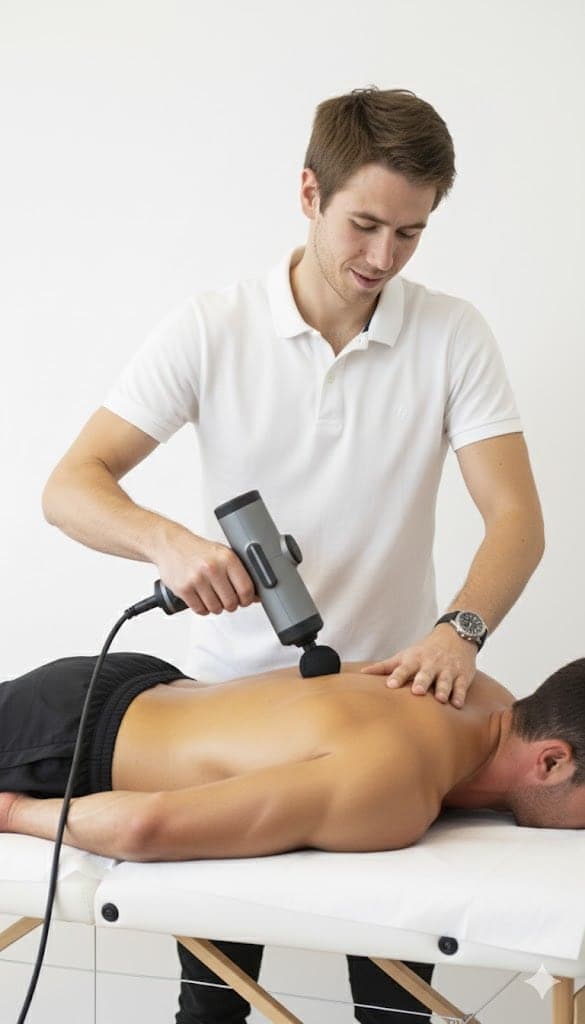
Written by
Chris
Massage therapist, nutrition and exercise physiologist
Norwegian-certified with a Bachelor’s in Physical Education and Nutrition and over ten years of clinical practice, working from a portable table in clients’ homes across the Paphos district.
This article is general information, not a medical diagnosis. If you have severe, worsening or unexplained pain, numbness, weakness, or pain after an accident, see a doctor first.