
Sports Massage Tala: Advanced Mechanical Deep-Tissue Treatment for Athletic Performance and Injury Prevention
In short
Discover how specialized sports massage in Tala transforms athletic performance through precision mechanical deep-tissue work. Expert-led treatment addressing the root causes of pain and limitation.
Most athletes in Tala settle for superficial massage therapy that temporarily masks discomfort without addressing the underlying mechanical dysfunction. I’ve spent the past decade perfecting an approach that fundamentally differs from conventional sports massage—a methodology grounded in biomechanics, powered by advanced technology, and validated through consistent results with elite performers and everyday athletes alike.
My name reflects a decade of hands-on work with the human body, backed by a Bachelor’s degree in Physical Education and Nutrition from Norway. Sports massage Tala practitioners typically focus on relaxation or temporary symptom relief. I focus exclusively on lasting structural correction through mechanical deep-tissue intervention. The distinction matters because your training schedule, competition calendar, and long-term athletic longevity depend on it.
Why Traditional Sports Massage Falls Short for Serious Athletes
I’ve witnessed countless athletes cycle through massage therapists in Tala, receiving temporary relief that evaporates within days. The fundamental problem isn’t effort or intention—it’s methodology. Human hands, regardless of the therapist’s skill level, possess inherent limitations in depth, consistency, and precision.
When a runner develops chronic IT band syndrome or a cyclist experiences persistent hip flexor tightness, surface-level manipulation provides momentary comfort while the underlying fascial restrictions and muscular adhesions remain untouched. Traditional sports massage Tala sessions often operate at 3-5 millimeters of tissue penetration. Meaningful structural change requires work at 12-20 millimeters, targeting the deep fascial layers where chronic tension patterns establish themselves.
The Consistency Problem Nobody Discusses
Even exceptional manual therapists experience variability. Fatigue, distraction, and simple human limitation create inconsistent treatment outcomes. An athlete preparing for competition cannot afford this unpredictability. When I treat a client on Monday and again on Thursday, the precision, depth, and effectiveness remain identical. This consistency stems from my specialized mechanical approach, not from superhuman endurance.
The Biomechanical Foundation of Effective Sports Massage in Tala
My academic background in Physical Education and Nutrition taught me that the body functions as an integrated kinetic chain. A shoulder injury rarely originates in the shoulder itself—it manifests there because of compensation patterns rooted in thoracic mobility restrictions, scapular dysfunction, or even hip instability.
When athletes seek sports massage Tala services for specific complaints, I conduct comprehensive movement assessments before treatment begins. This evaluation reveals:
- Primary sites of myofascial restriction limiting range of motion
- Compensation patterns creating asymmetrical load distribution
- Trigger point networks referring pain to distant anatomical locations
- Fascial adhesions restricting optimal biomechanical efficiency
This diagnostic approach separates therapeutic intervention from relaxation massage. I’m not guessing where tension exists—I’m identifying precise mechanical dysfunctions that compromise performance and predispose you to injury.
Understanding Fascial Architecture and Athletic Performance
Your fascia—the connective tissue network enveloping every muscle fiber, organ, and neural structure—determines movement quality more than muscle strength alone. When fascial layers adhere through repetitive stress, inflammatory response, or inadequate recovery, they create restrictive patterns that:
- Reduce force transmission efficiency between muscle groups
- Increase energy expenditure during movement
- Alter joint mechanics, accelerating degenerative processes
- Compress neural pathways, causing referred pain and weakness
Sports massage Tala athletes need should address these fascial dysfunctions at their source. Surface work simply cannot reach the depth required for meaningful fascial release.
My Mechanical Deep-Tissue Methodology: Precision, Power, and Consistency
After years of manual therapy work, I transitioned to a specialized mechanical system that delivers results impossible to achieve through hands alone. This isn’t about replacing human expertise—it’s about amplifying it through superior tools.
Depth: Accessing Tissue Layers That Determine Function
The specialized machine I employ penetrates tissue at controlled depths up to 20 millimeters, reaching the deep fascial planes where chronic restrictions reside. When treating a marathon runner’s chronic calf tightness, for example, superficial gastrocnemius work provides minimal benefit. The soleus muscle beneath it, along with the deep posterior compartment fascia, determines actual functional capacity.
Traditional hands-on sports massage in Tala cannot consistently access these layers without causing surface tissue trauma or therapist fatigue. My mechanical approach delivers precise depth while protecting superficial structures.
Control: Calibrated Intensity Matching Your Specific Needs
Athletes vary dramatically in tissue density, pain tolerance, and treatment requirements. A 95-kilogram rugby player requires different pressure application than a 58-kilogram distance runner. My system allows micron-level adjustment of treatment intensity, ensuring optimal therapeutic effect without overloading tissue tolerance.
During our first session, I calibrate pressure based on your feedback and tissue response. This baseline becomes your personalized treatment protocol, modified as your tissue quality improves and your performance demands evolve.
Consistency: Eliminating the Variable of Human Limitation
Manual therapists experience fatigue. Forearm strength diminishes. Attention wavers. These aren’t criticisms—they’re physiological realities. My mechanical methodology eliminates these variables entirely. Session fifteen delivers identical precision and power to session one. For athletes following periodized training programs, this consistency matters enormously.
| Treatment Aspect | Traditional Manual Massage | Mechanical Deep-Tissue Method |
|---|---|---|
| Maximum Depth | 5-8mm (limited by hand strength) | 15-20mm (controlled mechanical penetration) |
| Pressure Consistency | Varies by therapist fatigue | Precisely calibrated, unchanging |
| Treatment Duration Effectiveness | Diminishes as session progresses | Maintains full effectiveness throughout |
| Precision Targeting | Dependent on palpation skill | Millimeter-accurate application |
| Session-to-Session Replication | Approximate recreation | Exact protocol reproduction |
Real Performance Outcomes: What Sports Massage Tala Athletes Actually Achieve
I measure success through objective performance markers, not subjective comfort assessments. When a competitive cyclist comes to me with chronic lower back pain limiting training volume, we establish clear metrics: pain-free riding duration, power output sustainability, and recovery time between intense sessions.
Case Study: From Chronic IT Band Syndrome to Pain-Free Marathon Training
A recreational marathon runner contacted me six months before her goal race. She’d attempted three previous marathon training cycles, each derailed by debilitating IT band pain around the 18-kilometer mark. She’d tried foam rolling, stretching protocols, strength work, and five different massage therapists. Nothing produced lasting change.
My assessment revealed the expected IT band tightness, but more importantly, identified severe tensor fasciae latae hypertonicity, gluteus medius weakness creating hip instability, and deep lateral thigh fascial adhesions from years of compensation. These underlying mechanical dysfunctions—not the IT band itself—caused her symptoms.
Our treatment protocol targeted these root causes through mechanical deep-tissue work combined with corrective exercise progressions. Within four weeks, she completed a 20-kilometer run completely pain-free for the first time in three years. By race day, she finished her marathon 23 minutes faster than her previous best, without any IT band discomfort.
This exemplifies proper sports massage Tala implementation—addressing causation rather than chasing symptoms.
The Cumulative Effect: How Strategic Treatment Amplifies Training Adaptations
Athletes often view massage as post-training recovery. I position it as performance optimization. By systematically eliminating fascial restrictions and muscular adhesions, we improve:
- Movement efficiency: Reduced energy waste during technical execution
- Force production: Enhanced neural drive and muscle fiber recruitment
- Recovery capacity: Improved nutrient delivery and metabolic waste removal
- Injury resilience: Balanced load distribution across kinetic chains
These adaptations compound over training mesocycles. An athlete who maintains optimal tissue quality throughout a preparation phase arrives at competition significantly more capable than one who accumulates progressive dysfunction.
Injury Prevention Through Biomechanical Optimization
Most sports-related injuries don’t occur through traumatic incidents—they develop through accumulated microtrauma and progressive compensation patterns. When your left hip lacks 15 degrees of internal rotation compared to your right, your lumbar spine compensates. When your thoracic spine exhibits restricted extension, your shoulders compensate. These compensations create asymmetrical loading that eventually manifests as injury.
The Early Warning System Your Body Provides
Tissue dysfunction precedes pain by weeks or months. I’ve learned to identify these warning signs through palpation and movement screening. A subtle fascial restriction in your posterior hip capsule, currently asymptomatic, predicts future hip impingement or lumbar dysfunction. Addressing it now—before pain forces training modification—represents genuine injury prevention.
Traditional sports massage Tala practitioners often wait for complaints before intervention. I identify mechanical dysfunctions before they compromise training or trigger injury cascades. This proactive approach defines the difference between reactive symptom management and strategic performance optimization.
Balancing Tissue Stress and Adaptation
Athletes exist in constant tension between sufficient training stress (driving adaptation) and excessive tissue breakdown (causing injury). Optimal sports massage timing and intensity support this balance.
During high-volume training phases, I employ lighter interventions focused on maintaining tissue quality and accelerating recovery. Before competition periods, we execute deeper structural work addressing accumulated restrictions. Post-competition, aggressive treatment facilitates rapid restoration of baseline function. This periodized approach integrates with your training plan rather than existing separately from it.
Why Location Matters: The Advantage of In-Home Sports Massage Tala Sessions
I travel to your location with professional equipment, creating optimal treatment conditions in your environment. This isn’t merely convenient—it’s strategically superior for several reasons.
Eliminating Pre- and Post-Treatment Stress
Driving across Tala to reach a clinic, navigating parking, and rushing to appointments creates sympathetic nervous system activation—the opposite physiological state needed for effective deep-tissue work. When I arrive at your home, you’re already relaxed, your tissues receptive to treatment.
Post-treatment, you don’t face a commute home while experiencing the temporary soreness that accompanies aggressive deep-tissue work. You move directly into optimal recovery—hydration, gentle movement, and rest. This environmental control enhances treatment effectiveness measurably.
Professional Standards Without Clinical Sterility
I arrive with a specialized treatment bench, premium grade tools, and everything necessary for clinical-quality sessions. You receive professional sports massage Tala treatment standards in your comfortable environment. The combination optimizes both technical execution and physiological receptivity.
The Partnership Model: Why One-Off Sessions Produce Temporary Results
I don’t accept single-session bookings. This isn’t arbitrary preference—it reflects biomechanical reality. Meaningful structural change requires progressive intervention over weeks or months, not isolated treatments.
When you book a random massage session, you receive temporary symptomatic relief. Tissue quality improves briefly, then regresses to baseline within 72-96 hours. You’ve spent money and time without achieving lasting change. This transactional approach wastes both our resources.
Strategic Treatment Progression: How Cumulative Sessions Create Lasting Change
My partnership model involves:
- Comprehensive initial assessment: Movement screening, palpation examination, training history analysis
- Customized treatment protocol: Specific techniques, intensity calibration, frequency scheduling
- Progressive intervention: Each session builds on previous work, deepening structural improvements
- Ongoing reassessment: Regular movement testing validating objective progress
- Integration with training: Treatment timing coordinated with your competitive calendar
This strategic approach transforms sports massage from expense to investment. You’re not purchasing temporary comfort—you’re building lasting structural capacity that enhances performance and prevents injury for years.
Investment Framework: Understanding the True Cost of Dysfunction
Athletes often balk at comprehensive treatment costs without calculating the alternative. What does chronic dysfunction actually cost you?
- Training days lost to pain or injury
- Competition opportunities missed during recovery periods
- Performance degradation from accumulated restrictions
- Medical expenses treating acute injuries that preventive work would have avoided
- Career shortening through progressive degenerative processes
When you frame proper sports massage Tala treatment as injury prevention and performance optimization rather than luxury recovery, the economic calculation shifts dramatically. A comprehensive treatment partnership that keeps you training optimally year-round costs less than a single serious injury requiring months of rehabilitation.
What to Expect: The Reality of Effective Deep-Tissue Work
I don’t promise comfortable, relaxing sessions. Effective mechanical deep-tissue work addressing genuine structural dysfunction involves discomfort. I explain this clearly because managing expectations determines treatment success.
The Productive Discomfort Principle
We operate within a precise intensity zone I call “productive discomfort”—sufficient pressure to create fascial release and trigger therapeutic inflammation, without exceeding your tissue tolerance or creating protective muscle guarding. You’ll feel this work. That sensation confirms we’re reaching dysfunctional tissue at appropriate depth.
Twenty-four to forty-eight hours post-treatment, you may experience soreness similar to intense training. This represents normal inflammatory response as tissue remodels. By day three, you’ll notice improved mobility, reduced pain, and enhanced movement quality. These results persist and compound with subsequent sessions.
Communication During Treatment
I constantly monitor your feedback and tissue response. When pressure exceeds your tolerance, we adjust immediately. When we locate a significant restriction requiring extended work, I explain what I’m addressing and why. This collaborative communication ensures optimal outcomes while respecting your limits.
Who Benefits Most from This Approach
My methodology serves athletes and active individuals experiencing:
- Chronic pain or restriction limiting training volume or intensity
- Recurring injuries suggesting underlying biomechanical dysfunction
- Performance plateaus despite consistent training effort
- Post-injury return to sport requiring structural optimization
- Preparation for significant athletic goals requiring peak physical capacity
If you’re seeking relaxation massage or general stress relief, numerous Tala practitioners offer that service excellently. I specialize exclusively in mechanical problem-solving for athletes demanding measurable performance improvement and lasting pain resolution.
The Science Behind Mechanical Deep-Tissue Effectiveness
My confidence in this methodology stems from both practical results and scientific understanding. When we apply controlled mechanical pressure to restricted fascia, several physiological processes occur:
Fascial Remodeling Through Controlled Inflammation
Mechanical stress triggers fibroblast activation—the cells responsible for collagen synthesis and fascial architecture. Controlled tissue trauma initiates inflammatory cascades that break down pathological adhesions while stimulating organized collagen deposition. This remodeling transforms rigid, restrictive fascial planes into supple, functional tissue.
Neural Reprogramming and Motor Control Enhancement
Chronic muscle tension often reflects dysfunctional motor patterns rather than structural shortness. Deep-tissue work stimulates Golgi tendon organs and muscle spindles—proprioceptive structures that communicate muscle length and tension to the central nervous system. This sensory input can reset aberrant muscle tone, improving movement patterns even after single sessions.
Improved Tissue Perfusion and Metabolic Function
Fascial adhesions impede blood flow and lymphatic drainage. By restoring normal tissue architecture, we enhance nutrient delivery, oxygen availability, and metabolic waste removal. Athletes notice this through reduced recovery time between training sessions and diminished delayed-onset muscle soreness.
| Physiological Process | Mechanism | Performance Impact |
|---|---|---|
| Fascial Remodeling | Controlled inflammation breaking adhesions | Increased range of motion, reduced stiffness |
| Neural Adaptation | Proprioceptor stimulation resetting muscle tone | Improved movement patterns, enhanced coordination |
| Vascular Enhancement | Restored tissue perfusion and drainage | Faster recovery, reduced soreness |
| Trigger Point Deactivation | Mechanical disruption of ischemic nodules | Eliminated referred pain, improved strength |
Comparing Approaches: Why Methodology Determines Outcomes
Sports massage Tala offers various methodologies—Swedish massage, trigger point therapy, myofascial release, sports massage. Each serves specific purposes. Understanding these distinctions helps you select appropriately.
Swedish Massage: Relaxation Without Structural Change
Swedish techniques employ light to moderate pressure focusing on superficial tissue layers. They excel at promoting relaxation and temporary tension relief but cannot address deep fascial restrictions or chronic biomechanical dysfunction. If your goal involves actual performance improvement or injury prevention, Swedish massage provides inadequate intervention depth.
Traditional Trigger Point Therapy: Incomplete Without Fascial Context
Trigger points—hyperirritable spots within muscle tissue—certainly contribute to pain and dysfunction. However, treating trigger points without addressing surrounding fascial restrictions provides temporary relief only. The mechanical factors that created those trigger points remain, ensuring their rapid return. Comprehensive treatment must address both focal trigger points and broader fascial architecture.
Generic “Sports Massage”: Variable Quality Without Standardization
The term “sports massage” lacks standardized definition. Some practitioners simply apply stronger pressure to Swedish techniques. Others incorporate stretching and joint mobilization. Quality varies dramatically based on individual training and experience. When seeking sports massage Tala practitioners, understanding their specific methodology and educational background matters enormously.
Frequently Asked Questions About Sports Massage in Tala
How does mechanical deep-tissue work differ from regular massage?
Regular massage primarily addresses superficial tissue layers and focuses on relaxation and temporary tension relief. My mechanical deep-tissue methodology penetrates 15-20 millimeters, reaching the fascial planes where chronic restrictions reside. The specialized tool I employ delivers consistent pressure impossible to achieve manually, creating lasting structural changes rather than temporary symptom relief. Think of it as the difference between surface cleaning and deep renovation—one maintains appearance, the other fixes underlying problems.
Will the treatment hurt?
You’ll experience what I term “productive discomfort”—pressure sufficient to release restricted tissue without exceeding your tolerance. This isn’t relaxing massage. We’re addressing dysfunction that has accumulated over months or years, requiring significant mechanical intervention. Most clients describe the sensation as intense but manageable, with immediate mobility improvements validating the approach. Post-treatment soreness lasting 24-48 hours is normal and indicates successful tissue remodeling.
How quickly will I see performance improvements?
Initial improvements—increased range of motion, reduced acute pain—often manifest immediately post-treatment. However, meaningful performance enhancement requires 4-6 weeks of consistent intervention as fascial remodeling progresses and motor patterns adapt. Athletes typically notice significant changes around week three: reduced recovery time, enhanced movement quality, and eliminated compensatory patterns. Lasting structural change demands patient, progressive work, not instant fixes.
How often should I receive treatment?
Treatment frequency depends on your training volume, injury history, and performance goals. During initial intervention addressing chronic dysfunction, twice-weekly sessions accelerate progress. Once we establish baseline tissue quality, weekly or bi-weekly maintenance sessions sustain optimal function. I customize protocols based on your competitive calendar, intensifying treatment during preparation phases and reducing frequency during competition periods.
Can I train normally after treatment?
Intense deep-tissue work requires 24-48 hours recovery before high-intensity training. I schedule sessions strategically around your training plan—typically on rest days or following easy sessions. Light activity post-treatment actually enhances recovery by promoting blood flow and facilitating tissue remodeling. We’ll coordinate treatment timing to support rather than compromise your training progression.
Why don’t you offer single sessions?
Structural dysfunction develops over months or years through accumulated microtrauma and compensation patterns. Reversing this requires progressive intervention—each session building on previous work, deepening fascial release, and establishing improved motor patterns. Single sessions provide temporary relief without addressing root causes. My partnership model ensures you achieve lasting results justifying your time and financial investment, rather than cycling through temporary symptomatic improvements.
What makes your approach superior to traditional sports massage?
Three critical factors: depth, consistency, and methodology. My mechanical system reaches tissue layers human hands cannot access, delivers identical pressure session after session eliminating therapist variability, and operates within a biomechanical framework addressing causation rather than symptoms. Traditional sports massage offers valuable relaxation and recovery benefits but rarely creates the lasting structural changes serious athletes require for optimal performance and injury prevention.
Do you work with specific sports or athletic populations?
My methodology serves any athlete experiencing mechanical dysfunction—runners, cyclists, team sport athletes, strength competitors, recreational fitness enthusiasts. The underlying principles of fascial dysfunction, compensation patterns, and biomechanical optimization apply universally. I customize treatment protocols based on your sport’s specific demands, injury patterns, and movement requirements, but the fundamental approach remains consistent across athletic populations.
Taking Action: Moving from Chronic Dysfunction to Optimal Performance
You’ve likely spent months or years managing pain, modifying training, and accepting limitations you believed were inevitable. They’re not. Chronic dysfunction responds predictably to appropriate mechanical intervention when applied systematically by someone who understands biomechanics at a sophisticated level.
I’ve worked with hundreds of athletes across Tala who believed their situation was lasting—IT band syndrome that ended running careers, shoulder pain that limited lifting capacity, lower back dysfunction that prevented competition. In the majority of cases, these weren’t lasting conditions but rather mechanical problems with mechanical solutions.
The Cost of Continued Inaction
Every training session you complete while mechanically compromised reinforces dysfunctional movement patterns. Every competition you enter without optimal tissue quality accepts preventable performance limitations. Every month you delay addressing structural dysfunction allows compensatory patterns to deepen and spread.
Professional sports massage Tala treatment represents an investment in your athletic longevity and performance capacity. The question isn’t whether you can afford comprehensive intervention—it’s whether you can afford to continue training in your current compromised state.
What Partnership with Me Involves
When we begin working together, you’re not simply booking massage appointments. You’re engaging in a strategic performance optimization process. I become invested in your progress—analyzing your movement patterns, understanding your training methodology, identifying the specific mechanical limitations compromising your performance, and systematically addressing them through progressive treatment intervention.
This requires commitment from both of us. You must maintain consistent treatment scheduling, communicate openly about symptoms and responses, and implement the corrective exercises or modifications I recommend. I provide the expertise, technology, and dedication necessary to transform your structural capacity. Together, we create sustainable performance improvement that extends your athletic career and enhances your quality of life.
The Fundamental Truth About Athletic Performance
After a decade working with bodies under stress, I’ve learned this: your training program, nutrition protocol, and mental preparation matter enormously, but they operate within the constraints of your structural capacity. When fascial restrictions limit hip extension by 20 degrees, no amount of training volume creates efficient running mechanics. When shoulder capsule tightness prevents full overhead mobility, perfect programming cannot optimize pressing strength.
Sports massage Tala athletes need must address these mechanical foundations. Everything else—strength, endurance, power, skill—builds upon structural integrity. When we optimize that foundation through strategic deep-tissue intervention, your existing training produces dramatically superior results.
I’ve witnessed athletes plateau for years suddenly break through limitations within weeks of proper treatment. I’ve seen career-ending injuries become manageable dysfunctions that respond to consistent intervention. I’ve watched recreational athletes achieve performance levels they’d accepted as impossible.
These transformations don’t result from magic—they result from appropriate methodology applied systematically. The human body responds predictably to correct mechanical input when delivered with sufficient precision, depth, and consistency.
Your Next Step
If you’re serious about optimizing athletic performance, preventing injury, and achieving lasting resolution of chronic pain, we should talk. I don’t accept clients seeking quick fixes or temporary relief—I work exclusively with athletes ready to commit to comprehensive structural optimization.
Contact me to discuss your specific situation. We’ll evaluate whether my methodology suits your needs and goals. If we’re a good fit, we’ll establish a customized treatment protocol addressing your unique biomechanical dysfunctions and performance objectives.
You’ve accepted limitations long enough. It’s time to discover what your body can actually achieve when mechanical restrictions no longer constrain it.
Evidence and limits
Massage may help with some symptoms, but benefits and evidence vary by condition. It does not replace medical assessment or treatment. A page update is not evidence of an independent clinical review.
Further reading: Massage therapy: evidence, safety and limitations by US National Center for Complementary and Integrative Health. This is general background reading, not verification of every claim in this article.
How we describe evidence and updates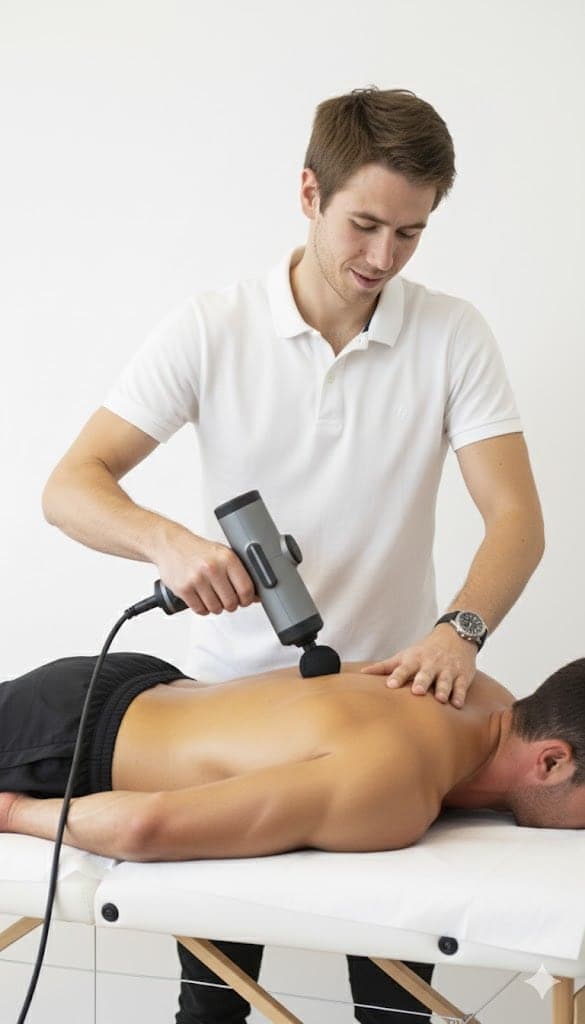
Written by
Chris
Massage therapist, nutrition and exercise physiologist
Norwegian-certified with a Bachelor’s in Physical Education and Nutrition and over ten years of clinical practice, working from a portable table in clients’ homes across the Paphos district.
This article is general information, not a medical diagnosis. If you have severe, worsening or unexplained pain, numbness, weakness, or pain after an accident, see a doctor first.