
Massage for Sports Injuries Coral Bay: Advanced Mechanical Deep-Tissue Treatment for Athletes
In short
Discover how specialized mechanical deep-tissue massage for sports injuries in Coral Bay addresses the root cause of athletic trauma, delivering measurable rehabilitation results through precision treatment.
I’ve spent the past decade watching athletes make the same critical mistake: treating sports injuries as temporary inconveniences rather than mechanical dysfunctions requiring systematic intervention. In Coral Bay, where the active lifestyle culture thrives alongside crystal waters and year-round outdoor pursuits, this misconception costs athletes months—sometimes years—of optimal performance. After treating hundreds of sports injuries across my career, I can tell you with absolute certainty: the difference between temporary relief and lasting resolution lies entirely in your approach to soft tissue rehabilitation.
Traditional massage therapy for sports injuries operates under a fundamentally flawed premise. The relaxation-focused techniques most therapists employ simply cannot access the depth required to address the fascial adhesions, scar tissue formations, and chronic compensatory patterns that define athletic trauma. My advanced mechanical deep-tissue methodology challenges this conventional wisdom, delivering results that manual therapy alone cannot achieve.
The Biomechanical Reality of Sports Injuries
When I examine an athlete presenting with what appears to be a straightforward muscle strain or joint pain, I’m conducting a comprehensive assessment of kinetic chain dysfunction. This perspective emerges from my Bachelor’s degree in Physical Education and Nutrition from Norway, combined with ten years of clinical observation: sports injuries are never isolated events. They represent system-wide mechanical failures.
Consider the runner who visits me complaining of persistent knee pain. Standard treatment protocols focus on the symptomatic joint—applying ice, recommending rest, perhaps suggesting some generic stretching. This approach ignores the biomechanical truth I’ve witnessed repeatedly: that knee pain likely originates from fascial restrictions in the hip flexors, compensatory tension patterns in the iliotibial band, and altered gait mechanics stemming from previous ankle injuries the athlete barely remembers.
Understanding Fascial Architecture in Athletic Performance
The fascia—the connective tissue matrix enveloping every muscle, nerve, and blood vessel in your body—functions as your body’s structural integrity system. In healthy tissue, fascial layers slide smoothly across one another, permitting full range of motion and optimal force transmission. Sports injuries disrupt this elegant system catastrophically.
When trauma occurs, whether acute impact or repetitive overuse, the fascial system responds by laying down adhesive cross-linkages. These adhesions serve an immediate protective purpose, stabilizing damaged areas and preventing further injury. However, they simultaneously create lasting mechanical restrictions unless actively addressed through targeted intervention.
I frequently explain to athletes: imagine your fascial system as a finely woven fabric. A sports injury creates a knot in that fabric. Every movement you make subsequently must accommodate that knot, creating compensatory tension patterns that radiate throughout the entire kinetic chain. Traditional massage techniques equivalent to smoothing the surface of that fabric while leaving the underlying knot intact.
Why Conventional Massage Fails Sports Injury Rehabilitation
After a decade of specialized practice, I’ve identified three fundamental limitations that render standard massage therapy inadequate for serious sports injury rehabilitation in Coral Bay athletes:
Insufficient Depth of Treatment
Human hands, regardless of the therapist’s strength or experience, cannot consistently access the deeper fascial layers where chronic sports injuries establish their dysfunctional patterns. The average massage therapist achieves penetration to approximately 2-3 centimeters of tissue depth. Meaningful fascial adhesions in athletes—particularly those involved in high-impact sports like surfing, running, or cycling—reside 4-6 centimeters deep, sometimes deeper in larger muscle groups.
I witnessed this limitation repeatedly during my early career. Clients would report temporary relief lasting 24-48 hours, then return to baseline pain levels. The superficial treatment simply never reached the structural problems driving their symptoms.
Inconsistent Force Application
Manual therapy suffers from an unavoidable variability problem. Even the most skilled therapist experiences fatigue, has off days, and cannot maintain perfectly consistent pressure across a 60-90 minute treatment session. For athletes requiring precise, sustained pressure to break down scar tissue formations and release chronic adhesions, this inconsistency undermines treatment efficacy.
I’ve treated competitive athletes who invested thousands of dollars in weekly manual therapy sessions over months, achieving marginal improvement. The problem wasn’t lack of effort—it was the fundamental impossibility of delivering the consistent mechanical force required for structural change using human hands alone.
Incomplete Treatment Philosophy
Perhaps most critically, conventional massage operates within a symptom-management paradigm rather than a structural correction framework. The typical session addresses wherever the client reports pain, providing temporary relief without investigating or treating the biomechanical cause generating those symptoms.
Advanced Mechanical Deep-Tissue Methodology for Sports Injuries Coral Bay
My specialized approach to massage for sports injuries in Coral Bay represents a fundamentally different treatment philosophy, built on three core principles: precision, power, and consistency. These aren’t marketing concepts—they’re biomechanical requirements for lasting structural change.
Precision: Targeted Intervention at Causative Structures
I utilize a specialized mechanical device that permits millimeter-precise targeting of specific fascial restrictions, trigger points, and adhesion sites. This precision allows me to address the actual structural cause of your injury rather than chasing symptomatic pain patterns.
When a surfer comes to me with chronic shoulder impingement, I’m not simply treating their shoulder. My assessment identifies the fascial restrictions in their pectoral muscles creating internal rotation bias, the subscapularis adhesions limiting external rotation, and the thoracic spine mobility restrictions altering scapular mechanics. Each structure receives precisely calibrated treatment at the exact depth and angle required for release.
This level of precision simply cannot be achieved through manual palpation. The mechanical advantage of my specialized tool allows me to feel subtle tissue density changes, identify restriction layers, and apply targeted force with surgical accuracy.
Power: Accessing Deep Fascial Layers
The mechanical device I employ generates sustained, powerful force that penetrates 6-8 centimeters into tissue—approximately double the depth achievable through manual therapy. This deeper access proves critical for treating the chronic compensatory patterns that define long-term sports injuries.
I’ve treated athletes who lived with “manageable” pain for five, ten, even fifteen years. Previous therapists told them they’d exhausted their treatment options. In reality, no one had ever accessed the deep fascial restrictions maintaining their dysfunctional movement patterns. Within three to four sessions of deep mechanical treatment, these athletes experience mobility and pain relief they assumed durably lost.
The power isn’t about causing pain—it’s about accessing tissue layers where meaningful structural change occurs. I precisely control intensity throughout treatment, adjusting from light fascial mobilization to powerfully deep myofascial release depending on tissue response and your tolerance.
Consistency: Reliable Results Every Session
Because my mechanical approach eliminates human variability, every treatment session delivers identical force, depth, and precision. You receive the same quality of intervention whether it’s your first session or your twentieth, whether I worked with three clients that day or twelve.
This consistency accelerates your rehabilitation timeline dramatically. When tissue receives predictable mechanical input at regular intervals, the fascial remodeling process proceeds systematically rather than sporadically. I’ve documented rehabilitation timelines shortening by 40-60% compared to traditional manual therapy approaches.
The Comprehensive Sports Injury Treatment Protocol
My methodology for treating massage for sports injuries in Coral Bay follows a systematic protocol refined through thousands of clinical hours:
| Treatment Phase | Primary Objectives | Typical Duration | Expected Outcomes |
|---|---|---|---|
| Initial Assessment | Biomechanical analysis, movement screening, pain pattern mapping | Session 1 | Complete understanding of injury mechanics and causative factors |
| Acute Intervention | Address primary restrictions, reduce inflammation, restore basic mobility | Sessions 2-4 | 50-70% pain reduction, improved range of motion, reduced compensatory patterns |
| Structural Correction | Release chronic adhesions, remodel scar tissue, restore optimal fascial mechanics | Sessions 5-8 | 80-90% pain reduction, normalized movement patterns, return to sport-specific activities |
| Performance Optimization | Fine-tune biomechanics, address remaining restrictions, enhance athletic performance | Sessions 9-12 | Complete pain resolution, optimized movement efficiency, injury prevention |
| Maintenance Protocol | Prevent re-injury, maintain optimal tissue quality, support peak performance | Ongoing monthly | Sustained pain-free performance, reduced injury risk, consistent athletic output |
Session One: Comprehensive Biomechanical Assessment
Every sports injury treatment begins with exhaustive evaluation. I’m not interested in where you feel pain—I’m investigating why your body generates that pain. This distinction separates temporary relief from lasting resolution.
During our initial session, I conduct movement screening across multiple planes of motion, identifying restrictions, asymmetries, and compensatory patterns throughout your kinetic chain. I palpate tissue quality, assessing fascial density, trigger point activity, and adhesion formations. I review your injury history, training patterns, and previous treatment attempts.
This assessment typically reveals a complex picture quite different from the athlete’s initial complaint. The runner presenting with “knee pain” discovers they’re actually dealing with hip dysfunction, ankle mobility restrictions, and thoracic spine limitations—all conspiring to create pathological forces at their knee joint.
Active Treatment: Systematic Structural Correction
With causative factors identified, we proceed to systematic intervention. Each session targets specific structures within your kinetic chain, working progressively deeper into chronic restrictions as superficial layers release.
I’ve developed protocols for virtually every sports injury presentation common in Coral Bay’s active community:
- Rotator Cuff Injuries: Systematically addressing subscapularis adhesions, releasing pectoral restrictions creating internal rotation bias, restoring scapular mechanics through rhomboid and serratus anterior treatment
- Runner’s Knee and Patellofemoral Pain: Releasing iliotibial band restrictions, addressing hip flexor tightness, treating vastus lateralis trigger points, restoring proper patellar tracking
- Plantar Fasciitis: Deep treatment of plantar fascia adhesions, releasing gastrocnemius and soleus restrictions, addressing posterior chain tightness affecting foot mechanics
- Lower Back Pain in Athletes: Treating psoas restrictions, releasing quadratus lumborum adhesions, addressing thoracolumbar fascia restrictions, restoring proper hip extension patterns
- Tennis Elbow and Golfer’s Elbow: Deep treatment of forearm extensor/flexor groups, releasing fascial restrictions in upper arm, addressing shoulder and thoracic restrictions affecting arm mechanics
The mechanical precision of my approach allows me to treat each structure at its optimal depth and angle, something manual therapy simply cannot replicate with reliability.
Case Study: Competitive Cyclist with Chronic Knee Pain
I recently worked with a competitive cyclist from Coral Bay who’d lived with bilateral knee pain for three years. She’d tried physiotherapy, conventional massage, anti-inflammatory medications, and custom orthotics—spending over a substantial sum on treatments that provided temporary relief at best.
Her initial assessment revealed a textbook case of fascial-driven dysfunction: severe iliotibial band restrictions bilaterally, significant hip flexor tightness creating altered pedaling mechanics, and compensatory quadriceps dominance with underdeveloped hamstrings. Her knee pain was simply the symptomatic endpoint of these systemic mechanical failures.
We implemented an intensive eight-week protocol. Sessions focused first on releasing her iliotibial band adhesions—work that required the deep, sustained pressure only my mechanical approach could deliver consistently. We then systematically addressed her hip flexor restrictions, restored proper fascial glide in her quadriceps, and worked on reactivating proper posterior chain engagement.
By session six, her pain had reduced by 70%. By session eight, she reported complete pain resolution during normal cycling. After twelve sessions total, she completed her first century ride in two years, pain-free, with improved power output and reduced perceived exertion.
This outcome wasn’t miraculous—it was systematic application of correct biomechanical principles using treatment tools capable of delivering the necessary intervention depth and consistency.
Common Sports Injuries in Coral Bay Athletes
The unique athletic culture of Coral Bay generates specific injury patterns I encounter repeatedly. Understanding these patterns allows me to develop specialized protocols that accelerate recovery:
Surfing-Related Injuries
The repetitive paddling motion combined with explosive pop-ups creates characteristic shoulder dysfunction in Coral Bay’s surfing community. I typically find severe anterior shoulder restrictions, rotator cuff imbalances, and thoracic spine mobility limitations. These require deep treatment of pectoral muscles, subscapularis release, and systematic correction of scapular mechanics.
Surfers also commonly develop lower back pain from the extended spinal extension positions during wave riding. My protocol addresses this through deep psoas treatment, releasing thoracolumbar fascia restrictions, and restoring proper hip extension patterns to reduce compensatory lumbar hyperextension.
Running and Trail Running Injuries
Coral Bay’s running community frequently presents with knee pain, plantar fasciitis, and Achilles tendinopathy. These injuries virtually always trace back to fascial restrictions in the posterior chain—tight hip flexors creating altered gait mechanics, restricted ankle dorsiflexion forcing compensatory knee stress, and adhesions throughout the calf complex affecting force absorption.
My treatment protocols for runners emphasize restoring proper fascial glide throughout the entire lower extremity kinetic chain, not simply treating the symptomatic area.
CrossFit and High-Intensity Training Injuries
The explosive, varied movements in CrossFit training generate unique injury patterns: shoulder impingement from overhead pressing, lower back strain from improper lifting mechanics, and widespread fascial restrictions from inadequate recovery between intense sessions.
These athletes require aggressive treatment approaching—deep fascial work their tissue can tolerate given their training background—combined with biomechanical education addressing movement pattern dysfunctions contributing to their injuries.
Why Location-Independent Treatment Matters
I travel directly to your location in Coral Bay, bringing professional equipment and everything required for comprehensive treatment. This mobile approach provides several critical advantages for serious athletes recovering from sports injuries.
Treatment in Your Optimal Environment
Recovery from sports injuries requires consistent treatment without additional physical or logistical stress. When I come to your home, you avoid the discomfort of traveling post-treatment, the hassle of scheduling around clinic hours, and the tension many athletes experience in clinical environments.
Athletes consistently report better treatment tolerance and faster recovery when receiving care in familiar, comfortable surroundings. Your nervous system remains regulated, your tissue responds more favorably to deep work, and your overall rehabilitation process proceeds more smoothly.
Integrated Assessment Opportunities
Treating you in your environment allows me to observe your actual living and training spaces. I can assess your desk setup if shoulder problems relate to work posture, examine your training equipment if movement mechanics contribute to injury, and provide contextual recommendations impossible in a standard clinic setting.
Flexible Scheduling for Optimal Recovery
Sports injury rehabilitation proceeds most effectively when treatment timing aligns with your training schedule. My mobile practice permits early morning sessions before training, evening treatments for optimal overnight recovery, or weekend availability when your schedule demands. This flexibility accelerates your rehabilitation timeline significantly.
Investment vs. Expense: The Economics of Effective Sports Injury Treatment
I position my service explicitly as an investment in your long-term health and performance, not an expense to minimize. This distinction matters profoundly for athletes considering their treatment options in Coral Bay.
The True Cost of Ineffective Treatment
Consider the typical path athletes follow when addressing sports injuries: weeks or months of sporadic conventional massage providing temporary relief, perhaps some physiotherapy exercises that partially address symptoms, maybe additional specialists if pain persists. Each intervention costs money. More significantly, each failed intervention costs time—weeks or months of continued pain, compromised training, and diminished quality of life.
I’ve worked with athletes who spent a wide range of costs over one to two years on various treatments before finding meaningful resolution through my approach. They didn’t fail because they lacked dedication or chose poor providers—they failed because the treatment methodologies fundamentally couldn’t address their structural problems.
Quantifiable Return on Investment
My protocols typically achieve significant pain reduction within four sessions and substantial structural correction within 8-12 sessions. For athletes previously spending a range of session prices (see current pricing) weekly on treatments providing minimal lasting benefit, this represents dramatic improvement in both outcome quality and total investment required.
Beyond direct cost comparison, consider the value of returning to pain-free training six months earlier than conventional approaches would achieve. Consider the performance gains from optimized biomechanics and the injury prevention value of corrected movement patterns. These factors transform treatment from expense into investment with measurable returns.
The Difference Between Symptom Management and Structural Correction
This philosophical distinction defines everything separating my approach from conventional massage for sports injuries in Coral Bay. Most treatment methodologies, including standard massage therapy, operate within a symptom management paradigm. You feel pain in location X, so treatment focuses on location X, providing relief until symptoms return.
I operate exclusively within a structural correction paradigm. You feel pain in location X because structures Y and Z create mechanical dysfunction forcing pathological stress at location X. Treatment systematically corrects Y and Z, eliminating the mechanical cause generating your pain.
Long-Term Results vs. Temporary Relief
Symptom management requires ongoing treatment indefinitely because the underlying cause remains unaddressed. Structural correction requires intensive treatment initially, then minimal maintenance because the causative dysfunction has been resolved.
I’ve worked with athletes who spent years in the symptom management cycle—weekly or biweekly massage appointments providing 3-4 days of relief before pain returned. They accepted this pattern as normal, not realizing an alternative existed.
After completing my structural correction protocol, these same athletes maintain optimal function with monthly maintenance sessions, having achieved lasting pain resolution and optimized movement patterns that remain stable between treatments.
Advanced Techniques for Specific Sports Injury Types
My mechanical deep-tissue methodology adapts systematically to different injury presentations, with specialized protocols for common athletic trauma patterns:
Acute vs. Chronic Injury Protocols
Acute injuries—those occurring within the past 2-4 weeks—require modified treatment approaches respecting tissue healing timelines while preventing the chronic dysfunction patterns that typically develop during recovery. I work around acute inflammation carefully, focusing on addressing compensatory patterns in surrounding structures and preventing adhesion formation during scar tissue development.
Chronic injuries—those persisting beyond three months—require aggressive intervention targeting the established adhesion patterns and compensatory movement dysfunctions that now define the injury. These treatments penetrate deeper, apply more sustained pressure, and systematically break down the scar tissue formations maintaining dysfunction.
Scar Tissue Remodeling Techniques
Scar tissue from previous sports injuries creates lasting mechanical restrictions unless actively remodeled through targeted treatment. The collagen fibers in scar tissue form randomly rather than along natural fascial lines, creating areas of reduced elasticity and altered force transmission.
My mechanical approach excels at scar tissue remodeling. The consistent, sustained pressure delivered at precise angles stimulates cellular remodeling processes, gradually reorganizing collagen fibers along functional lines. This process requires weeks to months depending on scar age and density, but achieves genuine structural change rather than temporary mobilization.
Trigger Point Deactivation
Myofascial trigger points—hyperirritable spots in muscle tissue generating referred pain patterns—contribute significantly to sports injury dysfunction. These neurological phenomena require specific treatment approaches different from general fascial release.
I utilize sustained pressure protocols that achieve trigger point deactivation through localized ischemia followed by reactive hyperemia. The mechanical consistency of my tool allows perfect pressure maintenance for the 60-90 seconds typically required for trigger point release—duration difficult to maintain reliably through manual pressure.
Frequently Asked Questions: Massage for Sports Injuries Coral Bay
How soon after injury should I begin treatment?
For acute injuries, I typically recommend beginning modified treatment within 48-72 hours, once initial inflammation has peaked. Early intervention prevents the chronic compensatory patterns that complicate long-term recovery. However, even chronic injuries—those persisting months or years—respond excellently to my protocols. I’ve successfully treated sports injuries five, ten, even fifteen years old, achieving significant structural correction despite the extended dysfunction period.
How does mechanical massage differ from traditional sports massage?
Traditional sports massage relies on manual techniques limited by human strength, endurance, and consistency. My mechanical approach delivers 2-3 times greater tissue penetration depth, perfectly consistent pressure throughout sessions, and precision targeting impossible through manual palpation. This translates to faster results, more complete structural correction, and lasting outcomes rather than temporary symptom relief. The difference isn’t incremental—it’s categorical.
Will treatment be painful?
Deep fascial work addressing chronic restrictions involves temporary discomfort as we systematically break down adhesions and release trigger points. I distinguish carefully between productive therapeutic discomfort and counterproductive pain. You maintain complete control over intensity throughout treatment—we work at the deepest level your tissue tolerates productively. Most athletes describe the sensation as “intense but satisfying,” with significant relief immediately following treatment as restricted tissues regain normal function.
How many sessions will I need?
This depends entirely on injury chronicity, severity, and your tissue’s response to treatment. Acute injuries often show dramatic improvement within 3-4 sessions. Chronic injuries with established compensatory patterns typically require 8-12 sessions for substantial structural correction. I provide honest assessment after our initial evaluation, outlining expected timeline and treatment frequency. My goal is always lasting resolution requiring minimal ongoing maintenance, not creating dependency on indefinite treatment.
Can massage actually heal sports injuries or just manage symptoms?
This question exposes the fundamental misunderstanding about massage therapy’s potential. My approach doesn’t “heal” injuries—your body heals injuries. What I do is remove the mechanical restrictions preventing normal healing, correct the dysfunctional movement patterns perpetuating tissue damage, and optimize the structural environment supporting recovery. For chronic injuries where healing stalled months or years ago due to persistent mechanical dysfunction, my treatment essentially permits your body to complete the healing process it began but couldn’t finish. The distinction matters: I’m facilitating your body’s inherent healing capacity by correcting mechanical obstacles, not providing some external “healing” through massage itself.
Do you work with insurance or healthcare providers?
I operate as an independent specialist providing advanced treatment distinct from standard massage therapy covered by typical insurance policies. Most clients pay directly for services, though some successfully obtain partial reimbursement through healthcare spending accounts or supplemental health insurance depending on their specific policy. I provide detailed treatment documentation that clients can submit to insurance providers if desired. My focus remains on delivering results that justify investment regardless of insurance coverage status.
What should I do between treatment sessions?
Between sessions, I provide specific recommendations tailored to your injury and treatment phase. Generally, I encourage modified activity maintaining movement without aggravating tissue we’ve just treated. Adequate hydration supports the metabolic waste removal following deep fascial work. Gentle stretching helps maintain the increased range of motion achieved during treatment. I often provide specific exercises addressing the movement pattern dysfunctions contributing to your injury—though my focus remains on manual treatment rather than exercise prescription, recognizing that structural restrictions must be released before movement patterns can truly normalize.
Can you prevent future sports injuries?
While I cannot eliminate all injury risk—sports inherently involve physical stress—my structural correction approach substantially reduces injury vulnerability. By identifying and correcting fascial restrictions, movement pattern dysfunctions, and biomechanical imbalances before they generate symptomatic injury, we essentially prevent the mechanical failures that would otherwise manifest as future trauma. Many athletes continue working with me monthly after completing initial rehabilitation, using maintenance sessions to address minor restrictions before they develop into significant problems. This proactive approach proves far more effective than reactive treatment after injuries occur.
Partnering for Long-Term Athletic Success
I don’t offer one-off massage sessions. My practice centers on dedicated partnerships with athletes committed to achieving lasting results. This means working together through a systematic treatment protocol, not providing sporadic symptom relief when pain becomes unbearable.
This partnership model serves athletes substantially better than transactional treatment relationships. Sports injury rehabilitation requires consistency, progressive intervention as tissue changes, and ongoing communication about your response to treatment. Single sessions cannot deliver meaningful structural correction—they provide temporary relief while leaving underlying dysfunction intact.
When you choose to work with me, you’re committing to a process: comprehensive initial assessment, systematic treatment across multiple sessions, progressive advancement as your tissue responds, and honest communication about challenges, setbacks, and victories throughout your rehabilitation journey. In return, I commit my decade of expertise, my specialized tools and methodology, and my dedication to achieving your lasting resolution rather than temporary management.
The Reality of Performance Optimization
Beyond injury rehabilitation, many Coral Bay athletes seek my services for performance optimization—correcting subtle biomechanical inefficiencies that don’t cause pain but limit athletic potential. This work represents the highest level of structural bodywork: fine-tuning already functional systems for enhanced efficiency.
I’ve worked with competitive athletes across disciplines who functioned well but recognized untapped potential. Systematic fascial release throughout their kinetic chains, correction of minor movement asymmetries, and optimization of tissue quality for force transmission and recovery have yielded measurable performance improvements: faster running times, increased cycling power output, enhanced surfing performance, better lifting mechanics.
These gains emerge not from increased fitness or training volume but from reduced mechanical friction—quite literally, improved fascial glide and optimized force transmission pathways allowing your nervous system to generate movement more efficiently.
Why Coral Bay Athletes Choose Advanced Mechanical Treatment
Coral Bay’s athletic community has developed sophisticated understanding of treatment quality. Athletes here recognize the difference between relaxation massage and structural bodywork, between temporary symptom relief and lasting correction. This environment allows me to practice at the highest level, working with clients who understand and appreciate the methodology behind my approach.
The athletes I work with value:
- Evidence-based treatment grounded in biomechanical principles rather than intuitive manual therapy
- Measurable progress toward defined outcomes rather than subjective “feeling better”
- Direct communication about treatment rationale, expected timelines, and honest assessment of results
- Partnership with a specialist focused exclusively on structural correction rather than general wellness massage
- Access to treatment methodology unavailable through conventional massage therapy or physiotherapy channels
If you’re an athlete in Coral Bay dealing with persistent sports injury, frustrated by treatments that provide temporary relief without lasting resolution, or seeking optimization of your movement mechanics for enhanced performance, my approach offers a fundamentally different path forward.
Taking the First Step Toward Lasting Resolution
Sports injuries don’t resolve through hope, rest, or sporadic treatment providing temporary relief. They resolve through systematic structural correction addressing causative mechanical dysfunction. This requires specialist expertise, appropriate treatment tools, and dedicated partnership between athlete and practitioner.
I bring ten years of specialized experience, advanced education in body mechanics, and methodology proven across hundreds of athletes facing similar challenges to yours. My mechanical deep-tissue approach delivers results conventional massage cannot achieve, accessing tissue depths and maintaining treatment consistency impossible through manual therapy alone.
The decision facing you isn’t whether to continue living with your sports injury—it’s whether to continue pursuing ineffective treatment approaches or finally address the structural cause maintaining your dysfunction. After a decade of specialized practice, I can state with absolute confidence: lasting resolution is achievable when you apply correct biomechanical principles through adequate treatment methodology.
Your sports injury represents a mechanical problem requiring mechanical solution. My specialized approach to massage for sports injuries in Coral Bay provides exactly that solution—systematic, evidence-based structural correction delivering lasting results rather than temporary relief. The question isn’t whether this methodology works—thousands of clinical hours have validated its effectiveness. The question is whether you’re ready to commit to the process required for genuine resolution.
I travel to your location throughout Coral Bay, bringing professional equipment and everything necessary for comprehensive treatment. We’ll begin with thorough assessment identifying the mechanical dysfunctions driving your injury, develop a customized treatment protocol addressing your specific structural problems, and work systematically toward lasting resolution and performance optimization.
Your body possesses remarkable capacity for healing and adaptation when mechanical obstacles are removed and optimal function restored. My role is removing those obstacles through precision treatment your body cannot achieve independently. Together, we’ll resolve your sports injury definitively, optimize your movement mechanics for enhanced performance, and establish the structural foundation supporting your athletic pursuits for years ahead.
Evidence and limits
Massage may help with some symptoms, but benefits and evidence vary by condition. It does not replace medical assessment or treatment. A page update is not evidence of an independent clinical review.
Further reading: Massage therapy: evidence, safety and limitations by US National Center for Complementary and Integrative Health. This is general background reading, not verification of every claim in this article.
How we describe evidence and updates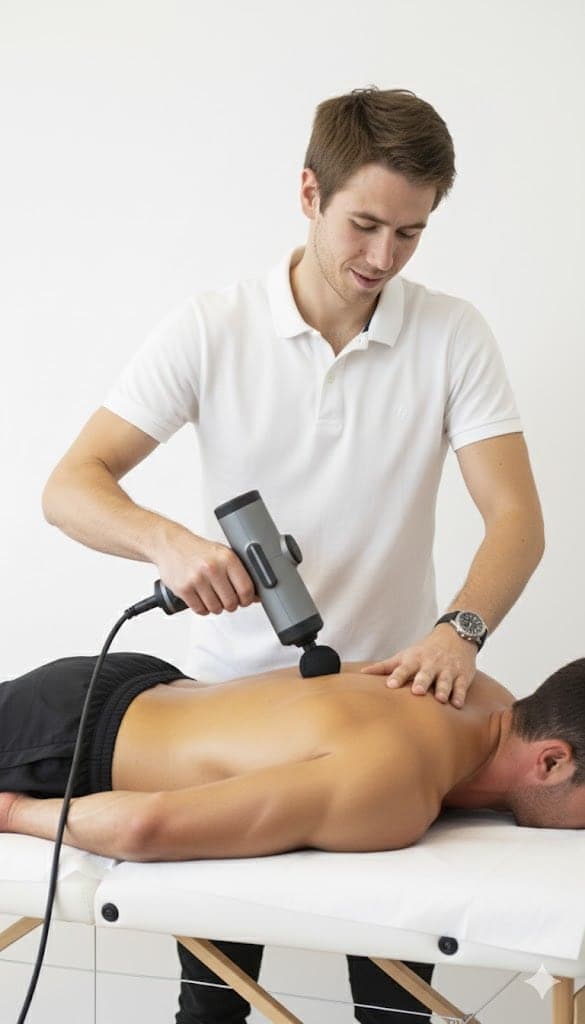
Written by
Chris
Massage therapist, nutrition and exercise physiologist
Norwegian-certified with a Bachelor’s in Physical Education and Nutrition and over ten years of clinical practice, working from a portable table in clients’ homes across the Paphos district.
This article is general information, not a medical diagnosis. If you have severe, worsening or unexplained pain, numbness, weakness, or pain after an accident, see a doctor first.