
Paphos Physiotherapy and Sports Massage: Advanced Mechanical Treatment for Lasting Results
In short
Discover why traditional massage fails and how advanced mechanical deep-tissue therapy in Paphos delivers lasting pain relief through precision engineering and clinical expertise from a specialized body mechanics professional.
I remember the day a competitive cyclist from Limassol drove to Paphos specifically because he’d heard about my approach. He’d spent thousands on traditional massage therapy over three years. Relaxing? Absolutely. Effective? Temporarily at best. His chronic lower back pain returned within days of every session. After our first ninety-minute treatment using advanced mechanical deep-tissue methodology, he experienced something he described as “fundamentally different”—not just relief, but a structural shift in how his body functioned. Six weeks later, after our customized treatment protocol, he completed his first pain-free century ride in four years.
This is not coincidental. This is what happens when you stop treating symptoms and start addressing the mechanical dysfunction causing your pain.
Why Traditional Massage Therapy Fails Most People in Paphos
Let me be direct about something the wellness industry doesn’t want you to understand: conventional massage therapy, regardless of how skilled the therapist’s hands are, operates within significant physiological limitations. Human hands, no matter how well-trained, cannot consistently penetrate beyond the superficial and intermediate fascial layers where chronic tension patterns establish themselves.
I’ve spent a decade studying body mechanics, earning my Bachelor’s degree in Physical Education and Nutrition in Norway, and working with everyone from office workers with debilitating neck pain to professional athletes requiring precise muscular optimization. What I’ve learned is this: most people suffering from chronic pain aren’t receiving inadequate effort from their therapists—they’re receiving an inadequate method.
Traditional sports massage in Paphos typically addresses surface-level muscular tension. The therapist applies manual pressure, you experience temporary relief, and within seventy-two to ninety-six hours, your original pain pattern reasserts itself. Why? Because the foundational mechanical dysfunction—the adhesions, fascial restrictions, and neuromuscular imbalances residing in deeper tissue layers—remains completely untouched.
The Depth Problem: Why Surface Treatment Produces Surface Results
Consider the architecture of your muscular system. Your body contains multiple fascial layers, each capable of developing independent restriction patterns. Surface massage addresses only the most superficial layer. Imagine trying to repair a foundation crack by repainting your house’s exterior. The aesthetic improves temporarily, but the structural problem persists and worsens.
When a client comes to me after months of traditional massage without lasting improvement, I explain this clearly: we’re not going to work harder—we’re going to work deeper and more precisely. That distinction changes everything.
Advanced Mechanical Deep-Tissue Therapy: The Engineering Approach to Pain Resolution
My methodology represents a fundamental departure from conventional massage philosophy. I utilize a specialized mechanical instrument that delivers what human hands physiologically cannot: precision, power, and consistency at therapeutic depths that durably alter dysfunctional tissue patterns.
This isn’t about replacing human expertise with technology. It’s about augmenting clinical knowledge with engineering precision. I control every aspect of the treatment—depth, pressure gradient, angle of approach, treatment duration per anatomical region—with the exactitude that produces reproducible, lasting results.
Precision: Targeting the Mechanical Origin of Pain
The specialized instrument I use allows me to access specific fascial planes and muscular layers with millimeter-level accuracy. When I’m treating someone with chronic shoulder pain stemming from subscapularis adhesion, I’m not approximating the location and hoping manual pressure penetrates adequately. I’m positioning the treatment head at the precise anatomical angle required to address that specific muscular dysfunction.
This level of precision matters profoundly. In my experience working with clients across Paphos, I’ve found that pain often originates not where people feel it, but in compensation patterns elsewhere in the kinetic chain. A competitive tennis player came to me with persistent elbow pain. The problem? Thoracic spine restrictions were altering his shoulder mechanics, which transferred excessive load to his forearm extensors. Traditional massage focused on his forearm. My approach addressed the thoracic dysfunction, and his elbow pain resolved durably within three weeks.
Power: Reaching Depths That Matter
Let me share something that distinguishes therapeutic from cosmetic treatment: depth under load. When I’m working with an athlete who needs deep erector spinae release, or an office worker whose psoas has shortened from years of sitting, superficial pressure accomplishes nothing meaningful.
The mechanical advantage of my specialized instrument delivers consistent therapeutic force at depths where chronic patterns reside. This isn’t about applying more pressure indiscriminately—it’s about delivering precisely calibrated force to specific tissue depths where dysfunction exists.
I adjust intensity based on individual tolerance, tissue quality, and therapeutic objectives. For someone recovering from prolonged inactivity, we might work at moderate depths, gradually progressing as tissue quality improves. For a CrossFit athlete preparing for competition, we might work at maximum therapeutic intensity to optimize performance capacity. The machine provides the range to serve both needs effectively.
Consistency: Eliminating the Variable of “Off Days”
Here’s an uncomfortable truth about manual therapy: therapist performance varies. Fatigue, distraction, physical limitation—these factors affect treatment quality even with experienced practitioners. I’ve witnessed this throughout my career, and it represented one of my primary motivations for adopting mechanical methodology.
With my approach, every treatment session delivers identical precision and power. Your third appointment produces the same therapeutic quality as your thirtieth. This consistency allows us to develop structured treatment protocols with predictable progression timelines. When I tell a client we’ll need six sessions over four weeks to resolve their chronic neck dysfunction, that’s not an estimate—it’s a clinical projection based on consistent therapeutic delivery.
Why Paphos Physiotherapy and Sports Massage Requires Specialized Body Mechanics Expertise
Paphos attracts an active population: cyclists navigating coastal routes, swimmers training in Mediterranean waters, golfers playing championship courses, and expatriates maintaining fitness regimens far from their home countries. This active demographic experiences specific mechanical challenges that generic massage therapy cannot adequately address.
I’ve treated British retirees whose years of golf have created rotational imbalances, Scandinavian athletes training in Paphos’s favorable climate, and local professionals whose sedentary work patterns create postural dysfunction. Each requires individualized mechanical analysis and customized treatment protocols.
The Clinical Assessment: Understanding Your Unique Mechanical Pattern
Before I begin any treatment, I conduct a comprehensive biomechanical assessment. This isn’t a cursory conversation about where you feel pain. I’m analyzing:
- Postural alignment and asymmetries that indicate compensation patterns
- Range of motion restrictions that suggest specific fascial limitations
- Gait mechanics that reveal lower kinetic chain dysfunction
- Tissue quality assessment through palpation to identify adhesion locations
- Movement pattern analysis to understand how dysfunction manifests functionally
A marathon runner from Paphos came to me with what she described as “general tightness” in her legs. My assessment revealed significant IT band restriction on her right side, stemming from gluteus medius weakness causing excessive TFL activation. Her left calf showed compensatory hypertonicity from altered stride mechanics. Traditional massage would have addressed her legs bilaterally with similar treatment. My protocol focused asymmetrically on the specific mechanical dysfunction causing her symptoms. She set a personal record six weeks later.
The Treatment Protocol: Structured Progression Toward Lasting Resolution
I don’t offer single massage sessions and hope for improvement. I develop customized treatment partnerships designed to durably resolve your mechanical dysfunction and optimize your body’s performance capacity.
Phase One: Acute Dysfunction Resolution
Initial sessions focus on releasing primary restriction patterns causing your immediate symptoms. This typically requires two to four treatments over two weeks, depending on dysfunction severity and chronicity.
During this phase, I’m working at therapeutic depths to release fascial adhesions, restore normal tissue mobility, and interrupt pain-spasm cycles that perpetuate dysfunction. Clients often experience dramatic improvement after the first session, but this represents only initial progress toward lasting resolution.
Phase Two: Structural Rebalancing and Optimization
Once acute symptoms resolve, we address underlying compensation patterns and mechanical imbalances that created your original dysfunction. This phase prevents recurrence and optimizes your body’s functional capacity.
I might identify that your shoulder pain stemmed from thoracic rigidity, which developed because hip mobility restrictions altered your spine mechanics years ago. We systematically address each component, ensuring your entire kinetic chain functions optimally.
This phase typically requires four to six sessions over four to six weeks. The exact timeline depends on your specific mechanical pattern and how long dysfunction has existed.
Phase Three: Performance Enhancement and Maintenance
For athletes and active individuals, we transition to performance optimization. This involves maintaining optimal tissue quality, preventing dysfunction before it manifests as pain, and ensuring your body operates at peak mechanical efficiency.
Maintenance frequency varies. Some clients benefit from monthly sessions; others prefer quarterly treatments. I customize recommendations based on your activity level, mechanical complexity, and personal goals.
Comparing Treatment Approaches: Why Mechanical Methodology Produces Superior Outcomes
| Treatment Characteristic | Traditional Manual Massage | Advanced Mechanical Deep-Tissue Therapy |
|---|---|---|
| Maximum Therapeutic Depth | Superficial to intermediate fascial layers | Deep fascial layers and specific muscular origins/insertions |
| Precision Level | Approximate anatomical targeting | Millimeter-level precision with controlled angulation |
| Treatment Consistency | Variable based on therapist condition | Identical precision and power every session |
| Results Duration | Temporary relief (days to weeks) | Lasting resolution with proper protocol completion |
| Treatment Philosophy | Symptom-focused relaxation therapy | Cause-focused mechanical correction |
| Outcome Predictability | Uncertain, highly variable | Structured progression with projected timelines |
Real Results From Paphos: Case Studies in Mechanical Dysfunction Resolution
The Chronic Neck Pain That Disappeared After Seven Years
A British expatriate contacted me after living with debilitating neck pain since 2016. She’d tried physiotherapy, chiropractic care, and regular massage. Nothing provided lasting relief. Her pain limited her ability to drive, read, and enjoy activities with her grandchildren.
My assessment revealed severe upper trapezius hypertonicity, levator scapulae adhesions, and profound cervical spine rigidity. Her head-forward posture had existed so long that her body had structurally adapted to dysfunction.
We implemented an eight-week protocol with twice-weekly sessions initially, transitioning to weekly maintenance. I worked systematically through each restriction layer, releasing adhesions, restoring cervical mobility, and rebalancing her shoulder girdle mechanics.
She reported fifty percent improvement after three sessions. By week six, her pain had reduced to occasional mild discomfort. Three months post-treatment, she remains pain-free and has resumed all normal activities. She describes it as “getting her life back.”
The Athlete Who Broke Through His Performance Plateau
A competitive age-group triathlete from Paphos had plateaued despite rigorous training. His run times had stagnated, and he experienced persistent hip tightness that limited his cycling power output.
My biomechanical analysis identified significant psoas and hip flexor restrictions bilaterally, with compensatory hamstring hypertonicity. His ankle dorsiflexion was limited from chronic calf tightness, altering his stride mechanics and reducing running efficiency.
We structured a six-week optimization protocol timed to his training periodization. Each session addressed specific mechanical limitations while respecting his training load. I worked progressively deeper as tissue quality improved, ultimately achieving complete hip flexor mobility and normalized ankle dorsiflexion.
His results? He reduced his half-marathon time by four minutes and reported his cycling felt “transformed”—more power with less perceived effort. He continues maintenance sessions quarterly to preserve optimal mechanical function.
Common Misconceptions About Sports Massage and Deep-Tissue Therapy in Paphos
Misconception: “All Massage Is Basically the Same”
This belief costs people years of unnecessary suffering. Relaxation massage, sports massage, and advanced mechanical deep-tissue therapy serve fundamentally different purposes. Relaxation massage activates parasympathetic nervous system response—valuable for stress management but ineffective for mechanical dysfunction. Sports massage addresses superficial muscular tension—helpful for acute recovery but insufficient for chronic pain patterns.
Advanced mechanical therapy corrects structural dysfunction at the tissue level. These are not interchangeable approaches.
Misconception: “More Pressure Equals Better Results”
I encounter this frequently: clients who believe effective treatment requires excruciating pain. This represents a profound misunderstanding of therapeutic methodology.
Effective treatment requires appropriate pressure applied at correct depths to specific anatomical structures. Excessive pressure triggers protective muscle guarding, actually preventing effective tissue release. I adjust intensity precisely to each client’s tolerance and tissue response, maximizing therapeutic effect while minimizing discomfort.
Misconception: “One Session Should Fix Everything”
Chronic dysfunction developed over months or years cannot resolve in sixty minutes. Your body adapted structurally to compensate for mechanical problems. Those adaptations require systematic correction through structured treatment protocols.
I’m transparent about realistic timelines. Most chronic conditions require six to eight sessions for lasting resolution. This isn’t a limitation—it’s biological reality. Anyone promising instant lasting results either misunderstands tissue healing physiology or isn’t being honest.
The Investment Perspective: Why Advanced Treatment Delivers Superior Value
When I discuss pricing with prospective clients, I frame it as an investment decision rather than an expense. Consider the alternative cost of chronic pain:
- Ongoing medication expenses for pain management
- Lost productivity from pain-limited work capacity
- Reduced quality of life from activity limitations
- Potential medical interventions if dysfunction worsens
- Emotional toll of persistent suffering
My treatment protocols typically cost less than three months of conventional physical therapy sessions while delivering lasting resolution rather than temporary symptom management. Clients frequently tell me they wish they’d found this approach years earlier, calculating the cumulative cost of ineffective treatments they’ve endured.
One client calculated she’d spent over €3,000 on various massage and physiotherapy treatments over four years before working with me. Our eight-session protocol cost approximately €600 and durably resolved her chronic lower back dysfunction. Her only regret? Not finding this solution sooner.
Why I Travel to Your Location: Convenience Meets Clinical Excellence
Unlike traditional clinic-based practice, I bring complete professional setup directly to your location in Paphos. I provide a specialized treatment bench, all necessary equipment, and the same clinical environment you’d experience in a dedicated facility.
This approach serves several important purposes. First, it eliminates travel burden for clients dealing with pain or mobility limitations. Second, it allows treatment in your comfortable, private environment where you can rest immediately afterward if needed. Third, it demonstrates my commitment to your convenience and comfort throughout our treatment partnership.
I’ve treated clients in their homes, hotel rooms during extended Paphos stays, and even outdoor locations when appropriate. My priority is delivering optimal clinical outcomes in whatever setting serves your needs best.
Frequently Asked Questions About Advanced Mechanical Deep-Tissue Therapy in Paphos
How does mechanical treatment differ from manual massage therapy?
Mechanical methodology delivers consistent therapeutic force at deeper tissue layers than human hands can effectively reach. This allows me to address the underlying fascial restrictions and muscular adhesions that cause chronic pain, rather than only treating superficial symptoms. The specialized instrument provides precision, power, and consistency that produces lasting structural changes in dysfunctional tissue patterns.
Is the treatment painful?
Discomfort during deep-tissue work is normal, but I control intensity precisely based on your tolerance and tissue response. Most clients describe the sensation as “intense but productive”—they can feel we’re addressing something meaningful. Pain should never exceed a seven out of ten on your subjective scale, and I constantly adjust based on your feedback. Many clients report that even intense sessions feel satisfying because they recognize we’re resolving their problem at its source.
How many sessions will I need to resolve my chronic pain?
This depends on your specific mechanical dysfunction, how long it has existed, and your tissue quality. Most chronic conditions require six to eight sessions over six to eight weeks for lasting resolution. Some acute issues resolve in three to four sessions. During your initial assessment, I provide a realistic timeline projection based on my clinical findings. I’m always transparent about expected progression rather than making unrealistic promises.
Can this approach help with old injuries that never fully healed?
Absolutely. I frequently work with clients who injured themselves years ago and never regained full function. Old injuries often create lasting fascial adhesions and compensation patterns that persist long after initial healing. Advanced mechanical therapy excels at releasing these chronic restrictions and restoring normal tissue mobility. I’ve successfully treated injuries from five, ten, even twenty years ago that clients assumed they’d simply have to live with durably.
Do you work with both athletes and non-athletes?
Yes. While my methodology proves particularly effective for athletic performance optimization, I work with clients across all activity levels. Office workers with postural dysfunction, retirees managing chronic pain, weekend warriors preventing injury—everyone benefits from optimal mechanical function. Your treatment protocol is customized to your specific needs, whether that’s returning to pain-free daily activities or achieving peak athletic performance.
What should I expect during and after my first treatment session?
Your first appointment begins with a comprehensive biomechanical assessment where I analyze your specific dysfunction pattern. The actual treatment session lasts sixty to ninety minutes, during which I work systematically through identified restriction areas. You’ll likely experience immediate improvement in mobility and pain reduction. Post-treatment soreness similar to intense exercise is normal for twenty-four to forty-eight hours as your body adapts to restored tissue mobility. I provide specific aftercare instructions including hydration recommendations and movement guidelines.
How do I maintain results after completing my treatment protocol?
Once we’ve resolved your primary dysfunction and optimized your mechanical function, most clients benefit from quarterly or semi-annual maintenance sessions. These prevent new restriction patterns from developing and maintain optimal tissue quality. I also provide specific movement strategies and postural recommendations customized to your lifestyle and activity patterns. The goal is lasting resolution, not dependency on ongoing treatment.
What areas of Paphos do you serve?
I travel throughout the Paphos region, including Paphos city center, Kato Paphos, Coral Bay, Peyia, and surrounding areas. Because I bring complete professional setup to your location, distance within the greater Paphos area isn’t a limiting factor. During our initial consultation, we’ll confirm that your location works within my service area.
The Philosophy Behind Lasting Results: Treating Causes, Not Symptoms
Throughout my decade of clinical practice, I’ve developed a clear understanding of what separates temporary relief from lasting resolution. The distinction lies entirely in whether you address symptoms or causes.
When someone comes to me with shoulder pain, I’m not primarily interested in their shoulder—I’m interested in why their shoulder hurts. What mechanical dysfunction created the condition where pain manifested? Is it thoracic spine rigidity? Scapular dyskinesis? Cervical compensation from an old whiplash injury? Postural adaptation from their work setup?
Pain is information. It tells us something isn’t functioning correctly. But treating the pain itself—the information signal—does nothing to correct the underlying dysfunction generating that signal. This is why conventional approaches provide only temporary relief. They’re essentially disconnecting the warning light rather than fixing the mechanical problem triggering it.
My approach systematically identifies and corrects the mechanical dysfunction causing your symptoms. This produces lasting results because we’ve eliminated the source generating your pain, not merely suppressed your awareness of it.
Understanding Your Body as an Integrated Mechanical System
Your body functions as an integrated kinetic chain where dysfunction in one area inevitably affects function elsewhere. I’ve seen countless clients whose primary complaint—knee pain, for example—originated from hip mobility restrictions that altered their gait mechanics, creating excessive load on their knee joint.
Traditional treatment approaches often work in isolation, addressing only the symptomatic area. My methodology analyzes your entire mechanical system, identifying all components contributing to your dysfunction. We then systematically correct each element, ensuring your body functions as the integrated, efficient system it was designed to be.
This holistic mechanical perspective explains why my clients often report improvements beyond their primary complaint. Someone seeking treatment for chronic neck pain might discover their headaches disappear, their sleep quality improves, and their energy level increases—all because we’ve corrected fundamental mechanical dysfunction affecting multiple systems.
Taking Action: Beginning Your Journey Toward Lasting Pain Resolution
If you’ve read this far, you likely recognize yourself in these descriptions. Perhaps you’ve suffered chronic pain for months or years. Maybe you’ve tried various treatments without lasting success. Possibly you’re an athlete seeking performance optimization but uncertain where to turn for genuinely advanced methodology.
I want you to understand something clearly: your current condition is not lasting. The pain you’re experiencing, the functional limitations you’ve accepted, the reduced quality of life you’ve accommodated—these are all correctable mechanical dysfunctions. They require proper identification and systematic treatment, but they are absolutely solvable.
I’ve witnessed this transformation hundreds of times throughout my career in Paphos. Clients who arrive skeptical, having tried everything without success, who complete our treatment protocol and experience profound, lasting change. Not temporary relief that fades within days, but genuine structural correction that restores their body’s optimal function.
The Consultation Process: Understanding Your Unique Situation
Beginning work together starts with understanding your specific mechanical dysfunction. I conduct an initial consultation where we discuss your pain history, previous treatments, current limitations, and objectives. This conversation helps me determine whether my methodology suits your particular needs.
Following our discussion, I perform the comprehensive biomechanical assessment described earlier. This provides the clinical information necessary to develop your customized treatment protocol. I then explain exactly what I’ve identified, why it’s causing your symptoms, and what structured approach will durably resolve it.
This consultation is thorough because I’m making a commitment to your lasting results, not just scheduling appointments. I want both of us confident that we can achieve your objectives before we begin treatment.
What Successful Treatment Requires From You
While my methodology and expertise provide the clinical foundation for your recovery, success requires your active participation. This means:
Committing to the recommended treatment schedule. Missing sessions or inconsistent attendance disrupts the progressive tissue changes we’re creating.
Following aftercare recommendations. Proper hydration, appropriate activity modification, and any specific exercises I prescribe all accelerate your progress.
Honest communication about your response to treatment. I adjust protocols based on how your body responds, which requires accurate feedback from you.
Realistic expectations about healing timelines. Chronic dysfunction requires time to resolve durably. Trust the process even when progress feels gradual.
Clients who approach treatment as a collaborative partnership consistently achieve superior outcomes compared to those expecting passive receipt of care.
Conclusion: Choosing Excellence in Paphos Physiotherapy and Sports Massage
The fundamental question before you is simple: Do you want temporary symptom relief or lasting mechanical resolution?
If you’re satisfied with short-term improvement followed by recurring dysfunction, conventional massage therapy serves that purpose adequately. If you’re seeking genuine, lasting correction of your mechanical dysfunction—if you want to understand why you hurt and eliminate that cause durably—then advanced mechanical deep-tissue therapy represents the logical choice.
I’ve devoted my career to mastering body mechanics and developing treatment methodology that produces results conventional approaches cannot achieve. My education, experience, and specialized equipment combine to offer something genuinely unique in Paphos: expert-level mechanical dysfunction resolution delivered with engineering precision.
Your chronic pain, movement limitations, and reduced quality of life are not inevitable conditions you must accept. They are mechanical problems with mechanical solutions. The only question is whether you’re ready to address them definitively rather than managing them indefinitely.
I work with clients throughout Paphos who’ve made that decision—who’ve chosen lasting resolution over temporary management. They’ve invested in their long-term health, eliminated chronic suffering, and optimized their body’s functional capacity. They consistently describe this as one of the best decisions they’ve made for themselves.
The opportunity exists for you as well. Your body’s optimal mechanical function, freedom from chronic pain, and enhanced performance capacity are achievable outcomes, not aspirational concepts. They require the right methodology applied with clinical expertise—precisely what I provide.
The choice, ultimately, is yours. Continue managing symptoms with approaches that haven’t produced lasting results, or commit to advanced treatment methodology designed specifically to deliver lasting resolution. I know which path leads where you want to go.
Evidence and limits
Massage may help with some symptoms, but benefits and evidence vary by condition. It does not replace medical assessment or treatment. A page update is not evidence of an independent clinical review.
Further reading: Massage therapy: evidence, safety and limitations by US National Center for Complementary and Integrative Health. This is general background reading, not verification of every claim in this article.
How we describe evidence and updates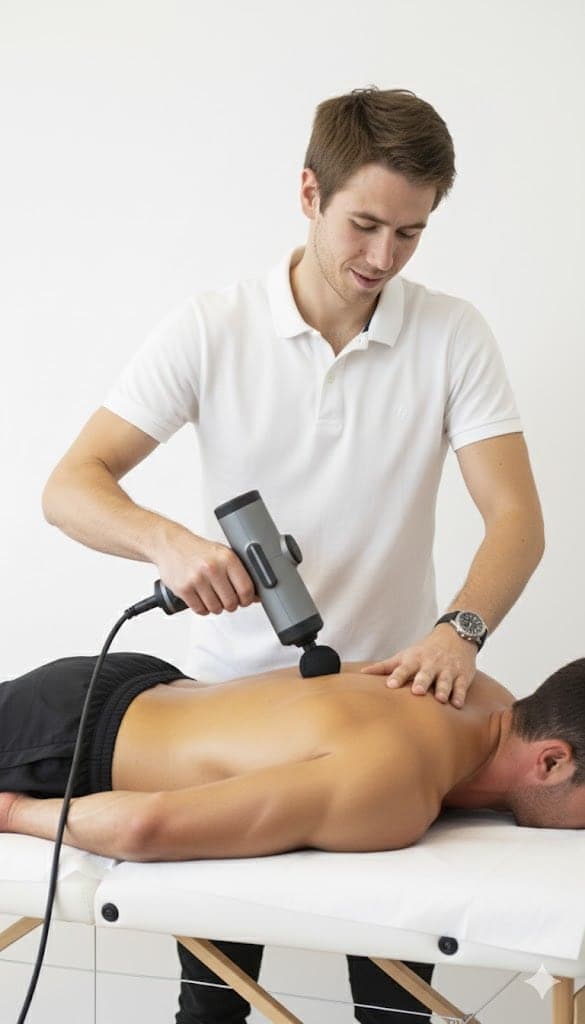
Written by
Chris
Massage therapist, nutrition and exercise physiologist
Norwegian-certified with a Bachelor’s in Physical Education and Nutrition and over ten years of clinical practice, working from a portable table in clients’ homes across the Paphos district.
This article is general information, not a medical diagnosis. If you have severe, worsening or unexplained pain, numbness, weakness, or pain after an accident, see a doctor first.