
Injury Recovery Massage Techniques: A Clinical Approach to Faster Healing
In short
Discover the most effective injury recovery massage techniques backed by biomechanics and a decade of clinical experience. Learn how precision deep-tissue work accelerates healing and prevents chronic compensation patterns.
I’ve spent ten years observing a pattern that frustrates me: clients arriving months after an injury, bodies locked into compensatory patterns that could have been prevented. They’ve done their physical therapy, followed their doctor’s orders, yet something still isn’t right. The injury site has “healed,” but the surrounding tissue remains dysfunctional. This scenario repeats itself because most recovery protocols fundamentally misunderstand the role that injury recovery massage techniques should play in the healing timeline.
My background in physical education and nutrition from Norway taught me to view the body as an integrated mechanical system. Every injury creates a cascade of protective responses—muscle guarding, fascial restrictions, altered movement patterns—that outlive the injury itself. Standard rehabilitation addresses the damaged structure. What it consistently fails to address is the residual tissue dysfunction that transforms acute injuries into chronic limitations.
The Biomechanical Reality of Injury Recovery
When tissue is damaged, your body initiates an intelligent but indiscriminate protective response. Muscles surrounding the injury site contract reflexively. Blood flow redirects. Fascia thickens to stabilize the area. This is appropriate during the acute inflammatory phase. The problem emerges when these protective mechanisms persist long after inflammation has resolved.
I’ve treated hundreds of clients whose “recovered” injuries still restrict their movement six months later. An ankle sprain that’s structurally healed but surrounded by fascial adhesions limiting dorsiflexion. A rotator cuff strain where the supraspinatus has repaired but the entire shoulder girdle remains locked in elevation. These aren’t mysterious complications—they’re predictable consequences of incomplete recovery protocols.
The tissue doesn’t spontaneously return to its pre-injury state. It requires systematic mechanical intervention to restore proper sliding surfaces between fascial layers, reestablish optimal muscle resting length, and eliminate trigger points that developed during the compensation phase.
Why Traditional Massage Fails in Injury Recovery
Most massage therapists approach injury recovery with the same techniques they use for relaxation. Light pressure. Broad, sweeping strokes. An emphasis on comfort over correction. This represents a fundamental category error. Injury recovery isn’t about feeling good during the session—it’s about systematically restoring tissue quality and mechanical function.
I’ve observed three critical limitations in conventional manual therapy for injury recovery:
Insufficient Depth: Human hands, no matter how skilled, cannot consistently access the deeper fascial layers where chronic restrictions develop. The practitioner fatigues. Pressure varies. The client’s tolerance fluctuates. By the time you’ve worked through the superficial layers, the session is over.
Inconsistent Force Application: Manual techniques rely on the therapist’s physical strength and stamina. The pressure delivered in minute fifteen differs from minute forty-five. This inconsistency prevents the sustained mechanical load necessary to produce genuine fascial release.
Inadequate Precision: Fingers and thumbs lack the concentrated contact area required to target specific adhesions and trigger points effectively. You’re using a broad tool for precision work, which explains why clients return repeatedly for the same restrictions.
These aren’t criticisms of practitioners—they’re acknowledgments of human biomechanical limitations. I recognized this early in my career, which led me to develop a different approach entirely.
The Machine-Assisted Deep Tissue Protocol
My method for injury recovery centers on a specialized mechanical tool that delivers what manual techniques cannot: precision, power, and unwavering consistency. This isn’t about replacing human expertise—it’s about augmenting it with technology that overcomes our physical limitations.
The machine I’ve integrated into my practice provides several distinct advantages in injury recovery contexts:
It penetrates to the fascial layers where chronic restrictions actually exist. We’re not massaging skin and superficial muscle—we’re accessing the deep tissue planes that control joint mechanics and movement patterns. This depth is achievable because the tool doesn’t fatigue, doesn’t vary in pressure, and can sustain the mechanical load required for genuine release.
The precision is surgical. Where fingers might affect a two-centimeter diameter, this tool targets specific trigger points and adhesions with millimeter accuracy. When I identify a restriction in the infraspinatus or a fascial adhesion along the IT band, I can address that exact structure without affecting surrounding tissue unnecessarily.
Most importantly, the consistency eliminates the variability that undermines traditional massage. Session one delivers identical pressure and precision to session ten. Your tissue receives the same quality of treatment regardless of my physical condition that day. This consistency is what produces cumulative results rather than temporary relief.
Evidence-Based Injury Recovery Massage Techniques
My approach to injury recovery integrates multiple techniques, each selected for specific therapeutic outcomes rather than tradition or comfort.
Myofascial Release for Adhesion Management
Fascial adhesions form wherever tissue has been immobilized, inflamed, or mechanically stressed. These adhesions bind layers that should glide independently—muscle to fascia, fascia to fascia, fascia to bone. The result is restricted range of motion and altered biomechanics.
Effective myofascial release requires sustained pressure applied at specific angles to the tissue fibers. I position the tool perpendicular to the fascial grain and maintain consistent force while the client performs controlled movements. This combination of mechanical load and active motion breaks cross-links between fascial layers more effectively than passive stretching or manual manipulation.
I’ve found this particularly effective for post-surgical scarring, where fascial restrictions can extend far beyond the visible scar tissue. A knee arthroscopy creates adhesions throughout the anterior thigh and lateral retinaculum. Addressing only the incision site leaves the majority of dysfunction untreated.
Trigger Point Deactivation
Trigger points—hyperirritable nodules within taut muscle bands—develop prolifically during injury recovery. The original injury creates them in the affected muscle. The subsequent compensation patterns create secondary trigger points in synergist and stabilizer muscles. Left untreated, these trigger points perpetuate pain and dysfunction long after structural healing is complete.
Traditional trigger point therapy relies on sustained pressure until the nodule releases. This works, but manual application is exhausting for the practitioner and inconsistent in pressure maintenance. My mechanical approach sustains precise pressure on the trigger point for the required duration—typically 60 to 90 seconds—without variation. The tool doesn’t get tired, doesn’t shift position unconsciously, and delivers exactly the pressure needed for deactivation.
I map trigger point patterns systematically. A shoulder injury predictably produces trigger points in the upper trapezius, levator scapulae, and rhomboids. A hip injury affects the gluteus medius, piriformis, and quadratus lumborum. Knowing these patterns allows me to address the entire compensation chain, not just the primary injury site.
Cross-Fiber Friction for Scar Tissue Remodeling
Scar tissue is metabolically lazy. It forms along the path of least resistance rather than following the original fiber orientation. This creates structural weakness and mechanical dysfunction. Cross-fiber friction applies force perpendicular to scar tissue fibers, mechanically disrupting immature collagen bonds and stimulating proper fiber alignment.
The technique requires significant pressure and precise fiber direction identification—both areas where mechanical tools excel. I can deliver consistent cross-fiber strokes for extended periods without the hand fatigue that limits manual application. This sustained mechanical stimulus triggers the remodeling process more effectively than brief manual interventions.
I’ve used this extensively for tendinopathy recovery, where degenerative tendon tissue requires mechanical stimulation to regenerate properly. Achilles tendinopathy, lateral epicondylitis, rotator cuff tendinosis—these conditions respond remarkably well to systematic cross-fiber work combined with appropriate loading protocols.
The Compensation Pattern Problem
Here’s what separates competent injury recovery from excellent outcomes: understanding and addressing compensation patterns. Every injury alters your movement strategy. Your body finds creative ways to accomplish tasks while protecting the injured area. These compensations become habitual, persisting as neuromuscular patterns even after the injury heals.
I treated a runner last year whose knee injury had resolved six months prior. Structurally sound. No pain at the injury site. But she couldn’t return to her previous mileage without hip pain developing. The issue wasn’t her knee—it was the hip hiking pattern she’d adopted during recovery. Her gluteus medius had weakened from disuse, her TFL had become dominant, and her IT band was a rope of tension from compensating for inadequate hip stability.
The injury was healed. The compensation pattern was destroying her hip mechanics.
This is where most recovery protocols fail. They address the injury but ignore the systematic dysfunction that developed around it. My approach involves identifying these compensation chains and systematically restoring normal tissue quality throughout the kinetic chain—not just at the injury epicenter.
| Primary Injury Site | Common Compensation Patterns | Required Treatment Areas |
|---|---|---|
| Ankle Sprain | Reduced dorsiflexion, lateral weight shift, hip hiking | Anterior compartment, peroneals, hip abductors, quadratus lumborum |
| Shoulder Impingement | Scapular elevation, thoracic rotation restriction, cervical sidebending | Upper trapezius, levator scapulae, pectoralis minor, scalenes |
| Lower Back Strain | Hip flexion avoidance, breath pattern alteration, thoracic rigidity | Psoas, diaphragm, paraspinals, latissimus dorsi |
| Knee Injury | Quadriceps dominance, foot pronation changes, hip stability loss | Hamstrings, gastrocnemius, gluteus medius, TFL/IT band |
Treatment Timing and Injury Phase Considerations
The question I hear constantly: “When should I start massage after an injury?” The answer depends entirely on which techniques you’re applying and the injury’s inflammatory status.
Acute Phase (0-72 Hours)
During active inflammation, aggressive mechanical work at the injury site is contraindicated. This doesn’t mean massage has no role—it means we work strategically. I focus on proximal structures to maintain tissue quality in areas that will compensate. For an acute ankle sprain, I’m working the hip and knee musculature, preventing the compensation patterns from establishing while the ankle goes through its necessary inflammatory process.
Subacute Phase (3 Days to 6 Weeks)
This is the critical window. Scar tissue is forming, compensation patterns are solidifying, and range of motion limitations are becoming habitual. Aggressive intervention during this phase prevents chronic dysfunction. I’m performing gentle work at the injury site to influence scar tissue alignment while systematically addressing the developing compensation chain.
This is where my mechanical approach provides maximum benefit. The precision allows me to work close to healing tissue without causing re-injury. The consistency ensures we’re providing optimal mechanical stimulus for proper tissue remodeling.
Chronic Phase (Beyond 6 Weeks)
By this point, the injury has structurally healed, but the mechanical dysfunction often remains. This is where most clients find me—months after injury, frustrated that they’re not back to baseline despite following all medical advice. The work here is systematic deconstruction of compensation patterns and restoration of normal tissue mechanics throughout the affected kinetic chains.
I can apply maximum intensity during this phase because there’s no acute tissue damage to protect. We’re addressing fibrotic tissue, chronic trigger points, and established fascial restrictions. This requires the sustained deep pressure that mechanical tools deliver far more effectively than manual techniques.
Integration with Active Recovery Protocols
Massage techniques don’t exist in isolation. The most effective injury recovery combines mechanical tissue work with appropriate loading and movement re-education. I structure my treatments as dedicated partnerships, not isolated sessions, because single interventions produce temporary changes at best.
After releasing restrictions mechanically, I guide clients through specific movements that reinforce the new tissue length and motor patterns. If I’ve released a tight hip flexor, we immediately practice hip extension patterns to teach the nervous system this range is available and safe. This integration of manual work and active movement is what produces lasting changes rather than temporary improvements.
I also adjust treatment timing around training or competition schedules for athletes. Deep mechanical work creates temporary inflammation and requires recovery time. Scheduling intensive sessions immediately before competition is counterproductive. Strategic timing—typically 3-5 days before peak performance requirements—allows the tissue remodeling benefits to manifest while minimizing temporary soreness.
Why Machine-Assisted Techniques Outperform Manual Methods
I’ve practiced both manual and machine-assisted techniques extensively. The difference in outcomes isn’t marginal—it’s categorical. Clients who’ve undergone months of traditional massage therapy experience more improvement in three sessions with mechanical tools than in their entire previous treatment history.
The explanation is straightforward: mechanical advantage. My tool delivers 10-15 kilograms of sustained pressure to a contact point measuring millimeters in diameter. This pressure remains constant for minutes at a time if required. No human hand can replicate this combination of force, precision, and duration.
But the advantage extends beyond raw mechanical capability. The consistency between sessions creates cumulative effects. Session three builds directly on session two because the pressure and technique were identical. With manual therapy, variability is inevitable—my physical condition, the client’s different positioning, the subtle changes in hand placement. These variations prevent the systematic progression that characterizes effective treatment.
I’ve also found that mechanical tools eliminate the practitioner’s ego from the equation. There’s no attachment to a particular technique working because it’s “my specialty.” The tool is neutral. If an approach isn’t producing measurable improvement, I modify it immediately without defending a preferred method. This clinical detachment produces better outcomes than the emotional investment that sometimes clouds manual practitioners’ judgment.
The Depth Factor
Most chronic pain and dysfunction exists in deep tissue layers—the fascia surrounding muscle groups, the insertions of stabilizer muscles, the fascial planes between muscle compartments. Surface work feels pleasant but doesn’t address these deeper structures.
When I treat a chronic IT band syndrome, I’m not working the superficial fascia lata—I’m accessing the vastus lateralis beneath it, the lateral intermuscular septum, and the attachments at the greater trochanter and Gerdy’s tubercle. This depth is impossible with manual techniques unless the client has minimal body mass and the practitioner has exceptional strength. My mechanical approach accesses these layers consistently regardless of client body composition.
The Pain Management Paradox
Here’s an uncomfortable truth: effective deep tissue work temporarily hurts. Not injury pain—therapeutic discomfort that signals we’re accessing restricted tissue and breaking adhesions. Many manual therapists reduce pressure when clients express discomfort, which prevents achieving therapeutic depth.
The mechanical tool eliminates this interpersonal complication. I adjust intensity based on client tolerance, but the pressure remains objective rather than filtered through the practitioner’s discomfort watching someone experience pain. This allows us to work at genuinely therapeutic depths that manual practitioners often avoid unconsciously.
Importantly, I maintain complete control over intensity. The tool’s adjustable settings allow precise calibration from gentle superficial work to powerful deep intervention. This range means I can treat acute injuries delicately and chronic restrictions aggressively within the same session—something that’s biomechanically difficult with manual techniques.
Client Case Studies in Injury Recovery
Theory matters less than results. I’ll share three recent cases that illustrate how injury recovery massage techniques integrate into comprehensive treatment approaches.
Post-Marathon Achilles Tendinopathy
A competitive runner presented eight weeks post-marathon with bilateral Achilles pain. He’d rested completely for six weeks per medical advice. The pain had diminished but returned immediately when he attempted running. MRI showed tendinosis without rupture.
The problem wasn’t the Achilles tissue itself—it was the entire posterior chain compensation. His calves were fibrotic from the marathon load. His plantarfascia had shortened. His hamstrings had tightened to protect the Achilles. Most significantly, his soleus had atrophied while his gastrocnemius had become dominant—a common pattern that overloads the Achilles insertion.
We spent four sessions systematically restoring tissue quality throughout this chain. Deep cross-fiber work to the Achilles insertion. Sustained pressure release through the soleus. Fascial work along the entire posterior compartment. Between sessions, he performed eccentric loading protocols to stimulate proper tendon remodeling.
He returned to running at six weeks with no pain recurrence. The key wasn’t working harder on the Achilles—it was understanding the mechanical system that had failed and restoring its function systematically.
Frozen Shoulder Following Rotator Cuff Repair
A client three months post-surgical rotator cuff repair had developed severe adhesive capsulitis. His surgeon had released him to physical therapy, but range of motion remained severely limited—80 degrees of flexion, 30 degrees of external rotation. He couldn’t reach his back pocket or lift his arm to shoulder height.
Frozen shoulder develops when inflammation causes capsular tissue to thicken and adhere. The solution requires mechanical mobilization—aggressive enough to break adhesions but controlled enough to avoid re-injury. This is precisely where mechanical tools excel.
We performed intensive work to the anterior capsule, the inferior capsule, and the subscapularis—the primary structures restricting his motion. The sustained pressure and precise targeting broke adhesions that manual therapy hadn’t affected. Simultaneously, we addressed his completely locked scapular mechanics, releasing his rhomboids, serratus anterior, and the fascial planes around his scapula.
Eight sessions over five weeks restored 160 degrees of flexion and 70 degrees of external rotation. He regained functional use of his arm and avoided the typical 12-18 month frozen shoulder timeline.
Chronic Lower Back Dysfunction Following Disc Injury
A client presented with persistent lower back pain 18 months after an L4-L5 disc injury. The disc had healed conservatively, but he remained limited in daily activities and unable to return to recreational sports. His pain was diffuse rather than localized, suggesting mechanical dysfunction rather than structural pathology.
Assessment revealed a textbook compensation pattern: bilateral quadratus lumborum hypertonicity, psoas shortening, thoracolumbar fascia restrictions, and gluteal amnesia. His spine was mechanically locked by the surrounding musculature that had been protecting the injury site.
The treatment required systematic release of every structure in this compensation chain. Deep work through the QL attachments at the 12th rib and iliac crest. Sustained pressure release along the entire psoas length. Extensive fascial work to restore thoracolumbar mobility. And most critically, trigger point deactivation throughout the paraspinal muscles that were maintaining this locked pattern.
Twelve sessions over three months restored his back function completely. He returned to basketball, resumed deadlifting, and eliminated the chronic pain that had defined his life for 18 months. The disc wasn’t the problem anymore—the compensation pattern was, and systematic mechanical work resolved it.
The Investment Framework for Injury Recovery
I don’t offer cheap massage. My services represent a significant financial commitment because they deliver outcomes that cheap massage cannot. This is an investment in lasting resolution, not an expense for temporary relief.
Consider the alternative pathway: months of mediocre treatment that produces marginal improvement. Multiple practitioners, none of whom resolve the underlying mechanical dysfunction. Eventually, you adapt to diminished capacity, accepting limitations you never had before. The true cost of inadequate treatment isn’t the money spent—it’s the life quality durably lost.
My approach delivers complete resolution in a concentrated timeframe. We work intensively, systematically, and with clear measurable outcomes at each stage. This costs more per session than relaxation massage, but it requires fewer sessions and produces lasting results. The return on investment isn’t measured in how you feel during the session—it’s measured in regaining capabilities you thought you’d lost durably.
I provide everything required and travel to your location because convenience removes barriers to consistent treatment. Injury recovery requires regular sessions during critical healing windows. If logistical complications prevent consistent attendance, outcomes suffer. By eliminating these barriers, I ensure you receive optimal treatment timing regardless of your schedule constraints.
Frequently Asked Questions About Injury Recovery Massage
How soon after injury can I receive massage treatment?
This depends on the injury severity and location. For acute injuries with active inflammation, I work proximal structures immediately while avoiding the injury site itself. Once inflammation has subsided—typically 3-5 days for soft tissue injuries—I can begin targeted work at the injury location. The earlier we address compensation patterns, the better the long-term outcomes.
Why is your approach more effective than physical therapy?
Physical therapy and advanced massage serve different but complementary functions. PT excels at movement re-education, strength development, and functional restoration. My work addresses tissue quality—the restrictions, adhesions, and trigger points that limit movement regardless of strength levels. Optimal outcomes typically require both: mechanical tissue work to restore available range, followed by PT to strengthen and integrate that range into functional patterns.
How many sessions does injury recovery require?
This varies dramatically based on injury chronicity, compensation pattern complexity, and tissue quality. Recent injuries with minimal compensation often resolve in 4-6 sessions. Chronic injuries with established dysfunction typically require 8-12 sessions for complete resolution. I provide honest assessments after the initial evaluation and adjust treatment plans based on measurable progress.
Is deep tissue massage painful?
Effective deep work creates therapeutic discomfort—a sensation of intense pressure and temporary soreness as we release restricted tissue. This differs fundamentally from sharp pain, which indicates tissue damage. I adjust intensity constantly based on your tolerance and the tissue’s response. Most clients find that tolerance increases rapidly as tissue quality improves and restrictions release.
Can massage replace surgery for serious injuries?
No. Massage addresses soft tissue dysfunction, not structural damage requiring surgical repair. However, many conditions labeled as requiring surgery are actually mechanical dysfunctions that respond to conservative treatment. I’ve worked with numerous clients whose “surgical candidates” diagnoses resolved through systematic tissue work combined with appropriate rehabilitation. Surgery should always be the final option after exhausting conservative treatments.
What makes machine-assisted techniques superior to skilled manual therapy?
Three factors: sustained pressure duration, consistent force application, and precision targeting. The most skilled manual practitioner cannot maintain 10 kilograms of pressure to a specific trigger point for 90 seconds without variation. The mechanical tool can. This isn’t about replacing human expertise—it’s about augmenting it with tools that overcome our biomechanical limitations.
Do results last, or will I need ongoing maintenance?
Properly executed injury recovery produces lasting improvements in tissue quality and mechanical function. The compensation patterns we eliminate don’t spontaneously return unless you re-injure yourself or develop new dysfunctions. Some clients return quarterly for optimization work, but this differs from dependency on regular treatment for symptom management. We’re resolving the problem, not managing symptoms indefinitely.
How do I know if my injury requires this level of treatment?
If you’ve completed standard rehabilitation but remain functionally limited, have persistent pain despite structural healing, or notice compensation patterns affecting your movement quality, you’re an ideal candidate. Traditional approaches handle straightforward injuries adequately. My expertise addresses the complex cases where standard protocols have failed or where optimization beyond “acceptable” recovery is the goal.
The Broader Context: Prevention Through Tissue Quality Maintenance
The most effective injury recovery is preventing the injury entirely. While accidents happen, many injuries result from pre-existing mechanical dysfunctions that create vulnerability. A chronically tight hamstring becomes a pulled hamstring. Restricted ankle dorsiflexion leads to Achilles tendinopathy. Scapular dysfunction precedes rotator cuff tears.
I’ve shifted my practice philosophy toward systematic tissue quality maintenance for athletes and active individuals. Regular mechanical work identifies and resolves restrictions before they cause injury. This proactive approach is far more effective than reactive treatment after damage occurs.
Think of it as mechanical maintenance for your body. You wouldn’t wait until your car’s engine fails to change the oil. You maintain it systematically to prevent catastrophic failure. Your musculoskeletal system deserves the same consideration, particularly if you’re demanding high performance from it.
Final Thoughts on Optimizing Recovery
Injury recovery represents a critical decision point. You can accept conventional recovery—structural healing with residual dysfunction—or pursue complete restoration of pre-injury function and mechanics. The difference between these outcomes isn’t luck or genetics. It’s systematic application of appropriate techniques at optimal timing.
My decade of experience has taught me that most chronic pain and limitation is preventable. Bodies heal remarkably well when given appropriate mechanical stimulus and systematic elimination of compensation patterns. What appears to be chronic injury is usually acute injury plus months of accumulated dysfunction.
The tools I use aren’t magic—they’re mechanical advantage applied with clinical expertise. The outcomes aren’t mysterious—they’re predictable results from addressing tissue quality systematically rather than symptomatically. The investment isn’t optional for anyone serious about optimization—it’s essential infrastructure for sustained performance and pain-free living.
If you’re months into recovery but still limited, in pain, or compensating around an “healed” injury, you haven’t completed recovery. You’ve accepted incomplete healing. The question is whether you’re willing to invest in true resolution or continue adapting to diminished capacity.
I provide the expertise, the tools, and the systematic approach. I travel to your location with professional equipment, eliminating logistical barriers. I’ve resolved hundreds of cases that conventional approaches failed to address. The question isn’t whether this approach works—it’s whether you’re ready to commit to genuine resolution rather than symptom management.
Injury recovery isn’t complicated. It’s systematic mechanical work applied with clinical precision during critical healing windows. Everything beyond this is either incomplete understanding or insufficient commitment to the process.
Evidence and limits
Massage may help with some symptoms, but benefits and evidence vary by condition. It does not replace medical assessment or treatment. A page update is not evidence of an independent clinical review.
Further reading: Massage therapy: evidence, safety and limitations by US National Center for Complementary and Integrative Health. This is general background reading, not verification of every claim in this article.
How we describe evidence and updates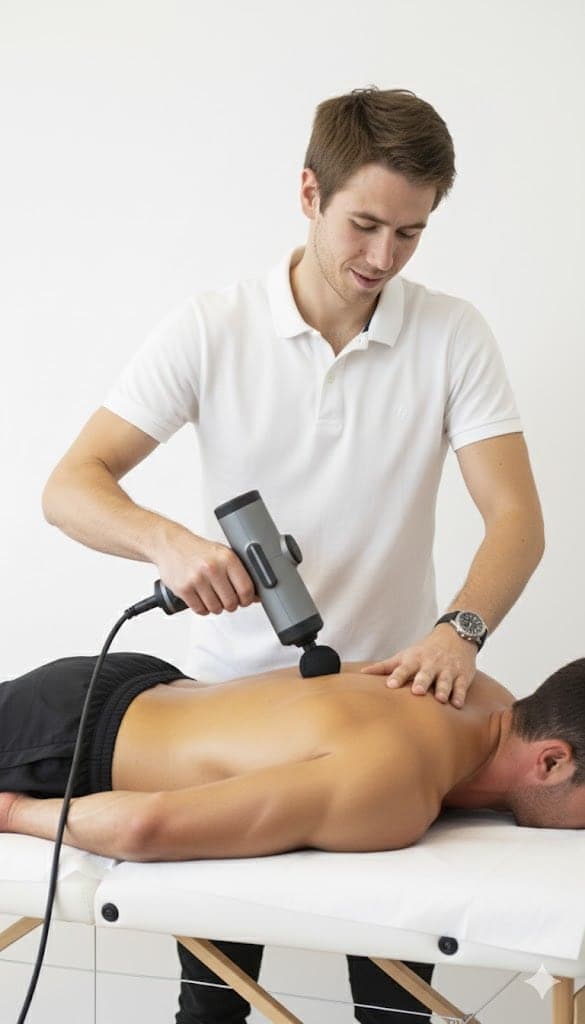
Written by
Chris
Massage therapist, nutrition and exercise physiologist
Norwegian-certified with a Bachelor’s in Physical Education and Nutrition and over ten years of clinical practice, working from a portable table in clients’ homes across the Paphos district.
This article is general information, not a medical diagnosis. If you have severe, worsening or unexplained pain, numbness, weakness, or pain after an accident, see a doctor first.