
Deep Muscle Therapy for Athletes: The Science Behind Performance Enhancement and Accelerated Recovery
In short
Discover how advanced deep muscle therapy transforms athletic performance through targeted mechanical intervention. Learn the clinical approach that delivers lasting results, not temporary relief.
I’ll never forget the first elite runner I worked with who walked into my treatment space carrying the weight of a six-month injury that had derailed his competitive season. His physical therapist had cleared him. His coach had programmed his return. But his body refused to cooperate. Within three sessions of targeted mechanical deep-tissue intervention, we identified and released fascial restrictions his previous treatments had never addressed. He returned to competitive form within four weeks. That experience crystallized a truth I’ve witnessed repeatedly across my decade of practice: the difference between symptomatic relief and genuine recovery lies in the precision and depth of the therapeutic intervention.
Athletes exist in a perpetual state of controlled tissue damage and repair. Training stimulates adaptation, but this process creates layers of compensation, adhesion, and dysfunction that accumulate silently until they manifest as injury, performance plateaus, or chronic limitation. Traditional approaches to muscular therapy—whether conventional massage, foam rolling, or standard physical therapy modalities—address surface-level tension without accessing the deeper mechanical restrictions that truly limit athletic potential. Deep muscle therapy for athletes represents a fundamentally different paradigm: one that treats the architectural integrity of the musculoskeletal system rather than merely soothing symptomatic discomfort.
Understanding the Biomechanical Reality of Athletic Performance
Athletic movement demands extraordinary precision from the neuromuscular system. A sprinter generating force against the track, a tennis player executing a serve, a cyclist maintaining power output over hours—these actions require optimal length-tension relationships within muscle tissue, unrestricted fascial glide between tissue planes, and complete neural recruitment without compensatory patterns. When any component of this system develops restriction, the entire kinetic chain adapts.
The adaptation process follows predictable patterns. Initial restriction in one muscle group forces adjacent tissues to compensate. This compensation creates altered loading patterns in connecting joints. Those altered patterns redistribute stress across the entire movement system. Over weeks and months, what began as a small adhesion in the hip flexor complex becomes knee pain, ankle stiffness, and lower back dysfunction. The athlete experiences symptoms far removed from the originating dysfunction.
I’ve observed this cascade in dozens of competitive athletes across multiple disciplines. A middle-distance runner presented with chronic Achilles tendinopathy that had resisted eight months of conventional treatment. Examination revealed profound restriction in her posterior hip capsule and deep external rotators—structures that sit anatomically distant from her symptomatic Achilles but biomechanically control the loading pattern through her entire lower extremity. Releasing those deep restrictions eliminated her Achilles symptoms within three weeks because we addressed the mechanical cause rather than the symptomatic expression.
Why Conventional Approaches Fail Athletic Populations
The athletic body requires depth of intervention that traditional manual therapy simply cannot deliver. Human hands, regardless of the practitioner’s skill or strength, possess inherent limitations in accessing deep tissue structures. The deeper the target tissue, the more superficial layers must be compressed to reach it. This compression creates protective guarding responses from the nervous system, limiting therapeutic access to the structures that most need intervention.
The physiological barrier explains why athletes often report temporary relief from conventional massage without lasting improvement. Surface work reduces general tension and improves circulation, producing subjective feelings of relaxation. But the deep architectural restrictions—the adhesions between muscle layers, the fibrotic changes within tendon tissue, the capsular restrictions limiting joint mechanics—remain untouched. When the athlete returns to training, those underlying restrictions immediately reassert themselves, reproducing the original limitation.
I’ve worked with athletes who invested thousands in conventional massage therapy over months or years without achieving lasting change. Their commitment wasn’t lacking. Their previous practitioners weren’t incompetent. The modality itself simply lacks the mechanical capacity to access and modify the tissue structures that limit athletic function. This isn’t a criticism of traditional massage, which serves valuable purposes for relaxation and general wellness. It’s a recognition that athletic optimization requires specialized intervention designed specifically for the unique demands of high-performance movement.
The Precision Problem in Manual Therapy
Beyond depth limitations, conventional manual approaches suffer from inconsistency. A practitioner’s effectiveness varies with their energy level, the number of clients seen that day, subtle variations in hand positioning, and countless other factors. An athlete receiving treatment on Tuesday may experience fundamentally different intervention than the same athlete on Friday with the same practitioner addressing the same restriction.
This variability creates unpredictable outcomes. Recovery planning becomes speculative. Athletes can’t reliably schedule peak performance around treatment because they can’t predict treatment effectiveness. The professional athlete preparing for competition or the dedicated amateur targeting a personal record needs absolute consistency in their therapeutic interventions. Variability isn’t merely inconvenient—it represents a fundamental failure of the treatment modality to meet the requirements of the athletic application.
Advanced Mechanical Deep-Tissue Therapy: A Clinical Alternative
My approach to deep muscle therapy for athletes emerged from direct confrontation with these limitations. After completing my Bachelor’s degree in Physical Education and Nutrition and accumulating early clinical experience, I recognized that conventional tools couldn’t deliver the outcomes my athletic clients required. The solution required specialized mechanical intervention: a system capable of generating consistent, controllable depth of pressure with precision that human hands cannot replicate.
The mechanical deep-tissue system I employ delivers three critical capabilities that define effective athletic therapy:
| Capability | Mechanical Advantage | Clinical Outcome |
|---|---|---|
| Depth of penetration | Reaches deep tissue structures without excessive superficial compression | Direct modification of target restrictions without triggering protective guarding |
| Pressure consistency | Maintains exact force parameters throughout treatment | Predictable, reproducible results independent of session variables |
| Precision control | Adjusts intensity from superficial to maximal depth with fine gradation | Customized intervention matched exactly to tissue tolerance and therapeutic requirement |
This isn’t merely upgraded massage. It represents a different category of intervention entirely—one that treats the body as an integrated mechanical system requiring specific, measurable modification rather than a recipient of generalized relaxation techniques.
The Physiological Mechanism of Mechanical Release
When properly applied, mechanical deep-tissue therapy produces specific physiological changes in target tissues. Controlled compression creates transient ischemia followed by reactive hyperemia—a flush of fresh blood that carries nutrients and removes metabolic waste products accumulated in previously restricted areas. This vascular response alone provides therapeutic benefit, but the mechanical effects extend deeper.
Sustained pressure applied with sufficient force and duration produces plastic deformation in connective tissue. Collagen fibers within fascia and tendon respond to mechanical load by remodeling their orientation and cross-linking patterns. Adhesions between tissue planes—areas where layers that should glide independently have become stuck together—break down under controlled mechanical stress. The tissue doesn’t simply relax temporarily; its physical structure changes in ways that persist after treatment ends.
I’ve measured this durability in athletes I’ve worked with across multiple training cycles. A competitive cyclist whose chronic IT band friction syndrome had limited his training volume for eighteen months achieved complete resolution after six weeks of targeted intervention. Two years later, he continues training at full volume with no recurrence. That permanence of outcome reflects genuine structural change, not temporary symptom suppression.
Deep Muscle Therapy Applications Across Athletic Disciplines
Different sports create characteristic patterns of restriction based on their specific movement demands. Understanding these patterns allows targeted intervention that addresses the sport-specific limitations before they manifest as injury or performance decline.
Endurance Athletes: Resolving Overuse Patterns
Runners, cyclists, and triathletes accumulate repetitive strain through thousands of movement repetitions. Their restrictions typically develop in high-load stabilizing muscles—the deep hip rotators, posterior hip capsule, thoracolumbar fascia, and anterior tibialis. These athletes rarely present with acute injury. Instead, they experience gradual performance decline, increased recovery requirements, and nagging discomfort that never quite resolves.
A marathon runner I worked with had reduced her weekly mileage by forty percent over eighteen months due to persistent hip discomfort. Multiple practitioners had addressed her hip flexors and glutes with conventional manual therapy. Examination revealed her primary restriction sat deeper—in her obturator complex and posterior capsule. Three sessions targeting those specific structures restored her full training volume. She set a personal record six months later.
Power Athletes: Optimizing Force Production
Sprinters, jumpers, and throwers require maximal force generation through complete ranges of motion. Their restrictions often develop in large prime movers—quadriceps, hamstrings, pectorals—where high-force eccentric contractions create deep intramuscular adhesions. These restrictions limit force production capacity and increase injury risk during maximal efforts.
Power athletes benefit dramatically from deep mechanical intervention because their performance directly correlates with muscle tissue quality. A track sprinter added three-hundredths of a second to his 100-meter time—a massive improvement at elite level—after four weeks addressing quadriceps and hip flexor restrictions that had limited his stride extension. The improved tissue quality translated directly into enhanced contractile performance.
Sport-Specific Movement Athletes: Restoring Pattern Integrity
Athletes in sports requiring complex skill execution—tennis players, golfers, martial artists—depend on precise neuromuscular patterns. Restrictions anywhere in their kinetic chains corrupt movement quality, forcing technical compensations that reduce performance and increase injury risk. These athletes often present with symptoms in one area while the causative restriction sits elsewhere in the movement chain.
A tennis player experiencing chronic shoulder pain provides the classic example. Her symptoms manifested during serving—her highest-velocity movement. Previous treatment focused on rotator cuff strengthening and local tissue work around her symptomatic shoulder. Assessment revealed significant restriction in her thoracic spine rotation and opposite hip—areas that provide the foundation for her kinetic chain during the serve. Releasing those restrictions eliminated her shoulder symptoms because we restored her normal movement pattern rather than treating the compensatory stress point.
The Systematic Approach to Athletic Optimization
Effective deep muscle therapy for athletes requires systematic assessment and strategic intervention planning. I don’t simply work on whatever feels tight or wherever the athlete reports discomfort. Every session follows a structured protocol designed to identify primary restrictions, address them in the appropriate sequence, and verify functional improvement.
Initial Assessment Protocol
The first session centers on comprehensive movement analysis. I observe how the athlete moves through fundamental patterns—squatting, hip hinging, reaching overhead, rotating. These basic movements reveal compensation patterns and restriction locations with remarkable clarity. An athlete who shifts weight asymmetrically during squatting indicates unilateral hip restriction. Limited overhead reach suggests thoracic or shoulder capsule dysfunction. Asymmetrical rotation points to spinal or hip limitations.
This movement-based assessment identifies functional limitations rather than merely cataloging areas of subjective tightness. Athletes often feel tight in compensating muscles that work overtime while the primary restricted structures feel relatively normal. Treating based on sensation alone frequently misses the actual problem. Treating based on observed movement dysfunction targets intervention where it creates meaningful change.
Palpation assessment follows movement observation. I systematically examine tissue quality through each region, noting areas of increased density, reduced tissue glide, and tender points that indicate local dysfunction. This hands-on assessment correlates movement limitations with specific tissue restrictions, creating a precise intervention plan.
Strategic Release Sequencing
The order of intervention matters enormously. Releasing restrictions follows specific principles based on biomechanical relationships and neuromuscular responses. I typically progress from proximal to distal—addressing hip restrictions before knee restrictions, shoulder restrictions before elbow limitations. This sequence respects how the body organizes movement from stable proximal segments to mobile distal segments.
Within each region, I work from deep to superficial. Releasing surface restrictions first often provides temporary improvement that masks underlying dysfunction. Releasing deep restrictions first allows superficial tissues to normalize secondarily, producing more complete and lasting results.
A typical lower-body session for a runner might progress through this sequence:
- Deep hip external rotators and posterior capsule—these structures control femoral rotation and load distribution
- Hip flexor complex including iliopsoas and rectus femoris—these commonly restricted muscles alter pelvic position and lumbar mechanics
- Hamstring origins and deep compartments—these structures control knee mechanics and hip extension power
- Anterior tibialis and foot intrinsics—these tissues control ankle mechanics and foot function
This sequence systematically works down the kinetic chain, ensuring each level achieves full function before addressing the next. Attempting to resolve ankle restrictions while hip dysfunction persists produces temporary improvement that disappears when the hip limitation reasserts itself during running. Working systematically from proximal to distal creates stable, lasting changes.
The Machine-Based Advantage in Athletic Applications
My specialized mechanical system provides capabilities that define its effectiveness with athletic populations. The machine generates consistent force output independent of my physical fatigue or energy level. An athlete receiving treatment as my first client or my eighth receives identical intervention quality. This consistency allows reliable treatment planning around competition schedules and training cycles.
The depth capability proves particularly valuable with heavily muscled athletes whose tissue density exceeds what hands can effectively penetrate. A rugby player or powerlifter possesses such substantial muscle mass that conventional manual pressure dissipates across superficial tissues without reaching deeper restrictions. The mechanical system generates sufficient force to access deep tissue structures regardless of superficial muscle density.
Precision control allows exact matching of intervention intensity to tissue tolerance. Early in treatment, when tissues remain highly sensitized, I apply lighter pressure to begin the release process without overwhelming protective responses. As tissues adapt and restrictions begin releasing, I progressively increase depth to access the remaining dysfunction. This graduated approach produces faster results with better athlete tolerance than attempting maximal depth immediately.
Customized Pressure Protocols for Different Athletes
Every athlete presents unique tissue characteristics based on their training history, injury background, and genetic factors. Some athletes possess relatively pliable tissues that respond quickly to moderate pressure. Others present with dense, fibrotic tissue that requires sustained high-force intervention. The mechanical system adapts precisely to these individual variations.
I’ve worked with athletes who tolerate and require maximal pressure from the first session—typically those with longer injury histories and more chronic restrictions. Their tissues have adapted to dysfunction over months or years, requiring aggressive intervention to produce change. Other athletes, particularly those seeking performance enhancement rather than injury resolution, benefit from more moderate pressure that optimizes tissue quality without creating excessive treatment soreness.
The ability to precisely calibrate intervention intensity allows optimization for each athlete’s specific situation rather than applying a one-size-fits-all approach. This customization accelerates results by matching mechanical input to tissue requirements exactly.
Integration with Training Cycles and Competition Schedules
Deep muscle therapy for athletes delivers maximum value when strategically integrated with periodized training. Different phases of an athlete’s preparation cycle require different therapeutic approaches.
Off-Season: Addressing Accumulated Dysfunction
The off-season provides optimal timing for aggressive intervention addressing chronic restrictions accumulated during competitive season. Athletes tolerate deeper work and can accommodate the temporary performance reduction that sometimes follows intensive tissue release. I schedule comprehensive assessment and systematic release of all identified restrictions during this phase.
A competitive swimmer might undergo six to eight sessions across an eight-week off-season block, systematically addressing shoulder capsule restrictions, thoracic mobility limitations, and hip dysfunction that accumulated during her racing season. This intensive intervention establishes optimal tissue quality as her next training cycle begins, allowing higher-quality training with reduced injury risk.
Base Building Phase: Supporting Training Load Increases
As athletes begin building training volume and intensity, therapeutic intervention focuses on maintaining tissue quality despite increasing mechanical stress. Sessions become less aggressive and more frequent, preventing restriction development rather than treating established dysfunction.
During this phase, I typically see athletes every two to three weeks, addressing areas showing early restriction before they develop into limiting dysfunction. This preventive approach maintains the tissue optimization achieved during off-season work while allowing the athlete to absorb training stress effectively.
Competition Phase: Tactical Performance Enhancement
As competition approaches, therapeutic intervention shifts to tactical performance enhancement. Treatment becomes lighter and more targeted, addressing specific limitations that impact competition performance without creating residual soreness or temporary performance reduction.
I worked with a competitive cyclist preparing for a stage race who experienced subtle hip restriction affecting his power output during threshold efforts. A single session ten days before his race, using moderate pressure targeted specifically to his hip external rotators, resolved the restriction and produced a measurable power output increase. The timing allowed complete recovery from any treatment effects while maintaining the performance benefit.
Common Athletic Restrictions and Their Resolution
Across ten years and hundreds of athletes, certain restriction patterns appear repeatedly. Understanding these common dysfunctions allows rapid identification and effective intervention.
The Hip Complex: Central Hub of Lower Body Function
Hip restrictions represent the most common and impactful limitation I encounter in athletes. The hip joint’s role as the connection point between trunk and lower extremity makes its function critical for virtually all athletic movement. Restrictions here ripple throughout the entire kinetic chain.
Deep hip external rotators—piriformis, gemelli, obturators—commonly develop profound restrictions in athletes across all disciplines. These small muscles control femoral rotation and pelvic stability, working intensely during running, jumping, cutting, and rotational movements. When restricted, they alter femoral positioning in the acetabulum, creating abnormal joint loading patterns that cascade into knee, ankle, and lumbar dysfunction.
The anterior hip capsule presents another frequent restriction site. Modern athletes spend substantial time in hip flexion—sitting during travel and recovery, cycling, rowing. This chronic flexed positioning allows anterior capsule adaptive shortening. The restricted capsule limits hip extension, forcing compensatory lumbar hyperextension during gait and running. This compensation creates the chronic lower back discomfort many athletes accept as normal but which actually represents hip dysfunction expressing itself proximally.
Releasing hip restrictions consistently produces dramatic functional improvements. Athletes report immediate increases in stride length, improved squat depth, reduced knee stress, and eliminated lower back tension. These changes occur because restoring hip function allows the entire lower kinetic chain to operate through its intended ranges and loading patterns.
Thoracic Spine and Ribcage: The Neglected Performance Limiter
Thoracic spine mobility profoundly impacts both upper and lower body athletic function, yet restrictions here often go unrecognized until they manifest as seemingly unrelated symptoms elsewhere.
The thoracic spine provides rotational mobility for the entire trunk. Sports requiring upper body rotation—throwing, tennis, golf, swimming—depend absolutely on thoracic rotation capacity. When thoracic mobility becomes restricted, athletes compensate by over-rotating at the lumbar spine or glenohumeral joint. These compensations create injury risk and performance limitation.
I’ve worked with overhead athletes—swimmers, tennis players, volleyball players—whose shoulder symptoms resolved completely with thoracic spine intervention alone. Their shoulders weren’t actually dysfunctional. They were compensating for inadequate thoracic mobility, creating excessive stress that manifested as shoulder pain. Restoring thoracic function eliminated the need for shoulder compensation, resolving the symptoms.
The intercostal muscles and ribcage mechanics also impact performance in ways athletes rarely recognize. Restricted ribcage mobility limits respiratory efficiency, forcing athletes to work harder for the same oxygen delivery. Endurance athletes particularly benefit from intercostal release, frequently reporting subjective breathing improvement and objective performance enhancement.
The Quadriceps Complex: Power Production and Knee Health
The quadriceps group generates enormous force during athletic movement, particularly in power and jumping activities. This high-force production creates deep intramuscular restrictions that limit both performance and joint health.
Rectus femoris—the quadriceps component crossing both hip and knee—develops restrictions that alter mechanics at both joints. Restricted rectus femoris limits hip extension, affecting running stride length and power output. It also increases patellofemoral compression, contributing to anterior knee pain. Releasing rectus femoris frequently eliminates knee symptoms athletes assumed required rest or joint-focused intervention.
The vastus medialis and intermedius—deep quadriceps components—control patellar tracking. Restrictions here create lateral patellar deviation, producing the anterior knee discomfort endemic in runners and cyclists. Deep mechanical release of these tissues restores normal patellar mechanics, eliminating symptoms and improving force production efficiency.
A cyclist experiencing chronic anterior knee pain exemplifies this pattern. Multiple previous practitioners had addressed his IT band and performed patellar mobilization. Assessment revealed profound restriction in his vastus medialis and intermedius. Four sessions targeting these deep quadriceps structures eliminated his knee pain and improved his power output by measurable amounts. We treated the mechanical cause rather than the symptomatic expression.
Measuring Success: Objective Performance Outcomes
I measure therapeutic effectiveness through functional outcomes, not subjective comfort. An athlete may feel looser after treatment, but the relevant question is: does their body perform better?
Performance metrics provide objective verification of therapeutic effectiveness. A runner’s stride length measured pre and post-treatment. A cyclist’s power output at threshold. A tennis player’s serve velocity. These quantifiable measurements confirm whether intervention produced genuine functional improvement or merely provided temporary comfort.
Athletes I work with typically experience measurable performance enhancement within three to six sessions. Running economy improves through increased stride efficiency. Power output increases through enhanced muscle tissue quality. Movement quality improves through restored normal biomechanics. These changes represent real physiological modification, not placebo effects or temporary relief.
Case Study: Marathon Runner Performance Enhancement
A competitive marathon runner approached me six months before a goal race seeking performance optimization rather than injury treatment. His training progressed well, but he felt his body limited his potential. Assessment revealed moderate restrictions throughout his hip complex and posterior chain—nothing severe enough to cause symptoms, but sufficient to limit optimal function.
Over twelve weeks, we systematically addressed his identified restrictions through eight treatment sessions integrated with his training progression. We released his deep hip external rotators, hip flexor complex, hamstring origins, and thoracic spine. His stride length increased by four centimeters—measured through video analysis before and after intervention. His running economy at threshold pace improved by three percent—measured through metabolic testing. These objective improvements translated directly into race performance: he set a personal record by nine minutes, breaking three hours for the first time.
This case exemplifies how deep muscle therapy for athletes functions as performance enhancement, not just injury treatment. The runner wasn’t injured. He was mechanically limited by restrictions that conventional training alone couldn’t resolve. Targeted intervention removed those limitations, allowing his training to produce superior adaptation and performance.
The Partnership Approach: Beyond One-Off Sessions
Optimal results require ongoing partnership rather than sporadic intervention. Athletic bodies exist in continuous states of adaptation and stress. They benefit from consistent monitoring and proactive maintenance rather than reactive problem-solving.
I structure my practice around dedicated partnerships with athletes committed to systematic optimization. We establish baseline function, identify all limitations, systematically address them, then maintain optimal tissue quality through strategic ongoing work. This approach prevents injury, maximizes training effectiveness, and produces consistent performance enhancement.
Athletes working with me aren’t purchasing sessions. They’re investing in a comprehensive optimization process that transforms how their bodies respond to training stress and perform under competition demands. This distinction fundamentally separates my approach from conventional massage therapy or even standard sports therapy. We’re not managing symptoms. We’re engineering superior function.
The Mobile Practice Advantage
I travel directly to athletes’ locations, bringing professional equipment and creating optimal treatment environments wherever needed. This mobile approach serves athletes who recognize that convenience and consistency trump arbitrary location requirements.
Elite athletes training intensively can’t afford wasted time traveling to appointments. Recovery time is training time. By eliminating travel requirements, I allow athletes to maximize their available recovery windows. They receive treatment in their preferred environment without disruption to training or life schedules.
The mobile approach also allows treatment timing optimization. Sessions can occur immediately post-training while muscles remain warm and responsive, or during specific recovery windows that fit training periodization. This flexibility produces better results than fixed-location practices requiring athletes to adapt their schedules to available appointment times.
Why This Investment Transforms Athletic Potential
Athletes invest tremendous resources—time, money, physical effort—in pursuit of performance. Training equipment, coaching, nutrition programming, recovery modalities. Yet many overlook the foundational requirement underlying all athletic development: optimal tissue quality and biomechanical function.
No amount of training can overcome mechanical limitations. An athlete with restricted hips cannot develop optimal stride length regardless of training volume. An athlete with thoracic restrictions cannot generate full rotational power regardless of strength development. These mechanical limitations create performance ceilings that training alone cannot break through.
Deep muscle therapy for athletes removes those ceilings. It transforms the body’s capacity to execute movement, tolerate training stress, and produce force. The investment doesn’t merely prevent injury or reduce discomfort—though it accomplishes both. It fundamentally expands what the athlete’s body can achieve.
Every athlete possesses untapped potential limited by accumulated restrictions they don’t recognize. The runner who assumes their stride length represents their genetic limit. The cyclist who accepts their threshold power as fixed. The tennis player who believes their serve speed has peaked. In most cases, mechanical restrictions impose these limitations, not physiological capacity. Removing restrictions reveals potential athletes didn’t know they possessed.
Frequently Asked Questions About Deep Muscle Therapy for Athletes
How does mechanical deep-tissue therapy differ from regular sports massage?
Sports massage provides valuable relaxation and general tension reduction through manual techniques applied to superficial tissues. Mechanical deep-tissue therapy accesses structural restrictions in deep tissue layers that hands cannot effectively reach. The mechanical system generates consistent, controllable force that modifies tissue architecture rather than temporarily reducing tension. One provides comfort; the other produces lasting structural change.
Is deep tissue work painful for athletes?
Effective deep tissue intervention produces intensity, not pain. Athletes describe the sensation as deep pressure with some discomfort in restricted areas. The mechanical system allows precise pressure control, ensuring intervention remains within productive therapeutic windows rather than exceeding tissue tolerance. Athletes accustomed to pain from training typically tolerate and appreciate the deep work once they experience the results it produces.
How quickly can athletes expect performance improvement?
Most athletes experience measurable functional changes within three to six sessions, with noticeable performance enhancement often appearing by the fourth week. The timeline depends on restriction severity and training status. Athletes seeking performance optimization rather than injury recovery typically respond faster than those addressing chronic dysfunction. The changes persist because they represent structural tissue modification, not temporary effects.
Can deep muscle therapy prevent injuries?
Proactive restriction release significantly reduces injury risk by restoring normal biomechanics before compensations create injury. Many injuries athletes experience represent the final expression of long-developing mechanical dysfunction. Systematic tissue maintenance identifies and resolves restrictions before they progress to injury. Athletes working with me consistently report reduced injury frequency and faster recovery when issues do arise.
When should athletes schedule sessions relative to training and competition?
Aggressive deep work suits off-season periods and early base building phases when temporary performance reduction doesn’t impact goals. As competition approaches, sessions become lighter and more targeted, optimizing performance without creating residual effects. The ideal schedule integrates therapeutic intervention with periodized training, matching intervention intensity to training phase requirements.
How does this approach work for different athletic disciplines?
The fundamental principles apply across all sports—restore optimal tissue quality, eliminate mechanical restrictions, enhance biomechanical function. The specific intervention focus varies by sport demands. Endurance athletes require different emphasis than power athletes. Upper-body dominant sports create different restriction patterns than lower-body sports. Assessment identifies sport-specific limitations, then intervention targets those patterns systematically.
What makes mechanical intervention superior to conventional manual techniques?
Three factors: depth, consistency, and precision. The mechanical system reaches tissue structures hands cannot access without excessive surface compression. It delivers identical intervention quality regardless of practitioner fatigue or session variables. It adjusts pressure with fine gradation, matching intervention exactly to tissue requirements. These capabilities produce faster, more complete, and more lasting results than manual techniques can achieve with athletic populations.
Do athletes need ongoing sessions or just initial correction?
Athletic training creates continuous mechanical stress requiring ongoing management for sustained optimal function. Initial sessions establish baseline tissue quality and resolve accumulated restrictions. Ongoing sessions maintain that optimization despite training stress and prevent new restriction development. Think of it as high-performance maintenance—the more demanding the athletic pursuit, the more value consistent optimization provides.
The Fundamental Truth About Athletic Potential
After ten years working exclusively with athletes pursuing their physical limits, one truth emerges with absolute clarity: most athletes operate nowhere near their actual potential. Not because they lack dedication or genetics, but because mechanical restrictions they don’t recognize limit what their bodies can achieve.
Every athlete I work with possesses more speed, power, endurance, or skill than their current performance demonstrates. Those capabilities remain locked behind restrictions accumulated through training, compensatory movement patterns, and incomplete recovery from previous injuries. Deep muscle therapy for athletes doesn’t create new abilities. It removes the barriers preventing expression of abilities that already exist.
The difference between conventional approaches and systematic mechanical deep-tissue therapy isn’t subtle. It’s the difference between managing symptoms and eliminating causes. Between temporary relief and lasting resolution. Between accepting limitations and transcending them.
Your body knows how to move optimally. It knows how to generate force efficiently, recover completely, and perform at peak capacity. Restrictions prevent it from executing that programming. Remove the restrictions, and the body expresses its inherent capabilities. That’s not theoretical. That’s what I observe every week with every athlete who commits to this systematic approach.
The question isn’t whether your body possesses greater potential. It does. The question is whether you’re ready to access it through intervention that produces genuine change rather than temporary comfort. Most athletes never experience what their bodies can truly accomplish because they accept mechanical limitations as lasting features rather than modifiable dysfunctions.
I’ve seen too many transformations—athletes breaking through plateaus they considered lasting, eliminating pain they thought chronic, achieving performances they believed impossible—to accept that conventional limitations represent true potential. Your body has more to offer. The method exists to unlock it. The only remaining variable is your commitment to the systematic process that produces lasting change.
Evidence and limits
Massage may help with some symptoms, but benefits and evidence vary by condition. It does not replace medical assessment or treatment. A page update is not evidence of an independent clinical review.
Further reading: Massage therapy: evidence, safety and limitations by US National Center for Complementary and Integrative Health. This is general background reading, not verification of every claim in this article.
How we describe evidence and updates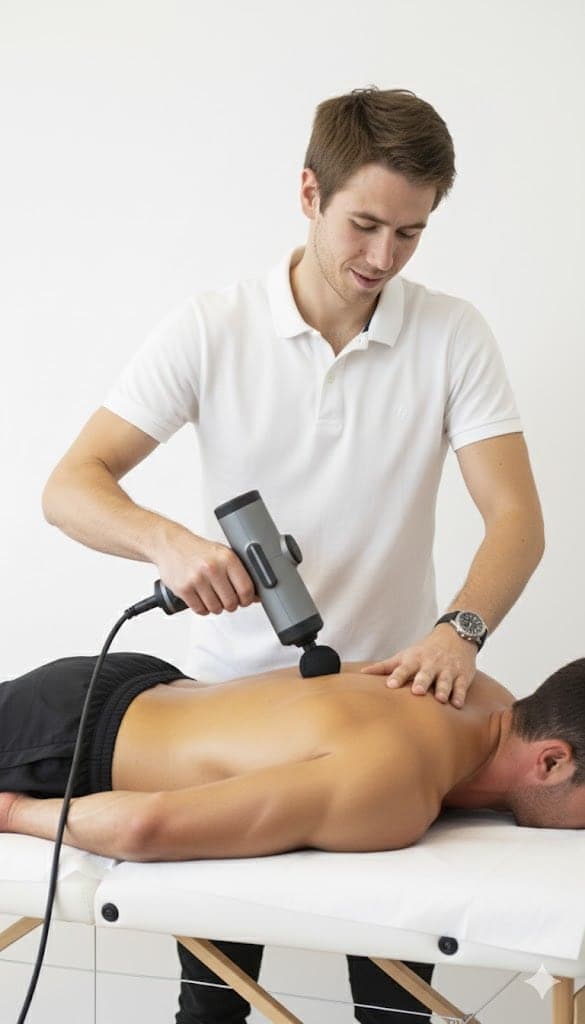
Written by
Chris
Massage therapist, nutrition and exercise physiologist
Norwegian-certified with a Bachelor’s in Physical Education and Nutrition and over ten years of clinical practice, working from a portable table in clients’ homes across the Paphos district.
This article is general information, not a medical diagnosis. If you have severe, worsening or unexplained pain, numbness, weakness, or pain after an accident, see a doctor first.