
Therapeutic Massage for Golfers Pegeia: Advanced Treatment for Peak Performance
In short
Specialized therapeutic massage for golfers in Pegeia using advanced mechanical deep-tissue techniques. Lasting relief from golf-related pain and enhanced performance through precision treatment.
Golf appears deceptively simple to those who’ve never committed to mastering it. You stand still, you swing, the ball flies. Yet anyone who’s played seriously knows the truth: golf is a biomechanical symphony of rotation, stability, and explosive power that places extraordinary demands on your body. After a decade of treating golfers throughout Pegeia, I’ve witnessed the specific patterns of muscular dysfunction that develop in players—patterns that conventional massage simply cannot address effectively.
The golfer’s body tells a story written in fascial restrictions and compensatory patterns. Your lower back absorbs the rotational forces your thoracic spine should be generating. Your lead hip develops adhesions that limit internal rotation. Your trail shoulder compensates for restrictions in your scapular mobility. These aren’t minor inconveniences—they’re mechanical failures that limit your swing efficiency, reduce your distance, and eventually manifest as chronic pain that conventional treatment approaches consistently fail to resolve.
I don’t provide relaxation massage. My work addresses the root mechanical causes of golf-related dysfunction through advanced deep-tissue techniques that traditional hands-on methods cannot replicate.
Why Golfers in Pegeia Develop Specific Muscular Dysfunctions
The golf swing generates rotational velocities exceeding 100 miles per hour in professional players, and even recreational golfers produce forces that repeatedly stress the same muscular chains in identical patterns. This repetitive loading creates predictable dysfunction.
During my Bachelor’s degree in Physical Education and Nutrition in Norway, I studied extensively how repetitive movement patterns create compensatory chains throughout the kinetic system. What fascinated me then—and what I’ve proven in practice over ten years—is that the location of pain rarely indicates the source of dysfunction.
The Biomechanical Reality of Golf-Specific Tension
Consider the mechanics of your backswing. Your body must create a differential between hip and shoulder rotation—the classic “X-factor” that generates power. This requires:
- Exceptional thoracic spine mobility to achieve full shoulder turn
- Hip stability to resist early rotation and maintain the differential
- Latissimus dorsi and oblique flexibility to allow the stretch
- Scapular control to maintain club position throughout the motion
When any component of this chain develops restrictions—and they all eventually do—your nervous system creates compensatory patterns. Your lower back hyperextends to compensate for limited thoracic rotation. Your trail knee collapses inward because your lead hip lacks internal rotation. Your shoulders elevate because your lats won’t lengthen properly.
These compensations work initially. You continue playing. Then one morning you wake up and your lower back has seized completely, or your shoulder won’t allow you to complete your backswing without sharp pain.
I’ve treated golfers who’ve spent months with physiotherapists, chiropractors, and traditional massage therapists without improvement. The reason is straightforward: superficial treatment cannot access the depth where golf-related restrictions develop.
Why Traditional Massage Fails Golfers
Let me be direct about something the massage industry doesn’t want to acknowledge: human hands cannot generate sufficient force to release deep fascial restrictions without fatiguing. This isn’t a criticism of therapists—it’s simple biomechanics.
The Depth Problem
Golf-related dysfunction develops in deep muscular layers and fascial planes that lie beneath multiple tissue layers. Your piriformis—which I treat in virtually every golfer because hip rotation is fundamental to the swing—sits deep to your gluteus maximus. Effective treatment requires sustained, precise pressure at depths human hands simply cannot maintain consistently.
I spent my early years providing traditional hands-on massage. I knew exactly where to work, I understood the anatomy, but I watched myself fatigue partway through treatments. My pressure would decrease. My precision would diminish. The client might feel temporarily better, but the deep restrictions remained largely untouched.
This frustrated me profoundly because I could visualize the mechanical changes needed but couldn’t deliver them consistently with my hands alone.
The Consistency Problem
Human performance varies. A therapist might deliver excellent work on Monday but lack the same precision on Friday after a demanding week. This inconsistency is invisible to clients but obvious in outcomes. Deep-tissue work requires not just pressure but sustained, controlled application at precise angles—something human endurance cannot guarantee across multiple sessions daily.
The Advanced Mechanical Approach to Golf-Related Dysfunction
After recognizing the limitations of manual techniques, I investigated mechanical solutions that could deliver the precision, depth, and consistency that golf-related restrictions demand. What I implemented wasn’t simply a different tool—it represented a fundamental advancement in how therapeutic deep-tissue work could be delivered.
Precision: Targeting the Mechanical Source
The specialized equipment I use allows me to work with millimeter-level precision on specific structures. When I’m releasing restrictions in your subscapularis—a deep rotator cuff muscle that becomes chronically shortened in golfers—I can maintain exact positioning and angle while delivering sustained pressure that hands cannot replicate.
This precision matters enormously. Working slightly off-target wastes treatment time and reduces effectiveness. The mechanical approach eliminates this variability completely.
Power: Accessing Depth Where Dysfunction Develops
Golf creates dysfunction at tissue depths that manual work simply cannot reach effectively. The mechanical tool I use generates controlled force that penetrates through superficial layers to address restrictions at their source.
Consider your thoracolumbar fascia—the thick connective tissue sheet covering your lower back that becomes rigid in golfers due to the rotational demands of the swing. This structure requires substantial force applied sustainably to create lasting change. Manual techniques might soften the superficial layers, but the deep restrictions remain.
I work systematically through tissue layers, progressively accessing deeper structures as superficial restrictions release. This isn’t possible with conventional massage, where therapist fatigue prevents the sustained deep work required.
Consistency: Eliminating Treatment Variability
Every session I provide delivers identical precision and power. There are no “off days,” no fatigue-related inconsistency, no variation in technique quality. This consistency is critical for achieving lasting results because tissue remodeling requires repeated, precise mechanical stimulus.
Your nervous system adapts to consistent input. When I treat your restricted hip internal rotators weekly at the same depth and pressure, your tissues progressively remodel, restrictions release durably, and your swing mechanics improve measurably.
Common Golf-Related Conditions I Address in Pegeia
My practice focuses exclusively on golfers and individuals with similar rotational sport demands. This specialization allows me to recognize patterns immediately and apply proven treatment protocols.
| Condition | Mechanical Cause | Treatment Focus | Expected Outcome |
|---|---|---|---|
| Lower Back Pain | Thoracic immobility forcing lumbar compensation | Thoracic erectors, lats, QL complex | Pain elimination, increased turn |
| Hip Pain/Restriction | Capsular tightness, piriformis dysfunction | Deep hip rotators, TFL, capsule | Restored rotation, improved weight shift |
| Shoulder Pain | Scapular dysfunction, rotator cuff imbalance | Subscapularis, infraspinatus, levator | Pain-free range, consistent swing plane |
| Elbow Tendinopathy | Grip pressure compensating for shoulder instability | Forearm flexors, shoulder stabilizers | Reduced grip tension, eliminated pain |
| Neck Tension | Head position compensation, postural fatigue | Suboccipitals, SCM, upper traps | Improved head stability, reduced tension |
The Lower Back-Hip Connection
I treated a golfer last year who’d been dealing with chronic lower back pain for three seasons. He’d tried everything: physiotherapy, core strengthening, swing modifications, even considered surgery. His pain occurred specifically during the downswing and follow-through.
My assessment revealed what I see in approximately 70% of golfers with lower back pain: severely restricted hip internal rotation on his lead side. His left hip had lost nearly 20 degrees of internal rotation compared to his right. This forced his lumbar spine to provide the rotation his hip couldn’t, creating repetitive stress that manifested as chronic pain.
I didn’t treat his lower back initially. I focused exclusively on his deep hip rotators—his piriformis, obturators, gemelli, and hip capsule. Over six sessions, his hip internal rotation normalized. His lower back pain disappeared completely without ever directly treating the painful area.
This is what I mean by addressing mechanical causes rather than symptoms.
The Science Behind Lasting Change
Temporary relief is worthless if your pain returns after your next round. My approach focuses on creating lasting tissue remodeling that restores optimal mechanics and prevents recurrence.
Fascial Plasticity and Tissue Remodeling
Your fascia—the connective tissue that surrounds and connects all muscular structures—responds to mechanical load through a process called mechanotransduction. Apply sufficient force consistently, and fascia remodels, becoming more pliable and regaining its normal sliding properties.
This process requires:
- Adequate force to create mechanical stimulus at the cellular level
- Sufficient duration to initiate the cellular response
- Consistent repetition to establish lasting change
- Progressive depth to address successive tissue layers
Manual massage rarely achieves adequate force or duration. Practitioners fatigue, pressure decreases, and the mechanical stimulus becomes insufficient for lasting remodeling.
The mechanical approach I use delivers optimal force consistently throughout treatment, ensuring the cellular response occurs reliably every session.
Neurological Reset and Motor Pattern Correction
Chronic restrictions alter your motor control patterns. Your nervous system adapts to limited mobility by creating compensatory movement strategies that become habitual. Simply releasing muscular restrictions isn’t sufficient—you must also restore proper motor patterns.
I’ve seen golfers whose restricted thoracic spine forced them to generate rotation through lumbar movement for so long that even after I restored thoracic mobility, they continued using the faulty pattern. This is why I emphasize that lasting results require more than single sessions.
My treatment protocols systematically address both tissue restrictions and motor pattern correction, ensuring your improved mechanics become automatic during your swing.
Why Location-Based Treatment Makes Clinical Sense
I travel to your location in Pegeia with a professional treatment bench and all necessary equipment. This isn’t merely convenient—it’s clinically optimal for several reasons.
Pre-Treatment State Matters
When you drive to a clinic, sit in a waiting room, and navigate treatment logistics, you’ve introduced muscular tension before treatment even begins. Your nervous system activates, your posture changes, and the precise baseline I need to assess becomes obscured.
Treating you in your familiar environment—whether that’s your home or accommodation—allows me to work with your body in its natural resting state. This produces more accurate assessment and more effective treatment.
Post-Treatment Recovery
Deep mechanical work creates temporary inflammation and tissue soreness as part of the remodeling process. This is normal and indicates effective treatment, but immediately driving after intensive work isn’t ideal. When I come to you, you can rest immediately after treatment, allowing your body to begin the adaptation process optimally.
Several clients schedule afternoon sessions specifically so they can rest afterward before playing the following morning. This timing produces optimal results.
What Effective Treatment Actually Feels Like
Let me set accurate expectations because therapeutic deep-tissue work differs significantly from conventional massage experiences.
Intensity and Discomfort
Effective treatment involves controlled discomfort as I work through restrictions. This isn’t pain—it’s the sensation of tight tissue releasing under sustained pressure. I adjust intensity precisely to your tolerance, but meaningful work requires adequate force.
Clients frequently describe the sensation as “hurts so good”—uncomfortable during application but immediately followed by relief and improved mobility. If you’re seeking gentle, relaxing massage, I’m not the appropriate provider. My work targets lasting mechanical change, which requires adequate treatment intensity.
Progressive Improvement
Significant restrictions don’t resolve in single sessions. Depending on severity and duration of dysfunction, meaningful improvement typically requires 4-8 sessions over several weeks. Each session builds on previous work, progressively releasing deeper tissue layers and establishing lasting change.
I recently worked with a golfer whose chronic shoulder restriction had limited his backswing for two years. After our first session, his range improved noticeably but wasn’t complete. By session five, he’d regained full, pain-free rotation. By session eight, the improvement was lasting and his swing mechanics had transformed completely.
This is realistic treatment progression for significant dysfunction.
Treatment Protocols for Different Golf-Related Conditions
I’ve developed specific protocols based on ten years of treating golf-related dysfunction. These protocols address the mechanical chain rather than isolated symptoms.
The Rotation Enhancement Protocol
For golfers lacking rotational capacity, I systematically address:
- Thoracic erector spinae and multifidi to restore segmental mobility
- Latissimus dorsi attachments that restrict shoulder turn
- Oblique and intercostal restrictions limiting trunk rotation
- Deep hip rotators affecting weight transfer and turn initiation
This protocol typically spans 6-8 sessions with measurable improvements in rotation angles and swing speed.
The Power Transfer Protocol
For golfers generating inadequate clubhead speed despite good technique:
- Hip capsule and deep rotators to optimize ground force transfer
- Thoracolumbar fascia to enhance elastic energy storage
- Scapular stabilizers to maintain connection throughout swing
- Core wall restrictions limiting force transmission
Clients routinely gain 5-10 mph clubhead speed through improved mechanical efficiency.
The Pain Elimination Protocol
For chronic pain that conventional treatment hasn’t resolved:
- Comprehensive assessment identifying true mechanical cause
- Systematic release of compensatory patterns
- Direct treatment of source dysfunction
- Motor pattern correction ensuring lasting resolution
Investment in Long-Term Performance
Quality therapeutic work represents an investment in your long-term health and performance, not an expense to minimize. I charge appropriately for specialized expertise that produces lasting results.
The Cost of Inadequate Treatment
Consider what ineffective treatment actually costs. You spend money on sessions that provide temporary relief but require constant repetition. You potentially worsen dysfunction through improper treatment. You lose playing time to recurring pain. You risk lasting damage through continued compensation patterns.
A golfer once told me he’d spent over €2,000 on various treatments for his shoulder pain over two years without resolution. Six sessions with my approach—representing significantly less expense—eliminated his pain durably and restored his swing completely.
Effective treatment costs less than ineffective treatment, both financially and in terms of your quality of life.
What You’re Actually Paying For
When you work with me, you’re accessing:
- A decade of specialized experience treating golf-specific dysfunction
- University education in biomechanics and human movement
- Advanced mechanical techniques unavailable through conventional massage
- Systematic protocols proven across hundreds of clients
- Customized treatment planning focused on lasting resolution
I don’t provide relaxation sessions or general massage. Every treatment is precisely planned to address your specific mechanical dysfunction and produce measurable improvement.
Frequently Asked Questions About Therapeutic Massage for Golfers
How does therapeutic massage differ from regular massage?
Therapeutic deep-tissue work addresses specific mechanical dysfunction at tissue depths conventional massage cannot reach. I’m treating fascial restrictions, motor pattern dysfunction, and biomechanical limitations—not providing general relaxation. The techniques, depth, and clinical approach differ fundamentally from spa massage.
Why do I need multiple sessions if the treatment is effective?
Significant restrictions develop over months or years and require progressive treatment to resolve durably. Each session releases successive tissue layers and allows neurological adaptation. Single-session “fixes” typically provide only temporary relief because deep restrictions remain partially addressed. Lasting change requires systematic progression.
Can this help my specific golf-related pain?
If your pain stems from mechanical dysfunction—which characterizes approximately 90% of golf-related pain—then yes, this approach addresses the root cause. I assess your movement patterns and restrictions comprehensively during initial consultation to determine if mechanical treatment is appropriate for your specific condition.
Will this improve my golf swing performance?
Absolutely. Removing mechanical restrictions allows your body to execute proper swing mechanics without compensation. Clients routinely report improved rotation, increased clubhead speed, better consistency, and reduced fatigue after treatment. Your body functions as it’s designed to when restrictions are eliminated.
How soon will I notice improvement?
You’ll typically notice improved mobility immediately after treatment, though some soreness may occur as tissues remodel. Functional improvement in your swing usually becomes apparent within 2-3 sessions as deeper restrictions release. Complete resolution of chronic dysfunction typically requires 6-8 sessions depending on severity.
Is the treatment painful?
The work involves controlled discomfort as I release restrictions, but I adjust intensity precisely to your tolerance. Most clients describe the sensation as intense but manageable—uncomfortable during application but immediately followed by relief. If you experience actual pain, we adjust accordingly.
Do you only treat professional or serious golfers?
I work with golfers of all skill levels who are serious about resolving dysfunction and improving performance. Whether you play occasionally for enjoyment or compete regularly, if you’re experiencing golf-related pain or limitations, my approach addresses the underlying mechanical causes effectively.
What should I do between treatment sessions?
Continue playing golf normally—your body needs movement to integrate treatment improvements. I may provide specific mobility exercises targeting areas we’ve released, but generally, regular golf activity helps establish new motor patterns. Avoid aggressive stretching of recently treated areas for 48 hours as tissues remodel.
Why Pegeia Golfers Need Specialized Treatment
Pegeia offers exceptional golf facilities that attract players year-round. The climate allows consistent play, which means your body experiences continuous repetitive loading without seasonal breaks that might otherwise allow natural recovery.
I’ve worked with numerous golfers who play multiple rounds weekly throughout the year in Pegeia. This consistent volume amplifies the mechanical demands on your body and accelerates the development of restrictive patterns. Without proper intervention, dysfunction becomes inevitable.
The golf courses here also present specific challenges—undulating terrain, varying lies, and wind conditions that require constant swing adjustments. These variations place additional demands on your body’s adaptability and increase the likelihood of compensatory patterns developing.
The Partnership Approach to Lasting Results
I don’t provide one-off massage sessions. My practice operates as an ongoing partnership where we systematically address your mechanical dysfunction and optimize your body for golf performance.
Initial Assessment and Treatment Planning
Our work begins with comprehensive assessment of your movement patterns, restriction locations, and compensation strategies. I evaluate your swing mechanics, identify dysfunction sources, and develop a customized treatment protocol targeting your specific needs.
This initial session provides immediate relief but, more importantly, establishes the roadmap for complete resolution.
Progressive Treatment Phases
Treatment proceeds systematically through phases:
- Acute Relief Phase: Immediate reduction of pain and restoration of basic mobility (typically 2-3 sessions)
- Deep Release Phase: Progressive treatment of underlying restrictions at increasing tissue depths (typically 3-4 sessions)
- Integration Phase: Motor pattern correction and ensuring lasting change (typically 2-3 sessions)
- Maintenance Phase: Optional ongoing optimization preventing recurrence
Measuring Progress
I track objective measures throughout treatment: range of motion angles, pain scales, functional movement patterns, and your subjective experience during golf. This data confirms we’re achieving the lasting mechanical changes intended.
Several clients photograph their swing positions before treatment and again after completion. The visual difference in rotation capacity, posture, and mechanics is often dramatic.
Making the Decision to Address Your Dysfunction
If you’re reading this, you likely recognize that conventional approaches haven’t resolved your golf-related pain or limitations. You’ve perhaps tried multiple practitioners, modified your swing, reduced playing frequency—yet the problem persists.
The question isn’t whether mechanical dysfunction is limiting your golf performance and quality of life. The question is whether you’re ready to invest in specialized treatment that addresses root causes rather than continuing with approaches that provide only temporary symptom relief.
I work with clients who are serious about lasting resolution. If that describes you, then the advanced mechanical approach I provide represents the most effective solution available for golf-related dysfunction in Pegeia.
My practice operates on the principle that your body can function optimally when mechanical restrictions are systematically eliminated. Ten years of clinical experience and hundreds of successfully treated golfers confirm this approach produces results that conventional methods simply cannot match.
The investment is your commitment to the treatment process. The return is lasting relief from pain, optimized golf performance, and enhanced quality of life both on and off the course.
Your body possesses remarkable capacity for change when provided with adequate mechanical stimulus applied precisely and consistently. That’s exactly what my specialized approach delivers—and why golfers throughout Pegeia who are serious about lasting results choose to work with me.
Evidence and limits
Massage may help with some symptoms, but benefits and evidence vary by condition. It does not replace medical assessment or treatment. A page update is not evidence of an independent clinical review.
Further reading: Massage therapy: evidence, safety and limitations by US National Center for Complementary and Integrative Health. This is general background reading, not verification of every claim in this article.
How we describe evidence and updates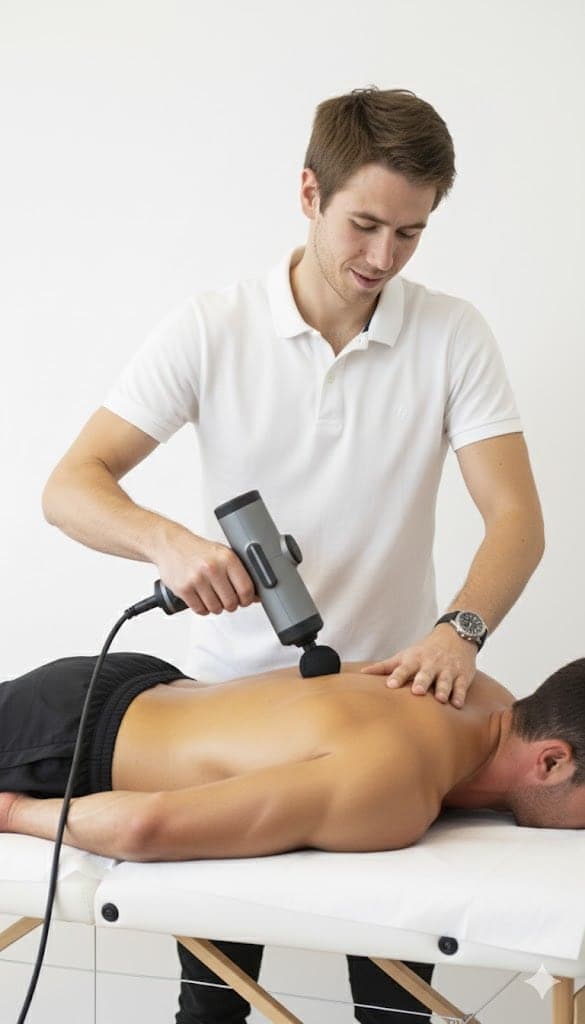
Written by
Chris
Massage therapist, nutrition and exercise physiologist
Norwegian-certified with a Bachelor’s in Physical Education and Nutrition and over ten years of clinical practice, working from a portable table in clients’ homes across the Paphos district.
This article is general information, not a medical diagnosis. If you have severe, worsening or unexplained pain, numbness, weakness, or pain after an accident, see a doctor first.