
Pegeia Massage Therapy for Golfers: Advanced Mechanical Treatment for Peak Performance
In short
Discover how advanced mechanical deep-tissue massage therapy in Pegeia addresses the root causes of golf-related pain and performance limitations through precision biomechanical intervention.
Golf is a biomechanically complex sport that places extraordinary demands on specific muscle groups, fascial planes, and joint structures. After a decade of treating golfers in Pegeia and throughout Cyprus, I’ve observed a consistent pattern: most players accept chronic discomfort as an inevitable consequence of their sport. They rotate through temporary solutions—over-the-counter anti-inflammatories, sporadic stretching routines, occasional relaxation massages—while the underlying mechanical dysfunction continues to degrade their performance and quality of life.
This acceptance of suboptimal function represents a fundamental misunderstanding of what’s actually happening in the tissues. When I assess a golfer’s movement patterns and palpate their musculature, I’m not simply feeling for “tight spots.” I’m evaluating compensatory patterns, fascial restrictions, trigger point formations, and the cumulative effect of repetitive rotational stress on the kinetic chain. The question isn’t whether massage therapy can help golfers—it’s whether the therapeutic approach addresses the mechanical reality of golf-related dysfunction.
My approach to Pegeia massage therapy for golfers differs fundamentally from conventional treatment modalities. With a Bachelor’s degree in Physical Education and Nutrition from Norway and ten years of specialized practice, I’ve developed a method centered on advanced mechanical deep-tissue intervention using precision equipment that achieves results impossible through manual techniques alone. This isn’t massage as relaxation therapy. This is biomechanical correction delivered with clinical precision.
Understanding Golf-Specific Biomechanical Stress
The golf swing generates forces that few recreational activities can match. During the downswing phase, rotational velocities exceed 100 degrees per second at the pelvis, with even higher rates at the thoracic spine. The lead shoulder experiences eccentric loading throughout the follow-through, while the trail side undergoes rapid concentric contraction. This asymmetrical loading pattern, repeated hundreds or thousands of times per week, creates predictable dysfunction patterns.
I see these patterns daily in my practice. The golfer arrives complaining of lower back pain, but the examination reveals the actual problem: restricted thoracic rotation forcing compensatory movement through the lumbar spine. Or they describe shoulder pain that’s actually radiating from trigger points in the subscapularis—a deep rotator cuff muscle that manual massage rarely addresses effectively. These aren’t isolated problems. They’re interconnected dysfunction within the kinetic chain, and treating them requires understanding the biomechanical cascade.
The standard approach—applying oil and working superficial muscle layers—provides temporary relief at best. I’ve treated countless golfers who’ve spent years receiving traditional massage without meaningful improvement. They describe the same cycle: temporary relaxation followed by the return of familiar pain patterns within days. This outcome is entirely predictable when treatment doesn’t address the mechanical dysfunction at the tissue level where it actually exists.
Why Traditional Massage Fails Golf-Specific Dysfunction
Human hands have inherent limitations when addressing deep fascial restrictions and established trigger points. Even experienced therapists can only generate approximately 30-50 pounds of force, and maintaining consistent pressure throughout a treatment session is physiologically impossible. Fatigue sets in. Pressure varies. The treatment becomes progressively less effective as the session continues.
More critically, manual techniques cannot achieve the depth required to address dysfunction in deep rotator cuff muscles, hip external rotators, or the multifidus complex along the spine—all crucial structures for golf performance. When I evaluate golfers who’ve undergone months of traditional massage, I consistently find that the deep tissue restrictions remain essentially untouched. The superficial muscle layers may feel temporarily relaxed, but the mechanical dysfunction driving their symptoms persists.
This isn’t a criticism of manual therapists. It’s simply recognition of physiological reality. The human hand cannot consistently deliver the depth, precision, and sustained force required to reorganize densely adhered fascial tissue or deactivate deeply embedded trigger points. Attempting to do so often results in therapist injury—I’ve personally treated numerous massage practitioners suffering from overuse injuries sustained while trying to work deeply enough to achieve lasting results.
The Depth Problem in Golf-Related Dysfunction
Consider the piriformis muscle, frequently involved in golf-related hip and lower back dysfunction. This muscle lies beneath the gluteus maximus, requiring penetration through several centimeters of tissue to address effectively. Manual pressure adequate to reach and treat this structure causes significant discomfort and requires force levels that most therapists cannot maintain safely.
Similarly, the subscapularis—a primary internal rotator of the shoulder and frequent source of golf-related shoulder pain—sits on the anterior surface of the scapula. Effective treatment requires working through or around the scapula itself, applying sustained pressure that manual techniques simply cannot deliver without causing tissue trauma to superficial structures.
I’ve treated golfers who’ve undergone dozens of manual massage sessions targeting these areas without resolution. Within single sessions using advanced mechanical deep-tissue techniques, we achieve release patterns that years of manual work failed to produce. This isn’t subjective impression. It’s measurable improvement in range of motion, demonstrable reduction in pain provocation, and objective enhancement of movement quality.
The Mechanical Deep-Tissue Advantage for Golfers
My specialized approach to Pegeia massage therapy for golfers utilizes advanced mechanical equipment designed specifically for deep-tissue intervention. This isn’t massage as most people understand it. This is precision biomechanical treatment delivered through technology that achieves three critical advantages: unprecedented depth, exact control, and perfect consistency.
The mechanical system I employ penetrates tissue layers that manual techniques cannot safely or effectively reach. We’re working at depths of 5-7 centimeters in major muscle groups, addressing fascial restrictions and trigger points at their source rather than their superficial manifestations. The precision adjustment capability allows me to modulate intensity from light superficial work to powerfully deep intervention within seconds, customizing the treatment to each tissue structure and each individual’s tolerance.
Perhaps most importantly, the mechanical approach eliminates variability. Every stroke delivers identical force, depth, and speed. There are no “off days” where therapist fatigue compromises treatment quality. The fifty-fifth minute of the session is as effective as the fifth. This consistency is crucial for golf-specific work, where treatment plans often span weeks or months of progressive tissue reorganization.
Treating the Kinetic Chain, Not Isolated Symptoms
When a golfer presents with lower back pain, I don’t simply treat their lower back. I assess their entire kinetic chain, identifying the movement restrictions and compensatory patterns that are forcing excessive stress through the lumbar spine. Often, the primary dysfunction exists in the hips—restricted internal rotation on the trail side, inadequate external rotation on the lead side, tight hip flexors limiting pelvic positioning.
I treated a 52-year-old golfer last spring whose chronic lower back pain had resisted two years of conventional treatment. His physician had suggested he might need to quit golf. My assessment revealed severely restricted hip internal rotation bilaterally, forcing him to compensate with excessive lumbar rotation during his swing. His back wasn’t the problem—it was the victim of hip dysfunction.
Over eight weeks of progressive mechanical deep-tissue work focused primarily on hip external rotators, hip flexors, and thoracic spine mobility, we restored functional movement patterns. His back pain resolved completely—not because I treated his back, but because I eliminated the mechanical dysfunction forcing his back to compensate. He’s now playing the best golf of his life, pain-free, two years later.
Common Golf-Related Dysfunction Patterns I Address
| Dysfunction Pattern | Primary Structures Involved | Mechanical Treatment Focus | Expected Outcome Timeline |
|---|---|---|---|
| Lower Back Pain from Rotation | Multifidus, quadratus lumborum, hip external rotators | Deep hip rotator release, thoracic mobility restoration | 4-8 weeks for complete resolution |
| Lead Shoulder Impingement | Subscapularis, infraspinatus, pectoralis minor | Deep rotator cuff work, scapular mobility enhancement | 6-10 weeks for full functional recovery |
| Trail Side Elbow Pain | Common extensor tendon, brachioradialis, triceps | Forearm extensor release, kinetic chain assessment | 3-6 weeks for symptom elimination |
| Hip Restriction Limiting Turn | Piriformis, obturator internus, iliopsoas | Deep hip flexor and external rotator treatment | 4-8 weeks for optimal rotation restoration |
| Neck Tension from Head Position | Upper trapezius, levator scapulae, suboccipitals | Deep cervical work, postural pattern correction | 2-4 weeks for sustained relief |
These timelines assume commitment to the treatment protocol and addressing any contributing movement patterns or training errors. Golf-related dysfunction develops over months or years of repetitive stress. Resolution requires systematic intervention, not quick fixes.
The Treatment Protocol: What Golfers Can Expect
My approach to Pegeia massage therapy for golfers follows a structured assessment and treatment model. I don’t offer one-off relaxation sessions. I provide dedicated partnerships focused on lasting resolution of mechanical dysfunction and optimization of performance capacity.
The initial session involves comprehensive movement assessment. I evaluate your golf swing patterns—not from a coaching perspective, but from a biomechanical stress perspective. Where are the restrictions? Which structures are compensating? What’s the cascade of dysfunction contributing to your symptoms? This assessment informs the entire treatment strategy.
Treatment itself is unlike conventional massage. I travel to your location with professional equipment—a specialized treatment bench and the mechanical deep-tissue system. You’re not lying on a hotel bed or makeshift surface. You’re positioned optimally for biomechanical access to the target structures. The mechanical intervention is powerful, deep, and precisely controlled. It’s not painful, but you’ll feel the work happening at tissue depths you’ve never experienced.
Progressive Tissue Reorganization
Effective treatment of established dysfunction requires progressive intervention. The first session addresses superficial and intermediate restrictions, preparing the tissue for deeper work. Attempting to address deep restrictions immediately causes excessive discomfort and risks tissue trauma. Instead, we systematically work deeper over successive sessions, allowing tissue adaptation and reorganization.
I treated a competitive amateur golfer whose lead shoulder had progressively limited his backswing for three years. Imaging showed no structural pathology—this was purely soft tissue dysfunction. The first session focused on superficial pectoral and anterior deltoid restrictions. The second session progressed to deeper pectoral minor work and scapular mobility. By the third session, we were addressing deep subscapularis adhesions that had been restricting internal rotation for years.
After eight sessions over ten weeks, his shoulder range of motion exceeded his pre-injury baseline. His swing speed increased by 7 mph. His shoulder pain disappeared completely. This is the outcome that progressive, scientifically-grounded intervention produces. There are no shortcuts to reorganizing tissue that’s been dysfunctional for years.
Why Golfers Specifically Benefit from Mechanical Deep-Tissue Work
Golf creates unique biomechanical demands that respond exceptionally well to mechanical deep-tissue intervention. The sport’s asymmetrical nature means dysfunction develops predictably on specific sides. The repetitive rotational stress creates characteristic restriction patterns in the thoracic spine, hips, and shoulders. These patterns exist at tissue depths that manual techniques cannot effectively address.
I’ve worked with recreational golfers experiencing performance plateaus despite excellent coaching and dedicated practice. Their swing mechanics were technically sound, but physical restrictions were preventing full execution. After addressing hip rotation restrictions, thoracic mobility limitations, and shoulder function deficits through mechanical deep-tissue work, they achieved swing speeds and consistency they’d never previously attained.
The performance implications extend beyond pain elimination. Unrestricted hip internal rotation allows optimal weight transfer. Full thoracic rotation enables proper shoulder turn without compensatory lumbar stress. Complete shoulder external rotation permits ideal backswing positioning. These aren’t coaching issues—they’re biomechanical capabilities that massage therapy, properly applied, can restore or enhance.
The Preventive Advantage
Most golfers seek massage therapy reactively—after pain develops, after performance declines, after injury occurs. The more sophisticated approach is preventive intervention. Regular mechanical deep-tissue work prevents the accumulation of restrictive adhesions, maintains optimal fascial mobility, and identifies emerging dysfunction before it becomes symptomatic.
I work with several low-handicap golfers who’ve adopted this preventive model. They schedule regular sessions throughout the season, maintaining optimal movement capacity and preventing the gradual restriction accumulation that degrades performance over time. They’re investing in sustained peak function rather than repeatedly addressing dysfunction after it develops.
This model requires a different mindset than conventional massage. You’re not purchasing relaxation sessions. You’re investing in biomechanical maintenance that preserves and enhances your physical capacity to perform at your highest level. The return on this investment—measured in years of pain-free golf, consistent performance, and avoiding the cascade of compensatory injuries—far exceeds the cost.
Case Study: Resolving Chronic Golf-Related Lower Back Pain
A 48-year-old executive golfer contacted me after eighteen months of persistent lower back pain that was progressively limiting both his golf and daily function. He’d undergone extensive imaging showing minimal degenerative changes insufficient to explain his symptoms. He’d tried physical therapy, chiropractic care, and regular sports massage without lasting improvement. His physician had suggested spinal injections as the next intervention.
My assessment revealed the actual problem: severely restricted thoracic spine rotation and bilateral hip internal rotation limitations forcing massive compensatory stress through his lumbar spine with every swing. His lower back was failing not because of inherent weakness or structural pathology, but because it was being forced to produce rotation that should have originated from the thoracic spine and hips.
We implemented a twelve-week treatment protocol focused primarily on thoracic mobility and hip function. The mechanical deep-tissue work addressed deep paraspinal restrictions from T4 through T12, released chronically tight hip external rotators limiting internal rotation, and eliminated trigger points in the quadratus lumborum that were perpetuating the pain cycle.
By week six, his back pain had decreased by approximately 70%. By week twelve, it was completely resolved. His thoracic rotation had improved by 30 degrees bilaterally. His hip internal rotation—which had measured 15 degrees on the trail side initially—now measured 35 degrees. He was swinging faster, scoring better, and completely pain-free. Two years later, with maintenance sessions every six weeks, he remains asymptomatic.
This outcome isn’t unusual in my practice. It’s the expected result when treatment addresses actual mechanical dysfunction rather than superficially managing symptoms.
The Investment Perspective: Cost Versus Value
Many golfers initially balk at the cost of comprehensive mechanical deep-tissue intervention, comparing it to the lower rates of conventional massage. This comparison fundamentally misunderstands what’s being purchased. Conventional massage provides temporary relaxation—valuable, but not corrective. Mechanical deep-tissue work resolves underlying dysfunction, producing lasting results that eliminate the need for ongoing treatment.
Consider the actual costs of unresolved golf-related dysfunction. There’s the direct cost of repeated ineffective treatments—I regularly meet golfers who’ve spent thousands on conventional approaches without meaningful improvement. There’s the cost of performance degradation—shooting higher scores, losing distance, reduced playing frequency. There’s the cost of cascading injuries as compensatory patterns create new problems. And there’s the enormous cost of eventually quitting golf entirely because pain makes it unsustainable.
Against these costs, investment in effective biomechanical intervention represents exceptional value. Spending several hundred euros to durably resolve a dysfunction that’s been degrading your quality of life for years isn’t an expense—it’s one of the highest-return investments you can make in your physical wellbeing and enjoyment of the sport.
The Partnership Model
I don’t offer isolated treatment sessions because that model doesn’t serve golfers effectively. Resolving established dysfunction and optimizing performance requires systematic intervention over weeks or months. I work through dedicated partnerships where we develop comprehensive treatment plans, schedule progressive sessions, and adjust the approach based on tissue response and outcome achievement.
This partnership means you’re not simply purchasing sessions—you’re gaining a dedicated specialist committed to your lasting improvement. Between sessions, I’m available for consultation on training modifications, movement pattern concerns, or symptom changes. This accessibility ensures that treatment remains optimally aligned with your needs and any developing issues are addressed immediately rather than waiting for the next scheduled session.
The golfers who achieve the most dramatic results are those who commit fully to this partnership model. They attend sessions consistently, follow movement recommendations, and trust the progressive protocol rather than expecting immediate complete resolution. Their patience is rewarded with outcomes that conventional approaches simply cannot produce.
Mobile Service: Professional Treatment at Your Location
Unlike clinic-based practitioners, I bring the entire professional treatment setup to your location throughout Pegeia and surrounding areas. This mobile approach provides several distinct advantages for golfers with demanding schedules and limited time availability.
You don’t lose time traveling to and from a clinic. You don’t deal with parking, waiting rooms, or schedule inflexibility. I arrive at your home, villa, or hotel with a professional treatment bench and all equipment necessary for comprehensive mechanical deep-tissue intervention. The treatment environment is private, controlled, and optimized for your comfort and the technical requirements of the work.
This mobile model particularly benefits golfers visiting Pegeia for golf holidays or extended stays. You can maintain your treatment protocol without interruption, scheduling sessions around your tee times and ensuring that physical preparation or recovery doesn’t interfere with your golf plans. Several clients schedule sessions in the evening after their rounds, addressing the acute stress from that day’s play and maintaining optimal function throughout their stay.
What Golfers Should Know Before Starting Treatment
Mechanical deep-tissue work differs fundamentally from any massage you’ve likely experienced. Understanding what to expect helps you participate effectively in the treatment process and achieve optimal results.
First, this isn’t relaxation therapy. The mechanical intervention is powerful and works at tissue depths that will be unfamiliar. It’s not painful, but you’ll definitely feel the work happening. Communication throughout the session is crucial—I need your feedback on pressure, sensation, and tissue response to optimize the intervention.
Second, expect some post-treatment soreness, particularly after early sessions. We’re reorganizing tissue that’s been restricted for months or years. Mild discomfort for 24-48 hours afterward is normal and indicates effective treatment depth. This soreness differs qualitatively from injury pain—it’s muscle soreness similar to what you’d experience after unaccustomed exercise.
Third, improvement isn’t always linear. You might feel dramatically better immediately after the first session, then experience some symptom return before the next session. This is normal tissue response as restrictions begin to release but haven’t fully reorganized. Sustained improvement develops progressively over the treatment protocol, not instantaneously.
Contraindications and Considerations
While mechanical deep-tissue work is safe for most individuals, certain conditions require caution or modification. Active inflammation, acute injury (within 48-72 hours), skin conditions in the treatment area, and certain medications affecting tissue healing may necessitate treatment adjustments or temporary postponement.
If you have significant medical conditions—cardiovascular disease, cancer history, osteoporosis, neurological conditions—inform me during initial consultation. These conditions don’t necessarily preclude treatment, but they require protocol modifications to ensure safety and optimal outcomes.
Frequently Asked Questions About Pegeia Massage Therapy for Golfers
How is mechanical deep-tissue massage different from sports massage?
Sports massage typically involves manual techniques working primarily on superficial and intermediate muscle layers. The therapist uses hands, forearms, and elbows to apply pressure, stretch tissue, and promote circulation. This approach is valuable for recovery and general maintenance but has inherent depth and consistency limitations.
Mechanical deep-tissue massage utilizes specialized equipment capable of working 5-7 centimeters deep into muscle tissue with precisely controlled force that human hands cannot match. We’re addressing fascial restrictions, trigger points, and adhesions at their source rather than their superficial manifestations. The mechanical approach also eliminates variability—every stroke delivers identical force and depth, ensuring consistent results impossible through manual techniques.
Will mechanical massage hurt?
The sensation differs significantly from conventional massage. You’ll feel substantial pressure as we work deeply into restricted tissue. Most clients describe it as “intense but good”—you’re aware of the work happening but it’s not painful. The mechanical system allows precise intensity adjustment, so we can modulate the pressure to your tolerance while maintaining treatment effectiveness.
Some areas will be more sensitive than others, particularly where significant dysfunction exists. Trigger points may refer sensation to other areas—for example, work on hip rotators might produce sensation down the leg. This is normal nerve referral, not damage. Communication throughout the session ensures we’re working at optimal intensity for tissue reorganization without exceeding your tolerance.
How many sessions will I need?
Treatment duration depends on dysfunction severity, how long the problem has existed, and your individual tissue response. Acute issues that have been present for weeks or months typically resolve in 4-8 sessions. Chronic dysfunction that’s existed for years may require 10-15 sessions for complete resolution.
I provide realistic timeline estimates after the initial assessment once I understand your specific dysfunction patterns. Some clients achieve their goals quickly; others require more extensive intervention. The key is committing to the protocol rather than expecting immediate complete resolution after one or two sessions.
Can mechanical massage improve my golf performance even if I don’t have pain?
Absolutely. Many golfers have movement restrictions that limit performance without causing obvious pain. Restricted hip rotation forces compensatory movement through the spine. Limited thoracic mobility reduces shoulder turn capacity. Tight shoulders restrict backswing depth. These restrictions develop gradually, so you adapt without recognizing the limitation.
Addressing these restrictions through mechanical deep-tissue work often produces dramatic performance improvements. I’ve worked with numerous golfers who gained 5-10 mph in swing speed simply by restoring full hip and thoracic rotation. Their mechanics didn’t change—their physical capacity to execute those mechanics improved.
How does this compare to physical therapy?
Physical therapy and mechanical deep-tissue massage address different but complementary aspects of dysfunction. Physical therapy focuses primarily on movement pattern correction, strengthening, and exercise prescription. This is valuable for addressing motor control deficits and building capacity.
Mechanical deep-tissue work addresses the tissue restrictions that prevent optimal movement patterns. If fascial adhesions restrict your hip rotation by 40%, no amount of stretching or strengthening will restore that rotation until the tissue restriction is released. Many clients benefit from combining both approaches—mechanical work to restore tissue mobility, physical therapy to optimize movement patterns using that restored mobility.
Will I need ongoing maintenance sessions?
Once we’ve resolved your primary dysfunction and achieved your treatment goals, the need for ongoing sessions depends on your activity level and goals. Recreational golfers who play once or twice weekly often maintain optimal function with quarterly sessions. More serious players or those with demanding practice schedules may benefit from monthly maintenance.
The purpose of maintenance isn’t treating recurring dysfunction—it’s preventing dysfunction from developing. Regular sessions identify and address emerging restrictions before they become symptomatic, maintaining the optimal movement capacity we’ve established. This preventive approach is far more efficient than repeatedly treating dysfunction after it develops.
Can you help with specific injuries like golfer’s elbow or shoulder impingement?
Yes, these conditions typically respond exceptionally well to mechanical deep-tissue intervention because they’re usually caused by soft tissue dysfunction rather than structural pathology. Golfer’s elbow (medial epicondylitis) develops from chronic tension in forearm flexors, often driven by compensatory grip patterns caused by shoulder or thoracic restrictions. True resolution requires addressing the entire kinetic chain, not just treating the symptomatic elbow.
Shoulder impingement similarly has root causes beyond the shoulder itself—restricted thoracic rotation forcing excessive shoulder compensation, tight pectoral muscles altering scapular mechanics, or restricted hip rotation causing compensatory upper body stress. Mechanical deep-tissue work systematically addresses these interconnected dysfunctions, resolving the condition durably rather than temporarily managing symptoms.
Do you work with golfers of all skill levels?
Absolutely. I work with everyone from beginners experiencing their first golf-related pain to competitive players seeking performance optimization. The biomechanical principles are identical regardless of skill level—the body experiences stress from the golf swing according to physics and physiology, not handicap.
Beginning golfers often benefit enormously because we can address dysfunction before it becomes severe and establish optimal movement patterns early. Experienced players appreciate the performance gains from eliminating restrictions they’ve accommodated for years. The approach is individualized to your specific needs, goals, and dysfunction patterns.
What should I do to prepare for a session?
Arrive well-hydrated and avoid eating a large meal within two hours of the session. Wear comfortable, loose-fitting clothing that allows easy access to treatment areas—shorts and a t-shirt work well. If you have imaging results, previous treatment records, or specific questions about your condition, bring those along for the initial consultation.
After the session, continue hydrating well, avoid intense exercise or golf for 24 hours to allow tissue adaptation, and apply ice if you experience post-treatment soreness. Light walking and gentle movement are beneficial—complete rest isn’t necessary or desirable.
Taking the Next Step: Starting Your Treatment Partnership
If you’re a golfer in Pegeia dealing with pain, performance limitations, or simply wanting to optimize your physical capacity for the sport, the question isn’t whether mechanical deep-tissue intervention can help—it’s whether you’re ready to commit to the process of lasting improvement.
This isn’t a quick fix. It’s not a relaxation service. It’s a systematic, scientifically-grounded approach to resolving the mechanical dysfunction that’s limiting your golf and your quality of life. It requires partnership, commitment, and patience as we progressively address restrictions that may have been developing for years.
The golfers who achieve the most dramatic outcomes are those who trust the process, attend sessions consistently, and recognize that they’re investing in long-term wellbeing rather than purchasing temporary symptom relief. They understand that several weeks of dedicated intervention to durably resolve dysfunction represents far greater value than years of repeatedly managing symptoms without achieving actual resolution.
My practice focuses exclusively on clients who are serious about achieving lasting results. I don’t offer one-off sessions or quick-fix approaches because they don’t serve golfers effectively. If you’re committed to genuinely resolving your dysfunction and optimizing your performance capacity, I’m committed to partnering with you throughout that process.
The difference between temporary relief and lasting resolution often comes down to choosing the right therapeutic approach. After ten years of producing outcomes that conventional methods couldn’t achieve, I’m confident that mechanical deep-tissue intervention represents the most effective available option for golf-related dysfunction. The question is whether you’re ready to experience what optimal function actually feels like.
Contact me to schedule an initial assessment and consultation. We’ll evaluate your specific dysfunction patterns, discuss realistic outcome expectations and treatment timelines, and determine whether this approach aligns with your goals. For golfers serious about lasting improvement, this represents the beginning of playing the best, most pain-free golf of your life.
Pegeia massage therapy for golfers doesn’t have to mean temporary relief and recurring dysfunction. When approached with appropriate biomechanical expertise and advanced treatment modalities, it means lasting resolution and optimized performance. That’s the outcome I deliver, and that’s the standard you should expect.
Evidence and limits
Massage may help with some symptoms, but benefits and evidence vary by condition. It does not replace medical assessment or treatment. A page update is not evidence of an independent clinical review.
Further reading: Massage therapy: evidence, safety and limitations by US National Center for Complementary and Integrative Health. This is general background reading, not verification of every claim in this article.
How we describe evidence and updates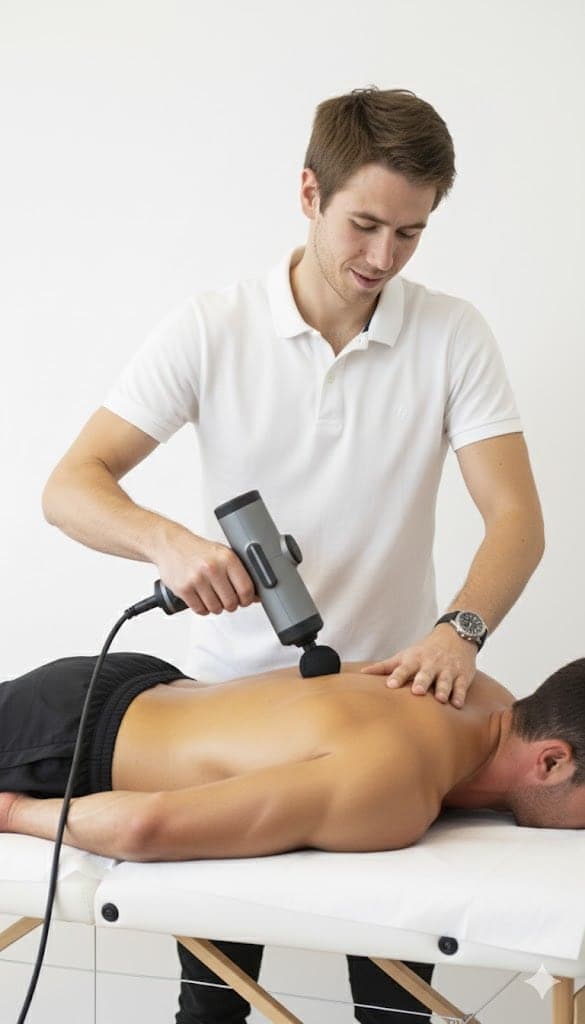
Written by
Chris
Massage therapist, nutrition and exercise physiologist
Norwegian-certified with a Bachelor’s in Physical Education and Nutrition and over ten years of clinical practice, working from a portable table in clients’ homes across the Paphos district.
This article is general information, not a medical diagnosis. If you have severe, worsening or unexplained pain, numbness, weakness, or pain after an accident, see a doctor first.