Post-workout recovery massage: what actually helps tired muscles
In short
A post-workout recovery massage works best 24 to 48 hours after a hard session, when soreness has peaked. Firm, slow deep-tissue work on the loaded muscles eases guarding and stiffness so you can train again sooner.
I am Chris, and I bring a bench and a mechanical deep-tissue device to homes across the Paphos district. A large part of my week is post-workout recovery massage for people who train hard — gym, running, cycling, padel, swimming — and want to be ready for the next session rather than sore for three days.
What is actually happening in a sore muscle
Hard training creates small, controlled damage in muscle fibres. That is normal and it is how you adapt. What follows is what most people notice as soreness, stiffness and a slightly clumsy feeling for a day or two.
- Local inflammation and fluid in the muscle, peaking around 24 to 48 hours after the session
- Raised resting tone in the muscles that did the most work, which the nervous system holds as protective guarding
- Reduced glide between muscle layers and their surrounding fascia, especially where the load was repetitive
- Altered feedback from the tissue, so movements feel less coordinated than usual
None of this needs to be treated in a panic. Most of it settles on its own. The point of recovery work is to shorten the stiff, guarded phase and stop it turning into the compensation patterns that quietly build over a training block.
Post-workout recovery massage — timing and what to expect
The question I get most is when to book. My answer is usually the day after, or the day after that. Immediately after a hard session the tissue is irritable and firm pressure adds to the load rather than relieving it. Once soreness has peaked, slow deep work is well tolerated and does the most good.
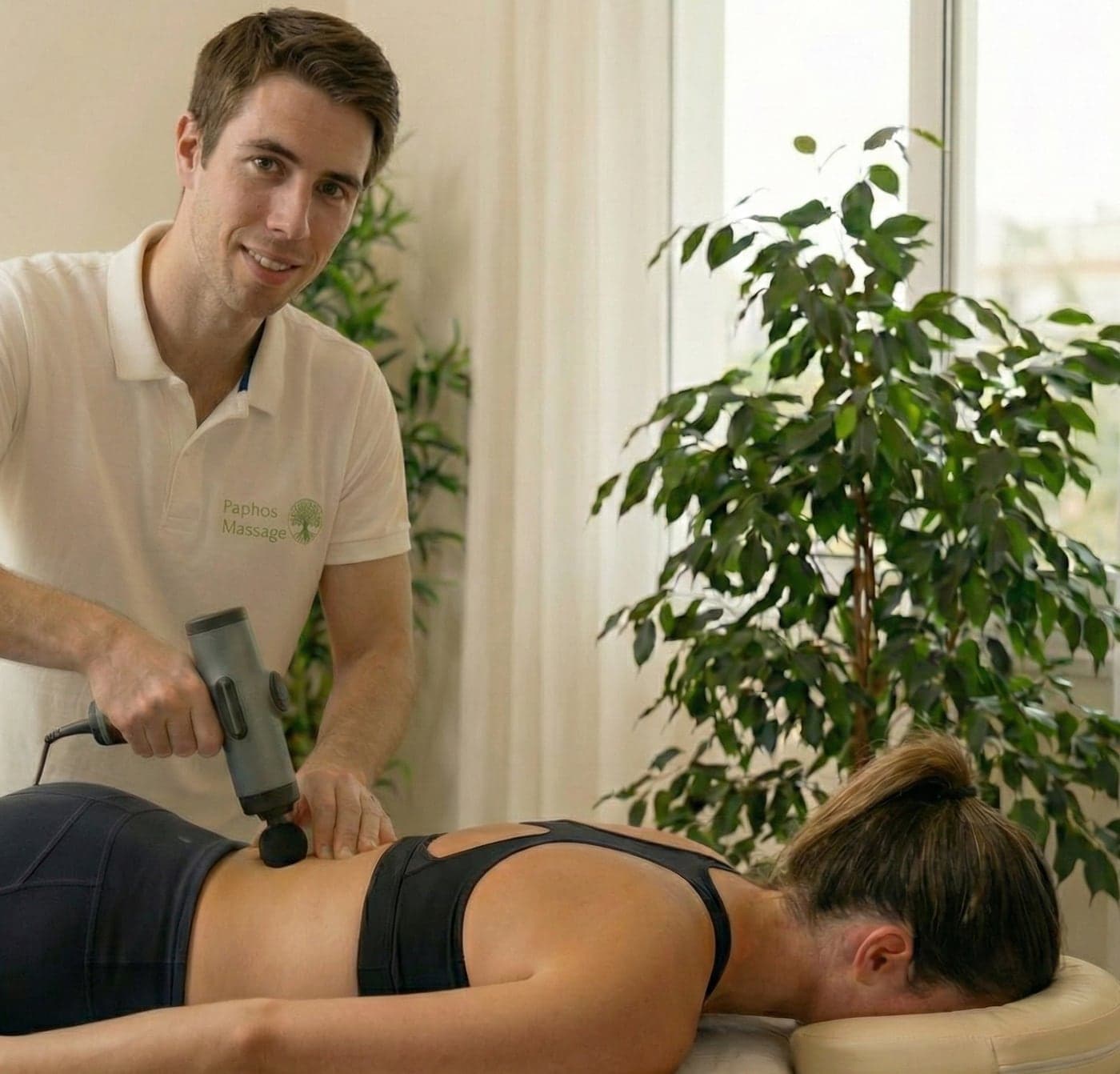
A session at your home starts with a short chat about what you trained and where you feel it. I set up the bench where there is a little space and work slowly through the muscles that took the load — for a runner that is calves, hamstrings, glutes and the deep hip rotators; for a lifter it is the spinal erectors, lats and the hip complex. Sixty minutes covers the legs and back well; ninety lets me add shoulders, forearms and the smaller stabilisers without rushing.
What the massage does and does not do
I would rather be honest here than oversell. Firm, directional deep-tissue work has clear and useful effects on a recovering muscle, and there are things it simply cannot do.
| Post-workout recovery massage helps with | It does not |
|---|---|
| Easing raised muscle tone and protective guarding | Repair muscle fibres faster than your body already does |
| Restoring comfortable range of motion after a heavy block | Remove the need for sleep and adequate food |
| Finding the tight, overworked spots you did not know were there | Replace medical assessment of a genuine injury |
| Making the next hard session feel less like starting from cold | Change your training programme for you |
The mechanical device I use matters for one reason: it lets me apply pressure that is slower, deeper and more consistent than hands alone manage over sixty minutes. I still choose every stroke, but I am not fighting fatigue in my own thumbs by the third muscle group. For dense, well-trained legs that difference is noticeable.
The rest of recovery — sleep, food and light movement
My degree covered nutrition alongside physical education, so I will say plainly that massage sits inside a bigger picture. If the basics are missing, no amount of tissue work makes up for them.
Where massage fits is in the gap these leave: the tissue that stays tight even when you have slept and eaten well, and the guarding that starts to shape how you move. That is also where the frequency question comes in. During a heavy block, one session a week or every second week is what most of my regular clients settle on. In a lighter phase, once a month is plenty for maintenance.
Common recovery mistakes I see in Paphos
After a decade of doing this, the patterns repeat. These are the ones that come up most often at the door.
- Booking too soon. A massage two hours after a brutal session feels heroic and mostly makes you sorer. Wait a day.
- Only treating what hurts. The sore calf is often the loudest, not the cause; tight hips and a stiff upper back are usually involved.
- Rolling harder instead of resting. Foam rollers and massage guns are fine for light self-care, but hammering an already inflamed muscle is not recovery.
- Recovering only when something is wrong. Reactive care means you are always behind. A regular slot in a hard block keeps you ahead of it.
- Ice baths for everything. Cold has its place, but used after every session it may blunt some of the adaptation you are training for. Save it for competition periods.
The presentation I see most often in the Paphos gym crowd is a well-trained person with strong legs, a very tight lower back and hips that have quietly stopped extending properly. Almost none of them feel restricted, because the body has adapted around it. That is exactly the case for regular work rather than emergency work, and it is what my sports massage sessions are built around when the training goal is performance rather than pure recovery.
Who this suits and when to see a doctor first
I can help with muscle soreness, stiffness, guarding and the tight, overworked spots that come with consistent training; I cannot help with — and will not treat — a sharp, sudden injury, a joint that has swollen or given way, or numbness and tingling, so see a doctor first if any of those are present, and come to me once you have been cleared.
That said, most people who message me are somewhere between "a bit stiff" and "have not been able to squat properly for a month". Both are well within what a series of home sessions can address. If you are unsure which side of the line you are on, describe it on WhatsApp and I will tell you honestly whether I am the right person or whether a doctor should look first.
Pricing is the same wherever I travel in the district: €90 for sixty minutes and €130 for ninety, with one additional free session when you pre-book five sessions as a package — details are on the pricing page.
Frequently asked questions
How soon after training should I have a post-workout recovery massage?
Ideally 24 to 48 hours after the hard session, once soreness has peaked and the tissue is no longer irritable. Immediately after training the muscles are inflamed and firm pressure adds to the load. If you have a race or event coming, keep any deep work at least two days before it so you start fresh rather than tender.
Does deep-tissue massage stop me adapting to training?
No. The training stimulus has already been delivered by the time I arrive; massage does not undo it. What slow, firm work does is settle the raised muscle tone and stiffness that follow, so you move well in the next session. The recovery methods that can interfere with adaptation are the very aggressive ones like daily ice baths, not massage.
How often should I book during a heavy training block?
Most of my regular clients in a hard phase settle on one session a week or every second week, then drop to roughly monthly for maintenance when training eases. It depends on volume, how dense the tissue is and how well you sleep and eat. We usually find the right rhythm after two or three sessions and adjust from there.
Is a massage gun or foam roller enough on its own?
For light, daily self-care they are useful and I encourage them. What they cannot do is hold slow, deep, directional pressure on the specific muscle layer that is guarding, or find the tight spots you are not aware of. Think of them as maintenance between sessions rather than a replacement for a proper hands-on assessment and treatment.
Do I need to be a competitive athlete for this to be worthwhile?
Not at all. Anyone who trains consistently — three gym sessions a week, a regular run group, padel twice a week — accumulates the same stiffness and guarding, just at a lower intensity. The recreational trainers I see benefit as much as the racers, and often more, because nobody has looked at their tissue before.
What if I feel sore the day after the massage?
Some mild tenderness the next day is common after firm work, similar to a light training session, and it settles within a day or so. Sharp pain, bruising or anything that gets worse rather than better is not expected; message me if that happens. Drinking water, an easy walk and a good night's sleep are the best follow-up.
Evidence and limits
Massage may help with some symptoms, but benefits and evidence vary by condition. It does not replace medical assessment or treatment. A page update is not evidence of an independent clinical review.
Further reading: Massage therapy: evidence, safety and limitations by US National Center for Complementary and Integrative Health. This is general background reading, not verification of every claim in this article.
How we describe evidence and updates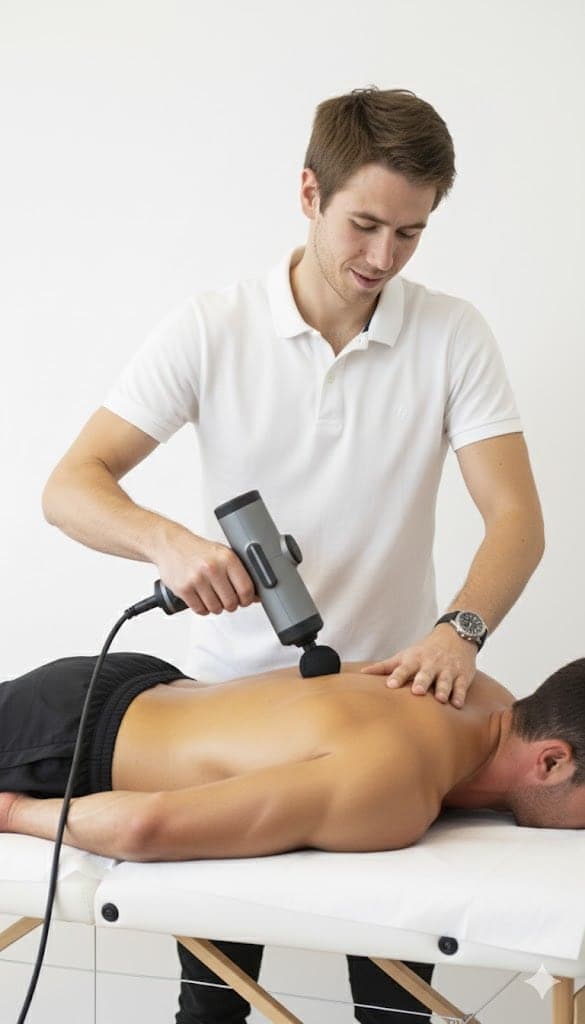
Written by
Chris
Massage therapist, nutrition and exercise physiologist
Norwegian-certified with a Bachelor’s in Physical Education and Nutrition and over ten years of clinical practice, working from a portable table in clients’ homes across the Paphos district.
- Norwegian-certified
- Nutrition & exercise physiologist
- 10+ years clinical practice
- Based in Chlorakas · all of Paphos district
- No call-out fee anywhere in Paphos district
Last updated
This article is general information, not a medical diagnosis. If you have severe, worsening or unexplained pain, numbness, weakness, or pain after an accident, see a doctor first.