Post-Ride Massage Benefits: The Science Behind Accelerated Recovery for Cyclists
In short
Discover how advanced mechanical deep-tissue massage after cycling delivers measurable recovery benefits, targeting muscle adhesions and metabolic waste for superior performance outcomes.
When I started working with competitive cyclists a decade ago, I noticed a recurring pattern: riders would push their bodies to extraordinary limits during training and events, then treat recovery as an afterthought. They’d stretch halfheartedly, maybe roll on a foam cylinder, and wonder why their performance plateaued or why chronic tightness became their new baseline. After ten years of clinical practice and thousands of sessions with riders ranging from weekend warriors to professional athletes, I can tell you unequivocally that post-ride massage isn’t just beneficial—it’s fundamental to sustained performance and longevity in the sport.
The critical distinction here is understanding what constitutes an effective post-ride treatment versus what most cyclists receive when they seek “massage.” Traditional Swedish massage, while pleasant, addresses surface-level tension and promotes general relaxation. That’s not what your body requires after pushing through hill repeats or completing a century ride. Your musculature needs targeted mechanical intervention that addresses the specific physiological disruptions created by repetitive pedaling motion, sustained positioning, and accumulated metabolic byproducts.
My background in Physical Education and Nutrition from Norway, combined with a decade of hands-on clinical work, has taught me that the body operates according to precise mechanical principles. When you understand these principles and apply the right intervention at the right depth with the right consistency, you don’t just feel better temporarily—you create lasting structural change that compounds over time.
Understanding the Biomechanical Stress of Cycling
Cycling places your body in a unique position of repetitive unidirectional stress. Unlike running, where impact forces vary with terrain, or swimming, where movement patterns constantly shift, cycling locks you into a fixed kinematic chain with thousands of identical repetitions. During a single hour-long ride at 90 RPM, you complete 5,400 pedal strokes. Each stroke recruits the same muscle groups through the same range of motion, creating what I call “pattern overload.”
This pattern overload manifests in three distinct ways that compromise your next ride if left unaddressed. First, the primary movers—your quadriceps, glutes, and hip flexors—develop microtrauma within the muscle fibers themselves. These microscopic tears are the body’s adaptation mechanism for building strength, but they also create localized inflammation and temporary structural weakness. Second, the stabilizing muscles, particularly throughout your lower back, hip rotators, and even upper trapezius from maintaining your position on the bike, accumulate sustained tension that restricts normal movement patterns. Third, metabolic waste products including lactate, hydrogen ions, and inflammatory cytokines concentrate in tissue with compromised circulation.
I’ve treated professional cyclists who could produce remarkable power output but couldn’t internally rotate their hip beyond 15 degrees. The limitation wasn’t flexibility in the traditional sense—it was accumulated fascial restriction and adhesion formation from years of riding without adequate deep-tissue intervention. When we addressed these restrictions with precision mechanical work, their power improved not because their muscles got stronger, but because their nervous system could finally recruit the full capacity that was always present but mechanically inaccessible.
The Physiological Cascade of Post-Ride Recovery
Understanding post-ride massage benefits requires grasping what happens in your body during the hours and days following intense cycling. The immediate post-exercise period represents a critical window where intervention can either accelerate or impede adaptation. Your body isn’t simply “tired”—it’s navigating a complex cascade of inflammatory responses, protein synthesis, and structural remodeling.
When you finish a hard ride, several simultaneous processes begin. Damaged muscle fibers trigger an inflammatory response that brings immune cells to the affected tissue. This inflammation is necessary for adaptation, but excessive or prolonged inflammation creates unnecessary recovery debt. Simultaneously, your lymphatic system attempts to clear metabolic waste, but this system lacks the pumping mechanism of your cardiovascular system and relies on external compression and movement to function efficiently. Meanwhile, your nervous system, which has been firing repeatedly to maintain your pedaling pattern, remains in a heightened state of activation that can persist for hours if not actively downregulated.
This is where the specificity of intervention matters enormously. I’ve seen countless riders who religiously ice their legs or use compression boots, believing they’re optimizing recovery. These modalities provide superficial benefits, but they don’t address the primary limitation to your next performance: mechanical restriction within the muscle tissue itself. Ice reduces inflammation indiscriminately, including the productive inflammation needed for adaptation. Compression boots move fluid temporarily, but they can’t release the adhesions that restrict sarcomere lengthening and limit contractile efficiency.
Why Mechanical Precision Surpasses Manual Techniques
Traditional massage has inherent limitations that become apparent when you understand what actually needs to happen at the tissue level. Human hands can deliver approximately 40-60 pounds of pressure before the therapist’s own structural integrity becomes compromised. For most riders, the areas requiring intervention—the proximal attachments of the IT band, the belly of the vastus lateralis, the insertion points of the hip flexors—need substantially more force to create meaningful change, especially in well-developed musculature.
I made this realization years ago when working with a criterium racer who had developed chronic lateral knee pain. Manual work would temporarily reduce his discomfort, but the underlying restriction in his lateral chain remained untouched because I simply couldn’t generate sufficient force to address the dense fascial tissue without compromising my own mechanics. When I transitioned to using a specialized mechanical device that could deliver controlled, sustained pressure at depths manual work couldn’t reach, we resolved his issue durably within four sessions.
The machine I use now allows for something human hands cannot provide: unwavering consistency at therapeutic depths. During a post-ride session, I can maintain 80-100 pounds of precisely directed pressure through the entire length of your quadriceps, systematically addressing every square inch of tissue. This consistency is critical because fascial restrictions don’t respond to brief pressure—they require sustained mechanical load to induce plastic deformation and lasting change.
The control this approach provides is equally important. With manual work, depth is always a compromise between the therapist’s endurance and your tolerance. With mechanical application, I can gradually increase intensity as tissue releases, working progressively deeper within a single session without fatigue affecting quality. For cyclists who’ve just completed an intense ride, this means I can address immediate surface-level tension first, then progress to deeper restrictions as the nervous system adapts to the intervention.
Strategic Treatment Timing for Maximum Adaptation
The question I’m asked most frequently is: “When should I schedule massage after a ride?” The answer depends on your training phase, the intensity of the ride, and your specific physiological response patterns, but there are general principles that apply universally.
For high-intensity training sessions or races, immediate post-ride intervention within 2-4 hours provides maximum benefit for acute recovery. During this window, your inflammatory cascade is just beginning, metabolic waste is at peak concentration, and your nervous system remains highly activated. Targeted deep-tissue work during this period accomplishes several objectives simultaneously. It mechanically facilitates lymphatic drainage more effectively than compression alone. It downregulates sympathetic nervous system activation through specific pressure application to key trigger points. And critically, it prevents the formation of early-stage adhesions where damaged tissue begins binding to adjacent structures.
I worked with a cyclist preparing for a stage race who would traditionally take two days to feel recovered after threshold intervals. We implemented a protocol where I treated him within three hours of finishing his Tuesday and Thursday sessions. By targeting his primary movers and hip flexors with deep mechanical work, we reduced his perceived recovery time to under 24 hours. He wasn’t working less hard—he was clearing the mechanical restrictions that had previously limited his subsequent sessions.
For moderate-intensity endurance rides, scheduling treatment the following day often provides optimal results. These rides create different stress patterns—less acute muscle damage but more cumulative fascial tension from sustained positioning. Waiting 12-24 hours allows the initial inflammatory response to establish itself, and then deep-tissue work enhances rather than interferes with the adaptation process. During these sessions, I focus heavily on the stabilizing musculature and postural chains that accumulate tension during long rides but rarely receive adequate attention.
Primary Areas of Intervention for Cyclists
Not all post-ride massage is created equal. The effectiveness of your recovery session depends entirely on whether the treatment addresses the specific areas where cycling creates restriction and whether it reaches adequate depth to create change. Based on my decade of specialized work with riders, certain regions consistently require focused intervention.
The Hip Flexor Complex
The hip flexors represent perhaps the most universally restricted area in cyclists, yet they receive inadequate treatment in most massage sessions. Your iliopsoas, rectus femoris, and tensor fasciae latae are concentrically loaded throughout the entire pedal stroke, and they maintain a shortened position while you’re on the bike. This combination creates dense adhesions, particularly at the muscular attachments near the anterior hip and ASIS.
When I work on a cyclist’s hip flexors after a hard ride, I’m not simply pressing on the front of their hip. I’m systematically addressing the psoas major where it crosses the pelvic brim, the iliacus along the internal surface of the ilium (accessible through careful anterior approach), and the full length of the rectus femoris from AIIS to patellar insertion. This work requires depth—often 70-90 pounds of sustained pressure—that manual techniques cannot consistently deliver without significant therapist fatigue.
The functional outcome of properly addressing hip flexor restriction is remarkable. Riders report immediate improvements in hip extension during the power phase of their pedal stroke, reduced lower back tension, and better positioning on the bike. These aren’t subjective improvements—they reflect genuine changes in tissue quality that allow fuller range of motion and more efficient force transmission.
The Quadriceps Group
Your quadriceps generate the primary power during cycling, particularly during climbs and high-intensity efforts. Post-ride, these muscles consistently demonstrate areas of localized hypertonicity—spots where individual fibers or small fiber bundles remain in sustained contraction even at rest. These trigger points reduce the muscle’s overall contractile efficiency and create referred tension patterns throughout the anterior thigh and knee.
Effective treatment of post-ride quadriceps requires working through multiple layers. The rectus femoris sits most superficially and often masks deeper restrictions in the vastus intermedius and vastus lateralis. I systematically work through each head, using the mechanical advantage of my device to maintain consistent pressure as I strip the full length of the muscle. The vastus medialis, critical for proper patellar tracking, requires particular attention at its distal attachment near the knee.
During a recent session with an ultra-endurance rider who’d completed a 200-mile gravel event, his quadriceps were so dense I could barely palpate the underlying bone at normal pressure. After 45 minutes of progressive mechanical work, the tissue quality had transformed—from rigid and resistant to supple and responsive. His power output two days later was within 3% of his pre-event baseline, whereas he’d historically needed 5-7 days for similar recovery.
The Gluteal Complex and Hip Rotators
The gluteus maximus, medius, and minimus work in concert with the deep hip rotators to stabilize your pelvis during each pedal stroke. These muscles develop different restriction patterns than the primary movers—instead of acute overload, they accumulate chronic tension from sustained activation. This tension, if unaddressed, progressively limits hip mobility and forces compensatory movement patterns that reduce efficiency.
The gluteal region requires three-dimensional treatment addressing multiple tissue layers and directional pulls. Surface work on the gluteus maximus provides some benefit, but the critical restrictions often lie deeper—in the gluteus medius where it attaches to the iliac crest, in the piriformis crossing the sciatic notch, and in the gemelli and obturator muscles that control hip rotation. Reaching these structures demands both precision and depth that only mechanical intervention can reliably provide.
I’ve documented cases where addressing chronic gluteal restriction improved a cyclist’s seated climbing power by 8-12% within three weeks. The mechanism isn’t mysterious—when the hip can move through its full functional range without restriction, the nervous system can recruit more motor units with better timing. The power was always available; the mechanical limitations were preventing access to it.
Metabolic Clearing and Lymphatic Facilitation
Beyond addressing mechanical restriction, post-ride massage provides critical metabolic benefits that accelerate the recovery timeline. During intense cycling, your muscles produce significant quantities of metabolic byproducts that must be cleared before optimal function returns. Lactate, while no longer considered the villain it once was, still accumulates in tissue and requires transport to the liver for conversion. Hydrogen ions increase tissue acidity, affecting enzyme function and contractile properties. Inflammatory mediators like cytokines and prostaglandins orchestrate the repair process but can create excessive soreness if concentrations remain elevated.
Your lymphatic system bears primary responsibility for clearing these substances, but it’s a passive system requiring external mechanical assistance to function optimally. During cycling, the repetitive muscle contractions provide some pumping action, but certain areas—particularly the proximal thigh and hip region—have relatively poor lymphatic drainage even during activity. Post-ride, when you’re stationary, this drainage essentially stops unless actively facilitated.
Deep-tissue massage provides superior lymphatic facilitation compared to passive modalities like compression or elevation. The key is applying appropriate pressure with correct directional orientation. I work systematically from distal to proximal, using sustained pressure to milk accumulated fluid toward the lymph nodes in the inguinal and iliac chains. The mechanical advantage of my device allows me to maintain the 40-60 pounds of pressure needed to effectively compress lymphatic vessels throughout an entire limb, something that becomes physically impossible with manual work after 15-20 minutes.
The practical outcome of effective metabolic clearing is measurably faster return to baseline. I track this with my cyclists using HRV measurements. Riders who receive structured post-ride treatment typically see their HRV return to normal ranges 24-36 hours faster than during periods without intervention. This isn’t placebo—it’s the physiological result of accelerated waste removal and reduced systemic inflammation.
Neural Downregulation and Recovery Integration
An often-overlooked benefit of post-ride massage is its effect on your nervous system. High-intensity cycling creates substantial neural fatigue—not just muscular tiredness, but actual depletion of neurotransmitters and sustained sympathetic activation. Your nervous system can remain in a heightened state for hours after finishing a ride, which interferes with the parasympathetic processes necessary for optimal recovery.
Specific deep-tissue techniques trigger powerful relaxation responses through several mechanisms. Sustained pressure on muscle bellies reduces gamma motor neuron activity through the Golgi tendon organ reflex, directly decreasing muscle tone. Work along the spine, particularly addressing the erector spinae and multifidi, influences the autonomic nervous system through the dorsal horn pathways. And systematic full-body treatment elevates endorphin levels, creating an analgesic and relaxation effect that facilitates sleep quality.
I’ve measured the impact of this neural component through both subjective and objective means. Cyclists consistently report improved sleep quality on nights following treatment—not just falling asleep faster, but achieving more restorative deep sleep stages. Some riders track this with sleep monitors and have shown me data demonstrating 15-30% increases in deep sleep duration after sessions. Given that growth hormone secretion and protein synthesis are maximized during deep sleep, this improvement directly enhances the adaptation process you’re trying to stimulate through training.
The sympathetic downregulation also has immediate practical benefits. I’ve worked with cyclists before evening training sessions, using targeted deep-tissue techniques to reduce residual tension from morning rides. The result is noticeably better workout quality—improved power output, better perceived exertion ratings, and superior technical execution. The body hasn’t become stronger in the intervening hours; it’s simply accessing its existing capacity more efficiently because mechanical restrictions and neural inhibition have been temporarily reduced.
Frequency and Periodization of Treatment
Determining optimal massage frequency requires understanding training periodization and individual recovery capacity. The generic recommendation of “weekly massage” ignores the reality that your needs fluctuate dramatically based on training phase and volume.
During base training periods with high volume but moderate intensity, I typically recommend treatment every 7-10 days with focus on maintaining tissue quality and preventing accumulation of chronic restriction. These sessions emphasize systematic full-body work, addressing the postural and stabilization muscles that accumulate tension from long, steady rides. The goal isn’t acute recovery from single sessions but rather maintaining optimal mechanical function throughout a sustained training block.
As training intensity increases during build and peak phases, treatment frequency should increase correspondingly. Riders doing multiple high-intensity sessions weekly often benefit from twice-weekly intervention, strategically timed around key workouts. I’ll schedule one session 12-24 hours after the hardest weekly session, focusing heavily on primary movers and acute recovery. A second session mid-week addresses accumulated tension and prepares the body for the upcoming hard session.
During taper periods before important events, treatment requires a nuanced approach. Heavy deep-tissue work can create temporary soreness that interferes with performance, so I modify both depth and focus. Sessions 7-10 days before an event are the last time for aggressive work on primary movers. Closer to the event, I shift to maintenance work on stabilizers and neural downregulation techniques that enhance readiness without creating residual soreness.
The post-event recovery period demands the most strategic intervention. Immediately following a major effort—a stage race, gran fondo, or particularly hard training block—I implement what I call “progressive restoration.” The first session within 24 hours is relatively light, focusing on metabolic clearing and reducing acute inflammation. Sessions over the following week progressively increase in depth and intensity, systematically addressing the accumulated restrictions that developed during the hard period. This approach allows the initial adaptation process to proceed while preventing the chronic restrictions that would otherwise persist and limit future performance.
Integration with Other Recovery Modalities
Post-ride massage doesn’t exist in isolation—it works synergistically with other recovery practices when properly integrated. Understanding these interactions allows you to structure a comprehensive recovery protocol that multiplies rather than simply adds benefits.
Relationship with Active Recovery
The timing of massage relative to active recovery rides matters. Light spinning the day after hard efforts serves important purposes—it promotes blood flow, maintains metabolic activity, and prevents the extreme stiffness that can occur with complete rest. However, performing active recovery before receiving deep-tissue work provides better outcomes than the reverse order.
When you do light spinning first, you warm the tissue and improve local circulation, making subsequent massage more effective and allowing me to work deeper with less discomfort. Conversely, if you spin after aggressive deep-tissue work, you provide mechanical stimulus to newly released tissue, helping integrate the changes and preventing the formation of new adhesions. I structure this deliberately with my cyclists: active recovery in the morning, deep-tissue work in the afternoon, then another 10-15 minutes of very easy spinning that evening. This sequence optimizes every component.
Interaction with Nutrition Timing
Your nutritional status affects massage effectiveness more than most riders realize. Treating someone in a glycogen-depleted state produces different results than working on someone who’s properly fueled. When muscle glycogen is depleted, the tissue is more fragile and less responsive to mechanical work. The muscle fibers themselves have reduced turgor, making it harder to generate appropriate tissue deformation.
I recommend that cyclists consume a full recovery meal 60-90 minutes before treatment. This meal should include adequate carbohydrates to begin glycogen replenishment and sufficient protein to support the repair processes that deep-tissue work will enhance. The improved tissue quality makes the session more productive, and the timing ensures that the enhanced circulation from massage coincides with peak amino acid availability, potentially amplifying protein synthesis rates.
Post-massage nutrition is equally strategic. The increased circulation and metabolic activity created by deep-tissue work persists for several hours. Consuming a second protein-rich meal 1-2 hours after treatment takes advantage of this enhanced delivery to provide additional support for the recovery processes you’ve stimulated.
Complementary and Counterproductive Modalities
Certain recovery modalities enhance massage benefits while others actually interfere. Heat application before treatment—whether through warm shower, heating pad, or sauna—improves tissue pliability and allows deeper work with better tolerance. I encourage cyclists to arrive at sessions after warming their tissue unless we’re specifically targeting acute inflammation.
Contrast therapy (alternating hot and cold) performed after massage appears to help integrate the changes and reduce any residual soreness from the treatment itself. The vascular flushing from temperature changes seems to accelerate the clearing of treatment-related metabolic byproducts and inflammatory markers.
However, aggressive stretching immediately after deep-tissue work is counterproductive. The tissue I’ve just released is temporarily vulnerable, and forcing it into end-range positions can create new microtrauma. I instruct cyclists to avoid intense stretching for 12-24 hours post-treatment, instead using gentle movement and position changes to maintain the newly achieved range of motion.
Common Misconceptions About Post-Ride Massage
The cycling community holds several persistent beliefs about massage that range from incomplete to entirely incorrect. Correcting these misconceptions is essential because acting on bad information costs you both time and adaptation potential.
“Any Massage is Beneficial”
This is perhaps the most damaging misconception. Massage is not a homogeneous intervention—different techniques create different physiological effects, some of which directly oppose your recovery needs. Relaxation-focused massage using light pressure and broad, sweeping strokes feels pleasant but does virtually nothing to address the mechanical restrictions that limit your next performance. It may temporarily reduce stress and improve mood, which has value, but these benefits are unrelated to the specific recovery demands of cycling.
I’ve evaluated numerous cyclists who had received regular massage for years yet presented with severe chronic restrictions in all the predictable areas. They’d been receiving “massage” but not receiving treatment appropriate to their needs. When we implemented proper mechanical intervention at adequate depth targeting the restricted structures, their chronic issues resolved rapidly—not because massage suddenly started working, but because they finally received appropriate treatment.
The distinction is critical: post-ride massage for cyclists must be mechanical, deep, and specifically targeted. Anything less is simply maintenance of dysfunction at best, and waste of resources at worst.
“More Pressure is Always Better”
While inadequate depth is the more common error, excessive pressure creates its own problems. Tissue has a threshold where mechanical deformation creates beneficial remodeling, but beyond that threshold, you’re simply creating new trauma that requires its own recovery. I’ve seen riders seek out therapists who pride themselves on painful treatments, believing that pain equals effectiveness. This is neurologically naive.
Effective deep-tissue work should approach but not exceed the pain threshold. When pressure becomes genuinely painful rather than intensely uncomfortable, your nervous system responds by contracting the muscle you’re trying to release—the exact opposite of what you need. The mechanical advantage of my device allows me to find that precise threshold and maintain it consistently, working at maximum therapeutic depth without triggering protective responses that make treatment counterproductive.
The indicator I use is simple: you should be able to maintain relatively normal breathing throughout treatment. If you’re holding your breath or breathing in short, rapid gasps, the pressure is excessive and the treatment is counterproductive regardless of how “deep” it feels.
“Massage is a Luxury or Reward”
This framing fundamentally misunderstands the role of post-ride treatment in performance optimization. Massage isn’t a luxury any more than proper nutrition or adequate sleep are luxuries—it’s a necessary component of managing training load and enabling adaptation. When you push your body to adapt to higher performance levels, you create mechanical stress that requires intervention. Viewing that intervention as optional or as a reward for hard work is like viewing physical therapy after surgery as optional.
I frame this differently with my cyclists: deep-tissue work is an investment with quantifiable returns. Every session I deliver accelerates your recovery timeline by 24-48 hours based on measurable markers like HRV and power output. If you train 15-20 hours weekly, that recovered time allows additional quality training that compounds over months and years. The question isn’t whether you can afford regular treatment—it’s whether you can afford to leave significant performance gains unrealized.
The riders I work with long-term understand this distinction completely. They schedule treatment with the same priority as their key workouts because they’ve experienced the tangible difference in what they can execute when tissue restrictions don’t limit their capacity.
Case Applications: Real Outcomes from Strategic Intervention
Theory and mechanisms matter, but ultimately this work is validated by results. These cases from my practice illustrate the tangible benefits of structured post-ride intervention.
A masters cyclist I began working with had developed chronic anterior knee pain that worsened during intense efforts. Multiple practitioners had treated the knee directly through various modalities without lasting improvement. When I evaluated his kinematic chain, the restriction was obvious—severe adhesions throughout his hip flexor complex that limited hip extension and forced his knee into compensatory loading patterns. We implemented twice-weekly treatment following his Tuesday intervals and Saturday group ride, aggressively targeting his iliopsoas, rectus femoris, and TFL. Within three weeks, his knee pain had resolved completely, and his FTP had increased by 18 watts—not from fitness gains but from mechanical efficiency improvements that allowed better force application throughout his pedal stroke.
Another rider preparing for a multi-day stage race needed to compress his training into a limited window. His previous attempts at high-volume blocks had ended in overuse injuries or persistent fatigue that forced extended recovery. We structured his six-week build with treatment following every hard session—three times weekly during peak volume weeks. The systematic intervention prevented the accumulation of mechanical restrictions that had previously forced training interruptions. He completed the entire build without missing sessions and finished his target event with a top-10 result in his age group. His power numbers were 5-8% higher across all durations compared to previous peak fitness levels, which he attributed entirely to being able to execute consistent training without the breakdowns that had previously limited him.
A professional cyclist I work with during his off-season training uses structured intervention to maintain high training loads while avoiding the overuse patterns that develop during the race season. We schedule treatment every 4-5 days, targeting different emphasis areas based on his training focus that week. The protocol has allowed him to sustain winter training volumes that would typically create chronic restrictions by spring. His early-season race results have improved markedly since implementing this approach—not because his fitness arrives earlier, but because he enters the season without the accumulated mechanical limitations that previously required weeks of racing to resolve.
Self-Assessment and Professional Intervention
Understanding when to seek professional treatment versus managing recovery independently requires developing accurate self-assessment skills. Several indicators signal that mechanical restriction has reached the level where professional intervention will provide superior outcomes to self-care approaches.
Persistent areas of localized tenderness that don’t resolve within 48-72 hours post-ride indicate restrictions requiring deeper mechanical work than you can deliver yourself. If specific spots in your quadriceps, hip flexors, or glutes remain tender multiple days after a hard effort, adhesions have likely formed that need targeted release.
Asymmetry in flexibility or power production between legs suggests uneven mechanical restriction. If your left hip consistently feels tighter than your right, or your left leg produces measurably less power, mechanical asymmetry is developing that will create compensatory patterns and eventually injury. Professional intervention can identify and address these asymmetries before they progress to clinical problems.
Declining performance despite consistent training indicates that accumulated restrictions are limiting your ability to express fitness. When power outputs drift downward or perceived exertion increases for the same absolute intensity, mechanical limitations often underlie the decline. Strategic intervention can rapidly restore access to your existing capacity.
Investment Framework for Regular Treatment
The economics of regular deep-tissue intervention favor the committed cyclist dramatically. Consider the typical scenario: you invest 10-15 hours weekly in training, which includes not just riding time but preparation, cleanup, and recovery. You likely spend significant money on equipment, nutrition, and potentially coaching. Yet the single intervention that most directly impacts your ability to execute quality training and realize adaptation—proper mechanical treatment of accumulated restriction—often receives minimal attention or resources.
I position my service as a partnership rather than episodic treatment for exactly this reason. When we work together consistently, I develop detailed understanding of your specific restriction patterns, how your tissue responds to training stress, and what intervention timing and focus produces optimal outcomes for your individual physiology. This knowledge allows me to deliver increasingly targeted, efficient treatment that produces compound benefits over time.
The riders who commit to regular structured treatment report that the value exceeds every other performance investment they make. Not because massage is inherently superior to quality coaching or proper equipment, but because it’s the intervention that allows them to fully utilize everything else. The best coaching means nothing if mechanical restrictions prevent you from executing the prescribed training. The lightest equipment provides no advantage if hip immobility limits your power production.
I travel to your location with professional equipment, eliminating the logistical barriers that prevent many riders from accessing consistent treatment. The convenience factor matters enormously—when treatment is simple to access, you actually do it consistently rather than scheduling it sporadically when problems become severe enough to interrupt training.
Frequently Asked Questions About Post-Ride Massage
How soon after a ride should I receive treatment?
For high-intensity sessions—intervals, races, hard group rides—treatment within 2-4 hours provides maximum acute recovery benefits. The metabolic clearing and immediate restriction release during this window measurably accelerates recovery markers. For moderate endurance rides, 12-24 hours later allows initial adaptation processes to establish while still addressing restrictions before they become chronic. Very easy recovery rides don’t require specific timing—treatment whenever convenient during that training week is sufficient.
Can massage interfere with training adaptation?
This concern stems from research showing that some interventions (particularly ice and NSAIDs) may blunt adaptation signaling. However, mechanical deep-tissue work creates a fundamentally different physiological response. Rather than suppressing inflammation, it facilitates the movement of inflammatory mediators through tissue while addressing mechanical restrictions. The evidence suggests that proper treatment enhances rather than inhibits adaptation by allowing more complete recovery and enabling higher quality subsequent training.
How does machine-based treatment compare to hands-on massage?
Human hands cannot consistently deliver therapeutic depth to well-developed cycling musculature without compromising either depth or treatment duration. The mechanical advantage of specialized equipment allows sustained pressure at 70-100+ pounds through entire muscle groups, releasing restrictions that manual work simply cannot access. Additionally, machine-based treatment eliminates the “off days” that affect manual therapists—every session delivers identical quality regardless of the therapist’s fatigue or physical state.
What should I expect to feel during and after treatment?
During treatment, expect intense sensation at the threshold between pressure and discomfort, but not sharp pain. You should be able to maintain relatively normal breathing throughout. Immediately after, the treated areas will feel distinctly different—usually looser and more mobile, sometimes slightly tender. Within 4-8 hours, you might experience what I call “rebound soreness”—mild discomfort as tissue adjusts to the changes created. This resolves quickly and indicates effective treatment. By 24 hours post-session, you should feel measurably better than before treatment, with improved mobility and reduced baseline tension.
How do I know if treatment is working?
Track objective markers rather than relying solely on subjective feeling. Monitor your morning HRV—effective treatment should show faster return to baseline after hard sessions. Track power data across similar workouts—progressive mechanical work should allow higher power at equivalent perceived exertion. Assess your flexibility using simple tests like hip flexor length or hip internal rotation range—these should improve progressively with regular intervention. If you’re not seeing measurable improvements within 3-4 sessions, either the treatment isn’t reaching adequate depth or the focus is missing your primary restrictions.
Can I do anything to enhance treatment effectiveness?
Yes, several practices significantly improve outcomes. Arrive well-hydrated and with glycogen stores replenished—this improves tissue quality and treatment response. Perform light active recovery before your session to warm tissue and improve circulation. Consume protein-rich food 1-2 hours post-treatment to support the recovery processes you’ve stimulated. Avoid aggressive stretching for 12-24 hours after treatment—use gentle movement instead to maintain newly achieved mobility. Track your response patterns so we can progressively refine timing and focus to your specific physiology.
Is there such a thing as too much massage?
Yes, though this is uncommon with proper technique. Excessive treatment frequency or depth can create a state where tissue never fully adapts because it’s constantly being mechanically disrupted. However, this typically requires daily aggressive treatment, which is neither necessary nor beneficial. The protocols I implement—generally 1-3 sessions weekly depending on training phase—allow adequate time for adaptation while preventing restriction accumulation. Listen to your body’s response and communicate clearly about sensation during treatment to ensure we remain in the therapeutic window rather than creating new stress.
How does nutrition interact with massage effectiveness?
Significantly. Massage performed in a depleted, dehydrated state produces inferior results because tissue quality is compromised. The mechanical work I deliver is more effective when muscle fibers are properly hydrated and have adequate glycogen stores. Additionally, the enhanced circulation created by deep-tissue work provides an opportunity to optimize nutrient delivery if timed strategically with protein intake. I recommend eating a full recovery meal 60-90 minutes before treatment, then consuming additional protein 1-2 hours after to maximize the anabolic window created by enhanced blood flow.
Building a Sustainable Performance System
The ultimate benefit of strategic post-ride massage isn’t any single session’s impact—it’s the cumulative effect of consistent intervention over months and years. When mechanical restriction is systematically addressed rather than allowed to accumulate, you operate from a progressively improving baseline rather than the declining baseline most cyclists accept as inevitable with aging or training volume.
I’ve worked with riders across three decades of age, from their 20s through their 50s. The consistent pattern is that those who implement structured treatment maintain mechanical function and performance capacity that typically declines without intervention. They don’t just feel better—they produce more power at the same training investment, they maintain mobility ranges that typically decrease with cycling-specific adaptation, and they avoid the overuse injuries that force many riders to reduce volume as they age.
This is what I mean when I position this work as an investment rather than an expense. Every session builds on previous work, progressively improving your body’s fundamental mechanical capacity. The restrictions we release stay released when properly addressed. The adhesions we prevent never develop to limit your future performance. The movement patterns we optimize become your new baseline, compounding over time rather than requiring constant maintenance against decline.
The partnership I offer recognizes this reality. We’re not just treating individual rides or recovering from specific events—we’re implementing a systematic approach to maintaining and enhancing your body’s mechanical function across your entire cycling career. This requires commitment from both sides: your commitment to consistent sessions and clear communication about your response, and my commitment to progressively refined treatment that evolves with your developing needs.
Your body is the most important piece of equipment you own as a cyclist. The frame, wheels, and components you invest in matter, but they deliver nothing without a properly functioning kinematic chain to apply force to the pedals. When you understand post-ride massage benefits as fundamental maintenance of your primary performance asset rather than optional treatment, the entire framework of training and recovery shifts. You stop accepting chronic restriction as normal. You stop believing that performance decline is inevitable. You start recognizing that with proper intervention, your body can sustain high performance for far longer than conventional wisdom suggests.
After a decade of watching riders transform their performance through nothing more than addressing the mechanical restrictions that previously limited them, I can tell you with absolute certainty: the benefits of proper post-ride treatment aren’t marginal—they’re foundational. The question isn’t whether this intervention matters, but whether you’re willing to invest in maintaining the mechanical capacity that determines everything else you can achieve on the bike.
Evidence and limits
Massage may help with some symptoms, but benefits and evidence vary by condition. It does not replace medical assessment or treatment. A page update is not evidence of an independent clinical review.
Further reading: Massage therapy: evidence, safety and limitations by US National Center for Complementary and Integrative Health. This is general background reading, not verification of every claim in this article.
How we describe evidence and updates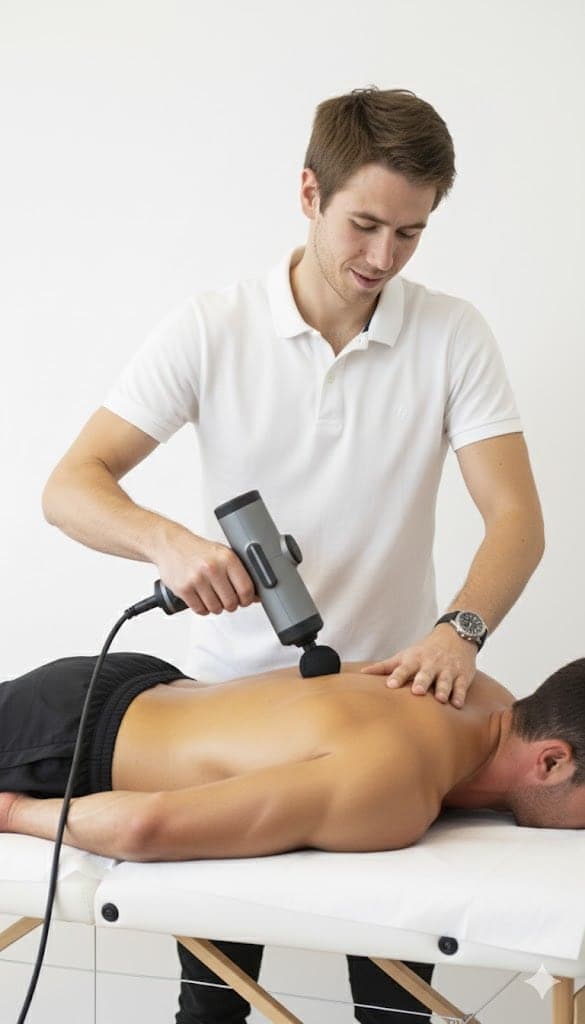
Written by
Chris
Massage therapist, nutrition and exercise physiologist
Norwegian-certified with a Bachelor’s in Physical Education and Nutrition and over ten years of clinical practice, working from a portable table in clients’ homes across the Paphos district.
This article is general information, not a medical diagnosis. If you have severe, worsening or unexplained pain, numbness, weakness, or pain after an accident, see a doctor first.