Continuing education for massage therapists: why advanced training transforms client outcomes
In short
Discover how continuing education for massage therapists elevates treatment effectiveness, enhances client results, and transforms practice from basic relaxation to clinical intervention.
Ten years ago, I thought I knew everything about massage therapy. Fresh out of my Bachelor’s degree in Physical Education and Nutrition from Norway, I was confident in my manual techniques and traditional approaches. Then I encountered my first chronic pain client – a construction worker with debilitating lower back issues that had persisted for three years. Despite multiple sessions using conventional methods, his pain remained unchanged. That humbling experience became the catalyst for my journey into advanced continuing education, fundamentally transforming not just my practice, but my entire understanding of what therapeutic massage could achieve.
The reality is stark: traditional massage education provides foundational knowledge, but it’s continuing education for massage therapists that separates competent practitioners from transformational healers. In my decade of specialized practice, I’ve witnessed countless colleagues plateau in their effectiveness simply because they stopped learning. Meanwhile, those who pursue advanced training consistently deliver superior client outcomes, command higher fees, and build practices based on measurable results rather than temporary relaxation.
This isn’t about collecting certificates for wall decoration. Continuing education for massage therapists represents the difference between addressing symptoms superficially and creating lasting physiological changes that enhance clients’ quality of life. Through my specialized focus on advanced mechanical deep-tissue work using precision equipment, I’ve learned that the depth of knowledge directly correlates with the depth of healing we can facilitate.
The critical gap between basic training and clinical effectiveness
Most massage therapy programs provide adequate foundation in anatomy, basic techniques, and safety protocols. However, they rarely address the complex biomechanical relationships that create chronic pain patterns or the advanced methodologies required to break them durably. This educational gap becomes painfully apparent when therapists encounter clients with serious musculoskeletal dysfunction – the very clients who need our expertise most desperately.
I remember treating an elite athlete whose career was threatened by persistent hip flexor restrictions. Traditional stretching and manual pressure had provided only temporary relief over months of treatment by multiple therapists. Through my advanced continuing education in mechanical precision techniques, I understood that her issue originated from fascial adhesions three layers deep – areas completely inaccessible through conventional manual methods. Using specialized equipment that delivers consistent pressure deeper than human hands can reach, we achieved complete resolution in four sessions.
This case perfectly illustrates why continuing education for massage therapists isn’t optional – it’s essential. Basic training teaches us to work with muscles; advanced education teaches us to understand the entire kinetic chain. We learn to identify compensation patterns, address root causes rather than symptoms, and utilize tools and techniques that produce measurable, lasting results. Without this knowledge, we’re limited to providing temporary relief rather than lasting solutions.
The physiological reality is that chronic pain and dysfunction develop through complex, interconnected mechanisms. Trigger points create referral patterns. Fascial restrictions alter movement patterns. Compensation strategies develop into secondary dysfunctions. Addressing these issues requires sophisticated understanding of biomechanics, advanced assessment skills, and specialized treatment approaches that simply aren’t covered in basic certification programs.
Advanced biomechanical understanding transforms treatment outcomes
Through continuing education for massage therapists focused on advanced biomechanics, I discovered that most chronic pain originates from predictable patterns of tissue dysfunction. The human body compensates magnificently, but these compensations eventually create secondary and tertiary problems that manifest as “mysterious” pain conditions. Understanding these patterns allows us to trace symptoms back to their mechanical origins and address them systematically.
Consider a typical office worker presenting with chronic neck tension and headaches. Basic training might focus on releasing tight upper trapezius muscles and providing temporary relief. However, advanced biomechanical education reveals that this tension often originates from anterior pelvic tilt causing compensatory thoracic kyphosis, which forces the cervical spine into extension to maintain visual orientation. Treating only the neck provides temporary relief while the root cause continues generating tension.
My specialized training in mechanical precision techniques allows me to address these multi-layered dysfunctions systematically. Using equipment that maintains consistent pressure and reaches depths impossible with manual techniques, I can release fascial restrictions in the hip flexors, restore proper pelvic positioning, normalize thoracic curvature, and eliminate the compensatory cervical tension – durably. This comprehensive approach is only possible through advanced continuing education that teaches these interconnected relationships.
The precision and consistency of mechanical intervention represents a quantum leap beyond traditional manual methods. Human hands fatigue, vary in pressure, and cannot penetrate deeply enough to address severe fascial restrictions. Advanced continuing education for massage therapists increasingly emphasizes tool-assisted techniques that eliminate these limitations while providing reproducible results session after session.
Specialized equipment mastery through continuing education
One of the most significant advances in massage therapy involves learning to integrate specialized equipment that extends our therapeutic capabilities far beyond what hands alone can achieve. Through intensive continuing education programs, I mastered the use of precision mechanical devices that deliver deeper, more consistent treatment than any manual technique possible.
The learning curve was substantial, requiring complete reconceptualization of how therapeutic pressure should be applied. Unlike manual massage where pressure varies with therapist fatigue and hand positioning, mechanical precision tools maintain exact pressure specifications throughout treatment. This consistency eliminates the variable results that plague traditional massage and ensures every client receives optimal treatment regardless of external factors.
Training with these advanced systems revealed three critical advantages that continuing education for massage therapists must address: precision, power, and consistency. Precision allows targeting specific tissue layers and structures with millimeter accuracy. Power enables penetration to depths where chronic restrictions actually exist. Consistency eliminates the “off days” that compromise treatment effectiveness in manual approaches.
I’ve treated elite athletes whose performance was limited by fascial restrictions so deep that multiple skilled therapists couldn’t reach them manually. Using mechanical precision techniques learned through specialized continuing education, these restrictions released completely, resulting in immediate performance improvements that manual therapy had never achieved. One Olympic-level swimmer improved her stroke efficiency by twelve percent following treatment of thoracolumbar fascial adhesions that had persisted despite years of conventional therapy.
This technological integration doesn’t replace clinical knowledge – it amplifies it. The most sophisticated equipment is useless without advanced understanding of tissue behavior, biomechanical relationships, and treatment progressions. Continuing education for massage therapists must therefore combine technological proficiency with enhanced clinical reasoning to maximize therapeutic potential.
Clinical assessment skills that separate experts from technicians
Advanced continuing education fundamentally changes how we evaluate clients, moving from basic symptom identification to comprehensive biomechanical assessment. This transformation separates massage technicians who follow protocols from clinical experts who design targeted interventions based on individual dysfunction patterns.
Through specialized training in movement analysis and postural assessment, I learned to identify the mechanical origins of pain before clients even lie on the treatment table. A simple walking pattern reveals hip mobility restrictions, compensatory strategies, and the likely locations of fascial adhesions. This assessment precision allows me to predict treatment requirements and expected outcomes with remarkable accuracy.
Recently, I evaluated a marathon runner experiencing mysterious knee pain that had stumped multiple healthcare providers. Traditional assessments focused on the knee joint itself, finding nothing structurally wrong. However, advanced movement analysis revealed subtle hip extension restrictions causing increased knee valgus during the loading phase of running. The “knee problem” was actually a hip problem – a connection only visible through sophisticated assessment skills developed in continuing education programs.
These advanced assessment capabilities transform client interactions from reactive symptom treatment to proactive dysfunction prevention. Instead of waiting for pain to develop, we identify and address biomechanical inefficiencies before they create problems. This predictive approach positions massage therapists as essential partners in performance optimization and injury prevention rather than mere pain relief providers.
The clinical reasoning skills developed through continuing education for massage therapists also enable us to communicate more effectively with other healthcare professionals. When we can articulate specific dysfunctions, treatment rationales, and expected outcomes using clinical terminology, we earn respect as legitimate healthcare providers rather than relaxation specialists.
Treatment depth and precision beyond manual limitations
The most profound revelation from my continuing education journey involves understanding the depth at which chronic dysfunctions actually exist and developing the technical skills to address them effectively. Most manual techniques work primarily in superficial tissue layers, providing temporary relief while deeper restrictions remain unchanged. Advanced education teaches us to reach and resolve the root causes of dysfunction.
Fascial restrictions that create chronic pain patterns typically exist three to five centimeters below the skin surface, embedded within deep muscle layers and surrounding joint capsules. Manual pressure, regardless of technique or force, simply cannot penetrate consistently to these depths without causing tissue damage in superficial layers. This limitation explains why traditional massage often provides only temporary relief – we’re treating secondary tension while primary restrictions remain intact.
Through specialized training with mechanical precision equipment, I learned to deliver therapeutic pressure directly to these deep restriction sites without traumatizing superficial tissues. The precision is remarkable: I can target specific fascial planes, isolated muscle fibers, and individual trigger points with pressure that would be impossible to generate and control manually. This capability transforms treatment from symptom management to root cause resolution.
I treated a professional violinist whose career was threatened by chronic forearm tension that prevented precise finger control. Multiple skilled therapists had worked extensively with her forearms and hands without lasting improvement. Using mechanical precision techniques, I identified and released deep fascial restrictions in her thoracic outlet and first rib area – restrictions that were creating referred tension throughout her arms. The improvement was immediate and lasting, allowing her to return to professional performance within days.
This case demonstrates why continuing education for massage therapists must emphasize both diagnostic precision and treatment depth. Understanding where problems actually exist is meaningless without the technical skills to address them effectively. Advanced education provides both components, creating therapists capable of producing results that seem miraculous to those limited by conventional approaches.
Consistency and reproducibility in therapeutic outcomes
One of the most frustrating aspects of traditional massage therapy involves the inherent variability in treatment quality. Therapist fatigue, emotional state, physical condition, and technique variations create inconsistent results that undermine client confidence and treatment effectiveness. Continuing education for massage therapists increasingly focuses on eliminating these variables through systematic approaches and precision tools.
Through advanced training programs, I learned that consistency isn’t just desirable – it’s essential for creating lasting physiological changes. Tissue remodeling requires specific pressure parameters maintained over precise time intervals. Manual techniques cannot provide this consistency, explaining why chronic dysfunctions often require dozens of sessions with variable results. Mechanical precision techniques deliver identical pressure specifications every session, ensuring optimal tissue response regardless of external factors.
The transformation in my practice was dramatic. Previously, some sessions produced excellent results while others seemed ineffective, creating frustration for both my clients and myself. After mastering mechanical precision techniques through intensive continuing education, every session now delivers predictable, measurable improvements. Clients know exactly what to expect, and I can guarantee specific outcomes based on assessment findings.
This consistency extends beyond immediate session results to long-term treatment planning. When every intervention produces predictable tissue responses, I can design precise treatment progressions that systematically address complex dysfunction patterns. A chronic low back pain case might require specific fascial releases in session one, targeted trigger point elimination in session two, and movement pattern correction in session three – each building on the previous intervention’s results.
The psychological impact of consistent results cannot be overstated. Clients develop confidence in the treatment process when they experience reliable improvement session after session. This confidence enhances treatment compliance and accelerates healing through reduced stress and anxiety. Continuing education for massage therapists must therefore emphasize not just advanced techniques, but the systematic approaches that ensure consistent application.
Lasting results versus temporary relief paradigms
Traditional massage therapy often operates within a maintenance model where clients require regular sessions to manage symptoms. While this approach generates steady revenue, it represents a fundamental failure to address underlying dysfunctions. Advanced continuing education for massage therapists shifts the paradigm from symptom management to lasting resolution, creating greater value for clients and higher professional satisfaction.
The difference lies in understanding tissue behavior and applying sufficient intervention to create lasting change. Temporary relief occurs when we reduce tissue tension without addressing the mechanical factors that created it. Lasting results require eliminating the root causes of dysfunction and restoring normal tissue function. This level of intervention demands advanced skills that basic training simply doesn’t provide.
I recently worked with a executive who had suffered chronic tension headaches for eight years, requiring weekly massage sessions for partial relief. Through advanced assessment techniques learned in continuing education, I identified the headaches as originating from first rib restrictions creating scalene tension and referral patterns. Using mechanical precision tools to release these deep restrictions, we eliminated his headaches completely in three sessions. Two years later, they haven’t returned.
This lasting resolution approach requires a completely different clinical mindset. Instead of booking clients for ongoing maintenance, I design targeted intervention programs with specific endpoints. Clients understand they’re investing in lasting solutions rather than purchasing temporary relief. This positioning elevates massage therapy from service commodity to healthcare investment, justifying premium pricing and attracting serious clients committed to results.
The transition from relief-based to resolution-based practice fundamentally changes the client relationship. Instead of passive recipients of temporary comfort, clients become active partners in their recovery process. They understand the treatment rationale, participate in assessment findings, and take ownership of their improvement. This collaboration accelerates healing and ensures lasting results.
Advanced pain science and neurological considerations
Continuing education for massage therapists increasingly emphasizes advanced pain science and neurological mechanisms that influence treatment outcomes. Understanding how the nervous system processes, amplifies, and perpetuates pain signals allows us to design interventions that address not just mechanical dysfunction but the neurological components that often maintain chronic conditions.
Through specialized training in pain neuroscience, I learned that chronic pain involves complex interactions between peripheral nociceptors, spinal cord processing, and brain interpretation mechanisms. Traditional massage often fails because it addresses only peripheral factors while central sensitization and altered pain processing continue generating symptoms. Advanced approaches must consider and influence these neurological components.
Mechanical precision techniques provide unique neurological advantages through their ability to deliver specific pressure parameters that influence nerve behavior. Deep, consistent pressure activates large-diameter mechanoreceptors that close pain gates at the spinal cord level, providing immediate pain relief. Sustained pressure also triggers neuroplastic changes that reset sensitized nerve pathways, creating lasting improvement in pain processing.
I treated a chronic pain client whose fibromyalgia symptoms had persisted despite years of various therapies. Traditional approaches had failed because they couldn’t provide sufficient intensity to override her heightened pain sensitivity. Using mechanical precision techniques calibrated to her specific neurological needs, we systematically desensitized hyperactive pain pathways while restoring normal tissue function. Her pain levels decreased by seventy percent over six sessions, and quality of life improvements were profound.
This neurologically-informed approach requires understanding complex interactions between mechanical intervention and nervous system responses. Continuing education programs that integrate pain science with advanced manual techniques create therapists capable of addressing the most challenging chronic conditions that resist conventional treatment approaches.
Business transformation through clinical excellence
Investing in continuing education for massage therapists transforms not just clinical capabilities but business sustainability and professional satisfaction. Therapists with advanced skills command premium pricing, attract motivated clients, and build practices based on results rather than time-based services. This transformation elevates massage therapy from manual labor to professional healthcare delivery.
My transition from traditional massage to specialized mechanical deep-tissue work completely changed my professional trajectory. Instead of competing on price with countless relaxation therapists, I positioned myself as a specialist addressing complex dysfunction patterns that others couldn’t resolve. This positioning attracts clients willing to invest significantly in lasting solutions rather than seeking cheap temporary relief.
The financial impact was substantial. Premium pricing for specialized services generates higher revenue per session while requiring fewer total sessions per client. Instead of maintaining large client volumes for ongoing maintenance, I work with smaller numbers of serious clients seeking lasting resolution. This model provides better work-life balance while generating superior income through higher value delivery.
Client quality also improves dramatically. Instead of passive recipients expecting relaxation, my clients are motivated individuals committed to achieving specific outcomes. They follow treatment recommendations, invest in necessary equipment, and actively participate in their recovery process. These partnerships are professionally fulfilling and produce consistently excellent results.
The reputation benefits compound over time. When you consistently deliver results that others cannot achieve, referrals become automatic. Healthcare professionals begin recommending your services because they’ve witnessed outcomes that traditional approaches couldn’t produce. This professional recognition elevates your status from service provider to healthcare partner.
Integration with healthcare teams and medical collaboration
Advanced continuing education for massage therapists increasingly emphasizes integration with broader healthcare teams, moving beyond isolated practice toward collaborative patient care. This integration requires developing clinical language, documentation skills, and treatment approaches that complement medical interventions rather than existing in isolation.
Through specialized training in medical massage and clinical documentation, I learned to communicate effectively with physicians, physical therapists, and other healthcare providers. This communication ability has opened doors to collaboration opportunities that would be impossible with basic training alone. When you can articulate treatment rationales using clinical terminology and provide objective outcome measures, medical professionals view you as a valuable team member.
Recently, I collaborated with an orthopedic surgeon treating a patient with persistent post-surgical adhesions following rotator cuff repair. Traditional physical therapy had reached a plateau, and the surgeon was considering revision surgery. Using mechanical precision techniques to address deep fascial restrictions that manual therapy couldn’t reach, we restored full range of motion and eliminated pain, avoiding unnecessary surgery.
These collaborative relationships benefit all parties involved. Physicians gain access to specialized intervention techniques that complement their medical treatments. Patients receive more comprehensive care addressing multiple aspects of their conditions. Massage therapists earn professional recognition and access to clients with complex conditions that showcase their advanced skills.
Documentation skills developed through continuing education also support insurance reimbursement opportunities and legal protection. When you can provide detailed assessment findings, specific treatment protocols, and objective outcome measures, your services gain credibility with insurance providers and legal systems. This documentation capability positions massage therapy as legitimate healthcare rather than wellness services.
Technology integration and equipment mastery
The future of massage therapy increasingly involves integration with advanced technologies that extend therapeutic capabilities beyond manual limitations. Continuing education for massage therapists must therefore include comprehensive training in equipment selection, application protocols, and safety considerations for technology-assisted interventions.
My mastery of mechanical precision equipment required extensive training in biomechanical principles, tissue responses, and safety protocols. The learning curve was substantial because these tools operate on completely different principles than manual techniques. Pressure delivery, treatment duration, and client positioning all require precise calibration to achieve optimal results while ensuring safety.
The equipment I utilize delivers three critical advantages: deeper penetration than manual techniques, consistent pressure regardless of therapist fatigue, and precise control over treatment intensity. These capabilities allow addressing dysfunction patterns that manual therapy simply cannot reach effectively. However, the equipment is only as effective as the operator’s understanding of how to apply it appropriately.
Training programs for advanced equipment must emphasize both technical proficiency and clinical reasoning. Understanding how to operate the device is meaningless without knowing when, where, and why to apply it. The most sophisticated technology cannot compensate for inadequate assessment skills or poor clinical judgment. Continuing education must therefore integrate technical training with advanced clinical education.
Client education also becomes crucial when using advanced equipment. Many people have preconceptions about mechanical massage that must be addressed through education about the precision and control capabilities of modern systems. When clients understand the advantages of consistency, depth, and precision that equipment provides, they become enthusiastic participants in technology-assisted treatment.
Specialization opportunities and niche development
Continuing education for massage therapists opens doors to specialization opportunities that create unique market positions and premium pricing potential. Rather than competing with general practitioners, specialized knowledge allows targeting specific populations with particular needs that require advanced intervention approaches.
My specialization in advanced mechanical deep-tissue work for chronic pain and performance optimization has created a unique market position. Instead of competing with relaxation therapists on price, I offer solutions that others cannot provide. This specialization attracts clients who have exhausted conventional options and are seeking advanced interventions to address persistent problems.
Specialization also allows developing treatment protocols and approaches that become proprietary methods. Through years of advanced continuing education and clinical experience, I’ve refined techniques that consistently produce results others struggle to achieve. These methods become competitive advantages that justify premium pricing and attract clients willing to travel significant distances for specialized care.
The key to successful specialization involves identifying underserved populations with specific needs that align with your interests and aptitudes. Elite athletes, chronic pain sufferers, post-surgical clients, and occupational injury cases all represent specialization opportunities requiring advanced skills that basic training doesn’t provide. Continuing education allows developing the expertise necessary to serve these populations effectively.
Marketing becomes more targeted and effective with specialization. Instead of generic massage advertising, you can speak directly to specific problems and offer concrete solutions. This focused messaging attracts ideal clients while repelling those seeking services outside your specialty area. The result is higher conversion rates and better client fit.
Research integration and evidence-based practice
Modern massage therapy increasingly emphasizes evidence-based practice requiring integration of current research findings into clinical decision-making. Continuing education for massage therapists must therefore include training in research interpretation, outcome measurement, and protocol development based on scientific evidence rather than tradition or intuition alone.
Through advanced education programs, I learned to critically evaluate massage therapy research, identify relevant findings for my practice, and modify treatment approaches based on emerging evidence. This scientific approach has dramatically improved treatment effectiveness while providing objective justification for clinical decisions. When clients question treatment rationales, I can reference specific research supporting our approach.
Research integration also involves collecting and analyzing outcome data from your own practice. By tracking objective measures like pain scales, range of motion assessments, and functional improvement indicators, you can demonstrate treatment effectiveness and identify areas for improvement. This data collection capability requires training in assessment protocols and documentation systems that basic education rarely addresses.
The credibility that evidence-based practice provides cannot be overstated. When you can cite research supporting your methods and provide objective outcome data from your practice, clients and healthcare professionals view you as a serious practitioner rather than a wellness provider. This credibility opens doors to collaboration opportunities and referral relationships that significantly enhance practice growth.
Staying current with research also ensures you’re utilizing the most effective approaches available. Massage therapy knowledge evolves rapidly, and techniques that seemed advanced five years ago may now be superseded by better methods. Continuing education provides access to these developments and training in their practical application.
Frequently asked questions about continuing education for massage therapists
How much continuing education should massage therapists complete annually?
While licensing boards typically require 12-24 hours annually, serious practitioners aiming for clinical excellence should complete 60-100 hours of advanced continuing education yearly. This investment allows mastering complex techniques, staying current with research developments, and developing specialized skills that differentiate your practice. In my experience, the practitioners who consistently deliver superior results dedicate substantial time to ongoing education, viewing it as essential professional development rather than regulatory compliance. The initial investment in time and money pays substantial dividends through enhanced clinical capabilities, premium pricing opportunities, and increased professional satisfaction from achieving results others cannot produce.
What types of continuing education provide the greatest practice impact?
The most transformative continuing education combines advanced biomechanical understanding with specialized intervention techniques that extend beyond manual limitations. Programs focusing on complex assessment skills, tool-assisted therapies, pain science integration, and clinical reasoning provide the foundation for achieving lasting results rather than temporary relief. Through my decade of experience, I’ve found that equipment-based training offers particularly high returns because it eliminates the consistency and depth limitations inherent in manual approaches. However, technology training must be combined with advanced clinical knowledge to maximize effectiveness and ensure appropriate application protocols.
How do advanced techniques justify higher pricing?
Advanced techniques justify premium pricing through superior outcomes that clients cannot achieve elsewhere. When you can demonstrate lasting resolution of chronic conditions that have resisted conventional treatments, clients recognize exceptional value and willingly invest accordingly. My transition to specialized mechanical deep-tissue work allowed implementing value-based rather than time-based pricing because clients pay for results rather than massage minutes. The key involves positioning your services as healthcare investments producing lasting improvements rather than temporary comfort services. This positioning requires consistently delivering outcomes that justify the investment, which is only possible through advanced continuing education and specialized equipment mastery.
Can continuing education replace years of practical experience?
Continuing education accelerates skill development but cannot substitute for practical experience applying advanced techniques with diverse client populations. However, therapists who combine extensive continuing education with focused practice experience develop expertise much more rapidly than those relying on experience alone. In my journey, advanced education provided the theoretical foundation and technical skills, while clinical experience taught me how to apply them effectively with different client presentations. The combination of systematic education and deliberate practice creates competence that surpasses what either component achieves independently. New graduates should prioritize both intensive continuing education and mentorship opportunities with experienced practitioners.
How does specialization affect client acquisition and retention?
Specialization dramatically improves both client acquisition and retention by attracting individuals with specific needs that align perfectly with your capabilities. Instead of competing with general practitioners on price, you become the obvious choice for clients requiring specialized intervention. My focus on chronic pain resolution using mechanical precision techniques attracts clients who have exhausted conventional options and are seeking advanced solutions. These clients typically invest more per treatment, require fewer total sessions due to lasting results, and provide exceptional referrals because of dramatic outcomes they experience. The key involves developing genuine expertise in your chosen specialty rather than simply marketing yourself as specialized without advanced capabilities to support that positioning.
What role does technology play in modern massage therapy practice?
Technology increasingly serves as a force multiplier that extends therapeutic capabilities beyond manual limitations while ensuring consistent treatment delivery. However, technology effectiveness depends entirely on the operator’s clinical knowledge and assessment skills. Advanced equipment can deliver deeper, more precise, and more consistent pressure than manual techniques, but it cannot compensate for poor clinical reasoning or inadequate assessment abilities. In my practice, mechanical precision tools allow achieving results that would be impossible manually, but their effective application required extensive continuing education in biomechanics, tissue behavior, and treatment protocols. The future belongs to practitioners who can integrate advanced technology with sophisticated clinical knowledge to produce outcomes neither component could achieve alone.
How should massage therapists evaluate continuing education programs?
Effective continuing education programs combine theoretical knowledge with practical skills training, emphasize evidence-based approaches, and provide ongoing mentorship opportunities. Look for programs taught by practitioners with extensive clinical experience, not just academic credentials. The best programs include hands-on training with advanced techniques, business integration strategies, and outcome measurement protocols. Avoid programs that promise miraculous results with minimal training or focus primarily on marketing rather than clinical skills. In my experience, the most valuable education comes from practitioners who have built successful practices using the methods they teach and can demonstrate consistent clinical results. Investment in quality education pays substantial dividends, while cheap programs often waste time and money while providing little practical value.
What business changes result from implementing advanced techniques?
Implementing advanced techniques transforms practice economics by enabling value-based pricing, attracting motivated clients, and reducing session frequency requirements due to lasting results. My transition to mechanical precision techniques allowed charging premium rates while reducing total treatment time per client because outcomes are achieved more efficiently. Client quality improves dramatically because advanced techniques attract individuals committed to achieving specific results rather than seeking general relaxation. This creates a sustainable practice model with higher revenue per client, better professional satisfaction, and enhanced reputation through consistently superior outcomes. However, the transition requires substantial upfront investment in education and equipment, along with patience during the learning curve as you develop mastery of new approaches.
Evidence and limits
Massage may help with some symptoms, but benefits and evidence vary by condition. It does not replace medical assessment or treatment. A page update is not evidence of an independent clinical review.
Further reading: Massage therapy: evidence, safety and limitations by US National Center for Complementary and Integrative Health. This is general background reading, not verification of every claim in this article.
How we describe evidence and updates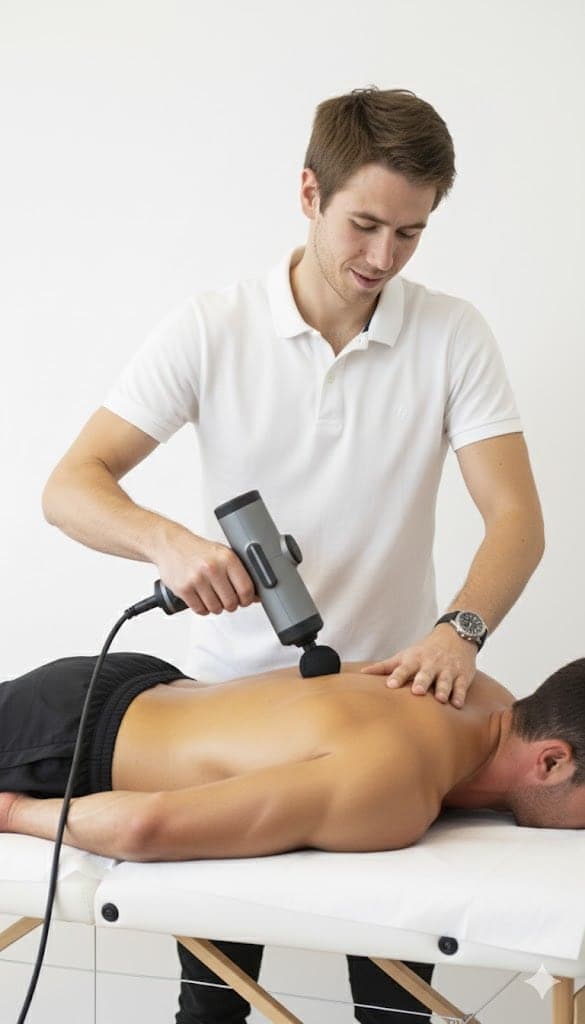
Written by
Chris
Massage therapist, nutrition and exercise physiologist
Norwegian-certified with a Bachelor’s in Physical Education and Nutrition and over ten years of clinical practice, working from a portable table in clients’ homes across the Paphos district.
This article is general information, not a medical diagnosis. If you have severe, worsening or unexplained pain, numbness, weakness, or pain after an accident, see a doctor first.