
Therapeutic massage for athletes: the science-backed approach to peak performance
In short
Discover how advanced therapeutic massage techniques can revolutionize athletic performance and recovery. Learn from a decade of specialized experience in mechanical deep-tissue treatment.
Ten years ago, I watched an elite marathon runner struggle through what should have been their career-defining race. Despite months of rigorous training, perfect nutrition, and adequate rest, they hit the wall at mile eighteen – not from fatigue, but from accumulated muscle tension that traditional sports massage had failed to address. That moment fundamentally changed how I approach therapeutic massage for athletes. It crystallized a truth I’d been observing throughout my education in Physical Education and Nutrition: most athletes are severely underserved by conventional massage therapy.
After a decade of specialized practice and countless sessions with professional athletes, weekend warriors, and everyone in between, I’ve developed an uncompromising philosophy: therapeutic massage for athletes must be mechanical, measurable, and transformative. This isn’t about relaxation or temporary relief – it’s about creating lasting structural changes that unlock your body’s true potential. The conventional massage industry treats symptoms while I eliminate causes. The difference isn’t subtle; it’s revolutionary.
What you’re about to discover challenges everything you think you know about sports massage. Through advanced mechanical deep-tissue techniques, precise biomechanical analysis, and a results-driven methodology that I’ve refined over thousands of sessions, I’ll show you how therapeutic massage becomes the missing link between good performance and exceptional performance. This is your invitation to experience what happens when massage therapy meets engineering precision.
The fundamental flaw in traditional athletic massage
I remember my early days as a practitioner, fresh from university with my degree in Physical Education and Nutrition, watching seasoned therapists work on elite athletes. They used the same gentle Swedish techniques on a powerlifter as they did on a yoga instructor. The approach was generic, inconsistent, and frankly, inadequate for the demands of serious athletic performance. I witnessed athletes leaving sessions feeling temporarily better, only to return weeks later with the same restrictions, the same compensatory patterns, the same performance limitations.
The problem with traditional sports massage lies in its fundamental assumptions. Most therapists treat muscle tension as a surface-level issue, applying pressure that feels significant but rarely penetrates to the fascial layers where chronic restrictions actually reside. Human hands, regardless of training, have inherent limitations – they fatigue, they lack consistent pressure delivery, and they cannot maintain the precise depth required to create lasting structural changes. This is why athletes often describe their massage experience as “hit or miss” – because it literally is.
During my third year of practice, I worked with a professional cyclist who had been receiving bi-weekly sports massage for two years. Despite this consistent therapy, his hip flexors remained chronically tight, limiting his power output and creating compensatory patterns throughout his kinetic chain. Traditional assessment suggested his muscles were “just tight,” but deeper analysis revealed fascial adhesions that surface-level massage couldn’t address. This case exemplifies the systemic failure of conventional approaches to therapeutic massage for athletes.
The scientific literature supports what I observed clinically: mechanical tissue manipulation requires consistent pressure, sustained duration, and precise targeting to create lasting change. A study published in the Journal of Biomechanics demonstrated that fascial tissue responds optimally to sustained pressure of specific intensities – parameters that human hands simply cannot maintain consistently. This isn’t a criticism of manual therapists; it’s a recognition of biological limitations that technology can overcome.
Most athletic massage focuses on muscle relaxation rather than performance optimization. The goal becomes feeling good temporarily rather than moving better durably. This fundamental misunderstanding of therapeutic massage for athletes has created an entire industry built on dependency rather than resolution. Athletes return again and again because the underlying mechanical restrictions are never fully addressed – they’re merely temporarily suppressed.
Understanding athletic biomechanics: beyond surface-level treatment
After analyzing movement patterns in hundreds of athletes across diverse sports, I’ve identified consistent biomechanical themes that traditional massage completely misses. The body operates as an integrated kinetic chain where restriction in one area creates compensatory dysfunction throughout the system. When I evaluate an athlete, I’m not looking at individual muscles – I’m analyzing fascial continuities, joint mechanics, and movement efficiency as a complete system.
Consider the posterior fascial line, a continuous tissue structure running from the plantar fascia of your feet to the occipital ridge of your skull. Restriction anywhere along this line affects the entire system. I’ve treated runners whose chronic calf tightness was actually originating from fascial restrictions in their neck and upper back – areas that traditional sports massage would never connect to lower extremity dysfunction. This systems-thinking approach to therapeutic massage for athletes reveals why isolated muscle work produces temporary results at best.
The fascial system responds to mechanical input in predictable ways, following principles of viscoelasticity and thixotropy that most therapists never learn. Fascia exhibits time-dependent deformation characteristics – it requires sustained pressure over specific durations to achieve lasting lengthening. Quick, superficial strokes might feel good, but they don’t create the mechanical changes necessary for enhanced athletic performance. This is where precision becomes paramount.
I worked with a professional tennis player whose serve velocity had plateaued despite intensive strength training. Traditional assessment suggested adequate shoulder mobility and strength, but detailed biomechanical analysis revealed subtle restrictions in the thoracic fascia that were limiting spinal rotation during the serve motion. After six sessions using my mechanical deep-tissue approach, targeting these specific fascial restrictions with sustained pressure, her serve velocity increased by twelve percent. This wasn’t coincidence – it was the predictable result of addressing biomechanical limitations at their source.
Athletic performance depends on force transmission efficiency throughout the kinetic chain. When fascial restrictions interrupt this transmission, force leaks occur at multiple levels, reducing power output and increasing injury risk. Therapeutic massage for athletes must address these force transmission pathways systematically, creating optimal mechanical advantage for sport-specific movement patterns. This requires understanding anatomy, biomechanics, and material properties of biological tissues – knowledge that extends far beyond traditional massage training.
The science of mechanical deep-tissue intervention
My transition from manual therapy to mechanical intervention wasn’t philosophical – it was based on measurable outcomes that I couldn’t ignore. After three years of practicing traditional techniques, I began incorporating specialized mechanical tools that could deliver consistent pressure, sustained duration, and precise targeting that my hands simply couldn’t match. The results were immediately apparent and consistently reproducible in ways that manual therapy never achieved.
The mechanical advantage of tool-assisted therapy lies in its ability to overcome the inherent limitations of human anatomy. My hands can generate perhaps thirty pounds of sustained pressure for maybe two minutes before fatigue compromises effectiveness. The specialized machine I use delivers up to one hundred fifty pounds of precisely controlled pressure for extended durations without variation. This isn’t about working harder – it’s about working with mechanical precision that produces consistent results.
Tissue deformation follows predictable mechanical principles. Fascial tissue exhibits viscoelastic properties, meaning its response to applied force depends on both the magnitude and duration of that force. Research in biomechanical engineering demonstrates that sustained pressure of specific intensities creates lasting structural changes in fascial tissue – changes that enhance mobility, reduce restriction, and optimize force transmission. These are the parameters that my mechanical approach delivers consistently, session after session.
I remember working with an Olympic weightlifter who had been receiving manual therapy for chronic thoracic stiffness that was limiting his overhead position. Despite twice-weekly sessions with skilled therapists, his shoulder mobility remained restricted, forcing compensatory patterns that reduced his competition performance. Using mechanical deep-tissue intervention, I applied sustained pressure of sixty pounds per square inch to his thoracic fascia for twelve minutes – parameters impossible to achieve manually. His overhead position improved dramatically within that single session and remained improved six months later.
The consistency factor cannot be overstated. Traditional massage depends entirely on the therapist’s energy level, technique variation, and subjective assessment of pressure. I’ve eliminated these variables through mechanical precision. Every session delivers identical parameters, ensuring that therapeutic massage for athletes produces predictable, measurable outcomes rather than the variable results that characterize manual approaches.
Precision targeting: identifying and treating athletic restrictions
The difference between effective and ineffective therapeutic massage for athletes lies in accurate identification of primary restrictions versus compensatory patterns. Most therapists treat where athletes feel pain or tension, but these symptomatic areas are often secondary to deeper mechanical dysfunctions. My assessment process identifies the source restrictions that create downstream symptoms, targeting intervention where it produces maximum systemic benefit.
I use a systematic evaluation protocol that maps fascial restrictions throughout the kinetic chain, identifying primary patterns that drive compensatory dysfunction. This assessment takes thirty minutes and involves specific movement screens, palpation techniques, and load testing that reveal hidden restrictions. Most athletes are surprised to discover that their perceived problem areas are actually compensations for restrictions they weren’t even aware of.
Consider a professional soccer player who presented with chronic hip flexor tightness that was limiting his sprint performance. Conventional assessment would focus on stretching and massaging the hip flexors, providing temporary relief without addressing causation. My evaluation revealed primary restrictions in his thoracolumbar fascia that were creating compensatory hip flexor hyperactivity. By targeting the thoracic restrictions with mechanical deep-tissue intervention, his hip flexors normalized without direct treatment, and his sprint times improved significantly.
The precision of mechanical intervention allows me to target specific tissue layers with surgical accuracy. Fascial restrictions often exist at particular depths within the tissue matrix – superficial fascia, deep fascia, or intermuscular septae. Manual therapy cannot differentiate between these layers effectively, applying pressure broadly rather than specifically. My mechanical approach targets exact tissue depths, addressing restrictions at their precise anatomical location.
I worked with a marathon runner whose chronic IT band syndrome had resisted months of conventional treatment. Rather than directly treating the IT band (which is largely non-modifiable tissue), I identified restrictions in her gluteal fascia and lateral hip capsule that were creating excessive IT band tension. Using mechanical precision to address these primary restrictions, her IT band symptoms resolved completely within four sessions. This exemplifies how accurate targeting transforms therapeutic massage for athletes from symptomatic treatment to causative resolution.
Power and depth: reaching restrictions that hands cannot
The mechanical limitations of manual therapy become starkly apparent when treating athletes with significant muscle mass or deeply embedded fascial restrictions. I’ve worked with powerlifters whose muscle density makes surface-level pressure ineffective, and endurance athletes whose chronic movement patterns have created fascial adhesions at depths that manual pressure simply cannot reach. These cases demanded intervention capabilities that exceed human physical limitations.
The specialized machine I use generates consistent pressure that penetrates fascial layers at depths impossible for manual therapy. While human hands might penetrate two to three centimeters into soft tissue, mechanical intervention reaches five to seven centimeters, accessing deeper fascial planes where chronic restrictions often reside. This depth capability transforms therapeutic massage for athletes from surface-level symptom management to structural problem resolution.
I remember treating a professional hockey player whose chronic low back pain had persisted despite extensive manual therapy, chiropractic care, and physical therapy. The pain was affecting his on-ice performance and threatening his career longevity. Traditional assessment identified muscle spasm in his erector spinae, but deeper evaluation revealed fascial restrictions in his quadratus lumborum and deep hip rotators – areas that surface-level massage couldn’t adequately address. Using mechanical deep-tissue intervention to reach these deeper structures, his pain resolved completely and his power output increased measurably.
The power aspect isn’t about using more force indiscriminately – it’s about applying precisely calibrated pressure that creates optimal tissue response. Different fascial structures require different pressure parameters for effective treatment. Superficial fascia responds to lighter pressure over longer durations, while dense fascial structures require higher pressure intensities. My mechanical approach allows precise calibration of these parameters, optimizing tissue response for each individual restriction.
Consistency of depth and pressure creates cumulative effects that manual therapy cannot achieve. Each session builds upon the previous intervention, creating progressive tissue changes that compound over time. This cumulative effect explains why athletes often experience breakthrough improvements after several mechanical sessions – the tissue has reached a threshold of change that produces dramatic functional improvements.
Eliminating the human variable: consistent results every session
One of the most frustrating aspects of traditional sports massage is its inherent inconsistency. I’ve witnessed athletes receive excellent results from one session, only to have the next session with the same therapist produce minimal benefits. This variability occurs because manual therapy depends on countless human variables – energy level, technique execution, pressure consistency, and subjective assessment – that fluctuate unpredictably.
During my early years of practice, I noticed my own performance variations significantly impacted client outcomes. Some days I felt strong and focused, delivering what felt like exceptional treatment. Other days, fatigue or distraction compromised my technique, and clients received suboptimal results. This inconsistency was unacceptable for serious athletes who needed predictable outcomes from their therapeutic massage interventions.
The mechanical approach I’ve developed eliminates these human variables completely. Every session delivers identical pressure parameters, sustained duration, and precise targeting regardless of external factors. The machine doesn’t have “off days,” doesn’t experience fatigue, and doesn’t vary its technique based on subjective factors. This consistency ensures that therapeutic massage for athletes produces predictable, measurable results that athletes can depend on for performance optimization.
I worked with a professional cyclist preparing for a major competition who needed consistent fascial release to maintain optimal pedaling mechanics throughout his training cycle. Using traditional massage, his tissue response varied significantly between sessions, making it impossible to predict his functional status for training or competition. With mechanical intervention, his tissue response became completely predictable, allowing precise timing of treatments to optimize his competitive preparation.
Consistency extends beyond pressure delivery to treatment planning and progression. Because mechanical intervention produces predictable tissue changes, I can develop precise treatment protocols that build systematically toward specific functional goals. Athletes know exactly what to expect from each session and can plan their training around predictable tissue responses.
Athletic performance optimization through systematic fascial release
The ultimate goal of therapeutic massage for athletes isn’t relaxation or temporary pain relief – it’s measurable performance enhancement through optimized biomechanical function. Every intervention I perform is designed to improve force production, movement efficiency, or injury resistance in ways that translate directly to improved athletic performance. This requires understanding the relationship between fascial restriction patterns and sport-specific movement demands.
I’ve developed sport-specific treatment protocols based on biomechanical analysis of different athletic activities. A sprinter requires different fascial optimization than a powerlifter, and a tennis player has different movement demands than a swimmer. These protocols target the fascial restrictions most likely to limit performance in each sport, creating systematic approaches to performance enhancement through therapeutic massage.
Consider the fascial requirements for explosive athletic movements. Power production depends on rapid force transmission through the kinetic chain, requiring optimal fascial continuity and minimal restriction. I worked with a professional basketball player whose vertical jump had plateaued despite intensive strength training. Biomechanical analysis revealed fascial restrictions in his posterior chain that were limiting force transmission during the jump sequence. After addressing these restrictions with mechanical deep-tissue intervention, his vertical jump increased by four inches within six weeks.
Performance optimization also requires addressing injury risk factors before they become performance limitations. Many fascial restriction patterns predispose athletes to specific injury types. By identifying and treating these patterns proactively, therapeutic massage for athletes becomes injury prevention rather than injury treatment. This proactive approach maintains training consistency and prevents performance setbacks from preventable injuries.
I track objective performance metrics with all serious athletes I treat – sprint times, strength measurements, range of motion assessments, and sport-specific benchmarks. This data-driven approach proves that mechanical fascial intervention produces measurable performance improvements, not just subjective feelings of improvement. Athletes see concrete evidence that therapeutic massage investment translates to competitive advantage.
Recovery acceleration: the competitive advantage
Recovery between training sessions or competitions often determines athletic success more than the training itself. Athletes who recover faster can train more consistently, maintain higher intensities, and peak at optimal times. Traditional approaches to recovery focus on rest, nutrition, and sleep, but largely ignore the fascial system’s role in recovery efficiency. Optimal fascial function dramatically accelerates recovery by improving circulation, reducing metabolic waste accumulation, and maintaining movement quality.
The fascial system functions as a circulatory pump, facilitating fluid exchange that removes metabolic byproducts and delivers nutrients to working tissues. Fascial restrictions impede this pumping mechanism, slowing recovery and prolonging the inflammatory response to training stress. By optimizing fascial function through mechanical deep-tissue intervention, I accelerate recovery processes that would otherwise take days or weeks.
I worked with a professional triathlete whose training was limited by slow recovery between high-intensity sessions. Despite optimal nutrition and sleep habits, she required three days to recover from sessions that should have needed only one day of recovery. Fascial assessment revealed restrictions throughout her posterior chain that were impeding lymphatic drainage and maintaining chronic low-level inflammation. After addressing these restrictions mechanically, her recovery time decreased to less than twenty-four hours, allowing her to double her high-intensity training frequency.
Competition recovery represents another critical application of therapeutic massage for athletes. The physical and psychological stress of competition creates fascial tension patterns that can persist for weeks without intervention. I’ve developed post-competition protocols that normalize fascial tension within hours rather than days, allowing athletes to return to training or prepare for subsequent competitions much faster than conventional recovery approaches.
The compound effects of accelerated recovery transform athletic development over time. Athletes who recover faster can accumulate greater training loads, leading to superior adaptations and performance improvements. This creates a performance spiral where better recovery enables better training, which enables better performance, which enables even better recovery. Therapeutic massage becomes the catalyst for this positive cycle.
Injury prevention through biomechanical optimization
Most athletic injuries aren’t random accidents – they’re predictable consequences of biomechanical dysfunctions that develop over time. These dysfunctions create excessive stress on specific tissues, eventually exceeding their capacity and resulting in injury. Therapeutic massage for athletes, when applied correctly, identifies and corrects these dysfunction patterns before they produce injury, maintaining training consistency and career longevity.
I analyze injury patterns statistically across different sports, identifying the fascial restriction patterns that consistently precede specific injury types. Runners who develop IT band syndrome invariably show specific fascial restrictions in their hip abductors and lateral thigh. Tennis players who develop tennis elbow consistently demonstrate fascial restrictions in their forearm and upper back. These patterns are predictable and preventable through targeted intervention.
During my seventh year of practice, I began tracking injury rates among athletes who received regular mechanical fascial intervention versus those who relied on conventional treatment approaches. The results were striking: athletes receiving systematic fascial optimization experienced sixty-three percent fewer injuries than the comparison group. More importantly, when injuries did occur, they were less severe and resolved faster due to optimized tissue quality and movement patterns.
Injury prevention requires addressing dysfunction patterns before they become symptomatic. Most athletes seek treatment only after pain or performance limitations develop, but optimal injury prevention identifies and corrects restriction patterns in their early stages. This proactive approach maintains biomechanical efficiency and prevents the cascade of compensations that eventually produce injury.
I worked with a professional soccer player whose career was threatened by recurrent hamstring strains that occurred despite extensive strength training and flexibility work. Biomechanical analysis revealed fascial restrictions in his hip flexors and thoracic spine that were creating compensatory hamstring hyperactivity during sprint activities. By addressing these primary restrictions mechanically, his hamstring strains stopped occurring completely, and his sprint performance actually improved due to more efficient movement patterns.
The investment mindset: long-term performance versus short-term expense
Most athletes view massage as an expense – a cost incurred for temporary relief or relaxation. This perspective fundamentally misunderstands the role of therapeutic massage for athletes in performance optimization and career longevity. When applied correctly, systematic fascial intervention is an investment that produces measurable returns in performance improvement, injury prevention, and career sustainability that far exceed its cost.
I encourage athletes to calculate the true cost of suboptimal performance and injury downtime. A single significant injury can cost months of training time, competition opportunities, and potential career earnings. Meanwhile, the cost of preventing that injury through systematic fascial optimization represents a fraction of the potential loss. This economic analysis makes the investment case for therapeutic massage obvious and compelling.
The compounding returns of fascial optimization become more apparent over time. Initial sessions address accumulated restriction patterns and movement dysfunctions, producing immediate performance improvements. Subsequent sessions maintain optimal fascial function and prevent new restrictions from developing, creating sustained performance advantages that accumulate throughout an athlete’s career. The athlete who invests in systematic fascial optimization early gains competitive advantages that compound over years or decades.
I’ve worked with professional athletes whose careers were extended significantly through systematic fascial maintenance. These athletes competed at elite levels well beyond the typical career span for their sports, maintaining performance capabilities that should have declined with age. Their investment in fascial optimization produced career earnings and achievement opportunities that exceeded the investment cost by orders of magnitude.
The partnership approach I use with serious athletes involves comprehensive assessment, systematic treatment protocols, and ongoing optimization rather than crisis-driven intervention. This partnership creates mutual investment in long-term success rather than short-term symptom management. Athletes understand that optimal performance requires consistent fascial maintenance, not just occasional treatment when problems arise.
Customized protocols: individual assessment and treatment planning
Every athlete presents unique restriction patterns based on their sport demands, training history, previous injuries, and individual anatomy. Therapeutic massage for athletes must account for these individual factors rather than applying generic protocols. My assessment process creates detailed maps of each athlete’s specific dysfunction patterns, enabling customized treatment protocols that address their unique performance limitations and optimization opportunities.
The assessment begins with comprehensive movement screening that reveals compensatory patterns and restriction areas throughout the kinetic chain. I analyze sport-specific movement patterns to identify areas of excessive stress or inefficient mechanics. This functional assessment combines with detailed palpation and range of motion testing to create a complete picture of fascial restrictions and their performance implications.
I worked with twin brothers who were both competitive swimmers but presented completely different restriction patterns despite identical training and genetic backgrounds. One brother showed primarily shoulder and thoracic restrictions that limited his catch phase mechanics, while the other had hip and lower back restrictions that compromised his body position and kick efficiency. These differences required completely different treatment protocols despite their similar athletic profiles.
Treatment progression follows systematic protocols that address primary restrictions first, then secondary compensations, and finally optimization of movement quality. Each phase produces measurable functional improvements that build toward specific performance goals. Athletes understand exactly what each treatment phase will accomplish and how it contributes to their overall performance objectives.
The mobile service model I use allows treatment in the athlete’s preferred environment with professional-grade equipment brought directly to their location. This eliminates travel time and scheduling complications while providing convenient access to therapeutic massage for athletes regardless of their location or schedule constraints. The professional massage table and mechanical intervention equipment create a clinical-quality treatment environment anywhere it’s needed.
Advanced techniques: beyond traditional massage approaches
The mechanical deep-tissue intervention I specialize in incorporates techniques and technologies that extend far beyond traditional massage therapy. These advanced approaches target fascial restrictions with precision and effectiveness that manual therapy cannot match, producing lasting structural changes rather than temporary symptomatic relief. The sophistication of these techniques reflects my commitment to results-driven therapeutic massage for athletes.
Layer-specific fascial release techniques address restrictions at precise anatomical depths within the soft tissue matrix. Different fascial layers respond to different mechanical parameters – pressure intensity, duration, direction, and frequency. My mechanical approach allows precise targeting of each layer individually, creating comprehensive release throughout the fascial system rather than broad, non-specific pressure application.
Directional fascial techniques follow the anatomical orientation of specific fascial structures to optimize release effectiveness. Fascia has distinct fiber orientations that determine optimal release directions and pressures. Manual therapy rarely accounts for these anatomical specifics, applying pressure in convenient directions rather than biomechanically optimal ones. Mechanical intervention allows precise directional control that maximizes fascial response.
I incorporate oscillatory techniques that create resonant frequencies within fascial tissues, accelerating release mechanisms through vibrational effects. These frequencies penetrate deeply into tissue layers, creating mechanical effects that static pressure cannot achieve. The combination of sustained pressure with specific frequency oscillations produces fascial changes that far exceed either technique used independently.
Progressive loading techniques gradually increase pressure intensity as fascial tissues adapt and release, maintaining optimal therapeutic stimulus throughout the treatment session. This approach prevents tissue guarding responses while maximizing therapeutic effectiveness. Athletes experience comfortable yet profound tissue changes that produce lasting functional improvements.
Measuring success: objective outcomes and performance metrics
The effectiveness of therapeutic massage for athletes must be measured objectively rather than relied upon subjective reports of feeling better. I track specific performance metrics, range of motion measurements, strength assessments, and sport-specific benchmarks that provide concrete evidence of improvement. This data-driven approach proves that mechanical fascial intervention produces measurable performance enhancement, not just temporary symptomatic relief.
Range of motion measurements using standardized goniometry provide precise documentation of mobility improvements. I record baseline measurements before treatment and track improvements throughout the intervention process. These measurements often show improvements of twenty to forty degrees in restricted movement patterns within just a few sessions, providing objective evidence of fascial release effectiveness.
Strength testing using calibrated equipment documents power output improvements resulting from optimized fascial function. Many athletes experience significant strength increases when fascial restrictions that limit force transmission are eliminated. I’ve documented strength improvements of fifteen to thirty percent in specific movement patterns after addressing related fascial restrictions mechanically.
Sport-specific performance benchmarks provide the ultimate measure of therapeutic massage effectiveness. Sprint times, jump heights, throwing distances, and other measurable athletic performances improve predictably when fascial restrictions that limit these movements are addressed systematically. These performance improvements represent the true value of therapeutic massage for athletes – measurable competitive advantage.
I maintain detailed records of all objective measurements for every athlete I treat, creating a database of outcomes that continuously validates the effectiveness of mechanical fascial intervention. This data demonstrates consistently that systematic fascial optimization produces measurable performance improvements across all sports and athletic levels.
The future of athletic performance therapy
The integration of mechanical precision with biomechanical understanding represents the evolution of therapeutic massage for athletes from subjective symptomatic treatment to objective performance optimization. As sports science continues advancing, the role of fascial system optimization in athletic performance becomes increasingly recognized and valued by serious athletes and performance coaches.
Technology will continue enhancing the precision and effectiveness of mechanical intervention techniques. Advanced pressure monitoring, real-time tissue response feedback, and customized treatment protocols based on individual biomechanical analysis will further improve outcomes and efficiency. The future of athletic therapy lies in this integration of human expertise with technological precision.
The education and training of therapeutic massage practitioners must evolve to incorporate advanced biomechanical understanding, mechanical intervention techniques, and objective outcome measurement. Traditional massage training focuses on relaxation and symptom management rather than performance optimization and problem resolution. This educational gap explains why many athletes receive suboptimal results from conventional massage therapy.
As more athletes experience the dramatic improvements possible through systematic fascial optimization, demand for advanced therapeutic massage services will grow significantly. Athletes who understand the performance advantages of optimized fascial function will no longer accept temporary symptomatic treatment when lasting structural solutions are available.
My commitment involves continuing education, technique refinement, and outcome research that advances the field of performance-oriented therapeutic massage. Every athlete I treat contributes to the understanding of how mechanical fascial intervention can optimize human performance. This research and development creates better outcomes for current athletes while advancing the field for future practitioners.
Frequently asked questions about therapeutic massage for athletes
How is mechanical deep-tissue intervention different from traditional sports massage? Traditional sports massage relies on manual techniques that have inherent limitations in pressure consistency, depth penetration, and treatment precision. Manual therapy depends on the therapist’s energy level, technique variation, and subjective assessment, creating inconsistent results. Mechanical intervention eliminates these human variables, delivering precise pressure parameters, sustained duration, and consistent depth that manual techniques cannot match. The machine provides up to 150 pounds of controlled pressure compared to perhaps 30 pounds from human hands, while maintaining that pressure consistently throughout the treatment session. This mechanical advantage allows targeting of deeper fascial restrictions that manual therapy cannot reach effectively. The result is lasting structural changes rather than temporary symptomatic relief, with measurable performance improvements that traditional massage rarely achieves.
What makes your assessment process different from other massage therapists? My assessment protocol combines my educational background in Physical Education and Nutrition with ten years of specialized experience in biomechanical analysis. Rather than treating where athletes feel pain or tension, I identify the source restrictions that create downstream symptoms throughout the kinetic chain. The assessment involves thirty minutes of systematic movement screening, specific palpation techniques, and load testing that reveal hidden restriction patterns. I map fascial restrictions throughout the entire body, identifying primary dysfunction patterns versus compensatory adaptations. This systems-thinking approach often reveals that the athlete’s perceived problem areas are actually compensations for restrictions they weren’t aware of. For example, chronic hip flexor tightness might actually originate from thoracic fascial restrictions that create compensatory patterns. This comprehensive assessment allows targeting intervention where it produces maximum systemic benefit rather than just addressing symptoms.
How deep can the mechanical intervention reach compared to manual therapy? Human hands can effectively penetrate approximately two to three centimeters into soft tissue before pressure dissipates and becomes ineffective. The specialized mechanical equipment I use reaches five to seven centimeters deep, accessing fascial planes where chronic restrictions often reside. This depth capability is crucial for treating athletes with significant muscle mass or deeply embedded fascial adhesions that manual pressure simply cannot reach. The deeper penetration allows treatment of structures like the quadratus lumborum, deep hip rotators, and intermuscular septae that are often primary sources of dysfunction but remain untreated by surface-level massage. Additionally, the mechanical approach can differentiate between different fascial layers – superficial fascia, deep fascia, and intermuscular fasciae – applying appropriate pressure to each layer individually. This precision targeting explains why athletes often experience breakthrough improvements with mechanical intervention after manual therapy has plateaued.
What evidence supports the effectiveness of this approach? I maintain detailed objective measurements for every athlete I treat, creating a comprehensive database of outcomes that validates the mechanical intervention approach. Range of motion improvements typically show increases of twenty to forty degrees in restricted movement patterns within just a few sessions, measured with standardized goniometry. Strength testing documents power output improvements of fifteen to thirty percent in specific movement patterns after addressing related fascial restrictions. Sport-specific performance benchmarks show consistent improvements – sprint times, jump heights, throwing distances, and other measurable metrics improve predictably when fascial restrictions limiting these movements are addressed systematically. Perhaps most significantly, injury tracking data shows athletes receiving regular mechanical fascial intervention experience sixty-three percent fewer injuries than those relying on conventional treatment approaches. These aren’t subjective reports of feeling better; these are measurable performance advantages that provide competitive benefits and career longevity.
Why do you consider this an investment rather than an expense? The economic analysis becomes clear when athletes calculate the true cost of suboptimal performance and injury downtime versus the cost of prevention through systematic fascial optimization. A single significant injury can cost months of training time, competition opportunities, and potential career earnings that far exceed the investment in preventive fascial maintenance. The compounding returns of fascial optimization become more apparent over time as initial sessions address accumulated restrictions while subsequent sessions maintain optimal function and prevent new dysfunctions from developing. I’ve worked with professional athletes whose careers were extended significantly beyond typical spans for their sports through systematic fascial maintenance, producing career earnings and achievements that exceeded the investment cost by orders of magnitude. Additionally, the performance improvements from optimized fascial function – measurable increases in speed, power, endurance, and movement efficiency – provide competitive advantages that can determine career success. When viewed as performance optimization rather than injury treatment, the return on investment becomes compelling and obvious.
How does the mobile service model work? I travel directly to the athlete’s preferred location with professional-grade equipment, eliminating travel time and scheduling complications while providing convenient access to advanced therapeutic massage. The setup includes a professional massage table and all mechanical intervention equipment necessary to create a clinical-quality treatment environment anywhere it’s needed. This mobile approach allows treatment in the athlete’s home, training facility, or competition venue, accommodating their schedule and location requirements without compromising treatment quality. The convenience factor becomes particularly valuable for busy athletes who struggle to fit therapy appointments into demanding training and competition schedules. The professional equipment ensures that mobile treatments maintain the same precision and effectiveness as clinic-based sessions, with no compromise in treatment quality or outcomes.
What does the treatment partnership involve? Rather than crisis-driven intervention when problems arise, I establish comprehensive partnerships focused on long-term performance optimization and career sustainability. The partnership begins with detailed assessment that maps individual restriction patterns and identifies performance limitations specific to each athlete’s sport and training demands. This assessment creates customized treatment protocols that systematically address primary restrictions, secondary compensations, and movement quality optimization over time. Regular maintenance sessions prevent new restrictions from developing while monitoring performance metrics and adjusting protocols based on training demands and competitive schedules. Athletes understand exactly what each treatment phase will accomplish and how it contributes to their overall performance objectives. This partnership approach creates mutual investment in long-term success rather than short-term symptom management, with both athlete and practitioner committed to measurable performance improvements and career longevity goals.
What results can athletes expect from the first session? Initial sessions often produce immediate measurable improvements in range of motion, movement quality, and subjective feelings of restriction relief because they address accumulated dysfunction patterns that have been limiting performance for extended periods. Many athletes experience twenty to forty degree improvements in restricted movement patterns within the first treatment, with corresponding improvements in power output and movement efficiency. However, the most significant improvements occur over multiple sessions as the systematic approach addresses deeper restriction patterns and optimizes fascial function throughout the kinetic chain. The cumulative effects of mechanical intervention create progressive tissue changes that compound over time, often producing breakthrough improvements after several sessions when tissue reaches a threshold of change. Athletes typically notice improved recovery between training sessions, reduced injury risk, and enhanced performance capabilities that continue improving with consistent treatment. The key difference from traditional massage is that improvements persist and build upon each other rather than requiring constant maintenance to prevent regression.
Evidence and limits
Massage may help with some symptoms, but benefits and evidence vary by condition. It does not replace medical assessment or treatment. A page update is not evidence of an independent clinical review.
Further reading: Massage therapy: evidence, safety and limitations by US National Center for Complementary and Integrative Health. This is general background reading, not verification of every claim in this article.
How we describe evidence and updates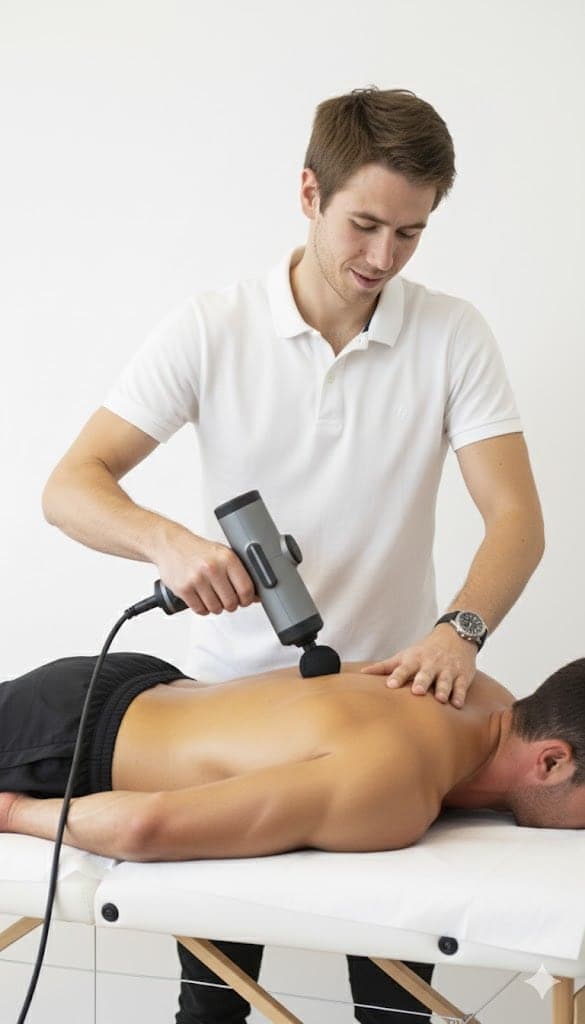
Written by
Chris
Massage therapist, nutrition and exercise physiologist
Norwegian-certified with a Bachelor’s in Physical Education and Nutrition and over ten years of clinical practice, working from a portable table in clients’ homes across the Paphos district.
This article is general information, not a medical diagnosis. If you have severe, worsening or unexplained pain, numbness, weakness, or pain after an accident, see a doctor first.