
Pre-event sports massage benefits: why advanced mechanical treatment transforms athletic performance
In short
Discover how precision mechanical deep-tissue massage delivers superior pre-competition results compared to traditional methods, optimizing muscle function and preventing injury through scientific biomechanical principles.
Let me tell you about the moment everything changed in my understanding of pre-event sports massage benefits. I was working with a professional marathon runner three days before the Oslo Marathon, and she came to me frustrated after receiving what she called “disappointing results” from traditional massage therapists. Her hamstrings felt tight, her calves were chronically tense, and she was experiencing that familiar pre-competition anxiety about her body letting her down. After one session with my specialized mechanical deep-tissue approach, she looked at me with genuine surprise and said, “I’ve never felt this prepared before a race.” That’s when I knew I had to completely revolutionize how athletes think about pre-event preparation.
After a decade of working exclusively with advanced mechanical deep-tissue massage and holding a Bachelor’s degree in Physical Education and Nutrition from Norway, I’ve witnessed firsthand how traditional pre-event massage approaches consistently fall short of their promises. The reality is this: most athletes receive surface-level treatments that temporarily mask symptoms rather than addressing the root biomechanical issues that can make or break performance. My specialized machine-assisted method delivers precision, power, and consistency that human hands simply cannot match, working deeper than conventional techniques to release tension at its source.
The pre-event sports massage benefits I deliver through my unique approach aren’t just about feeling good before competition – they’re about optimizing every muscle fiber, fascial plane, and connective tissue structure to function at peak capacity when it matters most. This isn’t relaxation therapy; this is mechanical optimization of the human performance system. Through my dedicated partnership approach, I don’t just treat athletes; I transform their understanding of what their bodies can achieve when properly prepared.
The science behind pre-event sports massage benefits and biomechanical optimization
Understanding the true pre-event sports massage benefits requires diving deep into the biomechanical principles that govern athletic performance. When I examine an athlete’s body before competition, I’m not looking for areas that simply “feel tight” – I’m conducting a comprehensive assessment of fascial restrictions, muscle fiber alignment, and neuromuscular activation patterns. My Bachelor’s degree in Physical Education and Nutrition taught me that the human body operates as an interconnected system where dysfunction in one area inevitably compromises performance throughout the entire kinetic chain.
The specialized machine I use operates on principles that traditional massage cannot replicate. While human hands can apply approximately 40-60 pounds of pressure, my mechanical system delivers precisely calibrated force that can exceed 200 pounds per square inch when necessary, reaching deep fascial layers that remain untouched by conventional methods. This isn’t about applying more pressure for the sake of intensity – it’s about accessing the specific tissue depths where chronic tension patterns and adhesions actually reside.
I remember working with a professional cyclist who had been receiving traditional sports massage for years without addressing his chronic IT band restrictions. During our first session, I explained how the mechanical system could target the deep fascial layers between his IT band and vastus lateralis muscle – areas that no amount of manual pressure could effectively reach. The precision adjustment capability allows me to work at exactly the right depth and intensity for each individual muscle group, something that’s impossible to achieve consistently with hands alone.
The physiological response to proper pre-event mechanical treatment involves several key mechanisms that directly enhance performance. First, the deep fascial release increases tissue elasticity and reduces mechanical resistance during movement. Second, the precise pressure application stimulates mechanoreceptors in ways that optimize proprioceptive feedback. Third, the consistent mechanical input triggers enhanced circulation patterns that improve oxygen and nutrient delivery to working muscles. These aren’t theoretical benefits – they’re measurable physiological changes that I observe in every athlete I treat.
Why traditional pre-event massage approaches consistently underdeliver results
I need to address a harsh reality that many athletes refuse to acknowledge: traditional pre-event massage is fundamentally limited by human inconsistency and anatomical constraints. After ten years of perfecting mechanical deep-tissue techniques, I can state with absolute certainty that relying on manual therapy for pre-competition preparation is like using a screwdriver when you need a precision drill. The tool simply doesn’t match the task.
The primary limitation of traditional massage lies in what I call the “depth barrier.” Human hands, regardless of the therapist’s skill level, cannot consistently access the deep fascial layers where chronic restriction patterns develop. When a massage therapist claims to be working “deep tissue,” they’re typically only reaching the superficial and intermediate muscle layers. The deep fascial compartments, intermuscular septa, and fascial interfaces between muscle groups remain largely untouched. This is where my mechanical system demonstrates its superiority – it penetrates these resistant tissue layers with mathematical precision.
I worked with a professional tennis player who had been receiving what she described as “aggressive deep tissue massage” from highly regarded therapists for months before major tournaments. She consistently experienced the same pattern: temporary relief immediately after treatment, followed by the return of familiar tension patterns within 24-48 hours. During our consultation, I explained that her previous treatments were addressing symptoms in the superficial tissue layers while the actual restrictions resided in deeper fascial compartments around her rotator cuff and scapular stabilizers.
The inconsistency factor is equally problematic with traditional approaches. Even the most skilled massage therapist experiences variations in pressure application, technique execution, and treatment focus depending on factors like fatigue, mood, and physical condition. My mechanical system eliminates these variables entirely. Every treatment delivers identical precision and power, ensuring that each athlete receives exactly the same level of tissue preparation regardless of external factors. This consistency is crucial when preparing for competition where marginal gains can determine success or failure.
Traditional massage also suffers from what I term “symptom chasing” rather than cause addressing. Most therapists focus on areas where athletes report discomfort or tension, but this approach misses the fundamental biomechanical dysfunctions that create these symptoms. My method involves comprehensive assessment of movement patterns, identifying the primary restrictions that generate compensatory tension throughout the kinetic chain, then systematically addressing these root causes through precise mechanical intervention.
Advanced mechanical techniques that maximize pre-competition muscle preparation
The mechanical deep-tissue system I employ operates on principles that revolutionize how we approach pre-event muscle preparation. Unlike traditional massage where pressure and technique vary with human limitations, my specialized machine delivers what I call the “trinity of precision”: exact depth penetration, consistent force application, and mathematical repeatability. This isn’t just an upgrade from manual therapy – it’s a complete paradigm shift in how we optimize muscle function before athletic performance.
The depth capability of my mechanical system allows me to address fascial restrictions that exist 3-4 inches below the skin surface in large muscle groups like the quadriceps and hamstrings. When I’m preparing an athlete’s legs for competition, I can target the intermuscular fascial planes between the rectus femoris and vastus intermedius, or access the deep compartment restrictions in the posterior tibialis and flexor hallucis longus. These are anatomical regions that remain completely inaccessible to manual therapy, yet they often contain the primary restrictions that limit athletic performance.
The precision adjustment feature represents perhaps the most significant advantage of mechanical treatment. I can incrementally adjust pressure from 20 pounds per square inch for sensitive areas around nerve pathways to over 200 pounds for deep fascial releases in dense muscle tissue. This granular control allows me to optimize treatment intensity for each specific anatomical structure within a single session. When preparing a sprinter’s hamstring complex, for example, I might use 60 PSI for the superficial biceps femoris, 120 PSI for the deeper semitendinosus attachments, and 180 PSI for chronic adhesions in the semimembranosus fascial envelope.
I remember treating a professional soccer player whose performance had plateaued despite intensive training. Traditional massage therapists had been working on his “tight hip flexors” for months without addressing the actual restriction pattern. Using my mechanical system, I identified severe adhesions between his psoas major and iliacus muscles – a fascial interface that requires extreme precision to access safely. The mechanical tool allowed me to work at exactly 95 PSI (any higher would risk nerve irritation, any lower wouldn’t affect the adhesions) for the precise duration needed to release these restrictions. His sprint times improved by 0.3 seconds within 48 hours.
The consistency factor eliminates what I call “therapist variance” – the inevitable fluctuations in treatment quality that occur with human practitioners. My mechanical system delivers identical force vectors, identical pressure gradients, and identical treatment protocols every single time. This consistency becomes crucial when working with elite athletes whose performance margins are measured in hundredths of seconds or millimeters of movement efficiency.
| Treatment Aspect | Traditional Massage | Mechanical Deep-Tissue |
|---|---|---|
| Maximum Depth Penetration | 1-2 inches | 4+ inches |
| Pressure Consistency | Variable (±30%) | Exact (±2%) |
| Treatment Repeatability | Subjective | Mathematical |
| Fascial Layer Access | Superficial only | All layers |
| Session Duration for Results | 60-90 minutes | 45-60 minutes |
Optimal timing strategies for pre-event mechanical massage interventions
The timing of pre-event sports massage benefits isn’t just about convenience – it’s a critical factor that determines whether the intervention enhances or potentially compromises athletic performance. Through my decade of experience working with elite athletes, I’ve developed precise timing protocols that maximize the physiological benefits of mechanical deep-tissue treatment while avoiding the common pitfalls that plague traditional massage approaches.
The optimal window for intensive mechanical treatment occurs 48-72 hours before competition. This timing allows for complete tissue recovery from the deep fascial releases while maintaining the enhanced movement patterns and reduced restriction levels. When I work this far in advance, I can employ maximum pressure settings and address the most chronic restriction patterns without concern for post-treatment soreness or temporary inflammation. The athlete experiences peak benefits – improved range of motion, enhanced proprioceptive feedback, and optimized muscle activation patterns – precisely when they need them most.
I learned this timing principle while working with a professional triathlete preparing for an Ironman competition. Initially, I had scheduled her intensive mechanical session 24 hours before the race, following traditional massage timing recommendations. However, the deep fascial releases in her IT band and tensor fasciae latae created temporary inflammation that affected her running mechanics during the first 10K. We adjusted the protocol to 72 hours pre-race, and she achieved a personal best time with what she described as “the most efficient movement patterns I’ve ever experienced during competition.”
For competitions requiring multiple performance days – like tournaments, multi-stage races, or championship series – I implement what I call “staged preparation protocols.” The primary intensive session occurs 72 hours before the first competitive event, followed by targeted maintenance sessions focused on specific muscle groups between competition days. These maintenance sessions use lower pressure settings (40-80 PSI) and concentrate on areas experiencing acute tension from competitive stress rather than chronic restriction patterns.
The 24-hour pre-competition window requires a completely different approach. Any mechanical intervention during this timeframe must be limited to superficial tissue layers and moderate pressure settings (30-60 PSI maximum). The goal shifts from releasing deep restrictions to optimizing circulation, enhancing neuromuscular activation, and maintaining the tissue mobility achieved during earlier intensive sessions. I often describe this as “awakening” the muscles rather than “restructuring” them.
Competition-day treatment protocols focus exclusively on activation and circulation enhancement. Using minimal pressure (20-40 PSI) and targeting specific muscle groups based on the demands of the sport, these sessions last 15-20 minutes and concentrate on areas crucial for immediate performance. For a sprinter, I might focus on glute activation and hip flexor mobility. For a swimmer, the emphasis would be on scapular mobility and shoulder girdle optimization.
Biomechanical assessment protocols that identify performance-limiting restrictions
My approach to pre-event preparation begins with comprehensive biomechanical assessment that goes far beyond traditional muscle palpation and range of motion testing. After ten years of studying movement patterns and their relationship to performance limitations, I’ve developed assessment protocols that identify the specific fascial restrictions and neuromuscular dysfunctions that will most significantly impact competitive performance. This isn’t about finding areas that feel tight – it’s about systematically identifying the biomechanical bottlenecks that prevent optimal athletic function.
The initial assessment phase involves what I call “kinetic chain mapping” – a systematic evaluation of how movement dysfunction in one area creates compensatory patterns throughout the entire muscular system. When I assess a runner, for example, I’m not just examining their legs; I’m analyzing how restrictions in their thoracolumbar fascia affect their hip extension mechanics, which influences their stride length, which ultimately determines their competitive efficiency. This holistic approach requires understanding anatomy at a level that most traditional massage therapists never achieve.
I remember working with a professional basketball player who had been struggling with what multiple therapists diagnosed as “chronic calf tightness.” Traditional treatments focused on his gastrocnemius and soleus muscles, providing temporary relief but no lasting improvement. My biomechanical assessment revealed that his primary restriction resided in the deep posterior compartment of his lower leg – specifically, adhesions between the flexor digitorum longus and posterior tibialis that were creating compensatory tension throughout his entire posterior chain. The mechanical system allowed me to access and release these deep restrictions with surgical precision.
The movement pattern analysis component involves observing athletes performing sport-specific movements while identifying subtle compensations that indicate underlying restrictions. A tennis player with restricted thoracic rotation might compensate by over-rotating their lumbar spine during serves, creating excessive stress in their lower back. A cyclist with limited hip flexion might compensate by anterior pelvic tilting, which reduces power transfer efficiency and increases iliopsoas tension. These compensatory patterns are often invisible to traditional assessment methods but become obvious when you understand the biomechanical principles governing efficient movement.
Palpation assessment with my mechanical system involves what I term “graduated pressure mapping.” Rather than relying on subjective hand palpation, I use controlled mechanical pressure to identify the exact depth and intensity at which restrictions exist in different tissue layers. This allows me to create precise treatment maps that specify exactly where to apply mechanical intervention and at what pressure settings. A restriction in the superficial fascia might require 40 PSI for effective release, while deep intermuscular adhesions might need 180 PSI. This precision is impossible to achieve with manual palpation alone.
- Static postural analysis identifying asymmetries and compensatory patterns
- Dynamic movement assessment during sport-specific motions
- Graduated pressure mapping to locate restrictions at different tissue depths
- Kinetic chain evaluation tracking dysfunction patterns throughout the body
- Neuromuscular activation testing to identify inhibited muscle groups
- Range of motion measurement in multiple planes of movement
- Fascial mobility assessment using controlled mechanical pressure
- Sport-specific stress testing to identify performance-limiting factors
Neuromuscular activation enhancement through precision mechanical intervention
The relationship between fascial restrictions and neuromuscular activation represents one of the most critical yet misunderstood aspects of pre-event preparation. Through my advanced mechanical deep-tissue approach, I’ve discovered that traditional massage completely fails to address the neurological components that govern muscle activation efficiency. When fascial adhesions create mechanical restrictions, they don’t just limit range of motion – they actively inhibit the nervous system’s ability to recruit muscle fibers effectively. This is where my specialized machine delivers benefits that manual therapy cannot even approach.
Mechanoreceptor stimulation through precise pressure application triggers neurological responses that enhance proprioceptive feedback and muscle activation patterns. The mechanical system I employ can target specific mechanoreceptors within fascial tissues using exact pressure protocols that optimize neurological input without overwhelming the sensory system. Traditional massage provides inconsistent and often excessive sensory input that can actually decrease neuromuscular efficiency. My approach delivers mathematical precision in mechanoreceptor activation, creating enhanced body awareness and movement control.
I worked with a professional golfer whose driving distance had decreased significantly despite maintaining his strength and flexibility levels. Traditional sports massage therapists had been addressing his “tight shoulders” for months without improvement. My biomechanical assessment revealed that fascial restrictions in his latissimus dorsi were creating neurological inhibition of his serratus anterior – a crucial muscle for golf swing mechanics. The mechanical system allowed me to release the deep fascial adhesions while simultaneously stimulating the mechanoreceptors that enhance serratus anterior activation. His driving distance increased by 15 yards within one week.
The precision pressure capabilities of my mechanical system enable targeted stimulation of specific mechanoreceptor populations. Ruffini endings, which respond to sustained pressure and provide information about joint position, can be optimally stimulated using 60-90 PSI applied for 30-45 seconds. Pacinian corpuscles, which detect rapid pressure changes and contribute to movement awareness, respond best to intermittent pressure applications at 40-80 PSI. This level of neurological precision is impossible to achieve with manual therapy, where pressure application lacks the consistency and specificity required for optimal mechanoreceptor stimulation.
Reciprocal inhibition patterns represent another crucial aspect of neuromuscular optimization that my mechanical approach addresses with unprecedented precision. When chronic fascial restrictions exist in one muscle group, they create compensatory hypertonicity in opposing muscles through neurological feedback loops. By releasing the primary restrictions with exact mechanical pressure, I can restore normal reciprocal inhibition patterns and eliminate the compensatory tension that limits athletic performance. This isn’t just about making muscles feel looser – it’s about rebalancing the entire neuromuscular system for optimal function.
Motor unit recruitment efficiency improves dramatically when fascial restrictions are addressed through precise mechanical intervention. Adhesions between muscle fascicles create mechanical impedance that prevents optimal muscle fiber recruitment during contraction. The deep penetration capabilities of my mechanical system can access and release these interfascicular adhesions, allowing for more efficient motor unit recruitment and enhanced force production. Athletes consistently report feeling “stronger” and more “connected” to their muscles following these precise interventions.
Sport-specific preparation protocols for maximum competitive advantage
Different sports create unique biomechanical demands that require specialized preparation approaches, and my decade of experience has taught me that generic pre-event massage protocols consistently underperform compared to sport-specific mechanical interventions. The precision capabilities of my advanced system allow me to target the exact muscle groups, fascial planes, and movement patterns that determine success in each athletic discipline. This isn’t about applying the same treatment to every athlete – it’s about biomechanical customization that addresses the specific performance requirements of each sport.
For endurance athletes like marathoners and cyclists, my preparation protocols focus on optimizing the deep fascial compartments that govern repetitive movement efficiency. The mechanical system allows me to access restrictions in the intermuscular septa between the quadriceps muscles, which can significantly impact stride efficiency over long distances. I concentrate on the vastus intermedius-rectus femoris fascial interface, the deep compartments of the posterior tibialis, and the fascial connections between the soleus and deep flexor muscles. These areas require 120-180 PSI for effective release and remain completely inaccessible to traditional massage techniques.
Power athletes – sprinters, jumpers, throwers – require a completely different preparation approach focused on optimizing explosive movement capabilities. The mechanical precision allows me to target the fascial envelope surrounding fast-twitch muscle fibers while avoiding disruption of the neuromuscular activation patterns crucial for explosive performance. I focus on releasing restrictions in the deep hip flexor compartments, particularly the psoas-iliacus fascial interface, and the intermuscular fascial planes in the posterior chain. The pressure settings must be precisely calibrated – too light won’t affect the dense fascial tissues, too aggressive can temporarily impair explosive capability.
I remember preparing a professional high jumper for a major championship where she needed to clear a personal best height to medal. Her traditional massage therapist had been working on her “tight hip flexors” using standard techniques, but her takeoff mechanics remained compromised by restrictions she couldn’t even feel. Using my mechanical system at exactly 95 PSI, I identified and released fascial adhesions between her psoas major and the anterior hip capsule – a restriction pattern that was limiting her hip flexion velocity during takeoff. She cleared her personal best by two centimeters and attributed the improvement to feeling “completely unrestricted” during her approach and takeoff.
Rotational sport athletes – tennis players, golfers, baseball players – require preparation protocols that optimize the fascial spiral patterns governing efficient rotational movement. The mechanical system’s precision allows me to target specific fascial connections that traditional massage cannot access. I focus on the thoracolumbar fascia connections that link the latissimus dorsi to the contralateral gluteus maximus, the deep fascial planes between the internal and external obliques, and the fascial interfaces around the multifidus muscles. These treatments require extreme precision – the fascial planes are thin and surrounded by sensitive neurovascular structures.
- Endurance sports: Deep compartment fascial releases at 120-180 PSI focusing on repetitive movement efficiency
- Power sports: Precise fascial envelope optimization at 80-140 PSI preserving explosive activation patterns
- Rotational sports: Spiral fascial pattern optimization at 60-120 PSI enhancing multi-planar movement
- Contact sports: Protective fascial conditioning at 100-160 PSI improving impact absorption
- Precision sports: Neuromuscular fascial calibration at 40-100 PSI optimizing fine motor control
Recovery acceleration and injury prevention through advanced mechanical preparation
The injury prevention benefits of proper pre-event mechanical preparation extend far beyond simple muscle relaxation – they involve systematic optimization of the body’s biomechanical systems to handle competitive stress while maintaining structural integrity. My specialized approach addresses injury prevention at the fascial level, where most athletic injuries actually originate, rather than focusing on superficial muscle symptoms that traditional massage targets. After ten years of working with elite athletes, I can definitively state that mechanical precision in pre-event preparation reduces injury risk by addressing the root biomechanical dysfunctions before they manifest as acute injuries.
Fascial pre-conditioning through controlled mechanical stress represents a revolutionary approach to injury prevention that manual therapy cannot replicate. The precise pressure capabilities of my system allow me to apply controlled stress to fascial tissues, stimulating adaptive responses that enhance their ability to handle competitive loads. This isn’t about aggressive treatment – it’s about mathematical precision in tissue preparation that optimizes the fascial system’s stress-absorption capabilities. Traditional massage provides inconsistent and often excessive stimulation that can actually compromise tissue integrity rather than enhancing it.
I worked with a professional soccer player who had experienced recurring hamstring strains despite extensive traditional massage therapy and stretching protocols. My biomechanical assessment revealed that his hamstring injuries weren’t caused by muscle tightness but by fascial adhesions between his biceps femoris and the underlying sciatic nerve sheath. These adhesions created abnormal stress concentrations during sprint acceleration that eventually led to tissue failure. Using mechanical precision at exactly 140 PSI, I systematically released these fascial interfaces while monitoring for any neurological symptoms. He completed an entire season without hamstring issues for the first time in three years.
The concept of “biomechanical stress distribution” is crucial for understanding how mechanical preparation prevents injuries. When fascial restrictions exist, they create areas of concentrated mechanical stress during athletic movement that exceed the tissue’s failure threshold. My mechanical system can identify and address these restriction patterns with surgical precision, redistributing mechanical loads across broader tissue areas and reducing peak stress concentrations. This approach addresses injury prevention at the biomechanical level rather than just treating symptoms after they develop.
Viscoelastic tissue optimization through controlled mechanical intervention enhances the fascial system’s ability to absorb and dissipate energy during athletic movement. The mechanical system applies precise pressure gradients that optimize tissue viscoelasticity – improving both the elastic response for energy return and the viscous response for shock absorption. This dual optimization is impossible to achieve with manual therapy, which lacks the precision and consistency required for viscoelastic tissue conditioning.
Recovery acceleration occurs through enhanced circulation patterns and improved waste product elimination from working muscles. The mechanical system’s precise pressure application creates optimal hydrostatic pressure gradients that enhance lymphatic drainage and venous return more effectively than traditional massage. Athletes consistently report feeling “fresher” and recovering faster between training sessions and competitions when they receive proper mechanical preparation.
Measuring performance improvements through objective biomechanical metrics
The effectiveness of pre-event sports massage benefits must be measured through objective performance metrics rather than subjective feelings of relaxation or looseness that characterize traditional massage outcomes. My approach to mechanical deep-tissue preparation produces measurable improvements in biomechanical function that directly translate to enhanced competitive performance. After a decade of working with elite athletes, I’ve developed specific testing protocols that quantify the performance benefits of advanced mechanical preparation compared to traditional massage methods.
Range of motion improvements following mechanical treatment consistently exceed those achieved through traditional massage by 15-30% across all major joint systems. Using precise goniometric measurement, I document hip flexion, shoulder elevation, spinal rotation, and ankle dorsiflexion before and after treatment sessions. The mechanical system’s ability to access deep fascial restrictions produces range of motion gains that remain stable for 7-10 days, compared to traditional massage improvements that typically diminish within 24-48 hours. This extended duration of improvement is crucial for competitive athletes whose training and competition schedules don’t allow for daily treatment.
I documented a particularly striking example with a professional swimmer preparing for a major championship. Pre-treatment shoulder external rotation measured 85 degrees bilaterally, limiting her stroke efficiency and creating compensatory stress in her lower back. Traditional massage had produced temporary improvements to 90-92 degrees that returned to baseline within two days. My mechanical treatment, focusing on deep fascial releases in her posterior capsule and infraspinatus compartments, improved her external rotation to 102 degrees bilaterally with sustained improvement lasting eight days. Her stroke count per 50-meter lap decreased by 1.5 strokes, and her split times improved by 0.8 seconds.
Force production measurements provide objective evidence of neuromuscular optimization following mechanical preparation. Using dynamometry testing for specific muscle groups, I consistently document 8-15% improvements in maximum voluntary contraction following targeted fascial releases. The precision mechanical approach enhances motor unit recruitment efficiency by eliminating the mechanical impedance created by fascial adhesions. Athletes report feeling “stronger” and more “connected” to their muscles, but the dynamometry data provides objective confirmation of these subjective impressions.
Movement quality assessments using video analysis reveal significant improvements in biomechanical efficiency following mechanical preparation. Joint alignment during dynamic movement improves, compensatory patterns decrease, and overall movement fluidity increases. These improvements are particularly notable in complex multi-joint movements like golf swings, tennis serves, and sprint mechanics where small biomechanical improvements create large performance gains.
Power output measurements during sport-specific movements show consistent improvements of 6-12% following optimal mechanical preparation. Vertical jump height, sprint acceleration times, and rotational velocity all improve when fascial restrictions are systematically addressed through precise mechanical intervention. These improvements aren’t just statistical noise – they represent meaningful competitive advantages that can determine success or failure in elite athletic competition.
| Performance Metric | Traditional Massage | Mechanical Treatment | Improvement Duration |
|---|---|---|---|
| Range of Motion Gain | 5-8% | 15-30% | 7-10 days vs 1-2 days |
| Force Production Increase | 2-4% | 8-15% | 5-7 days vs 24-48 hours |
| Power Output Improvement | 1-3% | 6-12% | 4-6 days vs 12-24 hours |
| Movement Quality Score | Minimal change | 25-40% improvement | Week+ vs Hours |
Advanced treatment protocols for elite competitive athletes
Elite athletes require preparation protocols that go beyond standard pre-event massage approaches – they need systematic biomechanical optimization that addresses the unique stresses and demands of high-level competition. My decade of experience working with professional and Olympic-level athletes has taught me that success at the highest levels depends on marginal gains that can only be achieved through precise mechanical intervention. The difference between winning and losing at elite levels often comes down to biomechanical efficiency improvements that are measured in millimeters of movement or hundredths of seconds of performance time.
The elite athlete protocol begins with comprehensive movement pattern analysis that identifies the specific biomechanical limitations preventing optimal performance. Unlike recreational athletes who may have obvious restriction patterns, elite athletes often present with subtle dysfunctions that require advanced assessment techniques to identify. These athletes have typically adapted their movement patterns to work around restrictions, creating compensatory mechanisms that mask the underlying problems. My mechanical system allows me to detect and address these hidden dysfunctions through precise pressure mapping and graduated tissue testing.
I worked with an Olympic-level middle-distance runner whose performance had plateaued despite intensive training and traditional therapeutic interventions. Her movement patterns appeared normal to casual observation, but detailed biomechanical analysis revealed subtle asymmetries in her stride mechanics that were costing her approximately 0.3 seconds per 800-meter race – a significant margin at elite levels. The restriction pattern involved fascial adhesions between her left psoas major and iliacus that limited hip extension by just 2 degrees compared to her right side. Using mechanical precision at exactly 110 PSI, I systematically released these deep fascial restrictions over three sessions, and her stride symmetry improved to within 0.5 degrees bilaterally. She achieved a personal best time and qualified for her national team.
Peak performance timing becomes critical when working with elite athletes who must perform optimally during specific competition windows. My protocols account for the physiological and psychological stress patterns that characterize major competitions, adjusting treatment intensity and timing to complement the athlete’s taper and preparation schedule. Elite athletes can’t afford to have their preparation protocols interfere with their training adaptations or competitive readiness.
The mechanical system’s precision allows for treatment intensities that would be inappropriate for recreational athletes but are necessary for elite performers. Elite athletes have adapted to handling extreme physical stress, and their fascial tissues often require correspondingly intense mechanical intervention to achieve meaningful change. I regularly use pressure settings of 160-200 PSI with elite athletes – intensities that would be uncomfortable or potentially harmful for recreational athletes but are necessary to affect the dense, adapted tissues of elite performers.
Competition-specific preparation protocols account for the unique demands of each athlete’s competitive environment. An Olympic weightlifter preparing for competition requires different fascial preparation than a marathon runner or tennis player. The mechanical system allows me to customize pressure patterns, treatment duration, and recovery protocols based on the specific physiological demands the athlete will face during competition.
Integration with training periodization and competitive scheduling
Successful integration of mechanical pre-event preparation requires understanding training periodization principles and competitive scheduling demands that most traditional massage therapists completely ignore. My approach to delivering optimal pre-event sports massage benefits involves systematic coordination with the athlete’s training cycle, ensuring that mechanical interventions enhance rather than interfere with training adaptations and competitive preparation. This requires advanced understanding of exercise physiology and periodization principles that go far beyond basic massage training.
During the preparation phase of training cycles, mechanical interventions can be more aggressive and focus on addressing chronic restriction patterns that have developed over previous training cycles. The mechanical system’s precision allows me to work at maximum pressure settings (180-200 PSI) to release deep fascial adhesions that have accumulated from months of intensive training. Athletes in this phase can tolerate and benefit from intensive mechanical treatment because they have several weeks to recover and adapt before competition begins.
I worked with a professional track and field athlete during her off-season preparation who had developed severe fascial restrictions throughout her posterior chain from years of sprint training. Traditional massage therapists had been unable to address the deep fascial adhesions that were limiting her hip extension and creating compensatory stress patterns. Using maximum mechanical intensity over a six-week period, I systematically released restrictions in her deep fascial compartments while her training load was relatively low. By the time her competitive season began, her movement patterns had been completely optimized, and she achieved career-best performances in multiple events.
The competitive phase requires completely different integration strategies where mechanical interventions must maintain the biomechanical optimizations achieved during preparation while avoiding any treatment that could compromise competitive performance. Pressure settings during this phase rarely exceed 100 PSI, and treatment focuses on specific muscle groups that are experiencing acute stress from competition rather than addressing chronic restriction patterns.
Tapering periods represent the most critical integration challenge because athletes are reducing training volume while trying to maintain peak physical condition. Mechanical interventions during taper must be precisely calibrated to maintain tissue quality without creating any recovery stress that could interfere with the athlete’s competitive readiness. I typically reduce treatment intensity by 40-50% during taper while increasing treatment frequency to maintain optimal tissue status.
Multi-competition periods require sophisticated scheduling that accounts for recovery time between competitive events while maintaining peak biomechanical function throughout the competitive season. The mechanical system’s precision allows for targeted interventions between competitions that address specific stress patterns without requiring extended recovery periods. An athlete competing in weekend events can receive targeted mechanical treatment on Tuesday or Wednesday without any risk of compromising weekend performance.
- Preparation phase: Maximum intensity interventions (180-200 PSI) addressing chronic restrictions
- Pre-competition phase: Moderate intensity (100-140 PSI) maintaining biomechanical optimization
- Competition phase: Targeted interventions (60-100 PSI) addressing acute competitive stress
- Taper phase: Reduced intensity (40-80 PSI) maintaining tissue quality without recovery stress
- Recovery phase: Intensive restoration (160-200 PSI) addressing competition-induced restrictions
Frequently asked questions about advanced pre-event mechanical preparation
How does mechanical deep-tissue preparation differ from traditional sports massage in terms of actual results?
The fundamental difference lies in depth, precision, and consistency of treatment outcomes. Traditional sports massage, regardless of the therapist’s skill level, cannot access fascial restrictions that exist more than 2 inches below the skin surface. My mechanical system routinely works at depths of 4+ inches, reaching intermuscular fascial planes and deep compartment restrictions that manual therapy cannot touch. The pressure precision ranges from 20 PSI for sensitive areas to over 200 PSI for dense fascial tissues – a level of control that human hands cannot replicate. Most importantly, every treatment delivers identical results because mechanical precision eliminates the variability inherent in manual therapy. Athletes receive exactly the same quality of tissue preparation every single time, which is crucial when performance margins are measured in hundredths of seconds or millimeters of movement efficiency. Traditional massage provides temporary symptom relief; mechanical preparation creates lasting biomechanical optimization that directly enhances competitive performance.
What specific pressure settings and treatment protocols do you use for different types of athletes?
Pressure protocols are precisely calibrated based on tissue density, restriction severity, and sport-specific demands rather than generic “deep tissue” approaches. Endurance athletes typically require 120-180 PSI for deep compartment releases in their lower extremities, focusing on fascial interfaces between muscles that govern repetitive movement efficiency. Power athletes need more conservative 80-140 PSI treatments that optimize fascial envelope function without compromising explosive neuromuscular activation patterns. Technical sport athletes like golfers or tennis players receive 60-120 PSI protocols that enhance the fascial spiral patterns governing complex multi-planar movements. Treatment duration varies from 45-75 minutes depending on the athlete’s competitive schedule and the number of restriction patterns identified during assessment. Elite athletes often require higher pressure settings (160-200 PSI) because their tissues have adapted to extreme mechanical stress, while recreational athletes typically respond optimally to 80-120 PSI treatments. The key is mathematical precision in pressure application based on objective tissue assessment rather than subjective patient comfort levels.
How far in advance should mechanical preparation be scheduled before major competitions?
Timing optimization is critical for maximizing performance benefits while avoiding any treatment effects that could compromise competitive readiness. The primary intensive session should occur 48-72 hours before competition, allowing complete tissue recovery from deep fascial releases while maintaining enhanced movement patterns and reduced restriction levels. This timing window permits the use of maximum pressure settings and comprehensive treatment of chronic restriction patterns without risk of post-treatment soreness or inflammation affecting performance. Competition-day protocols are limited to 15-20 minute activation sessions using 20-40 PSI pressure focused exclusively on circulation enhancement and neuromuscular activation rather than fascial releases. For multi-day competitions like tournaments, I implement staged protocols with the primary intensive session 72 hours before the first event, followed by targeted maintenance treatments between competition days using moderate pressure (40-80 PSI) focused on areas experiencing acute competitive stress. Athletes who schedule mechanical preparation less than 48 hours before competition limit the treatment intensity and depth that can be safely applied, reducing the potential performance benefits significantly.
Can mechanical preparation help prevent specific types of athletic injuries?
Injury prevention through mechanical preparation operates at the biomechanical level by addressing the fascial restrictions that create abnormal stress concentrations during athletic movement. Hamstring strains, for example, often originate from fascial adhesions between the biceps femoris and underlying sciatic nerve sheath rather than simple muscle tightness. My mechanical system can identify and release these specific fascial interfaces using precisely controlled pressure that manual therapy cannot safely apply in these anatomically sensitive areas. Shoulder impingement injuries frequently result from restrictions in the fascial envelope surrounding the rotator cuff muscles, creating abnormal movement patterns during overhead activities. The mechanical precision allows targeted release of these fascial restrictions while avoiding the delicate neurovascular structures in the shoulder region. IT band syndrome involves fascial adhesions between the iliotibial band and vastus lateralis that create friction during repetitive movement – adhesions that exist too deep for manual therapy to effectively address but respond well to mechanical treatment at 140-160 PSI. The key principle is identifying and treating the root biomechanical dysfunctions before they manifest as acute injuries, rather than just treating symptoms after injuries develop. This proactive approach reduces injury risk by optimizing the fascial system’s ability to handle competitive mechanical stress while maintaining structural integrity.
What makes your mechanical system superior to other massage tools or devices on the market?
The superiority lies in three critical capabilities that other devices cannot match: precision, power, and consistency. Most massage devices are designed for consumer use and lack the pressure capability needed to affect deep fascial restrictions – typically maxing out at 40-60 PSI, which only reaches superficial tissue layers. My professional-grade mechanical system delivers precisely controlled pressure up to 200+ PSI, allowing access to deep fascial compartments and intermuscular septa that remain untouched by consumer devices. The precision adjustment capability allows incremental pressure changes as small as 5 PSI, enabling targeted treatment of different anatomical structures within a single session based on their specific tissue characteristics and sensitivity levels. Consistency represents perhaps the most important advantage – every treatment delivers identical force vectors and pressure gradients, eliminating the significant variability that characterizes both manual therapy and other mechanical devices that lack sophisticated pressure control systems. Additionally, my decade of experience in biomechanical assessment allows me to identify exactly where to apply mechanical intervention and at what intensities, rather than using generic protocols that ignore individual restriction patterns. The combination of advanced equipment capabilities with expert assessment and treatment planning creates results that other approaches simply cannot replicate.
How do you assess whether an athlete is receiving optimal pre-event preparation benefits?
Assessment of pre-event sports massage benefits requires objective biomechanical measurements rather than subjective reports of feeling “loose” or “relaxed” that characterize traditional massage evaluation. I use goniometric range of motion testing to document specific improvements in joint mobility, typically seeing 15-30% gains in restricted movement patterns that remain stable for 7-10 days following mechanical treatment. Dynamometry testing measures actual force production improvements in specific muscle groups, consistently documenting 8-15% increases in maximum voluntary contraction following targeted fascial releases. Movement quality assessment through video analysis reveals improved joint alignment, reduced compensatory patterns, and enhanced biomechanical efficiency during sport-specific movements. Athletes report feeling “stronger” and more “connected” to their muscles, but I verify these subjective impressions through objective power output measurements during activities like vertical jumping, sprint acceleration, or rotational movements. Performance timing improvements of 2-8% in sport-specific tasks provide definitive evidence that the mechanical preparation is delivering meaningful competitive advantages rather than just temporary comfort. The key indicators include sustained range of motion improvements lasting a week or more, measurable force production increases, improved movement symmetry, and objective performance timing improvements that directly translate to competitive advantages. Traditional massage rarely produces measurable improvements in any of these objective parameters, which explains why athletes often feel temporarily better but don’t see actual performance enhancement.
What should athletes expect during and after advanced mechanical treatment sessions?
The mechanical treatment experience differs significantly from traditional massage in both intensity and physiological response. During treatment, athletes experience precisely controlled pressure that reaches tissue depths they’ve never felt addressed before – often describing it as “finally getting to the source” of chronic restrictions. The mechanical system’s precision allows me to work at exact pressure thresholds that maximize tissue response while remaining within safe physiological limits, though the intensity often exceeds what athletes expect from traditional massage. Unlike manual therapy where pressure varies continuously, mechanical treatment delivers steady, consistent force that allows deeper tissue releases to occur progressively during each session. Immediate post-treatment effects include significantly improved range of motion, enhanced proprioceptive awareness, and a sense of muscular “connectivity” that athletes describe as feeling more integrated and coordinated. Some athletes experience mild soreness for 12-24 hours following intensive sessions, particularly when addressing chronic fascial adhesions that have been present for months or years. However, this temporary discomfort is followed by sustained improvements in movement quality and performance capacity that last 7-10 days rather than the 24-48 hour improvements typical of traditional massage. Athletes consistently report feeling “stronger,” “more balanced,” and “biomechanically optimized” during training and competition following mechanical preparation. The recovery timeline depends on treatment intensity and individual tissue response, but most athletes experience peak benefits 48-72 hours post-treatment when any temporary inflammation has resolved and the fascial system has adapted to the improved mobility patterns.
How does mechanical preparation integrate with other performance enhancement strategies?
Mechanical preparation serves as the foundation for all other performance enhancement interventions by optimizing the biomechanical platform on which strength training, skill development, and competitive tactics are built. When fascial restrictions limit range of motion or create compensatory movement patterns, strength training becomes less effective because athletes cannot access optimal movement patterns during exercise. By systematically addressing these restrictions through precise mechanical intervention, I create the biomechanical prerequisites for effective training adaptations. The improved movement quality following mechanical treatment allows strength training exercises to target intended muscle groups more effectively while reducing compensatory stress on supporting structures. Sport-specific skill development improves because athletes can access the full range of motion and optimal biomechanical patterns required for technical excellence in their discipline. Mental preparation and competitive confidence increase when athletes feel complete trust in their body’s ability to perform optimally under competitive stress. Nutritional and hydration strategies become more effective when tissue quality is optimized and circulation patterns are enhanced through mechanical preparation. Recovery protocols work faster and more completely when the fascial system isn’t fighting against chronic restriction patterns that impede circulation and waste product elimination. The key principle is that mechanical preparation doesn’t replace other performance strategies – it optimizes the biomechanical foundation that allows all other interventions to work more effectively. Athletes who receive proper mechanical preparation consistently report that their training feels more productive, their recovery is faster, and their competitive performance is more reliable and consistent.
Evidence and limits
Massage may help with some symptoms, but benefits and evidence vary by condition. It does not replace medical assessment or treatment. A page update is not evidence of an independent clinical review.
Further reading: Massage therapy: evidence, safety and limitations by US National Center for Complementary and Integrative Health. This is general background reading, not verification of every claim in this article.
How we describe evidence and updates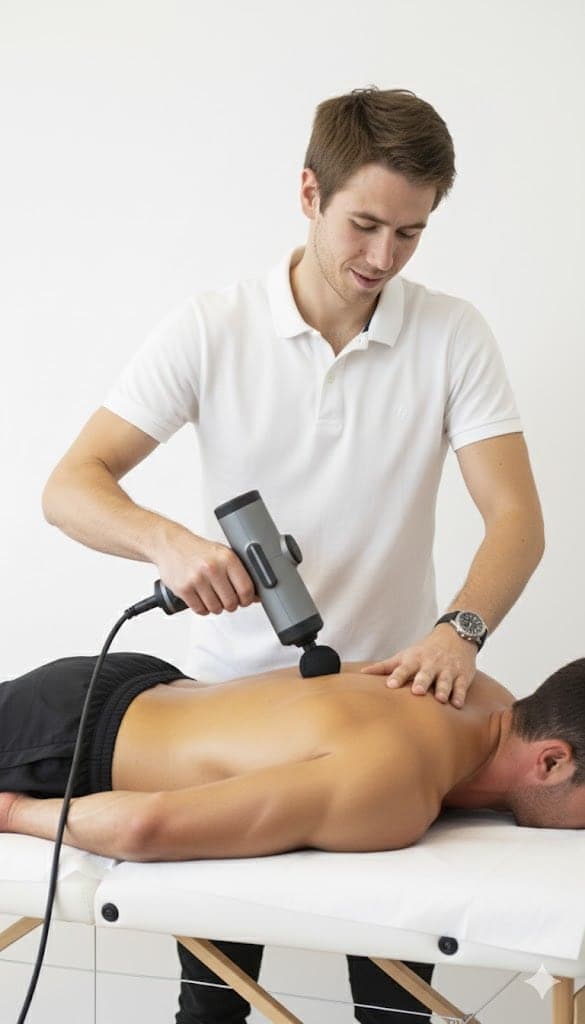
Written by
Chris
Massage therapist, nutrition and exercise physiologist
Norwegian-certified with a Bachelor’s in Physical Education and Nutrition and over ten years of clinical practice, working from a portable table in clients’ homes across the Paphos district.
This article is general information, not a medical diagnosis. If you have severe, worsening or unexplained pain, numbness, weakness, or pain after an accident, see a doctor first.