Physiotherapy for Lower Back Pain Paphos: Advanced Mechanical Treatment That Delivers Lasting Results
In short
Discover why precision mechanical physiotherapy in Paphos outperforms traditional methods for lower back pain. Evidence-based deep-tissue treatment that addresses the root cause, not just symptoms.
Lower back pain doesn’t care about your schedule. It arrives uninvited during a morning stretch, intensifies during your afternoon work session, and keeps you awake at night. I’ve treated hundreds of clients in Paphos over the past decade, and the pattern remains consistent: most people have tried multiple solutions before they reach out to me. They’ve swallowed painkillers that dulled their senses without addressing the problem. They’ve endured relaxation massages that felt pleasant but provided only temporary relief. They’ve stretched religiously, only to find the pain returning with stubborn persistence.
The fundamental issue isn’t that these approaches lack value entirely—it’s that they fail to address the mechanical dysfunction causing your lower back pain. Your lumbar spine, surrounded by dense layers of muscle, fascia, and connective tissue, requires precise intervention at the correct depth and angle. Traditional hands-based therapy, regardless of the therapist’s skill, cannot consistently reach the structures that matter most. This limitation isn’t a reflection of poor training; it’s a simple biomechanical reality.
After ten years of clinical practice and a Bachelor’s degree in Physical Education and Nutrition from Norway, I’ve developed an approach to physiotherapy for lower back pain in Paphos that eliminates this limitation entirely. My method combines advanced mechanical deep-tissue treatment with comprehensive body mechanics assessment, creating outcomes that traditional approaches cannot replicate.
Understanding the True Nature of Lower Back Pain: Beyond Surface-Level Solutions
Your lower back pain exists because of mechanical dysfunction, not because you need to “relax more.” The lumbar region bears substantial load throughout your daily activities—sitting at your desk, lifting objects, standing for extended periods, even sleeping in suboptimal positions. Over time, these repetitive stressors create layers of fascial adhesions, trigger points, and muscular compensation patterns that restrict movement and generate pain.
I remember treating a 42-year-old executive who had suffered with chronic lower back pain for six years. He’d tried everything: chiropractors, traditional massage therapists, even acupuncture. Each intervention provided relief lasting between three days and two weeks, then the pain returned with identical intensity. When I assessed his movement patterns, the dysfunction was immediately apparent—his gluteus medius wasn’t firing correctly, forcing his lumbar erector spinae to compensate during basic hip extension. The resulting tension had created dense fascial restrictions that no amount of superficial massage could address.
The Anatomy of Chronic Lower Back Dysfunction
The lumbar spine consists of five vertebrae (L1-L5) supported by an intricate network of muscles, ligaments, and fascial planes. When we discuss physiotherapy for lower back pain in Paphos, we must understand that pain rarely originates from the spine itself—it manifests from the surrounding soft tissue structures.
| Anatomical Structure | Role in Lower Back Function | Common Dysfunction |
|---|---|---|
| Erector Spinae | Primary spinal extensors | Chronic hypertonicity from compensation |
| Multifidus | Segmental stabilization | Inhibition leading to instability |
| Quadratus Lumborum | Lateral stabilization | Trigger points causing referred pain |
| Psoas Major | Hip flexion and lumbar stabilization | Shortening and adhesion formation |
| Thoracolumbar Fascia | Force transmission and stability | Adhesions restricting movement |
Traditional physiotherapy approaches these structures with manual techniques that, while well-intentioned, lack the mechanical advantage necessary to create lasting change. Human hands, regardless of training, cannot consistently penetrate through multiple tissue layers to reach the deep stabilizers where dysfunction originates. This isn’t opinion—it’s biomechanical fact.
Why Traditional Physiotherapy for Lower Back Pain Falls Short: The Mechanical Limitation
I spent the first three years of my career working within conventional physiotherapy frameworks. I delivered the standard protocols: heat application, manual massage, stretching routines, strengthening exercises. My clients improved, but the improvements were incremental and temporary. The pain would diminish for a week, perhaps two, then creep back with familiar intensity.
The problem wasn’t my assessment skills or understanding of anatomy—my university education provided that foundation thoroughly. The limitation was mechanical. My hands, like every therapist’s hands, could only generate so much force before my own body fatigued. They could only reach so deep before the client’s pain tolerance exceeded the therapeutic benefit. They varied in effectiveness depending on my energy levels, creating inconsistency that professional treatment should never exhibit.
The Depth Problem in Lower Back Treatment
Consider the psoas major muscle—a critical hip flexor that originates from the lumbar vertebrae and inserts on the femur. In chronic lower back pain, this muscle frequently develops dense adhesions and trigger points. To effectively treat the psoas, a therapist must work through:
- The abdominal muscles anteriorly (if accessing from the front)
- The intestinal cavity and surrounding fascia
- The psoas fascia itself
- The muscle fibers at varying depths
This requires sustained, precise pressure at angles that human hands cannot maintain consistently. Traditional manual therapy either fails to reach the structure entirely or creates excessive discomfort trying to force penetration.
I witnessed this limitation repeatedly. A professional cyclist came to me after six months of conventional physiotherapy for chronic lower back pain. His previous therapist had worked diligently, but the treatment couldn’t address the deep fascial restrictions in his iliopsoas complex that were pulling his lumbar spine into anterior tilt. The dysfunction persisted because the treatment, while conceptually correct, lacked mechanical efficacy.
Advanced Mechanical Physiotherapy: Precision, Power, and Consistency in Lower Back Treatment
My approach to physiotherapy for lower back pain in Paphos eliminates the mechanical limitations that compromise traditional treatment. I utilize a specialized mechanical device that delivers therapeutic force with precision that human hands cannot replicate. This isn’t a massage gun or percussion device—those tools provide superficial stimulation. This is a clinical instrument designed for deep fascial release and trigger point therapy.
The Three Pillars of Mechanical Advantage
Precision: The device allows me to target specific anatomical structures with millimeter accuracy. When treating quadratus lumborum trigger points, I can isolate the exact location where the dysfunction exists, applying force at the optimal angle for fascial release. This precision eliminates the “shotgun approach” of traditional massage, where therapists work broadly across an area hoping to affect the problematic tissue.
Power: The mechanical advantage generates sustained deep pressure that penetrates through multiple tissue layers. While working on a client’s thoracolumbar fascia, I can maintain consistent force for the 5-7 minutes necessary to create genuine structural change. Human hands fatigue within 90 seconds at comparable intensity. This difference isn’t marginal—it’s the difference between superficial temporary relief and structural resolution.
Consistency: I don’t have “off days” where my treatment effectiveness diminishes. The device delivers identical force and precision whether I’m treating my first client of the day or my fifth. This consistency ensures that every session produces reliable outcomes, eliminating the variable results that plague manual therapy.
Clinical Application: The Assessment and Treatment Protocol
When clients seek my services for physiotherapy for lower back pain in Paphos, I don’t begin with treatment—I begin with comprehensive assessment. My background in Physical Education and Nutrition, combined with ten years of clinical experience, has taught me that effective treatment requires accurate diagnosis of the mechanical dysfunction.
I evaluate:
- Postural alignment in standing, sitting, and movement
- Hip mobility and symmetry through active and passive range of motion testing
- Muscle activation patterns during fundamental movements (squatting, hip hinging, single-leg stance)
- Palpable tissue quality throughout the lumbar region and associated structures
- Compensation patterns that indicate which muscles are overworking and which are inhibited
This assessment reveals the specific mechanical dysfunction causing your pain. Perhaps your gluteus medius isn’t firing correctly, forcing your quadratus lumborum into chronic overactivation. Maybe years of desk work have shortened your hip flexors, creating anterior pelvic tilt and lumbar hyperextension. Possibly fascial adhesions in your thoracolumbar region are restricting spinal movement and creating referred pain patterns.
Once I’ve identified the dysfunction, I design a treatment protocol that addresses the root cause, not just the symptom. If your lower back pain stems from gluteal inhibition and lumbar overcompensation, I’ll use the mechanical device to release the hypertonic lumbar muscles while simultaneously providing activation protocols for the inhibited gluteals. This combined approach creates sustainable change because we’re correcting the movement pattern, not just treating the pain.
Case Studies: Real Results from Mechanical Physiotherapy in Paphos
The Desk Worker: Reversing Years of Postural Dysfunction
A 38-year-old software developer contacted me after eight months of increasing lower back pain. Her previous treatment included weekly traditional massages and daily stretching routines. The massage felt pleasant but provided no lasting relief. The stretching, while improving her flexibility slightly, didn’t reduce her pain.
My assessment revealed severe anterior pelvic tilt caused by shortened hip flexors and inhibited abdominal muscles. Her lumbar erector spinae were chronically contracted, attempting to prevent her pelvis from tilting even further forward. Traditional massage had addressed these erector muscles superficially, providing temporary relief, but hadn’t resolved the hip flexor restriction driving the dysfunction.
Using the mechanical device, I spent three sessions working through the dense fascial restrictions in her psoas and iliacus muscles. This required sustained pressure at depths manual therapy cannot reach. Simultaneously, I prescribed specific activation exercises for her deep abdominal stabilizers.
After six weeks of bi-weekly treatment, her pain had reduced by approximately 85%. More importantly, her postural alignment had improved significantly, indicating that we’d addressed the mechanical cause. She continues with monthly maintenance sessions, but the chronic daily pain that had dominated her life for eight months is gone.
The Athlete: Restoring Performance After Chronic Injury
I treated a semi-professional tennis player who had developed lower back pain that intensified during serving motion. He’d worked with a sports physiotherapist for four months with minimal improvement. The pain wasn’t severe enough to prevent playing, but it limited his service power and created compensation patterns affecting his entire game.
My assessment showed restricted thoracolumbar rotation caused by fascial adhesions, combined with trigger points in his quadratus lumborum. During his serving motion, his spine couldn’t rotate sufficiently, forcing excessive movement through his lumbar segments and creating pain.
The mechanical device allowed me to address the fascial restrictions with force and precision that his previous treatment lacked. Within three sessions, his rotational range had improved by 22 degrees. After eight sessions over five weeks, his serve velocity had increased, and the pain during serving had disappeared entirely.
This case illustrates why I position my service as an investment rather than an expense. The cost of continuing with ineffective treatment—both financially and in terms of performance limitation—far exceeds the investment in treatment that actually resolves the problem.
The Physiological Mechanisms: Why Mechanical Treatment Works
Understanding why mechanical physiotherapy for lower back pain in Paphos produces superior results requires examining the physiological processes occurring during treatment.
Fascial Release and Tissue Remodeling
Fascia, the connective tissue surrounding muscles and organs, responds to mechanical stress through a process called mechanotransduction. When sustained pressure is applied to fascial tissue, specialized cells called fibroblasts respond by remodeling the collagen structure. This remodeling breaks down adhesions and improves tissue mobility.
However, this process requires specific parameters:
- Sufficient Duration: Fascial release requires sustained pressure for 90-300 seconds per area
- Adequate Depth: The pressure must reach the fascial plane where restrictions exist
- Appropriate Force: The mechanical load must exceed the tissue’s resistance threshold
Manual therapy struggles to meet these parameters consistently. Therapists’ hands fatigue, reducing force over time. Discomfort limits how deep therapists can work. The mechanical device I use eliminates these limitations, allowing me to deliver the precise parameters necessary for genuine fascial remodeling.
Trigger Point Deactivation
Trigger points—hyperirritable spots within taut muscle bands—are common culprits in lower back pain. These points create local pain and referred pain patterns that can extend throughout the lumbar region and into the hips and legs.
Deactivating trigger points requires direct pressure sufficient to reduce blood flow temporarily (ischemic compression), followed by reperfusion that helps normalize the tissue. This process demands:
- Precise location of the trigger point
- Sustained pressure at 60-80% of pain tolerance
- Duration of 60-90 seconds per point
- Gradual release to facilitate reperfusion
The mechanical advantage of my device allows me to maintain this exact protocol consistently. I can hold the precise point with unwavering pressure while monitoring the client’s response and adjusting intensity in real-time. This level of control is impossible with manual therapy, where therapist fatigue and positional limitations compromise treatment effectiveness.
Beyond Pain Relief: Optimizing Movement and Preventing Recurrence
Effective physiotherapy for lower back pain in Paphos must extend beyond pain reduction. My objective isn’t simply to make you feel better temporarily—it’s to restore optimal movement patterns and prevent recurrence. This requires addressing both the structural dysfunction and the movement patterns that created it.
The Movement Education Component
After mechanical treatment has released fascial restrictions and deactivated trigger points, I educate clients on movement patterns that support long-term spinal health. This isn’t generic advice about “lifting with your legs”—it’s specific instruction based on your individual movement dysfunction.
For example, if your assessment revealed poor hip hinge mechanics, I’ll teach you proper loading patterns that spare your lumbar spine during daily activities. If you demonstrate inadequate core stabilization, I’ll provide specific exercises that train your deep stabilizers without overactivating your superficial muscles.
This education transforms my service from a temporary fix into a sustainable solution. You’re not dependent on weekly treatment indefinitely—you’re learning how to maintain the improvements we’ve achieved together.
The Maintenance Protocol
I structure my services around dedicated partnerships, not one-off sessions. After the initial intensive treatment phase resolves your acute pain, we transition to a maintenance protocol designed to prevent recurrence.
For most clients, this means monthly sessions that address minor dysfunctions before they develop into chronic problems. During these maintenance sessions, I assess your movement patterns, identify any emerging restrictions, and address them immediately. This proactive approach prevents the pain cycles that occur when people only seek treatment after dysfunction has progressed to the pain stage.
Frequently Asked Questions About Physiotherapy for Lower Back Pain in Paphos
How does mechanical physiotherapy differ from traditional massage therapy?
Traditional massage therapy focuses primarily on relaxation and stress reduction, working superficially across muscle tissue. My mechanical physiotherapy targets specific anatomical structures responsible for pain and dysfunction, working at depths and with precision that manual therapy cannot achieve. The objective is structural change and functional improvement, not temporary relaxation.
How many sessions are typically required to resolve chronic lower back pain?
The number of sessions depends on the severity and duration of your dysfunction. Acute pain (present for less than six weeks) typically responds within 3-4 sessions. Chronic pain (present for six months or longer) generally requires 6-10 sessions during the intensive treatment phase, followed by monthly maintenance. I provide realistic timelines during your initial assessment based on your specific condition.
Is the mechanical treatment painful?
Effective deep-tissue therapy works at the edge of discomfort—you’ll feel significant pressure as I address restricted tissue, but the sensation should remain within your tolerance. I adjust intensity continuously based on your feedback, ensuring we’re working deep enough to create change without exceeding your comfort threshold. Most clients describe the sensation as “intense but satisfying,” knowing they’re receiving treatment that’s actually addressing their problem.
Do you only treat lower back pain, or can you address other conditions?
While lower back pain is a common presentation, my mechanical physiotherapy approach effectively treats various musculoskeletal dysfunctions: shoulder pain, neck tension, hip restrictions, knee problems, and other conditions caused by fascial restrictions and trigger points. My assessment identifies the mechanical dysfunction regardless of where symptoms manifest.
Why do you travel to clients rather than operating from a clinic?
I bring a professional treatment bench and all necessary equipment to your location for several reasons. First, it eliminates travel stress for clients already dealing with pain. Second, it allows me to assess your home environment and identify factors contributing to your dysfunction (workstation setup, sleeping position, daily movement patterns). Third, it provides the privacy and comfort many clients prefer for intensive treatment sessions.
How do I know if my lower back pain is appropriate for your treatment approach?
My approach effectively addresses mechanical dysfunction—pain caused by fascial restrictions, trigger points, muscle imbalances, and movement pattern dysfunctions. If your pain results from these structural issues (which accounts for approximately 85-90% of lower back pain cases), mechanical physiotherapy will produce significant results. During initial consultation, I assess whether your condition is appropriate for my treatment or requires alternative medical intervention.
What makes your treatment worth the investment compared to cheaper massage options?
Traditional massage provides temporary relaxation at lower cost, but requires ongoing sessions without resolving the underlying problem. My treatment costs more per session because it utilizes specialized equipment and advanced methodology that produces lasting structural change. Most clients find that 6-8 sessions of effective treatment cost less than months of weekly massage that never addresses the root cause. Additionally, the value of eliminating chronic pain and restoring function exceeds any financial consideration for most people.
Can your treatment help even if I’ve tried physiotherapy before without success?
Yes—this is perhaps the most common situation I encounter. Previous physiotherapy likely utilized manual techniques that, while conceptually sound, lacked the mechanical advantage necessary to create lasting change. The specialized device I use provides treatment capabilities that conventional manual therapy cannot replicate, allowing me to address dysfunctions that previous approaches couldn’t resolve effectively.
The Investment in Long-Term Spinal Health
After ten years of clinical practice treating physiotherapy for lower back pain in Paphos, I’ve observed a clear pattern: people who view treatment as an investment in long-term health achieve dramatically better outcomes than those seeking the cheapest available option.
The mathematics support this perspective. Consider someone spending €40 weekly on traditional massage that provides temporary relief without addressing mechanical dysfunction. Over one year, they’ll spend €2,080 while remaining dependent on weekly treatment indefinitely. Alternatively, investing in specialized mechanical physiotherapy might require 8 sessions at higher cost during the intensive phase, followed by monthly maintenance. The financial investment is comparable, but the outcomes are incomparable—one approach maintains dependency on temporary relief, while the other resolves the underlying dysfunction.
Beyond financial considerations, chronic pain extracts costs that no monetary value can represent: lost productivity, diminished quality of life, inability to engage in activities you enjoy, psychological stress, and progressive deterioration of function. Effective treatment that eliminates these costs justifies premium investment.
Your Path Forward: Taking Action on Chronic Lower Back Pain
Lower back pain will not resolve through wishful thinking or passive waiting. The mechanical dysfunctions causing your pain are worsening gradually, creating deeper fascial restrictions, more pronounced movement compensations, and progressive functional limitation. The longer you delay addressing the root cause, the more extensive the dysfunction becomes and the more intensive the treatment required.
I’ve built my professional reputation over the past decade by delivering results that other approaches cannot match. My Bachelor’s degree in Physical Education and Nutrition provides the scientific foundation. My ten years of clinical experience provide the practical expertise. My specialized mechanical methodology provides the tool to create genuine structural change. These combined elements allow me to offer physiotherapy for lower back pain in Paphos that stands apart from conventional alternatives.
I work through a dedicated partnership model, creating customized treatment plans specific to your mechanical dysfunction. This isn’t a standardized protocol applied uniformly—it’s individualized intervention designed around your body’s specific needs, your functional goals, and your response to treatment.
Your lower back pain exists because of mechanical dysfunction that conventional approaches cannot adequately address. The solution requires precision, power, and consistency that only specialized mechanical physiotherapy provides. The question isn’t whether this approach works—my clinical results over ten years demonstrate its effectiveness clearly. The question is whether you’re ready to invest in treatment that resolves your problem durably rather than continuing with temporary relief measures that maintain your dependency.
I travel to your location throughout Paphos, bringing professional equipment and everything necessary for effective treatment. This eliminates the inconvenience of traveling while in pain and allows me to assess your environment for factors contributing to your dysfunction.
Chronic lower back pain will continue dominating your daily experience until you address the mechanical dysfunction causing it. Traditional approaches have failed you not because you chose poor therapists, but because those approaches cannot deliver the mechanical advantage necessary to create lasting structural change. My specialized methodology eliminates this limitation entirely, providing treatment capabilities that resolve dysfunction at its source.
The path forward begins with accurate assessment of your specific mechanical dysfunction, followed by targeted treatment that addresses the root cause with precision and power that manual therapy cannot replicate. This approach produces results that justify the investment—not just pain reduction, but restoration of function, elimination of compensation patterns, and prevention of recurrence through movement education and maintenance protocols.
Your lower back deserves treatment that actually works, delivered by someone with the education, experience, and methodology to create lasting results. That’s exactly what I provide through mechanical physiotherapy for lower back pain in Paphos.
Evidence and limits
Massage may help with some symptoms, but benefits and evidence vary by condition. It does not replace medical assessment or treatment. A page update is not evidence of an independent clinical review.
Further reading: Massage therapy: evidence, safety and limitations by US National Center for Complementary and Integrative Health. This is general background reading, not verification of every claim in this article.
How we describe evidence and updates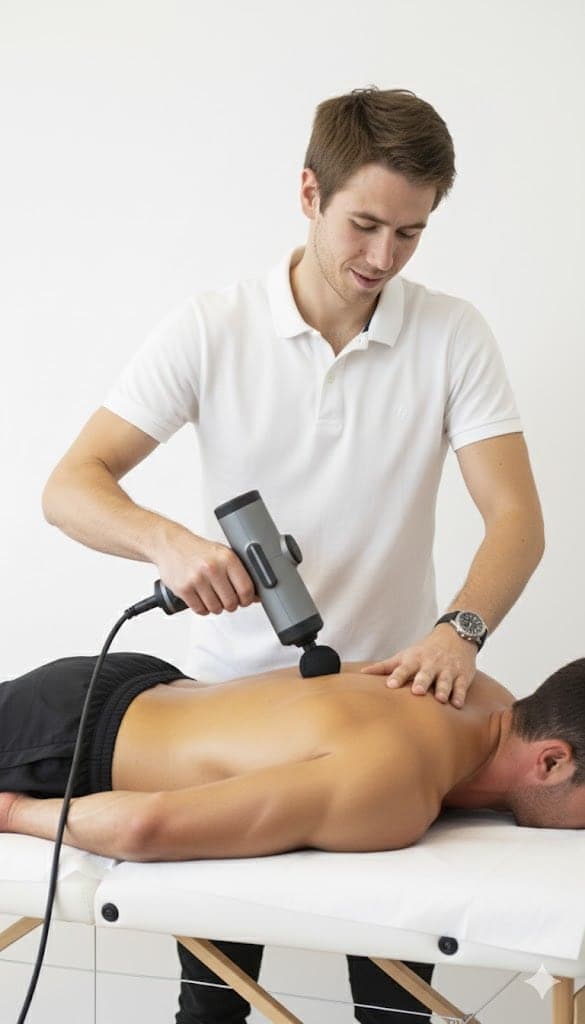
Written by
Chris
Massage therapist, nutrition and exercise physiologist
Norwegian-certified with a Bachelor’s in Physical Education and Nutrition and over ten years of clinical practice, working from a portable table in clients’ homes across the Paphos district.
This article is general information, not a medical diagnosis. If you have severe, worsening or unexplained pain, numbness, weakness, or pain after an accident, see a doctor first.