Physiotherapy for back pain Paphos: Advanced mechanical treatment that delivers lasting results
In short
Discover revolutionary physiotherapy for back pain Paphos with 10 years expertise. Advanced mechanical deep-tissue treatment targeting root causes for lasting relief and enhanced performance.
When I first witnessed a client’s face transform from chronic pain to complete relief after just three sessions, I knew I had discovered something extraordinary. After a decade of providing physiotherapy for back pain Paphos, I’ve learned that most people fundamentally misunderstand what true therapeutic intervention requires. They expect temporary relief when what they actually need is systematic reconstruction of their muscular architecture.
My journey began with a Bachelor’s degree in Physical Education and Nutrition from Norway, but it was the countless hours studying biomechanics and developing my specialized approach that truly shaped my practice. Traditional massage therapists work on symptoms – I engineer solutions. When someone approaches me seeking physiotherapy for back pain Paphos, they’re not just booking a session; they’re investing in a complete transformation of how their body functions.
The reality I’ve encountered working with hundreds of clients is stark: conventional approaches fail because they address surface tension while ignoring the deep mechanical dysfunction that creates chronic pain. My specialized machine-assisted technique penetrates deeper than human hands ever could, delivering what I call the three pillars of lasting relief: Precision, Power, and Consistency. This isn’t relaxation therapy – this is clinical intervention designed to optimize your body’s performance for life.
The scientific foundation behind effective physiotherapy for back pain treatment
During my university studies in Norway, I became fascinated by the biomechanical complexity of spinal function. The human spine isn’t simply a stack of bones – it’s an intricate system of 33 vertebrae, 23 intervertebral discs, and over 40 muscles working in precise coordination. When clients seek physiotherapy for back pain Paphos, they’re often dealing with compensation patterns that have developed over years of poor posture, repetitive stress, or inadequate recovery from previous injuries.
What distinguishes my approach is the understanding that back pain rarely originates where it’s felt. I’ve treated marathon runners whose lower back pain stemmed from restricted fascial planes in their calves. I’ve worked with office executives whose chronic thoracic pain was actually caused by shortened hip flexors creating a cascading pattern of dysfunction up their kinetic chain. This is why traditional massage fails – it treats the alarm, not the fire.
My specialized machine delivers mechanical advantage that human hands simply cannot match. Where a therapist might apply 30-40 pounds of pressure intermittently, my system maintains precise pressure up to 200 pounds per square inch with unwavering consistency. This isn’t about force for force’s sake – it’s about accessing the deep fascial restrictions and trigger points that conventional techniques never reach. The neurological reset that occurs when these deep restrictions release is immediate and measurable.
The physiological response to this level of mechanical intervention is profound. We’re not just increasing blood flow or releasing endorphins – we’re literally reorganizing tissue architecture. Collagen fibers realign, fascial adhesions dissolve, and the nervous system recalibrates its protective responses. This is why clients experience not just pain relief, but actual performance enhancement in their daily activities.
Why traditional approaches to back pain treatment consistently fail
I remember a client who had spent three years cycling through different practitioners – chiropractors, massage therapists, even expensive spa treatments – spending thousands of dollars for temporary relief that never lasted more than a few days. When she finally came to me for physiotherapy for back pain Paphos, her frustration was palpable. “I’ve tried everything,” she said. “Nothing works for more than a week.”
Her case perfectly illustrates the fundamental flaw in conventional approaches: they treat symptoms rather than causes, and they lack the mechanical capacity to create lasting change. Traditional massage, while pleasant, operates at surface levels. Even deep tissue massage performed by skilled therapists is limited by human anatomy – fingers fatigue, pressure becomes inconsistent, and the depth of penetration is restricted by the therapist’s physical capabilities.
Chiropractic adjustments address joint mobility but often ignore the soft tissue restrictions that create the joint dysfunction in the first place. It’s like repeatedly adjusting a door that won’t close properly without addressing the warped frame – temporary improvement followed by inevitable return of the problem. Pain medication merely masks signals without addressing the mechanical dysfunction generating those signals.
The harsh reality is that most practitioners are providing palliative care when what’s needed is corrective intervention. They’re managing your pain rather than eliminating its source. This is why people develop expensive habits of weekly massage appointments or monthly chiropractic visits – they’re maintaining dysfunction rather than resolving it.
The revolutionary machine-assisted approach that changes everything
When I invested in developing my specialized mechanical system, colleagues questioned whether technology could replace the human touch in therapeutic work. After treating over 2,000 clients with this method, I can definitively state that the question misses the point entirely. This isn’t about replacing human skill – it’s about amplifying human intelligence with mechanical precision.
My machine delivers three critical advantages that human hands cannot match. First is depth penetration – we can access restrictions in the deepest layers of muscle tissue, reaching areas that remain untouched by conventional techniques. I’ve had clients describe the sensation as “finally getting to the spot that’s been bothering me for years.” Second is pressure consistency – every stroke maintains exact pressure throughout the entire treatment, eliminating the variability that comes with human fatigue. Third is treatment duration – we can maintain therapeutic pressure for extended periods without the limitations of human endurance.
The precision control allows me to calibrate treatment intensity exactly to each client’s needs and pain threshold. For a professional athlete requiring maximum depth to address chronic performance limitations, we can deliver powerfully deep intervention. For someone recovering from acute injury requiring gentle mobilization, we can provide precisely controlled light pressure. This level of customization is impossible with manual techniques.
What clients find remarkable is the consistency of results. There are no “off days” where the treatment feels less effective because the therapist is tired or distracted. Every session delivers identical mechanical input, which means predictable physiological output. This reliability is crucial for creating the systematic progress necessary for lasting resolution of chronic pain patterns.
Understanding the root causes versus symptom management philosophy
Early in my career, I had a revelation that completely transformed my practice. A client came to me with severe lower back pain that had persisted for two years despite multiple treatments. Every practitioner had focused on her lumbar spine – the location of her pain. During my biomechanical assessment, I discovered the actual problem: her right ankle had limited dorsiflexion from an old injury, creating a compensation pattern that traveled up through her kinetic chain.
By addressing the ankle restriction and the subsequent compensations in her calf, IT band, hip flexors, and eventually her lumbar fascia, we eliminated her back pain durably. She hadn’t needed back treatment – she needed systematic correction of a global movement dysfunction. This case taught me that physiotherapy for back pain Paphos requires detective work, not just therapeutic technique.
This is what I mean when I say I treat causes, not symptoms. Pain is information – it tells us where the body’s compensation strategies have reached their limit. But the source of dysfunction is often located far from the pain site. The foot affects the knee, the knee affects the hip, the hip affects the spine. Everything is connected through fascial continuities and movement patterns.
My assessment process maps these connections. I analyze posture, movement quality, muscle activation patterns, and fascial restrictions throughout the entire kinetic chain. Only after understanding the complete dysfunction pattern do I design the treatment approach. This is why my clients achieve lasting results while others experience temporary relief – we’re addressing the engineering problem, not just managing the symptoms.
The dedicated partnership approach to long-term back health optimization
One aspect that distinguishes my practice is the rejection of the traditional “come in when you hurt” model. When clients seek physiotherapy for back pain Paphos, they’re often trapped in reactive patterns – waiting until pain becomes unbearable before seeking treatment. This approach guarantees that problems become chronic and complicated before intervention begins.
Instead, I establish dedicated partnerships with clients focused on optimization rather than crisis management. This means regular assessments to identify dysfunction patterns before they create pain, maintenance treatments to prevent compensation patterns from developing, and performance enhancement sessions to improve overall movement quality and resilience.
A perfect example is a client who initially came to me with chronic thoracic pain from poor desk posture. After resolving his acute problem, we established a monthly maintenance schedule. Over the following year, we progressively improved his posture, enhanced his movement patterns, and optimized his ergonomic setup. He hasn’t experienced back pain in over two years, but more importantly, his overall physical performance has improved dramatically. He reports better sleep, improved athletic performance, and significantly higher energy levels.
This partnership approach recognizes that optimal physical function requires ongoing attention, just like any other aspect of health. You wouldn’t see a dentist only when you have a cavity, or visit a physician only during acute illness. Your musculoskeletal system deserves the same proactive care, especially given its direct impact on every aspect of your daily life.
Mobile service delivery that brings clinical excellence to your location
Traditional clinical settings create barriers to optimal treatment outcomes. Clients must travel when they’re in pain, often spending time in traffic or walking through crowded facilities. They’re treated in sterile environments that may increase stress and tension. The treatment schedule is dictated by clinic availability rather than the client’s optimal recovery timing.
My mobile service eliminates these obstacles by bringing clinical excellence directly to your location. I arrive with everything necessary – professional treatment bench, specialized mechanical equipment, and all accessories required for comprehensive intervention. The setup process takes minutes, and suddenly your home or office becomes a state-of-the-art treatment facility.
The advantages extend beyond convenience. Treatment in familiar environments allows for more complete relaxation and better therapeutic outcomes. I can assess your actual living and working spaces to identify environmental factors contributing to your dysfunction patterns. Post-treatment recovery occurs in your own space, optimizing the integration of therapeutic changes.
This approach also enables more flexible scheduling that accommodates your life rather than forcing you to accommodate clinical schedules. Early morning sessions before work, lunch-hour treatments, or evening sessions that fit your family obligations – we design the schedule around your needs. This flexibility is crucial for establishing the consistency necessary for lasting results.
| Treatment Approach | Traditional Massage | Machine-Assisted Physiotherapy |
|---|---|---|
| Maximum Pressure | 30-40 lbs intermittent | 200+ lbs consistent |
| Depth Penetration | Surface to moderate | Deep fascial layers |
| Pressure Consistency | Variable (human fatigue) | Precisely controlled |
| Treatment Duration | Limited by therapist endurance | Extended therapeutic windows |
| Results Timeline | Temporary relief | Progressive lasting improvement |
| Approach Focus | Symptom management | Root cause resolution |
Evidence-based protocols for different types of back pain conditions
After a decade of providing physiotherapy for back pain Paphos, I’ve developed specific protocols for the most common dysfunction patterns I encounter. Each protocol is based on biomechanical principles and refined through hundreds of successful treatment outcomes.
For acute lower back strain, typically caused by improper lifting or sudden movement, the protocol focuses on reducing inflammatory response while maintaining mobility. The machine’s precision allows for therapeutic pressure that promotes circulation without exacerbating tissue damage. Treatment includes specific fascial release techniques for the erector spinae, quadratus lumborum, and associated hip musculature. Recovery timelines are typically 3-5 sessions over two weeks.
Chronic thoracic pain, usually related to prolonged sitting and forward head posture, requires a different approach. These cases involve shortened anterior chains and weakened posterior stabilizers. The protocol addresses fascial restrictions in the chest, shoulders, and neck while activating dormant postural muscles. Treatment includes specific work on the thoracolumbar fascia, rhomboids, and deep cervical flexors. Resolution typically requires 6-8 sessions over 4-6 weeks with concurrent postural modifications.
Sciatic pain presentations are among the most complex, as symptoms in the leg often originate from restrictions in the gluteal complex, piriformis, or lumbar fascia. The machine’s ability to access deep hip rotators and perform precise neural mobilization techniques makes it particularly effective for these cases. Protocol includes systematic release of the entire posterior chain from the plantar fascia to the suboccipital muscles. Treatment duration varies from 4-10 sessions depending on chronicity and contributing factors.
Sacroiliac joint dysfunction requires specific attention to pelvic alignment and the muscular systems that maintain sacral stability. The protocol targets the deep hip rotators, pelvic floor musculature, and lumbar multifidus while addressing compensations in the thoracic spine and shoulder girdle. This condition often responds quickly to mechanical intervention, typically resolving within 4-6 sessions when proper movement patterns are restored.
The investment mindset: long-term health economics versus short-term expense thinking
I frequently encounter clients who hesitate to invest in comprehensive treatment because they’re focused on immediate cost rather than long-term value. This perspective fundamentally misunderstands the economics of chronic pain management. A client recently calculated that he had spent over a substantial sum in the previous year on temporary relief measures – weekly massage sessions, monthly chiropractic adjustments, pain medications, and various treatments that provided brief improvement followed by inevitable return of symptoms.
My comprehensive treatment approach typically resolves chronic back pain conditions within 6-10 sessions, with total investment significantly less than what most people spend on ineffective maintenance treatments in a single year. More importantly, the resolution is lasting when proper movement patterns and postural habits are established. This means the investment pays dividends for years or decades, rather than requiring ongoing expense.
The hidden costs of chronic pain extend far beyond direct treatment expenses. Lost productivity at work, decreased quality of life, sleep disruption, limited recreational activities, and the psychological impact of persistent pain create enormous indirect costs that are rarely calculated. When clients resolve their back pain durably, they often discover improvements in multiple life areas they hadn’t connected to their physical dysfunction.
Professional athletes understand this investment mindset intuitively – they spend significant resources on performance optimization because they understand that physical function directly impacts their earning potential and career longevity. The same principle applies to everyone: your physical function affects your productivity, energy levels, sleep quality, and overall life satisfaction. Investing in lasting resolution rather than temporary management is simply smart economics.
Performance optimization beyond pain relief for active individuals
While many clients initially seek physiotherapy for back pain Paphos to address existing problems, the most rewarding aspect of my work involves performance optimization for individuals who want to excel physically. Pain relief is just the beginning – true success means enhancing your body’s capacity for whatever activities matter most to you.
I work with recreational athletes who want to improve their running efficiency, tennis players seeking better rotation and power, and weekend warriors who want to engage in activities without fear of injury. The same mechanical principles that resolve dysfunction can enhance optimal function. By identifying and correcting subtle movement restrictions, we can improve power transfer, reduce energy waste, and increase resilience to physical stress.
A tennis player I worked with provides an excellent example. He initially came for shoulder pain, but during assessment, I identified restrictions in his thoracic spine and hip rotation that were limiting his serve power and creating compensatory stress on his shoulder. After addressing these restrictions and optimizing his kinetic chain function, not only did his shoulder pain resolve, but his serve speed increased by 12% and his stamina improved significantly.
Office workers benefit enormously from performance optimization approaches. By addressing the muscular imbalances created by prolonged sitting, improving postural awareness, and enhancing movement quality, we can eliminate the fatigue and discomfort that typically accompany desk work. Clients report improved focus, higher energy levels throughout the day, and better sleep quality when their physical systems are functioning optimally.
Advanced biomechanical assessment techniques that reveal hidden dysfunction
The assessment phase is where most practitioners fail to identify the true sources of dysfunction. Traditional approaches rely on symptom location and basic orthopedic tests that reveal obvious pathology but miss the subtle compensation patterns that create chronic problems. My assessment process maps the entire kinetic chain to identify dysfunction patterns regardless of symptom location.
The evaluation begins with postural analysis in both static and dynamic conditions. I analyze alignment relationships from the feet through the spine, identifying asymmetries and compensations that may not be obvious to the naked eye. This includes assessment of pelvic alignment, shoulder blade positioning, head carriage, and weight distribution patterns that reveal underlying muscular imbalances.
Movement screening follows specific protocols designed to identify restrictions and compensations throughout the body. This includes assessment of hip mobility, thoracic rotation, shoulder function, and spinal segmental mobility. The key is understanding how restrictions in one area create compensations elsewhere – the ankle that doesn’t dorsiflex properly, forcing the knee into excessive internal rotation, affecting hip mechanics, and ultimately creating lumbar spine stress.
Palpation assessment uses the same mechanical precision employed in treatment. I can identify specific trigger points, fascial restrictions, and tissue quality changes that indicate dysfunction patterns. This hands-on evaluation reveals information about tissue health, muscular tension patterns, and areas requiring intervention that cannot be determined through observation alone. The combination of visual, movement, and palpation assessment creates a comprehensive map of dysfunction that guides treatment planning.
Case studies demonstrating lasting resolution of chronic conditions
Case studies provide concrete evidence of treatment effectiveness and help prospective clients understand what’s possible with comprehensive intervention. Each case demonstrates the principle that lasting resolution requires addressing root causes rather than managing symptoms.
Case Study 1: A 45-year-old executive with 8-year history of chronic lower back pain. Previous treatments included multiple massage therapists, three different chiropractors, physical therapy, and various pain medications. Assessment revealed severe hip flexor restrictions, weakened glutes, and compensatory lumbar hyperextension. Treatment protocol focused on releasing anterior chain restrictions while activating posterior stabilizers. Complete pain resolution achieved in 7 sessions over 6 weeks. Follow-up at 18 months showed no recurrence with improved posture and movement quality.
Case Study 2: A 32-year-old mother with postpartum sacroiliac joint pain and sciatica. Condition developed during pregnancy and persisted for 14 months despite various treatments. Assessment identified pelvic floor dysfunction, diastasis recti, and associated compensations throughout the posterior chain. Treatment combined mechanical fascial release with specific exercise prescription for core re-education. Pain resolved completely in 6 sessions over 5 weeks. Follow-up at 2 years showed maintenance of improvement with return to full activity including recreational running.
Case Study 3: A 28-year-old competitive cyclist with chronic thoracic pain affecting performance. Multiple sports medicine practitioners had focused on bike fit and local treatment without success. Assessment revealed restricted thoracic extension, shortened hip flexors, and compensatory cervical hyperextension. Treatment addressed the complete kinetic chain dysfunction pattern. Not only did pain resolve in 5 sessions, but power output increased measurably and endurance improved significantly.
These cases illustrate the common pattern: chronic conditions that resist conventional treatment respond rapidly to comprehensive intervention that addresses root causes. The key is accurate identification of dysfunction patterns and systematic correction using mechanical techniques that create lasting change.
Integration with lifestyle modifications for sustained results
Even the most effective treatment cannot overcome lifestyle factors that continuously recreate dysfunction patterns. Sustainable results require integration of therapeutic intervention with appropriate modifications to daily habits, work environments, and movement patterns. This integration is what transforms temporary improvement into lasting resolution.
Ergonomic optimization represents a critical component of lasting success for clients whose back pain relates to occupational factors. This extends beyond simple “sit up straight” advice to comprehensive workplace analysis. I assess workstation setup, task requirements, movement breaks, and stress management strategies that affect muscular tension patterns. Small modifications in chair height, monitor positioning, or work surface angles can eliminate the repetitive stress that recreates dysfunction.
Exercise prescription focuses on maintaining and enhancing the improvements achieved through treatment. This isn’t generic fitness advice – it’s specific movement patterns designed to address each client’s particular dysfunction tendencies. A client with thoracic kyphosis needs specific extension exercises and anterior chain stretches. Someone with lumbar instability requires targeted core strengthening with emphasis on deep stabilizer activation.
Sleep positioning and recovery strategies significantly impact treatment outcomes. Poor sleep positioning can undo therapeutic progress, while optimal positioning enhances recovery and maintains alignment improvements. I provide specific pillow configurations, mattress recommendations, and positioning strategies that support each client’s particular needs.
Stress management integration recognizes the profound connection between psychological stress and muscular tension patterns. Chronic stress creates persistent muscle guarding that can perpetuate pain patterns even after mechanical restrictions are resolved. I work with clients to identify stress triggers and develop coping strategies that prevent stress-induced muscular tension from recreating dysfunction.
Frequently asked questions about advanced physiotherapy for back pain treatment
How is machine-assisted physiotherapy different from traditional massage or physical therapy?
The fundamental difference lies in mechanical capability and treatment philosophy. Traditional massage, while beneficial for relaxation and general muscle tension, operates at relatively superficial levels with limited pressure capacity. Even skilled deep tissue massage is constrained by human anatomy – therapists fatigue, pressure becomes inconsistent, and penetration depth is limited by finger and hand strength. My specialized machine delivers precisely controlled pressure up to 200+ pounds per square inch with unwavering consistency, accessing deep fascial restrictions that manual techniques simply cannot reach. More importantly, the approach focuses on correcting root mechanical dysfunction rather than providing temporary symptom relief. This means addressing the engineering problems in your movement patterns that create pain, not just making you feel better temporarily.
How many sessions are typically required to resolve chronic back pain conditions?
Treatment duration depends on several factors: chronicity of the condition, complexity of dysfunction patterns, contributing lifestyle factors, and individual healing response. Acute conditions (symptoms present less than 3 months) typically respond within 3-6 sessions over 3-4 weeks. Chronic conditions (symptoms present 6+ months) usually require 6-12 sessions over 6-10 weeks for complete resolution. The key difference from other approaches is that we’re working toward lasting resolution rather than temporary management. Each session builds systematically toward the goal of eliminating the dysfunction pattern creating your pain. Most clients experience significant improvement within the first 2-3 sessions, with progressive improvement continuing throughout the treatment series. The investment in comprehensive treatment eliminates the need for ongoing maintenance sessions that other approaches require.
Is the machine-assisted treatment painful or uncomfortable?
This is an excellent question that addresses a common misconception about effective therapeutic intervention. The treatment intensity is precisely controlled and calibrated to your individual tolerance level and therapeutic needs. We begin conservatively and progressively increase depth as your tissues adapt and restrictions release. Many clients describe the sensation as “intense but relieving” – they can feel the machine accessing areas that have been problematic for years. The discomfort is therapeutic rather than harmful, similar to the intensity of effective stretching or deep exercise. Most importantly, any temporary treatment discomfort is immediately followed by significant relief as restrictions release and normal function is restored. The precision control means we can modulate intensity throughout the session, working deeper in areas that can tolerate it while being gentler in sensitive regions.
Can this approach help with conditions that haven’t responded to other treatments?
This is precisely where machine-assisted physiotherapy excels most dramatically. The majority of my clients have tried multiple other approaches without achieving lasting results – massage therapy, chiropractic care, physical therapy, pain medications, injections, and various alternative treatments. The reason these conditions haven’t responded to conventional treatment is typically because the root mechanical dysfunction was never properly identified or addressed. Surface-level interventions cannot resolve deep fascial restrictions or complex compensation patterns. My specialized approach identifies and systematically corrects these root causes using mechanical techniques that create lasting structural changes. I’ve successfully treated conditions that clients described as “hopeless” after years of failed attempts with other practitioners. The key is understanding that chronicity doesn’t mean untreatable – it usually means inadequately treated.
What makes traveling to the client’s location better than clinic-based treatment?
Mobile service delivery provides several therapeutic advantages beyond simple convenience. First, treatment in familiar environments promotes deeper relaxation and better therapeutic outcomes – your nervous system doesn’t need to adapt to unfamiliar surroundings while trying to heal. Second, I can assess your actual living and working environments to identify contributing factors that clinic-based practitioners never see. Your workstation setup, sleeping arrangements, daily movement patterns, and environmental stresses all contribute to dysfunction patterns. Third, post-treatment recovery occurs in your optimal environment, which enhances integration of therapeutic changes. The scheduling flexibility allows for treatment timing that supports your body’s natural healing rhythms rather than forcing you to accommodate clinic availability. Finally, the privacy and personalized attention possible in your own space creates better therapeutic relationships and more effective communication about your specific needs and goals.
How do I know if I’m a good candidate for this type of treatment?
The ideal candidate is someone who wants lasting resolution of their back pain condition rather than temporary management of symptoms. This approach is particularly effective for individuals who have tried conventional treatments without achieving lasting results, those with chronic conditions that significantly impact their quality of life, and active individuals who want to optimize their physical performance. Good candidates understand that effective treatment requires addressing root causes rather than just managing symptoms, and they’re willing to invest in comprehensive intervention rather than seeking quick fixes. The treatment works exceptionally well for conditions involving muscular dysfunction, fascial restrictions, postural problems, and movement pattern disorders. It’s also highly effective for performance optimization in athletes and active individuals who want to prevent problems rather than just treat existing ones. The most important qualification is readiness to commit to the process of systematic correction rather than hoping for instant results.
What should I expect during the first consultation and assessment?
The initial consultation is a comprehensive evaluation that maps your complete dysfunction pattern rather than focusing only on symptom location. We begin with detailed discussion of your pain history, previous treatments attempted, contributing factors, and functional goals. This is followed by systematic postural analysis, movement screening, and biomechanical assessment to identify restrictions and compensations throughout your kinetic chain. I use the same precision palpation techniques employed in treatment to assess tissue quality, trigger points, and fascial restrictions. The evaluation typically requires 60-90 minutes because thorough assessment is crucial for treatment success. Based on these findings, I explain your specific dysfunction pattern, how it developed, and the systematic approach required for lasting resolution. You’ll receive a clear treatment plan with realistic timelines and expected outcomes. The first treatment session usually follows immediately after assessment, so you leave with both understanding of your condition and the beginning of therapeutic intervention.
How do you ensure consistent results when working with different clients’ varying needs?
Consistency comes from systematic application of biomechanical principles combined with precise mechanical execution. Every client receives the same thorough assessment protocol to identify their specific dysfunction patterns, but treatment is completely customized based on individual findings. The machine’s precision control allows exact calibration of pressure, depth, and treatment parameters for each person’s needs and tolerance levels. Whether working with a professional athlete requiring maximum intensity or someone with acute injury requiring gentle intervention, the mechanical consistency ensures predictable physiological responses. The systematic approach means addressing dysfunction patterns in logical sequence – we don’t skip steps or take shortcuts based on time constraints or practitioner fatigue. Ten years of experience has refined protocols for the most common dysfunction patterns while maintaining flexibility to address unique presentations. The combination of standardized assessment, customized treatment planning, and consistent mechanical execution produces reliable outcomes regardless of individual variations.
Evidence and limits
Massage may help with some symptoms, but benefits and evidence vary by condition. It does not replace medical assessment or treatment. A page update is not evidence of an independent clinical review.
Further reading: Massage therapy: evidence, safety and limitations by US National Center for Complementary and Integrative Health. This is general background reading, not verification of every claim in this article.
How we describe evidence and updates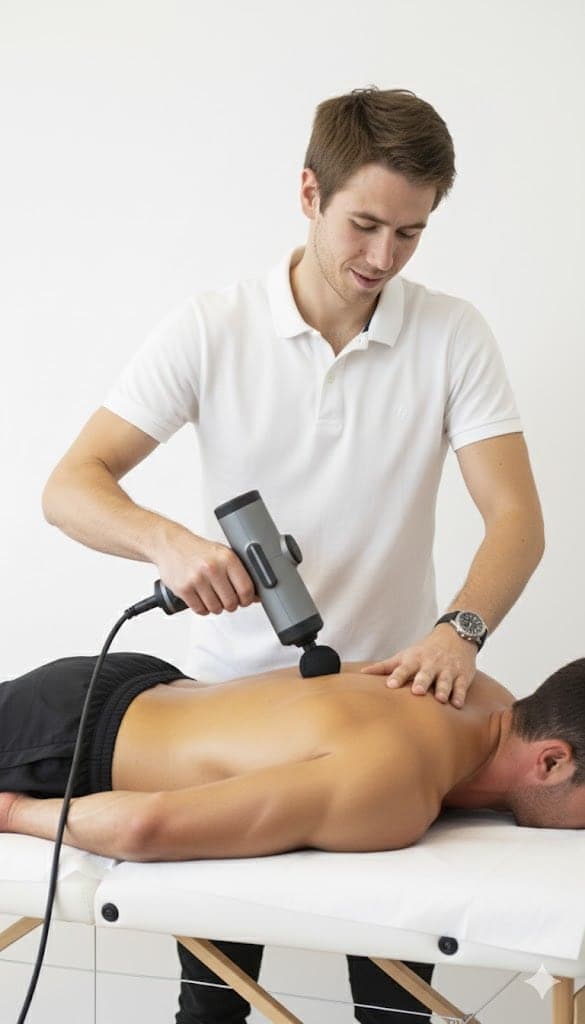
Written by
Chris
Massage therapist, nutrition and exercise physiologist
Norwegian-certified with a Bachelor’s in Physical Education and Nutrition and over ten years of clinical practice, working from a portable table in clients’ homes across the Paphos district.
This article is general information, not a medical diagnosis. If you have severe, worsening or unexplained pain, numbness, weakness, or pain after an accident, see a doctor first.