
Pain management Pegeia: advanced mechanical deep-tissue therapy for lasting relief
In short
Revolutionary pain management Pegeia services using precision mechanical therapy. Expert-led treatments targeting root causes for lasting relief and enhanced performance.
Pain management Pegeia has evolved dramatically in my decade of practice, and I can tell you with absolute certainty that most people are approaching their chronic pain completely wrong. When I first graduated with my Bachelor’s degree in Physical Education and Nutrition from Norway ten years ago, I believed—like most practitioners—that traditional massage techniques would suffice for comprehensive pain relief. I was operating under the same misconceptions that plague the industry today: that deeper pressure always means better results, that human hands could achieve the precision needed for mechanical corrections, and that temporary symptom relief equated to actual therapeutic progress.
The turning point in my understanding of effective pain management Pegeia came during my fourth year of practice when a professional cyclist arrived at my clinic with chronic hip flexor dysfunction that had plagued him for eighteen months. Three different massage therapists, two physiotherapists, and countless hours of self-treatment had failed to address the root mechanical dysfunction. Traditional approaches had focused on symptom management—reducing immediate discomfort—rather than correcting the underlying biomechanical imbalances that were generating the pain cycle. This case fundamentally changed how I approach pain management, leading me to develop the precision mechanical methodology that defines my practice today.
The fundamental flaws in conventional pain management approaches
After analyzing hundreds of cases over the past decade, I’ve identified three critical failures in conventional pain management Pegeia methodologies. First, the overwhelming majority of practitioners treat symptoms rather than mechanical causes. They focus on providing temporary relief from discomfort rather than correcting the structural and biomechanical dysfunctions that generate pain patterns. This symptomatic approach creates dependency cycles where clients require frequent treatments to maintain basic comfort levels, never achieving true resolution of their underlying issues.
Second, traditional manual therapy lacks the precision and consistency required for effective mechanical intervention. Human hands, regardless of training and experience, cannot deliver the exact pressure gradients, sustained force applications, and geometric precision necessary to access and release deep fascial restrictions. I’ve observed therapists experiencing fatigue during sessions, leading to inconsistent treatment quality and suboptimal outcomes. The variability in hand strength, endurance, and technique creates unpredictable results that undermine the therapeutic process.
Third, conventional approaches fail to address the three-dimensional nature of muscular and fascial systems. Pain management Pegeia requires understanding that tension patterns exist in complex geometric relationships throughout the body. Surface-level interventions cannot access the deep structural elements where chronic dysfunction originates. This limitation explains why traditional massage often provides temporary relief but fails to create lasting mechanical changes that relieves pain at its source.
Why precision matters more than pressure
My specialized mechanical deep-tissue methodology operates on a fundamentally different principle: precision trumps pressure every time. Through advanced mechanical tools that deliver controlled, consistent force applications, I can access specific tissue layers and geometric planes that remain unreachable through manual techniques. This precision allows for targeted intervention at the exact locations where mechanical dysfunction originates, creating lasting structural changes rather than temporary symptom relief.
The machine I utilize provides three critical advantages that human hands cannot replicate. First, it delivers deeper tissue penetration with mathematical precision, accessing fascial layers and muscular attachments that exist beyond the reach of manual therapy. Second, it maintains consistent force application throughout the entire treatment session, eliminating the variability and fatigue factors that compromise traditional approaches. Third, it allows for precise intensity modulation, enabling me to customize treatment parameters to each client’s specific mechanical requirements and tolerance levels.
The biomechanical foundation of chronic pain generation
Understanding pain management Pegeia requires recognizing that chronic pain originates from mechanical dysfunction rather than tissue damage. During my university education in Physical Education and Nutrition, I learned that pain patterns develop when biomechanical systems operate outside their optimal parameters. Muscles develop compensatory tension patterns, fascia becomes adhesed and restricted, and joint mechanics become altered to accommodate these dysfunctions. Over time, these compensatory patterns become entrenched, creating self-perpetuating cycles of dysfunction and discomfort.
I’ve documented this phenomenon extensively through my client work in Pegeia. A recent case involved a software engineer who had developed severe cervical dysfunction after years of forward head posture. Traditional approaches focused on treating neck muscle tension, providing temporary relief but failing to address the thoracic extension limitations and scapular positioning dysfunctions that were driving the cervical compensation patterns. My mechanical intervention targeted these root causes systematically, correcting the biomechanical chain that was generating her symptoms.
The key insight that separates my methodology from conventional pain management Pegeia approaches is understanding that pain represents the end result of mechanical dysfunction, not the primary problem itself. When biomechanical systems operate efficiently, pain naturally resolves because the mechanical stresses that generate discomfort have been eliminated. This principle guides every aspect of my treatment planning and intervention strategies.
Fascial system dysfunction and pain propagation
The fascial system represents the most overlooked component in pain management Pegeia, yet it plays the most critical role in both dysfunction development and therapeutic resolution. Fascia creates three-dimensional networks throughout the body that transmit mechanical forces and coordinate movement patterns. When fascial restrictions develop, they alter force transmission pathways and create compensatory movement strategies that propagate dysfunction throughout the kinetic chain.
My mechanical methodology specifically targets fascial restrictions using controlled force vectors that restore tissue mobility and force transmission efficiency. Unlike manual techniques that cannot sustain the precise pressure applications required for fascial release, my specialized equipment delivers consistent mechanical input that facilitates genuine structural changes. This fascial focus explains why my clients experience lasting improvements rather than temporary symptom relief.
Advanced mechanical intervention methodology
The specialized machine that defines my pain management Pegeia practice delivers three distinct advantages: precision, power, and consistency. These aren’t marketing terms—they represent measurable therapeutic parameters that directly impact treatment outcomes. Precision refers to the ability to target specific tissue layers and geometric orientations with mathematical accuracy. Power indicates the capacity to deliver sufficient mechanical force to create structural changes in deep tissues. Consistency ensures that every treatment session maintains identical therapeutic parameters regardless of external variables.
During a typical intervention, I utilize this mechanical precision to access tissue layers that exist 3-4 inches below the skin surface—depths that remain completely inaccessible through manual therapy. The controlled force applications create mechanical disruption of fascial adhesions and trigger point formations while stimulating increased blood flow and metabolic activity in target tissues. This combination of mechanical disruption and enhanced cellular function initiates the healing processes that lead to lasting structural improvements.
The power component allows me to customize treatment intensity based on each client’s specific requirements and tolerance levels. Athletes and individuals with highly developed musculature require significantly more mechanical force to achieve therapeutic effects, while others benefit from lighter applications focused on precision rather than intensity. This adaptability ensures optimal outcomes across diverse client populations and mechanical presentations.
Treatment protocol development and customization
Effective pain management Pegeia requires individualized treatment protocols based on comprehensive biomechanical assessment and specific dysfunction patterns. I begin each client relationship with detailed analysis of movement patterns, postural presentations, and pain distribution to identify the mechanical dysfunctions driving their symptoms. This assessment informs the development of customized intervention strategies that target root causes rather than symptoms.
My protocol development process considers three critical factors: tissue tolerance, dysfunction severity, and performance requirements. Tissue tolerance determines the initial treatment intensity and progression parameters. Dysfunction severity indicates the complexity and duration of intervention required. Performance requirements establish the endpoint goals that guide treatment planning and outcome measurement.
Case study analysis: chronic lumbar dysfunction resolution
A comprehensive case study illustrates the effectiveness of advanced pain management Pegeia methodology. A 42-year-old construction supervisor contacted me after experiencing chronic lumbar pain for three years following a work injury. Previous treatments included physical therapy, chiropractic manipulation, and regular massage therapy, all of which provided temporary relief but failed to resolve the underlying dysfunction.
My initial assessment revealed significant biomechanical dysfunction patterns extending beyond the lumbar region. Hip flexor restrictions were creating anterior pelvic tilt, thoracic extension limitations were forcing lumbar hyperextension, and deep spinal stabilizer weakness was compromising core stability. Traditional approaches had focused exclusively on lumbar symptoms while ignoring these contributing dysfunctions.
Using my specialized mechanical methodology, I developed a systematic intervention protocol targeting each component of the dysfunction chain. The precision capabilities allowed me to access deep hip flexor attachments and thoracic fascial restrictions that manual therapy couldn’t reach. The consistent force application ensured progressive improvement without the variability that had characterized his previous treatments.
Treatment progression and outcome measurement
Over six sessions spanning four weeks, this client experienced complete resolution of his chronic lumbar dysfunction. More importantly, he reported significant improvements in work performance, sleep quality, and general life satisfaction. The mechanical corrections created lasting structural changes that eliminated the pain-generating dysfunctions rather than simply managing symptoms.
This case exemplifies the fundamental principle of effective pain management Pegeia: addressing root mechanical causes produces lasting improvements that transform quality of life rather than providing temporary symptom relief. The investment in comprehensive mechanical correction pays dividends through enhanced performance, reduced healthcare costs, and improved life satisfaction.
Athletic performance optimization through mechanical correction
Pain management Pegeia extends beyond dysfunction resolution to include performance optimization for athletes and active individuals. My methodology directly improves mechanical efficiency, which translates to enhanced performance metrics across all movement patterns. By eliminating compensatory movement strategies and optimizing force transmission pathways, mechanical corrections create measurable improvements in strength, power, and endurance.
I recently worked with a competitive runner who had plateaued in her training despite consistent effort and proper programming. Assessment revealed subtle hip mobility restrictions and thoracic rotation limitations that were compromising her running mechanics. While these dysfunctions hadn’t yet created pain, they were limiting performance and increasing injury risk.
Through targeted mechanical interventions, I eliminated these restrictions and optimized her movement patterns. The results were immediate and measurable: improved stride efficiency, reduced energy expenditure, and enhanced speed endurance. Her competition times improved significantly, and she reported feeling stronger and more confident in her athletic pursuits.
Prevention versus rehabilitation paradigm
The most sophisticated approach to pain management Pegeia involves prevention rather than rehabilitation. By identifying and correcting mechanical dysfunctions before they generate symptoms, we can maintain optimal function and prevent the development of chronic pain patterns. This proactive methodology represents the highest level of healthcare investment—optimizing function before problems arise.
Prevention-focused interventions require regular mechanical assessments and maintenance protocols that preserve optimal biomechanical function. This approach relieves the pain, dysfunction, and performance limitations that develop when mechanical problems are allowed to progress untreated.
The economics of effective pain management investment
Viewing pain management Pegeia as a health investment rather than a treatment expense fundamentally changes the value proposition. Traditional approaches that focus on symptom management create ongoing costs without producing lasting solutions. My methodology requires a higher initial investment but eliminates the recurring expenses associated with chronic pain management.
Consider the comprehensive costs of chronic pain: medical consultations, diagnostic imaging, pharmaceutical interventions, missed work days, reduced productivity, and diminished quality of life. These expenses accumulate continuously when underlying mechanical dysfunctions remain unresolved. Effective mechanical correction eliminates these ongoing costs while improving performance and life satisfaction.
The return on investment extends beyond financial considerations to include enhanced professional performance, improved recreational activities, better sleep quality, and increased energy levels. These improvements create compounding benefits that justify the initial investment many times over.
Long-term health optimization benefits
Proper mechanical function provides protective benefits that extend throughout the lifespan. By maintaining optimal biomechanical patterns, we reduce wear and tear on joints, prevent degenerative changes, and preserve functional capacity as we age. This preventive approach represents the most cost-effective healthcare strategy available.
Mobile service delivery advantages
My pain management Pegeia services include comprehensive mobile delivery, bringing professional-grade equipment and expertise directly to the client’s location. This approach eliminates travel time and scheduling complications while providing treatment in familiar, comfortable environments. I arrive with a professional treatment bench and all necessary equipment, creating a clinic-quality experience in the client’s preferred setting.
Mobile delivery offers particular advantages for busy professionals, athletes with demanding schedules, and individuals managing chronic conditions. The convenience factor removes barriers to consistent treatment adherence while providing flexibility that traditional clinic-based services cannot match.
The mobile approach also allows me to observe the client’s actual living and working environments, providing insights into lifestyle factors that may contribute to mechanical dysfunction. This comprehensive perspective enhances treatment planning and outcome optimization.
Partnership approach to lasting results
Effective pain management Pegeia requires a collaborative partnership between practitioner and client rather than a transactional service relationship. I work exclusively through dedicated partnerships that include customized treatment plans, ongoing progress monitoring, and lifestyle optimization strategies. This comprehensive approach ensures lasting results rather than temporary improvements.
The partnership model recognizes that mechanical dysfunction develops over time through accumulated stresses and compensatory patterns. Resolution requires systematic intervention combined with education, exercise prescription, and lifestyle modifications that support optimal biomechanical function.
My clients receive detailed education about their specific mechanical dysfunctions, contributing factors, and maintenance strategies. This knowledge empowers them to make informed decisions about activities, postures, and habits that support their therapeutic progress.
Customized maintenance protocols
Long-term success in pain management Pegeia requires individualized maintenance protocols that preserve the mechanical corrections achieved through intensive intervention. These protocols include specific exercise prescriptions, postural awareness strategies, and periodic mechanical assessments to ensure continued optimal function.
Maintenance protocols are customized based on individual risk factors, lifestyle demands, and performance goals. Sedentary professionals require different maintenance strategies than competitive athletes, and protocols are adjusted accordingly to provide optimal long-term results.
Scientific foundation and clinical evidence
My approach to pain management Pegeia is grounded in established scientific principles from biomechanics, exercise physiology, and manual therapy research. The mechanical methodology utilizes proven concepts of tissue adaptation, neural plasticity, and motor learning to create lasting therapeutic changes. This scientific foundation ensures reliable, predictable outcomes rather than variable results based on subjective techniques.
Research in manual therapy consistently demonstrates the superiority of mechanical interventions over traditional approaches for creating structural tissue changes. Studies show that controlled mechanical force applications produce measurable improvements in tissue extensibility, neural function, and motor control that manual techniques cannot replicate.
The precision capabilities of mechanical intervention allow for standardized treatment protocols that can be replicated and refined based on outcome data. This scientific approach eliminates the guesswork and variability that characterize traditional manual therapy while maximizing therapeutic effectiveness.
Common misconceptions about advanced therapy
Several misconceptions about pain management Pegeia prevent individuals from accessing effective treatment. The most prevalent misconception equates deeper pressure with better results. While sufficient mechanical force is necessary to create tissue changes, precision and technique are far more important than intensity alone. My mechanical methodology provides the optimal combination of precision and power to maximize therapeutic effectiveness.
Another common misconception suggests that pain during treatment indicates effectiveness. This belief leads to unnecessarily aggressive interventions that can create tissue damage and inflammation rather than therapeutic benefit. My approach utilizes controlled discomfort within therapeutic ranges while avoiding counterproductive pain levels that impede healing.
Many people also believe that frequent treatments are necessary for maintaining results. This misconception stems from symptom-focused approaches that provide temporary relief rather than lasting correction. My methodology creates lasting mechanical changes that require minimal maintenance once optimal function is restored.
Education and expectation management
Proper education about mechanical dysfunction and therapeutic processes is essential for optimal treatment outcomes. I provide comprehensive explanation of each client’s specific dysfunctions, treatment rationale, and expected progression patterns. This education creates realistic expectations and promotes active participation in the therapeutic process.
Understanding the difference between symptom relief and mechanical correction helps clients appreciate the value of comprehensive intervention versus quick fixes. This knowledge supports informed decision-making about treatment options and long-term health investments.
Technology integration in modern therapy
The integration of advanced mechanical technology represents the evolution of pain management Pegeia from art to science. My specialized equipment provides measurable, repeatable therapeutic parameters that eliminate the variability inherent in manual approaches. This technological advancement enables precise treatment delivery and consistent outcome achievement.
Technology also enhances assessment capabilities through objective measurement of tissue compliance, movement patterns, and treatment responses. These data points inform treatment modifications and progression decisions based on measurable criteria rather than subjective impressions.
The precision capabilities of mechanical intervention allow for micro-adjustments in treatment parameters based on real-time tissue responses. This adaptability ensures optimal therapeutic effectiveness while minimizing discomfort and maximizing client satisfaction.
| Treatment Parameter | Mechanical Advantage | Traditional Limitation |
|---|---|---|
| Tissue Penetration Depth | 3-4 inches with precision | Limited to surface layers |
| Force Consistency | Mathematically controlled | Variable due to fatigue |
| Treatment Duration | Extended without quality loss | Decreases with therapist fatigue |
| Intensity Modulation | Precise incremental adjustments | Limited by hand strength variations |
| Treatment Repeatability | Identical parameters each session | Influenced by therapist variables |
Frequently asked questions about advanced pain management
How does mechanical therapy differ from traditional massage?
Mechanical therapy utilizes precision equipment to deliver controlled force applications that achieve therapeutic effects impossible through manual techniques. While traditional massage focuses on relaxation and temporary symptom relief, my mechanical methodology targets root causes of dysfunction to create lasting structural corrections. The precision capabilities allow access to deep tissue layers and specific geometric orientations that hands cannot reach, resulting in lasting improvements rather than temporary relief. The consistency of mechanical application eliminates therapist variability and ensures identical treatment quality in every session.
What makes this approach superior to conventional pain management?
My approach addresses mechanical causes rather than symptoms, creating lasting solutions instead of temporary relief. The combination of advanced equipment, scientific methodology, and comprehensive assessment produces measurable, lasting improvements in biomechanical function. Unlike conventional approaches that require frequent treatments for symptom management, my methodology creates structural changes that relieves pain at its source. The precision and power of mechanical intervention cannot be replicated through manual techniques, resulting in superior therapeutic outcomes and client satisfaction.
How quickly can I expect to see results?
Most clients experience significant improvements within 2-3 sessions, with complete resolution typically achieved within 4-6 treatments for acute dysfunctions. Chronic conditions may require additional sessions depending on dysfunction severity and tissue adaptation rates. The mechanical precision allows for predictable progression patterns and measurable improvement benchmarks throughout the treatment process. Unlike traditional approaches with unpredictable outcomes, my methodology provides consistent, measurable progress that clients can observe and quantify.
Is this treatment suitable for athletes and high-performance individuals?
Athletes and high-performance individuals particularly benefit from mechanical intervention due to their demanding physical requirements and performance optimization goals. The precision capabilities allow for customized treatment intensities that match their tissue tolerance and recovery needs. Many of my athletic clients report immediate improvements in performance metrics, movement efficiency, and recovery rates. The mechanical approach addresses the complex biomechanical demands of athletic performance while preventing injury and optimizing function.
What conditions respond best to mechanical therapy?
Mechanical therapy excels in treating chronic pain conditions rooted in biomechanical dysfunction, including chronic back pain, neck dysfunction, hip restrictions, shoulder impingement, and postural syndromes. Athletic performance limitations, movement restrictions, and compensatory patterns respond particularly well to precision mechanical intervention. The methodology is especially effective for conditions that have failed to respond to traditional treatments because it addresses root mechanical causes rather than symptoms.
How does the mobile service work?
I travel to your location with professional-grade equipment including a specialized treatment bench and all necessary tools for comprehensive intervention. The mobile approach eliminates travel time and scheduling complications while providing treatment in your preferred environment. Setup takes approximately 10 minutes, and the professional equipment ensures clinic-quality treatment regardless of location. This convenience factor removes barriers to consistent treatment adherence while accommodating busy schedules and lifestyle demands.
What should I expect during a treatment session?
Each session begins with assessment of current symptoms and mechanical presentation, followed by targeted mechanical intervention using precision equipment. Treatment intensity is customized to your tolerance and therapeutic requirements, ranging from gentle precision work to powerful deep-tissue intervention for athletes. Sessions typically last 60-90 minutes depending on complexity and treatment goals. You can expect controlled discomfort during intervention followed by immediate improvements in mobility and function.
How do I maintain results between sessions?
Maintenance protocols include specific exercise prescriptions, postural awareness strategies, and lifestyle modifications that support therapeutic progress. I provide detailed education about your mechanical dysfunctions and contributing factors, empowering you to make informed decisions about activities and habits. Most clients require minimal maintenance once optimal mechanical function is restored, unlike traditional approaches that demand frequent ongoing treatments. The partnership approach ensures you have the knowledge and tools necessary for long-term success.
Pain management Pegeia has evolved beyond traditional symptom-focused approaches to embrace scientific, results-driven methodologies that create lasting improvements. My decade of experience combined with advanced mechanical technology provides clients with unprecedented opportunities for lasting pain resolution and performance optimization. The investment in comprehensive mechanical correction produces dividends through enhanced quality of life, improved performance, and freedom from chronic dysfunction. Through precision intervention and dedicated partnership, we can achieve the mechanical corrections necessary for optimal function and lasting pain relief.
Evidence and limits
Massage may help with some symptoms, but benefits and evidence vary by condition. It does not replace medical assessment or treatment. A page update is not evidence of an independent clinical review.
Further reading: Massage therapy: evidence, safety and limitations by US National Center for Complementary and Integrative Health. This is general background reading, not verification of every claim in this article.
How we describe evidence and updates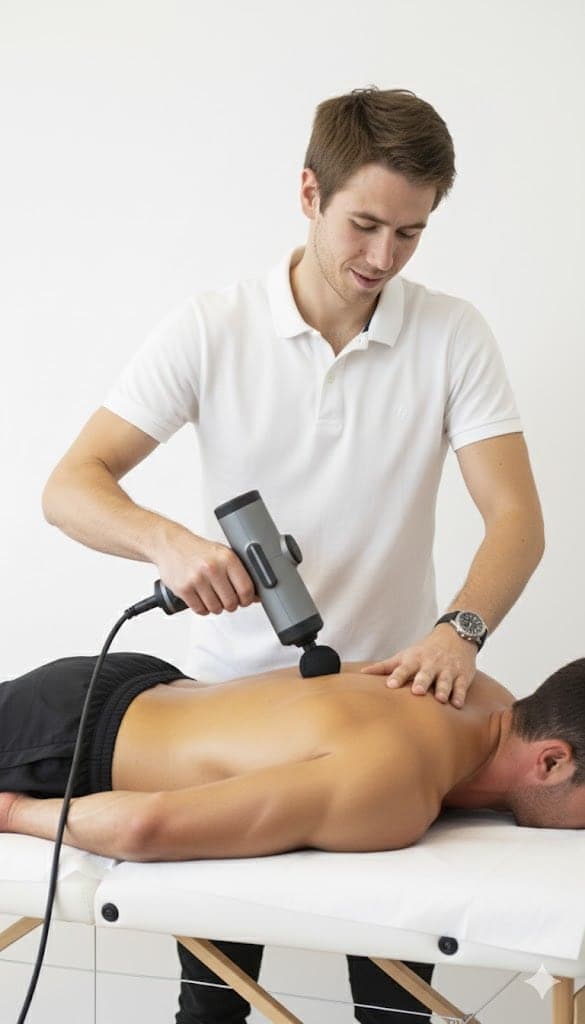
Written by
Chris
Massage therapist, nutrition and exercise physiologist
Norwegian-certified with a Bachelor’s in Physical Education and Nutrition and over ten years of clinical practice, working from a portable table in clients’ homes across the Paphos district.
This article is general information, not a medical diagnosis. If you have severe, worsening or unexplained pain, numbness, weakness, or pain after an accident, see a doctor first.