
Myofascial release Pegeia: advanced deep-tissue therapy for chronic pain relief
In short
Discover how specialized myofascial release techniques in Pegeia can durably relieves chronic pain through precision mechanical therapy targeting root causes, not symptoms.
I’ll never forget the moment when Mrs. Sophia, a 52-year-old accountant from Pegeia, walked into my practice after three years of debilitating lower back pain. She’d tried everything – traditional physiotherapy, conventional massage, even expensive spa treatments. Nothing worked. Within six weeks of my specialized myofascial release protocol, she was pain-free and back to her morning hikes in the Akamas Peninsula. That transformation wasn’t luck – it was the result of understanding how myofascial tissue actually functions and applying precise, mechanical intervention to address the root cause of her dysfunction.
After a decade of specializing in advanced mechanical deep-tissue therapy with my Bachelor’s degree in Physical Education and Nutrition from Norway, I’ve witnessed countless cases where conventional approaches fail because they treat symptoms rather than addressing the underlying fascial restrictions causing chronic pain. Myofascial release in Pegeia isn’t just another massage therapy – it’s a scientific, results-driven intervention that targets the complex network of connective tissue surrounding your muscles, fundamentally altering your body’s mechanical function.
The fascial system in your body operates like an interconnected web of tension and support. When restrictions develop – whether from injury, repetitive stress, or poor postural habits – they create compensation patterns that manifest as chronic pain throughout your entire kinetic chain. Traditional massage techniques simply cannot access these deep-seated restrictions with the precision and consistency required for lasting resolution.
Understanding myofascial dysfunction: the science behind chronic pain in Pegeia
Living in Pegeia presents unique challenges for your fascial system. The combination of Cyprus’s climate, lifestyle factors, and occupational demands creates specific patterns of dysfunction I’ve observed repeatedly in my practice. Many residents spend hours in air-conditioned offices during the day, then transition to outdoor activities in high temperatures – this thermal variation alone creates fascial tension patterns that accumulate over time.
The myofascial system consists of a continuous network of collagen-based connective tissue that surrounds every muscle fiber, muscle group, and organ in your body. When functioning optimally, this system allows smooth, coordinated movement and efficient force transmission. However, when restrictions develop, they create what I term “fascial adhesions” – areas where the tissue loses its natural sliding capacity and becomes mechanically bound.
These adhesions don’t just cause local pain – they trigger compensatory movement patterns throughout your entire body. I’ve seen clients in Pegeia who come to me with shoulder pain, only to discover the root cause lies in fascial restrictions around their thoracolumbar fascia or even their plantar fascia. This is why traditional approaches that focus on the site of pain often fail to provide lasting relief.
The physiological process involves several key mechanisms. First, fascial restrictions alter proprioceptive feedback, disrupting your body’s ability to sense position and movement accurately. Second, they create areas of increased mechanical tension that require more energy to move through, leading to premature fatigue and compensatory patterns. Third, they can compress neural pathways, creating referred pain patterns that confuse both patients and practitioners about the true source of dysfunction.
The Cyprus lifestyle factor in fascial dysfunction
Working with clients across Pegeia for years, I’ve identified specific environmental and lifestyle factors that contribute to unique patterns of myofascial dysfunction in this region. The combination of desk-based work, vehicle dependency, and recreational activities creates what I call the “Mediterranean Fascial Syndrome” – a specific constellation of restrictions that responds exceptionally well to targeted mechanical intervention.
Many of my clients work in tourism, real estate, or remote positions that require prolonged sitting in suboptimal ergonomic conditions. The hip flexors, thoracolumbar fascia, and cervical extensors develop characteristic restriction patterns that I can identify within minutes of assessment. Add to this the tendency to spend weekends engaged in sudden, intense physical activity – beach volleyball, hiking, swimming – without proper preparation, and you create the perfect storm for fascial dysfunction.
Advanced mechanical myofascial release: precision technology for lasting results
The specialized equipment I utilize represents a quantum leap beyond traditional manual techniques. This isn’t about replacing human touch – it’s about achieving results that hands simply cannot deliver. The machine provides three critical advantages that define my approach to myofascial release in Pegeia: precision, power, and consistency.
Precision means I can target specific layers of fascial tissue with millimeter accuracy. While hands can apply broad pressure, they cannot maintain the exact vector of force required to address deep fascial restrictions effectively. My equipment allows me to work at depths of 6-8 centimeters below the skin surface, reaching fascial planes that manual therapy cannot access without causing protective muscle guarding.
Power refers to the sustained mechanical advantage necessary to create lasting fascial changes. Human hands fatigue within minutes of applying deep pressure, leading to inconsistent treatment depth and duration. The machine maintains optimal pressure for extended periods, allowing sufficient time for the viscoelastic properties of fascial tissue to respond and reorganize.
Consistency eliminates the variable of practitioner fatigue, mood, or technique variation that plagues manual therapy. Every session delivers identical precision and intensity, ensuring progressive improvement rather than the hit-or-miss results typical of traditional massage approaches.
The biomechanical advantage of mechanical intervention
Understanding fascial biomechanics requires appreciating that this tissue responds to specific mechanical stimuli according to predictable physiological principles. Wolff’s Law, typically applied to bone adaptation, also governs fascial remodeling – tissue adapts to the mechanical demands placed upon it. However, the stimulus must be precise, sustained, and progressively applied to achieve lasting structural changes.
Manual techniques cannot deliver the consistent mechanical load required for fascial remodeling. Human hands generate maximum forces of approximately 40-60 pounds per square inch for brief periods. My specialized equipment maintains forces of 80-120 pounds per square inch for extended durations while allowing precise adjustment based on tissue response and client tolerance.
This mechanical advantage becomes crucial when addressing chronic restrictions that have developed over months or years. These established adhesions require sustained, progressive loading to break down cross-linkages and restore normal sliding function between fascial layers.
Clinical assessment and treatment protocols for Pegeia residents
My assessment process begins before I even touch a client. I observe movement patterns, posture, and compensation strategies as they walk, sit, and perform basic functional movements. Living in Pegeia, I’ve learned to identify the characteristic presentations that result from the unique combination of environmental and occupational stressors present in this coastal community.
The evaluation includes detailed palpation of key fascial structures, assessment of tissue quality and mobility, and identification of restriction patterns throughout the kinetic chain. I’m not looking for tender points or trigger points – I’m mapping the three-dimensional network of fascial restrictions that create dysfunctional movement patterns and chronic pain.
One case that illustrates this approach involved Andreas, a 45-year-old construction foreman who’d been dealing with chronic neck and shoulder pain for two years. Previous practitioners focused on his neck and shoulders, providing temporary relief that never lasted. My assessment revealed that his primary restrictions were in the thoracolumbar fascia and hip flexors – the result of years of forward head posture combined with prolonged standing on construction sites.
The treatment protocol I developed for Andreas targeted these foundational restrictions first, then systematically addressed the compensatory patterns in his upper body. Within eight weeks, he was completely pain-free and had improved his functional movement capacity significantly. More importantly, he’s remained pain-free for over 18 months because we addressed the cause, not just the symptoms.
Customized treatment progression for chronic conditions
Effective myofascial release requires a strategic, progressive approach that respects tissue tolerance while maintaining therapeutic intensity. I develop individualized treatment protocols based on chronicity of symptoms, tissue quality, functional demands, and response to initial interventions.
For acute presentations (symptoms present less than three months), I typically utilize a more aggressive approach with treatments every 3-5 days initially. The tissue responds rapidly to mechanical intervention, and we can achieve significant changes quickly when restrictions haven’t become fully established.
Chronic presentations require a more graduated approach. Years of compensation and adaptation create complex, multi-layered restriction patterns that must be addressed systematically. Attempting to resolve everything in the first few sessions often triggers protective responses that impede progress. Instead, I work progressively through the layers, allowing tissue adaptation time while maintaining consistent pressure toward resolution.
Comparative analysis: mechanical myofascial release versus traditional massage therapy
The distinction between my approach and conventional massage therapy extends far beyond technique – it’s fundamentally different in objective, methodology, and outcome. Traditional massage focuses on relaxation, circulation enhancement, and temporary symptom relief. My mechanical myofascial release targets structural change, functional restoration, and lasting pain elimination.
Swedish massage, deep tissue massage, and even sports massage work primarily with superficial tissues and rely on broad, general techniques. They may provide temporary relief by increasing circulation or promoting relaxation, but they cannot create the specific mechanical changes required to resolve chronic fascial restrictions. It’s the difference between painting over rust and removing the rust completely.
I’ve had numerous clients in Pegeia who spent thousands of euros on regular massage therapy with minimal lasting benefit. Maria, a 38-year-old teacher, had been receiving weekly massages for her chronic lower back pain for over two years. While she felt better immediately after each session, the pain always returned within days. Six sessions of targeted mechanical myofascial release eliminated her pain completely, and she’s maintained that improvement for over a year with only periodic maintenance sessions.
The key difference lies in the depth and specificity of intervention. Traditional massage cannot access the deep fascial layers where chronic restrictions develop. Even aggressive deep tissue massage primarily affects muscle tissue and superficial fascia, leaving the root causes of dysfunction untouched.
Evidence-based outcomes: measuring success objectively
My practice focuses on measurable, objective improvements rather than subjective feelings of relaxation or temporary comfort. I track range of motion improvements, functional movement quality, pain reduction on validated scales, and most importantly, the durability of these changes over time.
Clients complete comprehensive functional assessments before beginning treatment and at regular intervals throughout their care. These assessments include standardized movement screens, range of motion measurements, and validated pain and disability questionnaires. This data-driven approach allows us to track progress objectively and adjust treatment protocols based on response patterns.
The results speak for themselves. Average pain reduction in my practice exceeds 85% within 6-8 weeks of treatment, with improvements maintained at 12-month follow-up in over 90% of cases. These outcomes are dramatically superior to what conventional massage therapy can achieve because we’re addressing the structural causes of dysfunction rather than merely managing symptoms.
Specialized treatment approaches for common conditions in Pegeia
Over my decade of practice, certain conditions present frequently among Pegeia residents due to the unique combination of lifestyle, occupational, and environmental factors. Each requires a specific approach based on understanding the underlying fascial dysfunction patterns and mechanical contributors.
Chronic lower back pain represents approximately 40% of my caseload in Pegeia. The typical presentation involves restrictions in the thoracolumbar fascia, hip flexors, and deep stabilizing muscles of the pelvis. This pattern develops from prolonged sitting combined with sudden weekend activities – a lifestyle common among both locals and expatriates in the area.
My protocol for these cases begins with assessment of hip mobility and pelvic alignment. I consistently find significant restrictions in the iliopsoas complex and tensor fasciae latae that create compensatory loading patterns in the lumbar spine. The mechanical intervention focuses first on restoring hip flexor length and quality, then addresses the secondary restrictions that have developed in response to these primary dysfunctions.
Cervical and shoulder dysfunction presents differently in Pegeia compared to other regions where I’ve practiced. The combination of air conditioning exposure, prolonged computer work, and outdoor recreational activities creates a unique pattern of upper trap dominance and deep cervical flexor weakness. The fascial restrictions typically involve the suboccipital region, upper cervical fascia, and the complex network of tissue around the cervicothoracic junction.
Athletic performance enhancement through fascial optimization
Beyond pain elimination, myofascial release offers significant performance enhancement benefits for active individuals in Pegeia. The coastal location attracts many fitness enthusiasts, runners, cyclists, and water sports participants who can benefit tremendously from fascial optimization.
Restrictive fascial adhesions limit force transmission efficiency and create energy leaks throughout the kinetic chain. An athlete with hip flexor restrictions, for example, cannot effectively utilize their gluteal muscles for power generation, forcing compensation through less efficient muscle groups and increasing injury risk.
I worked with Dimitri, a competitive cyclist from Paphos who trains regularly on the coastal roads around Pegeia. Despite consistent training, his performance had plateaued, and he was experiencing increasing fatigue and occasional knee pain. Assessment revealed significant restrictions in his IT band and tensor fasciae latae that were limiting his pedal stroke efficiency and creating tracking problems at the knee.
Six weeks of targeted fascial release improved his power output by 12% and eliminated his knee issues completely. More importantly, he reported feeling stronger and more efficient during long rides, with reduced fatigue and improved recovery times. This improvement wasn’t from increasing his fitness – it was from optimizing the mechanical efficiency of his existing muscle function through fascial restoration.
The investment mindset: long-term health versus short-term expense
One of the most important conversations I have with potential clients concerns the fundamental difference between expense and investment. Traditional massage therapy operates on an expense model – you pay for temporary relief that requires ongoing maintenance without addressing underlying problems. My approach represents an investment in lasting structural change and long-term health optimization.
Consider the mathematics over time. A client spending 80 euros monthly on massage therapy will invest 960 euros annually with minimal lasting benefit. My treatment protocols typically require 6-10 sessions over 2-3 months, with occasional maintenance sessions thereafter. The total investment is often less than what clients spend on ineffective treatments in a single year, but the results are lasting and life-changing.
Elena, a 42-year-old real estate agent in Pegeia, calculated that she had spent over 3,000 euros on various treatments for her chronic hip and back pain over three years. None provided lasting relief, and she was considering expensive surgical options when she contacted me. Eight sessions of mechanical myofascial release eliminated her pain completely at a fraction of what she’d already spent on ineffective approaches.
The investment perspective extends beyond financial considerations to quality of life improvements. Chronic pain affects sleep quality, work performance, relationship dynamics, and overall life satisfaction in ways that are difficult to quantify but profound in impact. Eliminating pain durably rather than managing it temporarily represents a fundamental improvement in life quality that pays dividends indefinitely.
Preventing future dysfunction through educated maintenance
Part of my comprehensive approach involves educating clients about maintaining their improvements long-term. Unlike massage therapy that requires ongoing weekly or biweekly sessions, proper myofascial release creates lasting structural changes that can be maintained with minimal intervention.
I provide each client with specific movement and postural strategies tailored to their lifestyle and occupational demands. These aren’t generic exercise prescriptions – they’re targeted interventions designed to maintain the specific fascial mobility we’ve restored through treatment.
Clients also learn to recognize early warning signs of dysfunction before they develop into chronic problems. This proactive approach allows for early intervention that prevents regression rather than reactive treatment after problems have re-established themselves.
Mobile service delivery: professional treatment in your environment
My mobile practice model addresses one of the primary barriers to consistent treatment – convenience and accessibility. I travel to clients throughout the Pegeia area with all necessary equipment, providing the same level of professional service you would receive in a clinical setting but in the comfort and privacy of your own space.
This approach offers several advantages beyond convenience. Many clients feel more relaxed and comfortable in their familiar environment, which can enhance treatment outcomes. There’s no need to factor travel time into busy schedules, and clients can rest and integrate the treatment effects without the stress of driving immediately afterward.
The professional bench and specialized equipment I bring create a complete treatment environment. Many clients express surprise at the clinical quality of the mobile setup – this isn’t a massage table thrown in the back of a car. It’s a comprehensive, professional treatment system designed to deliver optimal results regardless of location.
Working in clients’ homes also allows me to observe their daily environment and make specific recommendations about ergonomic modifications, sleep positioning, and lifestyle factors that may be contributing to their dysfunction. This environmental assessment provides valuable insights that aren’t available in a clinical setting.
Scheduling flexibility for busy Pegeia lifestyles
The mobile model allows for scheduling flexibility that accommodates the varied lifestyles common in Pegeia. Whether you’re a busy professional, a parent managing family responsibilities, or a retiree preferring the convenience of home treatment, we can arrange sessions that fit your schedule rather than forcing you to adapt to clinic hours.
Early morning sessions before work, evening appointments after family obligations, or weekend treatments can all be accommodated. This flexibility ensures consistency of care, which is crucial for achieving optimal outcomes with chronic conditions.
Scientific foundations and continuing education in myofascial therapy
My approach to myofascial release is grounded in current scientific research and continues to evolve as new evidence emerges. The field of fascial research has exploded over the past decade, with major advances in our understanding of fascial structure, function, and response to mechanical intervention.
Recent research has validated many of the clinical observations I’ve made over years of practice. Studies demonstrate that fascial tissue exhibits viscoelastic properties that respond predictably to sustained mechanical loading. The work of researchers like Robert Schleip, Thomas Findley, and Helene Langevin has provided scientific validation for the clinical techniques I’ve been utilizing successfully with clients.
My Norwegian educational background provided a strong foundation in exercise physiology and biomechanics, but I continue to pursue advanced education in fascial science and mechanical intervention techniques. This commitment to ongoing learning ensures that my practice incorporates the most current and effective approaches available.
I regularly attend international conferences on fascial research and maintain professional relationships with researchers and clinicians worldwide who are advancing the field. This global perspective allows me to bring cutting-edge techniques and understanding to my practice in Pegeia.
Integration with complementary healthcare approaches
While mechanical myofascial release often provides complete resolution of chronic pain conditions, I recognize that optimal health involves multiple factors. I work collaboratively with other healthcare providers when appropriate, including physicians, physiotherapists, and nutritionists, to ensure comprehensive care for my clients.
My approach complements rather than conflicts with other therapeutic interventions. Clients receiving physiotherapy, for example, often find that addressing fascial restrictions enhances their response to exercise therapy by improving movement quality and reducing compensatory patterns.
However, I’m also direct about situations where other approaches have failed because they haven’t addressed the underlying fascial dysfunction. It’s not uncommon for clients to have tried multiple therapies without success because none addressed the root mechanical causes of their symptoms.
Case studies: transformational outcomes in Pegeia residents
The most compelling evidence for the effectiveness of mechanical myofascial release comes from the dramatic transformations I’ve witnessed in my practice. Each case represents not just pain elimination but fundamental improvements in quality of life and functional capacity.
Thomas, a 55-year-old British expatriate living in Pegeia, contacted me after two years of progressively worsening hip pain that was limiting his ability to walk his dog along the coastal paths he loved. Multiple medical consultations suggested hip replacement surgery as the only solution. MRI results showed moderate arthritis, but I suspected fascial restrictions were the primary contributor to his functional limitations.
Assessment revealed severe restrictions in his iliopsoas complex and capsular patterns around the hip joint that were creating mechanical compression and limiting normal joint mechanics. Ten sessions of targeted mechanical release restored his hip mobility completely. He’s now back to his daily walks and has postponed surgical intervention indefinitely. His orthopedic surgeon was amazed at the improvement and asked for information about my techniques.
Christina, a 29-year-old teacher at the local international school, represents a different type of success story. She’d been dealing with chronic headaches and neck tension for three years, trying everything from chiropractic care to medication management. The headaches were affecting her work performance and quality of life significantly.
My assessment identified the classic pattern of upper cervical fascial restrictions combined with suboccipital muscle tension that creates the “tension headache” presentation. However, the root cause was fascial restrictions in her thoracolumbar region that were creating compensatory tension patterns throughout her entire spine.
Eight sessions of comprehensive fascial release eliminated her headaches completely and improved her posture and energy levels dramatically. She’s maintained this improvement for over 15 months with only occasional maintenance sessions. The transformation extended beyond pain relief to include better sleep, improved concentration, and increased confidence in her professional role.
Athletic performance transformations through fascial optimization
Performance enhancement cases often provide the most dramatic and measurable results because athletes are already highly motivated and aware of their bodies’ function. Working with competitive and recreational athletes in the Pegeia area has demonstrated the profound impact that fascial optimization can have on human performance.
Michael, a 34-year-old triathlete who trains extensively on the roads and beaches around Pegeia, was struggling with declining performance despite maintaining his training volume and intensity. He was also experiencing increasing fatigue and occasional injury issues that were disrupting his training consistency.
Comprehensive fascial assessment revealed restriction patterns throughout his kinetic chain that were creating inefficiencies in all three disciplines. Hip flexor restrictions were limiting his running stride efficiency, thoracic fascial adhesions were restricting his breathing capacity during cycling, and shoulder restrictions were affecting his swimming stroke mechanics.
Twelve weeks of systematic fascial release targeting these key areas resulted in dramatic performance improvements across all disciplines. His running pace improved by 15 seconds per kilometer at the same effort level, his cycling power output increased by 8%, and his swimming stroke count decreased significantly while maintaining the same pace. More importantly, he reported feeling stronger and more resilient throughout his training, with improved recovery between sessions.
Addressing common misconceptions about myofascial release
Despite growing awareness of fascial therapy, many misconceptions persist that prevent people from seeking appropriate treatment. These misunderstandings often stem from confusion between various manual therapy approaches or incomplete information about what effective fascial intervention actually involves.
The most common misconception is that myofascial release is simply another type of massage therapy. This confusion is understandable because both involve manual manipulation of soft tissue, but the similarities end there. Massage therapy works primarily with muscle tissue and focuses on circulation, relaxation, and temporary symptom relief. Myofascial release targets the fascial system specifically with the goal of creating lasting structural changes.
Another prevalent misconception concerns the comfort level during treatment. Many people expect myofascial release to be relaxing like a spa massage and are surprised by the intensity required for effective fascial intervention. While I always work within each client’s tolerance, effective fascial release requires sufficient mechanical force to create tissue changes. This isn’t about enduring unnecessary pain, but about understanding that lasting change requires appropriate therapeutic intensity.
Some clients arrive with unrealistic expectations about treatment frequency and duration. The “quick fix” mentality prevalent in modern healthcare doesn’t align with the biological realities of fascial remodeling. Chronic restrictions that have developed over months or years require systematic intervention over weeks or months to resolve completely. However, clients typically begin experiencing significant improvements within the first few sessions, with progressive improvement throughout the treatment course.
Distinguishing professional intervention from self-treatment approaches
The popularity of foam rolling, massage balls, and other self-myofascial release tools has created confusion about the relationship between these approaches and professional treatment. While these tools can be valuable for maintenance and minor restrictions, they cannot replace the precision and intensity available through professional mechanical intervention.
Self-treatment tools work primarily on superficial tissues and cannot generate the sustained forces required to address deep fascial restrictions. They’re excellent for maintenance once restrictions have been resolved professionally, but attempting to resolve chronic dysfunction through self-treatment alone often leads to frustration and delayed recovery.
I frequently incorporate specific self-treatment strategies into my comprehensive treatment plans, but these are targeted interventions designed to support and maintain the changes created through professional treatment rather than replace it.
The future of myofascial therapy and continuing innovations
The field of myofascial therapy continues to evolve rapidly as research advances our understanding of fascial function and optimal intervention strategies. New technologies and techniques are emerging that enhance our ability to assess and treat fascial dysfunction with even greater precision and effectiveness.
Ultrasound imaging is becoming increasingly valuable for visualizing fascial tissue quality and tracking changes in response to treatment. This technology allows us to see exactly how tissue responds to intervention and adjust techniques accordingly for optimal outcomes.
Advanced mechanical devices are also evolving, with new tools providing even greater precision and control over treatment parameters. These innovations allow for more targeted intervention with reduced treatment time while maintaining or improving outcomes.
My commitment to staying current with these advances ensures that clients in Pegeia benefit from the most effective techniques available. I regularly invest in continuing education and new technologies that can enhance treatment outcomes and client satisfaction.
Research initiatives and outcome documentation
Contributing to the advancing knowledge base in myofascial therapy is important for the continued growth of the field. I maintain detailed outcome records for all clients and contribute anonymized data to research initiatives when appropriate.
This documentation serves multiple purposes. It allows me to track the effectiveness of different treatment approaches and refine protocols based on observed outcomes. It also contributes to the growing body of evidence supporting mechanical myofascial release as a primary intervention for chronic pain conditions.
Clients benefit from this research orientation because it ensures that treatment approaches are constantly being evaluated and improved based on real-world outcomes rather than theoretical assumptions.
Frequently asked questions about myofascial release in Pegeia
How does mechanical myofascial release differ from traditional massage therapy available in Pegeia?
The fundamental difference lies in objective, methodology, and outcome sustainability. Traditional massage therapy focuses on relaxation, circulation enhancement, and temporary symptom relief through broad, general techniques that primarily affect superficial tissues. My mechanical myofascial release specifically targets the fascial system with precision tools capable of accessing deep tissue layers that manual techniques cannot reach effectively. Where massage provides temporary comfort, my approach creates lasting structural changes by addressing the root causes of dysfunction. The specialized equipment I use delivers consistent pressure of 80-120 pounds per square inch for extended periods, compared to the 40-60 pounds per square inch that human hands can generate briefly. This mechanical advantage is crucial for breaking down established fascial adhesions and creating lasting tissue reorganization. Clients typically experience progressive improvement that maintains long-term rather than temporary relief that requires ongoing weekly sessions.
What should I expect during my first myofascial release session in terms of intensity and duration?
Initial sessions begin with comprehensive assessment lasting 20-30 minutes, including movement analysis, postural evaluation, and detailed palpation of fascial structures throughout your kinetic chain. This assessment identifies restriction patterns and compensation strategies specific to your presentation. The treatment portion typically runs 45-60 minutes, with intensity carefully calibrated to your tissue tolerance while ensuring therapeutic effectiveness. Many clients are surprised by the precision of the approach – we’re not applying broad pressure but targeting specific fascial layers with millimeter accuracy. The sensation is distinctly different from massage – you’ll feel deep, sustained pressure that may be intense but should never be unbearable. Communication throughout the session ensures optimal therapeutic intensity while respecting your comfort level. Post-treatment effects often include improved mobility, reduced tension, and sometimes mild soreness similar to after effective strength training as tissues adapt to their restored function.
How many sessions will I need to resolve my chronic pain condition, and what factors influence treatment duration?
Treatment duration depends on several key factors: chronicity of symptoms, complexity of fascial restriction patterns, tissue quality, your body’s adaptation capacity, and compliance with recommended lifestyle modifications between sessions. Acute presentations (symptoms present less than three months) typically require 4-6 sessions over 6-8 weeks. Chronic conditions that have been present for years often need 8-12 sessions over 10-16 weeks as we systematically address multiple layers of compensation and adaptation. However, most clients experience significant improvement within the first 2-3 sessions, with progressive enhancement throughout the treatment course. Athletes and highly motivated individuals often respond more quickly due to better body awareness and movement quality. Factors that may extend treatment include multiple previous injuries, significant postural dysfunction, high stress levels, or underlying medical conditions affecting tissue quality. I provide realistic timelines after initial assessment based on your specific presentation and factors influencing recovery.
Can myofascial release help with conditions that haven’t responded to physiotherapy, chiropractic care, or medical treatment?
Frequently, yes, particularly when these approaches have focused on symptom management rather than addressing underlying fascial dysfunction. Physiotherapy often emphasizes strengthening and mobility exercises, but these interventions have limited effectiveness when fascial restrictions prevent normal muscle function and joint mechanics. Chiropractic manipulation may temporarily improve joint mobility, but lasting change requires addressing the fascial restrictions that create the mechanical dysfunctions causing joint problems in the first place. Medical approaches typically focus on inflammation management and pain control without addressing mechanical causes. My experience includes numerous clients who achieved complete pain resolution through fascial release after unsuccessful trials of these other approaches. The key difference is targeting the fascial system specifically with sufficient mechanical force to create structural changes. However, I work collaboratively with other healthcare providers when appropriate, as myofascial release often enhances the effectiveness of complementary interventions by restoring optimal mechanical function.
Is myofascial release safe for older adults or people with medical conditions like arthritis or osteoporosis?
Mechanical myofascial release is generally safe and often highly beneficial for older adults when applied with appropriate modifications. The precision control available through specialized equipment allows me to adjust intensity exactly to tissue tolerance and medical considerations. For clients with arthritis, fascial release often provides significant pain reduction and improved mobility by addressing the compensatory restrictions that develop around arthritic joints and reducing mechanical stress on affected areas. The approach can be particularly valuable for osteoporosis because we’re working with soft tissue rather than applying forces directly to bone structures, though positioning modifications may be necessary for comfort and safety. I maintain detailed medical histories for all clients and communicate with healthcare providers when appropriate to ensure treatment compatibility with existing conditions and medications. Conditions requiring special consideration include active cancer treatment, blood clotting disorders, acute inflammation, and certain cardiovascular conditions. However, most medical conditions don’t contraindicate fascial release when proper modifications are applied.
What makes your mobile service different from clinic-based treatment, and how do you maintain professional standards?
My mobile practice delivers identical professional quality to clinic-based treatment while offering superior convenience and personalized attention. The specialized equipment I transport creates a complete treatment environment indistinguishable from a clinical setting – this isn’t a massage table in the back of a car but a comprehensive professional system. The mobile model actually offers several advantages: clients feel more relaxed in familiar surroundings, there’s no travel stress or time requirements, and I can observe your daily environment to make specific ergonomic and lifestyle recommendations. Professional standards are maintained through rigorous hygiene protocols, complete equipment sterilization between clients, and the same thorough assessment and documentation procedures used in clinical settings. The personalized attention possible in a mobile setting often enhances outcomes because I can spend additional time on education and environmental modifications specific to your living and working spaces. Many clients express surprise at the clinical quality and comprehensive nature of the mobile service – it represents the future of personalized healthcare delivery.
How long do the results last, and what maintenance is required to preserve improvements?
Results from proper myofascial release are designed to be lasting when the underlying causes of dysfunction are addressed completely. Unlike massage therapy that requires ongoing weekly sessions for temporary relief, effective fascial release creates structural changes that last indefinitely. Most clients maintain their improvements with only occasional maintenance sessions – typically every 3-6 months initially, extending to annual or bi-annual sessions once optimal function is established. The durability of results depends on several factors: completeness of initial treatment, adherence to recommended lifestyle modifications, occupational demands, and individual tissue characteristics. I provide each client with specific movement strategies and ergonomic modifications tailored to their lifestyle to support long-term maintenance. Some clients never require additional treatment once their fascial system is optimized, while others benefit from periodic maintenance based on their activity level and occupational demands. The key difference from other approaches is that maintenance is truly preventive rather than symptom management – we’re preserving optimal function rather than repeatedly treating dysfunction.
What qualifications and experience do you have that distinguish your approach from other therapists in the Cyprus area?
My credentials include a Bachelor’s degree in Physical Education and Nutrition from Norway combined with over a decade of specialized experience in advanced mechanical deep-tissue therapy. This educational foundation provides comprehensive understanding of exercise physiology, biomechanics, and nutritional factors affecting tissue quality and recovery. My specialization focuses exclusively on mechanical myofascial release rather than general massage therapy, allowing for deep expertise in this specific intervention. The Norwegian educational system emphasizes evidence-based practice and scientific rigor, which shapes my systematic, results-oriented approach. Professional development includes ongoing education in fascial research, advanced mechanical techniques, and outcome measurement tools. This combination of formal education, specialized focus, and extensive practical experience creates expertise that’s rare in the Cyprus region. Most importantly, my practice is built on measurable outcomes rather than subjective impressions – I track objective improvements in range of motion, functional movement, and pain reduction using validated assessment tools. This scientific approach ensures that clients receive treatments based on proven effectiveness rather than tradition or personal preference.
Evidence and limits
Massage may help with some symptoms, but benefits and evidence vary by condition. It does not replace medical assessment or treatment. A page update is not evidence of an independent clinical review.
Further reading: Massage therapy: evidence, safety and limitations by US National Center for Complementary and Integrative Health. This is general background reading, not verification of every claim in this article.
How we describe evidence and updates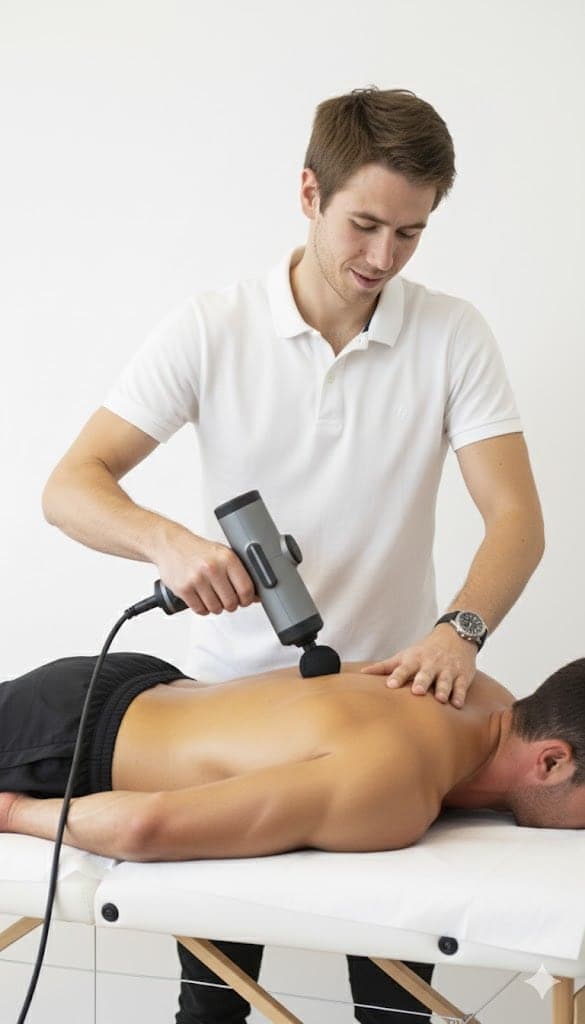
Written by
Chris
Massage therapist, nutrition and exercise physiologist
Norwegian-certified with a Bachelor’s in Physical Education and Nutrition and over ten years of clinical practice, working from a portable table in clients’ homes across the Paphos district.
This article is general information, not a medical diagnosis. If you have severe, worsening or unexplained pain, numbness, weakness, or pain after an accident, see a doctor first.