
Relaxing Leg Massage Pegeia: The Science-Based Approach to Stress Reduction Through Deep-Tissue Treatment
In short
Discover how a specialized relaxing leg massage in Pegeia transforms stress relief through advanced mechanical deep-tissue therapy. Evidence-based treatment targeting root causes, not symptoms.
After a decade of treating hundreds of clients in Pegeia and throughout Cyprus, I’ve observed a concerning pattern: most people fundamentally misunderstand what a truly effective relaxing leg massage should accomplish. They’ve been conditioned to believe that stress reduction comes from superficial manipulation of surface tissue—a pleasant hour of gentle kneading that provides temporary relief but addresses nothing at the mechanical level where stress actually manifests in your body.
Let me be direct: stress doesn’t simply exist in your mind. It creates measurable, physical changes in your muscular system, particularly in your legs. When cortisol floods your bloodstream during chronic stress, your muscles respond by contracting and holding tension in specific patterns. Your calves tighten. Your hamstrings develop adhesions. Your hip flexors shorten. This isn’t metaphorical—it’s biomechanical reality, and it requires a clinical approach to resolve.
I provide relaxing leg massage services in Pegeia that fundamentally differ from what you’ll find at spas or wellness centers. My method combines my university education in Physical Education and Nutrition from Norway with ten years of hands-on clinical experience, utilizing specialized mechanical deep-tissue therapy that reaches the structural level where stress-induced tension actually resides.
Understanding the Biomechanics of Stress in Your Lower Extremities
When I first meet clients in Pegeia who are seeking stress relief through leg massage, they often describe their symptoms: heavy legs after work, persistent tightness in their calves, difficulty sleeping due to restless legs, or generalized discomfort they can’t quite pinpoint. What they’re describing is the downstream effect of chronic stress on their musculoskeletal system.
Here’s what actually happens at the tissue level:
Your autonomic nervous system, when activated by stress, triggers a cascade of physiological responses. Blood vessels constrict. Muscle fibers contract. Fascia—the connective tissue surrounding your muscles—becomes dehydrated and adhesive. In your legs, which bear your body weight and absorb impact throughout your day, this process creates layers of compensatory tension that accumulate over weeks, months, and years.
The gastrocnemius and soleus muscles in your calves become chronically shortened. Your quadriceps develop trigger points that refer pain to your knees. Your hamstrings lose their natural elasticity. Most significantly, the fascia lata—the thick fascial sheet running along your outer thigh—becomes rigid and restrictive, affecting your entire gait pattern and creating a feedback loop of tension that perpetuates stress in your nervous system.
I explain this to every client because understanding the mechanism changes how you approach treatment. This isn’t about “relaxation” in the spa sense—it’s about systematically releasing mechanical restrictions that keep your nervous system in a heightened state of alert.
Why Traditional Massage Approaches Fail at Stress Reduction
I need to challenge a widespread misconception in the wellness industry, one that costs people in Pegeia both money and continued suffering. The standard approach to relaxing leg massage—gentle Swedish techniques, aromatherapy, soft music, and light pressure—provides a temporary nervous system downregulation that lasts approximately 24 to 48 hours before your body returns to its baseline stress state.
Why? Because surface-level manipulation cannot access the depth of tissue where chronic tension patterns exist.
Consider the anatomy: your deeper leg muscles—the soleus beneath your gastrocnemius, the vastus intermedius beneath your other quadriceps, the deeper fibers of your hamstring group—sit beneath multiple layers of tissue. Reaching these structures requires significant pressure delivered with precision and control. Human hands, no matter how skilled, fatigue. Pressure becomes inconsistent. The therapist’s own body mechanics limit how deeply and sustainably they can work.
I spent my first three years in practice using exclusively manual techniques. I was effective, but I recognized the limitations. My hands would fatigue during intensive sessions. I couldn’t maintain consistent pressure depth across a full treatment. Most critically, I couldn’t reach the fascial restrictions in larger, more muscular clients with the precision required for lasting change.
The Mechanical Advantage: Precision, Power, and Consistency in Leg Massage Treatment
My approach to relaxing leg massage in Pegeia utilizes a specialized mechanical deep-tissue tool that fundamentally changes what’s possible in treatment. This isn’t about replacing human expertise—it’s about extending it beyond the limitations of manual therapy.
The machine I use delivers three critical advantages:
Precision Targeting of Stress-Holding Tissue
The instrument allows me to focus pressure on specific muscle fibers and fascial planes with millimeter-level accuracy. When I assess your legs and identify exactly where stress-induced tension has accumulated—perhaps a dense band in your IT band, or adhesions between your hamstring layers—I can direct treatment precisely to that structure without dispersing pressure across surrounding tissue.
This precision matters enormously for stress reduction because it allows me to release restrictions systematically, working from superficial to deep layers in a controlled progression that your nervous system can integrate without triggering protective guarding responses.
Depth That Reaches Root Causes
The tool works deeper than human hands can sustainably penetrate. For stress-related tension in your legs, this depth is non-negotiable. The mechanical advantage allows me to reach the deeper muscle layers and fascial planes where chronic holding patterns exist, releasing restrictions that manual therapy simply cannot access effectively.
I’ve treated professional athletes, manual laborers, and office workers in Pegeia—each with different stress patterns in their legs, but all requiring deep fascial release to achieve lasting relief. The machine delivers this consistently, treatment after treatment.
Consistency Across Every Session
Perhaps most importantly, mechanical therapy eliminates variability. Every treatment delivers the same quality of work. There are no “off days” where my hands are tired or my body isn’t at peak performance. The pressure remains consistent, the depth remains constant, and the results remain predictable.
For clients investing in stress reduction, this consistency means you can plan your recovery timeline with confidence. You know that each session will build progressively on the previous one, systematically addressing the layers of tension in your legs without regression.
The Clinical Protocol: How a Relaxing Leg Massage Pegeia Session Actually Reduces Stress
Let me walk you through what happens during a treatment session, because understanding the process helps you appreciate why this approach delivers lasting results rather than temporary relief.
Initial Assessment and Baseline Establishment
I begin every session with a thorough biomechanical assessment. I’m not simply asking “where does it hurt?” I’m evaluating your gait pattern, range of motion, muscle firing sequences, and postural alignment. I observe how you walk, how you stand, how your weight distributes across your feet. This assessment reveals where stress has created compensatory patterns in your lower body mechanics.
For many clients in Pegeia, I discover that what they perceive as general leg tension is actually a specific pattern: tight hip flexors from prolonged sitting, compensatory tension in their calves from altered gait, and fascial restrictions in their IT bands from the cumulative effect. Each client presents a unique stress signature in their tissue.
Systematic Deep-Tissue Release
The treatment itself follows a systematic protocol that addresses tissue layers progressively. I begin with broader, preparatory work that signals to your nervous system that treatment is occurring. This initial phase is crucial—it prevents the protective guarding response that occurs when deep pressure is applied too quickly.
As your tissue becomes receptive, I progress to deeper fascial layers. Using the mechanical tool, I work through your quadriceps, addressing each muscle head individually. I release the vastus lateralis, the rectus femoris, the vastus medialis—each requiring different pressure depths and angles. I address the IT band methodically, working from your hip to your knee with sustained pressure that releases fascial adhesions.
In your posterior chain, I treat your hamstrings and gluteal complex, which hold enormous amounts of stress-related tension. The mechanical advantage here is profound—I can sustain deep pressure along the entire length of your hamstring group, releasing trigger points and fascial restrictions that manual therapy would miss.
Your calves receive particular attention because they’re both a primary stress holder and a key player in your body’s overall tension patterns. I work through both your gastrocnemius and the deeper soleus, releasing the chronic contraction that creates that “heavy legs” sensation so common with stress.
Integration and Nervous System Recalibration
The final phase of treatment involves integration work that allows your nervous system to recalibrate to the new tissue state. This isn’t passive rest—it’s active reprogramming. As restrictions release, your proprioceptors (sensory receptors in your muscles and fascia) send new information to your brain about your body’s state. This sensory input begins to override the stress-induced tension patterns your nervous system has been maintaining.
This is where temporary relief becomes lasting change. Your nervous system literally learns a new baseline, one without the chronic contraction patterns that were feeding back into your stress response.
The Physiological Connection: How Leg Massage Directly Reduces Systemic Stress
I want to address the science behind why focused leg treatment produces whole-body stress reduction, because this connection isn’t immediately obvious to most clients until I explain the physiology.
Your legs contain approximately 50% of your body’s total muscle mass. This massive amount of tissue is richly innervated—meaning it sends constant sensory information to your central nervous system. When your leg muscles are chronically contracted due to stress, they generate a continuous stream of tension signals to your brain, which interprets these signals as confirmation that you’re in a state requiring vigilance and protection. This creates a self-reinforcing cycle: stress causes muscle tension, muscle tension signals danger to your brain, your brain maintains your stress response.
When I systematically release this tension through deep-tissue treatment, several measurable physiological changes occur:
| Physiological System | Mechanism of Change | Stress Reduction Effect |
|---|---|---|
| Nervous System | Reduction in proprioceptive tension signaling to CNS | Decreased sympathetic activation, improved parasympathetic tone |
| Circulatory System | Release of fascial restrictions improving blood flow | Enhanced oxygen delivery, improved metabolic waste removal |
| Lymphatic System | Mechanical stimulation of lymph flow | Reduced inflammation markers, decreased tissue edema |
| Endocrine System | Reduction in cortisol, increase in endorphins | Normalized stress hormone levels, improved mood regulation |
| Musculoskeletal System | Release of myofascial trigger points | Improved movement efficiency, reduced compensatory tension |
The beauty of addressing legs specifically is that you’re treating the largest sensory input source to your nervous system. The stress reduction effects are proportionally significant because you’re changing the dominant signal your brain receives about your body’s state.
Real Results: Case Studies from My Pegeia Practice
Theory matters, but results matter more. Let me share three representative cases from my practice in Pegeia that illustrate how specialized leg massage treatment produces measurable stress reduction.
The Hospitality Professional: From Chronic Tension to Sustainable Performance
A restaurant manager approached me last year with what she described as unbearable leg fatigue and stress that was affecting her sleep quality. She worked 12-hour shifts, predominantly standing, and had developed a pattern of evening anxiety that she attributed to work stress but couldn’t resolve through conventional relaxation methods.
My assessment revealed severe fascial restrictions in her calves and IT bands, with compensatory tension throughout her posterior chain. Her gait had adapted to favor her hip flexors, creating a forward-leaning posture that perpetuated stress signals throughout her body.
Over eight weeks of bi-weekly treatments, we systematically released these restrictions. By the third session, she reported significant improvement in sleep quality—her legs no longer felt “restless” at night. By the sixth session, the evening anxiety had substantially decreased. She described feeling “grounded” in a way she hadn’t experienced in years.
The mechanism was straightforward: by releasing the chronic muscular tension that her nervous system was interpreting as a threat signal, we interrupted the stress feedback loop. Her body could finally downregulate because it was no longer receiving constant tension signals from her lower extremities.
The Athlete: Performance Optimization Through Stress Reduction
A competitive cyclist contacted me not primarily for stress relief, but for performance optimization. He was experiencing training plateaus and difficulty recovering between sessions. What he didn’t initially connect was how mental and physical stress were creating fascial restrictions that limited his power output and delayed recovery.
Through intensive deep-tissue work on his legs—particularly his quadriceps, hip flexors, and glutes—we released years of accumulated microtrauma and compensatory tension patterns. The performance improvements were immediate and measurable: his power-to-weight ratio increased, his recovery time decreased, and perhaps most significantly, he reported feeling more mentally resilient during competitive efforts.
This case illustrates an important principle: stress reduction isn’t separate from physical performance—they’re intimately connected through the fascial and nervous systems. By optimizing tissue quality in his legs, we simultaneously improved his body’s stress tolerance.
The Desk Worker: Breaking the Sitting-Induced Stress Cycle
An IT professional who’d worked from home throughout the pandemic came to me with what he called “unnamed anxiety” and constant leg discomfort. He couldn’t identify a specific injury, but his legs felt perpetually tense, and he’d developed difficulty concentrating on work.
My assessment revealed classic sitting-induced patterns: shortened hip flexors, weakened and tense hamstrings, restricted IT bands, and dormant glutes. His body had adapted to prolonged sitting by creating a structural tension pattern that his nervous system maintained 24/7, even when he wasn’t sitting.
Through systematic treatment targeting these specific restrictions, combined with targeted movement retraining, we restored proper tissue length and fascial mobility throughout his lower body. The anxiety decreased proportionally as we released the physical tension—because that tension was generating the nervous system activation he was experiencing as anxiety.
Within ten sessions over three months, he reported feeling “like a different person”—clearer thinking, better sleep, and a substantial reduction in the generalized anxiety that had been affecting his quality of life.
Why Location Matters: Mobile Treatment in Pegeia
I provide my services as a mobile practitioner throughout Pegeia, traveling to clients’ homes and accommodations with professional equipment. This isn’t merely a convenience—it’s a strategic component of effective stress reduction treatment.
When you travel to a clinic for massage, you introduce multiple stress factors: time pressure, driving, navigation, returning home afterward in a relaxed state through traffic. These factors compromise the parasympathetic (rest-and-digest) nervous system activation that we’re cultivating through treatment.
By coming to your location with my professional massage bench and all necessary equipment, I eliminate these stress triggers. You can transition directly from treatment to rest in your own environment, allowing your nervous system to fully integrate the physiological changes we’ve created. This environmental control significantly enhances treatment outcomes.
Moreover, treating you in your own space allows me to assess your daily movement environment and provide targeted recommendations. I observe your workspace setup, your furniture, your daily movement patterns—all factors that contribute to stress-related tension in your legs.
Treatment Frequency and Progressive Protocols
The question I’m asked most frequently is: “How often should I receive treatment?” The answer depends on your current tissue state, stress levels, and goals, but let me provide general frameworks based on a decade of clinical experience.
Acute Stress Relief (Intensive Phase)
If you’re currently experiencing significant stress-related symptoms—poor sleep, chronic leg tension, anxiety, restlessness—you’ll benefit from an intensive treatment phase. I recommend sessions twice weekly for the first three to four weeks. This frequency allows us to systematically release accumulated tension faster than your daily stress can recreate it, establishing a new baseline for your nervous system.
Progressive Maintenance (Stabilization Phase)
Once we’ve addressed the acute tension patterns and your symptoms have substantially improved, we transition to weekly maintenance sessions for four to six weeks. This phase consolidates the changes, ensures they’re integrated into your daily movement patterns, and prevents regression.
Long-Term Optimization (Preventive Phase)
After approximately three months of progressive treatment, most clients transition to bi-weekly or monthly sessions focused on maintaining optimal tissue quality and preventing stress accumulation. This preventive approach is significantly more effective—and more economical—than waiting for tension to rebuild and requiring another intensive phase.
I structure these protocols as partnerships, not transactions. We’re not treating isolated symptoms—we’re optimizing your body’s stress response capacity over the long term.
The Investment Perspective: Cost-Benefit Analysis of Specialized Treatment
I’m going to address the cost question directly, because it’s a decision point for potential clients, and I want to provide a framework for thinking about this investment properly.
Specialized mechanical deep-tissue treatment costs more than conventional massage. The equipment is expensive, the training is extensive, and the service delivers results that standard massage cannot achieve. When clients compare my rates to spa prices, they’re comparing different services entirely—it’s like comparing physical therapy to aromatherapy because both involve lying on a table.
Consider the cost of chronic stress: medical appointments, medications, reduced work performance, sleep disturbances, decreased quality of life. Calculate the cumulative expense of temporary relief treatments that must be repeated endlessly because they never address root causes.
My approach treats the mechanical foundation of stress-related tension, producing lasting improvements that accumulate over time. The investment is frontloaded—intensive treatment initially—but the long-term costs decrease dramatically as your tissue quality improves and your need for intervention reduces.
One client calculated that after six months with me, during which his stress-related symptoms resolved completely, he was spending less on monthly maintenance sessions than he’d previously spent on weekly spa massages that provided only temporary relief. More importantly, his quality of life had improved measurably—better sleep, better performance at work, better mood.
This is how professionals approach healthcare: as an investment in capacity and performance, not an expense to minimize.
What to Expect During Your First Session
If you’re considering scheduling treatment, understanding what to expect reduces uncertainty and helps you prepare mentally for the experience.
I arrive at your location in Pegeia with my professional massage bench, the mechanical treatment tool, and all necessary supplies. Setup takes approximately ten minutes, during which we’ll discuss your stress symptoms, medical history, and treatment goals.
The assessment phase takes another ten to fifteen minutes. I’ll observe your posture, gait, and movement patterns. I’ll palpate specific areas of your legs to identify tissue restrictions and assess tissue quality. This assessment is diagnostic—I’m gathering information about your specific stress patterns to customize the treatment.
The treatment itself typically lasts 60 to 90 minutes, depending on your tissue state and tolerance. I’ll explain what I’m doing throughout the session, because understanding the process helps your nervous system cooperate with treatment rather than resist it.
Regarding pressure: deep-tissue work involves significant pressure and will produce sensations ranging from “intense” to “temporarily uncomfortable.” I’m not seeking to cause pain, but I am working at depths that challenge your tissue’s current restrictions. I maintain constant communication and adjust intensity based on your feedback, but recognize that effective treatment requires working at the edge of your comfort zone.
After treatment, I’ll provide specific recommendations for the following 24 to 48 hours: hydration protocols, movement suggestions, and activities to avoid. Your tissue will continue changing after the session ends, and these post-treatment protocols optimize results.
Contraindications and Considerations
Professional standards require me to clearly state when intensive leg massage is not appropriate. Deep-tissue mechanical treatment is contraindicated in the following circumstances:
- Active deep vein thrombosis or recent history of blood clots
- Acute injuries (fractures, severe sprains, recent surgery in the treatment area)
- Uncontrolled hypertension or cardiovascular disease
- Severe osteoporosis
- Active cancer or undergoing chemotherapy (requires physician clearance)
- Pregnancy (particularly first trimester)
- Infectious skin conditions in the treatment area
If you have any of these conditions, we’ll discuss modifications or determine whether treatment is appropriate at this time. Medical clearance from your physician may be required before proceeding.
Additionally, understand that effective deep-tissue treatment produces temporary effects as your body adapts: mild soreness for 24 to 72 hours, increased urination as metabolic waste is cleared, occasional fatigue as your nervous system integrates changes. These are normal responses, not adverse effects, but they should be anticipated.
Frequently Asked Questions About Relaxing Leg Massage Treatment in Pegeia
How quickly will I notice stress reduction after starting treatment?
Most clients report noticeable improvements in sleep quality and general tension levels within the first two to three sessions. However, understand that initial treatments are addressing accumulated tension from months or years of stress—comprehensive relief develops progressively over several weeks. The nervous system requires time to recalibrate to a new baseline. Expect substantial improvements within four to six weeks of consistent treatment.
Is this treatment suitable for someone who’s never had deep-tissue work before?
Absolutely. I customize pressure and progression to your current tissue state and tolerance. First-time clients typically start with moderate intensity that we increase progressively as your tissue adapts and your nervous system learns to cooperate with deeper work. The mechanical tool actually provides better control for newcomers because I can adjust intensity with precision that manual therapy cannot match.
Will the results last, or is this something I’ll need indefinitely?
This distinction separates my approach from conventional massage: I’m treating the structural restrictions that perpetuate stress-related tension, not just providing temporary symptom relief. Once we’ve released these restrictions and your nervous system has integrated the changes, the results are largely lasting—provided you don’t recreate the same tension patterns through unchanged lifestyle factors. Most clients transition to infrequent maintenance sessions (monthly or less) after the initial treatment phase.
Can leg massage really reduce whole-body stress, or is that marketing?
It’s demonstrable physiology, not marketing. Your legs represent the largest proprioceptive input to your central nervous system. Chronic tension in leg muscles generates constant stress signals that maintain your body in a heightened alert state. By releasing this tension, we interrupt the feedback loop that perpetuates systemic stress. Additionally, improved circulation, reduced inflammation, and normalized cortisol levels following treatment produce measurable stress reduction throughout your entire body. The mechanism is well-established in scientific literature.
How does mechanical treatment differ from a foam roller or self-massage tools?
Self-treatment tools have value for general maintenance, but they cannot replicate professional treatment for several reasons. First, you cannot generate sufficient pressure on your own legs to reach deeper fascial restrictions—leverage and body positioning limit the intensity you can achieve. Second, you cannot maintain consistent pressure while simultaneously relaxing the tissue being treated—you’re in a constant state of contraction to operate the tool. Third, you lack the anatomical knowledge to target specific structures precisely. Professional treatment addresses restrictions that self-care tools cannot effectively reach.
I exercise regularly. Do I still need specialized massage treatment for stress?
Exercise is essential for health, but it doesn’t replace targeted fascial release. In fact, regular exercisers often develop specific tension patterns from repetitive movement and sport-specific demands. These restrictions limit performance and can perpetuate stress in your nervous system even while you’re maintaining good cardiovascular fitness. Many of my clients are athletes or regular exercisers who discover that addressing tissue restrictions enhances both their training results and their stress management capacity.
What should I do to prepare for treatment?
Arrive well-hydrated, avoid eating a heavy meal within two hours of the session, and wear comfortable, loose-fitting clothing that allows access to your legs. Prepare a quiet space where we can work without interruptions—I’ll bring all the equipment. Mentally, approach the session with openness to the intensity of deeper work and trust in the process. Your nervous system’s cooperation with treatment significantly affects outcomes.
How long before I can exercise after a deep-tissue leg treatment?
I recommend avoiding intense lower-body exercise for 48 hours after treatment to allow tissue integration. Light walking is beneficial and encouraged—it promotes circulation and helps your nervous system adapt to the changes. After the initial recovery period, most clients find their exercise performance actually improves due to reduced restrictions and better biomechanics. I’ll provide specific guidelines based on your training schedule and the intensity of your session.
The Partnership Approach: Long-Term Optimization vs. One-Time Sessions
I need to be transparent about how I structure my practice, because it differs from the standard massage business model and reflects my philosophy about producing real results.
I don’t offer one-time “relaxation sessions.” If you’re seeking a pleasant hour of gentle massage with no expectation of lasting change, I’m not the right provider. My services are structured as progressive treatment partnerships aimed at durably resolving the mechanical causes of stress-related tension in your legs.
This approach requires commitment from both parties. I commit to bringing my full expertise, customizing treatment protocols to your specific needs, and providing honest feedback about progress and realistic timelines. You commit to following through with the recommended treatment frequency, implementing the movement and lifestyle modifications we discuss, and approaching this as an investment in long-term capacity rather than a luxury expense.
This partnership model produces dramatically superior results compared to sporadic treatment. When we work together consistently over weeks and months, I can progressively address deeper layers of restriction, track patterns in your tissue response, and adjust protocols based on your specific adaptation rate. The cumulative effect of this approach is exponentially greater than the sum of individual sessions.
For clients in Pegeia serious about reducing stress through advanced bodywork, this partnership approach represents the most effective path forward. It’s not the quickest or cheapest option—it’s the one that actually works.
Scheduling Your First Assessment Session
If this approach resonates with your understanding of health optimization and you’re ready to address stress-related tension at its mechanical foundation, the next step is scheduling an initial assessment session.
During this first appointment, I’ll conduct a comprehensive evaluation of your leg biomechanics, discuss your stress symptoms and health history, and provide honest feedback about what treatment can realistically accomplish for your specific situation. We’ll discuss treatment frequency, establish short-term and long-term goals, and I’ll answer any remaining questions about the process.
Understand that I maintain a limited client roster to ensure consistent quality and availability. I work with clients who are committed to the process and ready to invest in lasting results rather than temporary relief. If that describes your approach to health management, I welcome the opportunity to work together.
The mobile service model means I travel throughout Pegeia to your location, eliminating the logistical stress of appointment scheduling and allowing you to remain in a comfortable environment before and after treatment. I maintain professional standards throughout—this is clinical treatment delivered in the convenience of your home, not a compromise in quality for the sake of convenience.
Conclusion: The Scientific Foundation of Stress Relief Through Targeted Leg Treatment
After ten years of clinical practice and hundreds of clients treated, I can state with complete confidence that specialized deep-tissue leg massage represents one of the most effective interventions for chronic stress available—provided it’s done correctly, with sufficient intensity, and with proper understanding of the biomechanical principles involved.
The connection between leg tension and systemic stress isn’t mysterious—it’s straightforward physiology. Your legs generate constant proprioceptive feedback to your central nervous system. When that feedback signal is “chronic tension,” your brain maintains a stress response. When we systematically release that tension through precise, deep mechanical treatment, your nervous system can finally downregulate to a healthier baseline.
This isn’t relaxation therapy in the conventional sense. It’s biomechanical optimization that produces stress reduction as a direct consequence of improved tissue quality and normalized nervous system function. The mechanism is scientific, the approach is clinical, and the results are measurable and lasting.
For residents and visitors in Pegeia seeking genuine, lasting stress relief rather than temporary escape, my specialized approach offers a proven pathway. The investment is significant, the process requires commitment, but the outcome—a body that functions optimally with substantially reduced stress burden—justifies both the cost and the effort.
Your legs carry you through life. When they’re restricted, tense, and signaling stress to your nervous system, your entire experience of life degrades. When they’re released, mobile, and functioning as they should, the effects ripple through every aspect of your health and performance.
That’s what professional, science-based leg massage treatment accomplishes. That’s what I provide in Pegeia. And that’s the standard by which you should evaluate any bodywork service claiming to reduce stress.
Evidence and limits
Massage may help with some symptoms, but benefits and evidence vary by condition. It does not replace medical assessment or treatment. A page update is not evidence of an independent clinical review.
Further reading: Massage therapy: evidence, safety and limitations by US National Center for Complementary and Integrative Health. This is general background reading, not verification of every claim in this article.
How we describe evidence and updates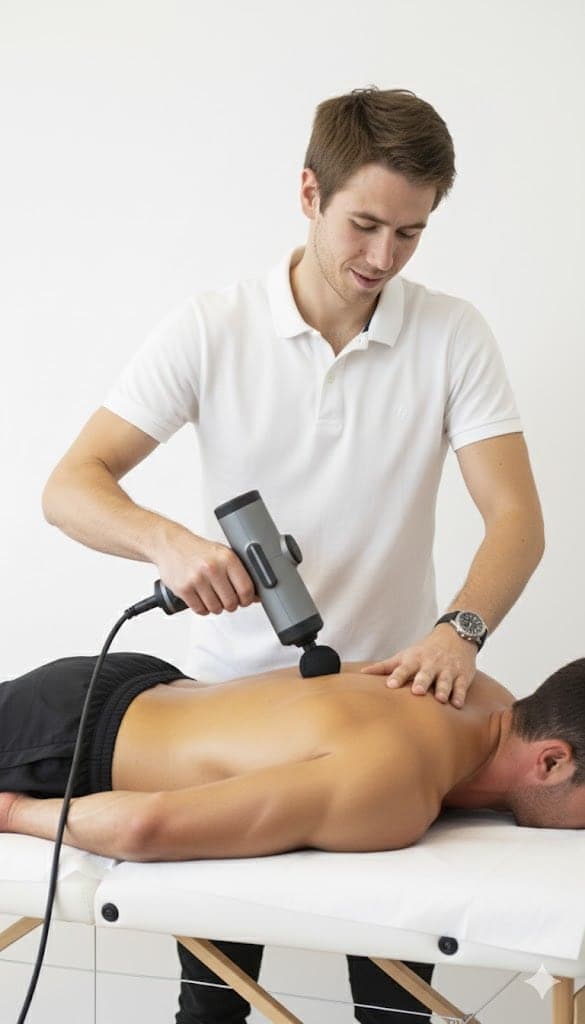
Written by
Chris
Massage therapist, nutrition and exercise physiologist
Norwegian-certified with a Bachelor’s in Physical Education and Nutrition and over ten years of clinical practice, working from a portable table in clients’ homes across the Paphos district.
This article is general information, not a medical diagnosis. If you have severe, worsening or unexplained pain, numbness, weakness, or pain after an accident, see a doctor first.