
Relaxation Massage Pegeia: Advanced Mechanical Deep-Tissue Treatment for Lasting Relief
In short
Discover how specialized relaxation massage in Pegeia delivers lasting pain relief through precision mechanical therapy. Expert-led treatments targeting root causes, not symptoms.
When clients first contact me about relaxation massage in Pegeia, I often sense their exhaustion—not just physical, but emotional. They’ve tried conventional massage. They’ve visited spa after spa. Yet here they are, still searching for genuine relief. I understand this frustration intimately, because I’ve spent the last decade studying exactly why traditional approaches fail and how advanced mechanical therapy succeeds where hands alone cannot.
Let me be direct: if you’re seeking a pleasant hour of surface-level relaxation followed by temporary relief, this article isn’t for you. But if you’re ready to invest in lasting results—if you’re prepared to address the mechanical root causes of your discomfort rather than merely masking symptoms—then what I’m about to share will fundamentally change how you think about therapeutic bodywork.
My name speaks through my results. With a Bachelor’s degree in Physical Education and Nutrition from Norway and ten years of specialized practice, I’ve developed a methodology that combines biomechanical precision with clinical rigor. This isn’t traditional massage. This is advanced mechanical therapy delivered through specialized equipment that achieves what human hands cannot: consistent depth, measurable pressure, and reproducible results.
Why Traditional Relaxation Massage in Pegeia Falls Short
I’ve observed a troubling pattern throughout my career. Clients arrive at their first session carrying misconceptions about what massage should accomplish. They’ve been conditioned to expect pleasant sensations, soothing music, and temporary relief that evaporates within 48 hours. The massage industry has, frankly, failed them by prioritizing experience over outcomes.
The fundamental problem with conventional massage lies in its limitations. Human hands, no matter how skilled, cannot deliver consistent pressure beyond superficial tissue layers. A therapist’s strength varies throughout the session. Their technique shifts based on fatigue, mood, and countless other variables. You’re essentially gambling on their “off days” versus their optimal days.
Consider the biomechanics: Chronic tension and pain originate deep within fascial networks, at the junction points where muscle, tendon, and connective tissue meet. Surface-level manipulation cannot reach these structures. It’s anatomically impossible. Yet traditional massage continues to work superficially, providing momentary relief while leaving the underlying mechanical dysfunction completely untouched.
I witnessed this failure repeatedly in my early career. Clients would return week after week, expressing gratitude for temporary comfort while fundamentally unchanged in their movement patterns and pain levels. That’s when I recognized the industry’s central flaw: we were treating symptoms, not causes.
The Mechanical Revolution: Precision Deep-Tissue Therapy
My approach to relaxation massage in Pegeia represents a complete departure from conventional methodology. I utilize advanced mechanical equipment specifically engineered to deliver what I call the three pillars of lasting therapeutic change: Precision, Power, and Consistency.
Precision: Targeting the Biomechanical Root
The specialized machine I employ allows millimeter-level accuracy in pressure application. We’re not approximating depth; we’re calculating it based on your tissue density, pain threshold, and specific biomechanical dysfunction. This precision enables me to address trigger points, fascial adhesions, and neuromuscular tension patterns with surgical accuracy.
During your first session, I conduct a comprehensive biomechanical assessment. I observe your movement patterns, identify compensation strategies your body has developed, and map the precise locations where mechanical dysfunction originates. This isn’t guesswork. It’s applied anatomy combined with ten years of pattern recognition.
Power: Reaching Depths Human Hands Cannot
Let me share something most therapists won’t tell you: effective deep-tissue work requires sustained pressure that exceeds what fingers and palms can deliver without injury to the practitioner. I’ve seen colleagues develop chronic hand and wrist problems attempting to provide adequate depth. The physics simply don’t support it.
My mechanical system generates consistent, controllable force that penetrates through superficial layers directly to the source. We’re working at depths of 3-5 centimeters in dense tissue—levels impossible to achieve manually. This isn’t about discomfort; it’s about accessing the fascial planes where restriction actually exists.
I adjust intensity precisely to your needs. Some clients require firm but moderate pressure to address postural imbalances. Others—particularly athletes or individuals with chronic conditions—benefit from powerfully deep work that would be unsustainable through manual techniques. The machine adapts seamlessly to both extremes and everything between.
Consistency: Eliminating Variables
Here’s what separates my methodology from every massage you’ve previously experienced: every session delivers identical results. The machine doesn’t have “off days.” It doesn’t fatigue. It doesn’t lose focus. You receive the exact same therapeutic quality whether it’s your first treatment or your fiftieth.
This consistency creates something revolutionary: predictable, measurable progress. We establish baseline measurements of your range of motion, pain levels, and functional capacity. Then we track improvement systematically. You’re not hoping for relief; you’re witnessing documented change.
The Science Behind Lasting Results
Understanding why this approach works requires basic knowledge of tissue mechanics. Your body responds to sustained mechanical pressure through several physiological mechanisms:
| Mechanism | Biological Response | Clinical Outcome |
|---|---|---|
| Fascial Release | Breaking crosslinks and adhesions in connective tissue | Restored range of motion and flexibility |
| Trigger Point Deactivation | Disrupting pain-spasm-pain cycles | Elimination of referral pain patterns |
| Increased Blood Flow | Enhanced oxygen and nutrient delivery | Accelerated tissue healing and recovery |
| Neuroplastic Adaptation | Resetting proprioceptive feedback loops | Improved movement patterns and posture |
These mechanisms require specific conditions: adequate depth, sustained pressure, and precise targeting. Miss any element, and you achieve only temporary relief. Combine all three, and you create lasting structural change.
Real Stories: Transformations I’ve Witnessed
Theory means nothing without results. Let me share what this methodology actually accomplishes in practice.
I worked with a software developer who’d suffered debilitating neck and shoulder tension for seven years. He’d tried everything: conventional massage, chiropractic adjustment, physical therapy, even medication. Nothing provided more than fleeting relief. During our initial assessment, I identified severe fascial restriction throughout his thoracic spine and scalene muscles—direct consequences of postural collapse from prolonged computer work.
After six weeks of targeted mechanical therapy, combined with specific mobility protocols I prescribed, his chronic tension disappeared entirely. More importantly, it stayed gone. We’d addressed the biomechanical cause: thoracic immobility forcing compensation through cervical structures. Without correcting that fundamental dysfunction, temporary relief would remain exactly that—temporary.
Another client, a triathlete preparing for competition, sought performance optimization rather than pain relief. Traditional sports massage wasn’t delivering the recovery speed he required. Through deep mechanical work on his hip flexors, IT bands, and posterior chain, we achieved measurable improvements in his stride length and running economy. He dropped three minutes from his previous half-marathon time—a significant margin attributable partly to enhanced mechanical efficiency.
These aren’t exceptional cases. They represent typical outcomes when you treat causes rather than symptoms.
Why Location Matters: Relaxation Massage in Pegeia
Pegeia presents unique challenges and opportunities for therapeutic work. The lifestyle here—active, outdoor-focused, often physically demanding—creates specific patterns of mechanical stress. I’ve observed consistent presentations: lower back dysfunction from hiking uneven terrain, shoulder tension from water sports, and postural issues from transitioning between activity levels.
Understanding these regional patterns allows me to anticipate common presentations and design treatments accordingly. This geographical specialization enhances diagnostic accuracy and treatment effectiveness.
Additionally, I bring my complete setup directly to your location. This isn’t merely convenient; it’s clinically significant. Treatment in your familiar environment, without the stress of travel or time pressure, optimizes your nervous system’s relaxation response. You’re not rushing from appointment to appointment. You’re investing dedicated time in your recovery within your own space.
The Investment Mindset: Reframing Massage as Healthcare
I need to address something that prevents many potential clients from accessing proper treatment: the misconception that massage represents an expense rather than an investment. This perspective fundamentally misunderstands what we’re accomplishing.
When you pay for conventional massage, you’re purchasing temporary relief—an experience that provides short-term comfort. When you invest in my mechanical therapy program, you’re acquiring lasting structural change. These are categorically different propositions.
Consider the mathematics: Spending €80 monthly on traditional massage for relief that lasts 48 hours costs you €960 annually for zero lasting improvement. Investing in a dedicated treatment program that eliminates your chronic dysfunction costs more upfront but delivers lasting results. Which represents better value?
I structure my services as partnerships, not transactions. We don’t do single sessions hoping for magic. We establish clear objectives, design customized protocols, and track measurable progress toward lasting resolution. This requires commitment from both parties, but it’s the only approach that actually works.
The Comprehensive Treatment Protocol
Understanding what to expect helps you make informed decisions. Here’s how my methodology unfolds:
Initial Assessment (Session One)
We spend 90 minutes conducting comprehensive biomechanical analysis. I observe your movement patterns, identify compensation strategies, and map dysfunction throughout your kinetic chain. This isn’t a massage session; it’s diagnostic work establishing our treatment roadmap.
I ask detailed questions about your pain patterns, activity levels, previous treatments, and specific goals. Every detail matters because it informs our strategy.
Foundation Phase (Sessions 2-6)
We address primary restrictions and establish baseline improvements. Treatment focuses on releasing major fascial adhesions, deactivating dominant trigger points, and restoring fundamental movement capacity. You’ll notice significant changes during this phase, but we’re building groundwork for lasting results.
Each session includes:
- Targeted mechanical therapy on identified dysfunction patterns
- Real-time adjustments based on tissue response
- Specific mobility protocols for home practice
- Education about biomechanical principles underlying your condition
- Progress measurements tracking tangible improvement
Optimization Phase (Sessions 7-12)
With major restrictions resolved, we refine movement patterns and address secondary compensations. This phase focuses on performance enhancement and injury prevention. We’re optimizing your mechanical efficiency for whatever activities matter to you—whether that’s competitive athletics or pain-free daily living.
Maintenance Protocol (Ongoing)
Even after achieving primary objectives, periodic maintenance sessions prevent regression and address new stresses before they become problematic. I design individualized schedules based on your activity levels and specific needs.
What Makes This Approach Superior
I’ve spent considerable time explaining methodology and philosophy. Now let me synthesize why this matters for your practical decision-making:
Depth and Precision: The mechanical system reaches tissues human hands cannot access, with accuracy manual therapy cannot match. This isn’t subjective; it’s measurable through tissue displacement and pressure application.
Consistency and Reliability: Every session delivers identical therapeutic quality. Your progress isn’t subject to variables affecting human performance.
Results-Driven Focus: We measure success through objective outcomes—pain reduction, improved range of motion, enhanced functional capacity—not subjective feelings of relaxation.
Customized Protocols: Treatment adapts precisely to your body’s responses, your goals, and your progress rate. This isn’t generic; it’s individually designed.
Education and Empowerment: You understand what’s happening in your body and why specific interventions work. Knowledge transfers power from practitioner to client.
Lasting Change: We address mechanical causes, not symptomatic effects. This distinction determines whether results last days or decades.
Who Benefits Most From This Methodology
While anyone seeking genuine improvement can benefit, certain presentations respond particularly well to mechanical deep-tissue therapy:
Chronic Pain Sufferers: If you’ve experienced persistent discomfort for months or years despite various treatments, biomechanical dysfunction likely underlies your condition. Addressing root causes through deep mechanical work often succeeds where other approaches fail.
Athletes and Active Individuals: Performance optimization requires addressing mechanical inefficiencies that limit movement quality. Whether you’re competitive or recreational, improved tissue quality translates directly to enhanced performance.
Desk Workers and Sedentary Professionals: Postural dysfunction from prolonged sitting creates predictable restriction patterns. Targeted intervention prevents these patterns from becoming chronic conditions.
Post-Injury Recovery: Proper tissue healing requires adequate blood flow and mobility. Mechanical therapy accelerates recovery while preventing compensatory dysfunction.
Prevention-Minded Individuals: You don’t need existing pain to benefit. Maintaining optimal tissue quality prevents future problems and enhances overall movement capacity.
Understanding Treatment Intensity
I need to address expectations around discomfort. Effective deep-tissue work involves sensations ranging from “intense but manageable” to “temporarily uncomfortable but therapeutically necessary.” This isn’t sadism; it’s physiology.
Breaking fascial adhesions and deactivating trigger points requires sufficient pressure to create tissue change. Too little pressure provides pleasant sensation without therapeutic effect. Adequate pressure creates temporary discomfort that resolves into lasting relief.
I maintain constant communication throughout treatment, adjusting intensity to remain within your therapeutic window—uncomfortable enough to create change, controlled enough to prevent injury or excessive nervous system activation. You’re always in control.
The intensity you experience directly correlates with your tissue condition. Severely restricted areas require more aggressive intervention initially. As tissue quality improves, less force achieves the same depth. This progression itself indicates therapeutic success.
Frequently Asked Questions About Advanced Mechanical Therapy
How does mechanical massage differ from traditional hands-on massage?
The fundamental difference lies in depth, precision, and consistency. Manual therapy cannot reach deep fascial layers without risking injury to the practitioner. Mechanical systems deliver sustained pressure at depths impossible through hands alone, with millimeter-level precision and zero variation between sessions. We’re comparing a hammer to a pneumatic drill—both have purposes, but they accomplish fundamentally different work.
Is the treatment painful?
“Pain” mischaracterizes the sensation. You’ll experience intensity—sometimes significant intensity—as we release restrictions and deactivate trigger points. This discomfort is temporary and therapeutic, completely different from pain indicating tissue damage. I adjust pressure continuously based on your feedback, maintaining optimal intensity throughout treatment. Most clients describe sensations as “intense but satisfying” rather than painful.
How quickly will I see results?
Timelines vary based on condition severity, tissue quality, and individual healing capacity. Most clients notice significant improvements within 3-4 sessions. Chronic conditions requiring years to develop naturally require more time to resolve. During our initial assessment, I provide realistic timelines based on your specific presentation.
How many sessions will I need?
This depends entirely on your objectives and current condition. Acute issues may resolve in 4-6 sessions. Chronic dysfunction typically requires 8-12 sessions for lasting resolution. Performance optimization represents ongoing work without fixed endpoints. I provide personalized treatment plans after your initial assessment.
Can this help if other treatments haven’t worked?
Frequently, yes. If previous approaches failed to address biomechanical causes—focusing instead on symptomatic relief—my methodology targets the dysfunction those treatments missed. I’ve worked with numerous clients who’d exhausted conventional options before experiencing lasting improvement through mechanical therapy.
Do you work with injuries or just general tension?
I address both acute injuries and chronic dysfunction. However, acute injuries require medical clearance before treatment. I work extensively with post-injury recovery, helping clients regain function while preventing compensatory patterns. General tension represents mechanical dysfunction just as injury does—it simply developed gradually rather than acutely.
What should I do between sessions?
I provide specific mobility protocols and self-care strategies customized to your condition. These aren’t generic stretches; they’re targeted interventions addressing your particular dysfunction patterns. Compliance with between-session work significantly accelerates progress.
Why do you travel to clients rather than maintaining a fixed location?
Clinical effectiveness and client convenience. Treatment in familiar environments optimizes nervous system relaxation. You’re not rushing through traffic or adhering to appointment windows. You’re dedicating focused time to recovery without external stressors. Additionally, I bring complete professional equipment, creating clinical-grade treatment environments anywhere in Pegeia.
The Partnership Model: How We Work Together
Success in therapeutic bodywork requires active participation from both practitioner and client. I provide expertise, methodology, and treatment. You provide commitment, honest feedback, and compliance with protocols.
This isn’t passive therapy where you lie motionless while I work. You’re an active participant—communicating sensations, performing prescribed exercises, tracking your progress, and making lifestyle modifications supporting recovery.
I maintain detailed records of every session, documenting treatments, tracking measurements, and noting responses. This data informs our evolving strategy and provides objective evidence of progress.
Between sessions, you’re implementing mobility work, applying self-care techniques, and monitoring changes. This continuity of care amplifies treatment effectiveness exponentially.
The partnership model distinguishes my practice from transactional massage services. We’re not exchanging money for time. We’re collaborating toward specific, measurable objectives with shared responsibility for outcomes.
Investment Structure and Commitment
I structure services to support committed, results-focused clients rather than casual consumers seeking occasional relief. Single sessions are available, but optimal results require programmatic approaches.
Treatment packages include:
- Comprehensive initial assessment and treatment planning
- Specified number of mechanical therapy sessions
- Customized mobility protocols and self-care education
- Progress tracking and protocol adjustments
- Direct communication access for questions between sessions
Pricing reflects the clinical expertise, specialized equipment, and personalized attention this methodology requires. I’m not competing with €40 spa massages because we’re not providing comparable services. You’re investing in lasting structural change, not temporary relaxation.
Making Your Decision: Is This Right For You?
I’ve laid out my methodology, philosophy, and approach with deliberate transparency. You now understand what I offer and how it differs fundamentally from conventional massage.
This treatment is right for you if:
- You seek lasting resolution, not temporary relief
- You’re willing to invest time and resources in proper treatment
- You understand that lasting change requires biomechanical correction
- You want active partnership rather than passive consumption
- You value measurable outcomes over pleasant experiences
This treatment is wrong for you if:
- You want relaxing spa experiences with soothing music
- You expect instant fixes without sustained effort
- You’re unwilling to experience therapeutic intensity
- You prefer single sessions over comprehensive programs
- You view massage as luxury rather than healthcare investment
I’m selective about clients because this methodology requires mutual commitment. If you’re not ready for serious therapeutic work, that’s completely acceptable—but it means we’re not the right fit currently.
The Long-Term Perspective: Beyond Immediate Relief
Everything I’ve discussed focuses on lasting change rather than temporary comfort. This perspective requires shifting how you think about bodywork entirely.
Traditional massage operates on a symptom-relief model. You feel tension, you book massage, you feel better temporarily, tension returns, you book again. This cycle continues indefinitely because nothing addresses underlying mechanical dysfunction.
My approach operates on a correction model. We identify dysfunction, design intervention strategies, implement treatment protocols, measure progress, and ultimately resolve the mechanical problems causing your symptoms. Once corrected, symptoms don’t return unless new dysfunction develops.
This distinction determines whether you’re managing symptoms perpetually or solving problems durably. Management is expensive, endless, and frustrating. Resolution is liberating, cost-effective long-term, and empowering.
Taking Action: Beginning Your Treatment Journey
If you’ve read this far, you understand what I offer and likely sense whether it matches your needs. The next step is straightforward: contact me to schedule your initial assessment.
During that first session, we’ll determine whether my methodology suits your condition and objectives. I’ll be honest about whether I can help you. If I can, we’ll design your treatment program. If I can’t, I’ll tell you directly rather than wasting your time and money.
What to expect when you contact me:
We’ll discuss your specific condition, goals, and expectations. I’ll ask detailed questions about your history, previous treatments, and current limitations. This conversation helps me determine whether we’re a good match before you invest in assessment.
If we proceed, I’ll schedule your comprehensive initial evaluation. I bring all necessary equipment to your location anywhere in Pegeia, creating a professional treatment environment in your space.
Following assessment, you’ll understand exactly what’s causing your dysfunction and what correction requires. No ambiguity, no uncertainty—just clear information enabling informed decisions.
The Reality of Professional Bodywork
I want to close with unvarnished truth about what separates effective therapeutic work from pleasant but ineffective services.
Genuine change requires discomfort. Not pain indicating damage, but intensity indicating adequate depth. If treatment feels entirely pleasant, it’s not reaching the tissues requiring attention.
Genuine change requires time. Dysfunction developing over years cannot resolve in single sessions. Quick fixes don’t exist in biomechanics.
Genuine change requires expertise. Not everyone practicing massage possesses the anatomical knowledge, mechanical understanding, and technical skill necessary for lasting results.
Genuine change requires investment. Quality equipment, extensive education, and clinical expertise cost money. Services priced like casual spa treatments cannot deliver clinical outcomes.
I state these truths not to discourage you, but to set appropriate expectations. If you want cheap, easy, and instantly gratifying, numerous options exist in Pegeia. If you want effective, lasting, and genuinely therapeutic, the options narrow considerably.
Final Thoughts: Choosing Lasting Solutions
After ten years and thousands of treatment sessions, I’ve witnessed what genuine therapeutic intervention accomplishes. I’ve seen chronic pain sufferers reclaim normal living. I’ve watched athletes achieve performance breakthroughs. I’ve observed ordinary people enhance their daily quality of life dramatically.
These outcomes share common elements: commitment to proper treatment, willingness to address causes rather than symptoms, and partnership with practitioners prioritizing results over revenue.
Relaxation massage in Pegeia can mean many things. It can mean pleasant but temporary spa experiences. Or it can mean serious therapeutic intervention producing lasting structural change. The choice depends entirely on what you’re actually seeking.
I know what I offer. I’ve explained it thoroughly, honestly, and without exaggeration. You now possess the information necessary to decide whether my advanced mechanical methodology matches your needs and expectations.
If it does, I look forward to partnering with you toward achieving genuine, lasting improvement. If it doesn’t, I respect that decision completely and wish you success finding the appropriate service for your current needs.
The difference between managing symptoms and solving problems is often simply choosing the right approach. That choice is yours.
Evidence and limits
Massage may help with some symptoms, but benefits and evidence vary by condition. It does not replace medical assessment or treatment. A page update is not evidence of an independent clinical review.
Further reading: Massage therapy: evidence, safety and limitations by US National Center for Complementary and Integrative Health. This is general background reading, not verification of every claim in this article.
How we describe evidence and updates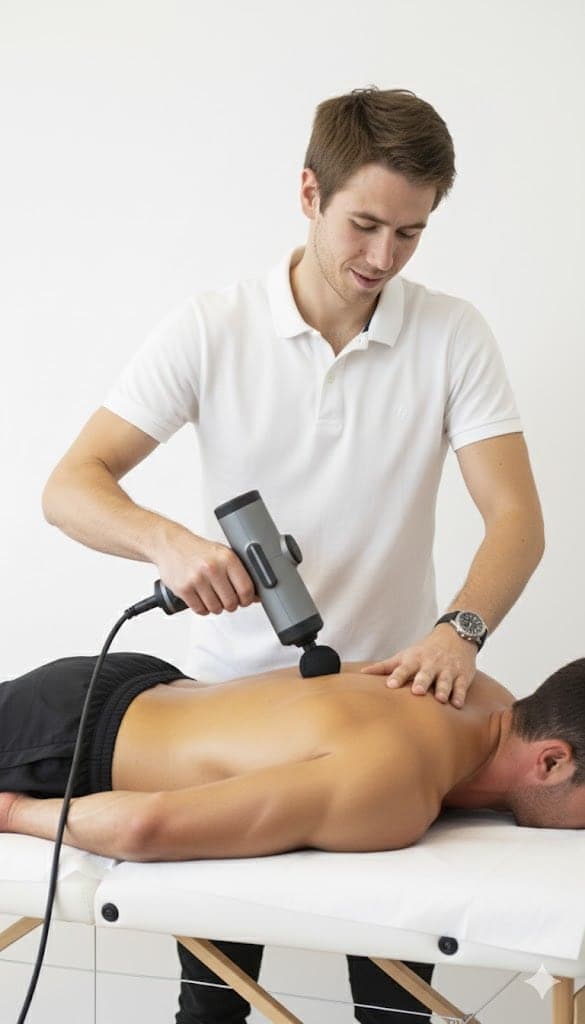
Written by
Chris
Massage therapist, nutrition and exercise physiologist
Norwegian-certified with a Bachelor’s in Physical Education and Nutrition and over ten years of clinical practice, working from a portable table in clients’ homes across the Paphos district.
This article is general information, not a medical diagnosis. If you have severe, worsening or unexplained pain, numbness, weakness, or pain after an accident, see a doctor first.