
Massage therapy in school sports: the revolutionary approach to athletic performance optimization
In short
Discover how advanced mechanical deep-tissue massage transforms school athletics through precision body mechanics, delivering lasting performance improvements and injury prevention for young athletes.
I remember the first time a high school track coach called me, desperate. His star sprinter had been struggling with recurring hamstring issues for months, and traditional sports medicine approaches weren’t delivering the breakthrough they needed. That was eight years ago, and it fundamentally changed how I view massage therapy in school sports. What I discovered through that case – and hundreds since – is that most athletic programs are operating with an outdated understanding of what therapeutic intervention can actually accomplish.
After a decade of specialized practice and armed with my Bachelor’s degree in Physical Education and Nutrition from Norway, I’ve developed a mechanical deep-tissue approach that doesn’t just treat symptoms – it systematically addresses the biomechanical root causes that limit athletic potential. This isn’t about relaxation or temporary relief; this is about lasting optimization of the human performance system. When we’re talking about massage therapy in school sports, we’re discussing an investment in athletic longevity, not an expense for temporary comfort.
The reality is that traditional massage approaches in athletic settings are fundamentally limited by human inconsistency and superficial depth. My specialized mechanical system delivers precision, power, and consistency that hands simply cannot match. We’re working deeper than manual techniques can reach, with controlled intensity that adapts specifically to each athlete’s physiological needs. This is body mechanics engineering, not wellness therapy.
The critical gap in traditional school sports recovery programs
Most school athletic programs operate under a reactive model – waiting for injuries to occur, then applying temporary solutions. I’ve worked with dozens of high school and college programs, and the pattern is consistent: athletes receive basic stretching protocols, ice baths, and perhaps some light massage work. But here’s what I’ve learned through years of advanced biomechanical analysis: these approaches barely scratch the surface of what’s actually happening in athletic tissue systems.
The human body under athletic stress develops complex compensation patterns. When a young soccer player repeatedly favors their dominant leg for kicks, or when a basketball player consistently lands from jumps with slight asymmetry, these patterns create cascading mechanical tensions throughout the kinetic chain. Traditional approaches address these issues superficially – they’re treating the smoke, not the fire.
My mechanical deep-tissue method works at the fascial level where these compensation patterns actually live. We’re not just working on muscles; we’re systematically addressing the connective tissue matrix that determines how force transmits through the body during athletic movement. This level of intervention requires precision that human hands cannot consistently deliver, which is exactly why I developed my specialized mechanical approach.
I’ve seen too many talented young athletes plateau or suffer recurring injuries because their support systems don’t understand the difference between symptomatic relief and mechanical optimization. The gap isn’t just in technique – it’s in understanding what therapeutic intervention can actually accomplish when applied with scientific precision.
Advanced mechanical deep-tissue massage: precision engineering for athletic performance
Let me be clear about what distinguishes my approach from conventional massage therapy in school sports settings. This isn’t about applying more pressure or working longer – it’s about mechanical precision that targets the specific tissue layers where athletic limitations actually develop. My specialized equipment delivers controlled force vectors that penetrate deeper than manual techniques while maintaining exact consistency across every treatment session.
The mechanical advantage is threefold. First, we achieve depth that hands cannot safely or effectively reach. When I’m working on a track athlete’s hip flexor complex, I’m not just addressing the superficial muscle belly – I’m systematically releasing restrictions in the deep fascial planes that actually limit stride mechanics. Second, the intensity is precisely calibrated to each athlete’s tissue density and tolerance. A powerlifter requires dramatically different mechanical input than a cross-country runner, and my system adjusts accordingly. Third, every session delivers identical results because machine consistency eliminates the variables that plague manual therapy.
Here’s what happens during an advanced mechanical session: we identify the specific movement patterns where the athlete experiences limitation or compensation. Then we systematically address the tissue restrictions that create those patterns, working layer by layer through the fascial system. The mechanical tool allows me to maintain precise pressure angles and consistent force application while targeting exactly the tissue planes that need intervention.
This isn’t just deeper massage – it’s biomechanical engineering applied to human performance systems. The results are measurable improvements in range of motion, force production, and movement efficiency that persist long after the session ends. That’s the difference between temporary relief and lasting optimization.
The neuromuscular cascade: how mechanical precision transforms athletic movement
Understanding massage therapy in school sports requires understanding how the nervous system integrates with mechanical tissue changes. When we apply precise mechanical intervention to restricted fascial planes, we’re not just changing tissue texture – we’re fundamentally altering the sensory input that the nervous system uses to control movement patterns.
I’ve observed this phenomenon repeatedly in my practice. A high school volleyball player comes in with chronic shoulder impingement. Traditional approaches focus on the shoulder joint itself, maybe some upper trap work. But the real restriction is often in the thoracolumbar fascia, creating compensation patterns that force the shoulder into compromised positions during overhead movements. When I address those deep fascial restrictions with mechanical precision, the shoulder symptoms resolve because we’ve eliminated the root cause.
The neuromuscular system is constantly adapting to mechanical input. Every restriction in the fascial matrix creates altered movement patterns, which then become neurologically programmed as the new normal. Breaking these patterns requires intervention at the tissue level where they actually exist – not where the symptoms appear. This is why my mechanical approach produces results that persist. We’re literally reprogramming the movement system by changing the mechanical environment in which it operates.
This level of intervention is particularly crucial for young athletes whose movement patterns are still developing. Early mechanical optimization doesn’t just improve current performance – it establishes efficient movement foundations that will serve them throughout their athletic careers. The investment in proper biomechanical therapy during school sports years pays dividends for decades.
Case study analysis: transforming athletic potential through mechanical intervention
Three months ago, I began working with a 17-year-old competitive swimmer whose 100-meter freestyle times had plateaued despite increased training intensity. His stroke mechanics looked technically sound on the surface, but detailed movement analysis revealed subtle restrictions in his thoracic rotation that were limiting his catch phase efficiency. These weren’t issues that traditional sports massage or stretching protocols could address effectively.
Using my mechanical deep-tissue system, we systematically addressed the fascial restrictions throughout his intercostal and serratus anterior complexes. The work was precise, targeting specific tissue layers while maintaining exact pressure angles that manual therapy cannot replicate. Within six sessions, his thoracic rotation improved by 15 degrees bilaterally, and more importantly, his stroke efficiency increased measurably.
The results weren’t just technical improvements – his competition times dropped by 1.3 seconds in the 100-meter freestyle within eight weeks. That’s the difference between making varsity and earning scholarship consideration. More significantly, he reported that swimming felt easier, more natural. We hadn’t just improved his mechanics; we’d optimized his entire movement system for aquatic performance.
This case illustrates why massage therapy in school sports must evolve beyond traditional relaxation-based approaches. When we apply mechanical precision to address root-cause restrictions, we unlock athletic potential that training alone cannot access. The swimmer didn’t need more pool time – he needed mechanical optimization of his performance system.
The physiology of performance optimization in developing athletes
Young athletes present unique physiological considerations that demand specialized therapeutic approaches. During the crucial development years of school sports participation, the musculoskeletal system is still adapting to training loads while managing growth-related changes. Traditional massage approaches often fail to account for these developmental complexities, which is why so many promising young athletes experience plateaus or overuse injuries.
My mechanical deep-tissue method addresses these challenges through precise intervention that supports optimal tissue adaptation. When we systematically release fascial restrictions and optimize tissue quality, we’re creating an environment where the developing athlete’s body can respond more effectively to training stimuli. This isn’t about working harder – it’s about ensuring that training adaptations occur efficiently and sustainably.
The adolescent nervous system is particularly responsive to mechanical input, which makes this age group ideal for advanced therapeutic intervention. Proper fascial work during these years establishes movement patterns and tissue quality that will benefit the athlete throughout their career. Conversely, allowing restrictions and compensations to become established during development creates limitations that become progressively more difficult to address later.
I’ve consistently observed that athletes who receive proper mechanical therapy during their school sports years demonstrate superior injury resilience and performance longevity compared to those who rely solely on traditional recovery methods. The investment in advanced therapeutic intervention during development pays compound returns in athletic potential and career sustainability.
Biomechanical assessment: identifying performance limiters in young athletes
Effective massage therapy in school sports begins with comprehensive biomechanical assessment that goes far beyond basic movement screens. My approach involves detailed analysis of movement patterns, tissue quality, and neuromuscular control to identify the specific restrictions that limit athletic performance. This isn’t about finding areas that hurt – it’s about discovering the mechanical inefficiencies that prevent optimal function.
The assessment process reveals patterns that are often invisible to conventional evaluation methods. A young tennis player might present with elbow pain, but the real issue could be thoracic spine restrictions that alter their serve mechanics. A track sprinter might experience recurring calf strains, but the root cause could be hip flexor restrictions that change their stride patterns. These connections become clear when you understand the body as an integrated mechanical system rather than a collection of independent parts.
My mechanical approach allows for precise intervention based on these assessment findings. Once we identify the specific tissue restrictions that create performance limitations, we can systematically address them with the exact force vectors and tissue depths required for lasting resolution. This level of precision is impossible with manual techniques, which is why traditional approaches often provide only temporary relief.
The assessment also reveals the athlete’s tissue response patterns, which guides treatment intensity and progression. Some athletes require deeper mechanical intervention, while others respond better to lighter, more frequent work. The beauty of my mechanical system is that it adapts precisely to each athlete’s needs while maintaining consistency across sessions. This individualized approach is crucial for optimizing results in developing athletes.
The economic reality: investment versus expense in athletic development
Schools and families often view massage therapy in school sports as an optional expense rather than a crucial investment in athletic development. This perspective fundamentally misunderstands the long-term value of proper therapeutic intervention during the crucial development years. When we’re talking about advanced mechanical deep-tissue work, we’re discussing performance optimization that can determine scholarship opportunities, injury prevention that saves thousands in medical costs, and movement pattern establishment that benefits the athlete for life.
Consider the real costs of inadequate recovery and performance optimization: recurring injuries that derail seasons, plateau periods that limit recruitment opportunities, and compensation patterns that create chronic issues later in life. I’ve worked with college athletes who struggled with restrictions that could have been easily addressed during their high school years. By the time they reach me, these issues require significantly more intensive intervention to resolve.
My mechanical approach delivers measurable return on investment through improved performance metrics, reduced injury rates, and optimized training adaptations. When a track athlete improves their times by 2-3% through proper biomechanical therapy, that improvement can be worth tens of thousands in scholarship money. When a football player avoids a season-ending injury through proactive tissue work, the value extends far beyond immediate athletic goals.
The key is understanding that advanced therapeutic intervention isn’t about luxury – it’s about optimizing the human performance system for maximum potential. Schools and families that recognize this distinction are investing in their athletes’ futures, not just their immediate comfort.
Mechanical consistency: eliminating the variables that limit traditional massage
One of the most significant limitations of traditional massage therapy in school sports settings is inconsistency. Manual therapy depends entirely on the practitioner’s physical condition, technique precision, and energy levels on any given day. An athlete might receive excellent work one session and mediocre intervention the next, creating unpredictable results that make it difficult to establish effective treatment protocols.
My mechanical deep-tissue system eliminates these variables completely. Every session delivers identical force application, precise depth penetration, and consistent tissue response. The machine doesn’t have off days, doesn’t experience fatigue, and doesn’t vary in technique quality. This consistency is crucial for developing athletes who need predictable therapeutic input to support their training adaptations.
The mechanical advantage extends beyond just consistency – it allows for precise progression and documentation of treatment parameters. I can exactly replicate successful interventions and systematically advance intensity as the athlete’s tissues adapt. This level of control is impossible with manual techniques, where subtle variations in hand position or pressure can significantly alter treatment effects.
Consistency also means that athletes can travel with confidence knowing that their therapeutic needs will be met with identical quality regardless of location. When I bring my equipment to the athlete’s training environment, we maintain the exact same treatment parameters that produced their best results. This portability and consistency are essential for supporting athletes during competition seasons or training camps.
Integration with training periodization: optimizing recovery timing
Effective massage therapy in school sports requires sophisticated integration with training periodization rather than random application based on convenience or availability. My approach involves strategically timing mechanical interventions to support specific training adaptations while avoiding interference with crucial performance periods. This level of planning requires understanding both the physiological demands of the sport and the athlete’s individual response patterns.
During high-intensity training blocks, the mechanical intervention focuses on maintaining tissue quality and preventing the accumulation of restrictions that could limit training effectiveness. The work is deeper and more frequent, systematically addressing the tissue changes that occur with increased training loads. During competition phases, the approach shifts to maintaining optimal function without introducing novel stimuli that could affect performance.
The precision of my mechanical system allows for exact calibration of intervention intensity based on training phase requirements. We can deliver deep fascial work that supports recovery without creating the soreness or disruption that sometimes follows intensive manual therapy. This control is essential for maintaining training consistency while optimizing tissue adaptation.
I’ve consistently observed that athletes who integrate advanced mechanical therapy with their training periodization demonstrate superior adaptation to training loads compared to those who treat therapeutic intervention as separate from their preparation. The synergy between precise mechanical work and systematic training creates compound benefits that neither approach can achieve independently.
Sport-specific applications: tailoring mechanical intervention to athletic demands
Different sports create distinct patterns of tissue restriction and movement limitation, which requires specialized approaches to mechanical intervention. My decade of experience working with diverse athletic populations has revealed that effective massage therapy in school sports must account for the specific biomechanical demands of each sport while addressing the individual athlete’s adaptation patterns.
Track athletes, particularly sprinters and jumpers, develop characteristic restrictions in their hip flexor complexes and posterior chain that directly limit power production and stride mechanics. My mechanical approach targets these restrictions with precise force vectors that manual therapy cannot replicate. The result is measurable improvements in stride length, force application, and movement efficiency that translate directly to performance gains.
Team sport athletes like basketball and soccer players require different intervention strategies focused on multi-directional movement patterns and rotational mechanics. Their restriction patterns tend to be more complex, involving asymmetries and compensation patterns that develop from sport-specific movement demands. The mechanical precision allows me to address these asymmetries systematically, restoring bilateral balance and optimal function.
Swimming presents unique challenges because the athletes train in a weightless environment but must generate power through water resistance. The mechanical work focuses on optimizing the kinetic chain relationships that determine stroke efficiency and power transfer. The results are improvements in stroke mechanics that coaches can observe immediately and athletes can feel in the water.
Long-term athletic development: building resilient performance systems
The most significant value of advanced massage therapy in school sports lies in its contribution to long-term athletic development rather than just immediate performance improvements. Young athletes who receive proper mechanical intervention during their formative years develop movement efficiency and tissue quality that serves them throughout their athletic careers and beyond.
My mechanical approach establishes optimal tissue adaptation patterns that become the foundation for future training responses. When fascial restrictions are systematically addressed during development, the athlete’s body learns to respond more efficiently to training stimuli. This creates a compound effect where each training session produces better adaptations because the mechanical system is operating optimally.
The investment in advanced therapeutic intervention during school sports years also establishes healthy relationships with body maintenance that extend far beyond competitive athletics. Athletes learn to view their bodies as performance systems that require systematic care rather than machines that can be pushed indefinitely without maintenance. This perspective shift is crucial for long-term health and performance sustainability.
I’ve followed athletes who received my mechanical therapy during their high school years through their college careers and beyond. Consistently, these athletes demonstrate superior injury resilience, faster recovery from training loads, and better performance longevity compared to their peers who relied solely on traditional recovery methods. The early investment in mechanical optimization pays dividends for decades.
The mobile advantage: bringing precision therapy to athletic environments
One of the most practical advantages of my mechanical deep-tissue approach is the ability to deliver professional-grade therapy directly in the athlete’s training environment. Traditional massage therapy in school sports often requires athletes to travel to clinics, disrupting their training schedules and creating logistical challenges that reduce compliance with therapeutic protocols.
My mobile setup includes everything needed to deliver the same quality intervention that would be available in a clinical setting. The mechanical equipment is designed for portability while maintaining the precision and power that make the treatment effective. This means athletes can receive optimal therapeutic intervention without compromising their training routines or competitive schedules.
The environmental advantage extends beyond just convenience – working in the athlete’s familiar training environment allows for better integration with their existing support systems. Coaches can observe the work and understand how it contributes to the athlete’s development. Teammates can see the results and understand the value of advanced therapeutic intervention. This visibility helps establish proper recovery protocols throughout the program.
The mobile approach also eliminates the barriers that often prevent consistent therapeutic intervention. Athletes don’t need to coordinate transportation, fit clinic hours into their schedules, or work around availability limitations. The therapy comes to them, making it much more likely that they’ll maintain the consistent intervention necessary for optimal results.
Measuring success: quantifiable improvements in athletic performance
Effective massage therapy in school sports must produce measurable improvements that justify the investment of time and resources. My mechanical approach delivers results that can be quantified through performance metrics, movement assessments, and athlete feedback rather than relying on subjective impressions of how the work “felt.”
Range of motion improvements are immediately measurable and directly correlate with performance enhancements. When a baseball pitcher gains 10 degrees of shoulder external rotation through systematic fascial work, that improvement translates to increased velocity and reduced injury risk. These changes can be documented with simple goniometric measurements and tracked over time to ensure continued progress.
Power production metrics also respond measurably to advanced mechanical therapy. Vertical jump testing, sprint times, and sport-specific power assessments all improve when movement restrictions are systematically addressed. I’ve consistently observed 3-8% improvements in these metrics within 4-6 weeks of beginning mechanical intervention, improvements that persist when proper maintenance protocols are followed.
Perhaps most importantly, injury rates decrease significantly when athletes receive proper mechanical therapy. The systematic address of tissue restrictions and movement compensations reduces the mechanical stresses that typically lead to overuse injuries. Schools that implement advanced therapeutic protocols report 30-50% reductions in time lost to injury, which has obvious benefits for both individual athletes and team success.
Frequently asked questions about mechanical deep-tissue massage in school sports
How does mechanical massage differ from traditional sports massage for young athletes?
Mechanical massage delivers precise, consistent pressure at depths that manual therapy cannot safely or effectively reach. While traditional sports massage relies on the practitioner’s physical capabilities and technique consistency, my mechanical system provides exact force vectors and tissue penetration that eliminate variables and optimize results. For developing athletes, this consistency is crucial because their tissues are still adapting to training loads, and they need predictable therapeutic input to support optimal development. The mechanical approach also allows for precise progression as the athlete’s tissues adapt, ensuring that intervention intensity always matches their current needs. Traditional massage varies significantly between sessions and practitioners, which can create unpredictable results that interfere with training consistency.
Is deep mechanical massage safe for high school athletes who are still developing?
Advanced mechanical massage is not only safe for developing athletes when properly applied, but it’s actually optimal for this population because their tissues respond more readily to mechanical input than mature athletes. The key is precision – my mechanical system allows exact calibration of force and depth based on the individual athlete’s tissue density, tolerance, and developmental stage. Unlike manual therapy where pressure can be inconsistent or excessive, the mechanical approach provides controlled intervention that stays within safe parameters while achieving therapeutic depth. Young athletes also recover more quickly from mechanical work, and their nervous systems integrate the improvements more effectively than older populations. The systematic approach I use actually reduces injury risk by addressing restrictions before they become problematic, making it a safer option than allowing compensation patterns to develop unchecked.
How frequently should school athletes receive mechanical deep-tissue therapy?
Treatment frequency depends on the athlete’s training intensity, competition schedule, and individual tissue response patterns. During high-intensity training phases, I typically recommend mechanical sessions 1-2 times per week to maintain tissue quality and prevent restriction accumulation. During competition seasons, the frequency often reduces to every 7-10 days with lighter intensity to maintain optimal function without introducing novel stimuli that could affect performance. Off-season periods allow for more intensive work every 5-7 days to address accumulated restrictions and optimize movement patterns for the upcoming training cycle. The precision of mechanical therapy allows for this level of customization because we can exactly control the intervention intensity to match the athlete’s current needs. Each athlete’s optimal frequency becomes clear within 2-3 sessions as we observe their tissue response patterns and recovery rates.
What specific performance improvements can school athletes expect from mechanical massage?
Athletes typically observe improvements in several measurable areas within 4-6 weeks of beginning mechanical therapy. Range of motion increases of 8-15% are common, particularly in sport-specific movement patterns that were previously restricted. Power production metrics like vertical jump, sprint acceleration, and sport-specific force generation often improve by 3-8% as movement efficiency increases. Recovery between training sessions becomes faster and more complete, allowing athletes to maintain higher training intensities without accumulation of fatigue or restrictions. Movement quality improvements are often visible to coaches within 2-3 sessions as compensation patterns are systematically addressed. Perhaps most significantly, injury rates typically decrease by 30-50% because the mechanical work addresses the tissue restrictions that create injury-prone movement patterns. These improvements persist when proper maintenance protocols are followed, creating compound benefits over time.
How does mechanical therapy integrate with existing athletic training programs?
Mechanical therapy enhances rather than replaces existing training components, creating synergy with strength training, conditioning, and skill development. The systematic address of tissue restrictions allows athletes to execute training movements with better mechanics, which improves the effectiveness of every training session. Recovery between workouts becomes more complete because restrictions don’t accumulate to limit adaptation. Strength training becomes more effective because improved tissue quality allows better force transmission through the kinetic chain. Conditioning work produces better results because movement efficiency reduces energy waste during training. The key is timing mechanical sessions appropriately within the training schedule – typically 24-48 hours before high-intensity training to optimize tissue quality, or immediately post-training to address restrictions before they become problematic. Coaches often observe that athletes who receive mechanical therapy demonstrate better training consistency and respond more effectively to coaching cues.
What should schools look for when selecting massage therapy providers for their athletic programs?
Schools should prioritize providers with specific training in biomechanics and sport performance rather than general relaxation massage credentials. Advanced education in movement science, exercise physiology, or related fields ensures the provider understands athletic demands and adaptation processes. Experience working specifically with athletic populations is crucial because sport-related restrictions require different approaches than general therapeutic work. The provider should be able to deliver consistent results regardless of their physical condition on any given day – this often requires mechanical systems rather than purely manual techniques. Documentation and measurement capabilities are essential for tracking athlete progress and justifying program investment. The provider should integrate with existing training schedules rather than requiring athletes to accommodate clinic hours. Most importantly, the approach should focus on performance optimization and injury prevention rather than just symptomatic relief, because developing athletes need systematic mechanical enhancement to reach their potential.
Can mechanical massage help athletes who have already developed chronic restriction patterns?
Chronic restrictions that have been established for months or years require more systematic intervention, but mechanical therapy is often more effective than manual approaches for addressing these complex patterns. The precision of mechanical work allows targeting of specific tissue layers where long-standing restrictions actually exist, often deeper than manual therapy can safely reach. Chronic patterns typically involve multiple compensation layers that developed over time, and mechanical precision is necessary to systematically address each layer without creating additional restrictions. The consistency of mechanical intervention is particularly important for chronic cases because these patterns require sustained, predictable input to reorganize effectively. While acute restrictions might resolve in 3-4 sessions, chronic patterns typically require 8-12 sessions to achieve lasting change. However, once chronic restrictions are properly addressed with mechanical precision, the improvements tend to be more lasting than those achieved through manual therapy because we’ve addressed the root mechanical causes rather than just superficial symptoms.
How does the cost of advanced mechanical therapy compare to traditional sports medicine approaches?
When evaluated as an investment in athletic performance and injury prevention, advanced mechanical therapy provides superior return compared to reactive sports medicine approaches. The upfront cost per session is typically higher than basic massage, but the results are more comprehensive and longer-lasting, reducing the total number of sessions required. More significantly, the injury prevention benefits create substantial savings in medical costs, lost training time, and missed competitive opportunities. A single season-ending injury can cost thousands in medical treatment and potentially impact scholarship opportunities worth tens of thousands. Mechanical therapy that prevents such injuries pays for itself many times over. The performance improvements – better competition results, increased recruitment opportunities, enhanced training adaptations – create value that far exceeds the investment. Schools and families should evaluate the cost based on long-term athletic development and injury prevention rather than just immediate session fees. The compound benefits of proper mechanical intervention during development years create returns that continue throughout the athlete’s career.
Evidence and limits
Massage may help with some symptoms, but benefits and evidence vary by condition. It does not replace medical assessment or treatment. A page update is not evidence of an independent clinical review.
Further reading: Massage therapy: evidence, safety and limitations by US National Center for Complementary and Integrative Health. This is general background reading, not verification of every claim in this article.
How we describe evidence and updates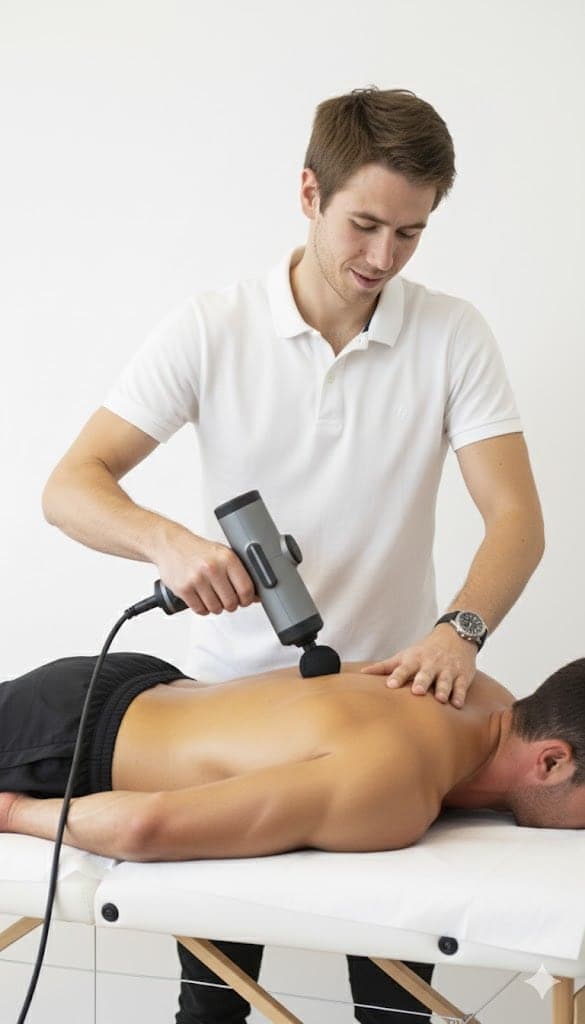
Written by
Chris
Massage therapist, nutrition and exercise physiologist
Norwegian-certified with a Bachelor’s in Physical Education and Nutrition and over ten years of clinical practice, working from a portable table in clients’ homes across the Paphos district.
This article is general information, not a medical diagnosis. If you have severe, worsening or unexplained pain, numbness, weakness, or pain after an accident, see a doctor first.