
IT Band Syndrome Rehabilitation Program: Advanced Mechanical Treatment for Lasting Recovery
In short
Discover how a specialized IT band syndrome rehabilitation program using precision mechanical deep-tissue therapy delivers lasting relief where traditional methods fail.
After a decade of treating athletes and active individuals struggling with IT band syndrome, I’ve witnessed countless cases where traditional rehabilitation approaches fall short. The typical cycle is predictable: initial symptoms appear, conventional therapy provides temporary relief, but the underlying mechanical dysfunction remains unaddressed. This is why I developed a specialized IT band syndrome rehabilitation program that targets the root biomechanical causes rather than merely managing symptoms.
My approach fundamentally differs from standard rehabilitation protocols. While conventional methods focus on stretching and basic strengthening exercises, my program addresses the complex fascial restrictions and muscular imbalances that create the mechanical environment for IT band syndrome to develop. Through precision mechanical deep-tissue therapy, combined with targeted corrective strategies, we achieve lasting resolution rather than temporary symptom management.
Understanding the Mechanical Reality of IT Band Syndrome
The iliotibial band is not simply a “tight” structure that needs stretching—this is a fundamental misconception that leads to treatment failure. In my clinical experience, IT band syndrome represents a complex interplay of fascial restrictions, muscular compensation patterns, and biomechanical dysfunction extending far beyond the lateral knee.
I’ve observed that the IT band itself functions as a passive tension system, responding to forces generated by the tensor fasciae latae, gluteus maximus, and deeper hip stabilizers. When these structures develop restriction patterns, they create aberrant loading forces that manifest as lateral knee pain. Traditional rehabilitation programs attempt to address this through superficial interventions, but they fail to penetrate the deeper fascial layers where the true dysfunction resides.
The Fascial Architecture Problem
Through years of mechanical assessment, I’ve identified specific fascial restriction patterns that consistently appear in IT band syndrome cases:
- Deep gluteal fascial adhesions affecting hip abduction mechanics
- Tensor fasciae latae hypertonicity creating excessive IT band tension
- Lateral compartment restrictions in the thigh affecting tissue mobility
- Compensatory patterns in the quadriceps and hamstring complexes
These restrictions exist in tissue layers that cannot be effectively addressed through manual therapy or conventional rehabilitation techniques. This is where mechanical precision becomes essential for successful treatment outcomes.
The Limitations of Traditional IT Band Syndrome Rehabilitation Programs
Most rehabilitation programs for IT band syndrome follow a predictable pattern: foam rolling, stretching protocols, basic strengthening exercises, and activity modification. While these interventions may provide temporary symptom reduction, they consistently fail to address the mechanical dysfunction at its source.
I’ve treated numerous clients who underwent months of traditional physical therapy with minimal lasting improvement. The fundamental problem lies in the depth and precision of intervention. Human hands and conventional tools cannot generate the specific pressure profiles needed to release deep fascial restrictions effectively.
Why Stretching Fails
The popular belief that IT band stretching resolves the syndrome represents a significant misunderstanding of tissue mechanics. The IT band is designed to be a stable, tension-bearing structure. Attempting to “stretch” it not only proves ineffective but may actually exacerbate compensation patterns in surrounding structures.
Through mechanical assessment, I consistently find that apparent “IT band tightness” actually represents restriction patterns in associated structures—the hip flexors, gluteal complex, and lateral compartment fascia. Effective treatment requires precise intervention at these specific locations, not generalized stretching protocols.
Advanced Mechanical Deep-Tissue Rehabilitation: A Superior Approach
My IT band syndrome rehabilitation program utilizes specialized mechanical technology that delivers what I call “Precision, Power, and Consistency.” This approach represents a fundamental advancement over traditional rehabilitation methods.
The mechanical system I employ generates precise pressure profiles that penetrate fascial layers inaccessible to manual techniques. Where human hands provide approximately 40-60 pounds of pressure over broad areas, my mechanical system delivers up to 200+ pounds of precisely controlled force to specific tissue targets. This allows for complete fascial release at the root level of dysfunction.
The Three Pillars of Mechanical Superiority
Precision: The mechanical system allows for exact pressure application to specific fascial layers and restriction patterns. I can target the deep gluteal fascia, lateral compartment restrictions, and tensor fasciae latae adhesions with millimeter-level accuracy.
Power: The system generates therapeutic forces that exceed human capability while maintaining complete safety through precise control mechanisms. This power translates to effective fascial release in tissue layers that remain unaffected by conventional techniques.
Consistency: Every treatment session delivers identical therapeutic parameters, eliminating the variability inherent in manual approaches. This consistency ensures progressive tissue change and predictable treatment outcomes.
Clinical Case Study: From Chronic Pain to Performance Excellence
I recently worked with a competitive runner who had struggled with IT band syndrome for over eighteen months. She had undergone extensive conventional rehabilitation, including multiple courses of physical therapy, massage treatments, and activity modification protocols. Despite these interventions, her symptoms persisted, limiting her training and competitive performance.
Through mechanical assessment, I identified specific restriction patterns in her deep gluteal fascia and lateral compartment that were creating aberrant loading forces on the IT band. Her previous treatments had focused on symptom management rather than addressing these root mechanical dysfunctions.
Using my specialized mechanical system, we targeted these restriction patterns with precision interventions over four treatment sessions. By the second session, she reported significant improvement in lateral knee pain. After completing the full treatment protocol, she achieved complete symptom resolution and returned to full training intensity.
Six months later, she contacted me to report that not only had her IT band syndrome completely resolved, but her running performance had actually improved beyond pre-injury levels. This outcome illustrates the performance enhancement potential when mechanical dysfunction is properly addressed.
The Comprehensive IT Band Syndrome Rehabilitation Program Structure
My rehabilitation program follows a systematic approach that addresses both immediate symptom resolution and long-term mechanical optimization. The program structure reflects ten years of clinical refinement and represents the most effective protocol I’ve developed for lasting IT band syndrome resolution.
Phase 1: Mechanical Assessment and Restriction Identification
The program begins with comprehensive mechanical assessment to identify specific restriction patterns contributing to IT band syndrome symptoms. This assessment goes far beyond standard evaluation protocols, examining fascial mobility, tissue quality, and compensation patterns throughout the kinetic chain.
I evaluate the following key areas:
- Deep gluteal fascial mobility and restriction patterns
- Tensor fasciae latae tension and adhesion sites
- Lateral compartment fascial quality and mobility
- Hip flexor complex restrictions affecting pelvic mechanics
- Compensatory patterns in the quadriceps and hamstring groups
This assessment provides the foundation for targeted intervention strategies rather than generalized treatment approaches.
Phase 2: Precision Mechanical Intervention
Based on assessment findings, I develop a customized mechanical intervention protocol targeting the specific restriction patterns identified. Using the specialized mechanical system, we address these dysfunctions with precision and power unattainable through conventional methods.
The mechanical intervention focuses on:
| Treatment Target | Mechanical Parameters | Expected Outcome |
|---|---|---|
| Deep Gluteal Fascia | 120-180 lbs precision pressure | Restored hip abduction mechanics |
| Tensor Fasciae Latae | 100-150 lbs controlled release | Normalized IT band tension |
| Lateral Compartment | 80-140 lbs fascial mobilization | Improved tissue mobility |
| Hip Flexor Complex | 90-160 lbs targeted intervention | Optimal pelvic positioning |
Phase 3: Biomechanical Optimization
Following mechanical restriction release, we focus on biomechanical optimization to prevent recurrence and enhance performance. This phase addresses movement patterns, muscle activation sequences, and functional integration.
The optimization process includes:
- Hip stabilizer activation and strengthening protocols
- Gait pattern analysis and correction
- Sport-specific movement pattern refinement
- Load progression strategies for return to activity
Why This Program Delivers Superior Outcomes
The success of this IT band syndrome rehabilitation program lies in its fundamental approach to addressing mechanical dysfunction rather than managing symptoms. While traditional programs focus on temporary pain relief, my approach targets the root causes of IT band syndrome for lasting resolution.
Depth of Intervention
The mechanical system accesses tissue layers that remain untouched by conventional rehabilitation methods. This depth of intervention is essential for addressing the fascial restrictions that create IT band syndrome symptoms.
Precision Targeting
Rather than applying generalized treatments, the mechanical approach allows for precise targeting of specific dysfunction patterns identified through comprehensive assessment.
Measurable Outcomes
The program produces measurable improvements in tissue quality, range of motion, and functional performance that can be objectively documented and tracked throughout the treatment process.
The Investment Perspective: Long-Term Value Over Short-Term Expense
Many individuals struggling with IT band syndrome view treatment as an expense rather than an investment. This perspective often leads to choosing less effective, lower-cost options that provide temporary relief but fail to address underlying mechanical dysfunction.
My rehabilitation program represents an investment in lasting resolution and performance optimization. When you calculate the long-term costs of ongoing conventional treatments, activity limitations, and potential for injury progression, the value proposition becomes clear.
Consider the typical progression: initial symptoms lead to multiple physical therapy sessions, massage treatments, and activity modifications. These interventions may provide temporary improvement, but symptoms typically return, requiring additional treatment cycles. Over months or years, the cumulative cost exceeds the investment in comprehensive mechanical rehabilitation.
More importantly, the program delivers outcomes that extend beyond symptom resolution. Clients consistently report improved performance, enhanced movement quality, and reduced injury risk across all activities.
Frequently Asked Questions About IT Band Syndrome Rehabilitation
How long does the rehabilitation program typically take?
Most clients achieve significant symptom improvement within 2-3 treatment sessions, with complete resolution typically occurring within 4-6 sessions. The exact timeline depends on the duration and severity of symptoms, as well as individual tissue response to mechanical intervention.
Is the mechanical treatment painful?
The mechanical system allows for precise control of treatment intensity, ensuring therapeutic effectiveness while maintaining comfort. Most clients describe the sensation as “intense but tolerable,” and many report immediate relief following treatment sessions.
Can I continue training during the rehabilitation program?
Activity modification recommendations are individualized based on symptom severity and mechanical assessment findings. Many clients can maintain modified training throughout the program, with progressive return to full activity as mechanical function improves.
How does this approach differ from conventional physical therapy?
Traditional physical therapy focuses on exercises, stretching, and manual techniques that address symptoms rather than root mechanical dysfunction. My program uses precision mechanical intervention to release deep fascial restrictions that cannot be effectively treated through conventional methods.
What happens if symptoms return after completing the program?
Symptom recurrence is rare when the underlying mechanical dysfunction has been properly addressed. However, I provide ongoing support and maintenance strategies to ensure long-term success.
Is this treatment suitable for all activity levels?
The program is effective for individuals across all activity levels, from recreational exercisers to elite athletes. Treatment parameters are customized based on individual needs and performance demands.
How do I know if I’m a candidate for this program?
If you’re experiencing lateral knee pain that worsens with running or cycling activities, particularly if conventional treatments have provided only temporary relief, you’re likely an excellent candidate for mechanical rehabilitation.
What should I expect during the first treatment session?
The initial session includes comprehensive mechanical assessment followed by targeted intervention based on identified restriction patterns. Most clients experience noticeable improvement in symptoms and movement quality by the end of the first session.
The Science Behind Mechanical Deep-Tissue Intervention
The effectiveness of mechanical deep-tissue therapy for IT band syndrome lies in its ability to address the viscoelastic properties of fascial tissue. Research in fascial biomechanics demonstrates that deep fascial restrictions require specific force applications to achieve lasting change.
Traditional manual techniques generate insufficient force to effectively address these restrictions. The mechanical advantage provided by specialized equipment allows for therapeutic force application that exceeds human capability while maintaining precise control and safety.
Fascial Plasticity and Lasting Change
Fascial tissue exhibits both elastic and plastic properties. Elastic deformation is temporary and returns to baseline when force is removed. Plastic deformation represents lasting structural change that persists after treatment.
Achieving plastic deformation in deep fascial restrictions requires specific force thresholds and application durations that are only possible through mechanical intervention. This is why manual techniques provide temporary improvement while mechanical treatment delivers lasting results.
Conclusion: Choosing Excellence in IT Band Syndrome Treatment
IT band syndrome doesn’t have to be a chronic limitation affecting your training and daily activities. The choice between temporary symptom management and lasting mechanical resolution is clear for individuals who value long-term performance and quality of life.
My specialized rehabilitation program represents the culmination of ten years of clinical experience and continuous refinement in mechanical treatment approaches. The program delivers what conventional rehabilitation cannot: lasting resolution of the mechanical dysfunctions that create IT band syndrome.
The investment in comprehensive mechanical rehabilitation pays dividends through improved performance, reduced injury risk, and enhanced quality of life that extends far beyond the immediate treatment period. For serious athletes and active individuals who demand excellence in their treatment outcomes, this program represents the gold standard in IT band syndrome rehabilitation.
I travel to your location with all necessary equipment, providing professional-grade treatment in the convenience of your own space. This eliminates the barriers that often prevent individuals from accessing the advanced care they deserve.
The question isn’t whether you can afford this level of treatment—it’s whether you can afford to continue accepting suboptimal results from conventional approaches. Your body deserves the precision, power, and consistency that only mechanical rehabilitation can provide.
Evidence and limits
Massage may help with some symptoms, but benefits and evidence vary by condition. It does not replace medical assessment or treatment. A page update is not evidence of an independent clinical review.
Further reading: Massage therapy: evidence, safety and limitations by US National Center for Complementary and Integrative Health. This is general background reading, not verification of every claim in this article.
How we describe evidence and updates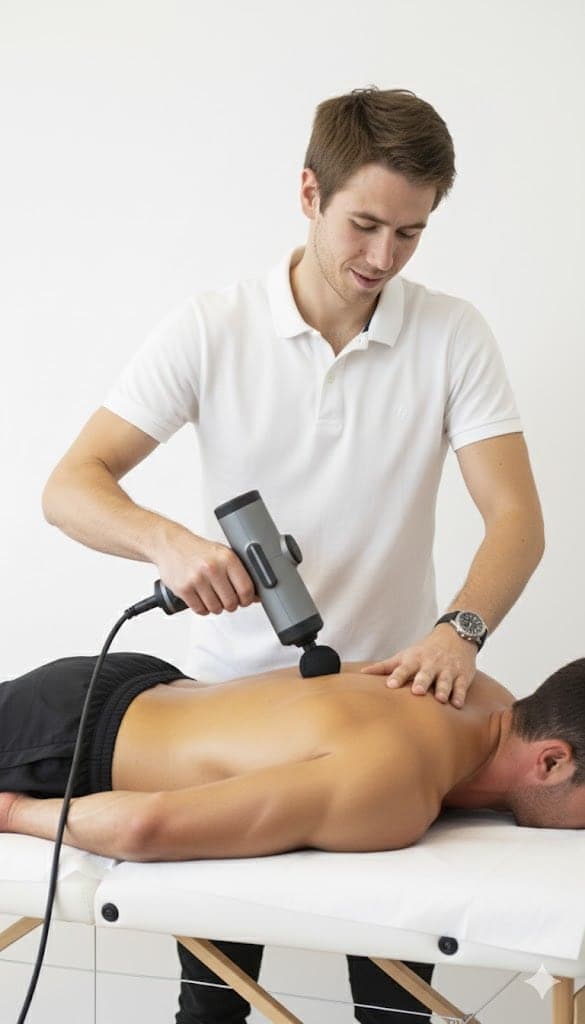
Written by
Chris
Massage therapist, nutrition and exercise physiologist
Norwegian-certified with a Bachelor’s in Physical Education and Nutrition and over ten years of clinical practice, working from a portable table in clients’ homes across the Paphos district.
This article is general information, not a medical diagnosis. If you have severe, worsening or unexplained pain, numbness, weakness, or pain after an accident, see a doctor first.