Holistic Approaches to Runner Recovery: Why Traditional Methods Are Only Part of the Solution
In short
Discover evidence-based holistic approaches to runner recovery that address the root biomechanical causes of injury, not just symptoms. Learn why advanced mechanical deep-tissue therapy outperforms conventional methods.
I’ve spent the last decade working exclusively with runners, from weekend warriors to elite marathoners. During this time, I’ve witnessed a disturbing pattern: runners who religiously follow conventional recovery protocols—foam rolling, ice baths, stretching routines—yet continue to experience recurring injuries, chronic tightness, and performance plateaus. The fundamental issue isn’t their dedication to recovery. The problem is that most approaches address surface-level symptoms while the underlying biomechanical dysfunction remains untouched.
My background in Physical Education and Nutrition, combined with ten years of clinical practice, has taught me something critical: true holistic approaches to runner recovery must integrate multiple modalities while prioritizing mechanical precision. This isn’t about adding another recovery tool to your arsenal. It’s about understanding how soft tissue dysfunction creates cascading problems throughout the kinetic chain, and why addressing these issues at their source produces exponentially better outcomes than symptomatic relief.
When I work with a runner experiencing chronic IT band syndrome or persistent plantar fasciitis, I’m not simply treating inflammation or providing temporary pain relief. I’m systematically identifying and resolving the fascial restrictions, muscle adhesions, and compensatory patterns that created the problem in the first place. This distinction separates effective long-term recovery from the endless cycle of temporary fixes that most runners find themselves trapped in.
The Biomechanical Reality of Running and Why Most Recovery Approaches Fail
Running is fundamentally a repetitive-stress activity. Every foot strike generates force equivalent to 2.5 to 3 times your body weight. For a 70-kilogram runner completing a 10-kilometer run with an average cadence of 170 steps per minute, that’s approximately 8,500 impacts per leg. Multiply that by weekly mileage, and you begin to understand the cumulative mechanical stress we’re addressing.
The human body responds to this repetitive loading through a complex process of tissue adaptation and, when overstressed, tissue dysfunction. Myofascial tissue—the connective tissue network enveloping every muscle fiber—begins to develop restrictions. These restrictions aren’t visible on standard imaging. They don’t present as acute injuries. Instead, they manifest as tightness, reduced range of motion, and compensatory movement patterns that gradually erode performance and increase injury risk.
Why Surface-Level Recovery Methods Produce Temporary Results
Most conventional recovery approaches operate at the superficial tissue layer. Foam rolling applies relatively diffuse pressure across broad surface areas. Standard massage therapy, while beneficial for circulation and general relaxation, typically lacks the mechanical precision and depth required to address dense fascial adhesions in runners who have accumulated years of tissue dysfunction.
I’ve treated hundreds of runners who arrive having spent months with physiotherapists performing prescribed stretches and exercises, yet their primary complaint—whether it’s chronic calf tightness, recurrent hamstring strains, or persistent lower back pain—remains unchanged. The exercise protocols address movement patterns. The stretching addresses muscle length. But neither directly resolves the underlying tissue restrictions that are fundamentally altering biomechanics.
The Integrated Approach: Combining Precision Mechanical Therapy with Comprehensive Recovery
Effective holistic approaches to runner recovery require integrating multiple evidence-based modalities while ensuring that mechanical dysfunction is addressed with appropriate precision and depth. My specialized approach centers on advanced mechanical deep-tissue therapy using a sophisticated tool that delivers three critical advantages traditional methods cannot match:
Precision: The ability to target specific tissue layers and adhesions with millimeter-level accuracy, something even the most skilled manual therapist cannot consistently achieve.
Power: Sufficient mechanical force to penetrate dense fascial layers and release restrictions at their source, adjustable from gentle to intensely deep based on individual tissue condition and tolerance.
Consistency: Elimination of practitioner fatigue and variation, ensuring every treatment session delivers identical mechanical effectiveness regardless of external factors.
This mechanical precision forms the foundation, but holistic recovery extends far beyond a single modality. Let me explain how these elements integrate.
Building an Evidence-Based Holistic Recovery Framework for Runners
The term “holistic” has unfortunately been diluted through overuse in wellness marketing. When I speak about holistic approaches to runner recovery, I’m referring specifically to a systematic, science-based integration of modalities that address physical, nutritional, and biomechanical factors simultaneously.
Component One: Advanced Mechanical Tissue Therapy
This is where most runners experience their breakthrough moment. After years of managing symptoms through conventional approaches, they finally address the root mechanical dysfunction. I work exclusively with specialized equipment that allows me to access tissue depths and apply sustained pressure that would be physically impossible through manual therapy alone.
During a typical treatment session, I’m not simply “massaging muscles.” I’m performing a clinical assessment of tissue quality, identifying specific fascial restrictions, and systematically releasing these adhesions through precisely controlled mechanical intervention. The process is inherently therapeutic rather than relaxational—we’re creating lasting structural changes in soft tissue, not providing temporary symptomatic relief.
| Traditional Massage Approach | Advanced Mechanical Deep-Tissue Therapy |
|---|---|
| Pressure limited by therapist hand strength | Adjustable mechanical pressure from 5kg to 40kg+ |
| Depth typically 10-15mm into tissue | Effective penetration 25-40mm into deep fascial layers |
| Precision varies with therapist fatigue | Consistent precision throughout entire session |
| Primarily addresses superficial muscle tension | Resolves deep fascial adhesions and trigger points |
| Results typically temporary (2-7 days) | Progressive, cumulative improvement toward lasting resolution |
Component Two: Nutritional Support for Tissue Recovery
My academic background in nutrition informs every treatment plan I develop. Soft tissue repair and adaptation require specific nutritional substrates. Collagen synthesis, the fundamental process underlying fascial remodeling after mechanical therapy, depends on adequate protein intake, vitamin C, copper, and zinc. Most runners I encounter are chronically under-consuming protein relative to their training load, typically ingesting 1.0-1.2 grams per kilogram bodyweight when optimal tissue repair requires 1.6-2.0 grams per kilogram.
Inflammation management through nutrition extends beyond simply avoiding inflammatory foods. Omega-3 fatty acid ratios, antioxidant intake from varied plant sources, and strategic timing of anti-inflammatory compounds around training and recovery sessions all influence how effectively your body responds to mechanical tissue therapy.
I provide specific nutritional protocols to every client because I’ve observed that runners who optimize their nutritional intake experience approximately 40% faster resolution of chronic tissue dysfunction compared to those who receive only mechanical therapy.
Component Three: Biomechanical Assessment and Movement Pattern Correction
Every runner develops compensatory movement patterns. These compensations emerge from previous injuries, structural asymmetries, or accumulated tissue restrictions. A runner with chronic tightness in the right hip flexor complex will unconsciously modify their gait pattern, potentially overloading the left gluteal muscles and creating secondary problems that appear unrelated to the original dysfunction.
During our work together, I’m constantly assessing movement quality, identifying compensations, and providing specific corrective strategies. This isn’t generic advice about “strengthening your glutes” or “improving hip mobility.” These are individually tailored interventions based on your specific biomechanical presentation and the particular tissue restrictions we’re addressing through mechanical therapy.
Why Conventional Recovery Protocols Keep Runners in a Symptom Management Cycle
I need to be direct about something most sports medicine practitioners won’t tell you: the standard recovery protocols prescribed to runners are designed for symptom management, not problem resolution. There’s a fundamental difference between these approaches, and understanding this distinction will change how you think about recovery entirely.
The Symptom Management Approach
A runner develops knee pain. They visit a physiotherapist who diagnoses patellofemoral pain syndrome. The treatment protocol includes ice, NSAIDs, specific strengthening exercises for the vastus medialis oblique, and activity modification. This approach addresses the symptomatic presentation—inflammation and pain at the knee joint—while potentially neglecting the biomechanical cause.
In my practice, when I treat that same runner, I often discover the actual problem originates from dense fascial restrictions in the hip flexor complex and ITB, creating altered patellar tracking that produces the knee pain. Until those tissue restrictions are mechanically resolved with sufficient depth and precision, the exercises and activity modifications provide only temporary improvement. The runner continues managing symptoms rather than eliminating the cause.
The Resolution-Focused Approach
My methodology operates from a completely different paradigm. We’re not managing symptoms or providing temporary relief. We’re systematically identifying and resolving the mechanical tissue dysfunction creating your problems. This requires:
Sufficient treatment depth: Accessing the deep fascial layers where chronic restrictions exist, not simply addressing superficial muscle tension.
Appropriate mechanical force: Applying enough sustained pressure to create lasting tissue changes, not just temporary increased blood flow.
Strategic treatment frequency: Following an evidence-based protocol that allows progressive tissue remodeling, typically starting with intensive sessions spaced 5-7 days apart, then transitioning to maintenance work.
Comprehensive biomechanical integration: Simultaneously addressing movement patterns and compensations as tissue restrictions resolve.
I’ve worked with competitive runners who spent 18 months in conventional physiotherapy for chronic hamstring issues, experiencing minimal improvement. After 8 weeks of targeted mechanical deep-tissue therapy combined with specific movement correction and nutritional optimization, their hamstring dysfunction completely resolved. This isn’t unusual in my practice—it’s the expected outcome when you address problems at their biomechanical source rather than managing superficial symptoms.
The Complete Integration: How Holistic Approaches to Runner Recovery Should Actually Function
Let me walk you through how genuine holistic recovery works in practice, using a composite case study that represents the typical trajectory I observe with distance runners.
Initial Assessment and Problem Identification
A 38-year-old marathon runner contacts me with chronic tightness in both calves and recurring episodes of plantar fasciitis that have limited her training for eight months. She’s tried conventional stretching, regular sports massage, orthotics, and prescribed strengthening exercises with minimal lasting improvement.
During our initial assessment, I identify several key findings:
- Dense fascial adhesions throughout the posterior compartment of both lower legs, particularly concentrated at the gastrocnemius-soleus interface
- Restricted ankle dorsiflexion on both sides, more pronounced on the right
- Compensatory overactivation of the hip flexors during gait
- Suboptimal protein intake and inadequate dietary anti-inflammatory support
- Running cadence of 158 steps per minute, contributing to increased ground contact time and greater impact loading
These findings reveal that her plantar fasciitis isn’t a foot problem—it’s the symptomatic manifestation of cumulative biomechanical dysfunction extending throughout the entire posterior kinetic chain.
The Progressive Treatment Protocol
We implement a structured protocol addressing all identified factors simultaneously:
Phase One (Weeks 1-4): Intensive mechanical deep-tissue therapy sessions every 5-6 days, specifically targeting the dense fascial restrictions in the posterior compartment. Each session progressively increases treatment depth as tissue quality improves and tolerance develops. Simultaneously, we implement nutritional modifications increasing protein intake to 1.8g/kg bodyweight, adding specific anti-inflammatory support through omega-3 supplementation and targeted plant polyphenols.
Phase Two (Weeks 5-8): As tissue restrictions resolve and ankle mobility improves, we space treatment sessions to 10-day intervals while introducing specific movement pattern corrections. She begins implementing cadence drills to gradually increase step frequency, reducing ground contact time and impact loading. The combination of improved tissue quality and modified biomechanics allows progressive training volume increases without symptom recurrence.
Phase Three (Weeks 9-12): Transition to maintenance protocols with treatment sessions every 3-4 weeks, focused on preventing the development of new restrictions as training volume increases toward her target marathon. Continued nutritional optimization and movement pattern refinement.
Measurable Outcomes
By week 12, this runner achieved:
- Complete resolution of plantar fasciitis symptoms
- Restoration of normal ankle dorsiflexion bilaterally
- 15% increase in weekly training volume without adverse symptoms
- Improved running economy measurable through reduced perceived exertion at equivalent paces
- Maintained improvements 6 months post-treatment with quarterly maintenance sessions
This represents the fundamental difference between holistic approaches to runner recovery that address root causes versus conventional protocols that manage symptoms. We didn’t “treat” her plantar fasciitis—we resolved the biomechanical dysfunction that created it.
Advanced Mechanical Deep-Tissue Therapy: The Non-Negotiable Foundation
Every holistic recovery framework requires a foundation that addresses mechanical tissue dysfunction with sufficient precision and depth. This is where most approaches fail, and why I invested years developing expertise with specialized equipment that delivers what manual therapy cannot.
The Mechanical Requirements for Lasting Tissue Change
To create lasting change in dense fascial tissue, you must apply sufficient mechanical force, sustained for adequate duration, with precise targeting. The biomechanical research is unambiguous on this point: superficial pressure produces temporary increased circulation but doesn’t modify underlying tissue structure. Deep, sustained, precisely targeted mechanical intervention creates lasting structural changes through fascial remodeling.
The specialized tool I work with delivers adjustable pressure from extremely gentle to intensely deep—we’re talking about mechanical force exceeding 40 kilograms applied through a small contact area when necessary for dense tissue. This isn’t remotely possible through manual therapy. Even the strongest therapist experiences hand fatigue and cannot maintain consistent pressure throughout an extended treatment session.
Why I Travel to You: Eliminating Barriers to Optimal Recovery
I provide a complete professional setup, traveling to your location with everything required for clinical-grade treatment. This isn’t merely convenience—it’s a strategic component of effective recovery. When you’re dealing with chronic tissue dysfunction, consistency matters enormously. By eliminating the travel burden, schedule conflicts, and environmental variables, we maximize compliance and treatment frequency during intensive phases.
This approach allows us to implement optimal treatment protocols without the practical barriers that cause most runners to settle for suboptimal solutions. You’re not fitting recovery around your schedule—we’re building a dedicated partnership where your recovery is the priority.
Integrating Additional Holistic Modalities: What Actually Works for Runners
Beyond the essential foundation of mechanical tissue therapy, several additional modalities provide meaningful benefits when properly integrated. Let me separate evidence-based approaches from popular trends that waste runners’ time and money.
Strategic Cold Therapy Application
Ice baths and cryotherapy have become recovery rituals for many runners, but the actual research reveals a more nuanced picture. Aggressive cold application immediately post-exercise can actually blunt the adaptive training response by suppressing inflammation that serves as a signaling mechanism for physiological adaptation.
Strategic cold therapy works differently: targeted application to specific areas of acute inflammation, timed appropriately relative to training stimulus. If you’re experiencing acute flare-up symptoms during an intensive training block, 10-15 minutes of localized ice application can provide symptomatic relief without significantly impacting adaptation. But routine ice baths after every training session? That’s counterproductive to long-term development.
Compression Therapy: Understanding the Physiological Mechanisms
Graduated compression garments and pneumatic compression devices have legitimate physiological benefits for recovery, primarily through enhanced venous return and waste product clearance. The research supports moderate benefits for perceived recovery and slight improvements in subsequent performance.
However, compression therapy doesn’t address mechanical tissue dysfunction. It’s a valuable supplementary tool that supports circulation and waste removal, but it cannot resolve fascial restrictions or modify compensatory movement patterns. I recommend compression as part of a comprehensive protocol, but never as a primary intervention.
Thermal Therapy and Tissue Preparation
Heat application increases tissue temperature, reduces viscosity, and can facilitate deeper mechanical therapy when used strategically. I sometimes incorporate localized heat during treatment to prepare particularly dense or sensitive tissue for mechanical intervention. This is different from general sauna use or hot baths, which provide relaxation benefits but limited specific therapeutic value for mechanical tissue dysfunction.
Nutrition as a Recovery Multiplier: Specific Protocols That Accelerate Healing
Most runners dramatically underestimate how significantly nutrition impacts recovery capacity and tissue repair. I’m not referring to general healthy eating advice—I’m talking about specific, evidence-based nutritional interventions that measurably accelerate the tissue remodeling process we’re creating through mechanical therapy.
Protein Timing and Quantity for Fascial Repair
Collagen, the primary structural protein in fascia, requires specific amino acid substrates for synthesis. Glycine, proline, and hydroxyproline are particularly important. While these are non-essential amino acids your body can synthesize, providing abundant dietary substrate accelerates repair processes.
I recommend runners undergoing intensive mechanical therapy consume 25-30 grams of high-quality protein within 60 minutes of treatment, ideally from sources rich in glycine like bone broth or supplemental collagen peptides. This strategic timing provides amino acid substrates exactly when tissue repair processes are most active.
Daily protein intake should reach 1.6-2.0 grams per kilogram bodyweight, distributed across 4-5 feeding opportunities to maintain elevated muscle protein synthesis throughout recovery periods.
Anti-Inflammatory Nutrition: Moving Beyond Generic Advice
Chronic low-grade inflammation impairs tissue repair and adaptation. However, aggressive anti-inflammatory interventions can also blunt positive training adaptations. The strategic approach involves:
Omega-3 optimization: Targeting an omega-6 to omega-3 ratio of approximately 3:1 through increased fatty fish consumption or quality supplementation (2-3 grams EPA+DHA daily).
Polyphenol-rich foods: Tart cherry, pomegranate, and dark berries contain specific polyphenols that modulate inflammation without suppressing adaptive responses.
Strategic curcumin: When combined with piperine for enhanced absorption, curcumin provides measurable anti-inflammatory effects that support recovery without impairing adaptation.
Micronutrient Optimization for Connective Tissue Health
Several micronutrients play critical roles in collagen synthesis and tissue repair:
| Micronutrient | Role in Tissue Recovery | Optimal Daily Intake for Runners |
|---|---|---|
| Vitamin C | Essential cofactor for collagen hydroxylation | 200-500mg from food sources, additional 500mg supplementation during intensive recovery |
| Zinc | Cofactor for collagen synthesis enzymes | 15-25mg daily |
| Copper | Required for lysyl oxidase function in collagen cross-linking | 2-3mg daily |
| Vitamin D | Modulates inflammation, supports muscle function | Maintain serum 25(OH)D above 75nmol/L through supplementation if necessary |
| Magnesium | Muscle relaxation, over 300 enzymatic reactions | 400-500mg daily, preferably magnesium glycinate |
Movement Pattern Correction: The Missing Element in Most Recovery Programs
Here’s something most runners don’t understand: resolving tissue restrictions through mechanical therapy creates an opportunity for movement pattern improvement, but it doesn’t automatically correct compensatory patterns you’ve reinforced through thousands of running miles. This is why biomechanical integration is essential for complete recovery.
Identifying Your Specific Compensatory Patterns
Every runner I work with has developed individual compensations. These aren’t generic weaknesses—they’re specific adaptations your neuromuscular system created to work around restrictions and limitations. As we resolve those restrictions through mechanical therapy, your nervous system needs to relearn optimal movement patterns.
Common patterns I identify include:
- Overactive hip flexors compensating for restricted ankle dorsiflexion
- Excessive pelvic rotation during gait secondary to unilateral hip restrictions
- Reduced arm swing amplitude from thoracic spine mobility limitations
- Prolonged ground contact time from posterior chain dysfunction
- Asymmetric loading patterns creating unilateral overuse vulnerability
I assess these patterns throughout our work together, providing specific corrective strategies as tissue quality improves and movement capacity expands.
Progressive Loading and Adaptation
As tissue restrictions resolve, you must progressively load the improved movement patterns to create lasting neuromuscular adaptation. This requires strategic exercise progression that I customize based on your specific presentation and training goals.
We’re not doing generic runner strengthening exercises. We’re implementing targeted interventions that address your individual biomechanical limitations and reinforce optimal movement patterns as tissue capacity improves.
The Economics of Effective Recovery: Investment Versus Expense
Let me address something directly: comprehensive, effective recovery costs more upfront than conventional symptomatic treatments. This creates a decision point for runners: continue managing symptoms indefinitely through cheaper but less effective approaches, or invest in resolution.
The True Cost of Symptom Management
Consider the typical trajectory: recurring issues requiring ongoing physiotherapy sessions, multiple massage appointments, regular equipment purchases (foam rollers, massage guns, compression boots), periodic medical consultations, and most significantly, reduced training capacity and missed performance goals.
When you calculate 12-24 months of symptom management—let’s conservatively estimate £80-120 per month for various treatments and tools—you’re spending £960-2,880 while your primary problems remain unresolved. You’re perpetually paying for temporary relief rather than lasting solutions.
The Investment in Resolution
My approach requires greater initial investment—intensive treatment protocols typically span 8-12 weeks with decreasing frequency as problems resolve. However, you’re purchasing lasting resolution of chronic dysfunction, not temporary symptom relief.
Runners who complete comprehensive treatment protocols typically transition to quarterly maintenance sessions, preventing the development of new restrictions while maintaining optimal tissue quality. This represents fundamentally different economics: you’re investing in long-term performance optimization rather than indefinitely funding symptom management.
Most runners I work with report that resolving chronic issues they’d managed unsuccessfully for years was worth several times what they invested. When you can finally train consistently without limitation, achieve performance goals previously constrained by dysfunction, and simply move through daily life without persistent discomfort, the value becomes obvious.
Why This Approach Produces Results When Everything Else Failed
I work exclusively with runners who have already tried conventional approaches. They arrive having spent months or years with physiotherapists, sports massage therapists, chiropractors, and other practitioners. They’re frustrated, skeptical, and often resigned to managing chronic issues indefinitely.
The fundamental reason this approach succeeds where others failed isn’t complicated: we’re actually addressing the problem rather than managing symptoms.
Sufficient Mechanical Depth
The specialized equipment I use delivers treatment depth that manual therapy cannot match. When you’re dealing with dense fascial adhesions accumulated over years of training, superficial approaches simply cannot create the structural changes necessary for resolution. You need sufficient mechanical force, precisely applied, to durably modify tissue structure.
Comprehensive Integration
Holistic approaches to runner recovery only work when all components are genuinely integrated. Mechanical tissue therapy without nutritional support produces slower results. Tissue therapy without movement pattern correction allows compensations to persist. Movement correction without resolving underlying tissue restrictions creates frustration as biomechanical limitations prevent optimal patterns.
This integration requires expertise across multiple domains—biomechanics, tissue therapy, nutrition, and training science. My background in Physical Education and Nutrition, combined with a decade of focused clinical practice, allows me to provide this comprehensive approach rather than treating symptoms in isolation.
Dedicated Partnership, Not Transactional Sessions
When I work with you, we’re establishing a dedicated partnership focused on your long-term outcomes. This isn’t about booking occasional massage sessions when symptoms become intolerable. We’re implementing a structured protocol designed to systematically resolve your specific biomechanical dysfunction, with clear milestones and measurable progress.
This requires commitment from both of us—my expertise and your consistency with treatment protocols, nutritional recommendations, and movement corrections. But this partnership approach is exactly why we achieve lasting results rather than temporary improvements.
Frequently Asked Questions About Holistic Runner Recovery
How is advanced mechanical deep-tissue therapy different from regular sports massage?
The fundamental difference is mechanical precision and depth. Sports massage provides valuable benefits for circulation and general tension relief, but typically cannot access the deep fascial layers where chronic restrictions exist in runners with years of accumulated dysfunction. The specialized equipment I use delivers precisely controlled pressure exceeding what’s possible manually, allowing us to resolve adhesions at their source rather than providing temporary symptomatic relief. Traditional massage is generally relaxational; my approach is clinical and results-driven.
How long does it take to see lasting results?
This depends entirely on the severity and chronicity of your tissue dysfunction. Runners with acute problems often experience significant improvement within 3-4 sessions over 2-3 weeks. Those with chronic issues accumulated over years typically require 8-12 weeks of intensive treatment to achieve complete resolution. However, most runners notice measurable improvements in movement quality and symptom reduction after the first 2-3 sessions. The key is that we’re creating progressive, cumulative improvement toward lasting resolution, not providing temporary relief that disappears within days.
Is the treatment painful?
Effective deep-tissue therapy works at the edge of your tolerance—it should feel intensely therapeutic but never exceed what you can tolerate productively. The specialized equipment allows me to precisely control intensity, adjusting from gentle to very deep based on your specific tissue condition and tolerance. Most runners describe the sensation as “intensely satisfying” rather than painful—you feel we’re accessing problems that need to be addressed. As tissue quality improves, tolerance increases and the same treatment depth becomes progressively more comfortable.
Can I continue training during treatment?
Absolutely, and in most cases you should. However, we strategically modify training load based on treatment intensity and your tissue response. During intensive treatment phases, you might reduce volume slightly or avoid very high-intensity sessions for 24-48 hours post-treatment to allow optimal tissue recovery. As dysfunction resolves, training capacity typically increases significantly. Many runners find they can handle greater training loads after treatment than before, because we’ve resolved the biomechanical limitations that were constraining their capacity.
How often do I need maintenance treatments?
After completing the initial intensive protocol, most runners transition to maintenance sessions every 3-4 months. This prevents the development of new restrictions as training continues while maintaining optimal tissue quality. Some competitive runners prefer monthly maintenance during peak training periods. The frequency depends on your training load, injury history, and individual tissue response patterns.
What should I do between treatment sessions?
I provide specific recommendations including nutritional protocols, movement corrections, and appropriate self-care strategies. However, the key is understanding that effective recovery happens during the structured treatment sessions—your role between sessions is supporting that process through proper nutrition, adequate sleep, and implementing movement corrections. Aggressive foam rolling or stretching isn’t necessary and can sometimes be counterproductive.
Do you work with recreational runners or only elite athletes?
I work with runners across all levels, from those completing their first 5K to elite marathoners. The biomechanical principles are identical regardless of your performance level. What matters is whether you’re committed to resolving chronic dysfunction rather than managing symptoms indefinitely. If you’re willing to invest in lasting solutions through a structured, evidence-based protocol, your current performance level is irrelevant.
Why do you travel to clients rather than maintaining a clinic?
Eliminating the travel burden and schedule complexity maximizes treatment consistency, which is essential for optimal outcomes. By bringing a complete professional setup to your location, we remove practical barriers that cause most runners to settle for suboptimal recovery solutions. You’re not fitting recovery around your schedule—we’re building your recovery protocol around what produces the best results. This approach also allows me to maintain a more focused practice, working exclusively with dedicated clients rather than managing high-volume clinic operations.
Making the Decision: Symptom Management or Problem Resolution
You’ve reached the point where you need to make a fundamental decision about your recovery approach. You can continue managing symptoms through conventional protocols that provide temporary relief, or you can invest in systematically resolving the underlying biomechanical dysfunction creating your problems.
I’ve spent ten years developing expertise in advanced mechanical tissue therapy specifically because I witnessed too many runners trapped in symptom management cycles that never addressed root causes. My background in Physical Education and Nutrition, combined with focused clinical practice, allows me to provide comprehensive holistic approaches to runner recovery that produce lasting results rather than temporary improvements.
The runners I work with aren’t looking for relaxation massage or generic sports therapy. They’re looking for clinical expertise, advanced methodology, and comprehensive integration that actually resolves chronic dysfunction. They understand that investing in lasting solutions creates fundamentally better long-term economics than indefinitely funding symptom management.
If you’re prepared to commit to a structured protocol designed to systematically resolve your specific biomechanical issues, we should talk. I bring everything required for clinical-grade treatment directly to your location, eliminating practical barriers and maximizing treatment consistency. We establish a dedicated partnership focused entirely on your long-term outcomes—lasting pain relief, optimal performance, and enhanced quality of life.
This isn’t about adding another recovery tool to your routine. This is about fundamentally changing your relationship with your body, resolving the chronic dysfunction that’s limited your training and performance, and achieving the consistent, pain-free running you’ve been working toward.
The choice is yours: continue managing symptoms indefinitely, or invest in resolution. Most runners who reach out have already spent months or years trying conventional approaches. They’re ready for something that actually works. If that describes you, let’s begin.
Evidence and limits
Massage may help with some symptoms, but benefits and evidence vary by condition. It does not replace medical assessment or treatment. A page update is not evidence of an independent clinical review.
Further reading: Massage therapy: evidence, safety and limitations by US National Center for Complementary and Integrative Health. This is general background reading, not verification of every claim in this article.
How we describe evidence and updates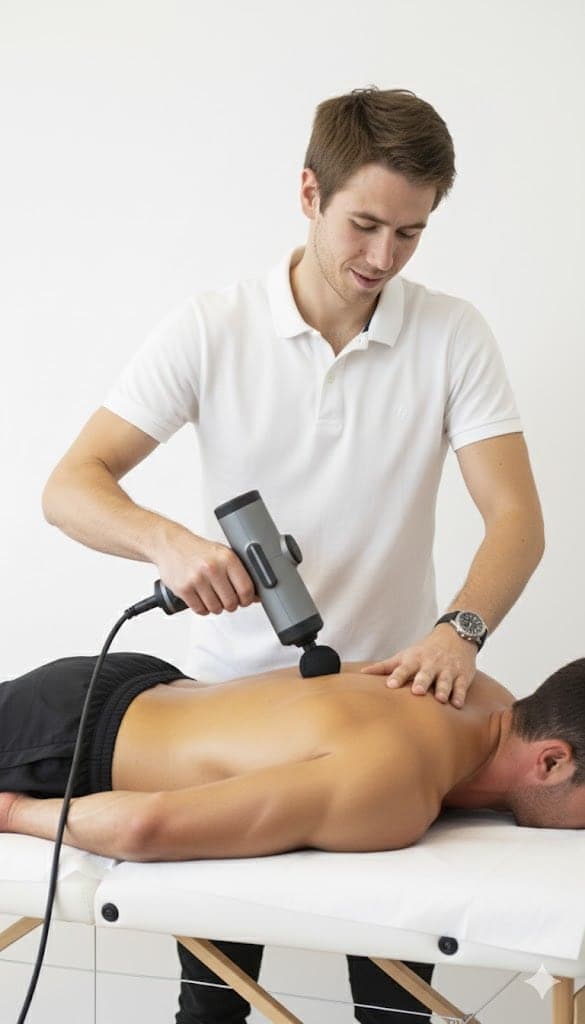
Written by
Chris
Massage therapist, nutrition and exercise physiologist
Norwegian-certified with a Bachelor’s in Physical Education and Nutrition and over ten years of clinical practice, working from a portable table in clients’ homes across the Paphos district.
This article is general information, not a medical diagnosis. If you have severe, worsening or unexplained pain, numbness, weakness, or pain after an accident, see a doctor first.