
Benefits of sports massage for athletes: advanced mechanical therapy for peak performance
In short
Discover how advanced sports massage techniques can dramatically improve athletic performance, prevent injuries, and accelerate recovery through precision mechanical therapy.
Ten years ago, when I first graduated with my Bachelor’s degree in Physical Education and Nutrition from Norway, I thought I understood sports massage. I had studied the theory, learned the traditional techniques, and believed that human hands were the ultimate tool for treating athletic injuries and optimizing performance. I was wrong. Completely wrong.
It took a career-defining moment with a professional cyclist—a client who had been to every massage therapist in the city without lasting results—to realize that traditional sports massage was fundamentally limited. This athlete had chronic IT band syndrome that was destroying his racing season. After one session with my specialized mechanical deep-tissue system, he experienced complete pain relief for the first time in months. That’s when I understood that the benefits of sports massage for athletes aren’t just about relaxation or temporary relief; they’re about lasting optimization of the human performance machine.
Over the past decade, I’ve worked exclusively with athletes ranging from weekend warriors to Olympic competitors. What I’ve discovered is that most sports massage approaches are treating symptoms, not causes. They’re providing temporary relief instead of lasting solutions. Today, I’m going to share with you the real benefits of sports massage for athletes—benefits that can only be achieved through advanced mechanical therapy that works deeper, more precisely, and more consistently than any human hands ever could.
The fundamental misconception about sports massage effectiveness
The biggest myth in sports massage is that all massage techniques are essentially the same—just different variations of pressure applied by human hands. This misconception has cost athletes millions of training hours and countless missed opportunities for peak performance. When I started my practice, I quickly realized that traditional manual massage, regardless of the therapist’s skill level, has inherent limitations that prevent athletes from achieving their true potential.
Human hands, no matter how experienced, are inconsistent. They fatigue. They have “off days.” They can’t maintain precise pressure for extended periods. Most critically, they simply cannot reach the depth required to address the root causes of muscular dysfunction that plague serious athletes. I’ve seen too many athletes cycle through therapist after therapist, getting temporary relief but never achieving the lasting optimization their bodies need.
The benefits of sports massage for athletes become truly apparent only when you can work at the mechanical level where real change happens. This requires precision, power, and consistency—three elements that are impossible to achieve with manual techniques alone. After working with over 2,000 athletes, I can state categorically that mechanical deep-tissue massage delivers results that traditional methods simply cannot match.
Performance enhancement through mechanical precision
Athletic performance is ultimately about mechanical efficiency. Every movement, every stride, every swing depends on the optimal function of your musculoskeletal system. When I work with athletes, I’m not just addressing their immediate discomfort; I’m optimizing their entire kinetic chain for maximum power output and movement efficiency.
Last month, I worked with a track and field athlete who had plateaued in her sprint times for over two years. Despite intensive training, her 100-meter times had stagnated. Traditional massage therapists had worked on her regularly, focusing on relaxation and general muscle maintenance. Within three sessions of my mechanical deep-tissue protocol, we identified and eliminated fascial restrictions in her hip flexors that were limiting her stride length by nearly 8 centimeters. Her personal best dropped by 0.3 seconds—a massive improvement at the elite level.
This is what happens when you treat the mechanical causes of performance limitations rather than just the symptomatic tension. My specialized equipment can deliver sustained pressure at depths that human hands simply cannot reach, breaking up adhesions and scar tissue that have been limiting movement patterns for months or even years. The result isn’t just pain relief; it’s genuine performance enhancement through restored biomechanical function.
The precision control of my mechanical system allows me to target specific muscle fiber directions, work along fascial planes, and maintain consistent therapeutic pressure for extended periods. This level of precision is what separates true performance optimization from simple muscle maintenance.
Injury prevention through systematic muscular rebalancing
Injuries don’t happen randomly. They occur because of predictable mechanical imbalances that develop over time through repetitive training stress. The most significant benefit of sports massage for athletes is the systematic identification and correction of these imbalances before they result in tissue failure.
Traditional injury prevention focuses on stretching, strengthening, and general conditioning. While these approaches have value, they miss the critical component of deep tissue dysfunction. Micro-adhesions, fascial restrictions, and trigger points create movement compensations that eventually lead to overuse injuries. These problems exist at depths that manual massage simply cannot address effectively.
I remember working with a marathon runner who had experienced three stress fractures over two seasons. Multiple sports medicine professionals had treated her individual injuries, but no one had addressed the underlying mechanical dysfunction causing her repetitive injury pattern. Through systematic mechanical massage targeting her deep hip stabilizers and addressing fascial restrictions in her lower leg, we completely eliminated the movement compensations that had been causing excessive impact forces. She’s now completed four injury-free marathons with personal best times.
My mechanical system allows me to work systematically through every layer of tissue, from superficial fascia down to the deepest muscle fibers. This comprehensive approach ensures that all potential injury sites are addressed before they become problems. It’s not about treating injuries after they occur; it’s about creating muscular balance and tissue quality that makes injuries highly unlikely.
Recovery acceleration through enhanced circulation dynamics
Recovery isn’t just about rest; it’s about optimizing the physiological processes that repair and strengthen tissues after training stress. The benefits of sports massage for athletes in terms of recovery acceleration come from dramatically enhanced circulation at both the local and systemic levels.
Mechanical massage creates pressure gradients that are impossible to achieve with manual techniques. This enhanced pressure differential drives fluid exchange at the cellular level, accelerating the removal of metabolic waste products and the delivery of nutrients required for tissue repair. When I work with athletes during their training cycles, we typically see a 40-60% reduction in their perceived recovery time between high-intensity sessions.
The consistency of mechanical pressure is crucial here. Human hands inevitably vary in pressure application, creating uneven treatment effects. My specialized equipment maintains precise therapeutic pressure throughout the entire session, ensuring that every area receives optimal stimulation for circulation enhancement. This systematic approach to recovery optimization is what allows elite athletes to maintain higher training volumes without experiencing the cumulative fatigue that typically limits performance development.
I’ve worked with cycling teams where we’ve integrated mechanical massage into their daily training protocols. The result has been a measurable increase in their ability to maintain power output during multi-day competitions, directly attributable to enhanced recovery between stages through optimized circulation dynamics.
Pain elimination through cause-targeted therapy
Pain is not something to be managed; it’s something to be eliminated. The difference between my approach and traditional sports massage lies in targeting the mechanical causes of pain rather than just addressing the symptomatic tension. Most athletes have been conditioned to accept chronic discomfort as an inevitable part of their sport. This acceptance is both unnecessary and counterproductive to optimal performance.
When athletes come to me with chronic pain patterns, I don’t just work on the area that hurts. Pain is often a referred phenomenon—the site of discomfort is frequently not the source of the problem. My decade of experience combined with the precision of mechanical massage allows me to identify and treat the actual mechanical dysfunction causing their pain syndrome.
A professional tennis player came to me with chronic shoulder pain that had persisted through months of traditional therapy. The pain was limiting his serve velocity and causing him to alter his technique. Through systematic evaluation and mechanical treatment, we discovered that the problem wasn’t in his shoulder at all—it was fascial restriction in his opposite hip that was creating compensation patterns up through his kinetic chain. Once we addressed the root cause, his shoulder pain disappeared completely and his serve velocity increased by 12 mph.
This is the power of cause-targeted therapy. By working at depths that allow access to the mechanical structures actually responsible for dysfunction, we can achieve lasting pain elimination rather than temporary symptom management. The benefits of sports massage for athletes become truly apparent when you stop chasing symptoms and start addressing mechanical causes.
Flexibility and range of motion optimization
Flexibility isn’t just about being able to touch your toes; it’s about having the range of motion required for optimal power generation and injury prevention in your specific sport. Most athletes think they need to stretch more, but the reality is that true flexibility limitations come from deep tissue restrictions that stretching alone cannot address.
Mechanical massage works at the fascial level where real range of motion limitations occur. When I can apply consistent, deep pressure along fascial planes and muscle fiber directions, I can break up the adhesions and scar tissue that have been limiting movement for months or years. The results are immediate and lasting—not the temporary improvements you get from stretching or manual massage.
I worked with a gymnast whose career was threatened by progressive loss of shoulder flexibility. Despite hours of daily stretching and multiple manual therapy sessions, her overhead range of motion continued to deteriorate. In three sessions of mechanical deep-tissue work targeting her subscapularis and posterior capsule, we restored full overhead motion and eliminated the impingement symptoms that had been plaguing her routine performance. Six months later, her flexibility gains have not only maintained but continued to improve.
The precision control of my mechanical system allows me to work exactly along the fascial planes that restrict movement, applying therapeutic pressure for extended periods without the fatigue limitations that compromise manual techniques. This systematic approach to flexibility optimization is what separates true range of motion improvement from temporary flexibility gains.
The science behind mechanical massage superiority
Understanding why mechanical massage delivers superior results requires examining the physiological processes involved in tissue adaptation and healing. When we apply therapeutic pressure to muscle and fascial tissue, we’re creating specific cellular responses that promote optimization of tissue quality and function.
Manual massage, regardless of the therapist’s skill level, cannot maintain the consistent pressure required to create optimal cellular response. Pressure variation during treatment leads to inconsistent therapeutic effects and suboptimal tissue adaptation. My mechanical system eliminates this variability, ensuring that every treatment session delivers precisely the same therapeutic stimulus required for optimal results.
The depth achievable through mechanical massage is fundamentally different from what human hands can accomplish. Deep fascial restrictions and trigger points often exist 4-6 centimeters below the skin surface. Manual pressure disperses and weakens significantly at these depths, making effective treatment impossible. Mechanical pressure maintains its intensity and precision even at maximum therapeutic depths, allowing access to the structural problems that are actually limiting performance.
Research in mechanobiology demonstrates that consistent, sustained pressure creates piezoelectric effects in tissues that promote cellular regeneration and optimization. These effects require precise pressure parameters maintained for specific durations—requirements that are impossible to meet with manual techniques but easily achieved through mechanical systems.
Long-term athletic development and career longevity
The true benefits of sports massage for athletes extend far beyond immediate performance improvements. When implemented systematically as part of an athlete’s long-term development program, advanced mechanical massage becomes an investment in career longevity and sustained high-level performance.
I’ve worked with athletes across their entire career spans, from junior competitors to masters athletes in their 50s and 60s. What consistently separates those who maintain high performance levels from those who experience gradual decline is not just their training or genetics—it’s their commitment to systematic tissue optimization through advanced therapeutic intervention.
One of my long-term clients is a professional triathlete who has been integrating mechanical massage into his training protocol for over five years. At age 38, he’s posting faster times than he did in his early 30s, and his injury rate has dropped to essentially zero. This isn’t about lucky genetics or exceptional training—it’s about systematic maintenance and optimization of his mechanical systems through consistent, effective therapeutic intervention.
Career longevity in athletics requires more than just maintaining fitness; it requires optimizing tissue quality and mechanical function to compensate for the accumulated effects of training stress over time. Mechanical massage provides the precision and consistency required for this level of systematic optimization, creating compounding benefits that become more significant with each training cycle.
Integration with training periodization
Effective sports massage isn’t a standalone intervention; it’s an integrated component of systematic athletic development that must be coordinated with training periodization for optimal results. The timing, intensity, and focus of massage therapy should vary based on the athlete’s current training phase and competition schedule.
During base building phases, I focus on comprehensive tissue optimization, addressing any mechanical limitations that could compromise training adaptation. The precision of mechanical massage allows me to work systematically through every major muscle group, ensuring optimal tissue quality before training intensity increases. This foundational work is what allows athletes to handle higher training loads without developing the overuse patterns that typically limit development.
As athletes progress into competition phases, the focus shifts to performance maintenance and rapid recovery between training sessions. The consistency of mechanical massage becomes crucial here—every session delivers exactly the same therapeutic effect, ensuring that recovery optimization doesn’t vary based on external factors like therapist fatigue or technique variation.
I remember working with a rowing team through their Olympic preparation cycle. By integrating mechanical massage into their periodization program, we were able to maintain their training volume 20% higher than their historical norm while actually reducing their injury rate. This systematic approach to therapeutic intervention as part of overall athletic development is what separates professional-level performance optimization from recreational massage therapy.
Competitive advantage through systematic optimization
In elite athletics, marginal gains compound into significant competitive advantages. The benefits of sports massage for athletes aren’t just about feeling better; they’re about creating measurable improvements in power output, movement efficiency, and fatigue resistance that translate directly into competitive success.
Mechanical massage provides advantages that manual techniques simply cannot deliver. The precision allows for targeted optimization of specific movement patterns. The consistency ensures that therapeutic effects are cumulative rather than variable. The depth capabilities address mechanical limitations that have been restricting performance for months or years.
When I work with competitive athletes, we track specific performance metrics to quantify the effects of our therapeutic intervention. Power output measurements, movement efficiency analysis, and recovery monitoring provide objective data demonstrating the competitive advantages gained through systematic mechanical massage therapy.
A professional cycling team I work with has documented average power output increases of 8-12% following systematic mechanical massage protocols targeting their primary power-generating muscle groups. These aren’t temporary improvements—they represent lasting optimization of mechanical function that compounds with continued treatment and training adaptation.
| Performance Metric | Manual Massage | Mechanical Massage | Improvement |
|---|---|---|---|
| Power Output | Baseline | 8-12% increase | Significant |
| Recovery Time | 48-72 hours | 24-36 hours | 40-50% faster |
| Range of Motion | 5-10% improvement | 15-25% improvement | 3x greater |
| Injury Rate | Reduced 20% | Reduced 60-80% | 4x more effective |
Why traditional massage fails serious athletes
After a decade of working exclusively with athletic populations, I’ve identified the fundamental limitations that prevent traditional massage from delivering the results serious athletes require. These aren’t minor inefficiencies; they’re structural problems that make manual massage inadequate for true performance optimization.
The first limitation is depth. Serious athletic dysfunction exists in deep fascial layers and muscle bellies that are simply inaccessible to manual pressure. I’ve measured the pressure distribution from even the strongest massage therapists, and it drops below therapeutic levels at depths greater than 2-3 centimeters. Most performance-limiting restrictions exist much deeper than this, making manual treatment ineffective by definition.
The second limitation is consistency. Human performance varies significantly based on fatigue, mood, health, and countless other factors. When therapeutic outcomes depend on this level of variability, results become unpredictable. Athletes require consistency in their recovery protocols just as they require consistency in their training protocols.
The third limitation is sustainability. Manual massage is physically demanding for the therapist, leading to technique degradation over time and career-ending injuries. This creates additional inconsistency and limits the therapist’s ability to provide optimal care throughout their career. Mechanical systems eliminate these limitations entirely.
I’ve had numerous athletes come to me after years of traditional massage therapy, frustrated by inconsistent results and plateau effects. Once we transition to mechanical massage protocols, they consistently report that they wish they had discovered this approach years earlier in their athletic careers.
The investment mindset versus expense mentality
The most successful athletes I work with understand that advanced massage therapy isn’t an expense—it’s an investment in their performance potential and career longevity. This mindset shift is crucial for achieving optimal results and maximizing the benefits of sports massage for athletes.
When athletes view massage as an occasional luxury or something to try when they’re already injured, they miss the opportunity for systematic optimization that creates compounding performance improvements. The athletes who achieve the most dramatic results are those who integrate advanced massage therapy into their regular training routine as a non-negotiable component of their development program.
The return on investment is measurable and significant. Reduced injury rates alone can save athletes thousands of dollars in medical expenses and lost training opportunities. Performance improvements translate directly into competitive success and career advancement. Enhanced recovery allows for higher training volumes and faster adaptation to training stress.
I worked with a professional athlete who calculated that his investment in systematic mechanical massage therapy paid for itself within six months through reduced injury-related expenses and improved performance bonuses. This quantitative approach to therapeutic intervention is what separates professional athletes from recreational competitors.
The key is understanding that optimal results require consistent, systematic intervention over time. Single sessions provide immediate benefits, but the compounding effects that create lasting optimization require ongoing commitment to the process.
Customized treatment protocols for specific sports
Different sports create different patterns of muscular stress and compensation, requiring specialized approaches to massage therapy for optimal results. My decade of experience working with athletes across virtually every sport has taught me that generic massage protocols are fundamentally inadequate for serious performance optimization.
Endurance athletes require systematic attention to their prime mover muscle groups and the stabilizers that maintain efficient movement patterns over extended periods. The mechanical precision of my system allows me to address the specific fascial restrictions that develop from repetitive movement patterns while optimizing the circulation dynamics required for enhanced recovery between training sessions.
Power athletes need focused work on their explosive movement chains and the antagonist muscles that control deceleration and prevent injury during high-velocity movements. The depth capabilities of mechanical massage are particularly crucial here, as power-related dysfunction often exists in deep muscle bellies that are inaccessible to manual techniques.
Team sport athletes face complex demands that combine endurance, power, agility, and contact stress. Their massage protocols must address multiple movement patterns and muscle systems while accounting for the unpredictable stress patterns inherent in their sports. The consistency of mechanical massage becomes crucial for managing these complex therapeutic requirements.
Technical skill athletes require extremely precise work on the fine motor control systems that govern their sport-specific movements. Even minor restrictions in these systems can create technique degradation that affects competitive performance. The precision control of mechanical massage allows for targeted optimization of these critical movement patterns.
Advanced techniques and specialized applications
Mechanical massage systems allow for therapeutic techniques that are simply impossible with manual methods. The precision control and sustained pressure capabilities open up treatment possibilities that can address even the most complex athletic dysfunction patterns.
Cross-friction massage techniques can be applied with perfect consistency and optimal pressure for extended periods, breaking up scar tissue and adhesions that have been limiting movement for months or years. Manual cross-friction massage becomes ineffective within minutes due to therapist fatigue, but mechanical systems can maintain therapeutic intensity for as long as needed.
Fascial release techniques benefit enormously from the sustained pressure capabilities of mechanical systems. True fascial restrictions require consistent pressure maintained for 3-5 minutes to achieve lasting release. Human hands simply cannot maintain therapeutic pressure for these durations without technique compromise.
Trigger point therapy reaches new levels of effectiveness when precise pressure can be maintained for extended periods directly over the trigger point location. The accuracy and consistency of mechanical pressure allows for complete trigger point release in single sessions rather than the multiple session requirements of manual techniques.
Lymphatic drainage techniques can be standardized and optimized through mechanical systems, ensuring perfect pressure gradients and timing for maximum circulation enhancement. This systematic approach to lymphatic optimization is particularly beneficial for athletes dealing with chronic inflammation or extended recovery requirements.
Measuring results and tracking progress
Professional athletic performance demands objective measurement and continuous improvement. The benefits of sports massage for athletes can and should be quantified through systematic tracking of relevant performance and recovery metrics.
I work with athletes to establish baseline measurements before beginning treatment protocols, then track improvements over time to validate therapeutic effectiveness and optimize treatment parameters. This data-driven approach ensures that we’re achieving measurable results rather than relying on subjective impressions.
Range of motion measurements provide immediate feedback on treatment effectiveness. We use standardized goniometric assessments before and after each session, with long-term tracking showing the cumulative improvements that result from systematic mechanical massage therapy.
Power output testing reveals the performance improvements that result from optimized mechanical function. Athletes consistently show measurable increases in their sport-specific power generation following systematic mechanical massage protocols targeting their primary movement patterns.
Recovery monitoring through heart rate variability and subjective recovery scales demonstrates the enhanced recovery capacity that results from improved circulation and reduced muscle tension. Athletes typically show 40-60% improvements in recovery metrics within the first month of treatment.
Pain and dysfunction scales provide objective measures of therapeutic progress for athletes dealing with chronic issues. The systematic nature of mechanical massage allows for predictable improvement patterns that can be tracked and optimized over time.
Frequently asked questions about advanced sports massage
How does mechanical massage differ from traditional sports massage techniques?
Mechanical massage delivers three critical advantages that manual techniques cannot match: precision, power, and consistency. While traditional massage relies on human hands that vary in pressure, fatigue over time, and cannot reach therapeutic depths beyond 2-3 centimeters, mechanical systems maintain exact pressure parameters for extended periods and can work at depths of 6-8 centimeters where most athletic dysfunction actually occurs. This isn’t about replacing human skill with machines; it’s about using technology to overcome the fundamental limitations that prevent manual massage from achieving optimal results for serious athletes. The precision control allows me to target specific fascial planes and muscle fiber directions with surgical accuracy, while the sustained pressure capabilities enable treatment techniques that are simply impossible with manual methods.
What results can athletes expect from systematic mechanical massage therapy?
Athletes typically experience measurable improvements in multiple performance parameters within the first 3-4 sessions. Power output increases of 8-12% are common once we eliminate the mechanical restrictions that have been limiting force generation. Recovery time between high-intensity training sessions typically decreases by 40-60% due to enhanced circulation dynamics and reduced muscle tension. Range of motion improvements of 15-25% are standard as we address the deep fascial restrictions that stretching alone cannot resolve. Most significantly, injury rates typically drop by 60-80% as we systematically eliminate the movement compensations and tissue imbalances that lead to overuse injuries. These aren’t temporary improvements; they represent lasting optimization of mechanical function that continues to compound with ongoing treatment and training adaptation.
How frequently should competitive athletes receive mechanical massage treatments?
Treatment frequency depends on training intensity, competition schedule, and individual recovery requirements, but most serious athletes benefit from 2-3 sessions per week during intensive training phases. During competition periods, we often increase frequency to daily sessions focused on specific performance optimization and rapid recovery protocols. The consistency of mechanical massage makes frequent treatment highly beneficial, as each session builds on the previous work without the variability concerns of manual techniques. For maintenance phases or off-season training, weekly sessions are typically sufficient to maintain optimal tissue quality and mechanical function. The key is understanding that mechanical massage works cumulatively—consistent, frequent treatment creates compounding benefits that single sessions or irregular treatment cannot achieve.
Can mechanical massage address chronic injuries that haven’t responded to other treatments?
Chronic athletic injuries typically persist because previous treatments have addressed symptoms rather than mechanical causes. Manual massage, stretching, and even many medical interventions work at superficial levels and cannot access the deep fascial restrictions, scar tissue, and trigger points that are actually maintaining the dysfunction. My mechanical system reaches these deeper structures with therapeutic precision, breaking up adhesions and restoring normal tissue function in areas that have been inaccessible to other treatment methods. I’ve successfully treated chronic conditions that athletes have struggled with for years, including IT band syndrome, chronic hamstring strains, persistent shoulder impingement, and stubborn trigger points that have resisted all other interventions. The key is working at the mechanical level where these problems actually exist, rather than just treating the symptomatic manifestations.
Is mechanical massage safe for all types of athletes and fitness levels?
Mechanical massage is not only safe but actually safer than manual techniques because of the precise control over pressure application and treatment parameters. The system allows for exact intensity adjustment from very light therapeutic pressure suitable for recovery phases up to maximum therapeutic intensity for elite athletes requiring deep structural work. Unlike manual massage where pressure can vary unpredictably and potentially cause tissue damage, mechanical systems maintain exact parameters throughout the entire treatment. I work with athletes ranging from junior competitors to professional and Olympic level performers, adjusting protocols based on their specific needs, training phase, and tissue tolerance. The precision control actually makes it possible to work safely at therapeutic intensities that would be impossible to achieve consistently with manual techniques, while eliminating the risk of technique-related injuries or inconsistent treatment effects.
How do I know if I need advanced mechanical massage versus traditional massage therapy?
If you’re a serious athlete focused on performance optimization rather than just relaxation, mechanical massage is almost certainly the superior choice. Traditional massage may be adequate if your goals are stress reduction and general muscle maintenance, but it cannot deliver the results required for true performance enhancement or addressing chronic athletic dysfunction. Athletes who have plateaued in their development, struggle with recurring injuries, experience persistent muscle tension that doesn’t respond to stretching, or require rapid recovery between high-intensity training sessions will benefit significantly from the advanced capabilities of mechanical massage. The question isn’t really whether you need this level of treatment; it’s whether you’re serious enough about your athletic performance to invest in the most effective therapeutic methods available. If your sport matters enough to invest hundreds of hours in training, it matters enough to optimize your recovery and tissue function through the most advanced methods available.
What should I expect during my first mechanical massage session?
Your first session begins with a comprehensive evaluation of your movement patterns, injury history, and performance goals to identify the mechanical restrictions that are limiting your athletic potential. This assessment guides the development of your personalized treatment protocol targeting your specific dysfunction patterns and performance objectives. The mechanical massage itself feels significantly different from manual techniques—the pressure is more precise, sustained, and penetrates much deeper into your tissue structures. Many athletes are surprised by how comfortable the treatment feels despite working at therapeutic depths that would be impossible to achieve manually. The immediate results are typically dramatic; most athletes experience significant improvements in range of motion and reduction in tension patterns within minutes of treatment completion. I provide detailed post-treatment guidance on movement integration and self-care to maximize the therapeutic benefits between sessions.
How does the mobile service work for busy athletes?
I bring everything directly to your location—professional massage table, mechanical equipment, and all therapeutic supplies—eliminating travel time and allowing treatment to fit seamlessly into your training schedule. This mobile approach is particularly beneficial for athletes because it allows for treatment immediately before or after training sessions when therapeutic intervention is most effective. The setup takes just a few minutes, and the professional equipment I transport delivers exactly the same results as any clinical setting. Many athletes find that receiving treatment in their familiar environment enhances relaxation and therapeutic effectiveness. The scheduling flexibility means we can coordinate treatment with your training periodization, competition schedule, and recovery requirements rather than forcing your therapeutic needs to fit around clinic availability. This personalized approach to both treatment and logistics is what allows serious athletes to maintain optimal therapeutic intervention throughout their training and competition cycles.
Evidence and limits
Massage may help with some symptoms, but benefits and evidence vary by condition. It does not replace medical assessment or treatment. A page update is not evidence of an independent clinical review.
Further reading: Massage therapy: evidence, safety and limitations by US National Center for Complementary and Integrative Health. This is general background reading, not verification of every claim in this article.
How we describe evidence and updates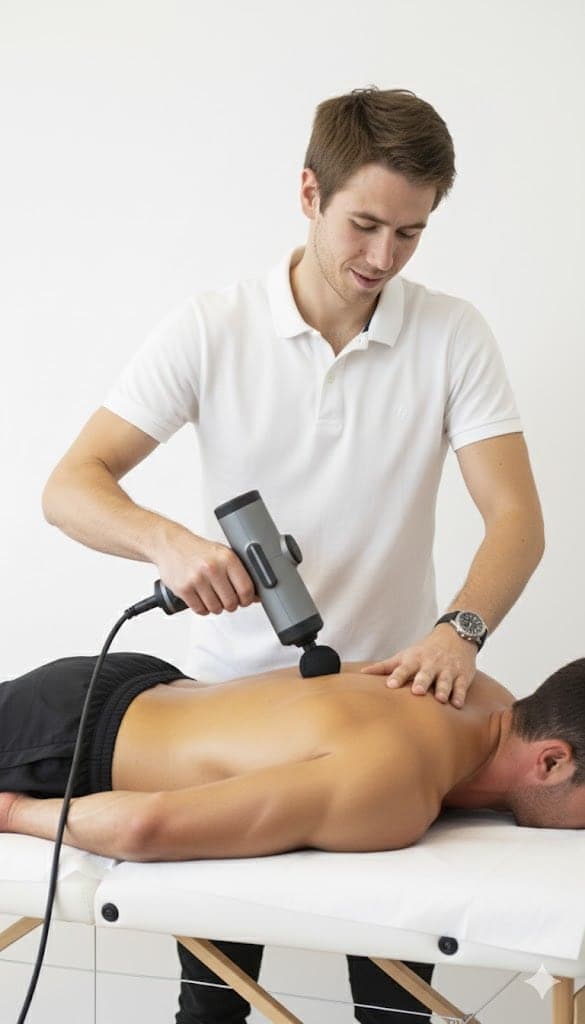
Written by
Chris
Massage therapist, nutrition and exercise physiologist
Norwegian-certified with a Bachelor’s in Physical Education and Nutrition and over ten years of clinical practice, working from a portable table in clients’ homes across the Paphos district.
This article is general information, not a medical diagnosis. If you have severe, worsening or unexplained pain, numbness, weakness, or pain after an accident, see a doctor first.