Wellness Partnership Strategies: Building Long-Term Success in Advanced Bodywork
In short
Discover proven wellness partnership strategies that transform conventional massage into a results-driven therapeutic alliance, combining precision deep-tissue mechanics with customized treatment protocols for lasting pain relief.
Most people approach massage therapy as a transactional experience—book an appointment, receive treatment, leave, repeat when pain returns. I’ve spent a decade challenging this model. Through hundreds of clients and thousands of treatment hours, I’ve learned that the difference between temporary relief and lasting results lies not in the treatment itself, but in the strategic partnership framework surrounding it.
After completing my Bachelor’s degree in Physical Education and Nutrition in Norway, I entered the massage industry expecting to help people. What I discovered shocked me: the traditional massage model was fundamentally broken. Clients returned week after week with the same complaints, therapists experienced inconsistent results depending on their energy levels, and the root mechanical issues causing pain remained unaddressed. This realization drove me to develop a completely different approach—one built on partnership, precision, and lasting outcomes.
Today, I travel to clients’ locations with specialized mechanical deep-tissue equipment that delivers results human hands simply cannot achieve. But the technology is only half the equation. The other half is the strategic wellness partnership framework that transforms sporadic treatments into systematic body optimization.
Understanding True Wellness Partnership Strategies
A wellness partnership differs fundamentally from conventional service delivery. In traditional massage, you’re a customer purchasing a service. In a strategic wellness partnership, we become collaborators working toward a shared objective: the lasting resolution of your mechanical pain and the optimization of your body’s performance.
I’ve analyzed what separates clients who achieve lasting results from those who remain trapped in the pain-relief-pain cycle. The difference isn’t pain tolerance or even the severity of their condition—it’s their willingness to engage in a structured partnership approach rather than seeking quick fixes.
The Partnership Versus Transaction Model
Let me share a case that illustrates this distinction. An executive came to me three years ago with chronic lower back pain that had persisted for eight years. He’d tried everything: traditional massage, chiropractic adjustments, physical therapy, even cortisone injections. Nothing provided more than temporary relief.
During our initial consultation, I explained that I don’t offer one-off treatments. I develop customized mechanical deep-tissue protocols within a dedicated partnership framework. He was skeptical—understandably so after years of disappointment. But he agreed to a three-month structured program.
Within six weeks, his pain had decreased by 70%. By three months, it was gone entirely. Today, he maintains a quarterly optimization schedule not because he’s in pain, but because he understands that prevention is infinitely more effective than intervention.
This is wellness partnership strategy in action: a long-term commitment to systematic improvement rather than reactive symptom management.
Core Components of Effective Wellness Partnership Strategies
Developing successful wellness partnerships requires specific structural elements. These aren’t optional—they’re the foundation upon which lasting results are built.
1. Comprehensive Initial Assessment
Before any treatment begins, I conduct a thorough mechanical assessment. This isn’t a standard intake form. I’m evaluating:
- Primary pain locations and their mechanical origins
- Compensatory movement patterns that perpetuate dysfunction
- Muscle tension distribution and fascial restriction patterns
- Daily activities and postural habits contributing to the condition
- Previous treatment history and why those approaches failed
- Realistic timeline expectations based on tissue condition and client commitment
This assessment determines whether we’re a good match. I turn away clients who aren’t ready for a partnership approach—those seeking relaxation massage or unwilling to commit to a structured protocol. That selectivity is itself a wellness partnership strategy. By working only with committed clients, I can guarantee results.
2. Customized Treatment Protocols
Generic treatment plans produce generic results. Every wellness partnership I develop includes a completely customized mechanical protocol designed specifically for that client’s tissue condition, pain patterns, and performance goals.
My specialized machine allows me to adjust intensity from gentle surface work to powerfully deep penetration that reaches tension at its root. This isn’t possible with hands alone. Human therapists have off days—fatigue, stress, physical limitations. The machine delivers consistent force, depth, and precision every single session.
I’ve treated elite athletes who require aggressive tissue manipulation to maintain peak performance alongside office professionals whose bodies have adapted to years of static postures. The treatment protocols are entirely different, but the partnership framework remains constant.
3. Progressive Intensity Management
Here’s what most massage therapists get wrong: they apply the same pressure week after week, never progressing the treatment as tissue quality improves. This is like doing the same workout with the same weights forever—you maintain, but you never improve.
In my wellness partnerships, we systematically increase treatment intensity as your tissues adapt and pain decreases. This progressive overload principle, borrowed from athletic training, ensures continuous improvement rather than plateau.
| Treatment Phase | Duration | Intensity Level | Primary Goal |
|---|---|---|---|
| Initial Relief | 2-4 weeks | Moderate to Deep | Reduce acute pain by 50-70% |
| Deep Correction | 4-8 weeks | Deep to Very Deep | Address root mechanical dysfunction |
| Optimization | 8-12 weeks | Variable (targeted) | Eliminate remaining restrictions |
| Maintenance | Ongoing | Deep (preventive) | Prevent recurrence, enhance performance |
4. Education and Empowerment
Effective wellness partnership strategies require educated clients. I spend significant time during each session explaining exactly what I’m doing and why.
When I’m working on your thoracolumbar fascia, I explain how that tissue connects to your hip dysfunction. When I’m addressing trigger points in your subscapularis, I describe how those restrictions are affecting your shoulder mechanics and contributing to your neck pain.
This education serves multiple purposes. It builds trust by demonstrating my expertise. It helps you understand why we’re taking a specific approach rather than just treating wherever it hurts. And crucially, it empowers you to make better daily decisions that support rather than undermine our work together.
Why Wellness Partnership Strategies Outperform Traditional Models
The massage industry operates largely on an outdated business model borrowed from spa culture: sell relaxation experiences by the hour. This model incentivizes quantity over quality and discourages the deep therapeutic work that actually produces lasting results.
I’ve rejected that model entirely. I don’t sell hour-long sessions. I develop multi-month partnerships focused on specific mechanical outcomes. This fundamental difference in approach produces dramatically different results.
Consistency Eliminates Variables
Traditional massage outcomes vary wildly based on which therapist you see, their energy level that day, and whether they remember your specific needs from last month. I’ve eliminated these variables.
My specialized mechanical equipment delivers identical force, depth, and precision every session. You receive exactly the treatment your tissues need without the inconsistency inherent in manual therapy. This consistency is essential for partnership-based care—you can’t build systematic improvement on unpredictable foundations.
Depth Creates Lasting Change
Most massage works superficially. Therapists apply moderate pressure for relaxation, occasionally going deeper for “therapeutic” work. But chronic pain and mechanical dysfunction exist in deep tissue layers—the fascia, the muscle-tendon junctions, the tissue interfaces where movement restrictions develop.
My machine reaches these depths consistently. It works deeper than hands can, accessing the mechanical restrictions that cause your symptoms. This isn’t more painful—it’s more effective. When you address problems at their source rather than massaging surface tension, you achieve lasting resolution rather than temporary relief.
Partnership Creates Accountability
When you’re in a strategic wellness partnership rather than buying individual sessions, accountability flows both ways. I’m accountable for delivering consistent, progressive results. You’re accountable for maintaining the treatment schedule and following the protocol we’ve developed together.
This mutual commitment is why partnership-based care produces superior outcomes. When both parties are invested in the result rather than just the service transaction, success becomes inevitable.
Implementing Wellness Partnership Strategies: The Practical Framework
Theory means nothing without practical application. Here’s exactly how I structure wellness partnerships to deliver lasting results.
The Initial Consultation Process
We begin with an in-depth consultation—typically 30-45 minutes before any treatment begins. During this conversation, I’m assessing three critical factors:
First: Can I help you? Not every condition responds to mechanical deep-tissue work. Some require medical intervention. I refer out when appropriate rather than accepting clients I can’t serve effectively.
Second: Will you commit to the process? Lasting results require consistent treatment over weeks or months. If you’re looking for a one-time fix, we’re not a match. I work exclusively with clients willing to commit to a structured protocol.
Third: Do our expectations align? I establish realistic timelines based on your tissue condition. If you expect complete pain elimination in two sessions after suffering for ten years, I’ll correct that expectation immediately. Partnership requires honest communication about what’s achievable and how long it will take.
Treatment Frequency and Duration Protocols
I recommend treatment frequency based on condition severity and tissue quality, not arbitrary weekly schedules.
For acute conditions (pain present less than three months), twice-weekly sessions for 4-6 weeks typically achieve complete resolution. The tissues haven’t yet developed chronic compensatory patterns, making them more responsive to intervention.
For chronic conditions (pain present more than six months), we usually begin with weekly sessions for 8-12 weeks, then transition to bi-weekly maintenance. Chronic patterns require more time to unwind because we’re not just addressing current tension—we’re reversing years of mechanical adaptation.
For performance optimization (athletes, high-performers without pain), monthly deep maintenance sessions prevent dysfunction before it develops. This proactive approach is significantly more effective than waiting until problems emerge.
Progress Tracking and Protocol Adjustment
Every wellness partnership includes systematic progress tracking. Before each session, I document:
- Current pain level (0-10 scale) in each affected area
- Functional limitations that have improved or persisted
- Any new issues that have emerged
- How well the previous treatment held
- Any factors that may have affected results (increased stress, unusual physical activity, travel, etc.)
This data drives protocol adjustments. If progress stalls, we modify the approach. If improvement accelerates, we may extend time between sessions. The partnership framework allows for this flexibility because we’re focused on outcomes, not just delivering predetermined services.
Advanced Wellness Partnership Strategies for Complex Cases
Some clients arrive with conditions that have resisted every conventional treatment. These complex cases require advanced partnership strategies that go beyond standard protocols.
Multi-System Integration Approach
Chronic pain rarely exists in isolation. The low back pain that brought you to me might originate from hip restrictions, which developed as compensation for ankle dysfunction, which started after an old injury you barely remember.
In complex cases, I map the entire mechanical chain rather than just treating the painful area. This systems-thinking approach is fundamental to advanced wellness partnership strategies. We’re not just eliminating your symptoms—we’re restoring proper mechanical function throughout your entire movement system.
I had a client whose “shoulder problem” traced back to restrictions in his opposite hip. Traditional massage had treated his shoulder for two years with no lasting improvement. Within six weeks of addressing the hip dysfunction, his shoulder pain disappeared entirely. This is why assessment matters. This is why partnership-based care outperforms transaction-based service.
Integration with Other Modalities
I don’t claim my method solves everything. Sometimes wellness partnerships require integration with other specialists. I maintain referral relationships with orthopedic physicians, physical therapists, and sports medicine practitioners for cases requiring multi-modal intervention.
The difference is coordination. In traditional care, you see multiple providers who don’t communicate, resulting in conflicting treatments and diluted results. In a wellness partnership framework, I coordinate with other specialists to ensure all interventions support the same objectives.
Lifestyle Integration and Prevention Protocols
Lasting results require lifestyle alignment. I provide specific guidance on:
- Daily stretching protocols to maintain treatment gains
- Ergonomic modifications for work environments
- Movement pattern corrections to prevent recurrence
- Hydration and nutrition factors affecting tissue quality
- Sleep position optimization to reduce mechanical stress
This guidance isn’t generic. It’s customized based on your specific mechanical issues and daily activities. An attorney who sits eight hours daily receives completely different lifestyle recommendations than a construction worker performing repetitive overhead movements.
The Economics of Wellness Partnership Strategies
Let’s address the elephant in the room: cost. Wellness partnerships represent a significant investment compared to occasional massage sessions. This requires justification.
Investment Versus Expense Framework
An expense is money spent on temporary relief that must be repeated indefinitely. An investment is money spent to solve a problem durably, eliminating future costs.
Traditional massage is an expense. You pay for temporary relief, feel better for a few days, then return when pain resurfaces. This cycle continues indefinitely—you’re perpetually spending money without resolving the underlying problem.
A wellness partnership is an investment. You commit to a structured protocol that addresses root mechanical dysfunction. Once resolved, you transition to infrequent maintenance rather than ongoing symptomatic treatment.
I’ve had clients calculate what they spent on traditional massage over five years—often a wide range of costs or more—with no lasting improvement. They achieved complete pain resolution through a three-month wellness partnership costing a fraction of their historical spending.
Quantifying the Return on Investment
Beyond direct cost comparison, consider the broader economic impact of unresolved pain:
| Pain Impact Category | Annual Cost (Conservative Estimate) |
|---|---|
| Reduced work productivity | a wide range of costs |
| Missed work days | a wide range of costs |
| Reduced quality of life (activities avoided) | a wide range of costs |
| Over-the-counter pain medication | a wide range of costs |
| Other treatments (chiropractic, physical therapy, etc.) | a wide range of costs |
| Total Annual Impact | a wide range of costs |
When chronic pain costs you a wide range of costs annually in reduced productivity, missed opportunities, and ongoing treatments, investing in lasting resolution becomes obviously rational.
Common Pitfalls in Wellness Partnership Development
After ten years and hundreds of clients, I’ve identified patterns that predict partnership success or failure. Avoiding these pitfalls dramatically improves outcomes.
Pitfall 1: Inconsistent Treatment Adherence
The most common failure mode is inconsistent scheduling. Clients commit to the partnership, experience significant improvement, then skip sessions or extend time between treatments prematurely.
Mechanical tissue change requires consistent stimulus. Missing sessions or extending intervals before completing the correction phase allows old patterns to reassert themselves. You lose progress and waste the investment already made.
I address this through explicit commitment agreements. Before beginning, we establish the recommended schedule and you commit to maintaining it through the correction phase. If you can’t make that commitment, we don’t start. This protects both your investment and my reputation.
Pitfall 2: Expecting Linear Progress
Tissue healing and mechanical correction don’t follow straight lines. You might experience dramatic improvement for three weeks, then plateau for two weeks, then suddenly break through to a new level.
This non-linear pattern confuses clients expecting steady week-to-week improvement. Some interpret plateaus as treatment failure and abandon the partnership just before the breakthrough.
I educate clients about this pattern during initial consultation and remind them during plateau periods. Understanding that plateaus are normal phases of the correction process, not failures, keeps partnerships on track.
Pitfall 3: Ignoring Lifestyle Factors
You can’t out-treat a destructive lifestyle. If we’re addressing your mechanical dysfunction twice weekly, but you’re spending forty hours weekly in a poorly designed work setup, progress will be slow and incomplete.
Successful wellness partnerships require lifestyle alignment. I provide specific recommendations, but you must implement them. This is partnership—both parties contribute to the outcome.
Measuring Success in Wellness Partnerships
How do we know a wellness partnership is working? I use multiple objective and subjective measures to track progress and adjust protocols.
Quantitative Metrics
- Pain Scale Reduction: Week-over-week tracking of pain intensity (0-10 scale) in each affected area
- Functional Improvement: Specific activities you couldn’t perform or that caused pain, tracked for improvement
- Range of Motion: Measured improvements in movement capacity for relevant joints
- Treatment Intensity Tolerance: Progressive increase in treatment depth without increased discomfort indicates improving tissue quality
- Duration Between Symptoms: Increasing time before pain returns between sessions indicates improving resilience
Qualitative Indicators
Beyond numbers, I track qualitative changes that indicate deep mechanical correction:
Tissue texture changes under treatment—chronic restrictions feel dense and fibrous initially, gradually becoming more pliable and responsive. When I can feel tissue quality improving under my machine’s precision application, I know we’re achieving real structural change.
Movement pattern improvements—compensatory patterns gradually disappear as we eliminate the restrictions that caused them. Clients often report moving more freely in activities completely unrelated to their original complaint.
Reduced treatment sensitivity—areas that initially couldn’t tolerate deep work gradually accept progressively more intense intervention as tissue quality improves.
Transitioning from Active Treatment to Maintenance
Successful wellness partnerships don’t end—they transition. Once we’ve achieved complete pain resolution and optimal mechanical function, we shift to a maintenance framework that prevents recurrence.
The Maintenance Protocol
Maintenance frequency depends on your activity level and mechanical demands:
High-Performance Athletes: Monthly deep sessions to prevent restrictions that could impair performance or increase injury risk.
Physically Demanding Professions: Monthly to bi-monthly sessions addressing repetitive strain patterns before they develop into pain.
Desk-Based Professionals: Quarterly optimization sessions to reverse accumulated postural stress.
General Population: 2-4 times annually for preventive maintenance.
I’ve maintained some clients in the maintenance phase for five years. They’re completely pain-free, moving optimally, and using scheduled sessions for prevention rather than intervention. This is the ultimate success in wellness partnership strategies—transforming from problem-focused treatment to performance-focused optimization.
Long-Term Partnership Benefits
Clients who maintain long-term wellness partnerships report benefits beyond pain elimination:
Enhanced athletic performance through optimal tissue function. Improved sleep quality from reduced muscular tension. Better stress management as physical restrictions no longer compound mental stress. Increased confidence in their body’s capabilities. Reduced anxiety about pain recurrence because they know we have effective prevention protocols in place.
These secondary benefits often exceed the original treatment objective in perceived value. This is why I frame my service as an investment in overall life quality, not just pain treatment.
The Future of Wellness Partnership Strategies
The healthcare industry is slowly recognizing what I’ve practiced for a decade: transactional service delivery produces inferior outcomes compared to partnership-based care. This shift is accelerating.
Technology Integration
My specialized mechanical equipment represents current state-of-the-art in precision deep-tissue work. But technology continues advancing. I’m tracking developments in pressure mapping, tissue density measurement, and biomechanical analysis that will further enhance assessment precision and protocol customization.
The fundamental partnership framework remains constant, but technology will enable even more precise, individualized treatment protocols.
Data-Driven Protocol Optimization
With ten years of detailed treatment records, I’m analyzing patterns that predict which protocols work best for specific condition profiles. This data will enable even faster results as I apply accumulated knowledge to new partnerships.
Expanding the Partnership Model
The wellness partnership strategy I’ve developed for mechanical deep-tissue work applies equally to other therapeutic modalities. Forward-thinking practitioners in physical therapy, functional medicine, and performance coaching are adopting similar frameworks.
This represents a fundamental shift from episodic symptom treatment to continuous optimization partnerships. It’s inevitable—outcomes are simply too superior to ignore.
Frequently Asked Questions About Wellness Partnership Strategies
How is a wellness partnership different from just booking regular massage appointments?
A wellness partnership is a structured, goal-oriented collaboration with customized protocols, consistent progress tracking, and mutual accountability for specific outcomes. Regular massage appointments are episodic treatments without coordinated progression toward lasting resolution. The partnership framework produces dramatically better results because every session builds systematically on previous work rather than just providing temporary relief.
What makes your machine-based approach superior to traditional hands-on massage?
My specialized equipment delivers three critical advantages: it works deeper than hands can reach, accessing the root mechanical restrictions causing pain; it provides perfectly consistent pressure and precision regardless of therapist fatigue; and it allows exact intensity control from gentle to powerfully deep. Human hands have inherent limitations—they tire, they lack the leverage to reach certain depths, and results vary based on the therapist’s condition that day. The machine eliminates these variables.
How long does it typically take to achieve lasting pain resolution?
This depends entirely on how long you’ve had the problem. Acute conditions (present less than three months) typically resolve completely in 4-8 weeks with appropriate treatment frequency. Chronic conditions (present more than six months) usually require 8-16 weeks to fully correct the mechanical dysfunction. Very long-standing problems (years or decades) might need 4-6 months. I provide realistic timelines during initial assessment based on your specific tissue condition.
What happens if I miss sessions or have to pause treatment?
Missing occasional sessions extends your timeline but doesn’t necessarily compromise results. However, extended gaps (more than two weeks during the active treatment phase) allow old patterns to reassert themselves, potentially requiring us to partially restart. This is why I emphasize commitment before beginning—consistency is essential for efficiency. If you need to pause, we discuss strategies to maintain gains until resuming.
Do I need to do anything between sessions to support the treatment?
Yes. I provide specific guidance on daily stretching, hydration, movement modifications, and ergonomic adjustments tailored to your condition. These aren’t generic recommendations—they’re customized protocols that support our work together. Partnership means both parties contribute. You don’t need to do anything complicated, but you do need to follow basic maintenance protocols to maximize results.
How do I know if I’m a good candidate for this approach?
Good candidates are committed to achieving lasting results rather than seeking temporary relief, willing to follow a structured treatment protocol, and have mechanical pain or dysfunction (as opposed to systemic medical conditions requiring physician care). During initial consultation, I assess whether I can help your specific condition and whether we’re a good match for partnership-based care.
What if I’ve tried everything else and nothing has worked?
This describes most of my clients. They’ve exhausted traditional options—massage, chiropractic, physical therapy, medications—with only temporary relief. The difference is approach: most treatments address symptoms rather than mechanical root causes, and none operate within a partnership framework that ensures systematic, progressive correction. My specialized equipment reaches depths and delivers consistency that previous treatments couldn’t, while the partnership structure ensures we stay focused on lasting resolution.
Is this maintenance phase really necessary once my pain is gone?
It depends on your goals. If you’re satisfied with pain elimination and don’t mind the possibility of recurrence, maintenance isn’t strictly necessary. However, most clients choose quarterly or monthly maintenance because the investment in prevention is tiny compared to the cost of letting problems redevelop. Additionally, regular maintenance sessions prevent performance decline and optimize mechanical function even in the absence of pain.
Final Thoughts: Choosing Partnership Over Transaction
After a decade of specialized practice, I’ve proven that wellness partnership strategies produce durably superior outcomes compared to conventional transactional massage therapy. This isn’t theory—it’s documented across hundreds of clients who arrived after exhausting every traditional option, achieved complete pain resolution through structured partnerships, and now maintain optimal function through preventive care.
The choice is yours: continue the expensive, ineffective cycle of temporary relief and recurring pain, or invest in a strategic partnership that addresses root mechanical dysfunction durably. One is an ongoing expense. The other is a one-time investment in reclaiming your body’s full potential.
I travel to your location with professional equipment and everything needed to deliver the most advanced mechanical deep-tissue work available. But the equipment is only part of the equation. The partnership framework—the assessment, the customized protocols, the systematic progression, the education, the accountability—is what transforms precision technology into lasting results.
You’ve spent years managing pain. You’ve invested thousands in treatments that provided only temporary relief. You’ve adjusted your life around limitations that shouldn’t exist. The question isn’t whether you can afford a wellness partnership. The question is whether you can afford not to finally solve this problem durably.
If you’re ready to move beyond symptom management into genuine resolution, if you’re willing to commit to a structured protocol instead of hoping for quick fixes, and if you want to work with someone who guarantees results through expertise, specialized technology, and a partnership framework proven over ten years—then we should talk.
This is how wellness partnership strategies work. This is how lasting results happen. This is the difference between treating pain and eliminating it at its mechanical source.
Evidence and limits
Massage may help with some symptoms, but benefits and evidence vary by condition. It does not replace medical assessment or treatment. A page update is not evidence of an independent clinical review.
Further reading: Massage therapy: evidence, safety and limitations by US National Center for Complementary and Integrative Health. This is general background reading, not verification of every claim in this article.
How we describe evidence and updates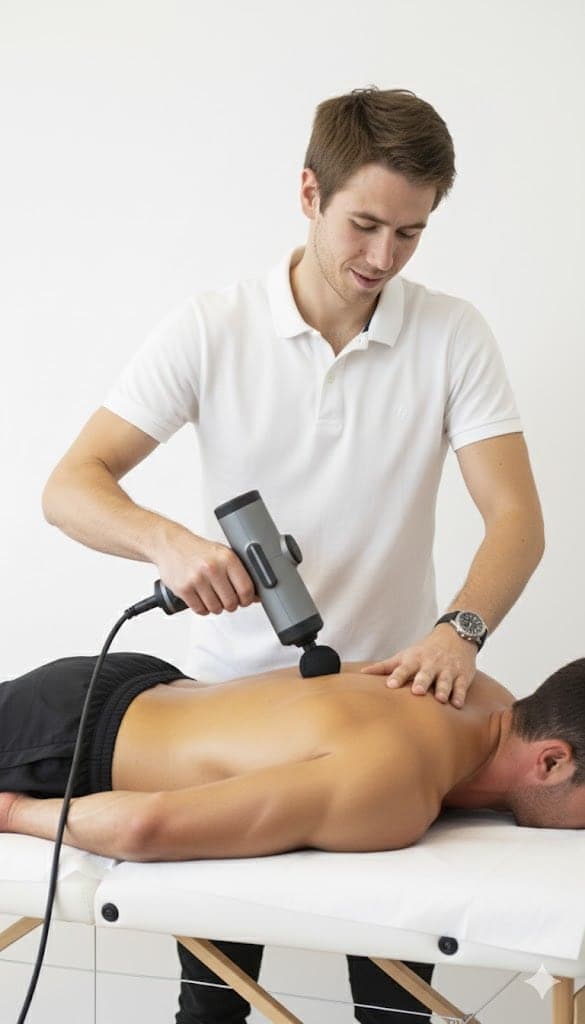
Written by
Chris
Massage therapist, nutrition and exercise physiologist
Norwegian-certified with a Bachelor’s in Physical Education and Nutrition and over ten years of clinical practice, working from a portable table in clients’ homes across the Paphos district.
This article is general information, not a medical diagnosis. If you have severe, worsening or unexplained pain, numbness, weakness, or pain after an accident, see a doctor first.