
Relaxation Massage Coral Bay: Advanced Deep-Tissue Therapy for Lasting Pain Relief
In short
Experience professional relaxation massage in Coral Bay with a certified specialist offering advanced mechanical deep-tissue therapy. Ten years of expertise, university-level education, and proven results.
I need to address something directly: most people searching for relaxation massage in Coral Bay are looking for temporary relief from stress and tension. They want to feel better for a few days, perhaps sleep better that night. I understand that desire completely. However, after a decade of specialized work in advanced mechanical deep-tissue therapy, I’ve learned that genuine relaxation—the kind that transforms your daily life—comes from addressing the mechanical causes of tension, not just massaging away the symptoms.
My name is accompanied by credentials that matter: a Bachelor’s degree in Physical Education and Nutrition from Norway, and ten years of hands-on experience treating everyone from chronic pain sufferers to elite athletes. I don’t work in a spa. I don’t offer aromatherapy or background music designed to make you forget your problems for an hour. What I provide is something fundamentally different: a clinical, results-driven approach to relaxation massage in Coral Bay that creates lasting change in how your body functions.
Why Traditional Relaxation Massage Falls Short
Let me share a story that changed how I practice. Seven years ago, a client came to me after spending thousands on weekly “relaxation massages” at various establishments around Cyprus. She described the experience perfectly: “I feel wonderful for about two days, then everything comes back—the shoulder tension, the lower back stiffness, the headaches. It’s like I’m renting relief instead of owning it.”
That phrase stuck with me. Renting relief. It’s exactly what happens when massage focuses solely on superficial muscle relaxation without addressing the mechanical dysfunction underneath. The human hand, no matter how skilled, simply cannot reach the deeper fascial layers where chronic tension patterns originate. Traditional massage techniques work on surface tissues, providing temporary vasodilation and endorphin release, but leaving the foundational problems untouched.
After years of studying body mechanics and experimenting with different modalities, I developed a method that goes deeper—literally and figuratively. This is where specialized mechanical therapy enters the picture, and where genuine, lasting relaxation becomes possible.
The Science Behind Lasting Relaxation
Your body doesn’t exist in isolated parts. When you experience chronic shoulder tension, it’s rarely “just” your shoulders. More commonly, I find compensatory patterns involving the thoracic spine, the hip flexors, and often the plantar fascia. These interconnected restrictions create a cascade of dysfunction that no amount of surface-level relaxation can resolve.
During my university studies in Physical Education and Nutrition, I learned something crucial: the body adapts to imposed demands. If you sit at a desk for eight hours daily, your hip flexors shorten, your thoracic spine rounds forward, and your shoulder girdle compensates by elevating and protracting. These adaptations become encoded in your fascial system—the connective tissue that surrounds every muscle fiber and organ in your body.
Here’s what makes my approach to relaxation massage in Coral Bay different: I treat the fascia as the primary target, not the muscle tissue itself. Fascia responds to sustained, precise pressure applied at specific vectors. This requires:
- Depth that exceeds what human hands can safely maintain
- Precision targeting of fascial planes and trigger points
- Consistent pressure duration (typically 90-120 seconds per focal point)
- Controlled intensity calibrated to tissue response
This is why I employ a specialized mechanical tool in my practice. It’s not a preference or a gimmick—it’s a necessity for achieving the results my clients expect and deserve.
Advanced Mechanical Deep-Tissue Therapy: How It Works
The machine I use represents the culmination of everything I’ve learned about effective soft-tissue therapy. After testing various tools and techniques over the years, I selected this equipment for three specific reasons: precision, power, and consistency.
Precision: Targeting the Root Cause
Human hands spread force across a relatively large contact area. Even with tools like elbows or knuckles, the pressure distribution remains imprecise. My specialized tool delivers force through a carefully designed applicator that focuses energy into fascial planes with millimeter-level accuracy. This allows me to address specific trigger points, adhesions, and restricted fascial layers that contribute to your chronic tension patterns.
During a typical session, I might identify twelve to fifteen distinct restriction points that contribute to your presenting complaint. Each requires individual attention with precisely calibrated force vectors. This level of specificity simply isn’t possible with manual techniques, regardless of the practitioner’s skill level.
Power: Going Deeper Than Hands Can Reach
I’ll be direct: most massage therapists cannot sustain the pressure required to create lasting fascial change. It’s not a criticism—it’s physiology. The human hand fatigues. Applying deep, sustained pressure for 90-minute sessions, multiple times daily, leads to practitioner injury and inconsistent treatment depth.
The mechanical advantage of my specialized tool allows me to work at depths ranging from superficial (for sensitive clients or acute conditions) to profoundly deep (for athletes or individuals with significant fascial restriction). More importantly, I can maintain that pressure consistently throughout the treatment window required for fascial release—typically 90 to 120 seconds per focal point.
This isn’t about applying more force arbitrarily. It’s about applying the appropriate force, sustained for the appropriate duration, at the appropriate depth. That precision creates the mechanical stimulus your fascia needs to reorganize and release chronic holding patterns.
Consistency: Eliminating the Variable of “Off Days”
One of my core principles is this: you deserve the same quality of treatment every single session. When I was providing manual therapy earlier in my career, I noticed an uncomfortable truth—my effectiveness varied. After treating four or five clients in a day, my hands fatigued. The depth and precision I could provide to my first client differed from what I could offer my last.
That inconsistency bothered me profoundly. If I’m positioning my service as an investment in your long-term health and function, then every session must deliver equivalent results. The mechanical tool eliminates this variable entirely. Whether you’re my first appointment or my fifth, you receive identical treatment quality.
What “Relaxation” Actually Means in Clinical Context
Let’s clarify terminology. When most people seek relaxation massage in Coral Bay, they’re describing a feeling—the pleasant parasympathetic state induced by gentle touch, dim lighting, and calm environment. That feeling is real and valuable, but it’s not the same as the deep, systemic relaxation that comes from resolving mechanical dysfunction.
True relaxation occurs when your nervous system no longer perceives threat from musculoskeletal imbalance. Consider chronic neck tension: your trapezius muscles aren’t contracting because they’re stressed (though stress exacerbates it). They’re contracting because your head is positioned forward of your center of gravity, requiring constant muscular effort to prevent your skull from falling forward.
Address the forward head posture—release the shortened anterior chain, mobilize the thoracic spine, restore proper scapular positioning—and the trapezius relaxation happens automatically. Your nervous system recognizes that constant guarding is no longer necessary. That’s genuine relaxation, and it persists long after you leave my treatment bench.
| Traditional Relaxation Massage | Advanced Mechanical Deep-Tissue Therapy |
|---|---|
| Focuses on superficial muscle tissue | Targets deep fascial restrictions |
| Provides temporary symptomatic relief | Addresses mechanical cause of dysfunction |
| Results last 1-3 days typically | Creates cumulative, lasting change |
| One-size-fits-all pressure and technique | Precisely calibrated to tissue response |
| Practitioner-dependent consistency | Machine-assisted reliability |
| General relaxation without specific outcomes | Measurable improvements in range of motion, pain levels, and function |
My Approach to Relaxation Massage in Coral Bay
When you work with me, you’re not booking a massage—you’re entering a dedicated partnership focused on lasting results. This distinction matters because it changes how we structure our work together.
Initial Assessment: Understanding Your Mechanical Story
Every body tells a story through its movement patterns and restrictions. During our first session, I spend considerable time assessing how you move, where you hold tension, and what compensatory patterns have developed over time. This isn’t a five-minute intake form. It’s a thorough biomechanical evaluation that identifies the true sources of your dysfunction.
I’ll ask questions that might surprise you: How do you sleep? What’s your daily driving position? When you’re stressed, where do you feel it first in your body? These details reveal the mechanical habits that create and maintain your tension patterns.
Customized Treatment Planning
Based on what I discover during assessment, I develop a specific treatment plan targeting your individual restriction patterns. Two people might both complain of lower back pain, but one needs hip flexor release and lumbar mobility work, while the other requires glute activation and thoracic extension. The treatment plan reflects these differences.
I typically recommend an initial series of sessions spaced strategically to create cumulative tissue change. This isn’t about booking you for ongoing weekly appointments indefinitely—it’s about concentrated work that produces lasting results. Most clients move to monthly or bi-monthly maintenance after completing their initial treatment series.
Progressive Intensity Calibration
One advantage of mechanical therapy is precise intensity control. During your first session, I work conservatively, allowing your tissue to adapt to this type of intervention. As your fascial system responds and reorganizes, we progressively increase depth and intensity to match your improving tolerance and tissue quality.
Athletes typically progress faster, often requesting maximum intensity by their second or third session. Individuals with chronic pain or high sensitivity might require six to eight sessions before reaching optimal working depth. The beauty of this system is that we can precisely calibrate the treatment to your needs, not apply some standardized pressure protocol.
The Mobile Advantage: Professional Service at Your Location
I travel to your location in Coral Bay with a professional treatment bench and all necessary equipment. This isn’t just convenience—it’s strategic. Receiving treatment in your own space allows your nervous system to remain in a familiar environment, which facilitates deeper relaxation response. You’re not fighting traffic to an appointment, sitting in a waiting room, or rushing home afterward.
After a session, I encourage clients to move gently, drink adequate water, and allow their body to integrate the work. Being in your own home makes this integration process significantly easier. You can rest if needed, move intuitively, and transition back to your day (or evening) without the additional stressor of travel.
Who Benefits Most from This Approach
My method of relaxation massage in Coral Bay serves several specific populations exceptionally well:
Chronic Pain Sufferers
If you’ve been managing persistent tension, headaches, or musculoskeletal pain for months or years, you’ve likely tried various interventions with limited lasting success. My clients in this category typically report that traditional massage feels good temporarily but doesn’t change their baseline pain levels. The mechanical depth and precision I provide finally addresses the tissue restrictions maintaining their chronic patterns.
Athletes and Active Individuals
Performance optimization requires more than just rest and stretching. Athletes develop specific fascial restrictions related to their sport’s movement demands. A cyclist’s hip flexors, a swimmer’s shoulder girdle, a runner’s plantar fascia—each requires targeted intervention at depths that facilitate genuine tissue remodeling. I’ve worked with athletes preparing for competition who need maximum intensity work, and the mechanical tool delivers power that complements their training rather than leaving them depleted.
Desk Workers with Postural Dysfunction
If you spend significant time in seated positions, you’re developing predictable patterns: shortened hip flexors, inhibited glutes, forward head posture, rounded thoracic spine, elevated and protracted shoulders. These aren’t problems that gentle massage resolves. They require systematic release of shortened anterior chain structures, mobilization of restricted spinal segments, and restoration of proper muscle activation patterns. This is mechanical work, and it demands mechanical intervention.
Individuals Seeking Prevention and Optimization
Not everyone comes to me with pain or dysfunction. Some clients simply recognize that regular tissue maintenance prevents problems from developing. These individuals understand that investing in their musculoskeletal health now prevents expensive interventions later. They’re purchasing quality of life—maintaining the mobility and function that allows them to enjoy activities they value without limitation.
Investment, Not Expense: Understanding Value
I need to address pricing directly because it reflects my philosophy about what I provide. My services cost more than a typical spa massage in Coral Bay. Significantly more. This isn’t arbitrary—it reflects the specialized education, decade of experience, and clinical outcomes I deliver.
Consider the alternative: ongoing weekly or bi-weekly massage appointments that provide temporary relief without lasting change. Over a year, those sessions accumulate into substantial expense while your underlying dysfunction persists. My approach front-loads the investment—concentrated sessions that create lasting improvement—followed by infrequent maintenance to preserve those gains.
One client calculated that he spent approximately €2,400 annually on weekly massage appointments before working with me. After our initial treatment series (eight sessions over ten weeks), he moved to monthly maintenance. His annual investment dropped to roughly €900 while his results improved dramatically. More importantly, his quality of life transformed—he returned to activities he’d abandoned due to pain, his sleep improved, and he stopped taking daily anti-inflammatory medication.
That’s not an expense. That’s one of the best investments he could make in his health and function.
Common Misconceptions About Deep-Tissue Work
Let me address several misunderstandings I encounter regularly:
“Deep tissue massage should hurt”
This misconception causes people to either endure unnecessary pain or avoid effective treatment entirely. Productive deep-tissue work exists at the edge of your tolerance—uncomfortable but not unbearable. If you’re clenching your jaw, holding your breath, or experiencing sharp pain, we’ve crossed from therapeutic into counterproductive. The mechanical tool allows me to work at your precise tolerance threshold, adjusted continuously based on your tissue response.
“I’ll be sore for days afterward”
Some post-session soreness is normal, particularly during initial treatments when we’re creating significant tissue change. However, debilitating soreness suggests excessive intervention. My approach prioritizes tissue adaptation—working progressively rather than traumatizing tissue with excessive force. Most clients report mild soreness similar to post-workout muscle fatigue, resolving within 24-48 hours.
“More pressure always equals better results”
This is perhaps the most dangerous misconception. Effective treatment requires appropriate pressure for your specific tissue condition. Someone with acute inflammation needs entirely different intervention than someone with chronic fibrotic adhesions. I calibrate intensity based on tissue quality, pain presentation, and treatment goals—not on arbitrary assumptions about “deeper is better.”
Frequently Asked Questions About Relaxation Massage in Coral Bay
How is mechanical deep-tissue therapy different from regular massage?
Regular massage primarily addresses superficial muscle tissue using manual techniques. My method employs a specialized mechanical tool that works at fascial depths human hands cannot safely reach, with precision and consistency that manual therapy cannot match. This produces lasting changes in tissue organization rather than temporary relaxation.
Is the treatment painful?
The sensation ranges from pleasantly intense to temporarily uncomfortable, depending on your tissue condition and tolerance. I continuously adjust pressure to remain within your therapeutic window—productive but not unbearable. Most clients describe it as “good pain” that they can feel working.
How many sessions will I need?
This depends entirely on your presentation. Acute issues might resolve in three to five sessions. Chronic patterns typically require eight to twelve sessions to create lasting change. After initial treatment, most clients transition to monthly or bi-monthly maintenance. I provide honest assessment after our first session once I understand your specific situation.
Can you help with specific conditions like sciatica or frozen shoulder?
I work with many conditions rooted in mechanical dysfunction: sciatica from piriformis syndrome, frozen shoulder from capsular restriction, tension headaches from cervical dysfunction, plantar fasciitis from posterior chain tightness. However, I’m not treating pathology—I’m addressing the mechanical factors contributing to your symptoms. If your condition requires medical diagnosis or intervention, I’ll refer you appropriately.
Do you accept insurance?
I operate as a cash-based practice, which allows me to focus on results rather than insurance-dictated session limits. Many clients submit receipts to their insurance for partial reimbursement, depending on their coverage. I provide detailed receipts that meet most insurance documentation requirements.
What should I expect during my first session?
Your initial appointment includes comprehensive assessment (15-20 minutes) followed by treatment (60 minutes). I’ll evaluate your movement patterns, identify restriction areas, and explain what I find and why it matters. The actual treatment introduces you to the mechanical tool at conservative intensity, allowing your tissue to adapt. We’ll discuss findings and develop a customized treatment plan before you leave.
How should I prepare for treatment?
Arrive hydrated and avoid eating a large meal immediately before your session. Wear comfortable clothing that allows access to treatment areas (or be comfortable with draping). Don’t schedule intense exercise immediately after your first session—give your body time to integrate the work. Beyond that, no special preparation is required.
What makes your approach superior to traditional massage therapy?
Traditional massage provides temporary symptomatic relief through surface-level techniques. My method addresses the mechanical cause of dysfunction at fascial depths, creating lasting tissue change. The specialized tool delivers precision, power, and consistency that human hands cannot match. Most importantly, my university education and decade of experience mean I understand body mechanics, not just massage techniques. I’m treating your musculoskeletal system as an integrated mechanical structure, not just providing relaxation.
Real Results: What Clients Experience
I measure success through functional improvements, not subjective feelings. While clients certainly report feeling more relaxed, the outcomes I track include:
- Measurable increases in range of motion (documented through goniometry)
- Reduction in pain scales from baseline to post-treatment series
- Return to activities previously limited by pain or dysfunction
- Decreased reliance on pain medication or anti-inflammatory drugs
- Improved sleep quality and duration
- Enhanced athletic performance metrics
These are objective markers that demonstrate real change, not placebo effect or temporary symptom masking. When someone tells me they completed their first pain-free half-marathon after years of chronic IT band syndrome, that’s a result I can stand behind. When a desk worker reports eliminating their daily tension headaches after our treatment series, that’s a lasting improvement in quality of life.
The Partnership Approach: What I Expect from You
Effective treatment requires collaboration. While I provide the expertise and intervention, you play a crucial role in the process:
- Honest Communication: Tell me what you feel during treatment. If intensity exceeds your tolerance, speak immediately. If something isn’t improving as expected, let me know so we can adjust approach.
- Homework Compliance: I typically provide specific exercises or stretches to reinforce treatment gains between sessions. These aren’t optional—they’re integral to the process. Clients who comply with homework consistently achieve better outcomes faster.
- Lifestyle Modifications: If your daily habits create the dysfunction I’m treating, we need to address those patterns. I can’t reverse eight hours of terrible sitting posture with one-hour weekly sessions. Sometimes ergonomic changes or movement habits need modification.
- Realistic Expectations: Tissue change takes time. You didn’t develop chronic dysfunction overnight, and we won’t resolve it in one session. Trust the process, commit to the treatment plan, and focus on cumulative progress rather than instant results.
Why Location Matters: Serving Coral Bay Specifically
Coral Bay attracts a specific demographic—people who value quality of life, outdoor activities, and maintaining active lifestyles in a beautiful environment. This population often pushes their bodies harder than average: swimming, diving, cycling, hiking, water sports. These activities create specific mechanical demands and, consequently, specific tissue restrictions.
Living in this area myself, I understand the activities that matter to my clients and the functional demands they place on their bodies. I’m not treating generic complaints—I’m addressing the mechanical factors that limit someone’s ability to enjoy the lifestyle that drew them to Coral Bay in the first place.
Additionally, the expatriate community here often lacks access to the specialized healthcare they had in their home countries. Finding quality therapeutic intervention that goes beyond basic spa services can be challenging. I provide that specialized service with credentials, experience, and outcomes that meet international standards.
Taking the Next Step: Working Together
If you’ve read this far, you’re likely someone who recognizes that genuine solutions require more than surface-level intervention. You understand that investing in your musculoskeletal health isn’t optional—it’s fundamental to maintaining the quality of life you value.
My approach to relaxation massage in Coral Bay isn’t for everyone. If you want a gentle, soothing spa experience with cucumber slices and lavender oil, I’m not your practitioner. But if you want results—measurable, lasting improvements in pain, function, and performance—then we should talk.
I maintain a limited client roster because effective treatment requires time and attention. I don’t rush through appointments or maximize daily session volume. Each client receives my full focus and expertise, which means availability is sometimes limited. If you’re serious about addressing your mechanical dysfunction rather than just managing symptoms, reach out to discuss whether my approach fits your needs.
The question isn’t whether you can afford this investment in your health. The question is whether you can afford to continue managing dysfunction that compromises your daily life, limits your activities, and progressively worsens without intervention. For those who understand that distinction, I provide the solution they’ve been searching for.
Your body is the only one you’ll ever have. Treat it like the sophisticated mechanical system it is, with the specialized care it deserves. That’s not just relaxation—that’s transformation.
Evidence and limits
Massage may help with some symptoms, but benefits and evidence vary by condition. It does not replace medical assessment or treatment. A page update is not evidence of an independent clinical review.
Further reading: Massage therapy: evidence, safety and limitations by US National Center for Complementary and Integrative Health. This is general background reading, not verification of every claim in this article.
How we describe evidence and updates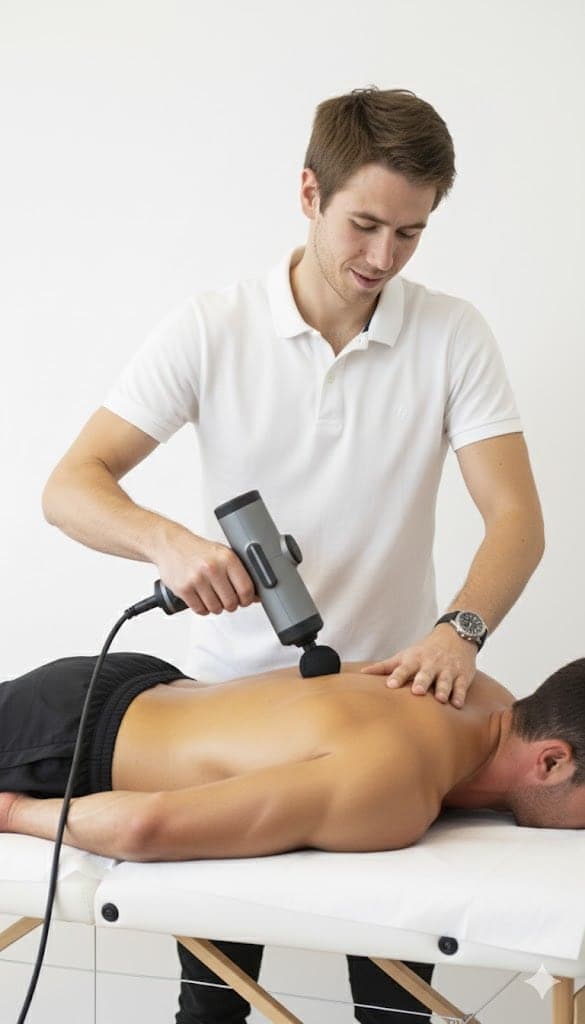
Written by
Chris
Massage therapist, nutrition and exercise physiologist
Norwegian-certified with a Bachelor’s in Physical Education and Nutrition and over ten years of clinical practice, working from a portable table in clients’ homes across the Paphos district.
This article is general information, not a medical diagnosis. If you have severe, worsening or unexplained pain, numbness, weakness, or pain after an accident, see a doctor first.