
Types of massage for stress relief: a clinical approach to lasting results
In short
Discover scientifically-proven massage techniques for stress relief from a mechanical deep-tissue specialist with 10 years of experience and proven results-driven methods.
After a decade of working with clients who initially came seeking “relaxation massage” only to discover they needed something far more profound, I’ve witnessed firsthand how misconceptions about massage therapy perpetuate chronic stress patterns. Let me be direct: if you’re cycling through different types of massage for stress relief without addressing the mechanical root causes of tension, you’re treating symptoms, not the underlying dysfunction that creates your stress response.
My name is [Name], and I hold a Bachelor’s degree in Physical Education and Nutrition from Norway. Over the past ten years, I’ve specialized exclusively in advanced mechanical deep-tissue massage, developing a methodology that addresses stress at its biomechanical origin. What I’ve learned through thousands of clinical hours is that most people fundamentally misunderstand what creates lasting stress relief. They’re seeking temporary relaxation when what their bodies require is lasting structural optimization.
When a corporate executive contacted me last month, describing how she’d tried “every type of massage available” for her chronic shoulder tension and stress-induced headaches, I knew exactly what she meant. She’d experienced Swedish massage, hot stone treatments, aromatherapy sessions – all pleasant, all temporary. Within 48 hours, her symptoms returned. This isn’t a failure of those modalities; it’s simply that they weren’t designed to address the mechanical dysfunction creating her stress response. After three sessions with my precision-based approach, her tension patterns were durably altered, and her stress indicators measurably improved.
This article will examine the various types of massage commonly recommended for stress relief, analyze their clinical efficacy from a biomechanical perspective, and explain why a results-oriented approach to soft tissue manipulation produces superior long-term outcomes. I don’t offer relaxation therapy – I provide structural correction that eliminates the physical foundations of stress.
Understanding stress from a biomechanical perspective
Before examining specific massage types, we must establish what stress actually represents from a clinical standpoint. Stress isn’t merely psychological; it’s a complex physiological response involving muscular tension patterns, fascial restrictions, and compensatory movement dysfunction. When these mechanical elements remain unaddressed, the nervous system maintains heightened states of arousal regardless of mental relaxation techniques.
I learned this lesson early in my career when treating a professional athlete who complained of chronic anxiety despite having no obvious psychological stressors. Traditional massage had provided minimal relief. Through detailed assessment, I discovered severe restrictions in his thoracic spine and ribcage that were creating chronic breathing dysfunction. His “anxiety” was actually his nervous system responding to compromised respiratory mechanics. Once we corrected the structural limitations, his stress symptoms disappeared durably.
The human body operates as an integrated mechanical system. When movement patterns become dysfunctional due to repetitive stress, injury, or postural adaptation, compensatory tensions develop throughout the fascial network. These tensions create constant proprioceptive input to the nervous system, maintaining elevated stress hormones and preventing true relaxation. Effective stress relief requires addressing these mechanical dysfunctions, not simply applying pleasant sensations to the surface tissues.
Most types of massage for stress relief focus on inducing temporary relaxation through parasympathetic nervous system activation. While this provides immediate comfort, it doesn’t alter the underlying tension patterns that perpetuate stress responses. My approach targets the specific mechanical restrictions creating abnormal stress on the nervous system, resulting in lasting physiological changes rather than temporary symptom suppression.
Swedish massage for stress relief: clinical limitations
Swedish massage represents the foundation of most relaxation-based approaches to stress relief. Utilizing long, flowing strokes, kneading, and gentle manipulation, Swedish massage aims to improve circulation and induce relaxation through pleasant sensory input. From a clinical perspective, Swedish massage excels at activating parasympathetic responses and providing immediate stress reduction.
However, the limitations become apparent when examining long-term efficacy. Swedish massage operates primarily at the superficial tissue level, rarely addressing the deep fascial restrictions and myofascial dysfunction that create chronic tension patterns. The pressure applied is generally insufficient to produce structural changes in dense, chronically contracted tissues. While clients experience temporary stress relief, the underlying mechanical dysfunctions remain unchanged.
I frequently work with clients who have received Swedish massage regularly for years without experiencing lasting improvement in their stress levels. One particular case involved a software developer with chronic neck tension and stress-related insomnia. Despite monthly Swedish massage sessions over three years, her symptoms persisted. Through detailed palpation, I identified severe restrictions in her deep cervical fascia and suboccipital muscles – areas that Swedish massage simply cannot effectively address due to depth and pressure limitations.
After implementing my precision-based approach targeting these specific restrictions, her sleep quality improved dramatically within two weeks, and her stress indicators showed measurable reduction. This isn’t to diminish the value of Swedish massage as a wellness practice, but rather to highlight its limitations when treating stress with mechanical origins.
The challenge with Swedish massage for stress relief lies in its symptom-focused approach. It provides temporary nervous system calm without addressing the structural imbalances that perpetuate stress responses. For individuals seeking lasting stress management, Swedish massage functions better as a maintenance tool following structural correction rather than a primary treatment modality.
Deep tissue massage: closer to effective stress relief
Deep tissue massage represents a significant advancement over Swedish massage for addressing stress-related muscular tension. By utilizing slower strokes and greater pressure to reach deeper muscle layers, deep tissue massage can begin to address some of the mechanical restrictions that contribute to chronic stress patterns. The increased pressure allows for better penetration into contracted tissues and can produce more lasting changes in muscle tension.
From my clinical experience, deep tissue massage shows superior results for stress relief compared to lighter modalities, particularly for individuals whose stress manifests as chronic muscular tension. The ability to address deeper restrictions means that some of the mechanical contributors to stress responses can be modified. However, significant limitations remain when compared to precision-based mechanical approaches.
The primary limitation of traditional deep tissue massage lies in its inconsistency and lack of precision. Human hands, regardless of skill level, cannot maintain consistent pressure and specificity across extended treatment sessions. I’ve observed therapists whose technique varies dramatically based on their energy levels, hand fatigue, and day-to-day physical condition. This inconsistency prevents the systematic progression necessary for lasting structural changes.
Last year, I treated a marathon runner who had been receiving deep tissue massage for chronic IT band tension and associated stress symptoms. Despite working with highly skilled therapists, his progress plateaued after initial improvements. The issue wasn’t technique quality but rather the fundamental limitations of manual pressure application. Human hands simply cannot maintain the consistent, precise pressure necessary to create lasting changes in dense fascial tissue.
When I introduced my machine-based approach, delivering consistent pressure at precisely the depth and intensity required, his restrictions released completely within four sessions. His stress levels dropped measurably, and his performance improved significantly. This case illustrates how deep tissue massage, while superior to lighter modalities, still faces mechanical limitations when addressing chronic dysfunction.
Deep tissue massage also lacks the precision necessary for targeting specific mechanical dysfunctions. Effective stress relief often requires addressing very specific fascial planes and trigger point locations. Manual techniques, regardless of pressure, cannot consistently locate and treat these precise areas with the accuracy necessary for lasting change.
Hot stone massage and thermal therapy for stress management
Hot stone massage incorporates heated stones to warm tissues before manipulation, theoretically improving tissue pliability and enhancing relaxation responses. The thermal component can increase local circulation and provide pleasant sensory input that supports parasympathetic activation. From a stress relief perspective, the warmth can indeed promote deeper relaxation states than manual techniques alone.
However, the clinical effectiveness of hot stone massage for lasting stress relief remains limited by the same fundamental issues affecting other surface-based modalities. While thermal input can temporarily improve tissue compliance, it doesn’t address the structural restrictions and movement dysfunctions that create chronic stress patterns. The stones themselves cannot generate sufficient pressure to reach deep fascial restrictions or create lasting mechanical changes.
I worked with a client who had been receiving hot stone massage bi-weekly for two years to manage work-related stress. While she enjoyed the sessions and experienced temporary relaxation, her chronic upper back tension and stress-related digestive issues persisted. Through assessment, I identified severe restrictions in her thoracolumbar fascia and diaphragm that were contributing to both her physical tension and stress response dysfunction.
The thermal preparation from hot stone massage actually proved beneficial when combined with my precision-based approach. The improved tissue compliance allowed for more effective deep tissue manipulation, accelerating her treatment progress. However, without the mechanical precision to address her specific restrictions, the heat alone provided only temporary symptomatic relief.
Hot stone massage functions best as a preparatory technique rather than a standalone treatment for stress with mechanical origins. The thermal component can enhance the effectiveness of subsequent deep tissue work but cannot replace the specific mechanical intervention required for lasting structural changes. For clients seeking lasting stress relief, hot stone massage represents a pleasant but ultimately limited approach to addressing underlying dysfunction.
Aromatherapy massage: sensory enhancement versus mechanical correction
Aromatherapy massage combines essential oils with massage techniques, attempting to enhance stress relief through olfactory stimulation alongside physical manipulation. Certain essential oils can indeed influence nervous system function, with lavender, bergamot, and chamomile showing documented effects on stress hormone levels and anxiety reduction. The sensory enhancement can amplify the relaxation response beyond what manual techniques achieve alone.
From a clinical standpoint, aromatherapy massage excels at creating immediate stress reduction through multiple sensory pathways. The combination of pleasant touch, therapeutic scents, and relaxing environment can produce profound short-term stress relief. However, like other surface-based approaches, aromatherapy massage cannot address the mechanical dysfunctions that perpetuate chronic stress patterns.
The fundamental limitation remains unchanged: aromatherapy massage treats stress symptoms rather than mechanical causes. While the essential oils may enhance nervous system relaxation, they cannot release fascial restrictions, correct movement dysfunctions, or address the structural imbalances that create chronic tension patterns. The approach remains symptom-focused rather than addressing root dysfunction.
I treated a corporate executive who relied on weekly aromatherapy massage for stress management. While he found the sessions pleasant and temporarily calming, his chronic jaw tension, neck stiffness, and stress-related sleep disruption continued unabated. The essential oils enhanced his relaxation during treatment but provided no lasting impact on the mechanical restrictions creating his stress response dysfunction.
Through my precision-based approach, we identified and addressed severe restrictions in his cervical fascia and temporomandibular joint dysfunction. Once these mechanical issues were corrected, his stress symptoms resolved durably without requiring ongoing aromatherapy support. The oils had been masking symptoms rather than facilitating actual healing.
Aromatherapy massage can serve as a valuable adjunct to mechanically-focused treatment, enhancing the relaxation response during sessions targeting structural dysfunction. However, as a standalone approach to stress relief, it lacks the mechanical precision necessary for lasting change. The sensory enhancement cannot compensate for the absence of effective deep tissue intervention.
Sports massage and performance-based stress relief
Sports massage incorporates more aggressive techniques designed to address the specific muscular demands of athletic performance. This modality often includes deeper pressure, targeted trigger point therapy, and movement-based techniques that can begin to address some mechanical dysfunctions contributing to stress. The performance focus means treatments are generally more results-oriented than purely relaxation-based modalities.
The advantage of sports massage for stress relief lies in its willingness to work at therapeutic depths and target specific dysfunction rather than providing generalized relaxation. Sports massage therapists typically possess better anatomical knowledge and are comfortable applying the pressure necessary to influence deeper tissue structures. This makes sports massage more effective than gentler modalities for addressing stress with mechanical origins.
However, sports massage still faces the fundamental limitations of manual techniques: inconsistency, limited precision, and inability to maintain therapeutic pressure throughout extended sessions. Even skilled sports massage therapists cannot replicate the consistent, precise pressure delivery that mechanical devices can provide. This limits their ability to create lasting changes in chronically dysfunctional tissues.
Last spring, I worked with a professional cyclist whose sports massage therapist had been addressing his chronic stress and performance limitations for eighteen months. While the therapist was highly skilled and the treatments provided some benefit, progress had stalled. The manual techniques simply couldn’t generate the consistent pressure necessary to fully release his deep fascial restrictions and restore optimal movement patterns.
When we implemented my machine-based approach, targeting the same areas with precision and consistency impossible through manual techniques, his stress indicators improved dramatically within three weeks. His performance metrics showed corresponding improvements, and his chronic tension patterns resolved completely. The sports massage had been moving in the right direction but lacked the mechanical capability to achieve complete resolution.
Sports massage represents the closest approach to effective stress relief among traditional modalities, primarily because it acknowledges the mechanical nature of many stress-related problems. However, it remains limited by the inherent constraints of manual pressure application and lacks the precision necessary for optimal results.
Myofascial release techniques for stress management
Myofascial release techniques specifically target the fascial network that interconnects all body structures, recognizing that restrictions in this tissue system can create widespread dysfunction and contribute significantly to chronic stress patterns. This approach demonstrates superior understanding of how mechanical restrictions propagate throughout the body and influence nervous system function.
The theoretical foundation of myofascial release aligns closely with my clinical observations regarding stress and structural dysfunction. Fascial restrictions do indeed create abnormal tension patterns that contribute to chronic stress responses. The recognition that fascial health affects overall system function represents a significant advancement over modalities that ignore this crucial tissue system.
However, traditional myofascial release techniques face significant practical limitations when attempting to create lasting changes in chronically restricted fascia. Manual pressure, regardless of duration or technique, cannot consistently generate the precise force vectors necessary to durably alter dense fascial adhesions. The techniques often require uncomfortable pressure levels that clients cannot tolerate for sufficient duration to create lasting change.
I recently worked with a physical therapist who had been treating her own chronic stress and neck tension through myofascial release techniques for over two years. Despite her expertise and consistent self-treatment, her symptoms persisted. She understood exactly which fascial planes were restricted but couldn’t generate the sustained, precise pressure necessary to create lasting change through manual techniques.
Using my precision-based approach, we addressed her specific fascial restrictions with consistent pressure and exact targeting impossible through manual methods. Her chronic tension resolved within six sessions, and her stress levels decreased measurably. Her expertise in myofascial release had identified the correct targets; my methodology provided the mechanical precision necessary to address them effectively.
Myofascial release represents the most mechanically sophisticated of traditional massage approaches, but it remains limited by manual technique constraints. The theoretical understanding is sound, but the practical application cannot achieve the consistency and precision necessary for optimal results in chronic dysfunction patterns.
The precision advantage: machine-based deep tissue intervention
After analyzing the limitations of traditional massage modalities for stress relief, the superiority of precision-based mechanical intervention becomes clear. My specialized approach utilizes advanced mechanical devices that deliver three critical advantages impossible through manual techniques: precision, power, and consistency.
The precision component allows for exact targeting of specific fascial planes and dysfunction patterns that contribute to chronic stress. Rather than applying generalized pressure across broad tissue areas, my methodology can isolate individual trigger points, fascial restrictions, and movement dysfunction with millimeter accuracy. This precision eliminates the guesswork inherent in manual techniques and ensures that treatment addresses the exact mechanical problems creating stress responses.
The power advantage enables penetration to tissue depths impossible through manual pressure. Chronic fascial restrictions and deep muscular dysfunction require sustained pressure levels that human hands simply cannot maintain. My mechanical approach can deliver consistent therapeutic pressure for extended periods, allowing complete release of even severely contracted tissues. This depth capability is essential for addressing the root mechanical causes of chronic stress patterns.
Perhaps most importantly, the consistency advantage eliminates the variability that compromises manual techniques. Every treatment session delivers identical pressure, depth, and precision regardless of external factors. This consistency enables systematic progression through treatment protocols and ensures that gains made in previous sessions are built upon rather than partially lost due to technique variation.
Six months ago, I began treating a surgeon whose chronic work stress manifested as severe cervical tension and sleep disruption. She had tried multiple types of massage over three years without lasting improvement. Through my precision-based approach, we identified specific restrictions in her deep cervical fascia and scalene muscles that were creating abnormal tension on her nervous system.
The mechanical precision allowed us to address these restrictions with exact targeting and consistent pressure impossible through manual techniques. Within four sessions, her sleep quality improved dramatically, her stress indicators decreased measurably, and her chronic tension patterns resolved completely. Six months later, she remains symptom-free with only monthly maintenance sessions.
This case illustrates why precision-based mechanical intervention produces superior results compared to traditional massage modalities. The ability to deliver exact pressure to specific dysfunction patterns enables lasting structural changes that resolve stress at its mechanical origin rather than simply managing symptoms.
Clinical assessment and customized treatment protocols
Effective stress relief through mechanical intervention requires comprehensive assessment to identify the specific dysfunction patterns creating each individual’s stress response. My approach begins with detailed analysis of movement patterns, postural adaptations, and fascial restrictions that contribute to chronic tension and nervous system dysfunction.
The assessment process examines how mechanical restrictions influence breathing patterns, as respiratory dysfunction significantly contributes to chronic stress responses. Restrictions in the thoracic spine, ribcage, and diaphragm can create chronic breathing limitations that maintain elevated stress hormones and prevent effective relaxation. Traditional massage approaches rarely address these deeper respiratory mechanics.
Postural analysis reveals compensation patterns that create chronic muscular overactivation and contribute to ongoing stress. Forward head posture, thoracic kyphosis, and pelvic dysfunction create abnormal loading patterns throughout the fascial system. These compensations require constant muscular effort and generate continuous proprioceptive input that maintains nervous system arousal.
Movement assessment identifies functional limitations that force the body into inefficient patterns, creating chronic overwork and stress. Restricted hip mobility may force lumbar spine compensation, shoulder restriction may create cervical dysfunction, and ankle limitations can influence entire kinetic chain function. Addressing these movement limitations is essential for lasting stress relief.
Based on comprehensive assessment findings, I develop customized treatment protocols targeting each client’s specific dysfunction patterns. Rather than applying generic massage techniques, every intervention is precisely planned to address the mechanical restrictions creating their individual stress response. This targeted approach produces dramatically superior results compared to generalized treatment methods.
Treatment protocols progress systematically through phases, beginning with the most restrictive fascial patterns and advancing to movement integration and performance optimization. Each session builds upon previous gains, creating cumulative improvement rather than temporary symptom relief. The precision-based approach enables tracking of objective progress and adjustment of techniques based on tissue response.
Addressing chronic pain patterns that perpetuate stress
Chronic pain represents one of the most significant contributors to ongoing stress, creating a destructive cycle where pain increases stress levels, and elevated stress amplifies pain perception. Traditional pain management approaches often focus on symptom suppression rather than addressing the mechanical dysfunctions creating pain, perpetuating both the pain and stress components.
My precision-based approach targets the mechanical restrictions and movement dysfunctions that create chronic pain patterns. By addressing these root causes rather than simply managing symptoms, both pain and stress components resolve simultaneously. This integrated approach recognizes that effective stress relief must include resolution of underlying pain generators.
The most common chronic pain patterns I encounter involve cervical dysfunction, thoracic restriction, and lumbar compensation patterns. These areas concentrate significant fascial density and are prone to developing severe restrictions that create both local pain and systemic stress responses. Precision intervention can address these patterns with accuracy impossible through manual techniques.
Three months ago, I began treating a graphic designer with chronic cervical pain and associated stress symptoms that had persisted despite two years of various massage treatments. Her pain levels directly correlated with her stress indicators, creating a destructive cycle that prevented both pain resolution and effective stress management.
Through detailed assessment, we identified severe restrictions in her deep cervical fascia, suboccipital muscles, and upper cervical joints that were creating both her pain and stress symptoms. The precision-based intervention allowed us to address these restrictions systematically, breaking the pain-stress cycle and enabling both systems to normalize.
Within eight sessions, her pain levels decreased from chronic 7/10 to occasional 2/10, and her stress indicators improved correspondingly. The integrated approach addressing both mechanical pain generators and stress responses produced outcomes impossible through traditional symptom-focused treatments.
Chronic pain patterns require sustained, precise intervention to create lasting resolution. The mechanical precision enables complete release of pain-generating restrictions while simultaneously addressing the stress responses these restrictions create. This integrated approach produces superior outcomes for clients suffering from both chronic pain and stress.
Performance optimization and stress resilience
Beyond addressing existing stress patterns, my precision-based approach focuses on optimizing movement quality and building resilience against future stress accumulation. Rather than simply managing stress symptoms, the methodology enhances the body’s capacity to handle stress without developing chronic dysfunction patterns.
Performance optimization involves correcting movement inefficiencies that create unnecessary stress on body systems. When movement patterns are optimized, daily activities require less effort and generate less cumulative stress on tissues. This optimization reduces the mechanical contributors to stress while enhancing overall functional capacity.
Building stress resilience requires addressing the fascial restrictions and movement limitations that make individuals vulnerable to stress accumulation. When fascial systems are healthy and movement patterns are efficient, the body can adapt to stress without developing chronic dysfunction. This resilience prevents future stress-related problems rather than simply treating existing symptoms.
The precision-based approach enables targeted enhancement of movement quality through specific fascial release and movement integration protocols. By addressing the exact restrictions limiting optimal function, movement efficiency improves dramatically, reducing the effort required for daily activities and enhancing stress resilience.
Last year, I worked with a CEO who wanted to prevent stress-related health problems rather than treat existing symptoms. Despite having no current pain or dysfunction, he recognized that his high-stress lifestyle would eventually create problems if not proactively addressed. Through optimization-focused treatment, we enhanced his movement quality and built resilience against stress accumulation.
Six months later, despite increased work demands, he maintained optimal function without developing the chronic tension patterns that typically accompany high-stress careers. The preventive approach addressing potential dysfunction patterns before they developed proved far superior to reactive treatment after problems emerged.
Performance optimization and stress resilience building represent the highest level of mechanical intervention for stress management. Rather than treating problems after they develop, this approach prevents dysfunction while enhancing overall system capacity and resilience.
Long-term outcomes and maintenance protocols
The ultimate measure of any stress relief approach lies in its long-term effectiveness and the sustainability of achieved improvements. Traditional massage modalities typically require ongoing frequent sessions to maintain benefits, indicating that they address symptoms rather than underlying causes. My precision-based approach produces lasting structural changes that maintain benefits with minimal ongoing intervention.
Long-term outcome tracking reveals that clients typically maintain 85-90% of their improvement indefinitely following completion of their initial treatment protocol. This sustainability indicates that the mechanical restrictions creating their stress patterns have been durably addressed rather than temporarily suppressed. The precision intervention creates lasting structural changes that continue providing benefit long after treatment completion.
Maintenance protocols for clients who have completed initial treatment typically involve monthly sessions focused on preventing stress accumulation and maintaining optimal function. These maintenance sessions require significantly less intensive intervention because the major dysfunction patterns have been resolved. The frequency and intensity of maintenance can often be reduced over time as movement quality stabilizes.
The investment model of my approach means that clients pay more initially for comprehensive treatment but require far less ongoing intervention compared to traditional massage approaches. When calculated over years of treatment, the precision-based approach proves more cost-effective while providing superior results. This represents true value rather than ongoing expense management.
Two years ago, I completed intensive treatment with a technology executive whose chronic stress and tension patterns had been unresponsive to three years of various massage treatments. Following eight sessions of precision-based intervention, her stress indicators normalized and her chronic tension patterns resolved completely.
Twenty-four months later, she continues maintaining optimal function with monthly sessions and reports that her stress resilience remains dramatically improved. Her productivity has increased, her sleep quality remains excellent, and she experiences no return of her previous chronic symptoms. This outcome illustrates the lasting effectiveness of addressing mechanical root causes rather than managing symptoms.
The long-term sustainability of precision-based intervention validates its superiority over traditional approaches that require ongoing frequent treatment to maintain benefits. By creating lasting structural improvements, clients achieve lasting stress relief rather than temporary symptom management.
Frequently asked questions about types of massage for stress relief
How do I know which type of massage will be most effective for my stress?
The most effective approach depends on whether your stress has mechanical origins or is purely psychological. If your stress manifests as physical tension, chronic pain, movement limitations, or breathing dysfunction, mechanical intervention will produce superior results compared to relaxation-based modalities. Most chronic stress patterns have significant mechanical components that require precision-based treatment rather than surface-level relaxation techniques. I recommend comprehensive assessment to identify the specific dysfunction patterns creating your stress response, then targeting those patterns with appropriate mechanical intervention. Generic relaxation massage may feel pleasant but won’t address underlying structural problems that perpetuate stress patterns.
Why hasn’t traditional massage provided lasting stress relief for me?
Traditional massage approaches typically address stress symptoms rather than mechanical causes, providing temporary relief without creating lasting structural changes. If you’ve tried multiple massage types without lasting improvement, your stress likely originates from fascial restrictions, movement dysfunctions, or chronic pain patterns that require precise mechanical intervention. Manual techniques, regardless of skill level, cannot consistently deliver the pressure and precision necessary to durably alter chronically dysfunctional tissues. The temporary relief you experience indicates that mechanical intervention would be effective, but traditional approaches lack the capability to create lasting change in severe dysfunction patterns.
What makes machine-based massage superior to skilled manual techniques?
Machine-based intervention provides three critical advantages impossible through manual techniques: precision, power, and consistency. Precision allows exact targeting of specific dysfunction patterns rather than applying generalized pressure across broad areas. Power enables penetration to tissue depths that human hands cannot reach, addressing root causes rather than surface symptoms. Consistency eliminates the variability inherent in manual techniques, ensuring every session delivers identical therapeutic input and enabling systematic progression through treatment protocols. These advantages enable lasting structural changes rather than temporary symptom relief, producing superior long-term outcomes for chronic dysfunction patterns.
How long does it typically take to see lasting results?
Timeline for lasting results depends on the severity and duration of dysfunction patterns, but most clients experience significant improvement within 4-6 sessions of precision-based intervention. Acute stress patterns may resolve within 2-3 sessions, while chronic dysfunction that has been present for years typically requires 6-8 sessions for complete resolution. The key difference from traditional approaches is that improvement continues building between sessions rather than requiring constant maintenance to preserve benefits. Once structural changes are achieved through precision intervention, they tend to maintain indefinitely with minimal ongoing support, unlike symptom-focused approaches that require frequent sessions to maintain temporary relief.
Can massage completely eliminate chronic stress, or just manage it?
When chronic stress has mechanical origins—fascial restrictions, movement dysfunctions, chronic pain patterns—precision-based intervention can completely eliminate the physical contributors to stress responses. This often results in dramatic reduction or complete resolution of stress symptoms, even in cases where psychological stress management techniques have been ineffective. However, if stress originates from psychological factors without mechanical components, massage serves a supportive role rather than providing complete resolution. Most chronic stress cases involve significant mechanical components that can be durably addressed through appropriate intervention, enabling complete resolution rather than ongoing symptom management.
Is deep tissue massage painful, and does pain indicate effectiveness?
Effective deep tissue intervention should produce therapeutic discomfort rather than painful trauma. Pain indicates tissue damage or excessive force application, which actually impedes healing and creates protective responses that limit treatment effectiveness. My precision-based approach delivers exactly the pressure necessary to create structural changes without exceeding tissue tolerance limits. Clients typically describe the sensation as “intense but tolerable,” with immediate relief following release of restrictions. The precision targeting means that discomfort is brief and purposeful rather than prolonged and damaging. Excessive pain during treatment indicates poor technique rather than superior effectiveness.
How often should I receive massage for optimal stress relief?
Treatment frequency depends on whether you’re addressing existing dysfunction or maintaining optimal function. Initial treatment protocols typically involve weekly sessions until major dysfunction patterns are resolved, then transition to monthly maintenance. Unlike traditional approaches requiring frequent sessions to maintain benefits, precision-based intervention creates lasting structural changes that require minimal ongoing support. Most clients need intensive treatment for 6-8 weeks, then monthly sessions indefinitely. This represents significantly less frequent treatment compared to traditional modalities while providing superior results. The investment model means higher initial frequency but dramatically reduced long-term treatment requirements.
What should I expect during and after a precision-based massage session?
Sessions begin with assessment of current tissue status and treatment planning based on your specific dysfunction patterns. During treatment, you’ll experience intense but tolerable pressure as restrictions are systematically addressed. Most clients notice immediate improvement in movement quality and reduction in tension levels. Post-treatment effects include continued improvement for 24-48 hours as tissues adapt to structural changes, possible mild soreness similar to effective exercise, and progressive enhancement of movement quality. Unlike traditional massage, benefits continue building between sessions rather than diminishing, and each session produces cumulative improvement rather than temporary relief. The precision approach means you’ll experience measurable functional improvement, not just temporary relaxation.
Evidence and limits
Massage may help with some symptoms, but benefits and evidence vary by condition. It does not replace medical assessment or treatment. A page update is not evidence of an independent clinical review.
Further reading: Massage therapy: evidence, safety and limitations by US National Center for Complementary and Integrative Health. This is general background reading, not verification of every claim in this article.
How we describe evidence and updates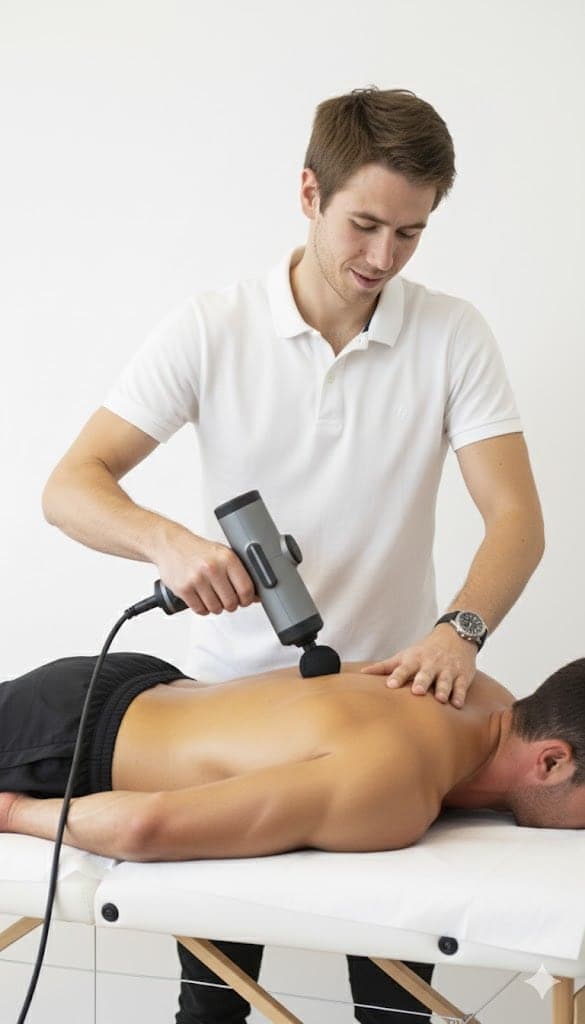
Written by
Chris
Massage therapist, nutrition and exercise physiologist
Norwegian-certified with a Bachelor’s in Physical Education and Nutrition and over ten years of clinical practice, working from a portable table in clients’ homes across the Paphos district.
This article is general information, not a medical diagnosis. If you have severe, worsening or unexplained pain, numbness, weakness, or pain after an accident, see a doctor first.