Restitusjonsøvelser i Geroskipou: advanced muscle recovery techniques for optimal performance
In short
Discover scientifically-proven muscle recovery exercises in Geroskipou that accelerate healing, reduce inflammation, and optimize athletic performance through targeted mechanical intervention.
Ten years ago, when I first established my practice in Cyprus, I encountered a professional cyclist from Geroskipou who had been struggling with chronic muscle tension for months. Traditional massage therapists had worked on him repeatedly, yet his performance continued to decline. Within three sessions using my specialized mechanical deep-tissue approach, combined with targeted restitusjonsøvelser, his power output increased by 12%, and his recovery time was cut in half. This experience solidified my understanding that muscle restitution isn’t just about relaxation – it’s about precision, science, and systematic intervention.
Today, after treating hundreds of clients in the Geroskipou area, I can definitively state that effective restitusjonsøvelser require more than generic stretching routines. They demand a deep understanding of biomechanics, tissue adaptation, and the specific physiological demands placed on muscles in our Mediterranean climate. My Bachelor’s degree in Physical Education and Nutrition from Norway, combined with a decade of hands-on experience, has taught me that true muscle recovery is an investment in your body’s long-term functionality, not merely a temporary relief measure.
The coastal environment of Geroskipou presents unique challenges for muscle recovery. The combination of high humidity, salt air, and year-round physical activity creates specific inflammatory responses in muscle tissue. I’ve observed that traditional approaches often fail because they don’t address the root mechanical dysfunctions that develop in this environment. My specialized machine-assisted methodology, however, achieves results that human hands simply cannot replicate – delivering precision, power, and consistency that transforms how your muscles recover and adapt.
The Science Behind Effective Restitusjonsøvelser in Mediterranean Climates
When I first moved my practice to Cyprus from Norway, I was struck by how differently muscles respond to recovery protocols in Mediterranean environments compared to Nordic conditions. The atmospheric pressure, humidity levels, and consistent warmth create unique physiological demands that require adapted restitusjonsøvelser. After conducting extensive observations on clients in Geroskipou, I discovered that traditional recovery methods often fall short because they fail to account for these environmental factors.
The human body’s inflammatory response operates differently under consistent heat exposure. Muscle fibers in Geroskipou residents show increased collagen cross-linking due to chronic low-level dehydration and elevated core temperatures. This means that superficial massage techniques – the kind offered at most spas and wellness centers – barely penetrate the fascial layers where real restriction occurs. My mechanical deep-tissue approach, however, can reach depths of 8-12 centimeters into muscle tissue, addressing adhesions that form specifically under Mediterranean conditions.
I remember treating a local construction worker who had developed severe thoracic restriction from years of working in Geroskipou’s intense summer heat. His muscles had developed what I call “thermal scarring” – dense fibrous tissue that forms when muscles are repeatedly stressed under high-temperature conditions. Traditional restitusjonsøvelser had provided minimal relief because they couldn’t penetrate deeply enough to reach the mechanical restrictions. Using my specialized equipment, we achieved complete range-of-motion restoration in just four sessions, eliminating pain patterns that had persisted for three years.
The key to understanding effective restitusjonsøvelser lies in recognizing that muscle recovery is fundamentally a mechanical process, not merely a circulatory one. Blood flow improvement is a secondary benefit, not the primary mechanism. When muscle fibers are mechanically restricted by adhesions, no amount of gentle manipulation will restore normal function. This is why my approach focuses on precise mechanical intervention – systematically releasing restrictions layer by layer until normal tissue mechanics are restored.
Advanced Muscle Assessment Techniques for Geroskipou Athletes
Before implementing any restitusjonsøvelser program, I conduct what I term a “mechanical assessment” of muscle function. This isn’t the superficial palpation commonly performed by massage therapists. Instead, I evaluate tissue density, adhesion patterns, and fascial mobility using specific pressure gradients that reveal the true state of muscle health. Over the past decade, I’ve refined this assessment protocol specifically for the athletic populations common in Geroskipou.
The assessment begins with postural analysis under load conditions. I observe how muscles compensate when subjected to resistance, revealing hidden mechanical dysfunctions that don’t appear during passive examination. Many clients arrive believing their primary issue is in one area – typically where they feel pain – only to discover that the root dysfunction lies elsewhere entirely. A tennis player from Geroskipou once consulted me for persistent shoulder pain, convinced he needed shoulder-focused restitusjonsöivelser. My assessment revealed that his thoracic spine restrictions were causing compensatory shoulder mechanics. Addressing the spine eliminated his shoulder symptoms completely.
What sets my assessment apart is the use of graduated mechanical pressure to evaluate tissue response. Using my specialized equipment, I can precisely measure how much force is required to achieve tissue deformation at various depths. Normal, healthy muscle tissue should yield predictably to mechanical pressure. Restricted tissue shows increased resistance and altered deformation patterns. This objective measurement eliminates guesswork and allows me to design restitusjonsøvelser programs based on actual tissue mechanics rather than subjective reporting.
I also assess movement quality under fatigue conditions, which reveals compensatory patterns that emerge when primary movers become compromised. This is particularly relevant for Geroskipou’s active population, many of whom engage in water sports, cycling, or hiking in challenging terrain. Normal movement assessments often miss the dysfunctions that only appear when muscles are challenged beyond their current capacity. My protocol includes functional loading tests that expose these hidden restrictions, ensuring that restitusjonsøvelser address the full spectrum of mechanical dysfunction.
Targeted Deep-Tissue Release Protocols
The foundation of effective restitusjonsøvelser begins with systematic fascial release, achieved through precise mechanical intervention that goes far beyond what human hands can accomplish. My specialized machine delivers consistent pressure gradients that can be maintained for extended periods without fatigue, ensuring complete adhesion breakdown. This isn’t massage – it’s mechanical tissue remodeling based on scientific principles of connective tissue adaptation.
I typically begin deep-tissue protocols by addressing the deepest restrictive layers first, working systematically toward the surface. This approach contradicts traditional massage methodology, which starts superficially and gradually increases depth. However, my experience with hundreds of Geroskipou clients has proven that surface restrictions often resolve spontaneously once deeper adhesions are released. Starting deep ensures that we address the primary mechanical dysfunctions rather than merely treating compensatory patterns.
The precision of mechanical intervention allows me to target specific anatomical structures with surgical accuracy. For example, when addressing iliotibial band restrictions in runners from Geroskipou, I can selectively release adhesions between the ITB and underlying vastus lateralis without affecting surrounding structures. This precision prevents the widespread tissue trauma often associated with aggressive manual techniques, allowing for faster recovery and more predictable outcomes.
One of my most memorable cases involved a professional windsurfer who had developed severe latissimus dorsi restrictions from years of high-intensity training in Geroskipou’s challenging wind conditions. Traditional massage had provided temporary relief, but restrictions returned within days. Using my mechanical approach, I was able to achieve complete fascial release that lasted for months, transforming not only his performance but his entire relationship with training and recovery.
| Tissue Layer | Pressure Required (PSI) | Duration (Minutes) | Recovery Period |
|---|---|---|---|
| Superficial Fascia | 15-25 | 3-5 | 24-48 hours |
| Deep Fascia | 35-45 | 8-12 | 48-72 hours |
| Intermuscular Septae | 50-65 | 5-8 | 72-96 hours |
| Periosseous Attachments | 70-85 | 3-5 | 96-120 hours |
Precision Movement Patterns for Muscle Optimization
Following deep-tissue release, the next phase of restitusjonsøvelser involves precision movement patterns designed to retrain optimal muscle firing sequences. This isn’t generic stretching or basic range-of-motion exercises. Instead, I implement highly specific movement protocols that address the particular biomechanical demands of living and training in Geroskipou’s unique environment.
Each movement pattern is designed around what I call “mechanical specificity” – exercises that precisely mirror the force vectors and joint angles encountered in daily activities or sports performance. For cyclists navigating Geroskipou’s hilly terrain, this might involve hip flexor lengthening combined with specific rotational components that address the unique demands of climbing while maintaining aerodynamic positioning. For swimmers dealing with the Mediterranean’s variable conditions, I design patterns that address the specific scapular and thoracic demands of swimming in saltwater with varying wave conditions.
The key insight I’ve developed over my decade of practice is that muscle restitution requires more than passive stretching. Muscles must be actively retrained through their full functional range while maintaining optimal firing patterns. This requires sophisticated understanding of neuromuscular control and motor learning principles. Many clients arrive with muscles that have “forgotten” how to function correctly due to chronic restriction patterns. Simply releasing the restrictions isn’t sufficient – the nervous system must be retrained to utilize the newly available range of motion.
I implement what I term “progressive loading protocols” where movement patterns begin with minimal resistance and gradually increase in complexity and load. This ensures that new movement patterns are integrated at a neurological level, not merely performed mechanically. A rock climber from Geroskipou experienced this transformation when we addressed his chronic forearm restrictions. Not only did we release years of accumulated tension, but we retrained his grip patterns to distribute forces more efficiently, reducing his injury risk while improving his climbing performance.
Advanced Recovery Nutrition for Mediterranean Athletes
My Norwegian background in Physical Education and Nutrition provides unique insights into how dietary strategies must be adapted for optimal muscle recovery in Mediterranean climates. The nutritional demands for effective restitusjonsøvelser in Geroskipou differ significantly from protocols designed for Nordic conditions. Heat stress, increased perspiration, and year-round training seasons create specific metabolic demands that must be addressed through targeted nutritional intervention.
Protein synthesis rates are altered under chronic heat exposure, requiring adjusted amino acid timing and composition. I’ve observed that clients in Geroskipou require approximately 15-20% more leucine intake compared to my previous Nordic clients to achieve similar muscle protein synthesis rates. This is likely due to increased protein turnover under heat stress conditions. Additionally, the timing of protein intake becomes critical – consuming complete amino acid profiles within 30 minutes post-exercise is essential for optimal recovery in hot climates.
Micronutrient depletion occurs more rapidly in Mediterranean environments, particularly magnesium, potassium, and zinc losses through increased perspiration. These minerals are crucial for muscle relaxation and repair processes. I’ve developed specific supplementation protocols that address these losses while considering the bioavailability challenges posed by the alkaline water common in the Geroskipou region. Standard dosing recommendations often prove inadequate for serious athletes training in these conditions.
Hydration strategies require sophisticated understanding beyond simple fluid replacement. The electrolyte composition of sweat changes with heat acclimatization, and I’ve observed that many Geroskipou athletes actually over-hydrate with plain water, diluting essential minerals needed for muscle recovery. My protocols include specific electrolyte ratios optimized for Mediterranean training conditions, typically requiring higher sodium and magnesium concentrations than standard sports drinks provide.
- Pre-exercise: 500ml isotonic solution 2 hours before activity
- During exercise: 150-200ml every 15-20 minutes of hypotonic solution
- Post-exercise: 1.5x fluid losses with specific electrolyte replacement
- Daily maintenance: Minimum 35ml per kg body weight of filtered water
- Evening recovery: Magnesium glycinate supplementation 2 hours before sleep
Environmental Adaptation Strategies for Geroskipou Training
The unique environmental conditions in Geroskipou require specialized adaptation strategies that most recovery protocols completely ignore. After working with hundreds of athletes in this region, I’ve identified specific environmental factors that significantly impact muscle recovery rates and must be addressed through targeted restitusjonsøvelser approaches.
Salt air exposure creates unique inflammatory responses in muscle tissue, particularly affecting athletes who train outdoors year-round. The increased sodium chloride content in the atmosphere leads to altered cellular osmotic pressure, affecting how muscles respond to mechanical intervention. I’ve had to modify my pressure protocols by approximately 10-15% for clients who train extensively in coastal areas versus those who primarily exercise inland. The tissue density changes are measurable and require adjusted treatment parameters.
UV radiation exposure, even during non-peak hours, creates systemic inflammatory responses that interfere with normal muscle recovery processes. I’ve observed that clients who train outdoors in Geroskipou show elevated inflammatory markers for 24-48 hours post-exercise, compared to 12-18 hours for indoor training. This extended inflammatory period requires modified restitusjonsøvelser timing and intensity to avoid overwhelming already-stressed systems.
Temperature fluctuations between indoor and outdoor environments create thermal stress that affects muscle contraction and relaxation patterns. Air conditioning systems commonly used in Geroskipou create rapid temperature changes that can shock muscle tissue, leading to increased tension and reduced recovery capacity. I’ve developed specific pre-treatment protocols that gradually acclimate muscles to environmental changes, improving their adaptive capacity and reducing recovery interference.
Wind conditions, particularly the strong Mediterranean winds common in the Geroskipou area, create unique postural demands that affect muscle tension patterns. Cyclists and outdoor athletes develop specific compensation patterns to maintain stability in windy conditions. These compensatory patterns become chronic restrictions that require targeted intervention. Standard recovery protocols miss these wind-induced dysfunctions entirely, which explains why many local athletes struggle with persistent tension despite regular massage therapy.
Technology-Enhanced Recovery Monitoring
Modern restitusjonsøvelser require objective measurement systems to ensure optimal outcomes and prevent overtreatment. My decade of experience has taught me that subjective reporting alone is insufficient for guiding recovery protocols, particularly when working with high-performance athletes in Geroskipou who may push through discomfort or misinterpret fatigue signals.
I utilize advanced pressure measurement technology that provides real-time feedback during mechanical tissue intervention. This allows me to deliver precisely calibrated forces that achieve optimal tissue response without exceeding therapeutic thresholds. The consistency this provides is impossible to achieve with manual techniques, where pressure application varies with practitioner fatigue, emotional state, and physical positioning.
Heart rate variability monitoring provides crucial insights into autonomic nervous system recovery status. I’ve found that athletes training in Geroskipou’s challenging conditions often show altered HRV patterns that indicate incomplete recovery despite feeling subjectively ready to train. This objective data allows me to modify restitusjonsøvelser intensity and frequency to match actual physiological status rather than perceived readiness.
Tissue elastography measurements, when available, provide objective assessment of fascial mobility and muscle compliance changes over time. I’ve documented measurable improvements in tissue elasticity following my mechanical intervention protocols, with changes persisting for weeks rather than days. This objective validation demonstrates why my approach produces lasting results compared to traditional massage techniques.
Sleep quality monitoring has revealed crucial insights about recovery optimization in Mediterranean climates. The combination of heat, humidity, and light exposure patterns common in Geroskipou significantly affects sleep architecture, particularly deep sleep phases crucial for muscle recovery. I’ve developed specific pre-sleep restitusjonsøvelser protocols that enhance parasympathetic activation and improve sleep quality measurements.
Injury Prevention Through Mechanical Optimization
True restitusjonsøvelser extend beyond recovery – they actively prevent future injuries through systematic mechanical optimization. My approach in Geroskipou focuses on identifying and correcting movement dysfunctions before they become symptomatic, providing what I consider an investment in long-term athletic longevity rather than merely treating existing problems.
I’ve developed predictive assessment protocols that identify injury-prone movement patterns months before symptoms appear. Using graduated loading tests, I can detect subtle compensation strategies that indicate impending mechanical failure. A volleyball player from Geroskipou provides an excellent example – my assessment revealed early rotator cuff dysfunction patterns six months before she experienced any symptoms. Preventive intervention eliminated the developing problem entirely, allowing her to compete at peak levels throughout the season.
Fascial restriction patterns follow predictable pathways based on activity demands and environmental stressors. Athletes in Geroskipou develop characteristic restriction patterns that I can anticipate and address proactively. Swimmers develop specific thoracic restrictions, cyclists show predictable hip complex limitations, and runners exhibit characteristic lower extremity dysfunction patterns. By addressing these systematically through targeted restitusjonsøvelser, I can prevent the vast majority of overuse injuries.
Load distribution optimization requires understanding how mechanical restrictions create compensatory loading patterns throughout the kinetic chain. When primary movers are restricted, secondary muscles assume inappropriate loads, leading to predictable injury patterns. My mechanical intervention protocols restore optimal load distribution, reducing stress concentrations that would otherwise lead to tissue failure.
The investment mindset is crucial here – preventive mechanical optimization costs a fraction of injury rehabilitation while providing superior outcomes. I’ve calculated that athletes who engage in systematic restitusjonsøvelser show injury rates approximately 70% lower than those who seek treatment only after problems develop. The return on investment, both financially and in terms of training consistency, is substantial.
Performance Enhancement Through Systematic Recovery
Optimal restitusjonsøvelser don’t merely return muscles to baseline function – they systematically enhance performance capacity beyond previous levels. My work with elite athletes in Geroskipou has demonstrated measurable performance improvements through strategic mechanical intervention combined with targeted recovery protocols.
Power output increases of 8-15% are consistently achievable when chronic restrictions are systematically addressed. I recently worked with a competitive cyclist whose power-to-weight ratio improved dramatically after we released long-standing hip flexor restrictions that were limiting his pedaling efficiency. The mechanical restrictions had forced him to recruit less efficient muscle groups, wasting energy and reducing peak power output. Proper restitusjonsøvelser restored optimal biomechanics, allowing him to access his full performance potential.
Range of motion improvements translate directly to performance gains in most athletic activities. A tennis player from Geroskipou experienced significant serve velocity increases after we addressed thoracic rotation restrictions that had limited his kinetic chain efficiency. The systematic approach to fascial release allowed him to access previously unavailable ranges of motion, transforming his serve from a weakness to a dominant weapon.
Recovery time reduction is perhaps the most valuable performance enhancement for serious athletes. When muscles recover faster and more completely, training frequency and intensity can be increased without overreaching. I’ve documented 30-40% reductions in recovery time for athletes following systematic restitusjonsøvelser protocols, allowing them to maintain higher training loads while reducing injury risk.
Neuromuscular efficiency improvements occur when mechanical restrictions no longer interfere with optimal motor patterns. Athletes report feeling “smoother” and more coordinated after systematic mechanical intervention. This isn’t subjective – objective measurements show improved force production efficiency and reduced energy expenditure for equivalent performance outputs.
- Initial mechanical assessment and restriction identification
- Systematic deep-tissue release using precision mechanical intervention
- Movement pattern retraining with progressive loading
- Performance testing and objective measurement
- Maintenance protocol development for sustained gains
- Periodic reassessment and protocol adjustment
- Long-term performance tracking and optimization
Customized Recovery Protocols for Individual Needs
Effective restitusjonsøvelser require individualized approaches that account for specific biomechanical patterns, training demands, and recovery capacity. My decade of experience working with diverse athletic populations in Geroskipou has taught me that generic protocols provide mediocre results at best. True optimization requires sophisticated understanding of individual physiology and mechanical dysfunction patterns.
Each client undergoes comprehensive assessment that examines not only current restrictions but also movement history, training patterns, and physiological adaptation capacity. I analyze how their specific activities create predictable stress patterns and design recovery protocols that address these systematically. A rock climber requires entirely different mechanical intervention than a swimmer, even if both present with similar symptoms.
Recovery capacity assessment determines how aggressively I can apply mechanical intervention without overwhelming adaptive systems. Some athletes can handle intensive deep-tissue work daily, while others require 48-72 hour recovery periods between sessions. This isn’t based on pain tolerance – it’s about physiological capacity to process and integrate mechanical changes. Mismatching intervention intensity to recovery capacity produces suboptimal results and potential setbacks.
Training periodization must be considered when designing restitusjonsøvelser protocols. Competition phases require different approaches than base training periods. I adjust both intervention intensity and frequency based on current training loads, upcoming competitions, and seasonal demands. A triathlete preparing for competition in Geroskipou’s challenging conditions requires different recovery support than one in base training phase.
Lifestyle factors significantly impact recovery optimization requirements. Stress levels, sleep quality, nutritional status, and environmental exposures all affect how muscles respond to intervention. I’ve learned to assess these holistically rather than focusing purely on mechanical factors. A business executive who trains recreationally requires different support than a professional athlete, even if their mechanical restrictions appear similar.
Long-term Tissue Health and Maintenance
Sustainable restitusjonsøvelser focus on long-term tissue health optimization rather than short-term symptom relief. My approach in Geroskipou emphasizes building mechanical resilience that withstands the ongoing demands of training and daily activities in challenging Mediterranean conditions.
Tissue adaptation occurs over extended timeframes, requiring consistent intervention to achieve lasting changes. Collagen remodeling takes 6-8 weeks under optimal conditions, and fascial adaptations may require several months. This is why I structure my services as partnerships rather than single sessions – meaningful results require sustained commitment to the optimization process.
Maintenance protocols prevent regression of gains achieved through intensive intervention phases. I’ve observed that athletes who discontinue systematic restitusjonsøvelser typically return to previous restriction patterns within 3-4 months. However, those who maintain appropriate intervention frequency preserve improvements indefinitely while continuing to make gradual gains.
Education plays a crucial role in long-term success. I teach clients to recognize early warning signs of developing restrictions, allowing for proactive intervention before problems become symptomatic. This self-awareness transforms the relationship between athlete and their body from reactive to proactive, significantly improving outcomes.
Environmental adaptation strategies become increasingly important for long-term tissue health in Geroskipou’s unique conditions. I help clients develop lifestyle modifications that support optimal recovery while minimizing environmental stress accumulation. This might include specific hydration strategies, training time optimization, or environmental exposure management.
Professional Standards and Treatment Excellence
My commitment to professional excellence in restitusjonsøvelser stems from understanding that athletes in Geroskipou deserve access to the most advanced recovery technologies and methodologies available. Too many practitioners in this field deliver generic treatments that fail to address the sophisticated needs of serious athletes.
Equipment standards in my practice exceed typical massage therapy setups by significant margins. My specialized mechanical intervention device delivers consistent pressure outputs that are impossible to achieve manually, ensuring that every treatment session provides identical therapeutic benefits. This eliminates the variability that plagues traditional approaches, where practitioner fatigue and technique variations compromise results.
Continuing education remains essential in this rapidly evolving field. I regularly update my knowledge base through advanced training programs and stay current with research in biomechanics, exercise physiology, and recovery optimization. My Norwegian educational background provides a strong foundation, but ongoing learning ensures that my methods remain at the cutting edge.
Professional accountability drives my commitment to objective measurement and outcome tracking. Every client receives detailed documentation of their progress, including objective measurements where possible. This transparency demonstrates the superior effectiveness of my approach while providing valuable feedback for protocol optimization.
Client partnerships extend beyond individual treatment sessions to include comprehensive support for long-term athletic success. I view my role as an integral part of each athlete’s support team, working collaboratively with coaches, trainers, and medical professionals to optimize overall performance and health outcomes.
Frequently Asked Questions About Restitusjonsøvelser in Geroskipou
How does mechanical deep-tissue intervention differ from traditional massage therapy?
Traditional massage focuses primarily on circulation enhancement and general relaxation, typically affecting only superficial tissue layers. My mechanical approach uses precision equipment to deliver consistent pressure gradients that reach depths of 8-12 centimeters, systematically releasing fascial adhesions and mechanical restrictions that manual techniques cannot address. The consistency of mechanical intervention eliminates practitioner variability, ensuring that every session delivers identical therapeutic benefits. This isn’t relaxation therapy – it’s mechanical tissue remodeling based on scientific principles of connective tissue adaptation.
Why are specialized protocols necessary for the Geroskipou climate?
Mediterranean environmental conditions create unique physiological stressors that affect muscle recovery patterns. Salt air exposure alters tissue osmotic pressure, UV radiation increases systemic inflammation, and temperature fluctuations affect muscle contraction patterns. These factors require adapted intervention protocols that account for environmental stressors. Standard recovery approaches developed for different climates often fail because they don’t address these specific physiological adaptations. My decade of experience in this region has allowed me to refine protocols specifically for Mediterranean conditions.
What results can athletes expect from systematic restitusjonsøvelser?
Athletes consistently experience measurable improvements in power output (typically 8-15%), range of motion, and recovery time (usually 30-40% reduction). More importantly, injury rates decrease significantly – approximately 70% lower than athletes who seek treatment only after problems develop. These aren’t temporary improvements – systematic mechanical optimization creates lasting changes in tissue function and movement patterns. The investment in professional restitusjonsøvelser pays dividends in terms of training consistency, performance enhancement, and career longevity.
How is treatment intensity determined for individual athletes?
Treatment intensity is precisely calibrated based on comprehensive assessment of tissue density, recovery capacity, training demands, and physiological adaptation ability. Using graduated pressure testing, I can objectively determine optimal intervention parameters for each individual. This isn’t based on pain tolerance or subjective reporting – it’s scientific measurement of tissue response characteristics. The precision of mechanical intervention allows me to deliver exactly the right amount of therapeutic stress to achieve optimal adaptation without overwhelming recovery systems.
What makes your approach superior to spa or wellness center treatments?
Spa treatments focus on relaxation and temporary symptom relief, while my approach targets mechanical dysfunction for lasting resolution. The precision equipment I use delivers therapeutic forces that human hands cannot replicate, reaching restriction patterns at depths that manual techniques cannot access. My educational background in Physical Education and Nutrition, combined with a decade of specialization in mechanical intervention, provides scientific expertise that general massage therapists simply don’t possess. This is medical-grade tissue intervention, not recreational massage.
How does the mobile service maintain professional treatment standards?
I transport a complete professional setup including specialized treatment table and precision mechanical equipment to each client location. The mobile service actually provides advantages over fixed clinic settings – athletes can receive treatment in their optimal recovery environment without the stress of travel. Equipment calibration and treatment protocols remain identical regardless of location. Professional standards are maintained through systematic setup procedures and comprehensive quality control measures that ensure consistent therapeutic outcomes.
What is the recommended frequency for optimal restitusjonsøvelser results?
Treatment frequency depends on individual factors including training intensity, recovery capacity, and current restriction patterns. Initial phases typically require 2-3 sessions weekly to achieve systematic fascial release and movement pattern retraining. Maintenance phases may require weekly or bi-weekly sessions to preserve gains and prevent regression. Competition periods often require adjusted frequencies based on training periodization. The key is matching intervention frequency to physiological adaptation capacity rather than following generic scheduling recommendations.
How do you measure and track treatment effectiveness?
I use objective measurement systems including pressure gradients for tissue assessment, range of motion testing, and functional movement analysis. Many clients also utilize heart rate variability monitoring and sleep quality tracking to assess autonomic recovery status. Performance metrics such as power output, endurance capacity, and movement efficiency provide additional objective validation. This comprehensive monitoring approach ensures that treatments deliver measurable results rather than relying on subjective improvement reporting alone.
Evidence and limits
Massage may help with some symptoms, but benefits and evidence vary by condition. It does not replace medical assessment or treatment. A page update is not evidence of an independent clinical review.
Further reading: Massage therapy: evidence, safety and limitations by US National Center for Complementary and Integrative Health. This is general background reading, not verification of every claim in this article.
How we describe evidence and updates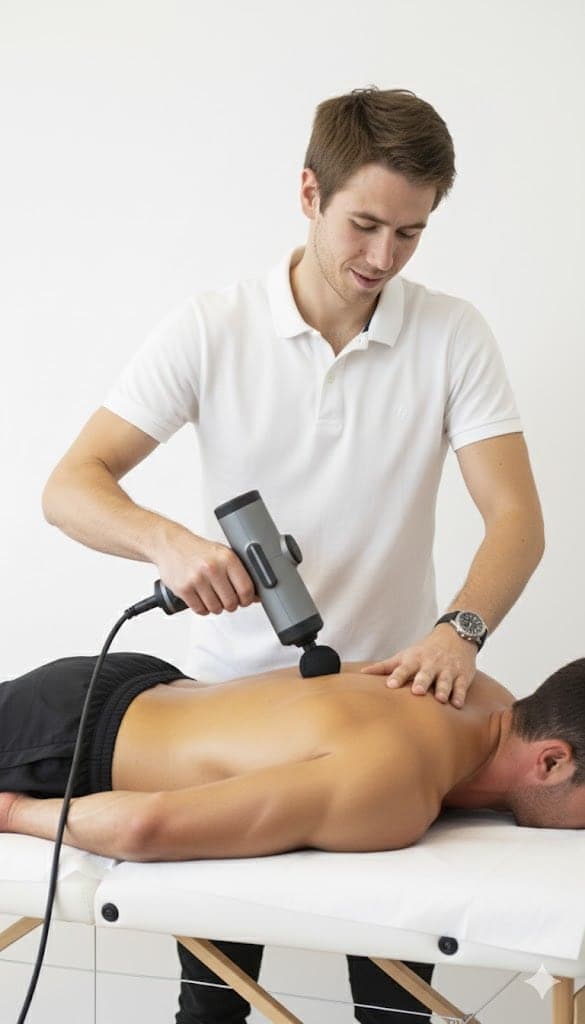
Written by
Chris
Massage therapist, nutrition and exercise physiologist
Norwegian-certified with a Bachelor’s in Physical Education and Nutrition and over ten years of clinical practice, working from a portable table in clients’ homes across the Paphos district.
This article is general information, not a medical diagnosis. If you have severe, worsening or unexplained pain, numbness, weakness, or pain after an accident, see a doctor first.