Sports Massage for Golfers Geroskipou: Advanced Deep-Tissue Treatment for Peak Performance
In short
Discover how specialized sports massage for golfers in Geroskipou addresses the root causes of swing limitations, lower back pain, and shoulder tension through precision mechanical deep-tissue treatment.
I’ve worked with golfers for ten years now, and I can tell you with absolute certainty: the pain limiting your swing, the stiffness affecting your drive distance, and the chronic lower back discomfort after 18 holes are not inevitable consequences of the sport. They’re mechanical problems with mechanical solutions—and most golfers in Geroskipou have never experienced the level of treatment that actually resolves these issues durably.
When a golfer tells me they’ve “tried massage before” and it didn’t help, I’m not surprised. Traditional massage, no matter how skilled the therapist’s hands, simply cannot reach the depth and precision required to release the fascial restrictions and muscular adhesions that accumulate from thousands of repetitive golf swings. Your body needs more than relaxation—it needs structural intervention at the level where dysfunction actually exists.
That’s why I’ve dedicated my practice exclusively to advanced mechanical deep-tissue massage, utilizing specialized equipment that delivers results human hands cannot match. With a Bachelor’s degree in Physical Education and Nutrition from Norway and a decade of clinical experience, I’ve developed a treatment protocol specifically designed for the biomechanical demands of golf—and I bring this entire professional setup directly to your location in Geroskipou.
Understanding the Biomechanical Reality of Golf-Related Dysfunction
Golf is not a gentle sport. Despite its reputation as a low-impact activity, the rotational forces generated during a full swing place extraordinary demands on your body’s kinetic chain. Every drive you execute involves a complex sequence of movements: coiling through the thoracic spine, generating power through hip rotation, stabilizing with core musculature, and decelerating the club through shoulder and wrist mechanics.
When these movements occur hundreds of times per week, specific muscular and fascial patterns develop. The latissimus dorsi becomes chronically shortened on your dominant side. The hip flexors develop adhesions that limit rotation. The erector spinae muscles along your lumbar spine accumulate tension that manifests as persistent lower back pain. Your rotator cuff muscles—particularly the infraspinatus and teres minor—develop trigger points that restrict your backswing and reduce power transfer.
Most treatments address only the superficial symptoms of these conditions. A standard massage might temporarily relieve surface tension, but it leaves the underlying structural problems untouched. Pain returns within days because the root cause—the deep fascial restrictions and muscular adhesions created by your swing mechanics—remains unresolved.
I don’t treat symptoms. I treat causes. And that requires working at a depth and with a precision that traditional methods cannot achieve.
Why Golfers in Geroskipou Need Specialized Mechanical Deep-Tissue Treatment
Let me be direct about why my approach delivers results where conventional massage fails.
Depth: Reaching the Structural Level Where Dysfunction Exists
The fascial restrictions limiting your hip rotation exist 4-6 centimeters below the surface of your skin. The muscular adhesions preventing full shoulder range of motion are embedded within the deep layers of your rotator cuff complex. Human thumbs, elbows, and forearms—no matter how strong—cannot consistently reach these structures with the sustained pressure required to create lasting change.
The specialized machine I use works deeper than hands can penetrate. It delivers focused mechanical force directly to the dysfunctional tissue, breaking up adhesions, releasing fascial restrictions, and restoring normal sliding motion between muscle layers. This isn’t comfort therapy—it’s structural intervention at the level where your body actually needs it.
Precision: Targeting Specific Structures With Clinical Accuracy
Golf-related dysfunction follows predictable anatomical patterns. Your psoas major becomes hypertonic from maintaining spine angle during your swing. Your subscapularis develops trigger points from internal rotation during your follow-through. Your quadratus lumborum compensates for inadequate hip mobility, creating chronic lower back strain.
Effective treatment requires identifying these specific structures and applying the appropriate technique, angle, and pressure to each one. The tool I use provides millimeter-level precision, allowing me to target individual muscle bellies, fascial planes, and trigger points with an accuracy that fingers cannot match. This precision means every session addresses exactly what your body needs—nothing wasted, nothing missed.
Consistency: Eliminating Variables That Compromise Results
Human performance varies. A therapist using manual techniques might deliver excellent pressure in the first session but less effective treatment when fatigued, distracted, or having an “off day.” This inconsistency compromises your results and extends your treatment timeline unnecessarily.
Mechanical deep-tissue treatment eliminates this variable entirely. The intensity I deliver in your first session is identical to what you receive in your tenth session. The depth reached in the first fifteen minutes matches the depth reached in the final fifteen minutes. This consistency accelerates your progress and ensures predictable, reliable outcomes every single time.
The Golf-Specific Treatment Protocol: Addressing Your Body’s Actual Needs
When I work with a golfer, I’m not following a generic massage routine. I’m executing a systematically designed treatment protocol based on the specific biomechanical demands of your swing and the dysfunction patterns I identify during assessment.
Lower Body Foundation: Establishing the Platform for Power Generation
Your swing begins with your feet and rises through your kinetic chain. Any restriction in your lower body directly compromises every aspect of your game. I address this foundation first, focusing on structures that golfers typically neglect but that fundamentally determine your performance capability.
The hip flexor complex requires particular attention. Your iliopsoas muscle group becomes chronically shortened from maintaining forward spine angle throughout your round. This restriction limits hip extension during your backswing, forcing compensatory movement patterns that reduce power and increase injury risk. I work deep into the anterior hip capsule, releasing fascial adhesions and restoring full hip extension capability—immediately improving your ability to load properly into your trail leg.
Your glute medius and piriformis muscles control hip stability and rotation. When these structures develop dysfunction—which they invariably do from repeated weight shifting—your pelvis cannot maintain proper position during your swing. Power leaks through unstable joints instead of transferring efficiently into the club. I release these deep hip rotators systematically, restoring the stability required for consistent ball striking.
The adductor complex along your inner thigh deserves equal attention. These muscles control lateral stability and contribute to rotational power. Adhesions here limit your ability to maintain width in your stance and restrict hip mobility. Deep treatment of the adductor longus, brevis, and magnus creates immediate improvements in your ability to rotate through the ball without losing posture.
Core and Spine: Addressing the Axis of Rotation
Your thoracic spine is the axis around which your entire swing rotates. Any limitation in segmental mobility through this region directly reduces your shoulder turn, compromises your coiling ability, and forces excessive rotation through your lumbar spine—the primary cause of lower back pain in golfers.
I address the erector spinae muscles along your entire spine, but particularly focus on the thoracolumbar junction where your mobile lumbar spine transitions into your less mobile thoracic spine. This region accumulates enormous tension from thousands of rotational movements. Deep mechanical work through the longissimus and iliocostalis muscles releases chronic holding patterns, immediately increasing your rotational capacity.
The quadratus lumborum—a deep muscle connecting your ribs to your pelvis—becomes hypertonic in virtually every golfer I treat. This muscle attempts to stabilize your spine during rotation but ends up creating chronic restriction instead. I work deep along the lateral border of this muscle, releasing trigger points and restoring normal length—often eliminating lower back pain that golfers have experienced for years.
Your oblique muscles—both internal and external—control rotational movement but frequently develop adhesions that restrict smooth motion. These restrictions create compensatory patterns where other structures work harder than they should. Targeted treatment of the oblique chains restores fluid rotation through your core.
Upper Body and Shoulder Complex: Optimizing Your Swing Mechanics
Your shoulders generate club speed, but they can only perform optimally when freed from the restrictions that develop through repetitive motion. The rotator cuff complex requires particular attention in every golfer.
The infraspinatus and teres minor muscles—responsible for external rotation—become laden with trigger points from the eccentric loading they experience during your downswing. These trigger points restrict your backswing range and reduce power output. Deep mechanical treatment of the posterior rotator cuff eliminates these restrictions, immediately increasing your shoulder turn and improving your ability to load the club properly.
The subscapularis—the internal rotator on the anterior surface of your scapula—develops chronic tension from the powerful internal rotation required during your follow-through. This muscle is impossible to reach effectively with hands; it sits beneath your scapula and requires sustained, precise pressure to release properly. The specialized tool I use accesses this structure directly, releasing adhesions that have likely restricted your shoulder function for months or years.
Your latissimus dorsi—the large muscle connecting your arm to your spine—becomes chronically shortened on your dominant side from thousands of pull-down movements during your swing. This restriction limits your ability to extend your arms fully during setup and follow-through. Comprehensive treatment along the entire length of this muscle restores balanced length and improves your swing arc immediately.
Real Results: What Golfers Actually Experience After Treatment
I don’t deal in subjective feelings or temporary relief. My clients experience measurable, lasting improvements in their golf performance and daily quality of life. Let me describe what actually happens when the structural restrictions limiting your body are properly addressed.
Immediate Changes You’ll Notice on the Course
After your first comprehensive treatment session, your body moves differently—and you feel it immediately during your next round. Your backswing extends further without forcing it. The sensation of restriction in your hips during rotation disappears. You maintain your spine angle through impact without the muscular fatigue you’ve become accustomed to.
Golfers typically report increased driver distance within the first week. This isn’t mysterious—when your hips rotate fully, your shoulders turn completely, and your core generates power efficiently, you simply produce more club speed. One client in Geroskipou gained 17 yards on his average drive after three sessions, not because he changed his swing, but because his body could finally execute the swing his mind intended.
Your lower back feels fundamentally different. The dull ache that typically appears around the 12th hole doesn’t materialize. The stiffness you experience after walking 18 holes significantly decreases. Several clients have told me they eliminated the routine of taking anti-inflammatory medication before their rounds—their bodies simply don’t produce the same inflammatory response when moving from a structurally sound baseline.
Long-Term Performance Enhancement Through Continued Treatment
The most significant benefits emerge through systematic, progressive treatment over time. Your body has accumulated restrictions over years of playing golf. While immediate improvements occur after single sessions, complete structural optimization requires a dedicated partnership where we progressively address deeper layers of dysfunction.
I work with golfers who’ve seen their handicaps drop 3-5 strokes within three months of beginning treatment—not from swing lessons, but purely from their bodies being able to execute movements that were previously restricted. When your kinetic chain functions properly, your natural swing mechanics emerge without conscious effort.
Consistency improves dramatically. Golfers tell me their ball striking becomes more predictable because their bodies move the same way on every swing. This consistency stems from muscular balance and proper fascial mobility—when tissue slides properly and muscles fire in balanced patterns, your movement becomes naturally repeatable.
Why Location Matters: Bringing Professional Treatment to Your Space in Geroskipou
I travel to your location in Geroskipou with a complete professional setup: specialized treatment bench, mechanical deep-tissue equipment, and everything required to deliver clinical-grade care in your home, office, or preferred location.
This approach serves a specific purpose beyond convenience. When you travel to a clinic, you experience treatment and then immediately engage with the stressors that created your dysfunction in the first place—sitting in your car, returning to your desk, resuming normal activities. Your nervous system never fully transitions into the parasympathetic state required for optimal healing.
When I bring treatment to your space, you remain in a controlled environment throughout the entire process. After your session, you can rest appropriately, allow your body to integrate the changes, and avoid the immediate physical demands that compromise treatment effectiveness. This seemingly small difference significantly accelerates your recovery timeline and enhances your results.
Investment Perspective: Understanding the True Cost of Unaddressed Dysfunction
Golfers frequently ask about treatment costs. I frame this conversation differently than most practitioners because I want you to understand what you’re actually investing in versus what you’re currently paying for inaction.
The Hidden Costs of Chronic Golf-Related Pain
| Cost Category | Typical Annual Expense | Effectiveness |
|---|---|---|
| Over-the-counter pain medication | €150-300 | Masks symptoms temporarily |
| Standard massage sessions (monthly) | €600-900 | Provides temporary relief only |
| Reduced playing frequency due to pain | €400-800 (lost green fees and membership value) | Avoidance, not solution |
| Diminished performance affecting enjoyment | Immeasurable | Progressive decline |
| Potential medical intervention if condition worsens | €1,000-5,000+ | Treats advanced stages of neglected issues |
Most golfers spend considerable money managing symptoms while the underlying structural problems progressively worsen. You’re not saving money by avoiding comprehensive treatment—you’re simply deferring the inevitable while accumulating additional dysfunction.
What You’re Actually Investing In
When you engage with my treatment protocol, you’re not purchasing an hour of relaxation. You’re investing in lasting structural changes that enhance your golf performance and improve your daily life quality for years afterward. You’re establishing a foundation of proper biomechanics that prevents future injury and slows the degenerative processes that typically accompany aging golfers.
Several of my long-term clients spend less annually on maintaining optimal body function with my specialized treatment than they previously spent on ineffective approaches that provided only temporary relief. More importantly, they’re playing better golf at 55 or 60 than they did at 45—a trajectory that contradicts the typical decline golfers experience.
The Assessment Process: Understanding Your Specific Dysfunction Patterns
Before beginning treatment, I conduct a comprehensive biomechanical assessment to identify the specific restrictions limiting your performance. This evaluation differs substantially from what you’ve likely experienced elsewhere.
I don’t ask you to lie down and then guess where you might hurt. I observe how your body actually moves through golf-specific patterns. I watch you simulate your setup position, rotate through a phantom swing, demonstrate your follow-through. I assess your hip internal and external rotation while lying supine. I evaluate your thoracic spine mobility in multiple planes of motion. I palpate specific structures to identify trigger points, adhesions, and areas of restricted fascial mobility.
This assessment reveals precisely which muscles are hypertonic, which fascial planes show restriction, which joints demonstrate limited range of motion, and which movement patterns show compensation. From this information, I design your specific treatment protocol—not a generic massage routine, but a systematically planned intervention targeting exactly what your body needs.
Throughout your treatment series, I continuously reassess and adjust the protocol. As we resolve initial restrictions, deeper layers of dysfunction become accessible. Your treatment evolves as your body changes, ensuring you’re always receiving exactly what you need at each stage of your structural optimization.
Common Golf-Related Conditions I Address: Specific Solutions for Specific Problems
Lower Back Pain: Addressing the Most Common Golf Complaint
Approximately 70% of golfers experience lower back pain at some point in their playing career. Most accept this as inevitable, but it’s entirely preventable and reversible with proper treatment.
The root cause typically combines three factors: insufficient hip mobility forcing excessive lumbar rotation, weak core stabilization allowing micro-movements during the swing, and chronic tension in the quadratus lumborum and erector spinae muscles from compensatory patterns. Traditional treatment addresses none of these factors at the structural level required for lasting resolution.
My protocol releases the deep spinal stabilizers, restores proper hip mobility, and eliminates the fascial restrictions that prevent your core muscles from functioning properly. Golfers who’ve experienced chronic lower back pain for years typically see complete resolution within 4-6 comprehensive treatment sessions—not temporary relief, but actual elimination of the mechanical problems causing their pain.
Shoulder Impingement and Rotator Cuff Dysfunction
The repetitive overhead motion of the golf swing creates specific patterns of rotator cuff dysfunction. The supraspinatus tendon becomes irritated from repeated impingement. The posterior cuff muscles develop trigger points from eccentric loading. The anterior structures become chronically tight from powerful acceleration forces.
Standard treatment approaches shoulder pain with generic exercises and superficial massage that cannot reach the dysfunctional tissue. I work directly on the rotator cuff structures themselves—releasing the subscapularis beneath the scapula, eliminating trigger points from the infraspinatus and teres minor, restoring proper scapulohumeral rhythm through targeted fascial release.
The result is not “managed” shoulder pain—it’s restored shoulder function that allows you to swing powerfully without limitation or discomfort.
Hip Restriction and Reduced Rotational Capacity
Your hip mobility determines your potential for generating power in your golf swing. When hip internal rotation becomes restricted—which it does in virtually all golfers—your pelvis cannot rotate properly during your backswing. Your lumbar spine compensates with excessive rotation, creating back pain. Your knee undergoes increased rotational stress, potentially leading to meniscal problems. Your swing plane changes, affecting your ball striking consistency.
I’ve worked with golfers whose hip internal rotation measured 15 degrees at initial assessment—severely restricted compared to the 40-45 degrees required for optimal swing mechanics. After addressing the deep hip capsule restrictions, psoas adhesions, and piriformis dysfunction, their rotation increased to 38-42 degrees. Their back pain disappeared. Their swing plane normalized. Their power output increased measurably.
This level of change cannot occur through stretching or traditional massage. It requires deep mechanical intervention at the capsular and fascial level—exactly what my specialized equipment delivers.
Comparing Treatment Approaches: Why Mechanical Deep-Tissue Delivers Superior Results
| Factor | Traditional Massage | Mechanical Deep-Tissue Treatment |
|---|---|---|
| Maximum effective depth | 2-3 cm into tissue | 5-7 cm, reaching deep fascial planes |
| Precision targeting | General area, limited accuracy | Millimeter-level targeting of specific structures |
| Consistency between sessions | Variable based on therapist condition | Identical pressure and technique every session |
| Treatment focus | Relaxation and symptom relief | Structural correction and lasting change |
| Results timeline | Temporary relief lasting days | Progressive improvement with lasting results |
| Ability to address golf-specific patterns | Generic approach applied to all clients | Customized protocol for golf biomechanics |
| Scientific basis | General wellness concepts | Biomechanical analysis and evidence-based intervention |
I’m not suggesting traditional massage has no value. It provides relaxation and temporary stress relief—worthy goals for some people. But if you’re a golfer seeking to resolve chronic pain, enhance performance, and optimize your body’s function, you need an entirely different level of intervention. You need treatment that addresses the actual structural problems limiting your capability.
The Science Behind Deep Mechanical Treatment: Understanding How This Works
Fascial Adhesions and Their Impact on Movement Quality
Fascia—the connective tissue that surrounds and interpenetrates every muscle in your body—should slide smoothly across adjacent structures during movement. This sliding capacity allows muscles to contract efficiently, joints to move through full range of motion, and kinetic chains to transfer force optimally.
Repetitive golf movements create micro-trauma within fascial planes. Your body responds with inflammatory processes that, over time, create adhesions—areas where fascial layers stick together instead of sliding smoothly. These adhesions restrict movement, limit power transfer, create compensatory patterns, and eventually produce pain.
Standard massage addresses fascia only superficially. The sustained, precise pressure required to break adhesions and restore normal fascial glide must be applied for extended periods directly to the restricted area—something that physically exhausts even the strongest therapists but that specialized mechanical equipment can maintain indefinitely.
Trigger Points and Their Effect on Muscle Function
Trigger points—hyperirritable nodules within muscle tissue—develop predictably in golfers at specific anatomical locations. These aren’t simply “tight spots”; they’re dysfunctional areas of muscle fiber that remain in sustained contraction, restrict blood flow, produce referred pain patterns, and inhibit normal muscle activation.
Your infraspinatus muscle develops trigger points that refer pain down your arm. Your gluteus medius develops trigger points that create hip pain you might mistake for joint problems. Your quadratus lumborum develops trigger points that produce the chronic lower back ache accompanying your golf game.
Effective trigger point treatment requires sustained pressure at a specific intensity for 60-90 seconds directly on the dysfunctional tissue. This duration and precision exceed what manual therapy can consistently deliver—but matches perfectly with what mechanical deep-tissue treatment provides.
Neurological Reset Through Intensive Mechanical Stimulation
Your nervous system maintains muscle tension levels based on proprioceptive feedback from muscle spindles and Golgi tendon organs. When muscles remain chronically hypertonic—as happens with golf-related overuse—your nervous system adopts this elevated tension as the new baseline.
Deep mechanical pressure stimulates Golgi tendon organs intensively, triggering autogenic inhibition—a reflex arc that causes the hypertonic muscle to release. This isn’t temporary relaxation; it’s a neurological reset that allows the muscle to return to normal resting length. Over repeated treatments, your nervous system adopts this healthier baseline as the new normal.
Frequently Asked Questions: Addressing Common Concerns About Advanced Treatment
How does this differ from the sports massage I’ve received at other facilities?
Most facilities offering “sports massage” provide skilled manual therapy focused on general muscle relaxation and superficial tension relief. While these treatments feel pleasant and provide temporary benefits, they cannot reach the depth required to address the structural restrictions limiting your golf performance. The specialized mechanical equipment I use penetrates 5-7 centimeters into tissue—more than double the depth achievable with hands—and delivers sustained, precise pressure that creates lasting fascial and muscular changes. Additionally, my treatment protocols are specifically designed around golf biomechanics, not generic sports massage routines applied identically to all athletes.
Will the treatment be painful?
Deep mechanical treatment works at intensities that superficial massage never reaches. You’ll experience significant pressure and, when we address chronically restricted areas, temporary discomfort. However, I maintain complete control over treatment intensity throughout your session, adjusting precisely to your tolerance while ensuring we’re working at the depth required for results. Most clients describe the sensation as “intense but productive”—the feeling of restriction releasing rather than pain being inflicted. Within 24-48 hours after treatment, any temporary discomfort resolves completely, replaced by improved mobility and reduced chronic pain.
How many sessions will I need before seeing results?
You’ll experience immediate improvements after your first comprehensive session—increased range of motion, reduced pain, enhanced movement quality. However, your body has accumulated restrictions over years of playing golf. Complete structural optimization typically requires 6-10 sessions over 2-3 months, with subsequent maintenance sessions every 4-6 weeks to prevent restriction recurrence. The exact timeline depends on your specific dysfunction patterns, how long they’ve existed, and your activity level between sessions. I provide honest assessment of your situation after the initial evaluation—no false promises, just realistic timelines based on a decade of clinical experience.
Can this treatment help my game even if I don’t currently have pain?
Absolutely. Many restrictions limit your performance without producing pain—yet. Reduced hip rotation decreases your power output. Thoracic spine stiffness shortens your backswing. Shoulder restrictions alter your swing plane. By addressing these limitations before they produce symptoms, you enhance your performance and prevent the injuries that would inevitably develop over time. Several of my clients engage in treatment purely for performance optimization, not pain management, and they experience measurable improvements in club speed, distance, and swing consistency.
What should I do after a treatment session to maximize results?
Immediately after your session, rest for at least 30 minutes to allow your nervous system to integrate the changes. Drink substantial water over the following 24 hours to support tissue healing and metabolic waste removal. Avoid intense golf practice or competition for 24 hours while your body adapts to the structural changes. Light walking and gentle movement are beneficial, but allow your tissues time to reorganize before demanding peak performance. You may experience temporary soreness for 24-48 hours—this is normal and indicates that deep tissue work has occurred. By the third day, you’ll notice the enhanced mobility and reduced restriction that characterize successful treatment.
How does traveling to my location work logistically?
I transport a complete professional treatment setup including a specialized massage bench and all necessary equipment directly to your home, office, or preferred location in Geroskipou. I require only a quiet space approximately 3×3 meters with climate control where we can work without interruption. The setup takes approximately 10 minutes before your session and breakdown takes another 10 minutes afterward. This mobile approach ensures you receive the same clinical-grade treatment you’d experience in a professional facility, but with the convenience of remaining in your own environment and the recovery benefits of resting in a familiar space afterward.
Why do you focus exclusively on mechanical deep-tissue treatment rather than offering various modalities?
Because specialization produces superior results. I spent ten years developing expertise in biomechanical assessment and advanced deep-tissue intervention—the treatment approach that creates lasting structural change for golfers and active individuals. Rather than offering a menu of modalities with varying effectiveness, I provide one service executed at the highest possible level. This focused approach means every client receives treatment from someone who has performed this specific work thousands of times, not a generalist attempting various techniques with less specialized expertise. My education in Physical Education and Nutrition from Norway provides the scientific foundation, and my decade of dedicated practice has refined the application—I’d rather be exceptional at one thing than adequate at many.
What distinguishes your approach from physical therapy?
Physical therapy typically emphasizes exercise prescription, movement pattern training, and rehabilitative protocols following injury. These approaches are valuable for certain conditions and stages of recovery. My work focuses on the structural restrictions that prevent optimal movement in the first place—the fascial adhesions, muscular trigger points, and tissue restrictions that standard physical therapy exercises cannot address. We’re solving different problems. Many of my clients work with physical therapists concurrently and find that their exercise programs become significantly more effective once the underlying structural restrictions are resolved through my mechanical deep-tissue treatment. The two approaches complement each other when applied appropriately to your specific situation.
Taking Action: The First Step Toward Lasting Improvement
I’ve explained the biomechanical realities of golf-related dysfunction, described why conventional approaches fail to produce lasting results, and detailed how specialized mechanical deep-tissue treatment resolves the structural problems limiting your performance. Now you face a decision.
You can continue managing symptoms with temporary solutions—anti-inflammatory medication before rounds, superficial massage for brief relief, reduced playing frequency to avoid pain escalation. This path leads inevitably toward worsening dysfunction, progressive performance decline, and eventual medical intervention when the accumulated damage becomes severe enough to demand it.
Or you can address the root causes now, while the solution is straightforward and the timeline is measured in weeks rather than years. You can invest in lasting structural optimization that enhances your golf performance, relieves chronic pain, and improves your daily life quality for the remainder of your playing career.
I work with golfers in Geroskipou who choose the second path—individuals who understand that their body is the foundation of everything they do on the course and who recognize that proper structural maintenance is not an optional expense but a fundamental requirement for sustained performance.
If you’re experiencing lower back pain after golf, shoulder restriction limiting your backswing, hip stiffness reducing your rotational power, or any other mechanical limitation affecting your game, the question is not whether you should address it, but whether you’ll address it effectively or continue with approaches that have already proven inadequate.
I bring a decade of professional experience, university-level education in body mechanics, and specialized equipment that delivers results human hands cannot match directly to your location in Geroskipou. I provide honest assessment, systematic treatment protocols, and realistic timelines for achieving lasting improvement. I don’t offer relaxation sessions or temporary symptom relief—I offer structural optimization that changes how your body functions.
The golfers who work with me consistently report the same experience: they wish they’d begun this treatment years earlier, before accumulating the restrictions that limited their game and compromised their enjoyment of the sport. You have the opportunity to make that decision now, while the path to optimal function remains direct and the investment remains reasonable.
Your golf game is only as good as your body’s ability to execute the movements your mind envisions. Everything else—equipment, technique, practice routines—sits atop the foundation of your physical capability. When that foundation is structurally sound, your potential emerges naturally. When it’s compromised by restrictions, adhesions, and dysfunction, you’re building on sand regardless of how perfect your swing mechanics might be.
I’m offering you the opportunity to optimize that foundation through proven, specialized treatment that addresses the actual mechanical problems limiting your performance. The question is whether you’re ready to invest in lasting improvement rather than continuing to manage symptoms that will inevitably worsen over time.
The choice, as always, is yours.
Evidence and limits
Massage may help with some symptoms, but benefits and evidence vary by condition. It does not replace medical assessment or treatment. A page update is not evidence of an independent clinical review.
Further reading: Massage therapy: evidence, safety and limitations by US National Center for Complementary and Integrative Health. This is general background reading, not verification of every claim in this article.
How we describe evidence and updates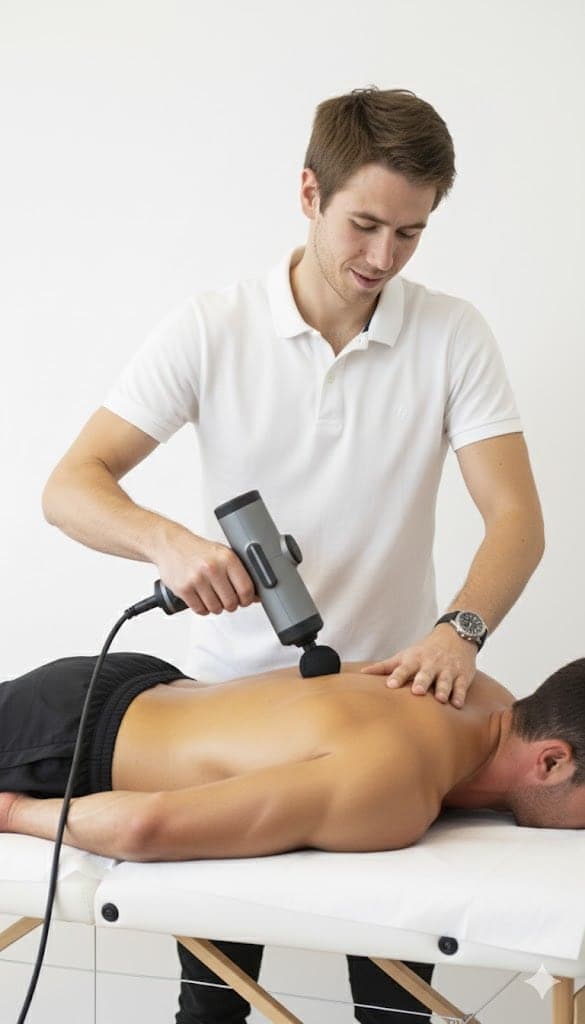
Written by
Chris
Massage therapist, nutrition and exercise physiologist
Norwegian-certified with a Bachelor’s in Physical Education and Nutrition and over ten years of clinical practice, working from a portable table in clients’ homes across the Paphos district.
This article is general information, not a medical diagnosis. If you have severe, worsening or unexplained pain, numbness, weakness, or pain after an accident, see a doctor first.