
Massage Techniques for Athletes Geroskipu: Advanced Mechanical Deep-Tissue Treatment That Delivers Lasting Results
In short
Discover scientifically-backed massage techniques for athletes in Geroskipu. With 10 years of experience and specialized mechanical deep-tissue methods, I relieves chronic pain and optimize performance through precision treatment.
After a decade of working with athletes across Geroskipu, I’ve witnessed a troubling pattern: athletes accepting chronic pain as “part of the game.” They cycle through weekly massage sessions that provide temporary relief but never address the underlying mechanical dysfunction causing their discomfort. This acceptance of perpetual treatment rather than lasting resolution represents a fundamental misunderstanding of what proper therapeutic intervention can accomplish.
My approach to massage techniques for athletes in Geroskipu differs radically from conventional methods. With a Bachelor’s degree in Physical Education and Nutrition from Norway and ten years of specialized practice, I’ve developed a mechanical deep-tissue protocol that targets the biomechanical root causes of athletic pain and performance limitation. This isn’t about relaxation or temporary symptom management—it’s about durably resolving the fascial restrictions, muscular compensations, and movement dysfunctions that prevent you from reaching your physical potential.
The athletes I work with in Geroskipu aren’t looking for another masseuse. They’re seeking a specialist who understands body mechanics at a clinical level and possesses the tools to create lasting change. That’s precisely what my advanced mechanical approach delivers.
Why Traditional Massage Techniques Fail Athletes in Geroskipu
Let me share a story that illustrates the limitation of conventional approaches. Last year, a competitive cyclist came to me after eight months of weekly traditional massage sessions. Despite this consistent treatment, his chronic IT band syndrome remained unchanged. Within three sessions using my mechanical deep-tissue protocol, we identified and released the fascial restrictions in his gluteus medius and tensor fasciae latae that were creating the compensatory tension pattern. Six weeks later, he completed his longest ride without pain—a result eight months of conventional treatment had failed to deliver.
This outcome wasn’t luck. It reflects the fundamental differences between superficial tissue manipulation and biomechanically-informed mechanical intervention.
The Depth Problem
Human hands, regardless of practitioner skill, possess inherent limitations in force application and sustained pressure capacity. When treating athletes—individuals with dense, hypertrophied muscle tissue and complex fascial adhesions—these limitations become critical barriers to effective treatment. The compensation patterns that generate chronic athletic pain originate in deep fascial layers and intrinsic muscle groups that manual techniques simply cannot access with sufficient precision and intensity.
My specialized mechanical equipment eliminates this constraint entirely. The device applies concentrated, controlled force that penetrates 3-4 centimeters deeper than manual techniques while maintaining absolute precision. This depth access allows me to address the actual source of dysfunction rather than merely treating superficial symptoms.
The Consistency Problem
Even the most skilled manual therapist experiences variations in treatment effectiveness based on fatigue, hand positioning, and physical limitations. Athletes require consistent, reproducible treatment protocols that deliver identical results session after session. Variable outcomes undermine treatment planning and make it impossible to establish progressive loading protocols.
My mechanical approach eliminates practitioner variability completely. Every session delivers precisely calibrated force, depth, and duration tailored to your specific tissue response and treatment phase. This consistency allows us to create progressive treatment plans with predictable outcomes—something impossible with manual techniques.
Advanced Massage Techniques for Athletes: The Mechanical Deep-Tissue Method
After treating hundreds of athletes in Geroskipu, I’ve refined a systematic protocol that addresses the specific biomechanical demands of athletic performance. This method integrates advanced understanding of fascia, movement patterns, and tissue adaptation with mechanical precision that human hands cannot replicate.
Myofascial Release Through Mechanical Precision
Fascia—the connective tissue network enveloping every muscle, nerve, and organ—responds to mechanical load through a process called thixotropy. When fascia becomes restricted through repetitive athletic movements or acute trauma, it creates three-dimensional tension patterns that alter joint mechanics, restrict range of motion, and generate compensatory pain patterns.
Traditional myofascial release attempts to address these restrictions through sustained manual pressure. However, achieving sufficient force to induce fascial reorganization in athletic tissue requires pressure intensities that quickly fatigue even experienced practitioners. My mechanical technique applies sustained, precisely calibrated compression that induces fascial reorganization without practitioner fatigue compromising treatment quality.
I identify restriction patterns through movement assessment and palpatory examination, then apply mechanical intervention in progressive layers. Initial passes address superficial fascial planes at moderate intensity, preparing tissue for deeper work. Subsequent treatment targets intermediate and deep fascial layers with incrementally increased force, following fascial planes and respecting tissue tolerance.
This systematic approach allows me to release restrictions in the thoracolumbar fascia, iliotibial tract, and other critical structures that manual techniques cannot adequately address. The result is restored tissue mobility, normalized movement patterns, and elimination of the compensatory tensions generating pain.
Trigger Point Therapy With Superior Force Application
Myofascial trigger points—hyperirritable nodules within taut muscle bands—generate both local and referred pain patterns that significantly impair athletic performance. Effective trigger point deactivation requires sustained ischemic compression at sufficient intensity to induce local tissue hypoxia, followed by reperfusion and metabolic waste removal.
Manual trigger point therapy faces two critical limitations: achieving sufficient compression depth in athletic tissue, and maintaining that compression for adequate duration without compromising positional accuracy. My mechanical approach overcomes both constraints.
The specialized tool delivers concentrated force through a precisely positioned contact point, achieving compression intensities impossible with manual techniques. More importantly, the mechanical system maintains this exact position and pressure for whatever duration tissue response requires—typically 60 to 90 seconds per point—without positional drift or pressure variation.
I’ve treated athletes in Geroskipu with chronic trigger points in the piriformis, scalenes, and other deep structures that had resisted years of manual therapy. The mechanical precision of my approach accesses these structures effectively and deactivates trigger points that conventional treatment could only temporarily suppress.
Cross-Friction Technique for Tendon and Ligament Rehabilitation
Athletes frequently develop chronic tendinopathies—pathological changes in tendon structure following repetitive mechanical loading. These conditions, including Achilles tendinopathy, patellar tendinopathy, and lateral epicondylitis, respond poorly to conventional massage but show remarkable improvement with properly applied cross-friction treatment.
Cross-friction therapy applies mechanical force perpendicular to tissue fiber orientation, creating controlled microtrauma that stimulates fibroblast activity and collagen remodeling. Effective treatment requires precise fiber identification, exact perpendicular force application, and sufficient intensity to induce therapeutic microtrauma without causing destructive tissue damage.
My mechanical system delivers this precise perpendicular force with intensity and duration control impossible through manual application. I can treat degenerative tendon tissue with the specific force vectors and loading parameters required to stimulate regenerative healing while avoiding the positional errors that make manual cross-friction therapy frequently ineffective.
Sport-Specific Massage Techniques for Geroskipu Athletes
Different athletic disciplines create distinct biomechanical stress patterns requiring specialized treatment approaches. My decade of experience working with diverse athletes in Geroskipu has taught me that effective treatment must address sport-specific dysfunction patterns, not apply generic protocols.
| Athletic Activity | Primary Dysfunction Patterns | Key Treatment Focus | Expected Outcome Timeline |
|---|---|---|---|
| Running and Cycling | IT band syndrome, piriformis dysfunction, hip flexor restrictions | Lateral fascial line release, gluteal activation restoration | 4-6 weeks |
| Swimming | Rotator cuff impingement, thoracic mobility restrictions, pectoralis minor shortening | Scapular mechanics optimization, anterior shoulder release | 6-8 weeks |
| Tennis and Racquet Sports | Lateral epicondylitis, wrist extensor tendinopathy, thoracic rotation deficits | Forearm fascial release, posterior shoulder girdle balancing | 8-10 weeks |
| Football and Contact Sports | Chronic adductor strains, lumbar-pelvic instability, shoulder joint dysfunction | Adductor complex restoration, core fascial integration | 6-8 weeks |
Running and Endurance Athletes
Runners in Geroskipu typically present with compensation patterns originating from inadequate hip extension mobility. When the hip cannot achieve full extension during the stance phase of gait, the body compensates through excessive lumbar extension, knee hyperextension, or both. Over thousands of repetitions, these compensations generate predictable pain patterns: IT band friction syndrome, patellofemoral pain, and chronic lumbar strain.
My treatment protocol for runners addresses the fascial restrictions limiting hip extension—typically in the rectus femoris, iliopsoas, and anterior hip capsule—while simultaneously releasing the compensatory tensions in the IT band, TFL, and lumbar erectors. The mechanical precision of my approach allows me to work these tissues at sufficient depth to create lasting mobility changes rather than temporary symptom relief.
I worked with a marathon runner last spring who had developed severe IT band pain preventing training beyond 15 kilometers. Previous treatment had focused exclusively on the IT band itself—the site of pain but not the source of dysfunction. After assessing his movement patterns, I identified severe hip flexor restrictions limiting extension by approximately 15 degrees. Six sessions targeting these restrictions, combined with posterior chain release, restored normal hip mechanics. He completed his marathon three months later, pain-free throughout the entire distance.
Swimmers and Overhead Athletes
Swimming demands extreme shoulder mobility combined with precise scapular control—a combination that frequently breaks down under training volume. Swimmers typically develop forward shoulder positioning from pectoralis minor shortening and serratus anterior dysfunction. This altered scapular positioning creates impingement mechanics that generate chronic rotator cuff pain.
Treating swimmers effectively requires releasing anterior shoulder restrictions while restoring posterior shoulder girdle function. The mechanical depth and precision of my technique allows me to address the pectoralis minor at its costal attachments—a location manual techniques struggle to access effectively. Combined with targeted subscapularis and rotator cuff treatment, this approach restores the balanced scapulohumeral mechanics necessary for pain-free overhead activity.
Team Sport Athletes
Football players, basketball athletes, and other team sport participants in Geroskipu face multidirectional forces, rapid acceleration-deceleration cycles, and frequent contact. These demands create complex dysfunction patterns affecting multiple body regions simultaneously.
I treated a semi-professional footballer last season with chronic adductor pain that had limited his performance for over a year. Multiple clinicians had treated his adductors directly without improvement. Movement assessment revealed the actual problem: inadequate hip internal rotation from posterior hip capsule restrictions was forcing excessive adductor recruitment during cutting movements. Eight weeks of progressive treatment addressing his posterior hip capsule, hamstring complex, and adductor group eliminated pain he’d accepted as lasting. His performance metrics—specifically cutting speed and change-of-direction ability—improved measurably following treatment.
The Science Behind Mechanical Deep-Tissue Massage for Athletes
My approach rests on established principles of tissue mechanics, neurophysiology, and motor control. Understanding these mechanisms explains why mechanical intervention produces superior outcomes compared to conventional massage techniques.
Tissue Remodeling Through Controlled Mechanical Loading
Connective tissue responds to mechanical stress through a process called mechanotransduction—the conversion of mechanical signals into cellular responses. When I apply precise mechanical force to restricted fascia, several physiological processes occur:
- Fibroblasts within fascial tissue detect mechanical deformation and respond by reorganizing collagen fiber orientation along lines of applied stress
- Ground substance—the gel-like matrix surrounding collagen fibers—transitions from a more viscous to more fluid state through thixotropic effects, allowing improved tissue mobility
- Adhesions between fascial layers break down under sustained shear forces, restoring normal tissue gliding
- Local inflammatory mediators are mechanically dispersed, reducing chemical sensitization of nociceptors
These effects require specific force parameters—intensity, duration, and directionality—that manual techniques cannot consistently deliver. My mechanical system provides precisely calibrated loading that optimizes tissue remodeling while avoiding the excessive force that creates additional trauma.
Neurological Reset Through Controlled Nociceptive Input
Chronic pain involves both peripheral tissue dysfunction and central nervous system sensitization. The nervous system adapts to persistent nociceptive input by lowering pain thresholds and expanding pain referral patterns—a process called central sensitization. Effective treatment must address both peripheral tissue dysfunction and central nervous system adaptation.
The controlled, progressive intensity of my mechanical approach provides nervous system desensitization through a process called graded exposure. By systematically applying calibrated mechanical pressure that approaches but doesn’t exceed tissue tolerance, we gradually reset nervous system pain thresholds. This neurological component explains why athletes often experience pain reduction that exceeds what tissue changes alone would predict.
Movement Pattern Restoration Through Tissue Mobility
The ultimate goal of treating athletes isn’t simply pain reduction—it’s performance optimization through restored movement quality. Pain and tissue restriction create altered movement patterns through a process motor control researchers call “adaptive motor behavior.” The nervous system modifies movement strategies to avoid painful or restricted ranges of motion, creating compensations that become habitual even after the original restriction resolves.
My treatment approach directly addresses this issue by eliminating the tissue restrictions that initially caused movement adaptation. Once fascial mobility and muscle extensibility are restored, we can retrain optimal movement patterns without the limitations that created compensations. This integration of tissue treatment with movement re-education produces the lasting results athletes in Geroskipu seek.
Why My Mechanical Approach Surpasses Traditional Massage Techniques
The distinction between my method and conventional massage extends far beyond simple technical differences. These represent fundamentally different philosophies about what athletic treatment should accomplish.
Precision: Treating Causes, Not Symptoms
Traditional massage typically addresses wherever the athlete reports pain. This symptomatic approach provides temporary relief but ignores the biomechanical dysfunctions generating symptoms. Pain location and dysfunction source frequently differ significantly.
My assessment process identifies the actual mechanical faults creating your symptoms. I examine movement patterns, assess tissue quality, and trace fascial restriction patterns to determine root causes. Treatment targets these sources rather than merely addressing symptoms. This precision explains why my athletes achieve lasting resolution rather than requiring perpetual maintenance treatment.
Power: Accessing Deep Tissue Effectively
Athletic tissue—dense, hypertrophied, and frequently scarred from previous injuries—requires treatment intensity that manual techniques cannot sustain. The specialized mechanical equipment I use generates concentrated force that penetrates deep fascial layers and accesses structures that hands simply cannot reach effectively.
This power advantage isn’t about causing more pain or creating unnecessary tissue trauma. It’s about accessing the actual structures requiring treatment and applying sufficient mechanical stimulus to induce lasting tissue change. Without adequate depth and intensity, treatment remains superficial regardless of how many sessions you attend.
Consistency: Reproducible Results Session After Session
Manual therapy effectiveness varies between sessions based on practitioner fatigue, hand positioning variables, and subtle technique modifications. This variability makes progressive treatment planning difficult and outcome prediction unreliable.
My mechanical system eliminates this variability entirely. Every session delivers precisely calibrated treatment based on your current tissue state and treatment phase progression. This consistency allows us to establish clear treatment goals, track progress objectively, and adjust protocols based on measurable tissue response rather than subjective assessment.
What to Expect: The Treatment Process for Athletes in Geroskipu
Athletes contacting me typically fall into one of two categories: those struggling with chronic pain that has resisted previous treatment, and those seeking performance optimization through improved movement quality. Both groups benefit from the same systematic approach.
Initial Assessment: Understanding Your Biomechanics
Our first session begins with comprehensive movement assessment. I observe how you perform fundamental movement patterns—squatting, hip hinging, overhead reaching, and sport-specific movements relevant to your activity. These observations reveal compensation patterns, mobility restrictions, and asymmetries that contribute to pain or performance limitation.
Following movement assessment, I perform detailed tissue examination of regions identified as problematic. This palpatory assessment identifies fascial restrictions, trigger points, and tissue quality changes requiring treatment attention. The combination of movement observation and tissue examination provides a complete picture of your biomechanical dysfunction pattern.
This assessment process typically requires 30-40 minutes and concludes with a clear explanation of what I’ve identified and what treatment protocol will address your specific dysfunction. You’ll understand not just what hurts, but why it hurts and exactly how we’ll resolve it.
Progressive Treatment Protocol: Systematic Dysfunction Resolution
Treatment follows a systematic progression through three phases:
- Foundation Phase (Weeks 1-3): Initial treatment focuses on releasing superficial and intermediate fascial restrictions while beginning trigger point deactivation. Intensity starts conservatively to allow tissue adaptation and establish your optimal treatment response patterns. Sessions occur twice weekly during this phase.
- Intensive Phase (Weeks 4-8): With superficial restrictions released and tissue tolerance established, treatment intensity increases to address deep fascial layers and chronic dysfunction patterns. We target the root causes identified during assessment with maximum mechanical precision and force. Session frequency may adjust to weekly as tissue tolerance and response dictate.
- Integration Phase (Weeks 9-12): Final treatment sessions focus on movement pattern retraining and performance optimization. Tissue restrictions have been eliminated; this phase ensures your nervous system adopts optimal movement strategies rather than reverting to previous compensatory patterns. Sessions occur every 2-3 weeks as needed.
This systematic progression produces lasting results because we address dysfunction comprehensively rather than providing temporary symptom management. Most athletes in Geroskipu complete their treatment protocol within 10-14 sessions, then require only occasional maintenance treatment to address new training demands.
Convenience: I Travel to Your Location
I recognize that athletes maintain demanding training and competition schedules. Rather than requiring you to travel to a clinic, I bring professional treatment directly to your location in Geroskipu. I arrive with a specialized treatment bench and all necessary equipment, creating a clinical treatment environment wherever you prefer—your home, training facility, or another convenient location.
This mobile approach eliminates travel time and scheduling complications that often interfere with consistent treatment attendance. You receive the same professional, clinical treatment you’d expect in a specialized facility, with the convenience of your chosen location.
Investment in Performance: Understanding Treatment Value
Athletes frequently ask about treatment cost, approaching therapeutic intervention as an expense rather than an investment. This perspective fundamentally misunderstands what we’re accomplishing through proper treatment.
When you invest in my mechanical deep-tissue protocol, you’re not purchasing temporary symptom relief that requires perpetual maintenance. You’re investing in lasting dysfunction resolution that relieves chronic pain, optimizes movement quality, and enhances athletic performance for years following treatment completion.
Consider the alternative: continuing with weekly massage sessions that provide temporary relief but never address underlying dysfunction. Over one year, this approach consumes significant resources while producing zero lasting improvement. Athletes continue this cycle indefinitely, accepting it as necessary rather than recognizing it as treatment failure.
My approach produces opposite outcomes. Through intensive, systematic treatment over 10-14 sessions, we durably resolve the biomechanical dysfunctions generating your symptoms. Following treatment completion, you function without pain and move with optimized mechanics—outcomes that persist without ongoing treatment dependency.
This represents genuine value: paying once for lasting resolution rather than paying perpetually for temporary management. From a purely economic perspective, investing in effective treatment that eliminates the need for future treatment provides dramatically superior return compared to perpetual symptom management.
Frequently Asked Questions: Massage Techniques for Athletes Geroskipu
How does mechanical massage differ from manual massage techniques?
Mechanical massage uses specialized equipment to deliver precisely calibrated force at greater depths and with perfect consistency compared to manual techniques. Human hands cannot sustain the intensity, depth, or precision required to effectively treat dense athletic tissue and deeply restricted fascial layers. The mechanical approach I use penetrates 3-4 centimeters deeper than manual techniques while eliminating the variability that makes manual treatment outcomes unpredictable. This isn’t simply about using machines instead of hands—it’s about accessing tissue depths and delivering force parameters that hands physically cannot reproduce.
Is mechanical deep-tissue massage more painful than traditional massage?
Treatment intensity is precisely calibrated to your tissue tolerance and systematically progressed as your body adapts. Initial sessions typically involve moderate discomfort as we release superficial restrictions and establish your optimal treatment intensity. Subsequent sessions work progressively deeper, but because tissue has adapted to previous treatment, relative discomfort remains manageable. Athletes describe the sensation as “intense but productive”—distinctly different from the sharp, protective pain indicating tissue damage. The mechanical precision of my approach allows us to work at the threshold of tissue tolerance without exceeding it, maximizing therapeutic benefit while minimizing unnecessary discomfort.
How many sessions do athletes in Geroskipu typically require?
Treatment duration depends on dysfunction complexity, chronicity, and your tissue response characteristics. Most athletes complete their primary treatment protocol within 10-14 sessions spread over 10-12 weeks. Acute dysfunction patterns often resolve faster—sometimes within 6-8 sessions—while chronic conditions that have existed for years may require the full treatment protocol. Unlike perpetual maintenance massage, my approach produces lasting dysfunction resolution. Following treatment completion, you don’t require ongoing sessions unless new training demands create new dysfunction patterns requiring attention.
Can mechanical massage improve athletic performance, not just treat pain?
Absolutely. Performance optimization represents a primary treatment goal, not merely a secondary benefit. Fascial restrictions and dysfunctional movement patterns limit force production, reduce movement efficiency, and constrain available range of motion—all factors directly impacting athletic performance. By eliminating these restrictions and restoring optimal movement mechanics, we enhance your body’s ability to generate force, move efficiently, and access full functional ranges of motion. Athletes frequently report measurable performance improvements—increased running speed, enhanced power output, improved movement quality—following treatment completion. This occurs because we’ve removed the mechanical constraints limiting their physical potential.
What makes your approach more effective than treatment other athletes have tried?
Most athletes in Geroskipu have experienced conventional massage, physiotherapy, or chiropractic treatment before contacting me. These approaches typically fail for three reasons: they address symptoms rather than biomechanical causes, they lack sufficient intensity to affect deep tissue, and they provide inconsistent treatment quality. My mechanical deep-tissue protocol eliminates all three limitations. I identify and treat root causes through comprehensive biomechanical assessment. The specialized equipment accesses tissue depths manual techniques cannot reach. Treatment consistency eliminates the variability that undermines progressive treatment planning. This combination produces lasting dysfunction resolution rather than temporary symptom management.
Do you work with recreational athletes or only competitive athletes?
I work with anyone committed to achieving lasting resolution rather than accepting temporary management. Whether you’re a competitive athlete, weekend warrior, or simply someone who refuses to accept chronic pain as inevitable, my approach delivers results. The biomechanical principles governing tissue dysfunction apply equally regardless of your competitive level. What matters is your commitment to following the treatment protocol systematically and your willingness to invest in genuine resolution rather than perpetual symptom management.
What happens after treatment is complete—will pain return?
When we’ve successfully eliminated the fascial restrictions and movement dysfunctions generating your symptoms, those specific problems don’t spontaneously return. Fascia doesn’t “re-restrict” without new mechanical stress causing new dysfunction. However, if you resume the exact training patterns that created original dysfunction without modifying your approach, similar problems may eventually develop. This is why the integration phase of treatment includes movement pattern optimization—we ensure you’re moving with mechanics that won’t recreate previous dysfunction. Most athletes remain symptom-free indefinitely following treatment completion. Some require occasional maintenance sessions if dramatically increased training loads create new restrictions, but this represents addressing new problems, not treating recurring old ones.
Why do you travel to clients rather than operating from a fixed clinic?
Athletes maintain demanding schedules with training sessions, competitions, and other commitments that make traveling to fixed clinic locations difficult. By bringing professional treatment directly to your location in Geroskipu, I eliminate scheduling barriers that often prevent athletes from receiving consistent treatment. You receive identical clinical-quality treatment in the convenience of your chosen location. This mobile approach also allows me to observe your training environment and movement patterns in context, providing insights that clinic-based treatment might miss. The specialized equipment I use is completely portable, allowing me to create a professional treatment environment anywhere.
Case Studies: Real Athletes, Lasting Results
The theoretical foundations of my approach matter less than actual outcomes with real athletes in Geroskipu. These case studies illustrate what systematic, biomechanically-informed mechanical treatment accomplishes.
The Runner Who Couldn’t Race
A competitive trail runner contacted me after developing severe posterior tibial tendinopathy that prevented racing for six months. Previous treatment included conventional physiotherapy, orthotics, and weekly sports massage—none producing meaningful improvement. Movement assessment revealed the actual problem: severely restricted ankle dorsiflexion from chronic soleus and gastrocnemius dysfunction, forcing excessive pronation and overloading the posterior tibial tendon.
Treatment focused on releasing his posterior compartment restrictions through systematic mechanical intervention. We worked progressively deeper over eight sessions, restoring normal ankle dorsiflexion mechanics. Simultaneously, we addressed compensatory hip and lumbar restrictions created by months of altered gait patterns. After ten weeks, his ankle dorsiflexion had improved by 18 degrees, and posterior tibial pain had completely resolved. He completed a 50-kilometer trail race three months following treatment completion, achieving a personal best time. Two years later, he remains symptom-free and continues competing at higher levels than before his injury.
The Swimmer Fighting Constant Shoulder Pain
A masters swimmer came to me after developing bilateral shoulder impingement that limited her training to less than half her previous volume. Two years of treatment from various providers had produced only temporary improvement. Assessment revealed classic swimmer’s shoulder: anterior positioning from pectoralis minor shortness, scapular dyskinesis from serratus anterior dysfunction, and resulting subacromial impingement.
Her treatment protocol addressed anterior shoulder restrictions with mechanical precision impossible through manual techniques. We systematically released her pectoralis minor at its coracoid attachments, addressed subscapularis restrictions limiting external rotation, and restored posterior shoulder girdle function. After twelve sessions over fourteen weeks, she demonstrated normal scapular mechanics and pain-free overhead function. She returned to full training volume without symptom recurrence. Her improvement wasn’t temporary relief—we had durably corrected the mechanical dysfunction creating her impingement.
Begin Your Journey to Lasting Resolution
If you’re an athlete in Geroskipu struggling with chronic pain that has resisted previous treatment, or if you’re seeking performance optimization through improved movement mechanics, my mechanical deep-tissue approach offers a fundamentally different solution.
I don’t provide temporary symptom relief requiring perpetual maintenance. I durably resolve the biomechanical dysfunctions limiting your performance and generating your pain. This approach demands greater commitment—systematic treatment over several months rather than sporadic sessions whenever symptoms become intolerable. But it delivers correspondingly greater results: lasting dysfunction elimination rather than temporary symptom management.
My decade of experience working with athletes, combined with advanced education in body mechanics and specialized mechanical treatment capability, allows me to deliver outcomes conventional approaches cannot match. I understand athletic tissue, athletic movement demands, and the specific dysfunction patterns different sports create. More importantly, I possess the tools and expertise to durably correct these dysfunctions rather than merely managing their symptoms.
The question isn’t whether mechanical deep-tissue treatment works—my athletes’ results demonstrate its effectiveness conclusively. The question is whether you’re ready to invest in lasting resolution rather than accepting perpetual management. If you’ve exhausted conventional approaches without achieving lasting results, if you refuse to accept chronic pain as an inevitable part of athletic participation, or if you’re committed to optimizing your movement quality and athletic performance, contact me to begin your treatment protocol.
I travel throughout Geroskipu, bringing professional mechanical deep-tissue treatment directly to your preferred location. Every athlete’s dysfunction pattern is unique, requiring customized assessment and individualized treatment protocols. Your path to lasting pain resolution and optimized performance begins with understanding exactly what mechanical dysfunctions are limiting you and how systematic treatment will eliminate them.
Stop accepting temporary relief from symptom-focused treatment. Invest in lasting resolution through biomechanically-informed mechanical intervention. Your body possesses remarkable capacity for optimal function—when we eliminate the restrictions preventing it.
Evidence and limits
Massage may help with some symptoms, but benefits and evidence vary by condition. It does not replace medical assessment or treatment. A page update is not evidence of an independent clinical review.
Further reading: Massage therapy: evidence, safety and limitations by US National Center for Complementary and Integrative Health. This is general background reading, not verification of every claim in this article.
How we describe evidence and updates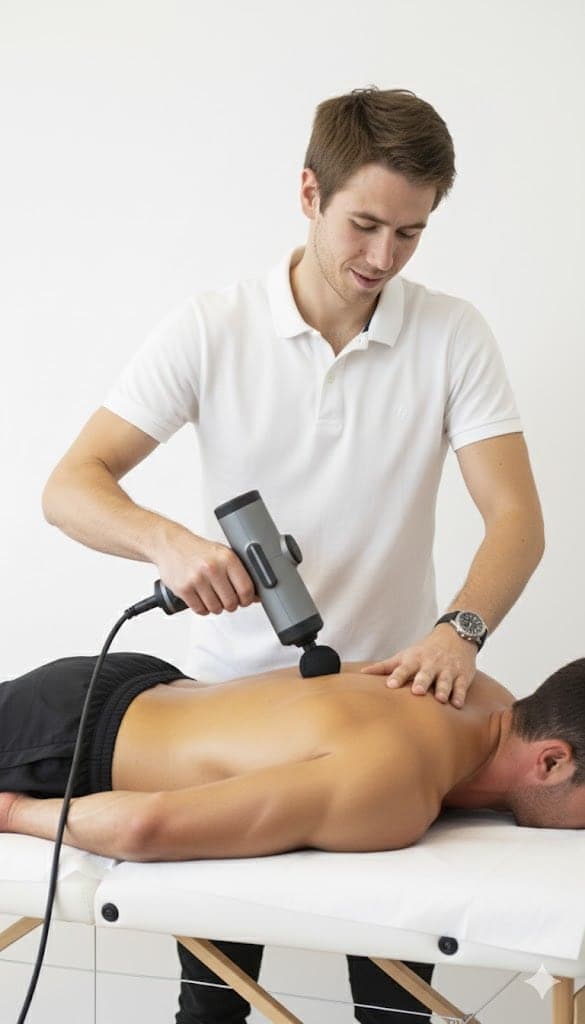
Written by
Chris
Massage therapist, nutrition and exercise physiologist
Norwegian-certified with a Bachelor’s in Physical Education and Nutrition and over ten years of clinical practice, working from a portable table in clients’ homes across the Paphos district.
This article is general information, not a medical diagnosis. If you have severe, worsening or unexplained pain, numbness, weakness, or pain after an accident, see a doctor first.