Posture Correction Classes Kissonerga: Advanced Mechanical Deep-Tissue Treatment for Lasting Results
In short
Discover specialized posture correction in Kissonerga through advanced mechanical deep-tissue therapy. Expert-led treatment addressing root causes, not symptoms, for lasting postural improvement and pain relief.
After a decade treating postural dysfunction across hundreds of clients, I’ve learned one fundamental truth: your posture isn’t just about “sitting up straight.” It’s the visible manifestation of deep fascial restrictions, muscular imbalances, and compensatory patterns that have developed over years—sometimes decades. When people in Kissonerga search for posture correction classes, they’re often looking for stretching routines or alignment exercises. What they actually need is something far more precise: targeted mechanical intervention that addresses the structural causes buried deep within their soft tissue.
My approach to posture correction in Kissonerga isn’t about group classes with generic stretches. It’s about individualized biomechanical treatment using advanced deep-tissue methodology that reaches depths human hands simply cannot achieve. With my Bachelor’s degree in Physical Education and Nutrition from Norway and ten years of specialized practice, I’ve developed a system that treats posture as what it truly is: a complex interplay of fascial health, muscular tension patterns, and neurological proprioception.
Why Traditional Posture Correction Classes Fall Short
Most posture correction programs focus on conscious positioning—”pull your shoulders back,” “tuck your chin,” “engage your core.” I’ve seen countless clients who’ve attended these classes for months, memorizing cues and practicing exercises, only to revert to their habitual patterns the moment they stop thinking about it. The reason is straightforward: you cannot stretch away restrictions that exist in the deep fascial layers. You cannot exercise your way out of adhesions that have formed between muscle bellies and fascial sheaths.
Traditional approaches treat posture as a behavioral problem requiring education and discipline. This perspective misses the mechanical reality. When your pectoralis minor has been shortened and adhered to surrounding structures for fifteen years due to desk work, no amount of conscious shoulder retraction will create lasting change. The tissue itself must be released at its source.
The Biomechanical Reality of Postural Dysfunction
Postural problems originate from predictable patterns I observe repeatedly in Kissonerga clients. The forward head position—where the skull shifts anterior to the shoulders—doesn’t happen because someone “forgot” to hold their head back. It develops because the suboccipital muscles, sternocleidomastoids, and scalenes have shortened adaptively while the deep cervical flexors have lengthened and weakened. This isn’t corrected through stretching classes. It requires precise, sustained mechanical pressure applied at specific angles to release the hypertonic tissue, followed by neuromuscular re-education.
Similarly, the rounded shoulder posture ubiquitous among computer users results from fascial restrictions in the anterior shoulder girdle combined with inhibition of the middle and lower trapezius. I’ve treated software developers whose pectoralis minor was so adhered that their scapula literally could not glide properly along the ribcage. No stretch they performed in a group class touched this restriction because the depth required exceeded what manual techniques or self-myofascial release can achieve.
Advanced Mechanical Deep-Tissue Therapy: Precision Posture Correction in Kissonerga
My methodology represents a fundamental departure from conventional posture correction classes. I utilize specialized mechanical deep-tissue equipment that delivers three critical advantages: precision, power, and consistency. This isn’t massage therapy focused on relaxation. This is biomechanical intervention targeting the structural foundations of your postural dysfunction.
Precision: Targeting Specific Fascial Restrictions
The specialized machine I employ allows me to work with millimeter-level accuracy on specific attachment sites, trigger points, and fascial planes. When treating upper crossed syndrome—the classic forward head, rounded shoulder pattern—I can isolate the levator scapulae insertion at the superior angle of the scapula, applying sustained pressure at the exact angle required to release the tissue. This level of precision is impossible in group classes and difficult even with advanced manual therapy.
I’ve treated a architect from Kissonerga whose chronic neck pain stemmed from a specific restriction where her upper trapezius inserted into the occipital ridge. Years of yoga and posture workshops hadn’t addressed it because no one had identified and treated that precise location with adequate depth. Three sessions with mechanical precision released the adhesion, and her head position normalized without her consciously “working on” her posture.
Power: Reaching the Deep Fascial Layers
Human hands fatigue. Even the strongest manual therapist cannot maintain the sustained, deep pressure required to release restrictions in the thoracolumbar fascia or the deep rotators of the hip—structures fundamentally involved in postural alignment. My mechanical approach eliminates this limitation. The equipment delivers consistent, controllable force that reaches the deepest layers of soft tissue where postural problems originate.
I adjust the intensity precisely to each client’s tolerance and tissue quality, ranging from moderate pressure for sensitive areas to powerfully deep treatment for athletes and those with dense, fibrotic tissue. This isn’t about causing pain—it’s about accessing structures that superficial techniques never reach. The difference in outcomes is measurable and lasting.
Consistency: Every Treatment Delivers Results
Unlike manual therapy, which varies based on the therapist’s energy level, technique variation, or simply having an “off day,” mechanical deep-tissue work delivers identical quality every single session. This consistency matters enormously when addressing posture, because releasing fascial restrictions requires cumulative effect over multiple treatments. You need reliable, reproducible intervention to achieve lasting structural change.
The Clinical Process: How Posture Correction Actually Works
When a client contacts me in Kissonerga seeking posture correction, we begin with comprehensive biomechanical assessment. I don’t offer generic “posture classes”—I provide individualized treatment protocols based on your specific dysfunction pattern. This assessment evaluates:
| Assessment Component | What It Reveals | Treatment Implication |
|---|---|---|
| Static Postural Analysis | Visible alignment deviations in multiple planes | Identifies primary compensation patterns |
| Active Range of Motion Testing | Functional limitations and asymmetries | Pinpoints specific restricted structures |
| Palpatory Examination | Tissue quality, adhesions, trigger points | Determines treatment depth and pressure requirements |
| Movement Pattern Assessment | How posture affects daily activities | Guides functional outcome goals |
| Pain Pattern Documentation | Relationship between posture and symptoms | Tracks treatment efficacy objectively |
Treatment Phase: Systematic Fascial Release
Based on assessment findings, I develop a customized treatment plan targeting your specific restrictions. For upper crossed syndrome—the most common pattern I treat in Kissonerga—this typically involves:
- Anterior Shoulder Release: Deep mechanical treatment of pectoralis major and minor, subclavius, and anterior deltoid to allow scapular retraction
- Posterior Neck Work: Releasing suboccipital muscles, upper trapezius, and levator scapulae to eliminate forward head position
- Thoracic Spine Mobilization: Addressing the thoracolumbar fascia and erector spinae to restore extension capacity
- Scapular Stabilizer Activation: Once restrictions are released, facilitating proper firing patterns of middle trapezius, lower trapezius, and serratus anterior
Each session builds on the previous one. This isn’t like attending a weekly posture class where you repeat the same exercises indefinitely. We’re systematically dismantling the structural restrictions that make poor posture your default position.
Integration Phase: Making Changes Lasting
Once the deep fascial restrictions are released, your body naturally adopts improved alignment. I’ve watched clients whose posture transforms without them consciously “trying” to sit differently—because we’ve removed the mechanical barriers that were forcing them into dysfunctional patterns. However, lasting change requires integration work: specific exercises and movement patterns that reinforce the new structural possibilities we’ve created.
This is where my background in Physical Education becomes crucial. I prescribe individualized corrective exercises based on your specific pattern—not generic “posture exercises” from a class curriculum. These target the weakened, inhibited muscles that need strengthening once the overactive, restricted tissues are released.
Real Results: Case Studies from Kissonerga Posture Correction
The Software Developer: Reversing Tech Neck
A 34-year-old developer came to me with severe forward head posture causing daily headaches and neck pain radiating into his shoulders. He’d tried yoga, Pilates-based posture classes, and ergonomic workstation adjustments. Nothing created lasting change because no one had addressed the deep cervical restrictions and thoracic immobility driving his compensation pattern.
After initial assessment revealing 45-degree forward head translation and severely restricted cervical extension, we began systematic treatment. Six sessions over three weeks released the suboccipital and scalene restrictions, mobilized his thoracic spine, and opened his anterior shoulder girdle. His headaches disappeared completely. More importantly, his posture improved dramatically without conscious effort—the mechanical restrictions that had pulled him into dysfunction were gone.
The Yoga Instructor: When Flexibility Isn’t Enough
This case challenges common assumptions. A yoga instructor with excellent flexibility came to me with chronic mid-back pain and rounded shoulders despite years of daily practice. Her problem wasn’t lack of stretching—it was specific fascial adhesions between her scapulae and ribcage that prevented proper scapular mechanics. These restrictions existed in tissue layers her yoga practice never accessed.
Mechanical deep-tissue treatment released these adhesions over four sessions. Her scapular movement normalized, her thoracic posture improved noticeably, and her pain resolved. She continues teaching yoga but now understands that flexibility and postural structural health are different qualities requiring different interventions.
Why Kissonerga Residents Choose Specialized Treatment Over Classes
The distinction between my approach and traditional posture correction classes parallels the difference between physical therapy and fitness classes. Both have value, but they serve different purposes. If you have structural dysfunction causing pain, compensation patterns, or functional limitations, you need clinical intervention—not group exercise.
Individualized Assessment and Treatment
In a posture class, everyone performs the same exercises regardless of their specific dysfunction pattern. This generic approach cannot address individual biomechanical problems. I assess your unique presentation and treat the specific restrictions causing your postural deviation. A teacher with thoracic kyphosis and tight hip flexors requires completely different intervention than an athlete with excessive lumbar lordosis and weak glutes—yet both might attend the same “posture correction class.”
Adequate Depth and Intensity
The fascial restrictions causing postural dysfunction exist in deep tissue layers. Surface-level work—whether stretching, foam rolling, or light massage—cannot access these structures. My mechanical approach reaches the depths required for actual structural change. This isn’t more comfortable than a stretching class, but it’s exponentially more effective because it addresses the problem at its source.
Measurable, Lasting Outcomes
I track objective changes: range of motion improvements, pain scale reductions, postural angle measurements. These aren’t subjective feelings—they’re quantifiable results demonstrating structural change. Clients don’t need to “maintain” their posture consciously because we’ve eliminated the mechanical restrictions that were forcing them into dysfunction. This represents genuine correction, not temporary compensation.
The Mobile Advantage: Professional Treatment at Your Kissonerga Location
I travel to your location throughout Kissonerga with professional equipment, bringing clinical-quality treatment to your home or office. This mobile approach offers significant advantages for posture correction work:
- Eliminates travel time and stress that can increase muscular tension before treatment
- Allows immediate return to comfortable rest or work after sessions
- Enables me to assess your actual work or home ergonomics and provide specific recommendations
- Provides privacy and convenience impossible in group class settings
- Permits flexible scheduling around your commitments
The professional treatment bench and specialized equipment I provide ensure you receive identical quality to a clinical setting. This isn’t a compromise—it’s clinical excellence delivered with maximum convenience.
Investment in Structural Health: Understanding the Value Proposition
When comparing costs, people often view a specialized treatment program as more expensive than ongoing posture classes. This perspective misses the fundamental difference in outcomes. Monthly posture classes represent a recurring expense that manages symptoms without resolving underlying causes. You’ll attend indefinitely because you’re not actually fixing the structural problem.
My treatment protocol is time-limited and results-focused. Most clients achieve substantial, lasting improvement within 6-12 sessions over 6-8 weeks. After that, they maintain results independently or return occasionally for tune-up work. The total investment is actually lower than years of classes, and the outcome—lasting structural improvement—is incomparable.
Calculating the True Cost of Postural Dysfunction
Consider what chronic postural problems cost beyond the obvious pain:
| Impact Category | Hidden Costs | Long-term Consequences |
|---|---|---|
| Work Performance | Reduced productivity, increased fatigue, difficulty concentrating | Career limitations, decreased earnings potential |
| Physical Capability | Exercise limitations, reduced athletic performance, injury susceptibility | Progressive deconditioning, accelerated aging |
| Healthcare Utilization | Regular pain medication, frequent practitioner visits, diagnostic imaging | Accumulating medical expenses, prescription dependence |
| Quality of Life | Sleep disruption, activity avoidance, social withdrawal | Chronic pain syndrome, depression, reduced life satisfaction |
| Degenerative Changes | Accelerated joint wear, disc degeneration, arthritis development | Surgical intervention needs, lasting disability risk |
Viewed comprehensively, investing in lasting structural correction isn’t an expense—it’s one of the highest-return investments you can make in your long-term health, capability, and quality of life.
Who Benefits Most from Specialized Posture Correction in Kissonerga
While anyone with postural dysfunction can benefit, certain populations see particularly dramatic results from this approach:
Desk Workers and Computer Professionals
If you spend 40+ hours weekly at a computer, you’re developing predictable fascial restrictions in your anterior shoulder girdle, hip flexors, and cervical extensors regardless of how ergonomic your setup or how frequently you stretch. These restrictions accumulate faster than conventional approaches can address them. Mechanical deep-tissue treatment can reverse years of adaptation in weeks, giving you a structural reset that prevents the chronic pain trajectory most office workers accept as inevitable.
Athletes and Performance-Focused Individuals
Postural deviations limit athletic performance by creating inefficient movement patterns and increasing injury risk. A cyclist with anterior pelvic tilt loses power transfer. A swimmer with restricted thoracic rotation develops shoulder impingement. Correcting these structural issues enhances performance measurably—and the improvements are sustainable because we’ve addressed mechanical causes, not just trained compensatory patterns.
Chronic Pain Sufferers
Many people in Kissonerga live with chronic neck pain, headaches, or back pain attributed to “stress” or “getting older” when the actual cause is postural dysfunction creating continuous tissue strain. I’ve treated clients who’ve suffered for years, trying endless treatments without lasting relief. Systematic structural correction often relieves pain they’d accepted as lasting because we’re finally treating the biomechanical root cause.
Individuals Seeking Prevention
The most strategic use of this work is preventive. If you’re developing early postural changes but aren’t yet symptomatic, addressing them now prevents the cascade of compensation, adaptation, and degeneration that creates chronic problems later. This is particularly relevant for younger people whose careers involve postural stress—addressing these patterns in your 30s prevents the chronic pain typically emerging in your 40s and 50s.
Frequently Asked Questions: Posture Correction Classes Kissonerga
How is mechanical deep-tissue treatment different from regular massage?
Regular massage primarily addresses superficial muscle layers and focuses on relaxation and temporary tension relief. Mechanical deep-tissue treatment uses specialized equipment to access fascial restrictions in deep tissue layers—the actual structural causes of postural dysfunction. The depth, precision, and sustained pressure achievable mechanically far exceed what human hands can deliver. This isn’t relaxation therapy; it’s biomechanical intervention producing measurable structural change.
How many sessions are typically required to see lasting posture improvement?
Most clients notice significant improvement within 3-4 sessions, with substantial, lasting correction achieved in 6-12 sessions over 6-8 weeks. The exact timeline depends on how long the dysfunction has existed, tissue quality, and the severity of restrictions. Unlike classes you attend indefinitely, this is a time-limited treatment protocol with a defined endpoint once structural issues are resolved.
Is the treatment painful?
The sensation is intense but manageable—clients describe it as “good pain” or “therapeutic discomfort.” Deep fascial work requires adequate pressure to release restrictions, which creates temporary discomfort during treatment. However, I precisely control intensity to your tolerance, and the relief following sessions far outweighs the momentary intensity. This isn’t about enduring pain; it’s about applying sufficient mechanical force to create actual tissue change.
Will my posture revert after treatment ends?
No. Once fascial restrictions are released and proper movement patterns are restored, the changes are structurally lasting. Your body naturally maintains improved alignment because we’ve eliminated the mechanical barriers that were forcing dysfunction. Some clients return periodically for maintenance work—perhaps quarterly—but the fundamental corrections remain stable because we’ve addressed root causes, not just managed symptoms.
Can’t I just do posture exercises and stretches instead?
Exercises and stretches are valuable as part of a comprehensive program, but they cannot release deep fascial adhesions or restrictions. You cannot stretch away tissue that’s been adhered for years. Think of it this way: if your hip flexors are shortened and restricted after a decade of sitting, no amount of stretching creates lasting change until the fascial restrictions are mechanically released. Treatment comes first, then exercises reinforce and maintain the structural improvements we’ve created.
Do you treat people with scoliosis or other structural conditions?
Yes. While I cannot change bony structure like fixed spinal curvature, I can address the muscular and fascial compensations surrounding structural conditions. Many people with scoliosis have significant soft tissue restrictions that worsen their symptoms. Releasing these restrictions often reduces pain dramatically and improves function, even though the underlying structural condition remains.
How does the mobile service work in Kissonerga?
I travel to your home or office with professional treatment equipment, including a specialized massage bench and mechanical deep-tissue tools. You need only provide space sufficient for the bench (roughly 2 meters by 1 meter) in a private area. I handle all setup and breakdown. Sessions typically last 60-90 minutes depending on the treatment protocol. This arrangement provides clinical-quality care with maximum convenience.
What should I expect during the first session?
The initial session includes comprehensive biomechanical assessment—evaluating your posture, movement patterns, range of motion, and tissue quality—followed by treatment of priority areas identified during assessment. We’ll discuss your specific concerns, goals, and any relevant health history. You’ll leave with a clear understanding of what’s causing your postural dysfunction and a structured treatment plan for correcting it. Expect the full session to last approximately 90 minutes.
The Scientific Foundation: Why This Approach Works
My methodology isn’t based on theories or trends—it’s grounded in fundamental biomechanical principles supported by research in fascial science, myofascial pain, and structural integration. The fascia—the connective tissue network surrounding and interpenetrating all muscles—plays a crucial role in posture and movement. When fascial restrictions develop, they create structural pulls that alter alignment and movement patterns.
Fascial Restriction and Postural Compensation
Research has demonstrated that fascia adapts to imposed demands by remodeling its collagen fiber orientation and density. Prolonged positioning—like sitting at a desk—causes adaptive shortening and increased density in loaded tissues while lengthening and weakening opposing structures. This creates the structural imbalances we observe as postural dysfunction.
Conventional stretching applies brief, intermittent force that rarely exceeds the fascia’s elastic resistance. Sustained mechanical pressure at adequate depth, however, produces plastic deformation—lasting lengthening of shortened tissue and release of adhesions between fascial planes. This is why mechanical deep-tissue work creates lasting change while stretching provides only temporary relief.
Neuromuscular Re-education Following Structural Release
Once fascial restrictions are released, the neuromuscular system must adapt to restored mechanical possibilities. This is where my background in Physical Education and movement science becomes essential. I provide specific exercises that facilitate optimal motor patterns in your newly available range of motion. This integration phase ensures your nervous system adopts improved posture as the new default, making changes lasting without conscious effort.
Taking Action: Starting Your Posture Correction Journey in Kissonerga
If you’re experiencing postural dysfunction—whether that manifests as pain, limited mobility, poor appearance, or declining performance—understand that this isn’t something you manage indefinitely through classes and exercises. Structural problems require structural solutions. The question isn’t whether to address your posture, but whether you’ll invest in genuine correction or continue managing symptoms without resolving underlying causes.
I’ve dedicated a decade to developing and refining this approach because I’ve witnessed the profound impact lasting structural correction has on people’s lives. Clients don’t just experience pain relief—they regain capabilities they’d lost, improve performance in activities they love, and fundamentally enhance their quality of life. This is possible because we’re addressing the actual biomechanical causes of their dysfunction, not just teaching them to “sit up straight.”
My commitment extends beyond delivering effective treatment. I’m partnering with you in a process of genuine structural transformation. This requires a collaborative approach—your engagement with recommended exercises and movement practices combined with my clinical expertise and mechanical intervention. Together, we achieve results that neither group classes nor passive treatments can deliver.
The Partnership Approach to Lasting Change
I don’t offer one-off sessions or drop-in treatments. Lasting posture correction requires a systematic approach delivered over multiple sessions. We work together through a customized treatment protocol designed specifically for your biomechanical presentation. This partnership model ensures accountability, tracks progress objectively, and adjusts intervention as your tissues respond and change.
When you commit to this process, you’re not just purchasing treatments—you’re investing in a dedicated expert partnership focused entirely on your structural health outcomes. This represents a fundamentally different model from attending classes or booking occasional massage appointments, and the results reflect that difference.
Final Perspective: Choosing Structural Correction Over Symptom Management
After ten years treating postural dysfunction in hundreds of clients, I’ve developed certainty about what works and what doesn’t. Group posture classes, generic stretching routines, and ergonomic adjustments all have value—but they cannot resolve established fascial restrictions and structural imbalances. These require precise, deep mechanical intervention delivered with clinical expertise.
The people who achieve the most dramatic, lasting improvements are those who understand this distinction and choose accordingly. They recognize that their chronic neck pain isn’t about “stress” requiring relaxation—it’s biomechanical dysfunction requiring structural correction. They understand that their rounded shoulders won’t improve through conscious effort alone—the anterior restrictions must be released first.
This clarity allows them to make strategic decisions about their health. Rather than spending years in classes that manage without solving, they invest concentrated effort and resources into treatment that actually corrects the underlying problem. The result is lasting improvement rather than perpetual management.
If you’re ready to move beyond symptom management and address the structural causes of your postural dysfunction, the specialized mechanical deep-tissue approach I’ve developed and refined over the past decade offers a proven pathway to lasting results. This isn’t the easiest option—genuine structural change requires commitment and tolerating therapeutic intensity—but it’s the most effective approach available for lasting posture correction in Kissonerga.
Your posture reflects your structural health. Investing in correcting it properly represents one of the most impactful decisions you can make for your long-term physical capability, pain-free living, and quality of life. The question is whether you’re ready to make that investment and commit to the process required for genuine, lasting change.
Evidence and limits
Massage may help with some symptoms, but benefits and evidence vary by condition. It does not replace medical assessment or treatment. A page update is not evidence of an independent clinical review.
Further reading: Massage therapy: evidence, safety and limitations by US National Center for Complementary and Integrative Health. This is general background reading, not verification of every claim in this article.
How we describe evidence and updates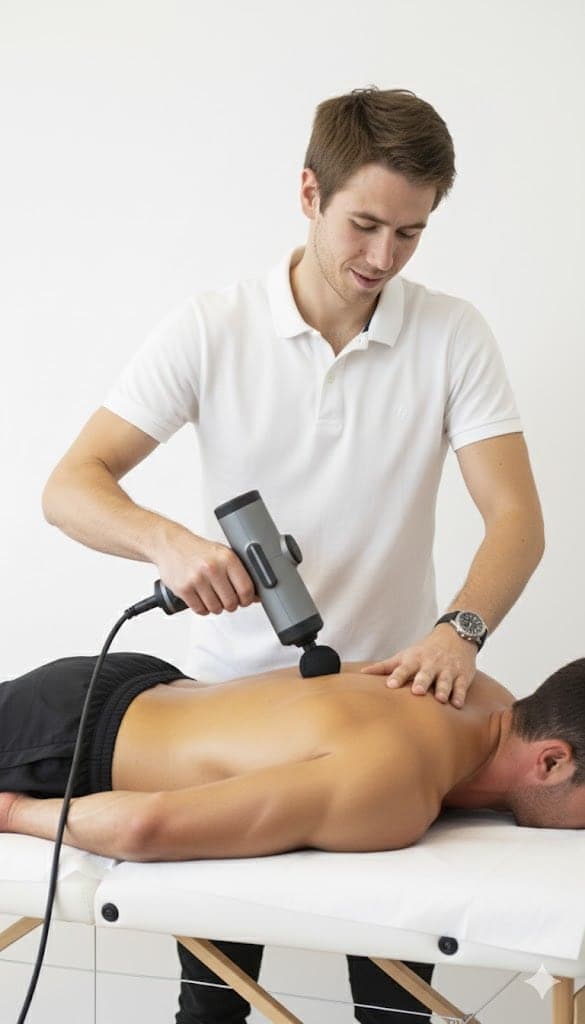
Written by
Chris
Massage therapist, nutrition and exercise physiologist
Norwegian-certified with a Bachelor’s in Physical Education and Nutrition and over ten years of clinical practice, working from a portable table in clients’ homes across the Paphos district.
This article is general information, not a medical diagnosis. If you have severe, worsening or unexplained pain, numbness, weakness, or pain after an accident, see a doctor first.