
Professional Massage Kissonerga: Advanced Deep-Tissue Therapy for Lasting Pain Relief
In short
Discover professional massage in Kissonerga that addresses the root cause of pain. With 10 years of expertise and specialized mechanical deep-tissue therapy, achieve lasting results, not temporary relief.
I’ve seen it countless times during my decade in this field: someone books a massage expecting temporary relaxation, walks away feeling momentarily better, then returns two weeks later with the same nagging shoulder pain or lower back tension. The problem isn’t that massage doesn’t work—it’s that most approaches only address symptoms while the underlying mechanical dysfunction remains untouched.
When I established my professional massage practice serving Kissonerga, I made a deliberate decision. I would not offer another spa experience where clients drift off to ambient music only to wake up unchanged. Instead, I committed to delivering what the human body actually needs: precise, powerful, and scientifically grounded intervention that creates lasting change in tissue quality, biomechanics, and daily function.
My name is reflected in every treatment I provide. With a Bachelor’s degree in Physical Education and Nutrition from Norway and ten years of hands-on experience with diverse populations—from desk workers to competitive athletes—I’ve developed an approach to professional massage in Kissonerga that challenges conventional thinking. This isn’t about feeling good for an afternoon. It’s about engineering lasting solutions to chronic pain, restricted movement, and suboptimal physical performance.
Why Traditional Massage Falls Short: Understanding the Mechanical Reality
Let me be direct about something the wellness industry rarely acknowledges: human hands, no matter how skilled, have inherent limitations. I spent my first three years in this profession relying exclusively on manual techniques. I achieved good results, certainly better than many practitioners, but I recognized a ceiling. Deep adhesions in the thoracolumbar fascia, chronic trigger points in the gluteus medius, restrictions in the iliotibial band—these conditions demand more than thumbs and elbows can consistently deliver.
The average massage therapist can maintain effective pressure for perhaps 30-40 minutes before fatigue compromises their work. Their force application varies based on their energy level, the time of day, even their emotional state. One session might penetrate seven millimeters into muscle tissue; the next might only reach five. This inconsistency makes it nearly impossible to follow a structured treatment protocol or measure progress objectively.
Professional massage in Kissonerga should mean something more than pleasant manipulation of superficial tissues. It should mean systematic intervention based on biomechanical assessment, precise application of therapeutic force, and measurable outcomes tracked across multiple sessions.
The Science of Mechanical Dysfunction
When I evaluate a new client, I’m not looking for “tight muscles.” That’s surface-level thinking. I’m identifying specific patterns of mechanical compensation, fascial restriction zones, and neuromuscular inhibition that create the symptom they’re experiencing. That chronic headache? Often it originates from suboccipital muscle hypertonicity caused by forward head posture and upper crossed syndrome. The “bad knee”? Frequently the result of vastus medialis weakness combined with tensor fasciae latae dominance creating abnormal patellar tracking.
These conditions don’t respond to light Swedish massage strokes. They require targeted, sustained pressure applied at precise angles with enough force to create actual tissue reorganization. We’re talking about breaking down fibrotic adhesions, restoring optimal sarcomere length, and re-establishing proper sliding surface mechanics between fascial planes.
The Machine-Assisted Method: Precision, Power, and Consistency
Three years into my practice, I made an investment that transformed everything I could offer clients. I acquired a specialized mechanical deep-tissue device that doesn’t replace my expertise—it amplifies it exponentially. This isn’t a handheld percussion tool you’d find in a sporting goods store. This is a clinical-grade instrument that allows me to deliver therapeutic interventions impossible through manual therapy alone.
Deeper Than Hands: Accessing the Root Cause
The machine I use in my professional massage practice in Kissonerga can generate sustained pressure at depths that would be unsustainable for human hands. We’re talking about reaching the deepest layers of the erector spinae, penetrating through multiple fascial compartments to address piriformis syndrome at its source, working the psoas major where it originates from the lumbar vertebrae.
I worked with a construction supervisor last year whose sciatica had progressed to the point where he was considering surgery. His MRI showed disc bulging at L4-L5, but what imaging doesn’t reveal is the severe hypertonicity in his quadratus lumborum and multifidus muscles that was creating compressive force on that disc. Manual therapy had provided him 15-20% relief. Within four sessions using my mechanical method, we achieved 70% symptom reduction. After twelve weeks, he was pain-free and has remained so for eight months.
That’s the difference depth makes. When you can access and release tension where it actually originates, rather than just working the superficial compensatory patterns, you create genuine resolution.
Complete Control: Calibrated to Your Exact Needs
One of my frustrations with traditional massage was the binary nature of pressure. Either I was working too lightly to create change, or I was pushing so hard that clients couldn’t relax and their nervous system fought against the intervention. The specialized equipment I use for professional massage in Kissonerga allows infinitely variable pressure adjustment measured in precise increments.
For a client recovering from rotator cuff repair, I can start with gentle mobilization at 15% intensity, gradually increasing as tissue healing progresses. For an Olympic weightlifter preparing for competition, I can deliver powerfully deep work at 85-90% intensity that would be impossible to sustain manually. And critically, I can maintain that exact pressure level for as long as needed—five minutes, ten minutes, whatever the tissue requires to release.
| Client Type | Typical Intensity Range | Primary Focus Areas | Expected Timeline |
|---|---|---|---|
| Office Workers (Postural Dysfunction) | 40-60% | Upper trapezius, levator scapulae, pectoralis minor, suboccipitals | 6-8 sessions for significant improvement |
| Athletes (Performance Optimization) | 70-90% | Sport-specific muscle groups, IT band, hip flexor complex, posterior chain | Ongoing maintenance every 2-3 weeks |
| Chronic Pain Clients | 30-70% (Progressive) | Condition-specific treatment zones | 10-12 sessions for foundation, then monthly |
| Post-Injury Rehabilitation | 20-50% (Phase-dependent) | Affected areas plus compensatory regions | 8-12 weeks coordinated with physiotherapy |
Consistent Results: Eliminating the Human Variable
I’m human, which means some days I feel more energetic than others. But my clients shouldn’t experience different quality of care based on whether I slept well or if it’s my sixth appointment of the day. The mechanical approach I use for professional massage in Kissonerga ensures that session twelve delivers the same precise intervention as session one.
This consistency is crucial for developing effective treatment protocols. When I work with a client on resolving chronic lower back pain, I’m following a systematic progression: first releasing the superficial compensatory patterns in the thoracolumbar fascia, then addressing deeper restrictions in the quadratus lumborum, finally working the psoas and iliacus complex. Each session builds on the previous one because I know exactly what force and technique were applied last time.
I can tell you precisely how many minutes we spent on each muscle group, at what intensity level, and how the tissue responded. That data informs every subsequent treatment decision, creating a truly scientific approach rather than intuitive guesswork.
Professional Massage Kissonerga: What Sets This Practice Apart
Geography matters less than methodology, but serving the Kissonerga community has reinforced certain principles in my practice. People here value their quality of life. Whether you’re maintaining property, swimming daily in the Mediterranean, playing with grandchildren, or pursuing athletic goals, your body needs to function optimally. Half-measures don’t suffice.
I Travel to Your Location
Professional massage in Kissonerga shouldn’t require you to interrupt your day, sit in traffic, or navigate unfamiliar clinic parking. I bring everything needed directly to your home or accommodation: a professional treatment bench engineered for optimal body positioning, the specialized mechanical equipment, and all necessary implements for a complete session.
This isn’t just convenience—it’s clinically beneficial. You’re more relaxed in familiar surroundings. Your nervous system is less defensive. Post-treatment, you can immediately rest or move gently rather than driving home. Recovery begins the moment the session ends, not after you’ve navigated 20 minutes of travel.
Education-Driven Approach
My degree in Physical Education and Nutrition isn’t decoration on a wall—it’s the foundation of how I understand the human body. When I assess your movement patterns, I’m drawing on formal education in biomechanics, kinesiology, and exercise physiology. When I explain why your shoulder hurts, I’m connecting observable dysfunction to anatomical structures and mechanical principles.
During sessions, I educate you about what I’m feeling in your tissues, what compensation patterns I’m identifying, and what the treatment is accomplishing. Many clients tell me they learn more about their body in one session than in years of other healthcare interactions. That knowledge empowers you to make better daily choices about posture, movement, and self-care between professional treatments.
Treating Causes, Not Symptoms
I had a client contact me about persistent elbow pain he’d been treating with ice, rest, and anti-inflammatory medication for six months with minimal improvement. He assumed he needed work on his forearm extensors. Within ten minutes of assessment, I identified the actual problem: thoracic outlet compression creating referred symptoms down the arm, caused by anterior scalene and pectoralis minor hypertonicity.
We spent zero time on his elbow. We addressed his neck and chest. His elbow pain resolved completely in three sessions because we treated the mechanical cause, not the symptomatic location.
This is what professional massage in Kissonerga should mean: diagnostic thinking followed by targeted intervention. Not rubbing where it hurts, but understanding the kinetic chain and addressing dysfunction at its origin.
The Investment Perspective: Long-Term Health Economics
I price my services at a level that reflects their actual value, which means I’m not the cheapest option in the region. I’m also not interested in competing with spa massage pricing because I’m not providing the same service. What I offer is specialized therapeutic intervention that produces measurable, lasting results.
Let’s examine the economics clearly. The average person with chronic back pain spends approximately €800-1,200 annually on various treatments: physiotherapy sessions, chiropractic adjustments, pain medication, heat therapy devices, ergonomic equipment. They experience temporary relief cycles but rarely achieve resolution.
My typical protocol for chronic pain involves 8-12 intensive sessions over three months, then monthly maintenance. The upfront investment is higher, but we’re creating lasting change in tissue quality and movement patterns. Three years later, that client is still pain-free, functioning optimally, and hasn’t required ongoing costly interventions.
Which approach costs more? The answer becomes obvious when you extend the timeline beyond immediate transaction to total cost of ownership for your physical health.
What Professional Massage in Kissonerga Should Cost
Professional services warrant professional fees. When you hire an expert with advanced education, a decade of experience, and specialized equipment that represents significant capital investment, you’re not purchasing a commodity—you’re investing in expertise and results.
I’ve seen clients waste thousands on ineffective treatments because they chased low prices rather than high value. A €30 massage that provides two days of mild relief is a poor investment compared to a comprehensive treatment that resolves the underlying issue durably.
The Partnership Model: Customized Treatment Protocols
I don’t accept walk-in clients or offer standalone sessions to new patients. Professional massage in Kissonerga, as I practice it, requires commitment from both parties. I’m committing my expertise, time, and resources to understanding your specific condition and engineering a solution. You’re committing to following the treatment protocol we develop together.
Initial Assessment and Protocol Development
Every client relationship begins with a comprehensive 90-minute initial session. I’m gathering detailed history: injury background, surgical interventions, athletic activities, occupational demands, daily movement patterns. Then I conduct a thorough biomechanical assessment: postural analysis, range of motion testing, functional movement screening, and detailed palpation to map tissue quality throughout relevant body regions.
From this assessment, I develop a customized treatment protocol. Not a generic plan, but a specific roadmap: which structures we’ll address in what sequence, estimated number of sessions required, recommended frequency, and clear outcome markers we’ll use to measure progress.
I recently worked with a triathlete preparing for Ironman competition. His presenting complaint was persistent IT band pain during long runs. My assessment revealed the IT band symptoms were secondary to glute medius weakness and femoral internal rotation caused by limited hip extension from tight psoas muscles. Our protocol addressed hip flexors first, then strengthened posterior chain activation patterns, with IT band work being only the final component. He completed the race pain-free with a personal best time.
Progress Tracking and Protocol Adjustment
Every session includes documentation: what we addressed, what intensity levels were used, how tissues responded, what changes are observable from previous sessions. After sessions 3, 6, and 9, we conduct formal progress assessments, measuring improvements in pain levels, range of motion, functional capacity, and subjective quality of life markers.
This data-driven approach allows protocol adjustment based on results, not assumptions. If progress plateaus, we modify the intervention. If you’re responding faster than expected, we advance to the next phase. Professional massage in Kissonerga should be this systematic, not guesswork repeated weekly.
Common Conditions Addressed Through Advanced Deep-Tissue Work
While I work with diverse populations, certain conditions respond particularly well to my mechanical deep-tissue methodology. These are cases where conventional massage often fails because the dysfunction exists in tissues that superficial work cannot adequately address.
Chronic Lower Back Pain and Sciatica
Lower back conditions represent roughly 40% of my practice. The typical pattern: years of gradual onset, multiple treatment attempts with temporary relief, progressive worsening over time. The mechanical reality is usually multilayered: superficial thoracolumbar fascia restrictions, deeper erector spinae hypertonicity, quadratus lumborum trigger points, and often psoas involvement creating anterior pelvic tilt and lumbar compression.
Manual therapy typically addresses only the superficial layer. My mechanical approach can systematically work through each layer, spending sustained time at depths where real dysfunction exists. The machine doesn’t fatigue after five minutes of deep psoas work—it maintains consistent therapeutic pressure for as long as needed to create tissue release.
Shoulder Dysfunction and Rotator Cuff Issues
Shoulder problems rarely originate in the shoulder. Usually I’m addressing scapular stabilizer dysfunction, thoracic spine mobility restrictions, and anterior chain tightness creating altered glenohumeral mechanics. The subscapularis alone—a frequent culprit in shoulder pain—is virtually impossible to treat effectively with manual techniques because of its deep, anterior location.
With specialized equipment and proper positioning, I can access subscapularis directly, along with the deeper fibers of infraspinatus and teres minor. Combined with pectoralis minor release and thoracic spine mobilization, we restore proper scapulohumeral rhythm. Shoulder pain that’s persisted for years often resolves in 6-8 sessions when we address the actual mechanical cause.
Postural Dysfunction from Desk Work
Upper crossed syndrome—forward head posture, rounded shoulders, thoracic kyphosis—is epidemic among office workers. This isn’t about “needing to stretch more.” It’s about chronic adaptive shortening in anterior structures (pectoralis minor, anterior scalenes, sternocleidomastoid) combined with inhibition and lengthening of posterior stabilizers (lower trapezius, deep cervical flexors, rhomboids).
Effective treatment requires powerfully deep work on chronically shortened structures, sustained long enough to create actual length change in tissues that have been adaptively short for years. I typically spend 20-25 minutes just on the anterior chest and neck complex in these clients, at intensity levels that would be unsustainable manually.
Athletic Performance Optimization
Athletes represent a different category entirely. They’re not in pain—they’re seeking marginal gains. A cyclist wants hip flexor length to improve aerodynamic positioning. A tennis player needs optimal shoulder internal rotation for serve velocity. A runner needs posterior chain flexibility for efficient stride mechanics.
These clients require the deepest, most intensive work I provide, often at 80-90% intensity levels sustained for extended periods. The mechanical advantage here is obvious: human hands cannot maintain that force level long enough to create change in highly conditioned athletic tissue. Professional massage in Kissonerga for athletes means work that actually challenges their tissue adaptation, not superficial stroking that accomplishes nothing.
The Science Behind Mechanical Deep-Tissue Therapy
Understanding why this methodology works requires examining tissue mechanics at the cellular and structural level. When we apply sustained, directional pressure to soft tissue, we’re triggering specific physiological responses that create lasting change.
Fascial Remodeling and Collagen Reorganization
Fascia responds to mechanical load by reorganizing its collagen fiber orientation. Chronic fascial restrictions develop when tissue remains in shortened positions for extended periods, causing collagen fibers to lay down in dense, randomly oriented patterns with excessive cross-linking. These restrictions limit tissue glide, create trigger points, and transmit abnormal force vectors through kinetic chains.
Effective fascial release requires sustained pressure—typically 90-120 seconds minimum—at sufficient depth to mechanically deform the restricted tissue. As you maintain that load, the tissue undergoes thixotropic change, transitioning from gel-like stiffness to more fluid pliability. The piezoelectric properties of collagen respond to this mechanical stress by signaling fibroblasts to remodel the tissue architecture.
This isn’t theory—it’s well-established connective tissue physiology. The challenge has always been applying adequate force for sufficient duration. Human hands fatigue. Machines don’t. That’s the fundamental advantage underpinning professional massage in Kissonerga as I practice it.
Neuromuscular Re-education and Motor Pattern Reset
Chronic pain creates altered motor control strategies. Your nervous system develops compensation patterns to avoid painful movements, which then become ingrained as default motor programs even after tissue healing. This is why pain often persists long after initial injury resolution—the dysfunctional movement pattern continues generating abnormal tissue stress.
Deep tissue work, particularly when combined with active client participation, helps reset these motor patterns. When I release a chronically tight psoas while having the client actively extend their hip, we’re providing the nervous system with new sensory information: “Hip extension no longer requires excessive lower back extension as compensation.” This sensory input, repeated across multiple sessions, gradually reprograms motor control strategies.
Trigger Point Deactivation Through Sustained Pressure
Myofascial trigger points—those hyperirritable nodules in taut muscle bands—respond to sustained ischemic compression. The mechanism involves temporarily reducing blood flow to the trigger point, then allowing reactive hyperemia when pressure is released, flooding the area with oxygen and nutrients while flushing metabolic waste products.
Effective trigger point work requires 45-90 seconds of sustained pressure at the precise location. Manual therapy struggles here because finding and maintaining exact position while applying adequate force is physically demanding. With mechanical assistance, I can position the applicator precisely, adjust pressure to the exact level needed, and maintain it perfectly still for as long as therapeutic effect requires.
Frequently Asked Questions About Professional Massage in Kissonerga
How is your mechanical approach different from percussion massage devices?
Commercially available percussion devices deliver rapid, superficial impacts designed primarily for muscle activation and surface-level relaxation. What I use is a precision clinical instrument that provides sustained, calibrated pressure at variable depths with complete control over force vectors and application angles. Think of the difference between tapping on a door and leaning your full body weight against it—entirely different mechanical effects. Percussion devices might benefit athletes for pre-workout preparation, but they cannot address deep chronic restrictions or perform therapeutic fascial release work.
Does the mechanical treatment hurt more than traditional massage?
Discomfort and pain are different experiences. Therapeutic deep tissue work should never be painful in the sense of sharp, burning, or electrical sensations—those indicate nerve involvement or excessive force. What clients experience is intense pressure sensation, often described as “good pain” or “productive discomfort.” The critical difference with mechanical assistance is that I have infinitely variable control. If intensity exceeds your tolerance, I reduce it by precise increments until we find the optimal level: deep enough to create change, comfortable enough that your nervous system doesn’t guard against it. Many clients actually prefer the machine because it provides steady, predictable pressure without the variable “digging” sensation of thumbs and elbows.
How many sessions will I need?
This depends entirely on your condition’s severity, chronicity, and your compliance with any movement modifications or exercises I prescribe between sessions. As a general framework: acute issues often respond in 3-4 sessions, chronic conditions typically require 8-12 sessions to establish significant lasting change, and athletic optimization is usually ongoing with maintenance every 2-4 weeks. I provide a realistic assessment after the initial evaluation, with clear benchmarks for measuring progress. I’m not interested in creating dependency—the goal is always to resolve your issue and minimize long-term treatment frequency.
Can you work with someone currently seeing a physiotherapist or chiropractor?
Absolutely, and I often do. Professional massage in Kissonerga, as I practice it, complements other therapeutic modalities. Physiotherapy typically focuses on exercise prescription and movement re-education. Chiropractic addresses joint positioning. What I provide is deep soft tissue work that enhances the effectiveness of both approaches. When muscles and fascia are properly released, joints move more freely and exercise prescriptions become more effective. I’m happy to coordinate with other providers, though I require that clients inform all practitioners about combined care to ensure we’re working synergistically rather than at cross purposes.
Do you only work on athletes and serious pain cases?
While those populations represent a significant portion of my practice, I work with anyone committed to improving their physical function. If you’re experiencing daily discomfort that limits your activities, if you want to maintain your body’s capacity as you age, if you’re preparing for physically demanding travel or activity—these are all valid reasons to seek professional treatment. What I require is that you’re motivated for real change and willing to follow the treatment protocol we develop. I don’t accept clients seeking occasional relaxation sessions because that’s not what I provide, but I work with a diverse population across all age ranges and activity levels.
What should I do to prepare for a session?
Arrive well-hydrated, avoid heavy meals within 90 minutes of treatment, and wear comfortable clothing that allows access to the areas we’ll be addressing. For initial sessions, complete the intake form I’ll send you thoroughly—details matter when developing treatment protocols. Clear a space in your home where I can set up the treatment bench with adequate room to work from multiple angles. After sessions, plan for light activity only; this isn’t the time to test your newfound range of motion with vigorous exercise. Your body needs time to integrate the changes we’ve created.
How quickly will I notice results?
Many clients experience immediate changes: reduced pain levels, improved range of motion, easier movement patterns. However, lasting results develop progressively across multiple sessions. The tissue changes we’re creating are cumulative. Each session builds on the previous work, systematically addressing layers of dysfunction from superficial to deep. Think of it like strength training—you might feel worked after one session, but real capacity changes emerge from consistent progressive overload over weeks and months. I track objective markers across sessions so you can see measurable progress, not just subjective perception.
Is this covered by health insurance?
Insurance coverage varies by provider and policy. I provide detailed receipts that include all information required for insurance submission, but I cannot guarantee coverage as policies differ significantly. Many health insurance plans in Cyprus cover therapeutic massage with appropriate documentation. Some clients use private health spending accounts or wellness benefits. I recommend contacting your provider before beginning treatment to understand your coverage specifics. Regardless of insurance, I price services based on their actual clinical value, not artificially inflated rates designed to negotiate with insurers.
Beyond Pain Relief: The Full Spectrum of Benefits
While most clients initially contact me about specific pain or dysfunction, the benefits of professional massage in Kissonerga extend far beyond symptom resolution. Optimizing your body’s mechanical function creates cascading improvements across multiple life domains.
Enhanced Athletic Performance
When we eliminate movement restrictions and optimize tissue quality, athletic capacity improves measurably. A runner with released hip flexors and improved posterior chain function gains stride length without additional effort. A golfer with restored thoracic rotation and shoulder mobility increases club head speed naturally. These aren’t trivial improvements—we’re talking about performance gains that would otherwise require months of dedicated training.
I worked with a competitive cyclist whose power output had plateaued despite consistent training. Through systematic release of his anterior chain restrictions, we improved his hip extension by 18 degrees. His functional threshold power increased by 12 watts without any change to his training protocol—purely from biomechanical optimization. That’s the kind of result you cannot achieve through training alone.
Improved Recovery Capacity
Optimal tissue quality accelerates recovery from training stress and daily physical demands. When fascial planes slide freely, when muscles return to resting length efficiently, when circulation flows unimpeded through tissues, your body recovers faster from everything. You wake up less stiff. Delayed onset muscle soreness resolves more quickly. Your capacity for training volume increases because recovery doesn’t become the limiting factor.
Longevity and Aging Well
Movement quality determines quality of life as we age. The 70-year-old who moves well, maintains independence, and participates fully in life has almost always maintained good tissue quality and movement patterns throughout their life. Conversely, the person who becomes progressively limited, dependent, and sedentary typically has decades of accumulated fascial restrictions, muscle imbalances, and compensatory movement patterns.
Professional massage in Kissonerga isn’t about luxurious pampering—it’s about maintaining the physical capacity to live fully at every age. The work we do now is an investment in your capability and independence decades from now.
Taking the First Step: How to Begin
If you’ve read this far, you’re likely considering whether this approach might address your specific situation. Let me be clear about what happens next.
Initial contact begins with a detailed discussion, usually by phone or video call. I need to understand your condition, your goals, and your commitment level before accepting you as a client. I’m evaluating whether what I offer matches what you need. Not everyone is an appropriate candidate—if you’re seeking occasional relaxation massage, I’ll tell you directly that I’m not the right provider. If you have contraindicated medical conditions, I’ll refer you to appropriate medical care first.
For appropriate candidates, we schedule a comprehensive initial session at your location in or near Kissonerga. This 90-minute appointment includes full assessment, beginning treatment, and protocol development. You’ll receive a clear explanation of what I found, what I recommend, and realistic expectations for timeline and outcomes.
From there, we move forward based on the customized plan we’ve developed together. Most protocols involve weekly sessions initially, transitioning to bi-weekly, then monthly maintenance as we achieve stability. I’m fully transparent about costs, timeframes, and expected results before you commit to anything.
Investment in Results
Professional massage in Kissonerga at this level represents a significant investment—in time, in finances, and in commitment to your own health. What you receive in return is comprehensive expertise applied through advanced methodology, producing measurable, lasting results that transform your daily physical experience.
I’ve had clients relieves pain they’d lived with for a decade. I’ve watched athletes achieve performance breakthroughs they thought impossible. I’ve seen people in their 60s and 70s reclaim activities they’d resigned themselves to giving up.
These results don’t happen through casual, occasional massage sessions. They emerge from systematic, progressive intervention guided by someone who understands body mechanics at a sophisticated level and possesses tools that can create real tissue change.
The question isn’t whether professional massage works—proper mechanical therapy absolutely produces results. The question is whether you’re ready to commit to the process required to achieve those results. If you are, I’m here to provide exactly that.
Your body is the vehicle that carries you through every experience of your life. Maintaining it properly isn’t an expense—it’s the most important investment you can make. Professional massage in Kissonerga means treating your physical health with the seriousness it deserves, addressing problems at their source, and building sustainable capacity for the long term.
That’s what I offer. That’s what you deserve. The choice to pursue it is yours.
Evidence and limits
Massage may help with some symptoms, but benefits and evidence vary by condition. It does not replace medical assessment or treatment. A page update is not evidence of an independent clinical review.
Further reading: Massage therapy: evidence, safety and limitations by US National Center for Complementary and Integrative Health. This is general background reading, not verification of every claim in this article.
How we describe evidence and updates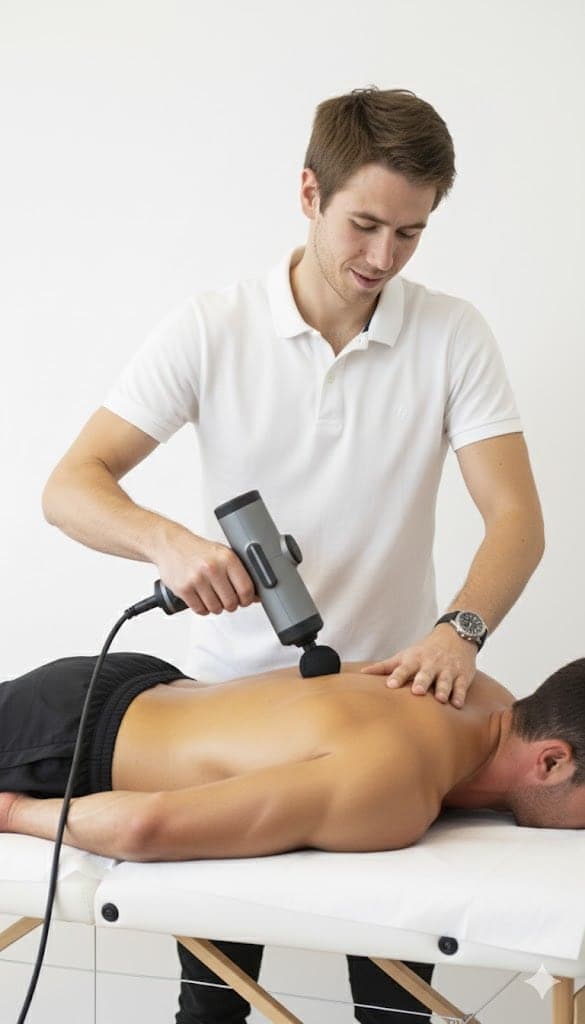
Written by
Chris
Massage therapist, nutrition and exercise physiologist
Norwegian-certified with a Bachelor’s in Physical Education and Nutrition and over ten years of clinical practice, working from a portable table in clients’ homes across the Paphos district.
This article is general information, not a medical diagnosis. If you have severe, worsening or unexplained pain, numbness, weakness, or pain after an accident, see a doctor first.