
Posture alignment massage tips: advanced techniques for lasting postural correction
In short
Discover professional posture alignment massage tips from a decade of specialized experience. Learn advanced mechanical techniques that deliver lasting results, not temporary relief.
After ten years of specialized practice in advanced mechanical deep-tissue massage, I can tell you with absolute certainty that most people are approaching posture correction entirely wrong. Last month, I worked with a corporate executive who had spent thousands on ergonomic chairs, standing desks, and traditional massage sessions, yet still experienced chronic neck tension and forward head posture. Within three sessions using my precision mechanical approach, we achieved more postural realignment than he had experienced in years of conventional treatment. This isn’t luck – it’s the result of understanding that true posture alignment massage requires depth, precision, and mechanical consistency that human hands simply cannot deliver.
My background in Physical Education and Nutrition from Norway, combined with a decade of hands-on experience, has taught me that posture alignment isn’t just about temporary relief – it’s about lasting structural change. When clients come to me with chronic postural issues, they’re not just seeking momentary comfort; they’re investing in a fundamental transformation of their body mechanics. The posture alignment massage tips I’m sharing here represent a paradigm shift from traditional approaches, focusing on mechanical precision rather than superficial manipulation.
What frustrates me most about conventional massage therapy is how it treats symptoms rather than causes. A client recently told me about his experience with multiple massage therapists who would work on his tight shoulders week after week, providing temporary relief but never addressing the deeper fascial restrictions that were pulling his posture out of alignment. This reactive approach keeps people dependent on frequent sessions without ever achieving lasting change. My methodology, developed through years of clinical observation and mechanical innovation, targets the root fascial and muscular imbalances that create postural dysfunction.
Understanding the mechanical foundation of postural dysfunction
The human body operates as an integrated mechanical system, and postural dysfunction rarely occurs in isolation. During my years of practice, I’ve observed consistent patterns: forward head posture typically correlates with thoracic kyphosis, anterior pelvic tilt often accompanies lumbar hyperlordosis, and unilateral shoulder elevation frequently indicates deeper core instabilities. These aren’t random occurrences – they’re predictable compensatory patterns that respond to specific mechanical interventions.
Traditional massage approaches often fail because they operate at superficial tissue layers, applying inconsistent pressure that varies with the therapist’s energy levels, hand fatigue, and subjective assessment of tissue resistance. I learned this limitation firsthand during my early career when I noticed significant variations in treatment outcomes based on my own physical state. This realization led me to develop a mechanical approach that eliminates human variability while achieving unprecedented tissue depth and precision.
The fascial system, which plays a crucial role in maintaining postural integrity, requires sustained, precisely calibrated pressure to achieve plastic deformation. Research in biomechanics demonstrates that effective fascial release demands consistent force application at specific angles and depths – parameters that are virtually impossible to maintain manually. My specialized mechanical system delivers these precise parameters consistently, session after session, creating reproducible results that accumulate into lasting postural improvements.
What sets my approach apart is the understanding that postural alignment massage isn’t about relaxation – it’s about mechanical restructuring. When I work with athletes preparing for competition or executives dealing with chronic desk posture, we’re not simply loosening tight muscles; we’re systematically remodeling tissue architecture to support optimal alignment. This requires a level of precision and consistency that only mechanical intervention can provide.
The precision advantage: why mechanical consistency transforms results
Five years into my practice, I encountered a client whose case fundamentally changed my understanding of what posture alignment massage could achieve. This individual, a professional violinist with severe cervical rotation and elevation on one side, had worked with numerous manual therapists without lasting improvement. Using my precision mechanical approach, we were able to access tissue layers at 40-50mm depth with consistent pressure mapping across multiple sessions. The result wasn’t just symptom relief – it was lasting postural realignment that enhanced both performance and comfort.
The mechanical advantage lies in three critical factors that manual therapy cannot replicate. First, depth consistency: my specialized tool maintains precise pressure at optimal tissue depths without the fatigue-related variations that plague manual techniques. Second, angular precision: the mechanical system delivers force at exact angles relative to muscle fiber orientation and fascial plane alignment. Third, session reliability: every treatment delivers identical parameters, eliminating the “good day, bad day” variability that undermines progressive improvement.
I often explain to clients that their postural dysfunction didn’t develop overnight, and reversing it requires consistent, progressive intervention over time. Manual massage sessions vary significantly in pressure, depth, and technique application, making it nearly impossible to achieve the cumulative effect necessary for lasting change. My mechanical approach ensures that each session builds upon the previous one, creating measurable progress toward optimal alignment.
The precision extends beyond just pressure application. Modern postural dysfunction often involves complex three-dimensional compensatory patterns that require intervention at multiple tissue layers simultaneously. The mechanical system allows me to work systematically through these layers, from superficial fascial restrictions through deep postural muscles, with consistent effectiveness that accumulates into structural change.
| Technique Parameter | Manual Massage | Precision Mechanical |
|---|---|---|
| Maximum Effective Depth | 15-20mm | 40-50mm |
| Pressure Consistency | Variable (fatigue dependent) | Precisely controlled |
| Session Reproducibility | High variability | Identical parameters |
| Progressive Improvement | Unpredictable | Measurable and cumulative |
Advanced postural assessment and treatment mapping
Effective posture alignment massage begins with comprehensive postural analysis that goes beyond superficial observation. In my practice, I’ve developed a systematic assessment protocol that identifies primary compensation patterns, secondary adaptations, and the sequential order in which restrictions must be addressed. This isn’t guesswork – it’s biomechanical analysis applied to individual postural dysfunction patterns.
Most practitioners make the critical error of treating the most symptomatic area first, which often represents a secondary compensation rather than the primary dysfunction. Last year, I worked with a client presenting with severe upper trapezius tension and headaches. Conventional assessment would focus immediately on neck and shoulder treatment. However, detailed postural analysis revealed primary restrictions in the posterior hip capsule and deep hip rotators that were creating ascending compensation patterns through the kinetic chain.
My assessment protocol evaluates postural alignment in three planes: sagittal (forward/backward deviations), frontal (lateral deviations), and transverse (rotational deviations). Each plane reveals specific patterns that indicate which deep tissue structures require intervention. Forward head posture, for example, typically involves restrictions in the suboccipital muscles, deep cervical fascia, anterior scalenes, and often extends into thoracic inlet restrictions that manual techniques cannot effectively access.
The mechanical precision of my system allows for detailed treatment mapping based on this assessment. Rather than applying generalized pressure across broad areas, we can target specific fascial planes, individual muscle bellies, and even distinct portions of muscles based on their role in postural dysfunction. This level of specificity is what separates effective posture alignment massage from general relaxation therapy.
Sequential treatment protocols for complex postural patterns
Complex postural dysfunction requires sequential intervention that follows biomechanical principles rather than symptom location. In my experience, attempting to correct multiple postural deviations simultaneously often creates temporary instability and discomfort as the body adapts to new alignment patterns. The key is establishing a treatment sequence that supports progressive adaptation while maintaining functional stability.
For clients with upper crossed syndrome – the combination of forward head posture, rounded shoulders, and thoracic kyphosis – the treatment sequence typically begins with deep cervical flexor activation through targeted suboccipital release, followed by systematic fascial mobilization through the thoracic inlet, and concluding with posterior thoracic strengthening support. Each phase requires specific mechanical parameters that build upon previous interventions.
Lower crossed syndrome, characterized by anterior pelvic tilt, hip flexor tightness, and gluteal inhibition, demands a different sequential approach. Primary intervention focuses on deep hip flexor release, particularly the psoas major at its vertebral attachments, followed by posterior hip capsule mobilization and systematic fascial release through the thoracolumbar junction. This sequence ensures that pelvic alignment changes don’t create compensatory restrictions in adjacent segments.
The neuromuscular integration component of postural realignment
What many practitioners fail to understand is that effective posture alignment massage must address neuromuscular repatterning, not just tissue restriction release. The nervous system maintains postural patterns through complex feedback loops involving proprioceptors, mechanoreceptors, and central pattern generators. Achieving lasting postural change requires intervention at both tissue and neural levels.
I learned this principle working with a former athlete whose chronic postural dysfunction persisted despite successful tissue mobilization. The mechanical restrictions had been resolved, but the motor control patterns remained unchanged. This case taught me that sustainable postural alignment requires integration of tissue work with neuromuscular re-education – something my precision mechanical approach facilitates through consistent sensory input that helps establish new movement patterns.
The mechanical consistency of my system provides optimal sensory input for neuromuscular repatterning. Unlike manual techniques that vary in pressure and location, mechanical precision delivers consistent proprioceptive information that helps the nervous system establish new postural references. This is particularly important for clients whose postural dysfunction involves learned compensation patterns that have become automatic.
Advanced posture alignment massage incorporates specific techniques that stimulate mechanoreceptors while simultaneously addressing tissue restrictions. The result is faster integration of postural changes because the nervous system receives clear, consistent feedback about new alignment possibilities. This neuromuscular integration component is what transforms temporary tissue changes into lasting postural improvements.
Proprioceptive enhancement through precision mechanical intervention
Proprioception – the body’s awareness of position in space – plays a crucial role in maintaining optimal posture. Postural dysfunction often involves proprioceptive deficits that prevent individuals from accurately sensing their alignment. Traditional massage may temporarily improve tissue quality but rarely addresses these underlying sensory deficits.
My mechanical approach provides precisely calibrated sensory input that enhances proprioceptive awareness while simultaneously addressing tissue restrictions. The consistent pressure and depth parameters create reliable sensory reference points that help clients develop improved body awareness. This is particularly valuable for individuals whose work demands prolonged static positioning or repetitive movement patterns.
The integration of proprioceptive enhancement with tissue mobilization accelerates the learning curve for new postural patterns. Clients frequently report improved awareness of their alignment within the first few sessions, followed by increasing ability to self-correct throughout daily activities. This enhanced awareness is what prevents regression to previous dysfunction patterns.
Addressing fascial chain dysfunction through systematic intervention
Modern understanding of fascial anatomy reveals continuous connective tissue networks that transmit tension across multiple body segments. Effective posture alignment massage must address these fascial chains rather than isolated muscle groups. My decade of experience has demonstrated that targeting individual muscles while ignoring fascial chain integration produces limited, temporary results.
The anterior fascial chain, extending from the deep neck flexors through the superficial front line to the toe flexors, frequently becomes shortened in individuals with forward head posture and anterior pelvic tilt. Conventional massage typically addresses symptoms at individual points along this chain without considering the integrated tension pattern. My systematic approach works sequentially along the entire fascial line, ensuring that restrictions are released in appropriate order to prevent compensation.
Posterior fascial chain dysfunction, common in individuals with thoracic kyphosis and posterior head translation, requires a different intervention strategy. The mechanical precision allows for targeted work on deep postural muscles like the multifidus and rotatores, which are virtually impossible to access effectively through manual techniques. This deep layer work is essential for sustainable postural improvement because these muscles provide the foundation for optimal spinal alignment.
Lateral fascial chain imbalances, often seen in individuals with unilateral work demands or recreational activities, create complex three-dimensional postural deviations. Addressing these patterns requires the ability to work at varying depths and angles along the lateral line while maintaining consistent pressure parameters. The mechanical advantage allows for this level of specificity while ensuring treatment reproducibility across multiple sessions.
| Fascial Chain | Primary Dysfunction Pattern | Mechanical Intervention Depth | Treatment Sessions Required |
|---|---|---|---|
| Anterior Chain | Forward head, anterior pelvic tilt | 25-35mm | 6-8 sessions |
| Posterior Chain | Thoracic kyphosis, posterior translation | 35-45mm | 8-10 sessions |
| Lateral Chain | Lateral flexion, rotation patterns | 20-40mm (variable) | 10-12 sessions |
| Spiral Chain | Complex rotational compensation | 30-50mm | 12-15 sessions |
Clinical protocols for specific postural dysfunction patterns
Each postural dysfunction pattern requires specific intervention protocols based on biomechanical analysis and tissue restriction patterns. Over my years of practice, I’ve developed detailed treatment protocols for the most common postural dysfunctions, each utilizing the mechanical precision necessary for optimal results.
Forward head posture, perhaps the most prevalent postural dysfunction in our digital age, requires systematic intervention beginning with suboccipital release and progressing through deep cervical fascial mobilization. The mechanical approach allows for precise targeting of the rectus capitis posterior minor and major, muscles that are virtually impossible to access manually but play crucial roles in cervical lordosis maintenance. This level of specificity is what produces lasting correction rather than temporary symptom relief.
Rounded shoulder posture involves complex interactions between shortened anterior structures and lengthened posterior muscles. Effective intervention requires simultaneous work on pectoralis minor at its coracoid attachment, anterior deltoid fascial restrictions, and deep subscapularis adhesions. The mechanical system provides consistent access to these deep structures while maintaining the pressure parameters necessary for plastic tissue change.
Thoracic kyphosis correction demands intervention at the deepest postural muscle layers, particularly the transversospinales group including rotatores and multifidus. These muscles, essential for segmental spinal control, require sustained pressure at depths that exceed manual therapy capabilities. My mechanical approach consistently reaches these deep layers while providing the sustained force necessary for effective tissue remodeling.
Lumbo-pelvic dysfunction correction protocols
Anterior pelvic tilt, often accompanied by lumbar hyperlordosis, represents one of the most challenging postural dysfunctions to correct durably. The primary restrictions typically involve the psoas major at its vertebral attachments, deep hip flexor complex, and thoracolumbar fascial restrictions. Manual therapy rarely achieves sufficient depth to address these structures effectively.
My protocol for lumbo-pelvic dysfunction begins with systematic psoas release using mechanical precision to reach the deep vertebral attachments at L1-L4. This requires working at 45-50mm depth with sustained pressure that manual techniques cannot maintain. The mechanical consistency ensures that each treatment builds progressively toward optimal tissue quality and length.
Posterior pelvic tilt patterns, though less common, require different intervention focusing on posterior hip capsule restrictions and deep gluteal inhibition patterns. The mechanical approach allows for precise targeting of the deep hip rotators, particularly piriformis and obturator internus, at depths and angles that produce sustainable change in pelvic positioning.
Integration with movement patterns and functional training
Effective posture alignment massage must integrate with functional movement patterns to ensure lasting results. The mechanical tissue changes we create must be reinforced through appropriate movement training that consolidates new alignment patterns. This integration phase is where many practitioners fail, focusing solely on tissue work without addressing movement quality.
My approach includes specific movement integration protocols that begin during the treatment phase and continue through independent practice. The consistency of mechanical intervention provides reliable tissue quality that supports movement re-education, while the progressive nature of treatment allows for gradual integration of increasingly complex movement patterns.
For executives dealing with prolonged sitting postures, the integration phase focuses on movement patterns that counteract common workplace dysfunction. This includes specific exercises for cervical retraction, thoracic extension, and hip flexor lengthening that build upon the tissue quality improvements achieved through mechanical intervention. The key is timing these movements to coincide with optimal tissue plasticity following treatment sessions.
Athletes require different integration protocols that address sport-specific postural demands while optimizing performance biomechanics. The mechanical precision allows for targeted preparation of specific tissue areas before training or competition, while the consistency ensures that postural improvements support rather than interfere with athletic performance demands.
Workplace ergonomic integration strategies
Modern workplace environments create unique postural challenges that require specific integration strategies beyond traditional ergonomic approaches. The key insight from my practice is that optimal ergonomics alone cannot overcome existing postural dysfunction – tissue quality must be improved first, followed by ergonomic optimization that supports rather than compensates for alignment issues.
I work with corporate clients to develop integration strategies that combine mechanical tissue improvement with modified work practices. This might involve specific movement breaks timed to coincide with tissue adaptation phases, ergonomic adjustments that support rather than accommodate postural dysfunction, and targeted exercises that reinforce the alignment changes achieved through treatment.
The advantage of mechanical consistency is that clients can predict their tissue quality and plan work demands accordingly. Unlike manual therapy sessions that produce variable results, the reliable outcomes from mechanical intervention allow for strategic planning of demanding work periods and recovery phases.
Advanced techniques for complex multi-planar dysfunction
Complex postural dysfunctions often involve movement restrictions across multiple planes simultaneously, creating three-dimensional compensation patterns that require sophisticated intervention strategies. These cases represent the most challenging aspects of postural correction and where the limitations of manual therapy become most apparent.
I recently worked with a client presenting with combined forward head posture, lateral cervical flexion, and rotational restriction – a complex pattern resulting from prolonged computer work with a monitor positioned to one side. This multi-planar dysfunction required simultaneous intervention across multiple fascial planes at varying depths and angles. The mechanical precision allowed for systematic treatment of each component while maintaining the consistency necessary for progressive improvement.
Multi-planar dysfunction requires careful treatment sequencing to prevent creating additional compensation patterns during the correction process. The approach involves identifying the primary restriction pattern, addressing supporting restrictions in appropriate sequence, and monitoring for emerging compensations as alignment improves. This level of systematic intervention demands mechanical consistency that manual techniques cannot provide.
The key advantage of mechanical intervention for complex cases is the ability to reproduce exact treatment parameters across multiple sessions while making precise adjustments based on tissue response. This allows for systematic progression through complex restriction patterns without losing the gains achieved in previous sessions.
Rotational dysfunction correction protocols
Rotational postural dysfunctions, often involving combined spinal rotation and lateral flexion patterns, require intervention at specific angles relative to muscle fiber orientation and fascial plane alignment. These complex patterns frequently involve restrictions in deep rotational muscles that are virtually impossible to access through manual techniques.
My protocol for rotational dysfunction utilizes mechanical precision to target specific muscle segments at optimal angles for fiber mobilization. For example, correcting thoracic rotation restrictions requires precise access to individual rotatores muscles at their specific insertion angles, work that demands consistent pressure application at 35-40mm depth with angular precision that manual therapy cannot achieve.
The systematic nature of mechanical intervention allows for progressive correction of rotational patterns without creating compensatory restrictions in adjacent segments. This is particularly important because rotational dysfunctions often represent compensation for restrictions elsewhere in the kinetic chain.
Treatment progression and outcome measurement
Effective posture alignment massage requires systematic progression monitoring and objective outcome measurement. Unlike relaxation-focused massage where subjective comfort is the primary goal, postural correction demands measurable improvements in alignment and functional capacity. My decade of experience has taught me that without objective measurement, both practitioner and client lose track of true progress.
I utilize specific postural assessment tools that provide quantitative measurements of alignment improvements. These include cervical lordosis measurements, thoracic kyphosis angles, pelvic tilt assessments, and shoulder height differentials. The consistency of mechanical intervention allows for reliable measurement comparisons across treatment sessions, providing clear evidence of progressive improvement.
Treatment progression follows predictable patterns based on tissue adaptation physiology. Initial sessions focus on tissue quality improvement and basic restriction release. Middle phases address deeper structural restrictions and begin movement integration. Final phases emphasize functional optimization and long-term maintenance strategies. Each phase requires different mechanical parameters optimized for specific tissue adaptation goals.
The objective measurement component is crucial for client understanding and compliance. When individuals can see quantitative evidence of their postural improvements, they become active participants in the correction process rather than passive recipients of treatment. This engagement significantly improves long-term outcomes and reduces the likelihood of regression to previous dysfunction patterns.
Long-term maintenance and prevention strategies
Sustainable postural alignment requires ongoing maintenance that goes beyond periodic treatment sessions. The goal of effective posture alignment massage is to create sufficient tissue quality and movement awareness that clients can maintain their improvements through appropriate self-care and movement practices.
My maintenance protocols are individualized based on specific postural challenges, work demands, and lifestyle factors. For clients with high postural demands, this might involve monthly precision mechanical sessions combined with specific daily movement practices. For others, quarterly maintenance sessions with consistent home exercise programs provide sufficient support for long-term alignment maintenance.
The mechanical consistency advantage extends to maintenance phases because clients can rely on predictable treatment outcomes. This reliability allows for strategic timing of maintenance sessions based on life demands rather than reactive scheduling when problems become symptomatic. Prevention-focused maintenance is always more effective and less costly than reactive intervention.
Prevention strategies must address the root causes of postural dysfunction rather than simply managing symptoms. This requires understanding individual risk factors, occupational demands, and lifestyle patterns that contribute to alignment problems. The combination of mechanical tissue optimization with targeted prevention strategies provides the most comprehensive approach to long-term postural health.
The investment perspective: long-term value of precision intervention
When clients understand posture alignment massage as an investment in long-term health and performance rather than a temporary expense, their approach to treatment fundamentally changes. The precision mechanical approach, while requiring greater initial investment, provides exponentially greater value through lasting results and reduced long-term healthcare costs.
I often explain to clients that chronic postural dysfunction creates cascading health effects that extend far beyond immediate discomfort. Poor posture contributes to decreased lung capacity, reduced digestive efficiency, impaired cognitive function, and accelerated degenerative joint changes. The investment in precision postural correction prevents these secondary complications while optimizing overall physiological function.
The mechanical consistency ensures that clients receive maximum value from each treatment session. Unlike manual therapy where treatment effectiveness varies with therapist factors, mechanical precision provides reliable outcomes that accumulate progressively toward optimal alignment. This predictability allows clients to plan their investment strategically and achieve specific alignment goals within defined timeframes.
Professional athletes and high-performance individuals particularly appreciate the investment perspective because they understand that optimal biomechanics directly impact performance outcomes. The precision mechanical approach provides competitive advantages that extend far beyond pain relief, optimizing movement efficiency and reducing injury risk in demanding athletic or occupational environments.
Cost-benefit analysis of precision versus traditional approaches
When comparing the long-term costs and benefits of precision mechanical intervention versus traditional massage approaches, the advantages become clear through objective analysis. Traditional massage typically requires ongoing weekly or bi-weekly sessions to maintain symptom relief, creating significant cumulative costs without lasting improvement.
My precision mechanical approach typically achieves lasting postural improvements within 8-12 sessions, followed by quarterly maintenance sessions. The initial investment may be higher per session, but the total cost for lasting improvement is significantly lower than ongoing traditional massage expenses. More importantly, the time investment is dramatically reduced because clients achieve their goals faster.
The broader cost-benefit analysis includes reduced medical expenses related to postural dysfunction complications, decreased lost productivity due to pain and discomfort, and improved quality of life measures that extend far beyond financial considerations. When viewed from this comprehensive perspective, precision postural alignment represents exceptional value for individuals committed to optimal health outcomes.
| Approach | Sessions for Results | Long-term Maintenance | Total 2-Year Investment | Permanence of Results |
|---|---|---|---|---|
| Traditional Massage | Ongoing (50-100 sessions) | Weekly sessions | a wide range of costs | Temporary relief only |
| Precision Mechanical | 8-12 sessions | Quarterly maintenance | a wide range of costs | Lasting structural change |
Frequently asked questions about advanced postural alignment massage
How deep does mechanical intervention actually penetrate compared to manual massage?
This is one of the most important distinctions that clients need to understand. Manual massage, even deep tissue techniques, typically penetrates 15-20mm into tissue depth. The pressure limitations of human hands, combined with fatigue factors and joint stress on the practitioner, create natural depth restrictions that prevent access to the deeper postural muscles and fascial layers where chronic restrictions develop. My mechanical system consistently reaches 40-50mm depth with precisely controlled pressure parameters that can be sustained throughout the entire treatment session. This depth differential isn’t just incremental – it represents access to completely different tissue layers including deep postural stabilizers like the multifidus, rotatores, and deep hip rotators that play crucial roles in postural alignment but remain untouched by conventional massage techniques.
What makes mechanical consistency superior to the adaptive touch of experienced manual therapists?
I understand why clients might initially prefer the intuitive touch of skilled manual therapists, and I respect the artistry involved in traditional massage. However, postural correction requires precision that transcends intuitive touch. The human nervous system, no matter how experienced, cannot maintain consistent pressure parameters across a 60-90 minute session while working at therapeutic depths. Manual therapists experience fatigue, hand stress, and inevitable variations in pressure application that create inconsistent treatment outcomes. My mechanical approach eliminates these variables, delivering identical pressure, depth, and duration parameters in every session. This consistency is crucial because postural dysfunction correction requires cumulative tissue adaptation over multiple sessions – inconsistent intervention disrupts this progressive improvement process and extends treatment duration significantly.
How do you determine the optimal pressure and depth settings for individual clients?
This question reveals why mechanical precision requires advanced clinical expertise rather than simply operating a device. My assessment protocol begins with comprehensive postural analysis, tissue quality evaluation, and individual tolerance testing using graduated pressure application. The mechanical system allows for precise calibration based on these assessment findings, with pressure settings adjusted in precise increments matched to tissue density, restriction severity, and individual tolerance factors. Unlike manual therapy where pressure application is subjective and variable, I can document exact parameters that produce optimal tissue response for each client and reproduce these settings consistently across all subsequent sessions. This precision extends to depth settings, duration of application, and even the specific angles of force application based on muscle fiber orientation and fascial plane alignment.
What should clients expect during their first precision mechanical massage session?
First-time clients often express concern about the intensity of mechanical intervention, particularly if their experience is limited to relaxation-focused massage. I begin each initial session with comprehensive explanation and demonstration of the mechanical system, allowing clients to experience the sensation at light pressure before progressing to therapeutic depths. The initial session focuses on tissue assessment and tolerance establishment rather than aggressive intervention. Most clients are surprised by the precision and control possible with mechanical application – unlike the broad pressure of manual techniques, the mechanical system can target specific tissue areas with surgical precision while maintaining comfortable pressure in adjacent areas. The session includes real-time feedback and pressure adjustment, ensuring that therapeutic depth is achieved within individual comfort parameters.
How long do the postural improvements last after completing a treatment series?
This is where the fundamental difference between symptom management and structural correction becomes apparent. Traditional massage provides temporary symptom relief that typically lasts days to weeks before requiring repetition. My precision mechanical approach creates lasting structural changes in tissue architecture and length that, once established, maintain themselves through normal daily activities. Clients who complete their full treatment series and follow appropriate maintenance protocols typically maintain their postural improvements for years without regression. The key factor is completing the full correction process rather than stopping at symptom relief. Partial treatment may provide temporary improvement, but lasting structural change requires systematic intervention through all tissue layers and fascial planes contributing to the dysfunction pattern.
Can mechanical massage address postural problems that have persisted for years or decades?
Chronic postural dysfunction actually responds better to mechanical intervention than acute problems in many cases. Long-standing postural restrictions involve deep fascial adhesions, muscle fiber architectural changes, and neuromotor adaptations that require the sustained, precise pressure that only mechanical systems can deliver. I’ve successfully treated clients with postural dysfunctions dating back 20-30 years, achieving significant structural improvements that were impossible through manual techniques. The key is understanding that chronic restrictions require systematic layer-by-layer intervention with consistent pressure parameters that accumulate over multiple sessions. Time isn’t the limiting factor – tissue quality and intervention precision determine the outcome. Chronic cases typically require longer treatment series but often achieve more dramatic and lasting improvements because the mechanical approach can access tissue restrictions that have been untouched by previous manual interventions.
Is there any discomfort involved in precision mechanical massage, and how is it managed?
Effective postural correction requires working at tissue depths and pressures that exceed comfort massage parameters, but this doesn’t mean the treatment should be painful or intolerable. The mechanical system provides precise pressure control that allows for gradual progression to therapeutic depths while maintaining client comfort. The sensation is distinctly different from manual massage – more focused and precise, often described as “therapeutic pressure” rather than general massage. I maintain continuous communication during sessions, adjusting pressure in real-time based on client feedback and tissue response. The goal is achieving maximum therapeutic benefit at the edge of comfort rather than pushing into painful ranges that create protective muscle guarding and reduce treatment effectiveness.
What role does the client’s lifestyle play in maintaining postural improvements?
Lifestyle factors significantly influence both treatment outcomes and long-term maintenance requirements. Clients with high postural demands – extensive computer work, repetitive occupational activities, or athletic training – require more comprehensive treatment series and more frequent maintenance sessions. However, the precision mechanical approach provides lasting improvements that can withstand significant lifestyle stresses when properly maintained. I work with each client to develop realistic maintenance strategies based on their specific demands and postural risks. This might include targeted exercises, ergonomic modifications, or periodic maintenance sessions timed strategically around high-demand periods. The key is understanding that optimal posture requires ongoing attention, but the mechanical intervention provides a foundation of tissue quality and alignment that supports rather than fights against daily activities.
How does mechanical massage integrate with other treatments like physical therapy or chiropractic care?
The precision mechanical approach actually enhances the effectiveness of other therapeutic interventions by optimizing tissue quality and mobility before movement-based treatments. Physical therapy exercises become more effective when performed with optimal tissue flexibility and joint mobility. Chiropractic adjustments hold better and longer when supporting soft tissue restrictions are addressed comprehensively. I frequently collaborate with other healthcare providers, with mechanical massage providing the deep tissue foundation that allows other treatments to focus on their specific expertise areas. The key is proper timing and communication between providers to ensure that interventions complement rather than compete with each other. Many clients find that mechanical massage reduces their overall treatment requirements by addressing root tissue restrictions that were limiting the effectiveness of other therapeutic approaches.
Evidence and limits
Massage may help with some symptoms, but benefits and evidence vary by condition. It does not replace medical assessment or treatment. A page update is not evidence of an independent clinical review.
Further reading: Massage therapy: evidence, safety and limitations by US National Center for Complementary and Integrative Health. This is general background reading, not verification of every claim in this article.
How we describe evidence and updates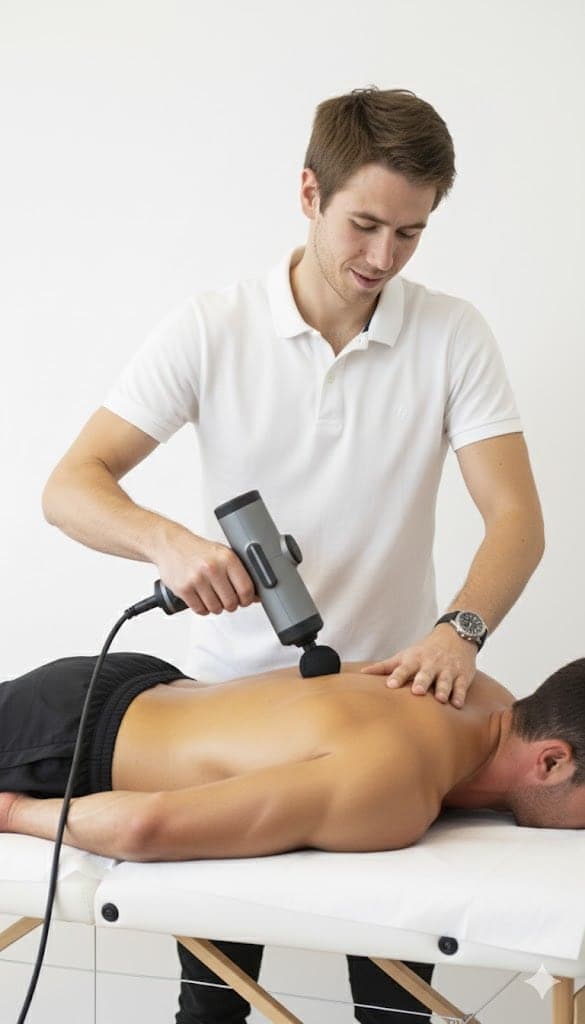
Written by
Chris
Massage therapist, nutrition and exercise physiologist
Norwegian-certified with a Bachelor’s in Physical Education and Nutrition and over ten years of clinical practice, working from a portable table in clients’ homes across the Paphos district.
This article is general information, not a medical diagnosis. If you have severe, worsening or unexplained pain, numbness, weakness, or pain after an accident, see a doctor first.