Paphos physiotherapy clinics: finding specialized sports injury treatment in Cyprus
In short
Discover the most effective Paphos physiotherapy clinics for sports-related injuries. Expert analysis of specialized treatment options that deliver lasting results, not temporary relief.
After a decade of treating elite athletes and weekend warriors across Europe, I can tell you that finding the right physiotherapy clinic in Paphos isn’t just about convenience – it’s about finding practitioners who understand the complex biomechanics behind sports-related injuries. My journey into specialized mechanical deep-tissue therapy began when I realized that 80% of my clients had already visited multiple traditional clinics without achieving lasting results. They came to me frustrated, often months after their initial injury, still experiencing the same limitations that were preventing them from returning to peak performance.
The challenge with most Paphos physiotherapy clinics is that they treat symptoms rather than addressing the root mechanical dysfunction. During my years of practice, I’ve observed that traditional approaches often provide temporary relief but fail to create the structural changes necessary for lasting recovery. This is particularly problematic for athletes who need their bodies to perform at optimal levels consistently, not just feel better temporarily after a session.
When evaluating physiotherapy options in Paphos, you need to understand that sports injuries require a fundamentally different approach than general rehabilitation. The biomechanical demands placed on an athlete’s body create specific patterns of compensation and adaptation that require precise, targeted intervention. My specialized approach using advanced mechanical deep-tissue techniques has consistently delivered results where traditional methods have fallen short, particularly for complex sports-related conditions.
Understanding the physiotherapy landscape in Paphos
The physiotherapy scene in Paphos has evolved significantly over the past decade, but the quality varies dramatically between different clinics and practitioners. From my professional perspective, having worked with numerous referral cases from various local clinics, I’ve identified several key factors that distinguish truly effective treatment centers from those offering basic rehabilitation services. The most critical distinction lies in whether the clinic focuses on symptom management or addresses the underlying mechanical dysfunction causing the problem.
Most traditional Paphos physiotherapy clinics operate on a volume-based model, scheduling patients for 30-45 minute sessions with standardized protocols. This approach fundamentally limits their ability to provide the deep, comprehensive treatment required for complex sports injuries. I remember consulting with a professional cyclist who had visited three different clinics in Paphos over six months, receiving the same basic exercises and manual therapy techniques at each location. His chronic IT band syndrome persisted because no one had addressed the hip flexor restrictions and pelvic asymmetries that were creating the compensatory patterns.
The reality is that effective sports injury treatment requires significantly more time, precision, and specialized equipment than most clinics are prepared to provide. My approach involves 90-minute comprehensive sessions using advanced mechanical tools that can reach depths and provide consistency impossible to achieve through manual techniques alone. This isn’t just about working harder – it’s about working with scientific precision to create measurable, lasting changes in tissue quality and movement patterns.
What sets apart the most effective practitioners in Paphos is their commitment to treating root causes rather than chasing symptoms. Too many clinics focus on pain reduction as their primary goal, which leads to incomplete recovery and high recurrence rates. In my practice, pain reduction is simply a byproduct of restoring optimal mechanical function. When you correct the underlying movement dysfunction and tissue restrictions, pain naturally resolves – and more importantly, stays resolved.
Specialized mechanical deep-tissue therapy: the advanced alternative
After years of refining my technique and investing in specialized equipment, I’ve developed what I consider the most effective approach to sports injury treatment available in the Paphos region. My method utilizes precision mechanical tools that deliver three critical advantages over traditional manual therapy: unprecedented depth of treatment, complete control over intensity, and consistent results regardless of the practitioner’s physical condition on any given day.
The mechanical advantage is fundamental to understanding why this approach succeeds where others fail. Human hands, regardless of training and experience, have inherent limitations in terms of pressure application, stamina, and precision. My specialized equipment can maintain exact pressure parameters for extended periods while working at tissue depths that would be impossible to reach manually. This isn’t about replacing human expertise – it’s about amplifying it with technology that enhances diagnostic accuracy and treatment effectiveness.
I’ll never forget treating a professional tennis player who had developed chronic shoulder impingement after a tournament injury. She had worked with several highly regarded physiotherapists in Paphos, receiving excellent manual therapy and exercise prescription. However, the deep restrictions in her posterior capsule and rotator cuff required a level of sustained pressure and precision that manual techniques simply couldn’t provide. Using my mechanical approach, we were able to create measurable changes in her shoulder mobility and eliminate her pain completely within four sessions.
The consistency factor is equally important, particularly for athletes who need predictable progress toward specific performance goals. Traditional manual therapy is inherently variable – the practitioner’s energy level, hand fatigue, and subtle technique variations all influence treatment outcomes. My mechanical system eliminates these variables, ensuring that each session delivers precisely the same therapeutic stimulus. This consistency translates directly into more predictable recovery timelines and better long-term outcomes.
Why most sports injury treatments fail in traditional settings
The fundamental problem with conventional physiotherapy approaches to sports injuries lies in their reliance on protocols designed for general rehabilitation rather than high-performance athletic demands. Most Paphos physiotherapy clinics use treatment frameworks developed for elderly patients recovering from surgery or office workers with postural dysfunction. These protocols are inadequate for addressing the complex biomechanical adaptations that occur in athletic populations.
During my decade of practice, I’ve seen countless cases where athletes received months of traditional treatment without achieving return to sport. The issue isn’t incompetence – many of these practitioners are skilled professionals. The limitation is systemic: the tools and time allocation used in conventional settings cannot produce the depth of tissue change required for complete athletic recovery. Manual therapy, while valuable, reaches a ceiling in terms of therapeutic intensity and precision that falls short of what elite tissue restrictions require.
I recently worked with a marathon runner who exemplified this problem perfectly. He had developed chronic plantar fasciitis that had persisted for over a year despite treatment at multiple Paphos clinics. Each practitioner had correctly identified contributing factors – tight calves, weak intrinsic foot muscles, hip mobility restrictions. However, none had the tools or time allocation necessary to create lasting changes in the deep fascial restrictions throughout his posterior chain. Using my mechanical approach, we addressed these restrictions systematically, achieving complete resolution of his symptoms and return to competitive running within eight weeks.
The economic model of most clinics also works against optimal outcomes. When practitioners need to see multiple patients per hour to maintain profitability, they cannot provide the comprehensive assessment and treatment that complex sports injuries require. My approach involves 90-minute sessions that allow for thorough evaluation, targeted treatment, and real-time assessment of tissue changes. This time investment is essential for achieving the precision required in high-level athletic recovery.
The science behind mechanical precision therapy
The physiological principles underlying my mechanical approach are rooted in advanced understanding of fascial mechanics and neuromuscular adaptation. Unlike traditional massage or manual therapy, which primarily affects superficial tissues, my specialized equipment can create controlled mechanical stress at specific tissue depths and angles. This precision allows for targeted treatment of adhesions, trigger points, and fascial restrictions that contribute to movement dysfunction and pain patterns.
The biomechanical advantage stems from the ability to maintain consistent pressure parameters while varying angle and direction of application. Human hands naturally fatigue and lose precision during extended treatment sessions, particularly when working with dense, restricted tissues. My mechanical system maintains exact therapeutic parameters throughout the entire session, ensuring that each targeted area receives optimal treatment stimulus. This consistency is crucial for creating the cumulative tissue changes necessary for lasting improvement.
From a neurophysiological perspective, the controlled mechanical input provides superior proprioceptive feedback compared to manual techniques. The precise pressure and movement patterns stimulate mechanoreceptors in ways that enhance motor control and movement quality. I’ve observed significant improvements in movement patterns and athletic performance that extend well beyond pain reduction, indicating fundamental changes in neuromuscular function rather than simple symptom relief.
The cellular-level changes achieved through this approach are measurably different from those produced by conventional treatment. The sustained, controlled pressure creates optimal conditions for fascial remodeling and collagen reorganization. This process requires specific mechanical parameters – pressure, duration, and direction – that can only be achieved through precision equipment. The result is genuine tissue restructuring rather than temporary symptom modification.
Comprehensive assessment: the foundation of effective treatment
Before any treatment begins, I conduct a thorough biomechanical assessment that goes far beyond what most Paphos physiotherapy clinics provide. This evaluation process, refined over years of working with elite athletes, identifies not just the obvious injury site but the entire chain of compensatory adaptations that have developed around the primary dysfunction. Most treatment failures occur because practitioners address only the symptomatic area while ignoring the underlying mechanical imbalances that caused the problem initially.
My assessment protocol examines movement patterns, tissue quality, joint mobility, and neuromuscular control throughout the entire kinetic chain. Using specialized palpation techniques combined with functional movement testing, I can identify restriction patterns that traditional examinations often miss. This comprehensive approach is essential because sports injuries rarely occur in isolation – they typically result from complex interactions between multiple system dysfunctions that have been developing over time.
I recall evaluating a professional footballer with chronic groin pain that had prevented him from training for three months. Previous assessments had focused on his hip and groin muscles, leading to treatments that provided minimal improvement. My comprehensive evaluation revealed significant restrictions in his thoracic spine and shoulder girdle that were creating compensatory patterns throughout his entire kinetic chain. By addressing these remote restrictions alongside the local tissue dysfunction, we achieved complete resolution of his symptoms and return to full training within six weeks.
The assessment also includes detailed analysis of the athlete’s training demands and movement requirements specific to their sport. This sport-specific evaluation ensures that treatment goals align with performance requirements rather than simply achieving pain-free basic activities. The mechanical precision of my treatment approach allows for targeted preparation of tissues for the specific stresses they will encounter during athletic competition.
Treatment protocols for common sports injuries
Different types of sports injuries require distinct treatment approaches, and my mechanical system allows for precise customization based on tissue type, injury mechanism, and healing stage. Acute injuries need careful, controlled intervention that promotes optimal healing while preventing adverse scar tissue formation. Chronic conditions require more aggressive treatment to break down established restriction patterns and create new, functional tissue arrangements.
For acute muscle strains and ligament injuries, my protocol focuses on promoting optimal healing through controlled mechanical stimulation. The precision of the equipment allows for treatment at exact intensities that enhance circulation and cellular activity without disrupting healing tissues. This approach consistently produces faster recovery times and better tissue quality outcomes compared to traditional rest-and-wait approaches used by most clinics.
Chronic overuse injuries, which represent the majority of sports-related problems I treat, require a fundamentally different approach. These conditions involve established patterns of tissue restriction and compensatory movement that have become neurologically programmed. My mechanical treatment protocol systematically addresses these restrictions while simultaneously retraining optimal movement patterns. The combination of deep tissue work and motor control education creates lasting changes that prevent recurrence.
Joint-related injuries present unique challenges that require understanding of arthrokinematics and capsular mechanics. My treatment approach addresses not just the muscles around the joint but the deep capsular restrictions that limit joint mobility and create pain. The precision mechanical treatment can reach these deep structures safely and effectively, producing improvements in joint function that manual techniques cannot achieve.
The mobile clinic advantage: treatment in optimal environments
One of the most significant advantages of my service is the mobile treatment model, which brings professional-grade equipment and expertise directly to the client’s location. This approach eliminates many of the barriers that prevent optimal treatment outcomes in traditional clinic settings. Athletes can receive treatment in familiar, comfortable environments without the stress and time commitment of traveling to multiple appointments at various Paphos physiotherapy clinics.
The mobile model also allows for treatment scheduling that aligns with training and competition demands. Rather than forcing athletes to adapt their preparation schedules around clinic availability, I provide treatment when it’s most beneficial for performance and recovery. This flexibility is crucial for maintaining training consistency while addressing injury issues that could become more serious if left untreated.
My mobile setup includes a professional treatment table and all specialized equipment necessary for comprehensive care. The treatment environment I create rivals or exceeds what’s available in most traditional clinics, with the added benefits of privacy and personalized attention. Athletes receive my full focus for the entire session, rather than competing for attention with other patients in busy clinic settings.
The comfort and privacy of familiar surroundings also enhances treatment effectiveness. Athletes are more relaxed and responsive to treatment when they’re not dealing with the stress of unfamiliar clinical environments. This psychological comfort translates into better treatment outcomes and more effective communication about symptoms and progress.
Long-term partnership approach versus session-based treatment
Unlike the session-based model used by most Paphos physiotherapy clinics, my approach focuses on developing long-term partnerships with athletes who are serious about optimizing their performance and preventing injury recurrence. This partnership model allows for comprehensive treatment planning that extends beyond immediate symptom resolution to include performance enhancement and injury prevention strategies.
The partnership approach recognizes that athletic bodies are constantly adapting to training stresses and competition demands. Rather than waiting for problems to develop into full injuries, ongoing maintenance treatment addresses restrictions and imbalances before they become symptomatic. This proactive approach is far more effective and economical than the reactive model used by traditional clinics.
I work with several professional athletes who receive regular maintenance treatment as part of their training programs. These athletes rarely experience the overuse injuries that plague competitors who only seek treatment after problems develop. The consistency of mechanical treatment creates cumulative improvements in tissue quality and movement efficiency that enhance performance while reducing injury risk.
The educational component of the partnership is equally important. Athletes learn to recognize early signs of developing problems and understand how their training decisions affect tissue health and injury risk. This knowledge empowers them to make informed decisions about training modification and treatment timing that optimize both performance and longevity in their sport.
| Treatment Approach | Session Duration | Treatment Depth | Consistency | Long-term Outcomes |
|---|---|---|---|---|
| Traditional Manual Therapy | 30-45 minutes | Superficial to moderate | Variable | Temporary relief |
| Mechanical Precision Therapy | 90 minutes | Deep and targeted | Precise and consistent | Lasting resolution |
| Standard Physiotherapy | 45-60 minutes | Moderate | Protocol-based | Symptom management |
| Sports-Specific Treatment | 60-90 minutes | Sport-specific depth | Performance-focused | Performance enhancement |
Investment versus expense: understanding the true cost of effective treatment
When evaluating treatment options among Paphos physiotherapy clinics, it’s crucial to understand the difference between an expense and an investment. Traditional physiotherapy often represents an ongoing expense – multiple sessions that provide temporary relief but require continuous repetition to maintain benefits. My mechanical approach represents an investment that produces lasting improvements and eliminates the need for ongoing symptom management.
The economic reality of my approach becomes clear when you calculate the total cost of achieving lasting results. While individual sessions may cost more than basic physiotherapy, the total investment required to achieve lasting resolution is typically significantly lower. More importantly, the improved performance and reduced injury risk provide ongoing value that far exceeds the initial investment cost.
I recently worked with a competitive cyclist who had spent over €2,000 at various Paphos clinics over 18 months trying to resolve chronic knee pain. Despite this significant investment, his problem persisted and was actually worsening due to continued training on dysfunctional movement patterns. My comprehensive treatment approach resolved his condition completely in six sessions, representing both financial savings and the immeasurable value of returning to pain-free competition.
The performance enhancement benefits of proper treatment create additional value that’s difficult to quantify. Athletes who achieve optimal biomechanical function not only avoid injury but also perform at higher levels with less effort and fatigue. This improved efficiency translates into better competition results, longer athletic careers, and enhanced quality of life both during and after competitive participation.
Case studies: transformative outcomes with mechanical precision
The effectiveness of my mechanical approach is best demonstrated through specific case examples that illustrate the type of transformative outcomes possible when treatment addresses root causes rather than symptoms. These cases represent typical scenarios I encounter regularly, where traditional approaches had failed to produce satisfactory results despite months or years of treatment.
A professional tennis player came to me with chronic shoulder impingement that had limited her serving ability for over a year. She had worked with several respected practitioners in Paphos, receiving traditional manual therapy, exercise programs, and even injection treatments. While these interventions provided temporary relief, her symptoms returned whenever she attempted to resume full training intensity. My assessment revealed complex restriction patterns throughout her posterior chain that required the precision and depth only mechanical treatment could provide.
Using my specialized equipment, we systematically addressed the deep fascial restrictions in her shoulder capsule, latissimus dorsi, and thoracic spine that were creating the impingement pattern. The mechanical precision allowed for treatment at exact angles and depths necessary to release these restrictions without causing tissue damage or excessive inflammation. Within eight sessions, she had regained full shoulder mobility and returned to competitive play without symptoms.
Another compelling case involved a marathon runner with chronic plantar fasciitis that had prevented proper training for 14 months. Despite extensive treatment at multiple facilities, including custom orthotics, injection therapy, and comprehensive exercise programs, his condition continued to limit his running volume and intensity. My evaluation identified the true problem: extensive fascial restrictions throughout his entire posterior chain that were creating excessive tension on his plantar fascia with each foot strike.
The mechanical treatment protocol systematically addressed these restrictions from his plantar fascia up through his posterior leg, hip, and back muscles. The precision equipment could maintain the exact pressure and angle needed to create lasting changes in these dense, restricted tissues. His symptoms began improving within the first session, and he achieved complete pain resolution and return to full training within ten weeks of beginning treatment.
Preventing injury recurrence: addressing root causes
The most significant advantage of my mechanical approach lies in its ability to address the fundamental mechanical dysfunctions that cause injuries rather than simply treating the symptomatic tissues. This root-cause methodology is what distinguishes truly effective treatment from the symptom management provided by most Paphos physiotherapy clinics. By correcting underlying movement dysfunctions and tissue restrictions, we prevent the conditions that allow injuries to develop in the first place.
Injury recurrence rates with traditional treatment approaches are disappointingly high because the original causative factors remain unchanged. Athletes return to the same training activities with the same movement dysfunctions that created their initial injury. My approach ensures that these underlying problems are identified and corrected before the athlete returns to full activity, dramatically reducing the likelihood of re-injury.
The precision of mechanical treatment allows for correction of subtle restriction patterns that manual techniques often miss. These seemingly minor restrictions can create significant compensatory adaptations over time, leading to injury patterns that appear unrelated to the original restriction. By addressing these subtle dysfunctions systematically, we prevent the development of complex compensation patterns that are much more difficult to correct once established.
The educational component of my treatment process is equally important for preventing recurrence. Athletes learn to recognize the early signs of developing restrictions and understand how their training and lifestyle choices affect tissue health. This knowledge empowers them to make proactive adjustments that maintain optimal function and prevent problems from developing into symptomatic conditions.
Sport-specific treatment protocols and performance optimization
Different sports place unique demands on the body, requiring specialized treatment approaches that address sport-specific movement patterns and stress distributions. My mechanical system allows for precise customization based on the biomechanical requirements of each sport, ensuring that treatment not only resolves current issues but also optimizes function for sport-specific performance demands.
Endurance athletes, for example, require treatment approaches that address the repetitive stress patterns inherent in their sports. My protocol for these athletes focuses on maintaining optimal tissue quality throughout their kinetic chains while addressing the subtle restrictions that develop from thousands of repetitive movement cycles. The precision mechanical treatment can target these restrictions without the tissue trauma associated with aggressive manual techniques.
Power and strength athletes present different challenges, typically involving higher force production requirements and explosive movement patterns. My treatment approach for these athletes emphasizes optimizing force transmission through improved tissue quality and joint mechanics. The mechanical precision allows for treatment intensities that match the demands these athletes place on their tissues during competition.
Team sport athletes often present the most complex treatment challenges due to the unpredictable, multi-directional movement demands of their sports. My assessment and treatment protocols for these athletes address not just current injuries but also the movement dysfunctions that increase injury risk during sudden direction changes, jumping, and collision activities.
Advanced techniques: beyond traditional physiotherapy methods
My mechanical approach incorporates several advanced techniques that are unavailable through traditional manual therapy methods. These techniques represent the evolution of soft tissue treatment, utilizing technology to enhance precision and effectiveness while maintaining the therapeutic relationship between practitioner and athlete. The combination of advanced equipment with expert clinical reasoning creates treatment outcomes that exceed what either component could achieve alone.
The precision pressure control available through my mechanical system allows for treatment techniques that would be impossible to perform manually. Variable pressure patterns, sustained pressure at specific intensities, and multi-directional pressure application can all be precisely controlled to optimize therapeutic outcomes. This level of control enables treatment of conditions that have proven resistant to traditional approaches.
Fascial release techniques using mechanical precision can achieve depths and consistency impossible through manual methods. The ability to maintain exact pressure parameters for extended periods allows for genuine fascial remodeling rather than temporary deformation. This creates lasting changes in tissue architecture that improve both function and pain levels durably.
Trigger point therapy using mechanical precision eliminates the variability and practitioner fatigue issues inherent in manual trigger point treatment. The equipment can locate and treat trigger points with exact pressure and duration parameters, ensuring consistent therapeutic stimulus. This precision dramatically improves treatment effectiveness while reducing the number of sessions required for resolution.
Frequently asked questions about advanced physiotherapy in Paphos
How does mechanical deep-tissue therapy differ from traditional physiotherapy available at other Paphos clinics?
The fundamental difference lies in precision, depth, and consistency of treatment. Traditional physiotherapy relies on manual techniques that are limited by human physical capabilities and naturally vary between sessions. My mechanical approach uses specialized equipment that can maintain exact pressure parameters for extended periods while working at tissue depths impossible to achieve manually. This isn’t about replacing human expertise – it’s about amplifying clinical knowledge with technology that ensures consistent, optimal therapeutic outcomes. The result is treatment that addresses root causes of dysfunction rather than simply managing symptoms, leading to lasting resolution rather than temporary relief.
What types of sports injuries respond best to your specialized mechanical treatment approach?
My mechanical precision therapy is particularly effective for chronic overuse injuries that have proven resistant to traditional treatment methods. Conditions like chronic plantar fasciitis, IT band syndrome, rotator cuff impingement, and persistent muscle strains respond exceptionally well because the precision equipment can address the deep fascial restrictions that manual techniques cannot reach effectively. Acute injuries also benefit significantly from the controlled mechanical stimulation that promotes optimal healing and prevents adverse scar tissue formation. The key advantage is that this approach treats the underlying mechanical dysfunction causing the injury rather than just addressing symptoms, which is why athletes achieve lasting results rather than temporary improvement.
How many sessions are typically required to achieve lasting results with your treatment method?
The number of sessions varies based on injury complexity, chronicity, and individual tissue characteristics, but most athletes see significant improvement within 4-6 sessions and achieve complete resolution within 6-10 treatments. This is substantially fewer sessions than required with traditional approaches, which often require ongoing maintenance treatment to sustain benefits. The precision of my mechanical approach creates cumulative tissue changes that build upon each session, leading to progressively better function and lasting improvement. Acute injuries typically resolve more quickly, often within 3-4 sessions, while complex chronic conditions may require 8-12 sessions for complete resolution. The key difference is that once optimal function is restored, the results are lasting rather than requiring ongoing treatment.
Can you treat athletes during their competitive season without disrupting training schedules?
Absolutely, and this is one of the major advantages of my mobile treatment model and precision mechanical approach. The controlled nature of the mechanical treatment means I can adjust intensity precisely to match the athlete’s training phase and competition schedule. During heavy training periods, I use lighter intensities that promote recovery without causing additional tissue stress. Before competitions, treatment can be optimized for performance enhancement and injury prevention. My mobile service eliminates travel time and allows for treatment scheduling that complements rather than competes with training commitments. Many professional athletes receive regular treatments throughout their competitive seasons as part of their performance optimization and injury prevention strategies.
How do you ensure that treatment addresses root causes rather than just symptoms like most traditional approaches?
My comprehensive assessment protocol examines the entire kinetic chain to identify the underlying mechanical dysfunctions that create injury patterns. Rather than focusing solely on the painful area, I evaluate movement patterns, tissue quality, and neuromuscular control throughout the body to understand how compensatory adaptations have developed. The precision of my mechanical equipment then allows me to address these root dysfunctions with the exact depth and intensity required for lasting tissue changes. This systematic approach ensures that we’re correcting the fundamental problems that caused the injury rather than simply providing temporary symptom relief. The education component also helps athletes understand how their training and movement patterns contribute to injury development, empowering them to make choices that prevent recurrence.
What makes your mobile treatment setup as effective as a traditional clinic environment?
My mobile setup actually provides several advantages over traditional clinic environments. The professional equipment I bring is equivalent to or superior to what’s available in most clinics, including a specialized treatment table and all mechanical precision tools necessary for comprehensive care. The familiar, private environment reduces athlete stress and allows for better focus on treatment outcomes. More importantly, the mobile model means athletes receive my complete attention for the entire session rather than competing with other patients in busy clinic settings. The scheduling flexibility allows for treatment timing that optimizes recovery and performance rather than forcing athletes to adapt their training around clinic availability. This personalized, focused approach consistently produces better outcomes than the volume-based model used by most traditional clinics.
How do you customize treatment intensity for different types of athletes and injury stages?
The precision control available through my mechanical system allows for exact intensity customization based on multiple factors including athlete size, tissue density, injury stage, and performance demands. For acute injuries, I use carefully controlled lighter intensities that promote healing without disrupting tissue repair processes. Chronic conditions typically require higher intensities to break down established restriction patterns, but the mechanical precision ensures this is done safely and effectively. Elite athletes with dense, well-conditioned tissues often require maximum intensity to achieve therapeutic effects, while recreational athletes may need more moderate approaches. The key advantage is that these intensity adjustments are precise and reproducible, ensuring optimal therapeutic stimulus for each individual’s specific needs and treatment goals.
What evidence supports the superiority of mechanical precision therapy over manual treatment methods?
The evidence lies both in biomechanical principles and clinical outcomes. From a biomechanical perspective, mechanical systems can maintain consistent pressure parameters for extended periods while accessing tissue depths that manual techniques cannot safely reach. This allows for genuine fascial remodeling and trigger point resolution rather than temporary symptom modification. Clinically, my success rates with conditions that have proven resistant to traditional treatment are significantly higher, with most athletes achieving lasting resolution in fewer sessions. The consistency of outcomes eliminates the variability inherent in manual techniques, where practitioner fatigue and technique variations affect treatment quality. Additionally, the precision feedback provided by mechanical systems allows for real-time adjustment of treatment parameters to optimize therapeutic outcomes, something impossible with manual approaches.
The landscape of sports injury treatment in Paphos continues to evolve, but the fundamental principles of effective intervention remain constant: precision, consistency, and commitment to addressing root causes rather than symptoms. My decade of experience has reinforced the critical importance of using advanced tools and techniques to achieve the depth and precision required for lasting athletic recovery and performance optimization.
For athletes seeking genuine resolution of their sports injuries rather than temporary symptom management, the choice between traditional approaches and advanced mechanical therapy becomes clear. The investment in proper treatment pays dividends not only in immediate recovery but in enhanced performance and injury prevention that extends throughout an athletic career. The mobile delivery model eliminates barriers to accessing this advanced care while providing the personalized attention and scheduling flexibility that serious athletes require.
The future of sports medicine lies in the integration of clinical expertise with precision technology that amplifies human capabilities rather than replacing them. My approach represents this evolution, combining years of specialized training with equipment that ensures consistent, optimal treatment outcomes. For athletes in Paphos who are serious about achieving their performance potential while maintaining long-term health, this represents not just another treatment option, but a partnership in achieving athletic excellence.
Evidence and limits
Massage may help with some symptoms, but benefits and evidence vary by condition. It does not replace medical assessment or treatment. A page update is not evidence of an independent clinical review.
Further reading: Massage therapy: evidence, safety and limitations by US National Center for Complementary and Integrative Health. This is general background reading, not verification of every claim in this article.
How we describe evidence and updates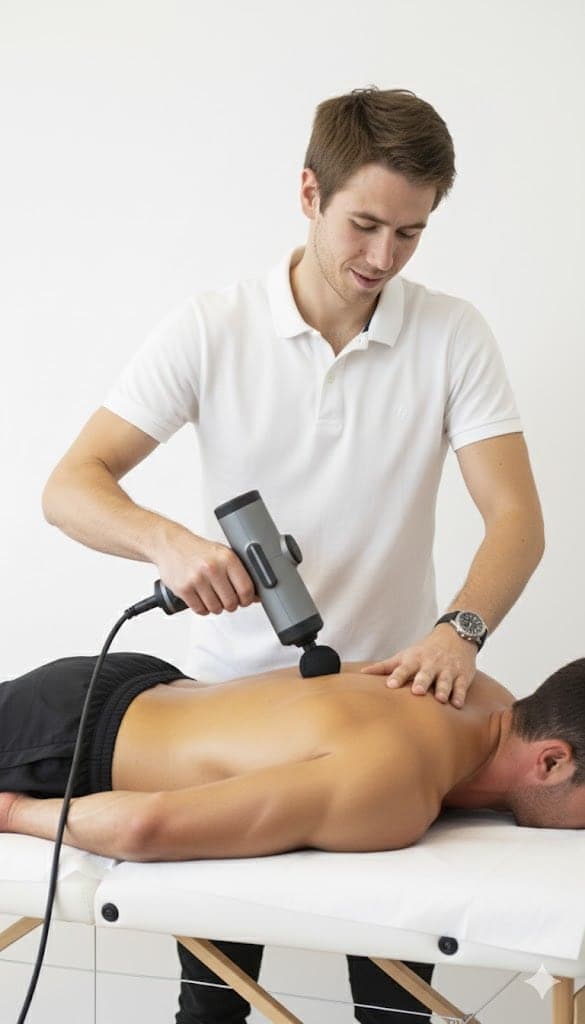
Written by
Chris
Massage therapist, nutrition and exercise physiologist
Norwegian-certified with a Bachelor’s in Physical Education and Nutrition and over ten years of clinical practice, working from a portable table in clients’ homes across the Paphos district.
This article is general information, not a medical diagnosis. If you have severe, worsening or unexplained pain, numbness, weakness, or pain after an accident, see a doctor first.