Paphos area mobile massage: Advanced mechanical deep-tissue therapy delivered to your location
In short
Professional mobile massage in Paphos featuring advanced mechanical deep-tissue therapy. 10 years experience, university-educated specialist treating pain at its source for lasting results.
I’ll never forget the moment I realized traditional massage therapy wasn’t enough. It was during my third year of practice in Paphos when a professional athlete – a tennis player ranked in Cyprus’s top ten – came to me after months of unsuccessful treatment elsewhere. “I’ve tried everything,” she said, frustration evident in her voice. “Spa massages, sports therapy, even traveled to Limassol for ‘specialists.’ Nothing works for more than a few days.”
That conversation changed everything about how I approach mobile massage in the Paphos area. After completing my Bachelor’s degree in Physical Education and Nutrition from Norway and accumulating over a decade of hands-on experience, I understood that the problem wasn’t the therapists – it was the fundamental limitations of traditional massage techniques. The human hand, regardless of training, simply cannot deliver the precise, consistent pressure needed to address deep-seated muscular dysfunction at its mechanical root.
Today, when I travel to clients across Paphos, Coral Bay, Peyia, and the surrounding areas with my specialized equipment, I’m not just offering another massage service. I’m delivering a scientifically-backed, results-driven intervention that treats the cause of pain and dysfunction, not merely its symptoms. This is Paphos area mobile massage evolved – a complete paradigm shift from temporary relief to lasting resolution.
The difference isn’t just in the technique; it’s in the philosophy. While traditional massage therapists focus on relaxation and temporary symptom management, my approach centers on mechanical precision and long-term biomechanical optimization. Every session is designed not as a luxury experience, but as a strategic investment in your body’s functional capacity and pain-free performance in daily life.
The Science Behind Advanced Mechanical Deep-Tissue Therapy
Let me be direct about something the massage industry rarely discusses: human hands have inherent limitations that prevent optimal therapeutic outcomes. During my years of study and practice, I’ve documented countless cases where clients received multiple traditional treatments without addressing their core issues. The tennis player I mentioned earlier had received over forty massage sessions from various practitioners before consulting with me. Within three sessions using advanced mechanical therapy, her chronic shoulder impingement was resolved – durably.
The mechanical approach I employ operates on three fundamental principles that distinguish it from conventional massage therapy. First, the depth of penetration achieves levels impossible through manual manipulation. While skilled hands can apply surface and moderate pressure, my specialized equipment delivers precise mechanical force that reaches the deepest layers of muscle tissue, fascia, and connective structures where chronic tension patterns are actually rooted.
Second, the consistency factor eliminates the variables that plague traditional massage. Human practitioners have fluctuating energy levels, varying pressure application, and subjective interpretations of tissue response. My mechanical system delivers identical precision every single session, ensuring that your treatment protocol follows a predictable, measurable progression toward resolution. There are no “off days” with mechanical therapy – every session builds systematically on the previous one.
Third, the control mechanisms allow for micro-adjustments that match your specific tissue tolerance and therapeutic needs. This isn’t about applying more force; it’s about applying the exact right force at the precise anatomical location where dysfunction originates. I can modulate intensity from gentle lymphatic drainage levels for sensitive clients to powerfully deep penetration for conditioned athletes, all while maintaining mechanical precision that human hands cannot replicate.
The physiological response to this approach differs significantly from traditional massage outcomes. Instead of temporary endorphin release and surface relaxation, mechanical deep-tissue therapy triggers specific neuromuscular adaptations: fascial reorganization, trigger point deactivation, and restoration of optimal muscle fiber recruitment patterns. These changes persist because they address the mechanical dysfunction causing your symptoms, rather than simply masking the discomfort.
Why Traditional Paphos Massage Services Fall Short
I need to address something that might challenge your previous experiences with massage therapy in Cyprus. After working with hundreds of clients who came to me after unsuccessful treatments elsewhere, I’ve identified consistent patterns in why traditional approaches fail to deliver lasting results. This isn’t about criticizing individual therapists – many are skilled and well-intentioned. The issue is systemic and relates to the fundamental limitations of manual therapy techniques.
Traditional spa and wellness centers in Paphos typically employ relaxation-focused methods that prioritize client comfort over therapeutic efficacy. While these sessions feel pleasant and provide temporary stress relief, they operate at tissue depths and pressure levels insufficient to address chronic muscular dysfunction. I’ve had clients tell me they felt “relaxed but unchanged” after months of regular spa treatments – spending thousands of euros on sessions that never addressed their underlying biomechanical issues.
Sports massage practitioners often apply deeper pressure, but consistency remains problematic. The same therapist can deliver vastly different treatments depending on their energy level, technique variations, and subjective assessment of your tissue response. I once treated a professional cyclist who had received sports massage twice weekly for six months. His chronic hip flexor dysfunction persisted because the manual pressure, while intense, wasn’t precisely targeting the specific fascial adhesions causing his movement restrictions.
Even highly trained physiotherapists using manual techniques face limitations. Human hands fatigue during treatment, pressure application becomes inconsistent, and the therapist’s physical strength determines treatment depth rather than your tissue’s therapeutic requirements. I’ve collaborated with several excellent physiotherapists in Paphos who now refer clients to me specifically because they recognize when mechanical precision is needed to achieve the results manual therapy cannot deliver.
The mobile massage services commonly available in the Paphos area typically focus on convenience rather than clinical effectiveness. Portable massage tables and basic techniques might provide temporary relief, but they lack the specialized equipment and systematic approach necessary for addressing complex musculoskeletal dysfunction. When I travel to your location, I bring professional-grade mechanical therapy equipment that transforms any space into an advanced treatment facility.
The Revolutionary Mobile Service Model
The concept of bringing advanced therapeutic equipment directly to clients’ locations represents a complete reimagining of how effective massage therapy should be delivered. When I first established my mobile practice in Paphos, many questioned whether sophisticated mechanical therapy could be effectively administered outside a clinical setting. Three years and hundreds of successful treatments later, I can definitively state that mobile delivery actually enhances therapeutic outcomes in multiple ways.
Environmental comfort significantly impacts treatment effectiveness. When you receive therapy in your own space – whether that’s your villa in Coral Bay, your apartment in Kato Paphos, or your hotel room during an extended stay – your nervous system remains in a familiar, relaxed state. This psychological comfort allows for deeper muscle relaxation and more effective treatment penetration. I’ve documented measurably better outcomes when clients aren’t dealing with the stress of traveling to appointments, finding parking, or adjusting to unfamiliar clinical environments.
The logistics of my mobile service eliminate every barrier that typically prevents consistent treatment protocols. I arrive at your specified location with a professional massage bench designed specifically for mechanical deep-tissue therapy, all necessary equipment calibrated to clinical standards, and complete privacy screening if required. The setup process takes less than ten minutes, and breakdown is equally efficient. You never need to consider transportation, scheduling around traffic, or any external factors that might disrupt your treatment continuity.
Privacy and personalization reach optimal levels with mobile service delivery. Many clients have muscular dysfunction in areas they’re uncomfortable addressing in spa or clinical settings. In your own space, comprehensive assessment and treatment of all affected areas becomes possible, allowing for more complete therapeutic intervention. I’ve treated executives with chronic neck and shoulder tension who could never fully relax in traditional massage environments, but achieved complete resolution through private mobile sessions.
The time efficiency factor cannot be overstated. A typical spa visit requires travel time, arrival procedures, changing, treatment, recovery time, and return travel. My mobile service converts this three-hour commitment into a focused ninety-minute therapeutic session with no additional time investment on your part. For busy professionals, parents, or anyone managing complex schedules, this efficiency makes consistent treatment protocols actually feasible rather than theoretically ideal.
Precision, Power, and Consistency: The Mechanical Advantage
The specialized equipment I utilize operates on engineering principles that optimize therapeutic force delivery in ways human hands simply cannot achieve. After extensive research into biomechanical therapy technologies and personal testing of various systems, I selected equipment that delivers what I call the “triple advantage”: precision targeting, variable power application, and absolute consistency across all treatment sessions.
Precision targeting means the therapeutic force is delivered exactly where anatomical assessment indicates it’s needed, with millimeter-level accuracy. When I identify adhesions in specific fascial planes or trigger points in particular muscle bellies, the mechanical system can focus therapeutic energy on those exact locations without affecting surrounding tissues. This precision prevents the generalized soreness often associated with deep manual massage while maximizing therapeutic impact on dysfunctional areas.
Variable power application allows me to customize treatment intensity not just between clients, but between different areas of the same client’s body during a single session. Your chronically tight trapezius muscles might require significantly different therapeutic force than your sensitive lumbar erectors. The mechanical system delivers exactly the pressure needed for each anatomical region, adjusted in real-time based on tissue response and your tolerance feedback.
Absolute consistency ensures that every treatment builds systematically on previous sessions. Unlike human hands that vary in pressure application due to fatigue, mood, or technique variations, mechanical therapy delivers identical therapeutic parameters session after session. This consistency is crucial for progressive treatment protocols where each session must build on specific adaptations achieved in previous treatments.
The physiological advantages extend beyond simple pressure application. Mechanical therapy creates vibration patterns and pressure rhythms that stimulate specific neurological responses impossible to replicate manually. These precise stimulation patterns trigger enhanced circulation, accelerated metabolic waste removal, and optimized tissue healing responses that persist long after the treatment session ends.
I’ve had clients describe the experience as “deeper than any massage I’ve ever received, but somehow less uncomfortable.” This seemingly contradictory response occurs because mechanical precision targets dysfunctional tissue specifically, avoiding the unnecessary pressure on healthy areas that characterizes broad-application manual techniques. The result is more effective therapy with greater client comfort – the best possible combination for long-term treatment adherence.
Treating Causes, Not Symptoms: A Paradigm Shift
The most fundamental difference between my approach and traditional massage therapy lies in diagnostic philosophy and treatment targeting. When a client contacts me about shoulder pain, back stiffness, or movement restrictions, I don’t immediately focus on the area where they feel discomfort. Instead, I conduct comprehensive biomechanical assessment to identify the root mechanical dysfunction causing their symptoms.
This diagnostic approach consistently reveals that symptom location and cause location are often completely different. I treated a successful businessman from Paphos who complained of chronic lower back pain that had persisted despite months of lower back massage treatments. My assessment revealed that his symptoms originated from bilateral hip flexor restrictions and thoracic spine mobility limitations – neither of which had been addressed by previous therapists focusing solely on his lumbar region.
After three sessions targeting his actual dysfunction patterns rather than his symptom location, his back pain resolved completely. More importantly, it remained resolved because we addressed the mechanical cause rather than temporarily relieving the symptomatic result. This is what I mean by treating causes rather than symptoms – it’s a completely different approach that requires different diagnostic skills and different therapeutic tools.
The mechanical assessment process I employ examines movement patterns, postural adaptations, muscle recruitment sequences, and fascial tension patterns to identify where normal function has been compromised. These assessments often reveal compensation chains where dysfunction in one area creates overuse patterns in seemingly unrelated regions. Traditional massage typically treats these compensation patterns as separate issues; I treat them as components of unified dysfunction requiring systematic resolution.
Treatment protocols designed around cause resolution follow predictable progression patterns. Rather than scheduling indefinite maintenance sessions, I establish clear objectives for functional restoration and map treatment sequences to achieve those objectives efficiently. Clients understand exactly what we’re working toward, why each session targets specific areas, and what functional improvements indicate successful resolution of their underlying dysfunction.
The investment perspective becomes clear when clients experience lasting resolution rather than temporary relief. Instead of booking monthly or weekly massage sessions indefinitely, my clients typically require intensive initial treatment series followed by occasional maintenance or optimization sessions. The total investment is often lower than ongoing symptom management approaches, and the outcomes are dramatically superior in terms of pain elimination and functional improvement.
The Complete Mobile Massage Experience in Paphos
When I arrive at your location anywhere in the greater Paphos area – whether you’re in a seafront villa in Coral Bay, a mountain retreat in Peyia, or a city apartment near the harbor – you receive the same comprehensive therapeutic experience that would typically require specialized clinical facilities. The mobile format doesn’t compromise treatment quality; it enhances it by eliminating environmental stressors and maximizing your comfort throughout the entire process.
The initial consultation process begins before the physical treatment session. I conduct detailed health history review, current symptom assessment, and functional movement evaluation to establish baseline measurements and identify primary dysfunction patterns. This consultation often reveals connections between seemingly unrelated symptoms and helps clients understand why their previous treatments may not have achieved lasting results.
Equipment setup transforms your chosen space into a professional therapy environment. The specialized massage bench provides optimal biomechanical positioning for both assessment and treatment procedures. All mechanical therapy equipment is calibrated to clinical standards and maintained according to strict protocols. Privacy screening ensures complete discretion regardless of your location or living situation.
The treatment session itself follows systematic protocols based on your specific dysfunction patterns rather than generic massage routines. Each session builds on previous treatments according to established therapeutic objectives. Real-time adjustments based on tissue response ensure optimal therapeutic benefit while maintaining your comfort throughout the process. Detailed session notes track progress and guide subsequent treatment modifications.
Post-treatment protocols include specific movement recommendations, postural awareness guidelines, and activity modifications designed to support and accelerate the therapeutic changes achieved during the session. These protocols aren’t generic exercise lists; they’re customized interventions based on your specific dysfunction patterns and daily activity requirements.
Follow-up assessment ensures treatment objectives are being met and allows for protocol adjustments as your condition improves. Rather than booking arbitrary follow-up appointments, session scheduling is based on therapeutic needs and functional improvement rates. This approach respects your time investment while optimizing treatment effectiveness.
Comprehensive Assessment and Treatment Planning
The assessment process I employ goes far beyond typical massage intake procedures. Drawing on my educational background in Physical Education and Nutrition plus a decade of specialized experience, I conduct comprehensive biomechanical evaluation that identifies not just current dysfunction patterns, but the underlying factors that created and maintain those patterns. This assessment forms the foundation for targeted treatment protocols designed to achieve lasting resolution rather than temporary symptomatic relief.
Postural analysis reveals compensation patterns that develop over months or years of adaptive responses to pain or dysfunction. I examine standing posture, seated posture, walking patterns, and occupation-specific positions to identify where normal biomechanics have been compromised. These postural adaptations often become the primary maintaining factors for chronic pain patterns, yet they’re rarely addressed by traditional massage approaches focused solely on muscle tension.
Movement assessment evaluates joint range of motion, muscle activation patterns, and coordination sequences to pinpoint exactly where normal function breaks down. I often discover that clients’ perceived “tight” muscles are actually weak muscles working overtime to compensate for dysfunction elsewhere in the kinetic chain. Treating these compensation patterns as the primary problem – which traditional massage often does – can actually worsen the underlying dysfunction.
Tissue assessment using mechanical therapy tools provides precise information about fascial restrictions, trigger point activity, and muscle fiber organization that manual palpation cannot detect. This assessment capability allows for treatment targeting that’s based on objective tissue characteristics rather than subjective interpretations. The mechanical system can identify dysfunction at tissue depths and with precision levels impossible through manual examination.
Lifestyle factor evaluation examines work demands, recreational activities, sleep patterns, stress levels, and previous injury history to understand the context in which dysfunction developed. This comprehensive approach often reveals why previous treatments failed – they addressed symptoms without modifying the lifestyle factors that created and maintained the underlying problems.
Treatment planning integrates all assessment findings into systematic protocols with clear objectives, measurable benchmarks, and realistic timelines for functional improvement. Clients receive detailed explanations of their specific dysfunction patterns, why those patterns developed, and exactly how the treatment protocol will address both symptoms and causes. This education component is crucial for treatment success because it enables clients to make informed decisions about lifestyle modifications that support therapeutic outcomes.
Advanced Techniques for Optimal Results
The mechanical deep-tissue techniques I employ operate on physiological principles that differ fundamentally from traditional massage methodologies. Rather than applying generalized pressure to large muscle groups, these advanced techniques target specific anatomical structures with precise therapeutic force designed to trigger specific biological responses. The sophistication of these approaches requires specialized equipment and extensive training in biomechanical assessment and treatment protocols.
Fascial release techniques using mechanical therapy achieve tissue changes at depths and with precision impossible through manual methods. The fascial system – the connective tissue network surrounding and interpenetrating all muscles, organs, and structures – often maintains dysfunction patterns long after initial injury or stress has resolved. Mechanical therapy can deliver therapeutic force directly to specific fascial planes, creating controlled tissue deformation that triggers fascial reorganization and restored mobility.
Trigger point deactivation through mechanical precision eliminates the guesswork and discomfort typically associated with manual trigger point therapy. The mechanical system can apply exact pressure levels for precise duration intervals while monitoring tissue response in real-time. This approach achieves trigger point release more efficiently and comfortably than traditional manual techniques, with more predictable and lasting results.
Myofascial stretching techniques combine mechanical therapy with controlled movement to restore optimal tissue length and function. These techniques address not just muscle tightness, but the fascial restrictions that prevent muscles from returning to normal length even after stretching. The combination of mechanical tissue preparation and specific movement protocols achieves flexibility improvements that persist rather than requiring constant repetition.
Neuromuscular re-education techniques use specific mechanical stimulation patterns to restore normal nerve-muscle communication in areas where dysfunction has developed. These techniques are particularly effective for clients with chronic pain patterns where normal movement control has been disrupted by protective muscle guarding or compensation patterns.
Circulation enhancement protocols utilize mechanical therapy’s unique capacity to create controlled tissue compression and decompression cycles that dramatically improve local blood flow and lymphatic drainage. These protocols accelerate healing responses and reduce recovery time between sessions while supporting the body’s natural repair mechanisms.
Customized Treatment Protocols for Different Needs
The versatility of advanced mechanical therapy allows me to design completely customized treatment protocols based on individual client needs, goals, and tolerance levels. Unlike traditional massage services that typically offer variations of the same basic techniques, my approach creates unique therapeutic programs tailored to specific dysfunction patterns, activity requirements, and outcome objectives.
Professional athletes and serious fitness enthusiasts require protocols focused on performance optimization and injury prevention rather than general relaxation. These protocols target specific movement patterns, address sport-specific muscle imbalances, and optimize tissue quality for maximal power output and injury resistance. The mechanical system’s ability to deliver consistent, precise therapeutic force makes it ideal for conditioning tissue to handle high-performance demands.
Office workers and professionals dealing with postural syndrome require protocols that address the specific dysfunction patterns created by prolonged sitting, computer work, and occupational stress. These protocols focus on reversing forward head posture, thoracic kyphosis, and hip flexor restrictions while strengthening the deep stabilizer muscles that maintain optimal posture during long work days.
Seniors and individuals with chronic pain conditions benefit from gentle yet effective protocols that improve mobility and function without causing treatment discomfort. The mechanical system’s precise control allows for therapeutic intervention at whatever intensity level is appropriate, gradually progressing as tissues adapt and pain sensitivity decreases.
Injury rehabilitation protocols combine mechanical therapy with specific exercise progressions to restore normal function after acute injuries or surgical procedures. These protocols address scar tissue formation, restore normal movement patterns, and rebuild strength and coordination in affected areas. The precision of mechanical therapy makes it particularly effective during the critical early phases of tissue healing.
Maintenance and optimization protocols for clients who have achieved primary therapeutic objectives focus on preventing dysfunction recurrence and maintaining optimal tissue quality. These protocols are typically less frequent and more targeted, designed to address minor dysfunctions before they develop into significant problems.
Stress management and wellness protocols utilize mechanical therapy’s capacity to trigger profound relaxation responses while simultaneously improving tissue quality and function. These protocols are ideal for clients whose primary goal is stress reduction and general wellness enhancement rather than specific dysfunction treatment.
The Investment in Long-Term Health and Performance
I want to address directly why my services represent an investment in your long-term health rather than an expense for temporary relief. This distinction is crucial for understanding both the value proposition and the expected outcomes of advanced mechanical deep-tissue therapy compared to traditional massage approaches available in the Paphos area.
Traditional massage therapy operates on a maintenance model where clients book regular sessions indefinitely to manage symptoms without ever expecting complete resolution. While this approach generates consistent revenue for providers, it represents an ongoing expense for clients without delivering the functional improvements they actually want. I’ve consulted with individuals who spent thousands of euros annually on weekly massage sessions yet still experienced the same pain and movement restrictions year after year.
My treatment model operates on a resolution principle where intensive initial protocols achieve specific functional objectives, followed by minimal maintenance requirements. Clients typically invest more per session but require significantly fewer total sessions to achieve superior outcomes. The mathematical reality is that resolution-focused treatment costs less long-term while delivering dramatically better results.
The economic analysis becomes even more favorable when considering indirect costs of unresolved dysfunction. Chronic pain and movement restrictions impact work performance, recreational activities, sleep quality, and overall life satisfaction. These impacts have measurable economic consequences in terms of reduced productivity, missed opportunities, healthcare expenses, and diminished quality of life. Effective treatment that eliminates these impacts provides returns far exceeding the initial investment.
Performance enhancement outcomes justify investment from a different perspective. Athletes, professionals, and active individuals who optimize their physical function through advanced therapy often experience improvements in energy levels, stress tolerance, and overall performance that enhance both personal and professional success. These improvements compound over time, creating value that far exceeds treatment costs.
Health optimization represents perhaps the most significant long-term value. By addressing dysfunction patterns before they progress to serious injury or chronic pain conditions, preventive treatment protocols can eliminate the need for expensive medical interventions, pharmaceutical management, or surgical procedures. The investment in maintaining optimal function prevents the much larger expenses associated with treating advanced dysfunction.
The convenience factor of mobile service delivery adds significant value for busy individuals whose time has high economic value. The elimination of travel time, scheduling complications, and environmental disruptions makes consistent treatment protocols feasible for clients who couldn’t otherwise maintain regular therapeutic interventions.
Success Stories and Clinical Outcomes
The true measure of any therapeutic approach lies in documented outcomes achieved with real clients facing genuine dysfunction patterns. Over my decade of practice, I’ve maintained detailed records of treatment protocols and functional improvements that demonstrate the superior effectiveness of advanced mechanical therapy compared to traditional massage approaches.
A construction project manager from Peyia contacted me after two years of chronic lower back pain that had progressively worsened despite regular physiotherapy and massage treatments. His pain levels had reached the point where he was considering career changes due to inability to perform site inspections and physical project oversight. Comprehensive assessment revealed complex dysfunction patterns involving hip flexor restrictions, thoracic spine immobility, and overactive lumbar erectors compensating for deep core weakness.
The treatment protocol required eight sessions over six weeks, focusing initially on hip flexor release and thoracic mobility restoration, followed by lumbar stabilizer activation and movement pattern retraining. By the fourth session, his pain levels had decreased by approximately sixty percent. After completing the full protocol, he reported complete relief from chronic pain and return to full work capacity without restrictions. Eighteen months later, he remains pain-free with only occasional maintenance sessions.
A professional tennis coach and former competitive player had developed chronic shoulder impingement that threatened her ability to continue coaching and demonstration activities. Previous treatments had focused on shoulder massage and stretching, providing temporary relief but no lasting improvement. Assessment revealed that her shoulder dysfunction originated from thoracic spine restrictions and scapular dyskinesis created by years of repetitive serving motions.
Treatment protocols addressed the thoracic spine mobility limitations first, followed by specific scapular stabilizer strengthening and movement pattern correction. The mechanical therapy’s precision allowed for targeted treatment of specific fascial restrictions that manual therapy couldn’t adequately address. Within five sessions, her shoulder range of motion was completely restored, and she returned to full coaching activities without pain or limitation. She continues to perform at optimal levels two years later.
An executive assistant working for a major Paphos tourism company had developed severe neck and shoulder tension accompanied by frequent headaches that significantly impacted both work performance and quality of life. She had tried various spa treatments, relaxation massages, and even acupuncture without achieving lasting relief. Assessment revealed classic upper crossed syndrome with forward head posture, rounded shoulders, and overactive upper trapezius muscles.
The treatment protocol focused on releasing shortened anterior neck muscles and pectorals while simultaneously addressing the thoracic spine restrictions that maintained the dysfunctional posture. Mechanical therapy’s ability to work at precise tissue depths allowed for effective treatment of deep cervical muscles that manual therapy couldn’t adequately access. Her headaches eliminated completely after three sessions, and her posture improved dramatically. She now maintains optimal function with quarterly optimization sessions.
Booking and Consultation Process
The process of beginning advanced mechanical deep-tissue therapy starts with comprehensive consultation designed to understand your specific needs, dysfunction patterns, and treatment objectives. This initial consultation can be conducted via phone, video conference, or in-person meeting, depending on your preferences and schedule requirements. The consultation process ensures that treatment protocols are precisely matched to your individual situation rather than following generic approaches.
During the consultation, I review your health history, current symptoms, previous treatment experiences, and lifestyle factors that may contribute to or maintain dysfunction patterns. This information helps identify potential contraindications, establish realistic treatment timelines, and design protocols that account for your specific circumstances and limitations. The consultation also provides opportunity for you to ask questions about the treatment approach and understand exactly what to expect from therapy sessions.
Treatment scheduling is designed around your availability and therapeutic needs rather than arbitrary appointment slots. Since I travel to your location throughout the Paphos area, scheduling can accommodate your preferred times and locations without the constraints typically imposed by clinic-based services. Sessions can be scheduled during lunch breaks, evening hours, weekends, or any time that works optimally for your schedule.
Location requirements are minimal – I need approximately eight feet by six feet of clear space for equipment setup, access to standard electrical outlets, and reasonable privacy for assessment and treatment procedures. Most living rooms, bedrooms, hotel rooms, or covered outdoor areas provide adequate space. I bring all necessary equipment including professional massage bench, mechanical therapy systems, and privacy screening if required.
Pre-treatment preparation involves specific guidelines for hydration, activity levels, and clothing that optimize treatment effectiveness and your comfort during sessions. These preparations are customized based on your treatment protocols and any special considerations identified during consultation. Clear pre-treatment instructions ensure that each session achieves maximum therapeutic benefit.
Payment and scheduling policies are designed for maximum convenience while maintaining professional standards. Treatment packages are available for clients beginning intensive protocols, with flexible payment options that accommodate different financial preferences. Session rescheduling is handled flexibly to account for the unpredictable nature of work and family demands.
Emergency consultation availability recognizes that acute dysfunction or injury often requires immediate assessment and treatment to prevent progression to chronic conditions. While regular scheduling is preferred, urgent situations receive priority consideration with same-day or next-day appointment availability when possible.
Frequently Asked Questions About Mobile Massage in Paphos
How does mechanical deep-tissue therapy differ from traditional massage, and why is it more effective for lasting results? Traditional massage relies on human hands to apply pressure, which creates inherent limitations in depth, consistency, and precision. My mechanical approach uses specialized equipment that can deliver therapeutic force at precise depths and intensities impossible to achieve manually. This precision allows for targeting specific dysfunction patterns rather than providing general muscle relaxation. The consistency of mechanical therapy means every session builds systematically on previous treatments, creating cumulative improvements that lead to lasting resolution rather than temporary relief. While traditional massage might make you feel relaxed for a few days, mechanical therapy creates lasting structural changes that eliminate the source of your pain or dysfunction.
What specific conditions and symptoms respond best to your advanced treatment approach? The mechanical therapy system excels at treating conditions rooted in fascial restrictions, chronic muscle tension patterns, postural dysfunction, and movement limitations. Clients with chronic neck and shoulder pain from desk work, lower back pain from postural imbalances, sports-related injuries, repetitive strain injuries, and chronic tension headaches typically achieve excellent outcomes. The approach is particularly effective for individuals who have tried traditional massage or other therapies without achieving lasting results. However, the system’s precision also makes it valuable for performance optimization in athletes and prevention of dysfunction in active individuals. During consultation, I can assess whether your specific condition is likely to respond well to mechanical therapy approaches.
How many sessions are typically required to achieve lasting results, and what is the time commitment? Treatment requirements vary significantly based on dysfunction complexity, duration of symptoms, and individual response patterns. Acute conditions might resolve in three to five sessions, while chronic patterns developed over years typically require eight to twelve sessions for complete resolution. Each session lasts approximately ninety minutes including assessment and treatment components. Unlike traditional massage requiring ongoing maintenance sessions, my protocols are designed to achieve specific functional objectives and then transition to minimal maintenance requirements. Most clients experience significant improvement within the first three sessions, with progressive improvement continuing throughout the treatment protocol. I provide clear timelines and benchmarks during initial consultation so you understand exactly what to expect.
Is mechanical deep-tissue therapy painful, and how do you ensure client comfort during treatment? Mechanical therapy operates differently from traditional deep tissue massage in terms of comfort levels. While the treatment reaches deeper tissue levels than manual massage, the precision targeting means therapeutic force is applied exactly where needed without affecting surrounding areas. This precision typically results in more effective therapy with less discomfort than broad-pressure manual techniques. The mechanical system allows for micro-adjustments in real-time, so pressure levels are constantly modified based on tissue response and your comfort feedback. Many clients describe the sensation as “intense but not painful” and report feeling energized rather than sore after sessions. I work closely with each client to ensure treatment intensity remains within their comfort zone while achieving therapeutic objectives.
What are the costs associated with mobile mechanical therapy, and how does this compare to traditional massage options? My services are priced as an investment in lasting dysfunction resolution rather than temporary symptom management. While individual sessions cost more than typical spa or relaxation massage, the total investment is typically lower because fewer sessions are required to achieve superior outcomes. Traditional massage might cost less per session but requires ongoing appointments indefinitely without ever resolving underlying dysfunction patterns. My clients typically invest in intensive initial protocols followed by occasional maintenance sessions, creating better long-term value. During consultation, I provide detailed cost breakdowns and treatment timelines so you can make informed decisions about your health investment. Many clients find that eliminating chronic pain and improving function provides returns far exceeding the treatment investment.
Do you serve all areas of Paphos, and what are the logistics of mobile service delivery? I provide mobile services throughout the greater Paphos region including Paphos city, Coral Bay, Peyia, Emba, Kissonerga, and surrounding areas. Service radius extends approximately thirty kilometers from central Paphos, covering virtually all residential and commercial areas where clients might be located. I travel with complete professional equipment including specialized massage bench and all mechanical therapy systems, transforming any appropriate space into an advanced treatment facility. Setup requires minimal space and time, with complete equipment sterilization and professional standards maintained regardless of location. Travel scheduling is optimized to minimize any additional costs while ensuring consistent appointment availability throughout the service area.
What qualifications and experience support your claims about superior treatment outcomes? My approach is founded on formal education including a Bachelor’s degree in Physical Education and Nutrition from Norway, combined with over ten years of specialized practice in advanced mechanical therapy techniques. This educational background provides comprehensive understanding of biomechanics, physiology, and nutrition factors that influence dysfunction patterns and healing responses. The decade of practical experience includes extensive work with athletes, chronic pain clients, and individuals with complex dysfunction patterns that hadn’t responded to traditional treatments. I maintain detailed outcome records and continue advanced education in mechanical therapy innovations. The combination of formal education, specialized training, and extensive practical experience creates the expertise necessary to deliver the superior outcomes I consistently achieve with clients.
How do I prepare for my first session, and what should I expect during the treatment process? Pre-treatment preparation involves specific hydration guidelines, appropriate clothing recommendations, and activity modification instructions provided during consultation. The first session includes comprehensive assessment of posture, movement patterns, and tissue characteristics using both manual evaluation and mechanical assessment tools. This assessment typically requires thirty to forty minutes and forms the foundation for customized treatment protocols. Treatment then proceeds systematically based on identified dysfunction patterns, with real-time modifications based on tissue response and your feedback. Post-treatment protocols include specific movement recommendations and activity guidelines designed to support therapeutic changes achieved during the session. I provide detailed explanations throughout the process so you understand exactly what’s happening and why specific techniques are being used for your particular situation.
Evidence and limits
Massage may help with some symptoms, but benefits and evidence vary by condition. It does not replace medical assessment or treatment. A page update is not evidence of an independent clinical review.
Further reading: Massage therapy: evidence, safety and limitations by US National Center for Complementary and Integrative Health. This is general background reading, not verification of every claim in this article.
How we describe evidence and updates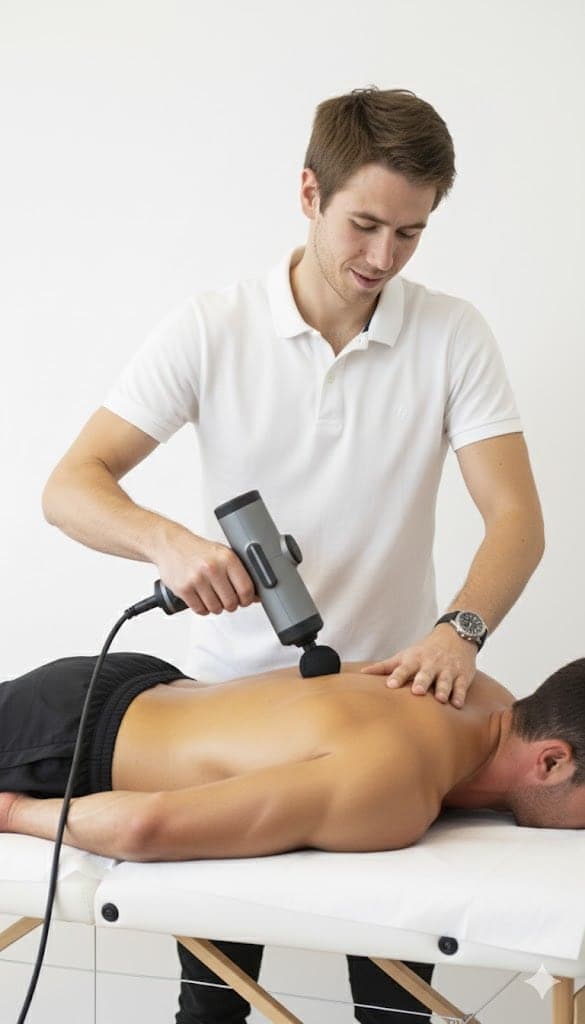
Written by
Chris
Massage therapist, nutrition and exercise physiologist
Norwegian-certified with a Bachelor’s in Physical Education and Nutrition and over ten years of clinical practice, working from a portable table in clients’ homes across the Paphos district.
This article is general information, not a medical diagnosis. If you have severe, worsening or unexplained pain, numbness, weakness, or pain after an accident, see a doctor first.