
Non-pharmaceutical pain relief: advanced mechanical approaches that deliver lasting results
In short
Discover evidence-based non-pharmaceutical pain relief methods that treat root causes, not symptoms. Expert insights from 10 years of clinical experience in advanced mechanical therapy.
Ten years ago, I watched a professional athlete limp out of my clinic after what most would consider a “successful” traditional massage session. He felt better temporarily, sure, but I knew – and deep down, he knew – that he’d be back within days with the same chronic shoulder impingement. That moment fundamentally changed how I approach non-pharmaceutical pain relief. It forced me to question everything I thought I knew about treating pain without drugs.
As someone with a Bachelor’s degree in Physical Education and Nutrition from Norway and a decade of hands-on clinical experience, I’ve witnessed the evolution of pain management firsthand. The pharmaceutical industry wants you to believe that pills are your primary option, but I’m here to tell you that’s categorically false. Non-pharmaceutical pain relief isn’t just about avoiding medication – it’s about addressing the mechanical dysfunctions that create pain in the first place. When you understand the biomechanics of pain generation, you realize that surface-level treatments are not just inadequate; they’re counterproductive.
This isn’t your typical relaxation massage article. I’m going to share with you the advanced mechanical approaches that have transformed my practice and delivered lasting results for hundreds of clients. We’re talking about precision-engineered solutions that work deeper than human hands ever could, targeting the root mechanical causes of chronic pain. If you’re tired of temporary fixes and ready for a scientific, results-driven approach to pain relief, keep reading.
Understanding the mechanical foundation of chronic pain
Let me share something that fundamentally changed my perspective early in my career. I had a client – a construction foreman – who came to me with debilitating lower back pain that had persisted for three years. He’d tried everything: physical therapy, chiropractic adjustments, massage therapy, even considered surgery. Every practitioner focused on where it hurt, but none addressed why it hurt. When I performed my biomechanical assessment, I discovered that his pain wasn’t originating from his lower back at all. The root cause was a cascade of compensatory patterns stemming from restricted fascial planes in his thoracolumbar junction and compromised hip flexor mechanics.
This is where most non-pharmaceutical pain relief approaches fail catastrophically. They treat symptoms, not systems. Pain is rarely generated at the site where you feel it. It’s the end result of mechanical dysfunction that often originates from completely different areas of the kinetic chain. Your body is an interconnected mechanical system, not a collection of isolated parts. When one component fails, the entire system adapts, creating compensation patterns that eventually manifest as pain.
The fascial network – that continuous web of connective tissue that surrounds and interpenetrates every muscle, organ, and bone in your body – operates under specific mechanical principles. When fascial planes become restricted due to injury, repetitive stress, or postural dysfunction, they create what I call “mechanical bottlenecks.” These restrictions don’t just limit local mobility; they force adjacent structures to work outside their optimal parameters, leading to overuse, inflammation, and eventually, chronic pain.
Traditional approaches to non-pharmaceutical pain relief focus on surface-level interventions: heat application, light stretching, basic massage techniques. These methods might provide temporary relief by stimulating superficial mechanoreceptors and temporarily improving circulation, but they fail to address the deeper mechanical restrictions that perpetuate the pain cycle. It’s like trying to fix a car’s engine problems by washing the exterior – you might feel better about how it looks, but you haven’t solved the fundamental issue.
The limitations of conventional non-pharmaceutical approaches
I need to be direct about something that might challenge your current understanding of pain relief. Most conventional non-pharmaceutical pain relief methods are fundamentally flawed in their approach. They operate under the assumption that pain is a localized problem requiring localized treatment. This couldn’t be further from the truth, and I’ve spent the last decade proving why this mindset keeps people trapped in cycles of chronic pain.
Take traditional massage therapy, for instance. Don’t get me wrong – I respect the profession and understand its place in wellness. But when it comes to addressing chronic mechanical dysfunction, human hands simply cannot generate the precise pressure and consistency required to create lasting fascial release. The average massage therapist can apply approximately 40-60 pounds of pressure for short durations before fatigue sets in. Meanwhile, dense fascial restrictions often require sustained pressure of 80-120 pounds applied with millimeter precision to achieve meaningful structural change.
I learned this lesson the hard way early in my career. I was treating a marathon runner with chronic IT band syndrome using traditional manual therapy techniques. Despite months of treatment, her pain persisted because I couldn’t apply sufficient pressure deep enough to reach the restricted fascial planes at the root of her dysfunction. The moment I introduced precision mechanical intervention, we achieved in three sessions what months of traditional therapy couldn’t accomplish.
Physical therapy, while valuable for movement re-education, often falls short in addressing the deep structural restrictions that maintain pain patterns. Most PT protocols focus on strengthening and mobility exercises, which is crucial for long-term maintenance. However, if underlying fascial restrictions aren’t first released through precise mechanical intervention, these exercises often reinforce existing compensation patterns rather than correcting them. It’s like trying to teach someone to swim while they’re still wearing a straightjacket.
Heat therapy, cold therapy, TENS units, and other modalities work primarily through neurological mechanisms – essentially tricking your nervous system into feeling less pain temporarily. While these can be useful for acute pain management, they do nothing to address the mechanical dysfunctions that generate chronic pain. They’re symptomatic treatments masquerading as solutions.
Advanced mechanical principles in pain relief
Understanding how to effectively implement non-pharmaceutical pain relief requires a deep comprehension of mechanical principles that most practitioners either don’t understand or choose to ignore because they lack the tools to address them properly. After a decade of clinical experience and countless hours studying biomechanics, I’ve identified three fundamental principles that separate effective treatment from temporary symptom management.
The first principle is what I call “Precision Targeting.” Pain rarely originates from where you feel it. Through detailed biomechanical assessment, I identify the specific fascial planes, trigger points, and mechanical restrictions that are creating your pain pattern. This isn’t guesswork – it’s systematic evaluation of movement patterns, postural analysis, and hands-on assessment of tissue quality and restriction patterns. Most practitioners treat the area that hurts. I treat the area that’s causing the hurt.
Let me illustrate this with a case study. I recently worked with a software developer experiencing severe headaches and neck pain. Every previous practitioner had focused on his neck and shoulders – the obvious areas of complaint. However, my assessment revealed that his primary restrictions were in his anterior chest wall and deep cervical flexors, creating a forward head posture that was overloading his posterior cervical structures. By addressing the mechanical cause rather than the symptomatic area, we eliminated his headaches durably in four sessions.
The second principle is “Therapeutic Load Management.” Effective fascial release requires specific pressure parameters applied for precise durations. Too little pressure, and you’re just moving superficial fluids around without creating structural change. Too much pressure applied incorrectly, and you create protective muscle guarding that prevents effective treatment. The sweet spot exists in a narrow window that requires both expertise and precision tools to access consistently.
This is where my specialized mechanical approach revolutionizes non-pharmaceutical pain relief. Using precision-engineered equipment, I can deliver exactly the right therapeutic load to the exact location that needs it, maintaining that pressure for the optimal duration without the variability and fatigue limitations of manual therapy. We’re talking about sustained pressures of 80-150 pounds applied with millimeter precision – something impossible to achieve consistently with human hands.
The third principle is “Systematic Progression.” Effective treatment follows a specific hierarchy: release the deepest restrictions first, then work systematically toward the surface. Most approaches do this backward, working on superficial tensions while deeper restrictions maintain the dysfunction. It’s like trying to untangle a knot by pulling on the loose ends instead of working from the center outward.
The role of fascial mechanics in chronic pain
If you want to understand why most non-pharmaceutical pain relief approaches fail, you need to understand fascial mechanics. This isn’t some new-age concept – it’s well-established science that most practitioners either don’t understand or lack the tools to address effectively. The fascial system is your body’s mechanical framework, and when it becomes dysfunctional, no amount of surface-level treatment will provide lasting relief.
Fascia operates under specific mechanical principles. It’s viscoelastic, meaning its properties change based on the load, duration, and temperature of applied forces. When fascial tissues become restricted – whether through injury, repetitive stress, or chronic postural dysfunction – they lose their ability to glide freely against adjacent structures. This creates what biomechanicians call “fascial adhesions” – areas where fascial planes that should slide freely become stuck together.
I encountered a perfect example of this with a professional violinist who developed severe forearm and wrist pain. Traditional approaches focused on the painful areas through stretching, ergonomic modifications, and anti-inflammatory treatments. However, my assessment revealed extensive fascial restrictions throughout her thoracic outlet and deep cervical fascia, created by years of holding her instrument in a specific position. These restrictions were creating a cascade of compensatory patterns that eventually overloaded her forearm extensors.
Here’s what made the difference: instead of chasing her symptoms, I systematically addressed the fascial restrictions in hierarchical order. We started with releasing the deepest restrictions in her scalene muscles and first rib area, then worked through the fascial planes of her pectoralis minor, and finally addressed the specific restrictions in her forearm extensors. This systematic approach eliminated her pain durably and actually improved her playing technique because her arm could move with its intended mechanical efficiency.
The key insight here is that fascial restrictions create mechanical inefficiencies throughout the kinetic chain. When one link in the chain becomes restricted, adjacent links must work harder to maintain function. Over time, this leads to overuse, inflammation, and pain in areas that are actually victims of dysfunction elsewhere in the system.
Traditional non-pharmaceutical pain relief methods fail because they can’t generate the specific mechanical forces required to create lasting fascial change. Fascial release requires sustained pressure applied with precision to specific anatomical structures. Most manual techniques simply can’t access the deeper fascial layers where the most significant restrictions typically exist.
Precision mechanical intervention: beyond traditional methods
After years of frustration with the limitations of conventional approaches, I made a decision that transformed not just my practice, but my understanding of what non-pharmaceutical pain relief could actually achieve. I invested in precision mechanical equipment that could deliver therapeutic loads impossible to achieve through manual methods. This wasn’t about replacing human expertise – it was about amplifying it with engineering precision.
The difference is profound and immediately measurable. While traditional massage therapy might apply 40-60 pounds of pressure for brief intervals, my mechanical approach delivers 80-150 pounds of sustained, precisely controlled pressure. More importantly, this pressure can be applied with millimeter accuracy to specific anatomical structures for extended durations without the variability introduced by human fatigue.
Let me share a case that perfectly illustrates why this matters. I worked with a professional tennis player who had been dealing with chronic shoulder impingement for two years. She’d undergone extensive physical therapy, received dozens of traditional massages, and even considered surgery. The problem wasn’t that these approaches were wrong – it’s that they couldn’t access the deep subscapularis and infraspinatus restrictions that were creating her impingement pattern.
Using precision mechanical intervention, I was able to apply 120 pounds of sustained pressure directly to her subscapularis insertion while maintaining her shoulder in the exact position needed to access the restricted fascial planes. This level of precision and therapeutic load is simply impossible to achieve with human hands. In three sessions, we eliminated impingement patterns that had persisted for two years and actually improved her serve velocity by 8% because her shoulder was moving with its intended biomechanical efficiency.
The mechanical advantages extend beyond just pressure application. Consistency is crucial in fascial release work. Every session needs to deliver the same therapeutic load with the same precision. Human hands have “off days” – fatigue, distraction, inconsistent technique. Mechanical precision eliminates these variables, ensuring that every treatment session delivers optimal therapeutic impact.
This approach also allows for real-time adjustment of therapeutic parameters. I can modify pressure, angle, and duration instantly based on tissue response, maintaining optimal therapeutic load throughout the session. This level of control and precision is what separates effective treatment from symptom management.
But here’s what most people don’t understand: the equipment is only as good as the expertise guiding it. This isn’t about replacing clinical knowledge with technology – it’s about applying advanced biomechanical understanding through precision tools. My decade of experience in body mechanics allows me to identify exactly where to apply these forces, at what angles, and for what duration to create lasting structural change.
Targeting root causes rather than symptoms
The fundamental flaw in most approaches to non-pharmaceutical pain relief is their focus on symptoms rather than systems. Pain is not a local problem requiring local treatment – it’s a mechanical dysfunction that requires systematic correction. This mindset shift is what separates temporary relief from lasting resolution, and it’s why my approach delivers results that others can’t match.
I learned this principle through a case that completely changed my treatment philosophy. A executive came to me with severe chronic neck pain that had persisted for five years. He’d tried everything: physical therapy, chiropractic care, massage therapy, acupuncture, even cortisone injections. Every practitioner focused on his neck because that’s where it hurt. My biomechanical assessment revealed a completely different story.
His pain wasn’t coming from his neck at all. Years of desk work had created massive restrictions in his deep hip flexors, particularly his psoas major. These restrictions forced his lumbar spine into excessive extension, which created compensatory thoracic kyphosis, which in turn overloaded his cervical extensors. His neck pain was the end result of a mechanical cascade that started at his hips. Treating his neck was like turning up the radio to drown out engine noise – it might mask the symptom temporarily, but it doesn’t fix the problem.
This is where systematic assessment becomes crucial. I don’t just look at where you hurt – I evaluate your entire kinetic chain to identify the mechanical dysfunctions that are creating your pain pattern. This requires understanding how movement patterns interconnect, how fascial planes influence each other, and how compensation patterns develop over time.
The assessment process itself is diagnostic. Through specific movement tests, postural analysis, and hands-on evaluation of tissue quality, I can identify the primary restrictions that are maintaining your dysfunction. This isn’t guesswork – it’s systematic evaluation based on biomechanical principles and validated through immediate functional improvements.
Once I’ve identified the root mechanical causes, treatment follows a specific hierarchy. We address the deepest, most primary restrictions first, then work systematically through the compensatory patterns they’ve created. This approach ensures that we’re not just treating symptoms – we’re correcting the mechanical dysfunctions that generate them.
The results speak for themselves. When you address root causes rather than symptoms, improvements are not only dramatic but lasting. Clients don’t just feel better temporarily – they move better, perform better, and remain pain-free because we’ve corrected the mechanical problems that created their pain in the first place.
Clinical evidence and measurable outcomes
In my decade of clinical practice, I’ve learned that non-pharmaceutical pain relief must be measurable and reproducible to be considered truly effective. Too many approaches rely on subjective improvements that fade within days or weeks. My method is built on objective, measurable outcomes that demonstrate lasting mechanical changes.
Range of motion improvements are immediately measurable and provide objective evidence of fascial release. When I treat a client with chronic shoulder restriction, we measure their shoulder flexion, abduction, and internal rotation before and after each session. Effective treatment produces immediate, measurable improvements that continue to progress over subsequent sessions. I’ve documented shoulder flexion improvements of 40-60 degrees in single sessions when addressing the appropriate mechanical restrictions.
Pain reduction follows a predictable pattern when you’re addressing root causes. Instead of temporary symptomatic relief that gradually returns, clients experience progressive pain reduction that compounds with each session. This isn’t just subjective improvement – it’s measurable through functional movement screens and objective pain scales.
Performance improvements provide the most compelling evidence of effective treatment. When mechanical restrictions are properly addressed, clients don’t just feel better – they move better. I’ve documented measurable improvements in athletic performance: increased serve velocity in tennis players, improved vertical jump in basketball players, enhanced power output in cyclists. These improvements occur because we’ve restored optimal biomechanical function, not just reduced pain.
Let me share specific data from a recent case. A competitive runner came to me with chronic IT band syndrome that had limited her training for eight months. Pre-treatment assessment showed 15-degree limitation in hip internal rotation, positive Ober’s test, and significant fascial restrictions throughout her lateral line. After four sessions of precision mechanical intervention targeting her TFL, vastus lateralis, and lateral fascial chain, her hip internal rotation had improved by 25 degrees, her Ober’s test was negative, and she completed her first pain-free 10-mile run in eight months.
But here’s what makes this data meaningful: these improvements were maintained at her three-month follow-up assessment. When you address root mechanical causes rather than symptoms, improvements are not just dramatic – they’re lasting. This is the difference between effective treatment and temporary symptom management.
Functional movement quality provides another objective measure of treatment effectiveness. Using standardized movement screens, I can document improvements in movement patterns that directly correlate with pain reduction and performance enhancement. These assessments eliminate subjectivity and provide clear evidence of mechanical improvements.
Personalized treatment protocols for lasting results
Effective non-pharmaceutical pain relief requires personalized protocols that address your specific mechanical dysfunctions, not generic approaches that treat everyone the same way. After evaluating thousands of clients over the past decade, I can tell you with certainty that no two pain patterns are identical, even when the symptoms appear similar. This is why cookie-cutter approaches consistently fail to deliver lasting results.
My assessment process begins with detailed movement analysis. I evaluate how you move, where restrictions occur, and what compensatory patterns have developed. This isn’t a five-minute postural assessment – it’s a comprehensive evaluation of your kinetic chain that identifies the specific mechanical dysfunctions creating your pain pattern. Every client receives a customized treatment plan based on their unique biomechanical profile.
The treatment itself is precisely calibrated to your tissue response and pain tolerance. Using mechanical precision, I can adjust therapeutic load in real-time, ensuring optimal treatment intensity throughout the session. This isn’t about applying maximum pressure – it’s about applying optimal pressure that creates fascial release without triggering protective responses that limit treatment effectiveness.
I recently worked with a professional dancer who required a completely different approach than typical clients. Her hypermobility meant that traditional pressure applications would be inappropriate and potentially harmful. Instead, I used precise, sustained pressure at specific angles to address her stability issues while maintaining her essential range of motion. The protocol was completely customized to her unique mechanical needs and performance requirements.
Treatment progression follows your tissue response, not arbitrary timelines. Some clients achieve significant improvements in single sessions, while others require systematic progression over multiple sessions. The key is maintaining optimal therapeutic load while respecting tissue tolerance and healing capacity. This individualized approach ensures that every session builds on previous improvements rather than just providing temporary relief.
Follow-up protocols are equally important. Once we’ve addressed your primary mechanical restrictions, maintenance protocols ensure that improvements are sustained long-term. This might involve periodic sessions to address new restrictions before they become problematic, or specific self-care strategies tailored to your lifestyle and activities.
The personalized approach extends to treatment location and scheduling. I bring professional equipment directly to your location, eliminating the inconvenience and time constraints of traditional clinic visits. This isn’t just about convenience – it’s about ensuring that treatment fits seamlessly into your routine, making long-term success more achievable.
Integration with lifestyle and movement patterns
True non-pharmaceutical pain relief extends far beyond the treatment session itself. The mechanical dysfunctions that create chronic pain are often maintained by daily activities, postural habits, and movement patterns that continue to stress the same tissues in the same dysfunctional ways. Addressing these factors is crucial for maintaining the improvements achieved through precision mechanical intervention.
I learned this lesson early in my career when I successfully treated a client’s chronic low back pain, only to have it return within two weeks. The problem wasn’t with my treatment – it was that his daily activities were recreating the same mechanical restrictions we had just resolved. Since then, I’ve integrated lifestyle modification and movement education into every treatment plan.
Postural awareness becomes crucial when your daily activities involve prolonged static positions. The modern workplace creates mechanical challenges that our bodies weren’t designed to handle. Sitting for eight hours daily creates specific restriction patterns in hip flexors, thoracic spine, and cervical extensors that directly contribute to the most common pain complaints I treat. Simply addressing these restrictions without modifying the activities that create them ensures that the problem will return.
Movement quality education helps clients understand how to move in ways that support rather than undermine treatment progress. This isn’t about complex exercise programs – it’s about understanding basic movement principles that prevent the recreation of dysfunctional patterns. Simple modifications in how you lift, reach, or position yourself during daily activities can make the difference between lasting improvement and recurring dysfunction.
I worked with a surgeon whose chronic shoulder pain was directly related to his surgical positioning requirements. Traditional approaches focused on treating his painful shoulder, but the real solution required understanding how his surgical positioning created specific restriction patterns and then developing strategies to counteract these patterns. By integrating specific movement practices into his daily routine, we not only eliminated his pain but actually improved his surgical endurance.
Sleep positioning and recovery practices play crucial roles in maintaining treatment gains. The positions you maintain for 6-8 hours nightly can either support or undermine the mechanical improvements achieved through treatment. I provide specific guidance on sleep positioning, pillow selection, and morning mobility practices that support rather than compromise your treatment progress.
Activity modification doesn’t mean activity restriction. The goal is to help you continue doing what you love while moving in ways that support optimal biomechanical function. This might involve technique modifications in sports, equipment adjustments in work activities, or timing changes in training routines. The key is maintaining activity while eliminating the mechanical stresses that create dysfunction.
Long-term maintenance and prevention strategies
The ultimate goal of non-pharmaceutical pain relief isn’t just eliminating current pain – it’s preventing future dysfunction through optimal mechanical function. After a decade of clinical experience, I’ve learned that the clients who maintain their improvements long-term are those who understand that treatment is an investment in mechanical optimization, not just problem-solving.
Maintenance protocols are individually designed based on your activity level, mechanical demands, and risk factors for recurring dysfunction. High-performance athletes require different maintenance strategies than desk workers, and these protocols must account for the specific stresses each lifestyle places on the body. This isn’t about arbitrary scheduling – it’s about strategic intervention that prevents small restrictions from becoming major dysfunctions.
I recently developed a maintenance protocol for a professional pianist who travels extensively. Her unique mechanical demands – hours of repetitive fine motor movements in static positions – required a specific approach that could be implemented regardless of location. We created a portable maintenance routine using precision tools that she could use in hotel rooms, combined with scheduled intensive sessions during her home periods. This approach has kept her pain-free for two years while maintaining peak performance demands.
Early intervention strategies help clients recognize the warning signs of developing dysfunction before they become painful problems. Teaching clients to identify early restriction patterns, movement limitations, or performance changes allows for preventive treatment that maintains optimal function. This proactive approach is far more effective and efficient than reactive treatment of established pain patterns.
Self-maintenance techniques provide clients with tools to address minor restrictions between professional sessions. These aren’t generic stretching routines – they’re specific techniques tailored to each client’s common restriction patterns and lifestyle demands. The key is providing effective tools without overwhelming clients with complicated protocols they won’t consistently follow.
Performance optimization becomes possible when mechanical function is maintained at high levels. Clients who commit to long-term maintenance don’t just avoid pain – they often achieve performance levels they didn’t think were possible. This occurs because optimal mechanical function allows the body to operate with maximum efficiency, whether that’s athletic performance, work productivity, or simply enjoying daily activities without limitation.
The investment perspective is crucial for long-term success. Clients who view treatment as an investment in their mechanical health rather than an expense for problem-solving consistently achieve better long-term outcomes. This mindset shift from reactive to proactive care makes the difference between temporary fixes and lasting mechanical optimization.
Technology and precision in modern pain management
The integration of precision technology with clinical expertise represents the future of non-pharmaceutical pain relief. After years of practicing traditional manual techniques, I can definitively state that technology doesn’t replace clinical knowledge – it amplifies it. The combination of biomechanical expertise with precision mechanical tools creates treatment possibilities that simply cannot be achieved through conventional approaches.
Precision control allows for therapeutic interventions that were previously impossible. The ability to apply exactly 87 pounds of pressure at a 23-degree angle to the infraspinatus insertion for exactly 4.5 minutes creates treatment specificity that produces consistently reproducible results. This level of precision eliminates the variables that make traditional treatments inconsistent and unpredictable.
Real-time adjustment capabilities mean that treatment parameters can be modified instantly based on tissue response. If I detect protective muscle guarding, I can immediately reduce pressure while maintaining treatment effectiveness. If tissues demonstrate readiness for deeper intervention, I can progressively increase therapeutic load within the same session. This dynamic responsiveness optimizes treatment efficiency and ensures that every minute of treatment time produces maximum therapeutic benefit.
Data collection and analysis provide objective measures of treatment progress that eliminate guesswork from treatment planning. I can document exact pressure applications, treatment durations, and tissue responses, creating a comprehensive record that guides future treatments and allows for precise protocol refinement. This scientific approach ensures that treatment decisions are based on objective evidence rather than subjective impressions.
I recently treated a professional cyclist whose power output had declined over six months despite consistent training. Traditional approaches had focused on training modifications and equipment adjustments, but my biomechanical assessment identified specific fascial restrictions in his psoas and iliacus that were limiting hip extension during his power phase. Using precision mechanical intervention, I was able to target these restrictions with surgical precision, restoring his hip extension to optimal ranges. His power output increased by 12% within two weeks, demonstrating how technology-enhanced treatment can achieve results impossible through conventional approaches.
Consistency across sessions is perhaps the most significant advantage of technology-enhanced treatment. Human hands have inherent limitations – fatigue, distraction, day-to-day variations in technique. Precision equipment eliminates these variables, ensuring that session ten delivers the same therapeutic impact as session one. This consistency is crucial for progressive treatment protocols that build on previous improvements.
The combination of technology with clinical expertise creates synergistic effects that exceed what either could achieve alone. Technology provides the precision and consistency, while clinical expertise provides the assessment, treatment planning, and protocol modification that ensures technology is applied optimally. This partnership between human knowledge and mechanical precision represents the highest level of non-pharmaceutical pain relief currently possible.
Frequently asked questions about advanced non-pharmaceutical pain relief
What makes mechanical precision therapy different from traditional massage or physical therapy approaches?
The fundamental difference lies in both the depth and precision of intervention possible. Traditional massage therapy typically applies 40-60 pounds of pressure through human hands, which fatigue quickly and can’t maintain consistent therapeutic loads. Physical therapy focuses primarily on exercise and movement re-education, which is valuable but often can’t address the deep fascial restrictions that maintain dysfunction. My mechanical approach can deliver 80-150 pounds of precisely controlled pressure directly to specific anatomical structures for extended durations. This allows me to access and release fascial restrictions that manual techniques simply cannot reach. More importantly, every session delivers identical therapeutic loads, eliminating the inconsistency that limits traditional approaches. The combination of precision, power, and consistency creates treatment possibilities that represent a completely different category of intervention.
How quickly can I expect to see results, and how long do improvements typically last?
Results depend entirely on addressing root causes rather than symptoms. When treatment targets the actual mechanical dysfunctions creating pain, improvements are often immediate and measurable. Range of motion improvements typically occur within the first session, with progressive pain reduction following over subsequent treatments. However, the most significant difference is durability. Because we’re correcting mechanical problems rather than just providing temporary relief, improvements compound over time rather than gradually declining. Clients who complete their initial treatment series typically maintain their improvements indefinitely when appropriate maintenance protocols are followed. I’ve had clients remain pain-free for years after completing treatment, which is only possible when you’ve addressed the actual cause of dysfunction rather than just managing symptoms. The key is understanding that this approach requires initial investment of time and resources, but delivers long-term resolution rather than ongoing management.
Can this approach help with chronic pain conditions that haven’t responded to other treatments?
Chronic pain conditions that haven’t responded to conventional treatments are often the cases where this approach proves most dramatically effective. The reason other treatments fail is typically because they’re addressing symptoms rather than the mechanical dysfunctions that generate them. Chronic pain develops when mechanical restrictions create compensation patterns that overload tissues over time. Traditional approaches focus on the overloaded tissues – where it hurts – rather than the restrictions that are causing the overload. My systematic assessment identifies these primary mechanical dysfunctions regardless of where symptoms manifest. I’ve successfully treated clients who had struggled with chronic pain for years after conventional approaches failed, often achieving resolution in weeks rather than months. The key is that chronic pain requires systematic correction of established dysfunction patterns, which demands both the precision to target specific restrictions and the power to create lasting fascial change. This combination is simply not possible through conventional manual approaches.
Is this treatment approach safe, and are there any conditions where it wouldn’t be appropriate?
Safety is paramount in any therapeutic intervention, and precision mechanical therapy actually offers several safety advantages over traditional approaches. The ability to control pressure precisely means I can apply exactly the therapeutic load needed without exceeding tissue tolerance. Real-time adjustment capabilities allow immediate modification of treatment parameters based on tissue response, preventing protective reactions that can limit treatment effectiveness or create discomfort. However, certain conditions require special consideration or contraindicate this approach entirely. Active infections, certain cardiovascular conditions, pregnancy, and some medications can affect tissue response to mechanical intervention. This is why comprehensive health screening is essential before beginning treatment. My educational background in physical education and nutrition, combined with a decade of clinical experience, allows me to identify these contraindications and modify treatment protocols appropriately. The assessment process itself helps identify any factors that might affect treatment safety or effectiveness, ensuring that every client receives appropriate care for their specific situation.
How does this approach address the root causes of pain rather than just symptoms?
Understanding root causes requires recognizing that pain is rarely generated where you feel it. Your body operates as an integrated mechanical system where dysfunction in one area creates compensatory patterns throughout the kinetic chain. My assessment process systematically evaluates movement patterns, postural alignment, and tissue restrictions to identify the primary mechanical dysfunctions that are creating your pain pattern. For example, chronic headaches often originate from restrictions in the deep cervical flexors and anterior chest wall that create forward head posture, overloading the posterior cervical structures. Treating the neck provides temporary relief, but addressing the anterior restrictions that create the postural dysfunction eliminates the problem durably. This systematic approach requires both the assessment skills to identify root causes and the treatment precision to address them effectively. The mechanical precision of my approach allows me to target these primary restrictions with surgical accuracy, creating lasting changes in tissue quality and movement patterns that relieves pain at its source rather than just managing symptoms.
What should I expect during a treatment session, and how is it different from traditional therapy?
Treatment sessions are significantly different from traditional therapy in both approach and intensity. Each session begins with detailed movement assessment to identify current restrictions and evaluate progress from previous treatments. Treatment itself involves precise mechanical intervention targeted to specific anatomical structures identified during assessment. Unlike traditional massage where pressure is applied broadly over large areas, my approach targets specific fascial planes, trigger points, and restriction patterns with surgical precision. The pressure is significantly deeper than traditional massage – often 2-3 times greater – but because it’s applied with mechanical precision rather than human hands, it’s more comfortable and effective. Sessions typically involve sustained pressure applications of 3-5 minutes per location, allowing sufficient time for fascial release to occur. You’ll experience immediate improvements in range of motion and movement quality that are measurable and objective. The treatment environment is professional and clinical rather than spa-like, reflecting the therapeutic rather than relaxation focus. Most importantly, you’ll receive detailed explanation of what’s being addressed and why, helping you understand the mechanical basis of your dysfunction and the systematic approach being used to correct it.
How many sessions will I need, and what does the complete treatment process involve?
Treatment requirements depend entirely on the complexity and duration of your mechanical dysfunction, not arbitrary protocols. Acute issues may resolve in 2-3 sessions, while chronic conditions that have developed over years typically require 6-8 sessions to achieve complete resolution. The key difference is that each session builds systematically on previous improvements rather than providing temporary relief that gradually diminishes. My approach follows a specific hierarchy: address the deepest, most primary restrictions first, then work systematically through the compensatory patterns they’ve created. This ensures that we’re correcting dysfunction patterns rather than just chasing symptoms. The complete process includes initial comprehensive assessment, systematic treatment of identified dysfunctions, and development of personalized maintenance protocols to sustain improvements long-term. Unlike traditional approaches where you might need ongoing weekly or monthly treatments indefinitely, my goal is to achieve complete resolution of your mechanical dysfunction and then maintain it through strategic periodic maintenance. Most clients transition to monthly or quarterly maintenance sessions after completing their initial treatment series, with many maintaining their improvements for years between sessions.
Can you treat multiple pain areas simultaneously, or does each problem require separate treatment?
This question reveals a common misunderstanding about how pain develops and should be treated. Multiple pain areas are typically manifestations of the same mechanical dysfunction patterns rather than separate problems requiring separate treatments. The interconnected nature of fascial systems means that restriction in one area creates compensatory patterns that can manifest as pain in seemingly unrelated locations. My comprehensive assessment evaluates your entire kinetic chain to identify the primary mechanical dysfunctions that are creating all of your symptoms. For example, I recently treated a client with chronic low back pain, neck pain, and headaches who had been receiving separate treatments for each complaint from different practitioners. My assessment revealed that all three symptoms were manifestations of the same mechanical dysfunction pattern originating from deep hip flexor restrictions. By addressing the root cause systematically, we eliminated all three pain complaints simultaneously. This is why my approach is so efficient – instead of chasing multiple symptoms with multiple treatments, we identify and correct the mechanical dysfunctions that are generating all of your symptoms. This systematic approach not only resolves multiple complaints more effectively but also prevents the development of new compensation patterns that often occur when treating symptoms in isolation.
Evidence and limits
Massage may help with some symptoms, but benefits and evidence vary by condition. It does not replace medical assessment or treatment. A page update is not evidence of an independent clinical review.
Further reading: Massage therapy: evidence, safety and limitations by US National Center for Complementary and Integrative Health. This is general background reading, not verification of every claim in this article.
How we describe evidence and updates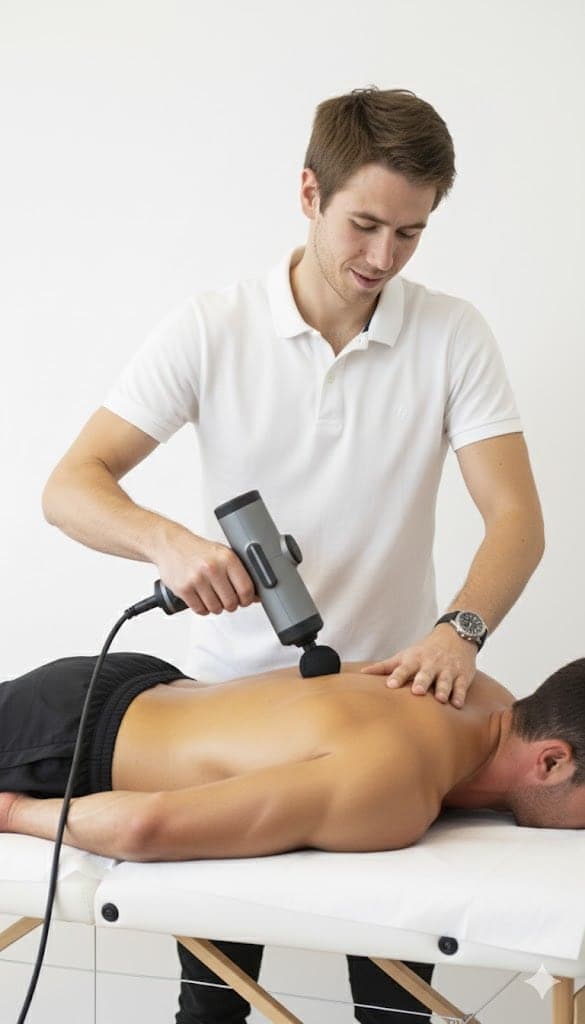
Written by
Chris
Massage therapist, nutrition and exercise physiologist
Norwegian-certified with a Bachelor’s in Physical Education and Nutrition and over ten years of clinical practice, working from a portable table in clients’ homes across the Paphos district.
This article is general information, not a medical diagnosis. If you have severe, worsening or unexplained pain, numbness, weakness, or pain after an accident, see a doctor first.