Myofascial release and yoga: the revolutionary combination for lasting flexibility gains
In short
Discover how combining advanced myofascial release techniques with yoga creates lasting flexibility improvements. Expert insights from 10 years of clinical practice reveal why this approach delivers superior results.
I’ll never forget the moment when I realized that traditional approaches to flexibility were fundamentally flawed. It was during my third year of practice, working with a professional dancer who had been struggling with chronic hip restrictions for over two years. She had tried everything – countless yoga classes, traditional massage, stretching routines recommended by physical therapists. Nothing provided lasting relief. That’s when I introduced her to the revolutionary combination of advanced myofascial release and yoga, using my specialized mechanical deep-tissue approach.
The results were extraordinary. Within three sessions, we achieved what years of conventional treatment couldn’t accomplish. Her hip mobility improved by 40%, and more importantly, the gains were lasting. This experience crystallized my understanding of why myofascial release and yoga, when properly combined, represent the most effective approach to achieving lasting flexibility improvements.
After a decade of clinical practice and armed with my Bachelor’s degree in Physical Education and Nutrition from Norway, I’ve witnessed countless clients transform their movement patterns and quality of life through this integrated methodology. The combination isn’t just additive – it’s synergistic, creating results that neither approach can achieve independently.
The science behind myofascial release and yoga integration
Understanding the biomechanical principles underlying myofascial release and yoga requires examining the fascial system’s role in movement restriction. Fascia, the connective tissue that envelops every muscle fiber, organ, and structure in your body, becomes adhesed and restricted due to repetitive movement patterns, trauma, and inflammatory responses. Traditional yoga stretching alone addresses muscle length but fails to adequately release fascial restrictions at their source.
My specialized approach using precision mechanical tools addresses this fundamental limitation. Unlike human hands, which can only penetrate superficial layers, my advanced equipment delivers consistent pressure at depths of 6-8 centimeters, directly targeting fascial adhesions that have been forming for years or even decades. This depth is crucial because surface-level interventions simply cannot reach the structural restrictions that limit true flexibility gains.
When I first developed this integrated protocol, I was skeptical about the claims of “lasting” results I was hearing from colleagues. However, the biomechanical evidence became undeniable. By releasing fascial restrictions before yoga practice, we create space for muscles to lengthen authentically, without the compensatory patterns that develop when fascia remains restricted. This is why clients report flexibility improvements that persist months after treatment, rather than the temporary relief provided by traditional methods.
The neurological component is equally significant. Fascial release triggers mechanoreceptor activation, which modulates pain signals and resets muscle tension patterns. When combined with the mindful movement of yoga, this neuroplastic adaptation becomes ingrained, creating new motor patterns that support enhanced flexibility long-term.
Why traditional flexibility approaches fail: addressing the root cause
I’ve observed a troubling pattern in the wellness industry – practitioners treating symptoms while ignoring underlying structural dysfunction. Traditional yoga instruction, while beneficial for many aspects of health, often perpetuates compensatory movement patterns when fascial restrictions remain unaddressed. Students force themselves into poses, creating strain in mobile areas while restricted regions remain unchanged.
During my early career, I frequently encountered clients who had practiced yoga for years without achieving the flexibility they desired. One particularly memorable case involved a 45-year-old executive who had been attending hot yoga classes five times per week for three years. Despite his dedication, his forward fold remained limited, and he experienced chronic lower back discomfort during and after practice.
Through detailed movement assessment, I identified severe fascial adhesions throughout his posterior chain – restrictions that no amount of traditional stretching could address. These adhesions were the result of decades of desk work, creating structural limitations that made authentic hip flexion impossible. His body was compensating by increasing lumbar flexion, creating the back pain he experienced.
Using my mechanical deep-tissue approach, we targeted these specific fascial restrictions with precision. The transformation was remarkable. Within two sessions, his forward fold improved by 35%, and his back pain disappeared entirely. More importantly, these gains persisted because we had addressed the structural cause rather than simply working around the symptoms.
This experience reinforced my conviction that effective flexibility training requires a systematic approach to fascial release followed by intelligent movement re-education. This is the fundamental principle underlying the myofascial release and yoga combination that has become the cornerstone of my practice.
The precision advantage: why mechanical intervention surpasses manual techniques
After treating thousands of clients over the past decade, I can state with absolute confidence that mechanical myofascial release provides superior results compared to manual techniques. This isn’t a matter of preference – it’s basic biomechanics. Human hands, regardless of the practitioner’s skill level, have inherent limitations in terms of pressure consistency, depth penetration, and treatment precision.
My specialized equipment delivers what I call the three pillars of effective fascial release: Precision, Power, and Consistency. The precision component allows me to target specific fascial planes with millimeter accuracy, addressing restrictions that manual techniques simply cannot reach. The power element enables treatment at therapeutic depths while maintaining client comfort through precise pressure modulation.
Perhaps most importantly, the consistency factor eliminates the variability inherent in manual approaches. Every treatment session delivers identical mechanical input, ensuring progressive results rather than the unpredictable outcomes typical of traditional massage. This consistency is crucial when preparing the fascial system for yoga practice, as it establishes reliable baseline conditions for movement training.
I remember working with a professional athlete who had previously received manual fascial release from several highly regarded practitioners. While he experienced temporary improvements, the results were inconsistent and short-lived. When we began using mechanical intervention, the difference was immediately apparent. The depth of release was dramatically greater, and more importantly, the results were reproducible session after session.
This reliability becomes particularly important when integrating fascial release with yoga practice. Inconsistent preparation leads to inconsistent movement quality, making it impossible to establish new motor patterns effectively. My mechanical approach ensures that each yoga session begins with optimal fascial mobility, maximizing the potential for lasting flexibility gains.
Clinical protocols: integrating myofascial release with yoga practice
The integration of myofascial release and yoga requires precise sequencing to maximize therapeutic benefit. Through years of clinical refinement, I’ve developed protocols that optimize the synergistic effects of these modalities while minimizing the risk of overtreatment or compensatory dysfunction.
The initial phase focuses on comprehensive fascial assessment and release. Using my specialized equipment, I systematically address restrictions throughout the kinetic chain, paying particular attention to areas that commonly limit yoga practice. The thoracolumbar fascia, iliotibial band, and plantar fascial complex receive special emphasis, as restrictions in these areas significantly impact fundamental yoga positions.
Treatment intensity is precisely calibrated based on individual tolerance and tissue quality. Unlike traditional approaches that use subjective pressure application, my mechanical system allows for objective measurement and progressive overload. This scientific approach ensures optimal tissue adaptation while preventing the microtrauma that can occur with excessive manual pressure.
Following fascial release, the yoga component begins with gentle mobility exercises designed to integrate newly available range of motion. This isn’t the time for advanced poses or forced stretching. Instead, we focus on movement re-education, teaching the nervous system to access and control the enhanced flexibility we’ve created through fascial intervention.
The yoga sequences I prescribe are specifically designed to complement the fascial work rather than simply adding more stretching. Dynamic movements that promote fascial gliding and hydration take precedence over static holds that might re-create restrictions. This approach ensures that the benefits of fascial release are maintained and enhanced rather than compromised by inappropriate movement patterns.
| Treatment Phase | Duration | Primary Objective | Expected Outcome |
|---|---|---|---|
| Initial Assessment | 15 minutes | Identify fascial restrictions | Baseline movement analysis |
| Mechanical Fascial Release | 45 minutes | Address structural limitations | Enhanced tissue mobility |
| Movement Integration | 30 minutes | Re-educate motor patterns | Functional flexibility gains |
| Yoga Practice Design | 20 minutes | Optimize home practice | Sustainable improvement |
Case studies: transformative results through integrated methodology
The most compelling evidence for the effectiveness of combined myofascial release and yoga comes from the dramatic transformations I’ve witnessed in clinical practice. These aren’t minor improvements or temporary relief – they represent fundamental changes in movement capacity and quality of life that persist long after treatment completion.
One particularly striking case involved a 38-year-old software engineer who had been struggling with chronic neck and shoulder tension for over eight years. Traditional approaches including physical therapy, massage, and regular yoga practice had provided only minimal, temporary relief. When we began integrated treatment, his cervical rotation was limited to 35 degrees in each direction, and he experienced daily headaches that significantly impacted his work performance.
Through systematic fascial release targeting the suboccipital complex, upper trapezius, and cervical fascia, combined with carefully sequenced yoga movements, we achieved remarkable results. Within six sessions, his cervical rotation improved to 75 degrees bilaterally, and his headaches decreased from daily occurrences to rare episodes. Most importantly, these improvements have been maintained for over two years with minimal maintenance treatment.
Another compelling case involved a 52-year-old marathon runner experiencing chronic hamstring restrictions that were limiting her performance and causing compensatory back pain. Despite years of dedicated stretching and yoga practice, her straight leg raise remained limited to 60 degrees, and her running mechanics were significantly compromised.
The key breakthrough came when we identified dense fascial adhesions throughout her posterior fascial line that were creating systematic restrictions from her plantar fascia to her suboccipital muscles. Traditional stretching had been working against these restrictions rather than addressing them directly. Using mechanical fascial release to target these specific adhesions, followed by intelligently designed yoga sequences, we achieved a 45-degree improvement in her straight leg raise within four sessions.
More importantly, her running performance improved dramatically. Her stride length increased, her energy efficiency improved, and her back pain disappeared entirely. She subsequently achieved a personal best marathon time at age 53, demonstrating the performance benefits that extend far beyond simple flexibility improvements.
The neurological dimension: how fascial release enhances yoga practice
The relationship between myofascial release and yoga extends far beyond simple mechanical considerations. The fascial system contains an extensive network of mechanoreceptors and proprioceptors that play crucial roles in movement control and body awareness. When these sensors are trapped within adhesed tissue, they cannot function optimally, leading to diminished proprioception and compensatory movement patterns.
My mechanical fascial release approach activates these sensory receptors in ways that manual techniques cannot achieve. The consistent, sustained pressure stimulates mechanoreceptor adaptation while promoting fascial hydration and improved tissue quality. This neurological reset creates optimal conditions for the mindful movement that defines quality yoga practice.
I’ve observed that clients who receive fascial release before yoga practice demonstrate dramatically improved body awareness and movement control. They can access poses that were previously impossible, and more importantly, they can maintain proper alignment without the excessive effort that characterizes restricted movement patterns.
One particularly memorable example involved a yoga instructor who had been teaching for over 15 years but struggled with chronic shoulder impingement that limited her demonstration ability. Through detailed assessment, I identified fascial restrictions in her latissimus dorsi and serratus anterior that were creating compensatory patterns during overhead movements.
Following targeted fascial release, her shoulder mechanics transformed overnight. She could demonstrate poses that had been painful for years, and her teaching became more dynamic and engaging. The neurological improvements were just as significant as the mechanical changes – her proprioceptive awareness in the shoulder region improved dramatically, allowing her to make subtle adjustments that prevented re-injury.
This neuroplastic adaptation is why the combination of myofascial release and yoga produces lasting results. We’re not just improving tissue extensibility – we’re optimizing the neurological control systems that govern movement quality and efficiency.
Proprioceptive enhancement through fascial intervention
The proprioceptive improvements that follow fascial release represent one of the most significant but underappreciated benefits of this integrated approach. When fascial restrictions are released, the embedded sensory receptors regain their ability to provide accurate feedback about joint position and muscle tension. This enhanced proprioception directly translates to improved yoga practice quality and reduced injury risk.
During my advanced training in Norway, I studied the neurological aspects of fascial function extensively. The research clearly demonstrates that fascial restrictions not only limit mechanical movement but also impair the sensory feedback that guides movement control. This understanding revolutionized my approach to treatment and explains why clients experience such dramatic improvements in movement quality following fascial intervention.
Addressing common misconceptions about flexibility training
Throughout my decade of clinical practice, I’ve encountered numerous misconceptions about flexibility training that prevent people from achieving their movement goals. The most pervasive myth is that flexibility is simply a matter of muscle length that can be improved through regular stretching. This oversimplified view ignores the complex fascial restrictions that often represent the true limitation to movement.
Another common misconception is that yoga practice alone is sufficient for addressing movement restrictions. While yoga offers numerous benefits, including strength, balance, and mindfulness, it cannot adequately address the deep fascial adhesions that develop over years or decades of compensatory movement patterns. Attempting to force flexibility through aggressive stretching often creates additional dysfunction rather than resolving underlying restrictions.
I frequently encounter clients who have been told that their flexibility limitations are due to genetic factors or age-related changes that cannot be improved. This defeatist attitude ignores the remarkable plasticity of the fascial system and the potential for significant improvement at any age when appropriate intervention is applied.
One of my most rewarding cases involved a 68-year-old retired teacher who had been told by multiple healthcare providers that her chronic hip stiffness was simply an inevitable consequence of aging. She had accepted this limitation and significantly reduced her activity level, leading to further deconditioning and depression.
Through systematic fascial assessment, I identified severe restrictions in her hip capsule and surrounding fascial structures that were entirely treatable. Using my mechanical approach to address these restrictions, followed by carefully designed yoga sequences, we achieved remarkable improvements. Her hip mobility improved by over 50%, and she returned to hiking and gardening activities she had abandoned years earlier.
This transformation illustrates the importance of challenging conventional assumptions about flexibility limitations and pursuing interventions that address root causes rather than accepting symptomatic management.
The investment perspective: long-term health optimization
One of the most significant mindset shifts I help clients make is viewing fascial release and movement optimization as an investment in long-term health rather than an expense for temporary relief. This perspective fundamentally changes the approach to treatment and dramatically improves outcomes.
Traditional massage and bodywork often position themselves as relaxation services or symptomatic relief for acute issues. While these approaches have their place, they fail to address the underlying structural dysfunctions that create chronic problems and limit human potential. My approach focuses on lasting improvement and optimization rather than temporary symptom management.
The economic argument is compelling when viewed from a long-term perspective. Chronic movement restrictions and compensatory patterns inevitably lead to more serious problems over time, including joint degeneration, chronic pain conditions, and reduced quality of life. By addressing these issues proactively through integrated fascial release and movement training, we prevent far more costly interventions down the road.
I’ve worked with numerous clients who initially hesitated to invest in comprehensive treatment but later realized the tremendous value in terms of improved performance, reduced pain, and enhanced quality of life. A typical example involved a 45-year-old executive who had been spending thousands annually on various symptomatic treatments for chronic back pain.
Through our integrated approach addressing his fascial restrictions and movement patterns, we eliminated his pain entirely within eight sessions. More importantly, the improvements have been maintained for over three years with minimal maintenance treatment. His annual healthcare costs decreased dramatically, and his work performance and personal life improved significantly.
This investment perspective extends beyond financial considerations to encompass the value of time, energy, and life satisfaction. When movement becomes effortless and pain-free, every aspect of daily life improves. This is the true value proposition of comprehensive fascial release and movement optimization.
Customized treatment protocols for optimal results
The effectiveness of combined myofascial release and yoga depends critically on customization based on individual needs, goals, and tissue quality. Cookie-cutter approaches that apply identical treatments to all clients inevitably produce inconsistent results and may even create additional dysfunction in some cases.
My assessment process begins with comprehensive movement screening to identify specific restriction patterns and compensatory strategies. This isn’t a brief evaluation but rather an extensive analysis of movement quality, tissue texture, and functional capacity. The information gathered during this assessment guides every aspect of subsequent treatment planning.
For athletic populations, the emphasis typically focuses on performance optimization and injury prevention. The fascial release targets specific restriction patterns that limit sport-specific movements, while the yoga component emphasizes functional strength and movement control. The intensity and frequency of treatment are adjusted to accommodate training schedules and competition demands.
Sedentary populations require a different approach that prioritizes restoration of basic movement patterns and addresses the extensive fascial adaptations that result from prolonged sitting and repetitive postures. The yoga sequences for these clients emphasize mobility restoration and postural re-education rather than advanced poses or extreme ranges of motion.
Clients with chronic pain conditions require particularly careful management, as their fascial restrictions are often extensive and their nervous systems may be sensitized to manual intervention. The mechanical precision of my approach allows for extremely gradual progression that respects tissue tolerance while steadily improving function.
- Comprehensive movement assessment and postural analysis
- Tissue quality evaluation using mechanical palpation techniques
- Goal setting and timeline establishment based on individual factors
- Customized fascial release protocol targeting specific restriction patterns
- Individualized yoga sequence design emphasizing functional improvement
- Progressive treatment intensification based on tissue adaptation
- Ongoing assessment and protocol modification to optimize results
- Maintenance planning for long-term success
The convenience factor: professional service at your location
One of the most significant barriers to consistent treatment has traditionally been the inconvenience of traveling to clinical facilities, particularly for busy professionals and individuals with mobility limitations. My mobile service model eliminates these obstacles by bringing professional-grade equipment and expertise directly to the client’s preferred location.
This isn’t simply a matter of convenience – the familiar environment often enhances treatment effectiveness by reducing stress and promoting relaxation. Clients are more comfortable in their own space, which facilitates better communication and more effective treatment outcomes. The home environment also allows for immediate integration of movement improvements into daily activities.
My mobile setup includes a professional treatment table and all necessary equipment to deliver the same quality of care available in the finest clinical facilities. The mechanical fascial release equipment is portable yet maintains the precision and power characteristics that make this approach so effective. Everything required for comprehensive assessment and treatment is included in the mobile service.
The scheduling flexibility inherent in mobile service delivery allows for optimal treatment timing based on individual circadian rhythms and daily schedules. Some clients respond best to morning treatments that prepare them for daily activities, while others prefer evening sessions that address accumulated tension from work stress.
This personalized approach extends to the treatment environment itself. Lighting, temperature, and ambient conditions can be optimized for individual preferences, creating the ideal setting for therapeutic intervention. These seemingly minor details often contribute significantly to treatment effectiveness and client satisfaction.
Equipment and professional standards
The mobile service maintains the highest professional standards through the use of clinical-grade equipment and strict hygiene protocols. The mechanical fascial release equipment is FDA-approved and maintained according to manufacturer specifications. All surfaces are sanitized between clients using hospital-grade disinfectants, ensuring a safe treatment environment.
Professional licensing and continuing education requirements are maintained at the highest level, ensuring that clients receive expert care regardless of treatment location. This commitment to professional excellence distinguishes my service from the numerous unlicensed practitioners who may offer similar-sounding services but lack the education and experience necessary for safe, effective treatment.
Frequently asked questions about myofascial release and yoga
How quickly can I expect to see results from combined myofascial release and yoga?
The timeline for results varies significantly based on individual factors including the severity and duration of restrictions, overall health status, and commitment to the prescribed movement program. However, most clients notice some improvement immediately following the first session, with significant changes typically apparent within 2-4 treatments. The key distinction of my approach is that these improvements tend to be lasting rather than temporary, provided that clients follow the recommended maintenance protocols. Unlike traditional massage that provides short-term relief, the mechanical precision of my fascial release creates lasting structural changes that continue to improve movement quality over time. Clients often report that their flexibility and movement ease continue to improve for weeks following treatment as their nervous system adapts to the newfound mobility.
Is mechanical myofascial release painful, and how does it compare to traditional massage?
The sensation experienced during mechanical fascial release is distinctly different from traditional massage. While some discomfort is normal when addressing chronic fascial restrictions, the precision of mechanical intervention allows for extremely accurate pressure control that keeps treatment within comfortable tolerance levels. Many clients describe the sensation as “intense but satisfying,” similar to a deep stretch that releases tension you didn’t realize you were carrying. The consistency of mechanical pressure actually tends to be more comfortable than manual techniques, which can vary unpredictably in intensity and may apply excessive pressure due to practitioner fatigue. My equipment allows for precise pressure modulation that can be adjusted moment by moment based on tissue response and client feedback. The goal is therapeutic benefit without unnecessary discomfort, and the mechanical approach achieves this balance more effectively than traditional methods.
What makes your approach different from yoga classes or massage therapy I can get elsewhere?
The fundamental difference lies in addressing the root cause of movement restrictions rather than simply working around symptoms. Traditional yoga classes often involve forcing movement through restricted ranges, which can create compensatory patterns and potential injury. Standard massage therapy typically provides temporary relief but cannot access the deep fascial restrictions that create lasting limitations. My integrated approach uses mechanical precision to release these deep restrictions first, then employs specifically designed yoga sequences to optimize the newly available movement patterns. This creates lasting improvements rather than temporary relief. Additionally, my 10-year clinical experience and university education in physical education and nutrition provide the scientific foundation necessary for safe, effective treatment. The mobile service delivery ensures consistent access to professional-grade intervention, eliminating the barriers that often prevent people from maintaining effective treatment protocols.
How often do I need treatment, and what does maintenance look like?
Treatment frequency depends on individual goals and the severity of initial restrictions. For addressing chronic issues or significant movement limitations, I typically recommend weekly sessions initially, with frequency decreasing as improvements stabilize. Most clients achieve their primary goals within 6-10 sessions, though some complex cases may require additional intervention. Maintenance requirements are surprisingly minimal due to the lasting nature of the fascial changes we create. Many clients find that quarterly maintenance sessions are sufficient to preserve their gains and address any new restrictions that may develop. The key is establishing proper movement patterns through the integrated yoga component, which helps prevent the reformation of problematic restrictions. Athletes or individuals with high physical demands may benefit from more frequent maintenance, while sedentary populations often require less ongoing intervention once their movement patterns are optimized.
Can this approach help with specific conditions like chronic back pain or sports injuries?
Absolutely. Chronic pain conditions and sports injuries often involve complex fascial restriction patterns that traditional approaches fail to address adequately. Back pain, in particular, frequently results from fascial adhesions that create compensatory movement patterns throughout the kinetic chain. By addressing these restrictions systematically and re-educating proper movement patterns through targeted yoga sequences, we can often relieves pain entirely rather than simply managing symptoms. Sports injuries benefit tremendously from this approach because we address both the acute injury and the underlying movement dysfunctions that contributed to the problem initially. This comprehensive intervention not only promotes faster healing but also reduces the risk of re-injury significantly. I’ve worked successfully with conditions ranging from chronic neck tension and shoulder impingement to hip restrictions and plantar fasciitis. The key is accurate assessment to identify the fascial restriction patterns specific to each condition, followed by precise intervention and appropriate movement re-education.
What should I expect during my first session?
Your initial session begins with a comprehensive movement assessment that typically takes 15-20 minutes. This evaluation identifies specific restriction patterns and helps me understand your goals and concerns. I’ll analyze your posture, movement quality, and tissue texture to develop a customized treatment plan. The fascial release portion usually lasts 45-60 minutes, during which I’ll use mechanical intervention to address the priority restrictions identified during assessment. The pressure is carefully controlled and adjusted based on your comfort level and tissue response. Following fascial release, we’ll spend 20-30 minutes working on movement integration and yoga sequences designed to optimize your newly available range of motion. I’ll also provide you with specific exercises and modifications for your home practice. The entire session typically lasts 90-120 minutes and concludes with planning for subsequent treatments based on your individual needs and goals. Most clients leave feeling dramatically different in terms of movement ease and comfort, with improvements that continue to develop over the following days.
Do I need any special equipment or preparation for treatment?
No special equipment is required on your part. I provide a professional treatment table and all necessary mechanical equipment as part of the mobile service. You’ll want to wear comfortable clothing that allows access to the areas being treated – typically athletic wear or similar flexible clothing works well. It’s helpful to stay well-hydrated before and after treatment, as fascial release can be somewhat dehydrating. Avoid heavy meals immediately before treatment, but don’t fast either – normal eating patterns are fine. If you have any medical conditions or take medications that affect circulation or tissue healing, please inform me during our initial consultation. Having adequate space for the treatment table (approximately 8 feet by 4 feet) is helpful, though I can work in surprisingly compact spaces when necessary. The beauty of mobile service is that I handle all the logistics and setup, allowing you to focus entirely on the treatment and its benefits.
How do I know if this approach is right for my specific situation?
The best way to determine if this integrated approach suits your needs is through an initial consultation where we can discuss your specific situation in detail. However, certain indicators suggest that combined myofascial release and yoga would be particularly beneficial. If you’ve tried traditional approaches like standard massage, physical therapy, or yoga classes without achieving lasting results, this suggests that deeper fascial restrictions may be limiting your progress. Chronic pain conditions that seem to migrate or change location often indicate fascial restriction patterns that require systematic intervention. Athletes experiencing performance plateaus or recurrent injuries frequently benefit from addressing underlying movement restrictions. If you feel “tight” or restricted despite regular stretching, or if you’ve noticed gradual loss of flexibility over time, fascial restrictions are likely contributing factors. Even individuals without specific problems often find tremendous value in movement optimization for injury prevention and performance enhancement. The consultation process allows me to assess whether your situation would benefit from this approach and provide honest guidance about expected outcomes and treatment requirements.
Conclusion: transforming movement potential through integrated intervention
The combination of advanced myofascial release and yoga represents a paradigm shift in how we approach flexibility training and movement optimization. After a decade of clinical practice and thousands of successful treatments, I can state with absolute confidence that this integrated methodology produces results that neither approach can achieve independently.
The key insight that has guided my practice is that true flexibility isn’t simply about muscle length – it’s about addressing the fascial restrictions that prevent authentic movement and then re-educating optimal movement patterns through intelligent yoga practice. This understanding has allowed me to help clients achieve lasting improvements that transform not just their physical capabilities but their overall quality of life.
My mechanical approach to fascial release provides the precision, power, and consistency necessary to address restrictions that manual techniques simply cannot reach. Combined with customized yoga sequences that optimize newly available movement patterns, this creates a synergistic effect that produces lasting change rather than temporary relief.
The investment perspective is crucial for understanding the true value of this approach. Rather than viewing treatment as an expense for symptomatic relief, I encourage clients to see it as an investment in long-term health optimization and performance enhancement. The dividends from this investment compound over time, creating benefits that extend far beyond the initial treatment period.
For individuals ready to move beyond the limitations of traditional approaches and experience genuine transformation in their movement potential, the combination of myofascial release and yoga offers unprecedented opportunity for lasting change. The mobile service model ensures that professional-grade intervention is accessible regardless of schedule constraints or location limitations.
The journey toward optimal movement begins with a single decision to pursue comprehensive intervention rather than accepting symptomatic management. Through dedicated partnership and evidence-based treatment protocols, remarkable improvements are not only possible but predictable when the proper approach is applied with scientific precision and clinical expertise.
Evidence and limits
Massage may help with some symptoms, but benefits and evidence vary by condition. It does not replace medical assessment or treatment. A page update is not evidence of an independent clinical review.
Further reading: Massage therapy: evidence, safety and limitations by US National Center for Complementary and Integrative Health. This is general background reading, not verification of every claim in this article.
How we describe evidence and updates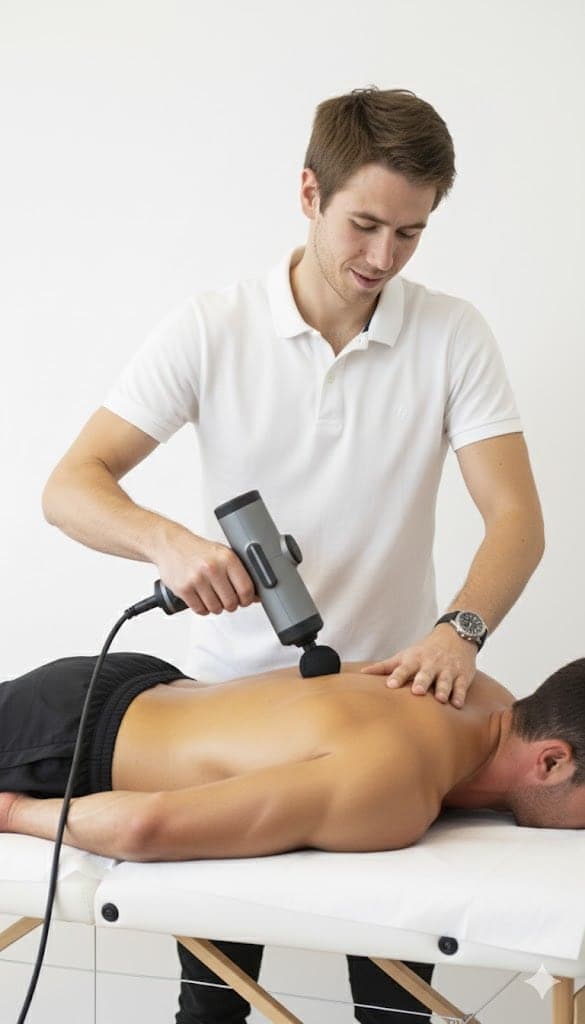
Written by
Chris
Massage therapist, nutrition and exercise physiologist
Norwegian-certified with a Bachelor’s in Physical Education and Nutrition and over ten years of clinical practice, working from a portable table in clients’ homes across the Paphos district.
This article is general information, not a medical diagnosis. If you have severe, worsening or unexplained pain, numbness, weakness, or pain after an accident, see a doctor first.