Massage for Stiffness Paphos Area: Advanced Deep-Tissue Treatment That Delivers Lasting Results
In short
Discover how specialized mechanical deep-tissue massage addresses chronic stiffness in Paphos through precision treatment that targets root causes, not symptoms—backed by 10 years of clinical experience.
Stiffness isn’t just discomfort. It’s your body’s alarm system telling you that something fundamental has shifted in your biomechanics. After a decade of treating chronic muscular dysfunction across Paphos, I’ve seen hundreds of clients who’ve spent years—and considerable money—on treatments that address only surface-level tension. They experience temporary relief, then return to the same restricted movement patterns within days.
The difference between conventional massage and what I provide comes down to depth, precision, and methodology. My approach treats stiffness as a mechanical problem requiring mechanical solutions—not as a stress symptom requiring relaxation techniques. When you understand the biomechanical cascade that creates persistent stiffness, you realize why traditional methods consistently fall short of delivering lasting change.
Why Traditional Massage Fails to Resolve Chronic Stiffness
Most people seeking massage for stiffness in Paphos area encounter the same frustrating cycle: they feel better for two or three days, then the tightness returns exactly where it started. This isn’t because massage doesn’t work—it’s because the treatment never reached the structural adhesions creating the restriction in the first place.
Human hands, regardless of the therapist’s strength or technique, have physiological limitations. The average massage therapist can apply approximately 20-30 pounds of targeted pressure for brief intervals before fatigue compromises their precision. Chronic stiffness—the kind that persists for months or years—develops in fascial layers and muscular attachments that exist far deeper than surface manipulation can effectively access.
I learned this reality early in my career when I treated a 52-year-old client who had undergone eighteen months of weekly traditional massage for thoracic stiffness. She described marginal improvement but never regained the rotational capacity she’d lost. Within three sessions using mechanical deep-tissue methodology, her range of motion increased by 40 degrees in thoracic rotation. The difference wasn’t my skill versus another therapist’s—it was the depth and consistency the specialized equipment provided.
The Biomechanical Reality of Persistent Stiffness
Stiffness originates from fascial adhesions, myofascial trigger points, and compensatory tension patterns that develop over time. When muscular tissue experiences repetitive strain, inflammatory responses, or sustained postural stress, collagen fibers cross-link inappropriately. These adhesions literally bind tissue layers that should glide independently, creating the sensation of stiffness and restricted movement.
Releasing these structural restrictions requires sustained, specific pressure at precise angles—delivered consistently across the entire affected tissue chain. This is where mechanical advantage becomes non-negotiable for achieving lasting results.
Advanced Mechanical Deep-Tissue Massage: A Clinical Approach to Stiffness
My specialized method differs fundamentally from conventional massage therapy available throughout Paphos area. I work exclusively with advanced mechanical deep-tissue equipment that delivers three critical advantages human hands cannot match: precision, power, and consistency.
Precision That Targets Root Causes
The specialized machine I use allows me to apply sustained pressure at specific vectors through multiple tissue layers simultaneously. Where manual therapy disperses force across a broad contact area, mechanical treatment concentrates therapeutic pressure through a controlled focal point. This precision means I can address the exact fascial plane or muscular attachment creating your restriction—not just the superficial muscle belly showing symptoms.
When treating lumbar stiffness, for example, I’m not simply working the erector spinae muscles. I’m releasing adhesions in the thoracolumbar fascia, addressing quadratus lumborum attachments, and restoring proper glide between fascial layers—work that requires reaching tissue depths manual therapy cannot consistently access.
Power That Reaches Structural Restrictions
The equipment delivers adjustable force ranging from light fascial release to powerfully deep structural work suitable for athletic optimization. I control intensity precisely based on your tissue response, pain tolerance, and treatment objectives. For clients with severe chronic stiffness, I can maintain therapeutic pressure at depths exceeding 60 pounds per square inch for sustained periods—something no human hands can accomplish without compromising precision.
This matters enormously for achieving lasting results. Superficial work produces temporary relaxation. Deep structural work creates lasting biomechanical change by physically breaking down adhesions and restoring proper tissue mobility.
Consistency That Eliminates Variables
Perhaps the most underappreciated advantage of mechanical treatment is consistency. Every session delivers identical quality regardless of my physical state, energy level, or previous treatments that day. The machine doesn’t fatigue. Its pressure doesn’t vary based on factors unrelated to your needs. This consistency means your third session is exactly as effective as your first—and your tenth builds progressively on the structural changes we’ve already achieved.
I’ve worked with competitive athletes who traveled to Paphos for training camps. They consistently report that mechanical deep-tissue treatment allows them to maintain optimal performance throughout extended training blocks—something impossible with conventional massage that varies in effectiveness session to session.
Common Causes of Stiffness I Address in Paphos
Over ten years treating clients across Paphos area, I’ve identified consistent patterns in how and why stiffness develops. Understanding these patterns allows me to address not just your current symptoms but the underlying mechanical dysfunction causing them.
| Stiffness Location | Common Underlying Cause | Typical Treatment Duration |
|---|---|---|
| Neck and Upper Shoulders | Forward head posture, upper crossed syndrome, scalene/levator adhesions | 4-6 sessions |
| Mid-Back (Thoracic) | Thoracic kyphosis, scapular dysfunction, intercostal restrictions | 5-7 sessions |
| Lower Back (Lumbar) | Anterior pelvic tilt, psoas tension, thoracolumbar fascia adhesions | 6-8 sessions |
| Hips and Glutes | Hip flexor dominance, piriformis syndrome, TFL tightness | 5-7 sessions |
| Legs and Calves | Posterior chain imbalances, plantar flexor restrictions, IT band adhesions | 4-6 sessions |
Postural Compensation Patterns
Most chronic stiffness I encounter stems from postural compensation. When one area of your kinetic chain functions improperly, surrounding tissues adapt by increasing tension to maintain stability. Over months or years, these compensatory patterns become your new baseline—and the stiffness becomes chronic.
I treated a 38-year-old businessman last year who experienced debilitating morning stiffness in his thoracic spine. He’d tried everything available in Paphos: stretching programs, yoga, conventional massage, even medication. The issue wasn’t his mid-back at all—it was chronic hip flexor tension from excessive sitting creating anterior pelvic tilt, which forced his thoracic extensors into sustained isometric contraction to maintain upright posture.
We addressed his psoas restrictions mechanically, restored proper pelvic positioning, and his thoracic stiffness resolved within three weeks. This is why understanding biomechanics matters more than knowing massage techniques.
Athletic Overuse and Training Imbalances
Athletes and active individuals developing stiffness typically show repetitive strain patterns. Cyclists develop severe quadriceps and hip flexor restrictions. Runners present with posterior chain adhesions and plantar flexor limitations. Tennis players invariably have rotator cuff and thoracic dysfunction on their dominant side.
The key with athletic stiffness is addressing the entire kinetic chain involved in the movement pattern—not just the muscle group showing symptoms. When a runner complains of calf stiffness, I’m assessing their entire posterior chain from plantar fascia through hamstrings to lumbar fascia, because dysfunction anywhere in that chain manifests as localized stiffness elsewhere.
My Treatment Methodology: How I Restore Movement Quality
My approach differs substantially from conventional massage therapy available throughout Paphos area. I don’t offer relaxation sessions or generic “full-body massage.” I provide clinical treatment for specific biomechanical dysfunction, delivered through a systematic methodology developed over a decade of practice.
Initial Assessment and Biomechanical Analysis
Every client relationship begins with comprehensive assessment. I evaluate your movement patterns, identify compensations, locate primary restrictions, and determine the biomechanical cascade creating your stiffness. This takes 20-30 minutes and involves functional movement screening, palpatory examination, and detailed discussion of your symptom history.
I’m looking for the why behind your stiffness, not just the where. Understanding causation allows me to design treatment that produces lasting change rather than temporary relief.
Progressive Treatment Protocols
Based on assessment findings, I develop a customized treatment protocol targeting your specific dysfunction. Early sessions focus on releasing primary restrictions and addressing acute adhesions. Subsequent treatments progress to deeper structural work, addressing compensatory patterns and optimizing movement quality throughout affected kinetic chains.
Treatment intensity increases progressively as your tissue adapts and tolerance improves. I’m not trying to “fix” you in one session—I’m systematically restoring proper tissue mobility and biomechanical function through staged intervention.
Education and Self-Management Strategies
Lasting results require your active participation between sessions. I provide specific guidance on movement patterns to avoid, corrective exercises to reinforce treatment effects, and self-care strategies to maintain improvements. You’re not a passive recipient of treatment—you’re a partner in restoring your body’s optimal function.
Clients who engage with this process consistently achieve lasting resolution of chronic stiffness. Those who view treatment as something done to them rather than with them typically experience slower progress and higher recurrence rates.
Why Location Matters: Mobile Service Throughout Paphos Area
I travel to your location with all necessary equipment—a professional treatment bench, specialized mechanical tools, and everything required to deliver clinical-quality treatment in your space. This mobile approach eliminates common barriers to consistent treatment while providing significant practical advantages.
Treatment in Your Optimal Environment
Recovery and tissue response improve when you’re comfortable and relaxed in familiar surroundings. Traveling to a clinic, finding parking, and navigating unfamiliar environments creates stress that counteracts treatment benefits. By bringing professional service to your home, hotel, or office in Paphos, I eliminate these variables and allow you to rest immediately post-treatment—maximizing therapeutic effects.
Consistency Despite Busy Schedules
The clients achieving the best results are those who maintain regular treatment schedules. Mobile service makes this consistency realistic even with demanding professional or family obligations. We schedule sessions around your availability, at your location, eliminating the time investment and logistical complications of traveling to appointments.
I’ve worked with corporate executives whose schedules made regular clinic visits impossible. Mobile treatment allowed them to address chronic stiffness affecting their performance without disrupting professional obligations—treatment during lunch breaks, early morning sessions before work, or evening appointments after business commitments.
The Investment Perspective: Why This Approach Costs More and Delivers More
My service costs more than conventional massage available throughout Paphos. This isn’t arbitrary pricing—it reflects the specialized equipment I use, the clinical expertise I provide, and most importantly, the lasting results this methodology delivers.
Consider the economics of conventional massage for chronic stiffness: weekly sessions at €50-70 each, ongoing indefinitely because symptoms recur when treatment stops. Over a year, you invest €2,500-3,500 for temporary relief that never addresses underlying dysfunction.
My approach requires 4-8 sessions at higher per-session cost, but resolves the mechanical dysfunction creating your stiffness. You invest more upfront and achieve lasting results that eliminate the need for ongoing treatment. This is the difference between an expense that provides temporary relief and an investment that restores lasting function.
Quantifying Treatment Outcomes
I measure success through objective improvements in movement quality, range of motion, and functional capacity—not subjective feelings of relaxation. Clients completing treatment protocols show measurable increases in flexibility, strength, and movement efficiency that persist long after treatment concludes.
Last year I worked with a 45-year-old client whose lumbar stiffness limited her to 20 degrees of forward flexion. After seven sessions, she achieved 75 degrees—functional range allowing her to resume gardening and playing with grandchildren without pain. That improvement persisted six months post-treatment without maintenance sessions. This is the outcome standard I hold myself to.
Who Benefits Most from This Approach
While I work with diverse clientele across Paphos area, certain individuals achieve particularly dramatic results from mechanical deep-tissue treatment for stiffness.
Individuals with Chronic, Unresolved Stiffness
If you’ve experienced persistent stiffness for months or years despite trying conventional treatments, you’re exactly who this approach serves. Chronic dysfunction requires deep structural work—the precise intervention my methodology provides.
Athletes and Active Individuals
Competitive athletes and serious recreational athletes benefit enormously from the precision and depth this treatment offers. I can address the specific biomechanical demands of your sport, optimize movement patterns, and enhance performance while resolving stiffness that limits training quality.
People Seeking Lasting Solutions
If you’re tired of temporary relief and want to address the root cause of your stiffness, this methodology aligns with your objectives. I work with clients who view treatment as investment in long-term health rather than ongoing expense for symptom management.
Professionals with Limited Time
Mobile service combined with results-focused treatment makes this ideal for busy professionals in Paphos who need efficient solutions that fit demanding schedules. We achieve in 6 sessions what conventional massage might attempt over 20 sessions—if it addresses the problem at all.
Frequently Asked Questions About Massage for Stiffness in Paphos Area
How is mechanical deep-tissue massage different from regular massage?
Regular massage uses manual techniques that work primarily on superficial tissue layers and provide temporary relaxation. Mechanical deep-tissue massage uses specialized equipment to reach deeper fascial layers and structural restrictions that manual therapy cannot effectively access. The difference is depth, precision, and permanence of results. I’m treating biomechanical dysfunction, not providing relaxation therapy.
Is mechanical massage painful?
Discomfort during treatment correlates with tissue dysfunction severity. Areas with significant adhesions or chronic restrictions will be tender when addressed properly—this is unavoidable when releasing structural restrictions. However, I control intensity precisely based on your tolerance and tissue response. The discomfort is productive and necessary, not gratuitous. Most clients describe it as “good pain”—the sensation of releasing something that’s been stuck for years.
How many sessions will I need to resolve my stiffness?
This depends entirely on your specific condition, duration of dysfunction, and compliance with self-management recommendations. Most clients with chronic stiffness require 4-8 sessions for substantial resolution. I provide realistic timelines during initial assessment based on your particular presentation. Unlike conventional massage offering open-ended treatment, my goal is defined protocols that achieve lasting results within specific timeframes.
Do I need ongoing maintenance after my stiffness resolves?
The purpose of treatment is restoring proper biomechanical function that persists without ongoing intervention. Most clients don’t require regular maintenance once we’ve addressed underlying dysfunction. Some athletes choose periodic optimization sessions to maintain peak performance, but this is enhancement rather than necessity. If we’ve properly resolved the mechanical problem, it shouldn’t recur unless you re-create the conditions that caused it initially.
Can you treat stiffness caused by medical conditions or injuries?
I work within my scope of practice as a specialist in mechanical dysfunction and body mechanics. For stiffness stemming from musculoskeletal dysfunction, postural problems, or athletic overuse, my methodology is highly effective. For stiffness related to inflammatory conditions, neurological disorders, or acute injuries requiring medical management, I work collaboratively with your healthcare providers or refer appropriately. Initial assessment determines whether your condition falls within my treatment scope.
What should I expect during my first session?
Your first session includes comprehensive biomechanical assessment followed by initial treatment. I’ll evaluate your movement patterns, discuss your symptom history in detail, identify primary restrictions, and explain the biomechanical cascade creating your stiffness. Treatment begins conservatively to assess your tissue response and tolerance. You should expect some post-treatment soreness—similar to workout soreness—as your body adapts to structural changes. I provide specific guidance for managing this response and preparing for subsequent sessions.
Why is your service more expensive than conventional massage in Paphos?
The specialized equipment I use represents significant investment. More importantly, you’re paying for a decade of clinical expertise, university education in physical mechanics and body function, and a treatment methodology that produces lasting results rather than temporary relief. When you calculate cost per outcome rather than cost per session, this approach is substantially more economical than ongoing conventional massage that never resolves underlying dysfunction.
What areas of Paphos do you serve?
I provide mobile service throughout the greater Paphos area, traveling to your home, hotel, or office with all necessary equipment. This eliminates travel barriers and allows you to receive professional clinical treatment in your optimal environment. We schedule based on your location and availability to maximize consistency and convenience.
The Education Behind the Methodology
My approach isn’t based solely on practical experience—it’s grounded in formal education in physical mechanics, body function, and human performance optimization. I hold a Bachelor’s degree in Physical Education and Nutrition from Norway, providing comprehensive understanding of biomechanics, kinesiology, muscular physiology, and systemic factors affecting tissue health and recovery.
This academic foundation allows me to analyze your movement patterns through the lens of kinetic chain function, understand compensatory mechanisms creating your stiffness, and design interventions addressing root causes rather than symptoms. I’m not guessing about what might help—I’m applying evidence-based principles of tissue mechanics and functional anatomy to your specific dysfunction.
The combination of formal education and a decade of clinical practice creates expertise that conventional massage therapists—regardless of their skill with manual techniques—simply don’t possess. When you understand why tissue behaves certain ways under specific mechanical stress, you can design interventions that produce predictable, lasting outcomes.
Beyond Stiffness: Optimizing Movement Quality for Life
While clients typically seek my service to resolve stiffness, the ultimate benefit extends far beyond eliminating discomfort. Proper biomechanical function affects every aspect of physical performance and quality of life. When movement becomes effortless and unrestricted, you rediscover capabilities you’d forgotten you possessed.
I’ve worked with clients in their 60s and 70s who assumed age-related stiffness was inevitable and irreversible. After addressing the actual mechanical dysfunction—not accepting it as immutable reality—they’ve returned to activities they’d abandoned years earlier. Gardening without lumbar pain. Playing with grandchildren without hip stiffness. Traveling without the anxiety that prolonged sitting would leave them immobile for days afterward.
This is what drives my work: seeing people reclaim physical autonomy they’d resigned themselves to losing. Stiffness isn’t an inevitable consequence of aging or desk work or athletic training. It’s a mechanical problem with mechanical solutions—and when you address it properly, using methodology adequate to the task, you can achieve results that seemed impossible through conventional approaches.
Starting Your Treatment Journey
If you’re experiencing chronic stiffness affecting your movement quality, performance, or daily life in Paphos area, the first step is comprehensive assessment. I need to understand your specific biomechanical dysfunction before designing effective intervention. This assessment allows me to provide realistic expectations about treatment duration, likely outcomes, and your role in the process.
I work with clients who are committed to achieving lasting results and willing to engage actively with treatment protocols. This isn’t a passive service—it’s a collaborative process requiring your participation between sessions. If you’re seeking quick fixes or relaxation massage, numerous therapists throughout Paphos provide excellent services for those purposes. If you want to resolve the mechanical dysfunction creating your stiffness durably, my methodology offers unmatched effectiveness.
The difference between temporary relief and lasting resolution comes down to whether you address symptoms or causes. After ten years specializing exclusively in mechanical dysfunction, using equipment and methodology that reach depths manual therapy cannot access, I’ve seen hundreds of clients achieve lasting freedom from stiffness that had persisted despite years of conventional treatment. This outcome is possible for you if you’re willing to invest in proper intervention delivered by someone who understands body mechanics at the level necessary to produce real, lasting change.
Stiffness limits your life in ways you might not fully recognize until it’s resolved. The activities you avoid, the movements you modify, the opportunities you decline because you know your body won’t cooperate—all of these restrictions can be addressed through proper biomechanical intervention. You don’t have to accept reduced movement quality as your lasting reality. With the right expertise and methodology, you can restore function you thought was lost forever.
Evidence and limits
Massage may help with some symptoms, but benefits and evidence vary by condition. It does not replace medical assessment or treatment. A page update is not evidence of an independent clinical review.
Further reading: Massage therapy: evidence, safety and limitations by US National Center for Complementary and Integrative Health. This is general background reading, not verification of every claim in this article.
How we describe evidence and updates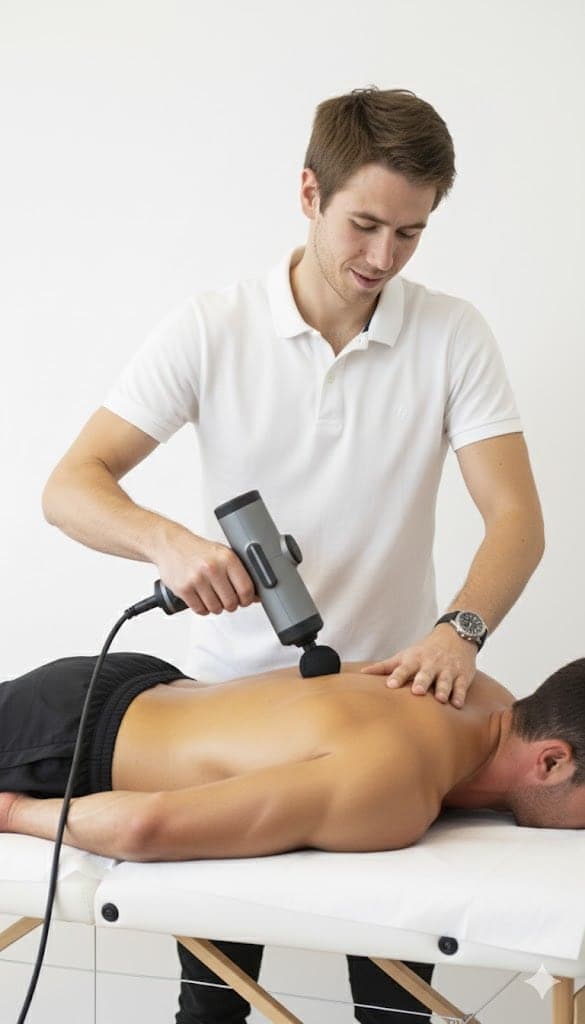
Written by
Chris
Massage therapist, nutrition and exercise physiologist
Norwegian-certified with a Bachelor’s in Physical Education and Nutrition and over ten years of clinical practice, working from a portable table in clients’ homes across the Paphos district.
This article is general information, not a medical diagnosis. If you have severe, worsening or unexplained pain, numbness, weakness, or pain after an accident, see a doctor first.