
Massage for Pregnant Women in Geroskipou: Advanced Mechanical Deep-Tissue Treatment That Addresses the Root Cause
In short
Discover safe, results-driven massage for pregnant women in Geroskipou. With 10 years of experience and specialized mechanical techniques, I deliver targeted relief that goes beyond relaxation.
Pregnancy transforms your body in profound ways. The average woman gains 25-35 pounds during pregnancy, and this weight redistributes rapidly—your center of gravity shifts forward, your lumbar curve deepens, and your pelvis tilts to accommodate your growing baby. These biomechanical changes create compensatory patterns throughout your entire musculoskeletal system. Most pregnant women I work with in Geroskipou experience lower back pain, hip discomfort, or sciatica by their second trimester. The question isn’t whether you’ll experience muscular tension during pregnancy—it’s whether you’ll address it at the source or merely mask the symptoms.
I’ve spent a decade studying body mechanics and treating pregnant clients through a clinical lens. With a Bachelor’s degree in Physical Education and Nutrition from Norway and ten years of hands-on experience, I’ve developed an approach to massage for pregnant women in Geroskipou that fundamentally differs from conventional prenatal massage. My method uses specialized mechanical deep-tissue tools to access fascial restrictions and muscular adhesions that manual techniques simply cannot reach effectively. This isn’t about temporary relaxation—though that’s certainly a welcomed side effect. This is about identifying and treating the mechanical dysfunctions that pregnancy creates in your body, ensuring you remain functional, pain-free, and physically capable throughout all three trimesters.
Why Conventional Prenatal Massage Falls Short for Most Pregnant Women
Let me be direct: traditional prenatal massage typically focuses on symptom management rather than causative treatment. A therapist uses gentle Swedish strokes, applies light pressure, and positions you on your side with pillows. You feel relaxed afterward, perhaps for a few hours or a day. Then the tension returns—because the underlying mechanical problem was never addressed.
During pregnancy, your body produces relaxin, a hormone that loosens ligaments to prepare for childbirth. This increased joint mobility, combined with postural shifts, creates instability throughout your kinetic chain. Your hip flexors shorten and tighten. Your gluteal muscles weaken and become inhibited. Your thoracolumbar fascia develops restrictions to stabilize your increasingly unstable spine. These aren’t superficial issues that respond to gentle rubbing—they’re deep structural problems requiring precise, powerful intervention.
I had a client in her 32nd week who came to me after seeing three different massage therapists in Geroskipou. Each session felt “nice,” she told me, but her sciatic pain intensified every week. During our first assessment, I identified severe piriformis syndrome—her piriformis muscle had developed dense adhesions and was compressing her sciatic nerve. This required targeted, deep mechanical work at the muscle’s insertion points. Within two sessions using my specialized equipment, her sciatic pain reduced by 70%. By the fourth session, she was completely pain-free and remained so through delivery.
The Biomechanical Reality of Pregnancy That Most Therapists Don’t Understand
Your body during pregnancy operates under completely different mechanical principles than your non-pregnant body. Understanding these principles is essential to delivering effective treatment, and frankly, most massage therapists lack the educational background to work with pregnant bodies from a true biomechanical perspective.
Postural Compensation Patterns That Create Chronic Pain
As your belly grows, your body compensates through a predictable sequence of adaptations. Your lumbar lordosis increases—sometimes by as much as 28 degrees by the third trimester. This hyperextension compresses your posterior spinal structures and creates chronic tension in your erector spinae muscles. Simultaneously, your thoracic spine flexes forward to counterbalance, creating upper back strain and contributing to the rounded-shoulder posture that causes neck pain and headaches.
Your pelvis anteriorly tilts to support the baby’s weight. This tilt shortens your hip flexors while simultaneously overstretching and weakening your abdominal muscles and gluteals. The result? Your lower back must work overtime to stabilize your spine, creating chronic hypertonicity in your quadratus lumborum and multifidus muscles.
These aren’t isolated problems—they’re systemic dysfunctions that require a systematic approach. I map these compensation patterns during our initial assessment, identifying exactly which muscles have developed adhesions, which fascial planes have restricted, and which movement patterns have become dysfunctional. Only then can I design a treatment protocol that addresses your specific biomechanical situation.
Fascial Restrictions and Why They Matter During Pregnancy
Fascia—the connective tissue that surrounds every muscle, organ, and structure in your body—becomes particularly problematic during pregnancy. The combination of hormonal changes, postural stress, and reduced activity creates areas of fascial restriction that limit mobility and create referred pain patterns.
Your thoracolumbar fascia, which connects your upper and lower body, commonly develops restrictions that manifest as both lower back pain and hip dysfunction. Your iliotibial band often becomes thickened and adhered, contributing to lateral hip pain and knee discomfort. These fascial problems don’t respond to superficial work—they require deep, sustained mechanical pressure applied at precise angles to create actual tissue change.
This is where my specialized equipment becomes invaluable. The mechanical tools I use deliver consistent, powerful pressure that penetrates through superficial layers to reach these deep fascial planes. Unlike human hands, which fatigue and cannot maintain sustained deep pressure, my equipment provides the mechanical advantage necessary to create genuine fascial release. This isn’t theoretical—I’ve treated hundreds of pregnant women in Geroskipou, and the clinical outcomes speak for themselves.
My Approach to Massage for Pregnant Women in Geroskipou: Precision, Power, and Proven Results
My method is built on three fundamental principles that separate it from conventional massage approaches. These principles aren’t marketing concepts—they’re biomechanical realities that determine treatment effectiveness.
Precision: Treating Specific Structures, Not General Areas
When you tell me you have lower back pain, I don’t simply work on your “lower back.” I assess which specific structures are dysfunctional. Is your quadratus lumborum in spasm? Are your multifidus muscles inhibited? Has your thoracolumbar fascia developed restrictions? Are your hip flexors creating an anterior pelvic tilt that’s loading your spine improperly?
Each of these problems requires different treatment angles, depths, and techniques. My specialized mechanical tools allow me to target individual muscles and fascial planes with millimeter precision. I can work along muscle fiber directions, access attachment points at bone interfaces, and release specific trigger points that refer pain to distant locations. This level of precision is impossible with manual techniques alone.
Power: Going Deep Enough to Create Actual Tissue Change
Here’s a truth that many therapists won’t tell you: most prenatal massage never reaches the depth necessary to address the actual problem. They’re trained to use light pressure with pregnant clients, operating under the misconception that anything deeper is unsafe. This is categorically false when performed by someone who understands anatomy and biomechanics.
Safe deep-tissue work during pregnancy requires knowing exactly which areas to avoid (abdominal region, certain acupressure points) and which areas benefit from deep intervention (gluteals, hip flexors, spinal erectors, upper traps). My mechanical equipment delivers the power necessary to reach these deep structures without the fatigue limitations of manual work. I can maintain sustained pressure for the 90-120 seconds necessary to achieve fascial release, something virtually impossible with thumbs or elbows alone.
I remember working with an athlete in her 28th week who was devastated that she couldn’t run anymore due to hip pain. Previous therapists had told her it was “just part of pregnancy” and to accept it. During our assessment, I found severe adhesions in her tensor fasciae latae and IT band, along with gluteus medius dysfunction. Using my mechanical tools, I was able to work deep enough to break down these adhesions and restore proper tissue quality. She returned to light running within three weeks and maintained activity through delivery. This outcome wasn’t luck—it was the result of applying sufficient mechanical force to the right structures.
Consistency: Every Session Delivers Equal Quality
Manual therapists have off days. They get tired. Their hands hurt. Their pressure varies depending on how many clients they’ve seen that day. This inconsistency means your treatment quality is unpredictable, and frankly, unacceptable when we’re talking about treating pain that affects your daily function.
My mechanical approach eliminates this variable entirely. The equipment delivers identical pressure, depth, and precision in your first minute of treatment and your sixtieth. Whether you’re my first client of the day or my last, you receive the same high-quality intervention. This consistency is particularly important during pregnancy, when your body is changing weekly and you need reliable treatment outcomes you can count on.
Safety Protocols for Advanced Mechanical Treatment During Pregnancy
Let me address the elephant in the room: Is mechanical deep-tissue work safe during pregnancy? The answer is unequivocally yes—when performed by someone who understands pregnancy contraindications and biomechanics.
What We Avoid and Why
There are specific areas and techniques I never use with pregnant clients:
- Direct abdominal work of any kind
- Pressure on specific acupressure points known to stimulate uterine contractions (SP6, LI4, BL60)
- Deep work on the medial aspects of ankles and wrists
- Any positioning that restricts blood flow or causes supine hypotensive syndrome
- Aggressive stretching that could strain relaxin-affected ligaments
Beyond these contraindications, the rest of your body not only tolerates deep work—it actively benefits from it. Your gluteal muscles, which are working overtime to stabilize your pelvis, respond exceptionally well to deep mechanical release. Your hip flexors, which are chronically shortened, require deep work to restore proper length-tension relationships. Your upper back and neck, strained from postural changes, need powerful intervention to release chronic hypertonicity.
Positioning and Comfort Throughout Treatment
I travel to your location with a professional treatment bench designed specifically for pregnant clients. We use side-lying positions with strategic bolstering that maintains spinal alignment while allowing complete access to treatment areas. You’re never placed in compromising positions, and we adjust continuously as your body changes throughout pregnancy.
Comfort during treatment is non-negotiable, but I want to distinguish between “uncomfortable pressure” and “unsafe pressure.” Deep-tissue work, done correctly, often involves temporary discomfort—that pressure sensation as we release a stubborn adhesion. This discomfort is productive and safe. What’s never acceptable is sharp pain, breath-holding discomfort, or any sensation that makes you tense up. I constantly monitor your response and adjust pressure accordingly. We’re partners in this process, and communication is essential.
Common Conditions I Treat in Pregnant Women Throughout Geroskipou
Over ten years of practice, I’ve identified patterns in the musculoskeletal complaints pregnant women experience. Here are the most common conditions I treat and my approach to each.
Lower Back Pain and Lumbar Strain
Nearly 70% of pregnant women experience lower back pain at some point during pregnancy. The mechanical cause is almost always the same: excessive anterior pelvic tilt combined with compensatory hypertonicity in the lumbar erectors and quadratus lumborum.
Treatment focuses on releasing the chronically shortened hip flexors (primarily iliopsoas), addressing restrictions in the thoracolumbar fascia, and reducing hypertonicity in the erector spinae group. I also work the gluteals to improve their force production, which helps stabilize the pelvis and reduce strain on the lower back. Results are typically noticeable within the first session, with significant improvement by the third.
Sciatica and Piriformis Syndrome
Sciatic pain during pregnancy usually stems from piriformis syndrome—the piriformis muscle developing tightness or spasm and compressing the sciatic nerve as it passes beneath (or sometimes through) the muscle. As your baby grows and your pelvis widens, the piriformis is placed under increasing mechanical stress.
Addressing this requires deep, sustained pressure into the piriformis muscle itself, along with work on the surrounding hip rotators. My mechanical tools excel at this application because I can maintain consistent pressure deep into the muscle belly and along its attachments to the sacrum and greater trochanter. Manual work simply cannot achieve the same depth for the duration necessary. I’ve seen sciatic pain that has plagued women for months resolve completely within 3-4 treatment sessions.
Upper Back and Neck Tension
As your thoracic spine rounds forward to counterbalance your growing belly, your upper trapezius, levator scapulae, and rhomboids develop chronic tension. Many pregnant women also develop headaches originating from suboccipital muscle tension.
Treatment targets these specific muscle groups with deep mechanical pressure, working along fiber directions and addressing trigger points that refer pain into the head and shoulders. I also focus on restoring proper thoracic mobility through specific soft tissue release, which immediately reduces the strain on neck muscles.
Hip Pain and Gluteal Dysfunction
Hip pain during pregnancy typically manifests in three locations: anterior hip (hip flexor strain), lateral hip (gluteus medius tendinopathy or IT band syndrome), or posterior hip (gluteal weakness and SI joint dysfunction). Each requires different intervention strategies.
For anterior hip pain, I focus on releasing chronically shortened iliopsoas and rectus femoris. For lateral hip pain, I address IT band restrictions and strengthen the gluteus medius. For posterior pain, I work the entire gluteal complex and address sacroiliac joint mechanics through soft tissue release of the surrounding musculature.
| Condition | Primary Cause | Treatment Focus | Typical Sessions to Improvement |
|---|---|---|---|
| Lower Back Pain | Anterior pelvic tilt, lumbar hyperextension | Hip flexors, QL, erectors, thoracolumbar fascia | 1-3 sessions |
| Sciatica | Piriformis syndrome, nerve compression | Piriformis, hip rotators, gluteals | 3-5 sessions |
| Upper Back Tension | Thoracic flexion compensation | Upper traps, levator scapulae, rhomboids | 2-4 sessions |
| Hip Pain | Gluteal dysfunction, IT band syndrome | Gluteal complex, TFL, IT band, hip flexors | 3-6 sessions |
The Difference Between Treating Symptoms and Treating Causes
This distinction is fundamental to everything I do, yet it’s where most massage approaches fail. Treating symptoms means applying techniques that temporarily reduce your pain. Treating causes means identifying and correcting the underlying mechanical dysfunction creating that pain.
When a pregnant woman comes to me with lower back pain, the symptom is obvious—her back hurts. But the cause is usually multifactorial: shortened hip flexors creating anterior pelvic tilt, weak gluteals failing to stabilize the pelvis, restricted thoracolumbar fascia limiting movement, and compensatory hypertonicity in the lumbar erectors. If I only address the back pain itself, I’m treating the symptom. The relief will be temporary because the mechanical dysfunction remains.
Instead, I assess the entire kinetic chain. I identify every component contributing to the problem. Then I systematically address each component until the mechanical function is restored. This takes more time, requires more precision, and demands actual tissue change rather than temporary relaxation. But the results are lasting—or at least, they last until a new compensation pattern develops, which we then address proactively.
I worked with a woman in her 34th week who had been receiving weekly prenatal massage for months. She felt relaxed after each session but her pain always returned within days. During our first session, I explained that relaxation wasn’t the goal—mechanical correction was. We worked deeply on her hip flexors, releasing years of accumulated tension. We addressed fascial restrictions throughout her posterior chain. We restored proper muscle activation patterns in her gluteals. By the third session, her pain was gone—not temporarily, but genuinely resolved. She continued maintenance sessions every three weeks through delivery and reported the final month of pregnancy was her most comfortable.
Why This Is an Investment in Your Health, Not an Expense
I position my service honestly: this is more expensive than conventional massage. The question you need to ask isn’t “Why does this cost more?” but rather “What am I actually paying for?”
With conventional prenatal massage, you’re paying for an hour of relaxation. You’ll feel nice afterward. The tension returns, so you book another session. Then another. You’re caught in a cycle of temporary symptom relief, spending money repeatedly on an intervention that never addresses the root problem.
With my approach, you’re paying for lasting resolution. Yes, the per-session cost is higher. But we’re typically talking about 3-6 sessions to resolve a chronic problem completely, versus indefinite ongoing sessions that never actually fix anything. Financially, which makes more sense?
Beyond the financial calculation, consider what you’re actually investing in: the ability to remain active and functional throughout pregnancy, reduced risk of compensatory injuries, better recovery postpartum, and most importantly, actually enjoying your pregnancy rather than enduring it in pain. Several clients have told me that the freedom from chronic pain was the best investment they made during their entire pregnancy.
The Treatment Process: What to Expect When Working With Me
I operate through a partnership model, not a transactional service model. This means we work together systematically to address your specific biomechanical situation, rather than you simply booking random massage sessions whenever you feel tight.
Initial Assessment (90 Minutes)
Our first session is comprehensive. I conduct a full postural assessment, evaluate your movement patterns, identify compensation strategies your body has adopted, and pinpoint the specific structures that are dysfunctional. We discuss your pain history, activity level, and goals for pregnancy and beyond.
Based on this assessment, I design a treatment protocol specific to your needs. This might involve 4 sessions over 6 weeks, or 8 sessions over 12 weeks—it depends entirely on the severity and complexity of your mechanical dysfunctions. I’m honest about what’s realistic. If I believe you’ll need 6 sessions to resolve your issues, I tell you upfront. No surprises.
Treatment Sessions (60-75 Minutes)
Each session follows a systematic approach: we reassess changes since the previous session, adjust the treatment plan if necessary, then work through the specific structures that need attention. I use my mechanical tools for deep work, combined with strategic manual techniques where appropriate. We finish with functional movement to integrate the changes and teach your nervous system the new patterns.
You’ll likely experience some soreness after deep-tissue sessions—this is normal and indicates actual tissue change. This soreness typically resolves within 24-48 hours, and you should notice improved function and reduced pain by day three.
Ongoing Maintenance
Once we’ve resolved your primary issues, we transition to maintenance sessions. During pregnancy, this typically means sessions every 3-4 weeks to address new compensations as your body continues changing. This proactive approach prevents problems from becoming severe, rather than waiting until you’re in crisis mode again.
The Equipment and Technology That Makes This Possible
The specialized mechanical tools I use aren’t standard massage equipment—they’re precision instruments designed for deep fascial work and trigger point therapy. These tools provide several critical advantages over manual techniques:
Mechanical Advantage: The tools amplify force, allowing me to generate deep pressure without physical strain. This means I can work at therapeutic depths for extended periods without fatigue affecting quality.
Precision Tips: Different attachments allow me to work on structures ranging from large muscle groups to specific trigger points. I can use broad surfaces for general fascial release or narrow tips for pinpoint work on muscle attachments.
Adjustable Intensity: The pressure is completely controllable, from gentle work appropriate for sensitive areas to powerful deep-tissue work for dense adhesions. We find your optimal therapeutic pressure and maintain it consistently throughout treatment.
Consistent Delivery: Unlike hands that fatigue, the equipment delivers uniform pressure throughout the entire session. This consistency ensures every treatment area receives optimal attention.
I bring all equipment to your location—you don’t need anything except space for my treatment bench. I handle setup and breakdown. Your only job is to show up and be ready to address your pain at its source.
Why Location Matters: Serving Geroskipou and Surrounding Areas
I specifically serve Geroskipou and the immediate surrounding region because effective treatment requires consistency and accessibility. When you’re pregnant and dealing with pain, driving long distances to appointments becomes another stressor. By traveling to your location, I eliminate this barrier entirely.
Working in Geroskipou also means I understand the local context—the lifestyle factors, activity patterns, and common postural habits that contribute to musculoskeletal problems in this population. This contextual knowledge enhances my ability to design relevant interventions.
The mobile service model also means we can work in your home environment, where you’re most comfortable. There’s no rushing to appointments, no sitting in waiting rooms, no managing logistics when you’re already exhausted. I arrive, we do the work, and you can immediately rest afterward if needed.
Frequently Asked Questions About Advanced Massage for Pregnant Women
Is deep-tissue massage actually safe during pregnancy?
Yes, absolutely—when performed by someone who understands pregnancy contraindications and biomechanics. The misconception that pregnant women can only receive light touch comes from therapists who lack the education to work confidently with pregnant bodies. Deep work on appropriate areas (glutes, hips, back, shoulders, legs) is not only safe but often necessary to address the mechanical problems pregnancy creates. I avoid specific contraindicated areas and techniques, but the rest of your body benefits immensely from deep intervention.
How is this different from regular prenatal massage?
Conventional prenatal massage focuses on relaxation using gentle Swedish techniques. My approach focuses on mechanical correction using deep-tissue methods. We’re solving different problems. If you want an hour of gentle relaxation, conventional massage is fine. If you want to actually resolve chronic pain and dysfunction, you need mechanical intervention that addresses the root cause.
When during pregnancy should I start treatment?
Ideally, as soon as you start experiencing musculoskeletal discomfort—often during the second trimester when postural changes become significant. However, I’ve worked with women in every stage of pregnancy, including women who come to me in their 38th week in desperation. Earlier intervention generally requires fewer total sessions, but it’s never too late to address mechanical dysfunctions.
How many sessions will I need?
This depends entirely on the severity and chronicity of your issues. Most clients with standard pregnancy-related back pain or hip pain see significant improvement within 3-4 sessions. More complex issues like chronic sciatica or multiple compensation patterns might require 6-8 sessions. I provide an honest assessment after our initial evaluation and adjust the plan based on your response to treatment.
Will this hurt?
Deep-tissue work involves pressure sensations that can be temporarily uncomfortable—think of it as “productive discomfort.” We’re working on tight, restricted tissues, and releasing them requires sustained pressure. However, you control the intensity through feedback. We find the pressure level that’s therapeutic without being intolerable. Pain that makes you tense up is counterproductive, so we never push beyond your tolerance. Most clients describe the sensation as “hurts good”—uncomfortable in the moment but followed by immediate relief.
Can this help with postpartum recovery?
Absolutely. The mechanical approach I use is equally effective for addressing postpartum issues: diastasis recti, pelvic floor dysfunction, nursing posture problems, and the general deconditioning that occurs during pregnancy. Many clients continue working with me postpartum to restore optimal function more rapidly than would occur naturally.
Do you work with high-risk pregnancies?
I work with most pregnancy situations, but high-risk pregnancies require clearance from your healthcare provider first. If you have conditions like preeclampsia, placenta previa, or a history of preterm labor, I need written approval from your doctor before proceeding. Safety always comes first, and medical clearance ensures we’re working within appropriate parameters for your specific situation.
What should I wear during treatment?
Comfortable clothing that allows access to treatment areas. Many clients wear shorts and a sports bra or tank top. We use draping for privacy, and I only work on areas directly related to your treatment plan. Your comfort and modesty are always respected.
Real Outcomes From Real Clients in Geroskipou
Theory and explanation are valuable, but ultimately, you care about results. Here are representative examples of outcomes I’ve achieved with pregnant clients in Geroskipou:
A 31-year-old in her 29th week presented with bilateral hip pain that prevented her from walking more than 10 minutes. Previous massage provided temporary relief lasting less than a day. After assessing her mechanics, I identified severe gluteus medius weakness and IT band restrictions bilaterally. Four sessions over five weeks, focusing on deep fascial release of the IT bands and activation work for the gluteals, resolved her pain completely. She reported walking 45 minutes daily pain-free by week 34.
A 28-year-old athlete in her 24th week was devastated by lower back pain that ended her running routine. Standard advice was to accept reduced activity during pregnancy. Evaluation revealed excessive anterior pelvic tilt driven by shortened hip flexors and weak glutes. Six sessions over eight weeks addressed these mechanical dysfunctions through deep psoas release and gluteal activation. She returned to light running at week 30 and maintained activity through delivery.
A 35-year-old in her 36th week came to me with chronic headaches and upper back pain that multiple chiropractors had failed to resolve. Assessment revealed the problem wasn’t primarily spinal—it was severe hypertonicity in her upper trapezius and levator scapulae, combined with restricted thoracic mobility. Three sessions of deep mechanical release to these structures eliminated her headaches entirely and dramatically reduced her upper back tension.
These aren’t cherry-picked exceptional cases—they’re representative of what happens when you address mechanical problems with mechanical solutions. The results are reproducible because the approach is based on biomechanical principles, not subjective techniques.
The Partnership Model: Why I Don’t Offer Single Sessions
You’ll notice I haven’t mentioned pricing for individual sessions—that’s intentional. I don’t operate on a per-session model because that approach doesn’t serve your best interests.
Resolving mechanical dysfunction requires a systematic process. One session might provide temporary relief, but it cannot address the multiple layers of compensation patterns your body has developed. Selling you single sessions knowing they won’t solve your problem would be dishonest.
Instead, I work through treatment packages designed to actually resolve your issues. After our initial assessment, I recommend a specific number of sessions based on your presentation. We commit to that plan together. This approach ensures we have adequate time to create lasting change, rather than just chasing symptoms session by session.
This model also keeps me accountable. If I recommend six sessions and you’re not significantly improved by session four, we reassess the approach. I’m invested in your outcome, not just in filling appointment slots. This is a partnership focused on your long-term function, not a transactional service business.
Taking Action: Moving From Chronic Pain to Optimal Function
If you’re pregnant and experiencing musculoskeletal pain, you have a choice. You can continue managing symptoms with temporary solutions, accepting pain as “just part of pregnancy.” Or you can address the mechanical dysfunctions creating that pain and restore the function that allows you to actually enjoy this phase of your life.
I’ve been doing this work for a decade because I genuinely believe that pain—especially predictable, mechanically-driven pain—is a solvable problem. You don’t need to suffer through pregnancy. Your body is capable of adapting to the changes pregnancy requires while remaining functional and pain-free. It just needs the right intervention applied at the right structures.
The mothers I work with in Geroskipou consistently report that the freedom from chronic pain transformed their pregnancy experience. They’re more active, sleep better, feel more capable, and approach delivery with confidence rather than dread. These outcomes aren’t guaranteed—every body is different, and some presentations are more complex than others. But they’re achievable when you commit to addressing the root cause rather than just managing symptoms.
The expertise I bring—a decade of experience, formal education in body mechanics, specialized equipment, and a systematic approach to treatment—exists specifically to solve the mechanical problems pregnancy creates in your body. This isn’t relaxation therapy. This is clinical intervention designed to restore optimal function.
If that resonates with you, if you’re ready to stop accepting pain as inevitable and start addressing it at its source, then this approach is for you. The question isn’t whether your pain can be resolved—in most cases, it absolutely can. The question is whether you’re ready to invest in the process that actually creates lasting change.
I travel to your location throughout Geroskipou with everything needed for professional treatment. Your role is simply to commit to the process and show up ready to do the work. My role is to apply a decade of expertise and specialized mechanical techniques to restore the function that allows you to move through pregnancy pain-free and capable.
That’s the partnership I offer. That’s the outcome I deliver. And that’s why pregnant women throughout Geroskipou choose to work with me when conventional massage has failed them.
Evidence and limits
Massage may help with some symptoms, but benefits and evidence vary by condition. It does not replace medical assessment or treatment. A page update is not evidence of an independent clinical review.
Further reading: Massage therapy: evidence, safety and limitations by US National Center for Complementary and Integrative Health. This is general background reading, not verification of every claim in this article.
How we describe evidence and updates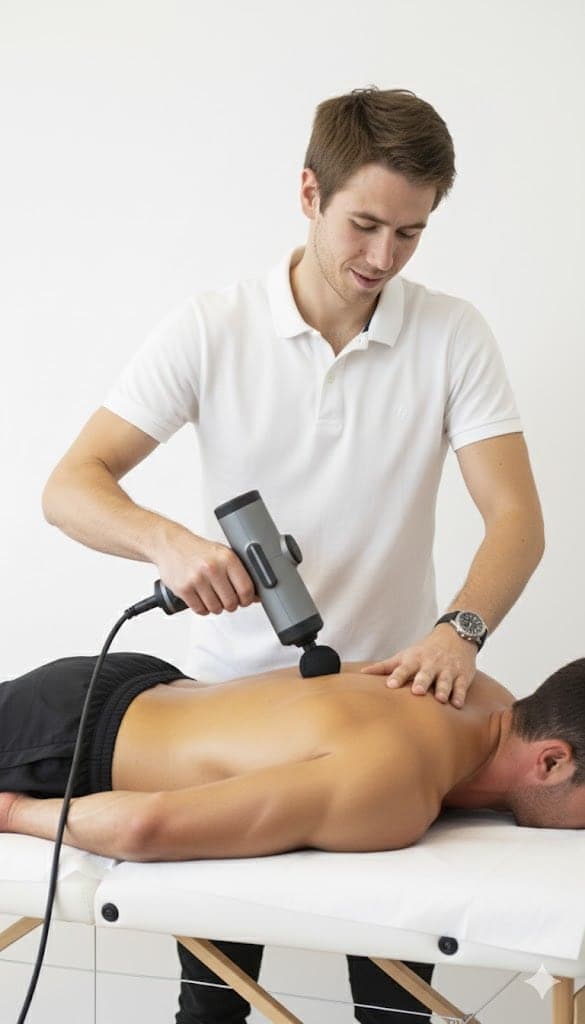
Written by
Chris
Massage therapist, nutrition and exercise physiologist
Norwegian-certified with a Bachelor’s in Physical Education and Nutrition and over ten years of clinical practice, working from a portable table in clients’ homes across the Paphos district.
This article is general information, not a medical diagnosis. If you have severe, worsening or unexplained pain, numbness, weakness, or pain after an accident, see a doctor first.