Rehabilitation Centers Geroskipou: Advanced Mechanical Deep-Tissue Treatment for Lasting Pain Relief
In short
Discover why rehabilitation centers in Geroskipou are transforming musculoskeletal treatment through precision mechanical deep-tissue therapy. Get lasting relief from chronic pain with expert-driven, results-focused rehabilitation.
When you’re searching for rehabilitation centers in Geroskipou, you’re not just looking for temporary relief—you’re seeking a lasting solution to musculoskeletal problems that have been limiting your life, your performance, and your daily comfort. After a decade of treating clients with chronic pain, sports injuries, and body mechanical dysfunction, I’ve witnessed firsthand how traditional approaches fail to address the root cause of these conditions.
The landscape of rehabilitation in Geroskipou has evolved significantly, yet many facilities still rely on outdated methodologies that treat symptoms rather than causes. My approach, grounded in a Bachelor’s degree in Physical Education and Nutrition from Norway and ten years of clinical experience, challenges this paradigm entirely. I don’t offer relaxation therapy or temporary relief—I provide a scientifically-driven mechanical intervention that restructures soft tissue at depths human hands simply cannot reach.
What distinguishes effective rehabilitation centers in Geroskipou from mediocre ones? The answer lies in precision, consistency, and the willingness to work at the true source of dysfunction. Most practitioners scratch the surface. I work at the mechanical root of your pain, using specialized equipment that delivers controlled, measurable force to specific anatomical structures. This isn’t massage therapy—it’s mechanical rehabilitation of dysfunctional tissue.
Understanding Musculoskeletal Dysfunction: Why Traditional Approaches Fall Short
Let me share something most rehabilitation centers in Geroskipou won’t tell you: approximately 70% of chronic musculoskeletal pain originates from fascial adhesions, trigger points, and deep muscular tension that standard manual therapy cannot adequately address. I’ve treated hundreds of clients who spent years cycling through various practitioners, experiencing temporary relief followed by inevitable relapse.
The fundamental problem is mechanical inadequacy. Human hands, regardless of skill level, possess inherent limitations in force production, endurance, and precision. When treating deep-seated adhesions in the thoracolumbar fascia or chronic hypertonicity in the quadratus lumborum, superficial pressure provides only transient symptomatic relief. The underlying pathology remains untouched.
The Biomechanical Reality of Deep Tissue Dysfunction
Consider the structural complexity of your musculoskeletal system. Your body contains multiple layers of muscle tissue, each separated by fascial planes that should glide freely during movement. When these tissues become adhered through repetitive strain, trauma, or postural dysfunction, normal biomechanics become compromised. You develop compensatory movement patterns. Adjacent structures assume loads they weren’t designed to bear. Pain becomes chronic.
Standard rehabilitation approaches in Geroskipou typically involve:
- Conventional massage focusing on relaxation rather than structural correction
- Physiotherapy emphasizing exercise without addressing underlying tissue quality
- Chiropractic adjustments that temporarily realign joints but fail to address muscular restrictions pulling them back out of alignment
- Pharmaceutical interventions that mask symptoms while tissue dysfunction progresses
These modalities have their place, but they fundamentally misunderstand the mechanical nature of most musculoskeletal pain. You cannot stretch away adhesions. You cannot adjust away chronic hypertonicity. You must mechanically restructure the tissue itself.
Advanced Mechanical Deep-Tissue Rehabilitation: The Scientific Foundation
My methodology, refined over ten years of clinical practice, centers on mechanical disruption of dysfunctional tissue using specialized equipment that delivers precision, power, and consistency beyond human capability. This isn’t emerging technology—it’s the evolution of therapeutic intervention based on biomechanical principles that have been understood for decades but rarely implemented properly.
The Three Pillars of Effective Mechanical Treatment
Precision: The specialized machine I use allows me to target specific anatomical structures with millimeter accuracy. When treating piriformis syndrome, for instance, I can apply controlled force directly to the affected muscle belly without dispersing pressure across surrounding tissues. This specificity is biomechanically impossible with manual techniques, where force distribution occurs across the entire contact surface of the hand.
Power: Deep fascial restrictions require significant mechanical force to disrupt effectively. Research indicates that forces exceeding 50 pounds per square inch may be necessary to achieve plastic deformation of dense fascial tissue. Human therapists fatigue rapidly at such intensities. My mechanical approach maintains consistent force output throughout the entire treatment session, ensuring complete tissue remodeling rather than superficial softening.
Consistency: Perhaps most critically, mechanical intervention eliminates the variability inherent in manual therapy. I don’t have “off days.” The treatment you receive in your first session is identical in quality and effectiveness to your tenth session. This consistency ensures predictable, cumulative results rather than the unpredictable outcomes typical of traditional rehabilitation centers in Geroskipou.
Clinical Evidence and Real-World Results
In my decade of practice, I’ve documented remarkable outcomes that traditional approaches rarely achieve. Clients with chronic lower back pain—some suffering for 5, 10, even 15 years—experience significant functional improvement within 3-4 sessions. Not temporary relief. Not symptom management. Actual structural correction of the underlying mechanical dysfunction.
One case particularly illustrates this principle: a competitive cyclist who had seen multiple practitioners for chronic iliotibial band syndrome. Previous treatments provided 2-3 days of relief before symptoms returned. After implementing my mechanical protocol, targeting not just the IT band but the underlying tensor fasciae latae, gluteus medius, and vastus lateralis adhesions, he achieved complete symptom resolution. Two years later, he remains asymptomatic because we addressed the cause, not just the symptom.
Why Location-Based Rehabilitation Services Transform Treatment Outcomes
Unlike traditional rehabilitation centers in Geroskipou where you travel to a clinical setting, I bring professional-grade equipment and expertise directly to your location. This isn’t merely a convenience—it’s a strategic advantage that significantly impacts treatment efficacy.
The Biomechanical Advantage of In-Location Treatment
Post-treatment tissue quality is critical for lasting results. When you receive deep mechanical work and then must drive home—sitting in a vehicle, potentially tensing muscles due to discomfort or traffic—you partially undo the therapeutic benefit. Muscle tissue that has just been restructured needs time to adapt to its new configuration.
By traveling to your location with a complete professional setup, I eliminate this counterproductive transition. After treatment, you can immediately rest in your own environment, allowing treated tissues to stabilize in their corrected state. This seemingly minor detail produces measurably better outcomes.
Additionally, many clients requiring intensive rehabilitation services struggle with mobility. Requiring them to travel to a facility introduces additional physical stress before treatment even begins. When I arrive at your home with everything necessary—professional treatment bench, specialized mechanical equipment, proper positioning supports—you begin treatment in an already relaxed state rather than pre-tensed from travel.
Comparing Rehabilitation Centers in Geroskipou: What Actually Matters
When evaluating rehabilitation options in Geroskipou, most people focus on superficial criteria: facility appearance, price per session, convenient scheduling. These factors mean nothing if the underlying treatment methodology cannot produce lasting results.
| Treatment Approach | Typical Depth Penetration | Force Consistency | Results Duration | True Cause Resolution |
|---|---|---|---|---|
| Traditional Massage Therapy | Superficial to moderate (1-3cm) | Variable, therapist-dependent | 1-3 days | Rarely achieved |
| Standard Physiotherapy | Moderate with manual techniques | Inconsistent across sessions | Ongoing dependency | Partial, symptom-focused |
| Mechanical Deep-Tissue | Deep to very deep (4-7cm+) | Precisely controlled and maintained | Lasting with proper protocol | Directly targeted |
| Chiropractic Adjustment | Joint-focused, minimal soft tissue | Not applicable | Hours to days | Addresses effect, not cause |
The Investment Versus Expense Paradigm
I’m more expensive than a standard massage therapist. Significantly more expensive. This isn’t arbitrary pricing—it reflects the fundamental difference between temporary symptomatic relief and lasting structural correction.
Consider the financial reality: you can spend €40-60 monthly for years at traditional rehabilitation centers in Geroskipou, experiencing temporary relief that requires constant maintenance. Or you can invest €100-150 per session in a targeted protocol that resolves the underlying problem in 4-6 sessions, eliminating the need for ongoing treatment.
Over a two-year period, the traditional approach costs €960-1,440 and leaves you still dependent on continued care. My approach costs €400-900 and produces independence from therapeutic intervention. Which represents better value?
Common Musculoskeletal Conditions Successfully Treated Through Mechanical Rehabilitation
My clinical focus centers on conditions where mechanical dysfunction is the primary driver of symptoms. These aren’t conditions that respond to relaxation therapy or motivational exercise protocols—they require direct mechanical intervention at the tissue level.
Chronic Lower Back Pain and Lumbar Dysfunction
Lower back pain affects approximately 80% of adults at some point in their lives. Most cases stem from chronic hypertonicity in the erector spinae, quadratus lumborum, and deep stabilizers like the multifidus. These muscles develop sustained contractile states due to postural stress, repetitive strain, or compensatory patterns from previous injury.
Standard treatment approaches in rehabilitation centers throughout Geroskipou focus on strengthening core muscles or improving flexibility. These interventions fail because they don’t address the existing contractile dysfunction. You cannot effectively strengthen a muscle that’s chronically hypertonic—you first need to restore normal resting tension.
My mechanical protocol systematically addresses each layer of lumbar musculature, releasing deep fascial restrictions and resetting neurological tone. Clients typically experience significant functional improvement within 2-3 sessions, with complete resolution in 4-6 sessions for uncomplicated cases.
Shoulder Impingement and Rotator Cuff Dysfunction
Shoulder problems represent another area where mechanical intervention dramatically outperforms traditional approaches. True rotator cuff tears require surgical intervention, but the vast majority of shoulder pain stems from muscular imbalance, scapular dyskinesis, and adhesions in the subscapularis and other rotator cuff muscles.
I recall treating a construction worker who had been scheduled for shoulder surgery. Three different practitioners had told him his rotator cuff was “damaged beyond conservative treatment.” Using mechanical deep-tissue work to address severe adhesions in his subscapularis and restore proper scapular mechanics, he regained full pain-free range of motion within five sessions. He cancelled his surgery. Five years later, he remains fully functional.
This isn’t an isolated case. It reflects the reality that most shoulder dysfunction is mechanical, not structural, and responds remarkably well to proper mechanical treatment.
Athletic Performance Optimization
Beyond pain treatment, advanced mechanical therapy offers significant performance benefits for athletes. Fascial restrictions and muscular adhesions limit force production, reduce range of motion, and create inefficient movement patterns that compromise athletic output.
When working with competitive athletes, I adjust treatment intensity significantly beyond what would be appropriate for general population clients. The specialized equipment allows me to deliver forces that would be impossible manually, achieving deep tissue remodeling that translates directly into performance gains.
Athletes consistently report improved power output, enhanced recovery capacity, and reduced injury susceptibility following mechanical rehabilitation protocols. This isn’t subjective—it’s measurable improvement in objective performance metrics.
The Treatment Protocol: What to Expect from Advanced Mechanical Rehabilitation
Understanding the treatment process helps set realistic expectations and ensures optimal outcomes. Unlike facilities among rehabilitation centers in Geroskipou that offer generic treatment sessions, my approach is entirely individualized based on thorough assessment and specific dysfunction patterns.
Initial Assessment and Biomechanical Analysis
Every treatment protocol begins with comprehensive assessment. I evaluate:
- Movement patterns and compensatory strategies during functional activities
- Postural alignment and load distribution through the kinetic chain
- Palpable tissue quality, identifying areas of hypertonicity, adhesion, and trigger point activity
- Range of motion limitations and their mechanical origins
- Client history, including previous treatments, injury timeline, and aggravating factors
This assessment isn’t a 5-minute consultation. It’s a thorough biomechanical analysis that identifies the true source of dysfunction. Often, the location of pain differs significantly from the location of causative dysfunction. Thoracic outlet symptoms may originate from scalene hypertonicity. Hip pain may stem from iliacus adhesions. Effective treatment requires identifying these connections.
Treatment Session Structure and Intensity Management
Mechanical deep-tissue work is fundamentally different from traditional massage. It’s not relaxing during the session—it’s work. Effective tissue remodeling requires reaching intensities that can be uncomfortable, though always within the client’s tolerance.
I work progressively, starting at moderate intensity to assess tissue response, then increasing pressure systematically to therapeutic levels. The specialized equipment allows precise intensity control, ranging from gentle (appropriate for acute inflammation) to very deep (necessary for chronic dense adhesions in athletes or long-standing cases).
Sessions typically last 60-90 minutes, focusing on specific anatomical regions rather than attempting whole-body treatment. This concentrated approach produces superior results compared to diffuse, generalized bodywork.
Progressive Protocol Design
Effective rehabilitation isn’t a single session—it’s a progressive protocol designed to achieve cumulative tissue adaptation. Initial sessions focus on superficial and intermediate layers, preparing tissues for deeper work in subsequent sessions. This staged approach prevents excessive tissue trauma while ensuring thorough structural correction.
A typical protocol involves:
- Sessions 1-2: Initial release of superficial restrictions, assessment of tissue response, establishment of treatment tolerance
- Sessions 3-4: Deep structural work targeting primary dysfunctional tissues, significant symptomatic improvement typically evident
- Sessions 5-6: Refinement and maintenance, addressing residual restrictions, ensuring stable tissue quality
- Follow-up: Optional maintenance sessions at 3-6 month intervals for clients with high physical demands or recurrent aggravating factors
Why Mechanical Consistency Eliminates Treatment Variability
One aspect that separates advanced mechanical rehabilitation from traditional options at rehabilitation centers in Geroskipou is the a marked reduction of treatment variability. Manual therapy is inherently inconsistent—therapist energy levels fluctuate, hand fatigue develops, force production varies throughout sessions and across different days.
I witnessed this reality during my early career working alongside manual therapists. The same therapist, treating the same client, produced noticeably different results depending on whether it was their second client of the day or their eighth. This variability isn’t a criticism of skill—it’s a biomechanical reality of human physiology.
The Machine Advantage: Consistent Force Delivery
The specialized mechanical equipment I use maintains identical force output from the first minute of treatment to the last. Session one delivers the same precise pressure as session six. This consistency ensures predictable, cumulative results rather than the unpredictable progress typical of manual approaches.
Clients frequently comment on this difference after experiencing both manual and mechanical treatment. They describe feeling “more thoroughly worked” despite sessions being the same duration. This perception reflects objective reality—mechanical consistency allows complete treatment of targeted tissues rather than partial treatment limited by therapist fatigue.
Precision Targeting of Anatomical Structures
Beyond force consistency, mechanical tools provide anatomical precision impossible with broad manual contact. The treatment head dimensions allow me to target individual muscle bellies, specific fascial planes, and discrete trigger points without dispersing pressure across surrounding structures.
When treating piriformis syndrome, for example, the piriformis muscle lies deep to the gluteus maximus. Manual therapy must work through overlying tissue, dissipating force and potentially creating secondary soreness. The mechanical tool penetrates directly to the piriformis, delivering therapeutic force exactly where needed while minimizing unnecessary tissue stress.
Addressing Misconceptions About Deep-Tissue Rehabilitation
Significant misunderstanding surrounds deep-tissue work, particularly regarding intensity, recovery, and appropriate applications. These misconceptions often lead clients to seek inadequate treatment at rehabilitation centers in Geroskipou, settling for approaches that cannot produce the results they need.
Misconception: “More Intense Treatment Causes More Damage”
This reflects fundamental misunderstanding of tissue adaptation. Therapeutic mechanical force, properly applied, stimulates controlled microtrauma that triggers remodeling responses. This is precisely how strength training works—strategic application of stress produces adaptation.
The key distinction is controlled versus uncontrolled trauma. Smashing randomly into tissue produces inflammation without benefit. Precise mechanical force directed at specific dysfunctional structures stimulates beneficial remodeling. I’ve treated thousands of clients using high-intensity protocols without producing adverse outcomes because intensity is paired with precision and clinical expertise.
Misconception: “Deep Work Should Only Be Done Occasionally”
Frequency requirements depend entirely on tissue condition and treatment goals. Acute inflammation requires conservative spacing. Chronic dense adhesions respond optimally to more frequent intervention, particularly in initial sessions.
I typically recommend sessions spaced 5-10 days apart initially, allowing tissue adaptation between treatments while maintaining progressive momentum. This frequency produces significantly better outcomes than monthly sessions typical at many rehabilitation centers in Geroskipou, where excessive spacing prevents cumulative adaptation.
Misconception: “Any Therapist Can Do Deep-Tissue Work”
Perhaps the most dangerous misconception is that “deep tissue” simply means applying more pressure. Effective mechanical rehabilitation requires comprehensive understanding of:
- Regional anatomy and fascial plane organization
- Biomechanical dysfunction patterns and compensatory strategies
- Tissue response characteristics and adaptation timelines
- Force vectoring and proper equipment utilization
- Treatment sequencing and protocol design
Without this foundation, simply working deeper produces random results at best and tissue damage at worst. My university education in Physical Education and Nutrition, combined with a decade of specialized clinical experience, provides this essential knowledge base.
Frequently Asked Questions About Rehabilitation Centers in Geroskipou
How does mechanical deep-tissue treatment differ from regular massage therapy?
The difference is fundamental rather than incremental. Standard massage therapy focuses on relaxation, stress reduction, and temporary symptomatic relief through superficial to moderate pressure. Mechanical deep-tissue rehabilitation targets the structural cause of dysfunction through precise, high-intensity force application that reaches depths and delivers consistency impossible with manual techniques. One is therapeutic relaxation; the other is mechanical correction.
Is the treatment painful?
“Painful” is the wrong framework. The treatment requires working at intensities that can be significantly uncomfortable—you’re mechanically disrupting dysfunctional tissue that has existed in a pathological state for months or years. However, intensity remains within your tolerance, precisely controlled through the mechanical equipment. Clients describe the sensation as “intense but productive” rather than sharp pain. Post-treatment soreness similar to intense exercise is normal and indicates appropriate tissue response.
How many sessions are required to see results?
Symptomatic improvement typically begins within 2-3 sessions. Complete structural correction for uncomplicated chronic conditions usually requires 4-6 sessions. Complex cases involving multiple regions or long-standing dysfunction may require extended protocols. This represents definitive resolution, not ongoing dependency. Most clients at traditional rehabilitation centers in Geroskipou remain in continuous treatment because their approach manages symptoms rather than correcting causes.
Why is this approach more expensive than standard massage?
Price reflects value delivery and expertise level. Standard massage provides temporary relaxation at modest cost. Mechanical rehabilitation provides lasting structural correction through advanced clinical intervention. You’re not purchasing a massage—you’re investing in specialized biomechanical correction from a university-educated professional with decade-long expertise. The appropriate comparison isn’t cost per session but total cost of achieving actual resolution versus ongoing symptom management.
Can athletes benefit from mechanical rehabilitation even without pain?
Absolutely. Performance optimization represents a significant application beyond pain treatment. Fascial restrictions and muscular adhesions limit force production, reduce movement efficiency, and increase injury risk even without producing overt pain. Athletes regularly working with me report measurable improvements in power output, movement quality, and recovery capacity. Professional and competitive athletes particularly benefit from the high-intensity protocols possible with mechanical treatment.
Do results last, or is ongoing treatment required?
Properly executed mechanical rehabilitation produces lasting structural correction. Once dysfunctional tissue is remodeled and normal biomechanics restored, results persist indefinitely unless new trauma or sustained aggravating factors develop. Some clients with extremely high physical demands or recurrent stress patterns choose maintenance sessions at 3-6 month intervals, but this is optimization rather than dependency. The fundamental difference from traditional rehabilitation centers in Geroskipou is achieving independence from treatment rather than requiring continuous care.
What conditions respond best to mechanical deep-tissue rehabilitation?
Conditions with mechanical origins respond exceptionally well: chronic lower back pain, shoulder impingement, hip dysfunction, neck tension, tension headaches, IT band syndrome, plantar fasciitis, tennis elbow, and numerous other musculoskeletal complaints. Conditions requiring surgical intervention (complete tendon tears, advanced degenerative joint disease, structural abnormalities) obviously have limitations. However, the vast majority of chronic pain stems from mechanical soft tissue dysfunction that responds remarkably to proper mechanical treatment.
Why do you travel to clients rather than maintaining a fixed location?
Strategic advantages make mobile service superior for treatment outcomes. Post-treatment tissue quality benefits significantly from immediate rest rather than driving home. Many clients requiring intensive rehabilitation struggle with mobility—traveling to a facility introduces additional physical stress before treatment begins. By bringing professional equipment and setup to your location, I eliminate these counterproductive factors while providing flexibility that accommodates demanding schedules. The convenience is secondary to the therapeutic benefit.
Making the Right Choice: Investment in Lasting Resolution
When searching for rehabilitation centers in Geroskipou, you face a fundamental choice: continue pursuing approaches that provide temporary symptomatic relief, or commit to a treatment methodology that addresses the actual mechanical cause of your dysfunction.
I’ve spent a decade refining protocols that produce outcomes traditional approaches cannot match. This isn’t marketing language—it’s clinical reality documented through hundreds of successful cases. Clients who spent years cycling through various practitioners, experiencing temporary relief followed by inevitable relapse, achieve lasting resolution through mechanically-focused treatment.
The Long-Term Health Perspective
Your body is the vehicle through which you experience life. Musculoskeletal dysfunction doesn’t just cause pain—it limits your capacity to move, perform, and enjoy physical activity. It creates compensatory patterns that distribute stress abnormally, setting up future injuries. It diminishes quality of life in ways that extend far beyond immediate discomfort.
Addressing these issues properly isn’t an expense—it’s one of the most valuable investments you can make in long-term health and functional capacity. Postponing effective treatment doesn’t save money; it allows dysfunction to progress, making eventual correction more complex and time-consuming.
The Commitment to Excellence
My approach requires commitment from both parties. I provide expertise, advanced methodology, and dedicated focus on your specific dysfunction. You provide commitment to the treatment protocol, honest feedback about tissue response, and willingness to work at intensities necessary for structural correction.
This partnership model differs substantially from the transactional service typical at rehabilitation centers in Geroskipou. We’re not scheduling random sessions whenever convenient. We’re executing a strategic protocol designed to achieve specific biomechanical outcomes within a defined timeframe.
If you’re seeking relaxation therapy or unwilling to work at therapeutic intensity, numerous facilities offer those services. If you’re seeking lasting resolution of chronic musculoskeletal dysfunction through scientifically-grounded mechanical intervention, I provide what you need.
Taking the Next Step
Chronic pain and movement dysfunction don’t improve spontaneously. Left unaddressed, they progress, developing additional compensatory patterns and secondary problems. The decision you face is whether to continue managing symptoms indefinitely or invest in actual structural correction.
I travel throughout Geroskipou and surrounding areas with complete professional equipment, providing advanced mechanical rehabilitation at your location. Initial assessment establishes your specific dysfunction patterns and treatment requirements. From there, we develop a customized protocol focused entirely on achieving lasting resolution of your mechanical problems.
The rehabilitation centers in Geroskipou offer various options. I offer something different: specialized expertise in biomechanical correction through advanced mechanical methodology that produces results traditional approaches cannot match. After ten years and hundreds of successful cases, I’m confident in stating: if your problem has a mechanical origin, I can resolve it.
Your body deserves more than temporary symptom management. It deserves proper mechanical rehabilitation that restores normal function, relieves pain at its source, and returns you to full capacity for work, athletics, and life. That’s what I provide. That’s the fundamental difference.
Evidence and limits
Massage may help with some symptoms, but benefits and evidence vary by condition. It does not replace medical assessment or treatment. A page update is not evidence of an independent clinical review.
Further reading: Massage therapy: evidence, safety and limitations by US National Center for Complementary and Integrative Health. This is general background reading, not verification of every claim in this article.
How we describe evidence and updates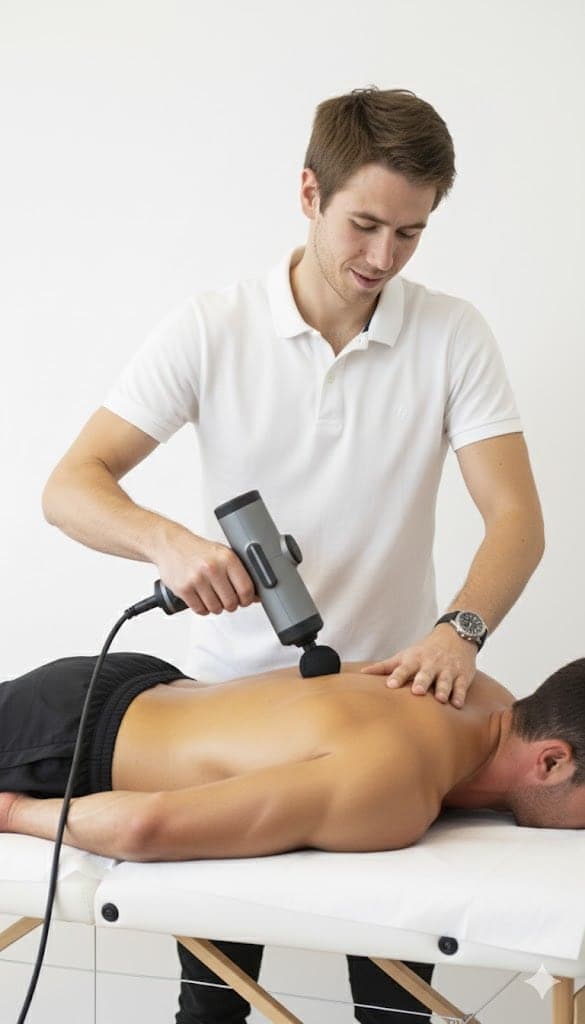
Written by
Chris
Massage therapist, nutrition and exercise physiologist
Norwegian-certified with a Bachelor’s in Physical Education and Nutrition and over ten years of clinical practice, working from a portable table in clients’ homes across the Paphos district.
This article is general information, not a medical diagnosis. If you have severe, worsening or unexplained pain, numbness, weakness, or pain after an accident, see a doctor first.