
Deep Tissue Massage Deals Geroskipu: Investment-Grade Therapy That Actually Works
In short
Discover authentic deep tissue massage deals in Geroskipu that deliver lasting pain relief. Ten years of clinical experience, advanced mechanical techniques, and results-focused treatment plans.
Let me tell you something I learned during my first year treating chronic pain patients in Geroskipu: the search for “massage deals” often leads people down the wrong path entirely. They find themselves booking cheap sessions at spa-style facilities, experiencing temporary relief that vanishes within 48 hours, and wondering why they keep returning to the same practitioner month after month without ever actually solving their underlying problems.
I’ve spent a decade perfecting a completely different approach to deep tissue work in Geroskipu—one that treats musculoskeletal dysfunction as a mechanical problem requiring mechanical solutions. With a Bachelor’s degree in Physical Education and Nutrition from Norway and ten years of clinical practice, I’ve developed a method that addresses fascial restrictions, muscular adhesions, and biomechanical imbalances at their source. When you’re evaluating deep tissue massage deals in Geroskipu, you’re not just comparing prices. You’re choosing between superficial symptom management and genuine structural correction.
Why Most Deep Tissue Massage Deals in Geroskipu Miss the Mark
The fundamental problem with conventional massage pricing models is that they commoditize something that should never be treated as a commodity: your body’s structural integrity. I see this constantly in Geroskipu. Someone books a “deal” for €35, receives 60 minutes of moderately firm pressure, feels somewhat better for a few days, and then watches their shoulder pain or lower back dysfunction return exactly as it was before.
This happens because traditional manual therapy has inherent limitations that no amount of skill can fully overcome. Human hands fatigue. Therapists have “off days” where their precision and power fluctuate. Most critically, fingers and palms cannot consistently access the depth required to release chronic fascial adhesions in the thoracolumbar fascia or address trigger point complexes in the deeper layers of the erector spinae group.
I experienced this limitation firsthand during my early years practicing conventional techniques. A high-level amateur cyclist came to me with persistent iliotibial band syndrome that had resisted six months of weekly manual therapy from another practitioner. After our third session using my specialized mechanical approach, he reported complete resolution. The difference? My method reached the actual source of his dysfunction—fascial restrictions in the tensor fasciae latae and gluteus medius that manual palpation simply couldn’t address with sufficient depth and precision.
The Advanced Mechanical Approach: Precision, Power, and Consistency
After years of frustration with the limitations of manual techniques, I invested in specialized equipment that fundamentally changed what’s possible in deep tissue work. This isn’t a massage gun you can buy online. This is a clinical-grade mechanical tool that allows me to deliver treatment at a level of depth, precision, and consistency that human hands physically cannot match.
Depth Beyond Manual Capability
The biomechanics are straightforward. When I’m treating chronic tension in the quadratus lumborum—a common culprit in lower back pain—I need to work through several layers of tissue: the thoracolumbar fascia, the erector spinae group, and potentially the latissimus dorsi depending on the individual’s presentation. Manual pressure dissipates as it travels through these layers. My mechanical method concentrates force precisely at the target depth, allowing me to address restrictions that conventional techniques simply cannot reach.
I remember working with a construction supervisor in Geroskipu who had developed severe trapezius dysfunction from years of overhead work. He described his previous massage experiences as “painful but not productive.” The problem wasn’t the pain—deep tissue work addressing real dysfunction will involve discomfort. The problem was that the force was being absorbed by superficial tissues before reaching the actual adhesions in his deeper fascial layers. Within two sessions using my mechanical approach, we achieved mobility improvements that six months of manual therapy hadn’t produced.
Controlled Intensity Calibrated to Your Tolerance
One of the most significant advantages of my method is the ability to adjust pressure intensity with absolute precision. Whether you’re an athlete requiring aggressive fascial release or someone beginning treatment after years of sedentary dysfunction, I can calibrate the pressure to your exact tolerance and therapeutic needs.
This matters because effective deep tissue work exists in a specific therapeutic window. Too light, and you’re merely increasing circulation without addressing structural problems. Too aggressive, and you trigger protective muscle guarding that prevents therapeutic release. My mechanical approach allows me to find and maintain that optimal pressure level throughout the entire treatment, something that’s impossible to sustain manually over a 60- or 90-minute session.
Consistent Results Every Single Session
Here’s an uncomfortable truth about manual therapy: the quality of your treatment depends entirely on your therapist’s physical and mental state that particular day. I was exhausted after treating four clients yesterday? Your session suffers. I have minor inflammation in my wrist? Your treatment quality decreases. This inherent inconsistency means you’re essentially gambling every time you book a session.
My mechanical method eliminates this variable completely. Session fifteen delivers exactly the same power, precision, and depth as session one. This consistency isn’t just about quality control—it’s essential for progressive treatment protocols. When I’m working to resolve chronic plantar fasciitis or addressing adhesive capsulitis in the shoulder, I need to deliver precise, measurable mechanical input across multiple sessions. Inconsistent pressure makes evidence-based treatment impossible.
Understanding Real Deep Tissue Massage Deals in Geroskipu
When you’re evaluating options for deep tissue massage in Geroskipu, I want you to shift your framework entirely. Stop thinking about the cost per session. Start thinking about the cost per problem solved.
| Approach | Sessions Required | Result Duration | True Cost Per Quarter |
|---|---|---|---|
| Budget spa massage | 12+ sessions | 2-4 days relief | €420+ (no lasting improvement) |
| Standard manual deep tissue | 8-12 sessions | 1-2 weeks relief | €480-720 (ongoing maintenance required) |
| Advanced mechanical therapy | 4-6 sessions (initial) | Lasting improvement | €320-480 (problem resolved) |
The mathematics are compelling. My clients typically achieve complete resolution of their primary complaint within four to six sessions. At that point, they transition to occasional maintenance—perhaps once every two to three months—or stop treatment entirely because their dysfunction has been corrected at the structural level.
Compare this to the typical pattern I see with clients who come to me after spending months or years on conventional massage: they’re booking weekly or bi-weekly sessions indefinitely, experiencing temporary relief that never compounds into actual improvement, and spending thousands of euros without ever addressing the root biomechanical problem.
What Actually Qualifies as a “Deal” in Therapeutic Deep Tissue Work
After ten years in this field, I can tell you that the best deep tissue massage deals in Geroskipu aren’t about discounted prices. They’re about return on investment measured in functional outcomes.
Customized Treatment Protocols, Not Generic Sessions
When someone contacts me about treatment, we don’t start with a standard 60-minute session. We start with a comprehensive assessment of their movement patterns, pain history, occupational stressors, and functional goals. I’m looking at their gait. I’m assessing shoulder mechanics. I’m identifying compensatory patterns they’ve developed over years or decades.
A logistics manager contacted me last year with chronic neck pain she’d been treating with weekly massages for three years. Three years. The first thing I noticed during our initial consultation was asymmetric shoulder elevation—her left shoulder sat nearly two centimeters higher than her right. Her previous therapists had been treating her neck symptoms without ever addressing the underlying cause: a chronic restriction in her left levator scapulae that was creating mechanical stress throughout her cervical spine.
We designed a six-session protocol specifically targeting that restriction and the compensatory patterns it had created. After session four, her neck pain was gone. After session six, her shoulder symmetry was restored. She now comes in quarterly for maintenance. That’s a deal—not because of the per-session price, but because we actually solved the problem.
Progressive Treatment That Builds on Itself
Another critical factor that distinguishes investment-grade therapy from commodity massage is progressive treatment design. Each session in my protocols builds on the previous one, creating cumulative improvements that compound over time.
When I’m treating chronic lower back dysfunction, for example, session one might focus on releasing superficial fascial restrictions and establishing baseline mobility. Session two goes deeper, addressing trigger points in the quadratus lumborum and erector spinae group. Session three incorporates the gluteal complex and addresses compensatory patterns in the hip flexors. By session four or five, we’re fine-tuning biomechanics and reinforcing optimal movement patterns.
This is impossible with random, disconnected massage sessions. Progressive protocols require consistent methodology, precise pressure control, and detailed session notes tracking exactly which structures have been addressed and how they responded. My mechanical approach and clinical documentation make this level of precision standard practice.
The Economics of Lasting Pain Relief
Let me walk you through the actual cost comparison using real scenarios I’ve treated in Geroskipu.
Case Study: Chronic Lower Back Pain
Client presentation: 42-year-old office manager, eight years of recurring lower back pain, previous treatment history including weekly massage (€45 per session) for 18 months.
- Previous approach cost: €3,240 over 18 months with ongoing weekly sessions required
- Pain status: Manageable but persistent, recurring every 1-2 weeks
- Functional limitation: Unable to play tennis, difficulty with prolonged sitting
My treatment protocol: Six sessions over eight weeks targeting fascial restrictions in the thoracolumbar region, trigger points in the quadratus lumborum, and compensatory patterns in the hip flexors.
- Total investment: €480
- Outcome: Complete resolution of chronic pain, return to recreational tennis, quarterly maintenance only
- Follow-up cost (year one): €240 for maintenance
The financial difference is obvious, but the quality-of-life improvement is what actually matters. She’s playing tennis again. She’s working without constant discomfort. She’s not planning her life around managing back pain. That’s the real definition of a deep tissue massage deal in Geroskipu.
Case Study: Athletic Performance Optimization
Client presentation: 28-year-old competitive cyclist, no acute pain but seeking performance optimization and injury prevention.
Previous approach: Monthly sports massage (€60 per session) focused on general muscle tension relief.
My protocol: Initial intensive phase of four sessions addressing specific restrictions in the hip flexors, iliotibial band, and thoracic spine that were limiting power output and creating asymmetric loading patterns.
- Measurable outcomes: 8% improvement in power output measured on cycling computer, elimination of post-ride hip discomfort, improved pedaling symmetry
- Maintenance: Bi-monthly sessions during competition season
For athletes, the ROI calculation includes performance gains. An 8% power improvement is enormous in competitive cycling—it’s the difference between mid-pack and podium finishes. You cannot put a price on that kind of functional enhancement.
How I Deliver Deep Tissue Therapy in Geroskipu
Location flexibility is another crucial element that many therapists overlook when discussing value. I travel to your location with a professional treatment bench and all necessary equipment. This isn’t a minor convenience—it’s a strategic component of effective treatment.
The Environmental Advantage
When you receive treatment in your own space, your nervous system is already in a familiar, comfortable state. This matters more than most people realize. Muscular tension patterns are partially maintained by nervous system activation. When you’re relaxed in familiar surroundings, therapeutic release happens more efficiently. You don’t have the added stress of navigating traffic, finding parking, or sitting in an unfamiliar waiting room.
I also find that clients are more forthcoming about their actual functional limitations when we’re working in their environment. You might not mention to a therapist in a clinical setting that you struggle to reach items on high shelves, but when we’re in your kitchen and I see you moving, those movement limitations become obvious. This observational data is invaluable for treatment planning.
Equipment That Matches Clinical Standards
My mobile setup isn’t a compromise. The treatment bench I bring provides the same stability and positioning options as any clinical table. The mechanical therapy device is the same clinical-grade equipment I would use in a fixed facility. The only difference is that you don’t have to leave your home to receive treatment that would typically require a specialized clinic.
What to Expect: The Treatment Process
Transparency about the treatment experience is essential. This isn’t a relaxing spa massage with gentle music and aromatic oils. This is clinical intervention targeting specific structural dysfunctions.
Initial Consultation and Assessment
Your first session begins with a detailed discussion of your pain history, functional limitations, and goals. I’m asking specific questions about when pain appears, what movements aggravate it, what you’ve tried previously, and what you’re ultimately hoping to achieve.
Then I’m watching you move. I’m observing your gait pattern. I’m assessing shoulder mechanics, spinal mobility, and any obvious compensatory patterns. I’m palpating specific structures to identify restrictions, trigger points, and areas of dysfunction. This assessment typically takes 20-30 minutes before we begin any hands-on work.
During Treatment
The mechanical therapy itself is intense but controlled. Clients describe the sensation as “deep pressure” or “aggressive but tolerable.” I’m constantly communicating with you about pressure levels, adjusting intensity based on your feedback and tissue response.
You will likely experience some discomfort during treatment. This is fundamentally different from pain caused by injury—it’s the discomfort of releasing chronic restrictions. I explain to clients that we’re working at a “therapeutic seven” on a scale of one to ten. Too light (a four or five), and we won’t create the mechanical changes needed. Too aggressive (a nine or ten), and your body activates protective guarding that prevents therapeutic release.
Post-Treatment Response
Most clients experience significant muscle soreness for 24-48 hours after treatment, similar to delayed-onset muscle soreness after intense exercise. This is completely normal and indicates that we’ve created appropriate mechanical stimulus. I provide specific guidelines about hydration, movement, and what to expect during this adaptation period.
The actual therapeutic improvements typically become apparent 3-5 days post-treatment as inflammation resolves and tissues adapt to their new length-tension relationships. This is when clients report improved range of motion, reduced pain, and enhanced functional capacity.
Investment Structure: How Deep Tissue Massage Deals in Geroskipu Actually Work
Pre-book five sessions as a package and receive one additional session free. My goal is to solve your problem as efficiently as possible, not to maximize the number of sessions you purchase.
Pay-Per-Session with Strategic Planning
You pay for each session individually, but we’ve mapped out a strategic protocol from the beginning. After your initial assessment, I provide a realistic estimate of how many sessions will likely be required to achieve your specific goals. For most chronic pain presentations, this is four to six sessions. For athletic optimization or complex dysfunction patterns, it might be six to eight sessions.
If you’re achieving your goals faster than expected, we stop. If progress plateaus and I don’t believe additional sessions will provide meaningful benefit, I tell you. My reputation depends on delivering results, not on maximizing revenue per client.
Maintenance Protocols
Once we’ve resolved your primary complaint, we discuss maintenance. Some clients need quarterly sessions to prevent regression. Others—particularly those with good movement habits and low occupational stress—might not need any ongoing treatment. Athletes during competition season might schedule monthly sessions for performance optimization.
This customized approach is how deep tissue massage deals in Geroskipu should work. You’re paying for expertise and outcomes, not for an arbitrary number of sessions determined by package pricing.
Who Benefits Most from This Approach
After a decade of clinical practice in Geroskipu, I’ve identified the clients who achieve the most dramatic results with my mechanical deep tissue methodology.
Chronic Pain Sufferers Who Haven’t Found Solutions
If you’ve been managing persistent pain for months or years without achieving lasting improvement, you’re an ideal candidate. The clients who benefit most are those who’ve tried conventional approaches—physical therapy, standard massage, pain medication—without resolving their underlying problem.
A restaurant owner came to me after two years of shoulder pain that limited his ability to work effectively. He’d tried everything: physiotherapy, cortisone injections, weekly massage. The problem was that all these interventions addressed symptoms without correcting the mechanical cause—severe restrictions in his subscapularis and posterior shoulder capsule from years of repetitive reaching movements.
We resolved it in five sessions. His shoulder pain is gone. His range of motion is completely restored. He’s back to full function in his restaurant. That’s the kind of outcome this approach delivers for chronic cases that haven’t responded to conventional treatment.
Athletes Seeking Performance Optimization
Competitive and serious recreational athletes represent another population that benefits enormously from this method. You’re not coming to me because you’re injured—you’re coming because you want to maximize your physical capacity and prevent injuries before they occur.
The mechanical precision of my approach allows us to identify and correct subtle biomechanical inefficiencies that are limiting your performance. A marathon runner might have fascial restrictions in the hip flexors that are reducing stride length by just two centimeters—hardly noticeable in daily life, but resulting in hundreds of wasted steps over race distance. We identify these restrictions, address them at their source, and your performance improves measurably.
Desk Workers with Postural Dysfunction
The modern office environment creates specific patterns of dysfunction: rounded shoulders, forward head posture, tight hip flexors, inhibited glutes. These patterns develop slowly over years and create a cascade of compensatory problems throughout the kinetic chain.
If you’re spending 40+ hours weekly at a desk and experiencing neck pain, upper back tension, or lower back discomfort, the culprit is almost certainly postural dysfunction. My treatment protocols for office workers focus on releasing the specific restrictions that modern desk work creates—primarily in the pectoralis minor, upper trapezius, levator scapulae, and hip flexor complex.
Common Questions About Deep Tissue Massage Deals in Geroskipu
How is this different from massage therapy I can find at spas?
Spa massage focuses on relaxation and stress reduction. I’m treating structural dysfunction using clinical techniques designed to create lasting biomechanical changes. The difference is similar to the distinction between taking a pleasant walk and following a structured training program designed to improve your cardiovascular capacity. Both involve movement, but the intent, intensity, and outcomes are completely different.
Will it hurt?
You will experience intense pressure and some discomfort during treatment. However, this is controlled therapeutic discomfort, not injury-related pain. I’m constantly adjusting pressure based on your feedback and tissue response. Most clients describe the sensation as “hurts so good”—uncomfortable in the moment but with immediate awareness that we’re addressing real restrictions.
How quickly will I see results?
Most clients report noticeable improvements within 3-5 days after their first session, with progressive enhancement after each subsequent treatment. For chronic conditions that have developed over years, complete resolution typically requires four to six sessions. Acute problems often respond more quickly.
Do I need ongoing treatment forever?
No. My goal is to resolve your dysfunction, not create dependency. Once we’ve achieved your functional goals, you may need occasional maintenance sessions—perhaps quarterly or even less frequently—but you’re not committed to weekly treatments indefinitely. Many clients complete their initial protocol and don’t return unless they develop a new issue or want optimization work.
Can I combine this with other treatments?
Yes. My approach complements physical therapy, chiropractic care, and strength training. I often work alongside other practitioners as part of a comprehensive treatment plan. The key is ensuring all providers are working toward the same functional goals and communicating about treatment strategies.
What conditions respond best to this method?
Chronic lower back pain, neck and shoulder dysfunction, plantar fasciitis, iliotibial band syndrome, hip pain, tension headaches, and postural problems all respond exceptionally well. I also treat athletes seeking performance enhancement and injury prevention. The common thread is that these are all mechanical problems requiring mechanical solutions.
How long are the sessions?
Initial consultations typically run 90 minutes, including assessment and treatment. Follow-up sessions are usually 60-75 minutes. Session length is determined by the work required, not by arbitrary time blocks.
Why do you travel to clients rather than maintaining a fixed location?
The convenience factor is significant, but more importantly, treating clients in their own environment produces better therapeutic outcomes. Your nervous system is more relaxed, I can observe how you move in your actual living space, and you don’t have the added stress of travel. This directly enhances treatment effectiveness.
The Real Definition of Value in Deep Tissue Work
After spending this much time discussing deep tissue massage deals in Geroskipu, I want to return to the fundamental question: what actually constitutes value in therapeutic bodywork?
Value isn’t the lowest per-session cost. Value is achieving your functional goals with the least number of sessions and maintaining those improvements long-term. Value is working with a practitioner who has the expertise, equipment, and methodology to address your specific dysfunction at its source.
I’ve built my practice around this principle: deliver measurable functional improvements using evidence-based techniques and clinical-grade equipment. When clients invest in this approach, they’re not paying for temporary relaxation—they’re investing in lasting structural correction.
The mechanical deep tissue methodology I’ve developed over ten years represents the most effective approach I’ve found for treating chronic pain and optimizing physical function. It’s deeper than manual techniques can reach. It’s more precise than human hands can deliver. It’s more consistent than therapists can maintain across multiple sessions.
When you’re evaluating your options for deep tissue treatment in Geroskipu, consider the complete picture: the practitioner’s education and experience, the methodology and equipment being used, the treatment philosophy and approach, and most importantly, the actual outcomes you can expect to achieve.
That comprehensive evaluation is how you identify genuine deep tissue massage deals in Geroskipu—not by comparing prices, but by assessing return on investment measured in pain relief, functional improvement, and quality of life enhancement.
Next Steps: Beginning Your Treatment Protocol
If you’re dealing with chronic pain that hasn’t responded to conventional treatment, if you’re an athlete seeking performance optimization, or if you’re simply tired of managing symptoms without addressing their underlying cause, the next step is straightforward.
We begin with a detailed consultation where I assess your specific presentation, explain exactly what I can realistically achieve for your condition, and outline a strategic treatment protocol. You’ll have complete clarity about the process, timeline, and expected outcomes before we begin any hands-on work.
The investment you’re making isn’t in massage—it’s in lasting structural correction delivered by someone with a decade of clinical experience and the advanced equipment necessary to create lasting change. That’s the actual definition of deep tissue massage deals in Geroskipu: expert treatment that solves problems durably, delivered with precision and consistency that conventional approaches simply cannot match.
Your chronic pain didn’t develop overnight, and resolving it requires more than superficial intervention. But with the right approach, the right equipment, and the right expertise, even long-standing dysfunction can be corrected. That’s what I provide, and that’s what genuine value looks like in therapeutic deep tissue work.
Evidence and limits
Massage may help with some symptoms, but benefits and evidence vary by condition. It does not replace medical assessment or treatment. A page update is not evidence of an independent clinical review.
Further reading: Massage therapy: evidence, safety and limitations by US National Center for Complementary and Integrative Health. This is general background reading, not verification of every claim in this article.
How we describe evidence and updates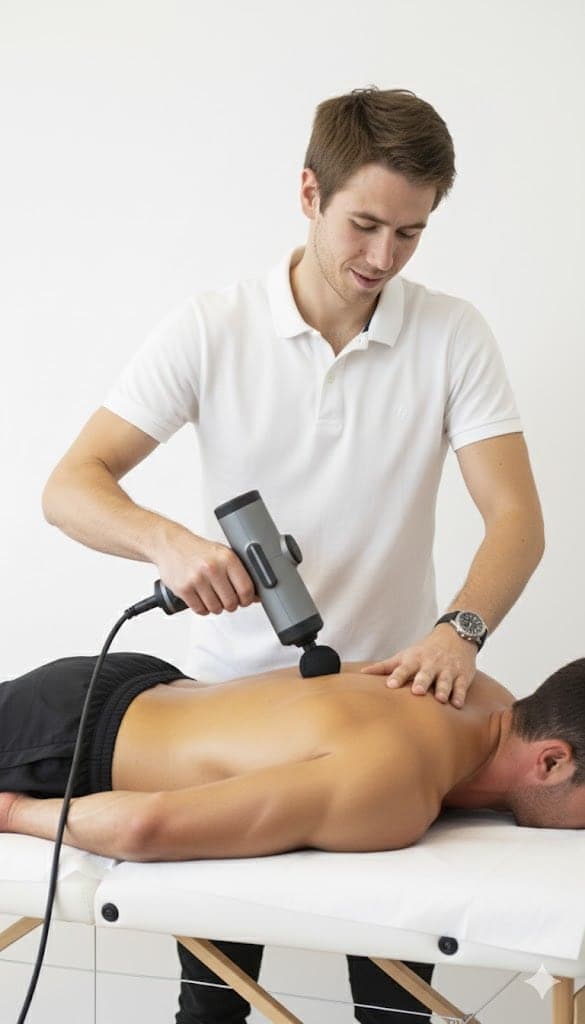
Written by
Chris
Massage therapist, nutrition and exercise physiologist
Norwegian-certified with a Bachelor’s in Physical Education and Nutrition and over ten years of clinical practice, working from a portable table in clients’ homes across the Paphos district.
This article is general information, not a medical diagnosis. If you have severe, worsening or unexplained pain, numbness, weakness, or pain after an accident, see a doctor first.