
Holistic Pain Relief Practitioner: A Mechanical Approach to Lasting Results
In short
Discover how a holistic pain relief practitioner with a decade of specialized experience uses advanced mechanical deep-tissue techniques to address the root cause of chronic pain, delivering lasting relief through precision-engineered methodology.
After a decade working with athletes, desk-bound professionals, and chronic pain sufferers, I’ve observed a consistent pattern: most people chase temporary symptom relief instead of addressing the mechanical dysfunction causing their discomfort. This fundamental misunderstanding about pain management has led to a multi-billion-dollar industry built on recurring appointments rather than lasting solutions. As a holistic pain relief practitioner with a Bachelor’s degree in Physical Education and Nutrition from Norway, I’ve dedicated my career to challenging this paradigm through advanced mechanical intervention.
Traditional approaches to pain management—whether pharmaceutical, conventional massage, or passive physical therapy—typically treat surface-level symptoms. My methodology operates from a different premise entirely: chronic pain originates from specific mechanical dysfunctions within the musculoskeletal system, and lasting relief requires precise, deep intervention at the architectural level of tissue structure. This isn’t massage therapy in the traditional sense; it’s mechanical rehabilitation performed with clinical precision.
Understanding the Mechanical Nature of Chronic Pain
The human body operates as an integrated mechanical system where every component influences every other component. When I evaluate a client presenting with shoulder pain, I’m not simply addressing that shoulder in isolation. I’m analyzing the entire kinetic chain: spinal alignment, scapular positioning, thoracic mobility, and compensatory patterns that may originate from seemingly unrelated areas like the hip flexors or hamstrings.
Consider a client who came to me after three years of persistent lower back pain. She had tried conventional massage, chiropractic adjustment, and cortisone injections without lasting improvement. During my initial assessment, I identified severe adhesions in her iliopsoas muscle complex—a deep hip flexor that rarely receives adequate treatment through standard massage techniques. This structural restriction was creating compensatory loading patterns throughout her lumbar spine, manifesting as chronic pain during prolonged sitting and standing.
The challenge with this type of structural dysfunction is accessibility. The iliopsoas lies beneath multiple tissue layers and requires substantial depth penetration to effectively release. Human hands, regardless of the therapist’s strength or technique, simply cannot maintain the consistent pressure and precision necessary to address these deep-seated adhesions without compromising treatment effectiveness or causing practitioner fatigue.
Why Traditional Massage Fails to Deliver Lasting Results
I respect the massage therapy profession, but we must acknowledge its fundamental limitations when addressing chronic mechanical dysfunction. Traditional hands-on massage operates within specific physiological constraints:
- Depth Limitation: Even the strongest therapist experiences rapid fatigue when attempting deep tissue work, leading to inconsistent pressure and incomplete release of adhesions.
- Precision Variance: Human hands cannot maintain millimeter-level precision across an entire treatment session, particularly when working through multiple tissue layers.
- Inconsistent Application: Every therapist experiences “off days” due to fatigue, illness, or other factors that compromise treatment quality.
- Broad Treatment Philosophy: Most massage focuses on general relaxation rather than specific mechanical correction, resulting in temporary symptom relief rather than structural resolution.
I witnessed these limitations firsthand during my early career when I relied exclusively on manual techniques. I could provide temporary relief, but clients returned with the same complaints within weeks or months. The adhesions would reform, compensatory patterns would re-establish, and the cycle would continue. This outcome-based observation drove me to develop a fundamentally different approach.
Advanced Mechanical Deep-Tissue Methodology
My specialized approach utilizes a precision-engineered mechanical tool that delivers what I call the three pillars of effective structural intervention: Precision, Power, and Consistency. This isn’t a massage gun or percussion device—those tools operate on entirely different mechanical principles and cannot achieve the depth or specificity required for structural rehabilitation.
Deeper Than Hands: Accessing Root-Level Dysfunction
The mechanical advantage of my specialized tool allows me to work at tissue depths that would be physiologically impossible with manual techniques. When treating that client with iliopsoas dysfunction, I could maintain consistent pressure through the superficial tissue layers—the rectus abdominis, external obliques, and transverse abdominis—to access the deep hip flexor complex directly. This level of penetration, sustained over the necessary treatment duration, produces genuine structural change rather than superficial tissue manipulation.
I recently worked with a competitive cyclist experiencing chronic IT band syndrome that had plagued him for two seasons. Traditional approaches had focused on foam rolling and superficial massage of the iliotibial band itself—a fibrous tissue that doesn’t significantly lengthen or release through surface-level intervention. My assessment identified the actual mechanical issue: severe adhesions in his tensor fasciae latae and gluteus medius, creating excessive tension transmitted through the IT band.
By accessing these deep muscular structures with sustained, precise pressure, we achieved complete resolution of his symptoms within four sessions. Two years later, he remains symptom-free and has improved his competitive performance. This outcome exemplifies the difference between symptomatic treatment and mechanical resolution.
Complete Control: Individualized Intensity Calibration
Every client presents with unique tissue characteristics, pain tolerances, and mechanical dysfunctions. The precision calibration capabilities of my mechanical approach allow me to adjust treatment intensity in real-time, from light exploratory pressure for initial assessment to powerfully deep intervention for athletic clients with dense tissue architecture.
This level of control proves particularly valuable when working with clients presenting diverse pain profiles. I can begin treatment at a conservative intensity to assess tissue response, then gradually increase depth as the client’s nervous system adapts and adhesions begin releasing. This progressive approach produces superior outcomes compared to fixed-intensity methods that either under-treat or overwhelm the tissue.
| Treatment Approach | Depth Capability | Precision Level | Consistency Rating | Outcome Duration |
|---|---|---|---|---|
| Traditional Massage | Superficial to Moderate | Variable | Therapist-Dependent | Days to Weeks |
| Foam Rolling/Self-Care | Superficial | Low | User-Dependent | Hours to Days |
| Percussion Devices | Superficial | Low | High | Hours to Days |
| Advanced Mechanical Method | Deep to Very Deep | High | Consistently High | Months to Lasting |
Consistent Results: Eliminating the Variable Factor
One of my professional frustrations with hands-on practice was the inevitable variation in treatment quality. After treating four clients in a day, my hands would fatigue, affecting the depth and consistency I could maintain for subsequent appointments. The mechanical nature of my current methodology eliminates this variable entirely.
Every treatment session delivers identical mechanical characteristics regardless of how many clients I’ve seen that day or whether I’m working with my first appointment or my fifth. This consistency produces predictable, reproducible results across my entire client base. When I develop a treatment protocol for a specific dysfunction, I know that protocol will perform identically every time it’s applied.
The Holistic Pain Relief Philosophy: Treating Causes, Not Symptoms
The term “holistic” has been diluted through overuse in wellness marketing, often signifying nothing more substantial than aromatherapy candles and relaxation music. My interpretation of holistic pain relief centers on a comprehensive understanding of mechanical interconnection throughout the body’s kinetic system.
When a client presents with knee pain, I don’t simply treat the knee. I evaluate hip mobility, ankle dorsiflexion, gluteal activation patterns, quadriceps-hamstring balance, and even thoracic spine positioning—all factors that influence knee joint loading and movement mechanics. This systems-based approach identifies the actual mechanical cause of pain rather than merely addressing the painful site.
I worked with a runner who had undergone arthroscopic knee surgery for meniscus damage, followed by months of conventional physical therapy. Despite completing her prescribed rehabilitation program, she experienced persistent medial knee pain whenever she attempted to return to running. Her orthopedic surgeon recommended another surgical intervention to “clean up” additional meniscus tissue.
My assessment revealed that her knee pain originated from severe adhesions in her adductor complex and vastus medialis, creating abnormal tracking patterns of the patella during the gait cycle. These adhesions had formed during her post-surgical compensatory movement patterns and were never addressed during her standard physical therapy. After six focused sessions releasing these deep tissue restrictions and rebalancing her lower extremity mechanics, she returned to pain-free running without additional surgery.
This case illustrates why I position my work as a holistic pain relief practitioner rather than a massage therapist. I’m not providing a service—I’m solving mechanical problems with clinical precision.
The Dedicated Partnership Model: Investment Versus Expense
I don’t accept one-off appointments. This business model might seem counterintuitive in an industry built on recurring drop-in sessions, but it reflects my commitment to delivering actual results rather than temporary relief.
Structural change requires time and progressive intervention. During an initial consultation, I conduct a comprehensive mechanical assessment to identify primary dysfunctions and compensatory patterns. Based on this analysis, I develop a customized treatment protocol specifying the number of sessions required, treatment frequency, and expected outcome timeline.
This approach requires clients to view treatment as an investment in long-term functional capacity rather than an expense for temporary symptom management. The initial financial commitment may appear higher than a single massage session, but the outcome—lasting pain resolution and optimized movement mechanics—delivers exponentially greater value over time.
Consider the financial mathematics: a client experiencing chronic lower back pain might spend the session price (see current pricing) weekly on massage therapy for years, investing thousands of dollars while never achieving lasting improvement. My typical treatment protocol ranges from four to eight sessions, after which most clients experience complete resolution or significant improvement that remains stable without ongoing maintenance.
From a pure cost-benefit perspective, my methodology represents superior value. More importantly, it delivers the outcome clients actually want: freedom from chronic pain and restoration of functional capacity.
Mobile Service Delivery: Professional Treatment in Your Environment
I travel to each client’s location with a professional treatment bench and all necessary equipment. This mobile service model provides several advantages beyond mere convenience:
Elimination of travel stress: Clients experiencing acute pain episodes avoid the discomfort of driving to a clinic location while managing their symptoms.
Familiar environment recovery: Following treatment, clients can immediately rest in their own space rather than navigating traffic during the post-treatment adaptation period.
Time efficiency: Busy professionals and athletes value the time savings of in-home service, particularly for early morning or evening appointments that would be impractical with clinic-based care.
Privacy and comfort: Some clients prefer the confidentiality and comfort of receiving treatment in their personal environment rather than a commercial setting.
I recently began working with a corporate executive who experiences severe tension headaches stemming from cervical spine dysfunction. His schedule includes frequent international travel and 12-hour workdays, making consistent clinic appointments practically impossible. By traveling to his office for early morning sessions before his workday begins, we’ve maintained treatment consistency that would otherwise be unfeasible, achieving substantial improvement in his symptoms and functional capacity.
Common Pain Conditions Addressed Through Mechanical Intervention
While my methodology applies to virtually any musculoskeletal dysfunction, certain conditions respond particularly well to advanced mechanical deep-tissue intervention:
Chronic Lower Back Pain and Sciatica
Lower back pain frequently originates from deep adhesions in the quadratus lumborum, iliopsoas complex, or piriformis muscles. These structures rarely receive adequate treatment through conventional approaches due to their anatomical depth and the surrounding tissue density. My mechanical methodology accesses these structures directly, releasing the restrictions that create pain referral patterns and movement limitations.
Shoulder Impingement and Rotator Cuff Dysfunction
True shoulder pathology requires complex intervention addressing subscapularis adhesions, pectoralis minor restrictions, and thoracic spine mobility limitations. The depth required to effectively treat subscapularis dysfunction—located beneath the scapula itself—makes this condition particularly challenging for manual techniques. My mechanical approach provides the sustained depth penetration necessary for genuine structural change.
IT Band Syndrome and Lateral Hip Pain
Despite the common misconception that IT band syndrome responds to foam rolling or superficial massage, effective treatment requires addressing the muscular structures that generate IT band tension: tensor fasciae latae, gluteus medius, and gluteus minimus. These muscles require deep, sustained pressure to release chronic adhesions and restore normal biomechanics.
Plantar Fasciitis and Foot Dysfunction
Plantar fascia pain rarely originates solely from the foot itself. Comprehensive treatment addresses gastrocnemius and soleus restrictions, posterior tibialis dysfunction, and often extends to hamstring and gluteal imbalances that affect entire lower extremity mechanics. This systems approach explains why my success rate with plantar fasciitis substantially exceeds conventional treatment modalities.
Chronic Neck Pain and Tension Headaches
Cervical dysfunction typically involves deep restrictions in the suboccipital muscles, levator scapulae, and cervical paraspinals—structures that require precise, sustained pressure to effectively release. Additionally, forward head posture creates compensatory restrictions throughout the thoracic spine and shoulder girdle that must be addressed for complete resolution.
The Clinical Assessment Process: Understanding Your Mechanical Dysfunction
During our initial consultation, I conduct a systematic evaluation of your movement mechanics, postural alignment, and pain patterns. This assessment differs substantially from a standard massage intake form:
- Pain History Analysis: I document your complete pain timeline, including onset circumstances, aggravating factors, previous treatments attempted, and outcome patterns. This information reveals whether you’re experiencing acute injury, chronic overuse, or compensatory dysfunction.
- Postural Assessment: I evaluate your static posture from multiple angles, identifying deviations from neutral alignment that indicate muscular imbalances and compensatory patterns.
- Movement Quality Evaluation: I observe fundamental movement patterns—squat mechanics, hip hinge quality, overhead mobility, and rotational capacity—to identify restrictions and asymmetries that contribute to pain presentation.
- Palpatory Examination: I conduct detailed manual palpation to locate specific adhesions, trigger points, and areas of tissue density that correlate with your pain presentation and movement restrictions.
- Treatment Protocol Development: Based on these findings, I design a specific treatment protocol addressing your primary dysfunctions in a systematic sequence that produces optimal outcomes.
This comprehensive approach ensures that treatment addresses your actual mechanical problems rather than merely targeting painful areas. A client recently referred by his sports medicine physician presented with what he described as “general upper back tightness” limiting his golf performance. My assessment identified severe adhesions in his right latissimus dorsi and teres major, creating restricted shoulder internal rotation that forced compensatory movement throughout his backswing. By addressing this specific mechanical restriction, we eliminated his symptoms and improved his golf swing mechanics—outcomes that general “upper back massage” would never have achieved.
What to Expect During Treatment Sessions
My treatment sessions differ substantially from conventional massage experiences. Understanding this distinction helps clients optimize their outcomes and approach treatment with appropriate expectations:
Duration and intensity: Sessions typically last 60 to 90 minutes depending on the treatment protocol complexity. I work systematically through targeted areas with sustained pressure that produces deep tissue release. This process requires your active participation and communication about pressure tolerance and sensation quality.
Post-treatment response: Effective deep-tissue intervention produces temporary soreness similar to post-exercise muscle fatigue. This response indicates that we’ve achieved genuine tissue change rather than superficial manipulation. I provide specific guidance for managing post-treatment soreness and optimizing tissue adaptation.
Progressive improvement: Chronic dysfunction develops over months or years and requires progressive intervention to resolve. You’ll typically notice improvement following each session, with cumulative gains building toward complete resolution. Some clients experience dramatic improvement after initial treatment, while others require several sessions before significant change becomes apparent—both patterns are normal and depend on individual tissue characteristics.
Homework protocols: Between sessions, I may prescribe specific stretching routines, movement pattern corrections, or postural awareness exercises that support your structural changes and accelerate progress. These protocols represent essential components of your treatment plan, not optional suggestions.
Frequently Asked Questions About Holistic Pain Relief Through Mechanical Intervention
How does your methodology differ from deep tissue massage?
Traditional deep tissue massage relies on manual techniques that cannot maintain the depth, precision, and consistency required for lasting structural change. My mechanical methodology utilizes specialized equipment that accesses tissue depths beyond human capability while maintaining millimeter-level precision throughout entire treatment sessions. This technological advantage produces lasting outcomes rather than temporary symptom relief.
Is the treatment painful?
Effective structural intervention produces sensation that ranges from mild discomfort to intense pressure, depending on tissue density and restriction severity. However, this differs fundamentally from harmful pain. I calibrate intensity to remain within your tolerance while achieving necessary depth. Many clients describe the sensation as “uncomfortable but productive”—they recognize that the pressure is resolving their problem rather than causing additional damage.
How many sessions will I need?
Treatment duration depends on your specific condition, chronicity, and tissue response characteristics. Acute conditions with recent onset may resolve within 2-4 sessions. Chronic dysfunction present for years typically requires 6-8 sessions for complete resolution. During your initial assessment, I provide a specific recommendation based on your individual presentation.
Will results be lasting?
When we address the mechanical cause of your pain and you maintain reasonable movement patterns and loading practices, results typically remain stable indefinitely. However, if you return to the exact behaviors that created your original dysfunction, symptoms may eventually recur. I provide guidance for maintaining your structural improvements through appropriate movement practices and postural awareness.
Do you accept insurance?
I operate as a private practitioner and do not bill insurance directly. However, many clients successfully obtain reimbursement by submitting their treatment receipts to health insurance providers under out-of-network benefits. I provide detailed documentation supporting these submissions.
What should I do to prepare for treatment?
Arrive well-hydrated and avoid eating a large meal within two hours of your appointment. Wear comfortable clothing that allows access to treatment areas. Come prepared to discuss your complete pain history, previous treatments attempted, and current functional limitations. The more information you provide during assessment, the more precisely I can target your treatment protocol.
Can your method help with conditions that haven’t responded to other treatments?
Many of my clients arrive after exhausting conventional treatment options without achieving satisfactory results. In these cases, the limiting factor wasn’t the condition’s severity but rather the treatment methodology’s inability to access and address root-level dysfunction. If your pain originates from mechanical tissue restrictions—which accounts for the vast majority of chronic musculoskeletal pain—my methodology can typically produce substantial improvement regardless of previous treatment failures.
Do you work with athletes specifically?
While I work with diverse client populations—from desk workers to retirees—athletes represent a significant portion of my practice because they demand optimal mechanical function and appreciate the performance enhancement that accompanies pain resolution. The same mechanical principles that relieves chronic pain also optimize movement efficiency, making this methodology particularly valuable for competitive and recreational athletes seeking performance advantages.
The Long-Term Value Proposition: Freedom and Function
After a decade working as a holistic pain relief practitioner, I’ve observed that clients who invest in comprehensive structural rehabilitation experience transformations extending far beyond pain elimination. They rediscover activities they had abandoned, improve their athletic performance, enhance their work productivity, and reclaim quality of life dimensions they had accepted as durably lost.
I recently completed treatment with a client who had lived with chronic lower back pain for 12 years following a construction injury. He had accepted pain as his lasting reality, modifying his entire lifestyle around his limitations. After eight sessions addressing his deep iliopsoas, quadratus lumborum, and piriformis restrictions, he achieved complete pain resolution for the first time in over a decade.
Six months later, he contacted me not to report recurring symptoms but to thank me. He had resumed mountain biking—an activity he loved but had abandoned years earlier. He was playing on the floor with his young grandchildren. He was sleeping through the night without waking to reposition himself. These quality of life improvements represented the true value of our work together—not merely pain elimination but life restoration.
This outcome exemplifies why I position my work as an investment rather than an expense. The financial cost of treatment represents a finite commitment. The return on that investment—measured in functional capacity, life quality, and freedom from chronic limitation—compounds indefinitely.
Taking the Next Step Toward Lasting Pain Relief
If you’re reading this article, you’re likely experiencing chronic pain that has resisted conventional treatment approaches. You’ve probably tried various therapies, spent considerable money and time, and become frustrated with temporary results that fail to deliver lasting improvement.
I understand this frustration because I’ve worked with hundreds of clients in exactly your situation. What distinguishes my methodology isn’t merely the mechanical tools I employ but the fundamental philosophy underlying my approach: genuine pain relief requires addressing mechanical dysfunction at its source, not merely managing symptoms.
The decision to pursue comprehensive structural rehabilitation represents a commitment—to the treatment process, to the financial investment, and to your own long-term wellbeing. However, this commitment positions you to achieve an outcome that conventional approaches cannot deliver: lasting resolution of chronic pain and restoration of optimal functional capacity.
Your pain developed through specific mechanical processes over months or years. Resolution requires systematic intervention addressing those processes with clinical precision. I bring a decade of specialized experience, advanced clinical training, and a proven methodology that has transformed outcomes for countless clients experiencing exactly the challenges you face.
The question isn’t whether mechanical rehabilitation can resolve your pain—the evidence supporting this approach is overwhelming. The question is whether you’re ready to invest in a methodology that delivers lasting results rather than temporary relief. If you’re prepared to make that commitment, I’m prepared to deliver the expertise and precision necessary to achieve your outcome.
Freedom from chronic pain isn’t merely possible—it’s the expected result of properly applied mechanical intervention. As a holistic pain relief practitioner, I don’t offer hope or comfort. I offer engineering solutions to mechanical problems, delivered with clinical precision and backed by a decade of specialized experience. Your pain has a cause. Together, we’ll address that cause and restore the functional capacity you deserve.
Evidence and limits
Massage may help with some symptoms, but benefits and evidence vary by condition. It does not replace medical assessment or treatment. A page update is not evidence of an independent clinical review.
Further reading: Massage therapy: evidence, safety and limitations by US National Center for Complementary and Integrative Health. This is general background reading, not verification of every claim in this article.
How we describe evidence and updates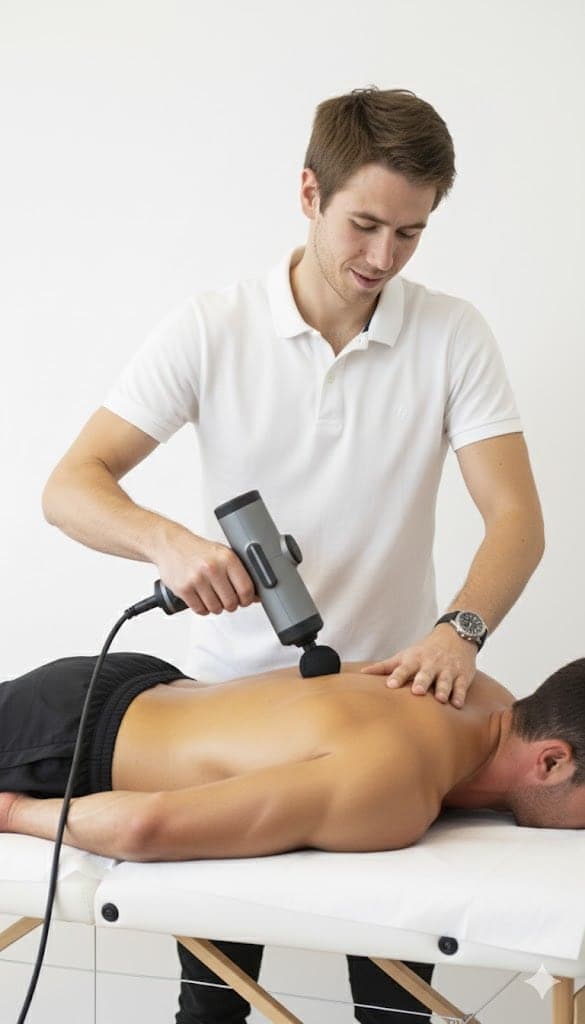
Written by
Chris
Massage therapist, nutrition and exercise physiologist
Norwegian-certified with a Bachelor’s in Physical Education and Nutrition and over ten years of clinical practice, working from a portable table in clients’ homes across the Paphos district.
This article is general information, not a medical diagnosis. If you have severe, worsening or unexplained pain, numbness, weakness, or pain after an accident, see a doctor first.