
Experienced massage therapist for chronic pain: advanced mechanical solutions for lasting relief
In short
Discover how an experienced massage therapist for chronic pain uses advanced mechanical techniques and 10 years of expertise to deliver lasting pain relief through precision deep-tissue therapy.
When I first encountered a client who had been suffering from chronic lower back pain for over eight years, having tried countless traditional massage therapists, chiropractors, and even surgical consultations, I realized something profound about the limitations of conventional approaches. This individual had resigned themselves to a life of daily discomfort, accepting that pain was simply their new reality. Three sessions into our partnership using my specialized mechanical deep-tissue methodology, they called me with tears in their voice – not from pain, but from the overwhelming relief of waking up pain-free for the first time in nearly a decade.
As an experienced massage therapist for chronic pain with a Bachelor’s degree in Physical Education and Nutrition from Norway and ten years of specialized practice, I’ve witnessed this transformation hundreds of times. The difference lies not in hoping for temporary relief, but in understanding the biomechanical root causes of chronic pain and addressing them with surgical precision using advanced mechanical techniques that surpass what human hands alone can achieve.
The conventional massage industry has conditioned people to view bodywork as a temporary escape – a luxury service that provides momentary relaxation before pain inevitably returns. This fundamentally misrepresents what therapeutic intervention should accomplish. My approach challenges this paradigm entirely, focusing on lasting mechanical solutions that treat the cause, not merely the symptoms, of chronic pain conditions.
The Science Behind Mechanical Deep-Tissue Intervention for Chronic Pain
Chronic pain represents a complex interplay of fascial restrictions, muscular compensation patterns, and neurological adaptations that develop over months or years. Traditional massage, while pleasant, operates primarily at superficial tissue layers and lacks the consistent pressure dynamics necessary to create lasting structural changes in chronically contracted tissues. My specialized mechanical approach addresses these limitations through three fundamental principles that distinguish it from conventional methodologies.
The first principle involves achieving therapeutic depth that exceeds human capability. Chronic pain conditions typically originate from restrictions in deep fascial layers and muscle bellies that lie 2-4 inches beneath the skin surface. Manual pressure, even from the strongest therapists, dissipates significantly as it travels through tissue layers, often failing to reach these critical areas with sufficient intensity. My mechanical system generates consistent, focused pressure that penetrates to the exact depth required for structural release, regardless of the thickness or density of overlying tissues.
I remember working with a marathon runner whose chronic hip flexor dysfunction had forced him to abandon competitive running for three years. Previous therapists had spent countless hours working the surface muscles, providing temporary relief that lasted mere hours. Using mechanical precision, we accessed the deep psoas and iliacus muscles that had been locked in chronic contraction since his initial injury. The release was immediate and profound – he completed his first pain-free run in over three years just five days after our initial session.
The second principle centers on pressure consistency and control. Human hands fatigue, technique varies between sessions, and therapist energy levels fluctuate daily. These variables create unpredictable treatment outcomes that prevent systematic progress in chronic pain resolution. My mechanical system eliminates these variables entirely, delivering precisely calibrated pressure that remains constant throughout each session and identical across multiple treatments. This consistency enables progressive tissue adaptation and lasting structural changes that manual therapy cannot reliably achieve.
The third principle involves treatment customization based on individual biomechanical assessment. Every chronic pain condition presents unique compensation patterns, tissue densities, and sensitivity levels that require specific mechanical parameters for optimal resolution. My system allows real-time adjustment of pressure intensity, contact surface area, and treatment angles to match each client’s precise therapeutic requirements. This level of customization ensures maximum efficacy while maintaining complete safety and comfort throughout the intervention process.
Advanced Biomechanical Assessment: Identifying Root Causes
Effective treatment of chronic pain begins with comprehensive understanding of the underlying mechanical dysfunction causing symptoms. Most therapeutic approaches focus on the location of pain rather than the source of dysfunction, leading to temporary symptomatic relief without addressing causative factors. My assessment methodology combines advanced knowledge of human biomechanics with detailed movement analysis to identify the precise muscular and fascial restrictions creating chronic pain patterns.
During my university training in Physical Education and Nutrition, I developed a deep appreciation for the interconnected nature of human movement systems. The body functions as an integrated mechanical unit where dysfunction in one area inevitably creates compensatory stress in distant regions. Chronic shoulder pain might originate from thoracic spine restrictions, persistent headaches often stem from cervical fascial adhesions, and lower back discomfort frequently results from hip flexor contractures that alter pelvic positioning and lumbar mechanics.
A recent case exemplifies this interconnected approach perfectly. A client presented with chronic neck pain and frequent headaches that had persisted for two years following a minor car accident. Traditional treatment had focused exclusively on neck muscles and cervical vertebrae, providing minimal improvement. My biomechanical assessment revealed significant restrictions in the deep cervical flexors, suboccipital muscles, and upper trapezius fibers that had created a cascade of compensation patterns affecting the entire kinetic chain from skull to mid-thoracic spine.
Using targeted mechanical intervention, we systematically released each restriction in the precise sequence required to restore normal biomechanical function. The treatment progression began with deep suboccipital release to restore proper atlanto-occipital joint mechanics, followed by systematic lengthening of shortened cervical extensors and strengthening of inhibited deep flexors. Within six weeks, both neck pain and headaches had resolved completely, and the client reported improved sleep quality, enhanced mental clarity, and increased energy levels they hadn’t experienced since before the accident.
This comprehensive assessment approach extends beyond identifying current restrictions to understanding the lifestyle and occupational factors that contributed to their development. Chronic pain rarely results from single traumatic events but rather from cumulative stress patterns that gradually overwhelm tissue adaptation capacity. By addressing both the mechanical restrictions and their underlying causes, we create sustainable solutions that prevent recurrence and optimize long-term function.
Mechanical Precision: Superior Technology for Superior Results
The limitations of manual massage therapy become evident when treating chronic conditions that require consistent, deep pressure application over extended periods. Human hands, regardless of therapist skill level, cannot maintain the precise pressure dynamics necessary for lasting structural change in chronically contracted tissues. This reality drove my decision to integrate advanced mechanical technology that delivers therapeutic outcomes impossible to achieve through traditional manual methods.
My specialized mechanical system operates on principles of biomechanical engineering rather than subjective manual techniques. The device generates consistent pressure waves that can be precisely calibrated to match tissue density, depth requirements, and individual pain tolerance levels. This technological approach eliminates the variables that compromise manual therapy effectiveness: therapist fatigue, technique inconsistency, and pressure variation that occurs naturally during extended treatment sessions.
The mechanical advantage becomes particularly evident when treating deep postural muscles that maintain chronic tension patterns. These muscles, including the psoas complex, deep rotators of the hip, and intrinsic spinal stabilizers, lie beneath multiple tissue layers and require sustained pressure application to achieve therapeutic release. Manual pressure dissipates significantly as it travels through overlying tissues, often reaching these critical areas with insufficient intensity to create lasting change.
I recall treating a software engineer whose chronic lower back pain had developed over five years of prolonged sitting and forward head posture. Traditional massage had provided temporary relief, but the pain consistently returned within 24-48 hours because the deep stabilizing muscles remained chronically contracted. Using mechanical precision, we accessed the multifidus muscles and deep hip flexors that had been inaccessible through manual techniques. The sustained, consistent pressure application created immediate structural changes that manual therapy had failed to achieve over months of treatment.
The mechanical system’s ability to maintain consistent pressure throughout extended treatment sessions enables progressive tissue adaptation that leads to lasting structural changes. Rather than simply pushing fluid through tissues or providing temporary neurological inhibition, the sustained mechanical pressure creates actual lengthening of shortened muscle fibers and fascial structures. This mechanical remodeling process requires precise pressure parameters that can only be maintained through technological assistance.
Treatment Protocols: Customized Mechanical Interventions
Effective resolution of chronic pain requires systematic treatment protocols that progress logically from initial tissue preparation through advanced structural integration. My mechanical approach follows evidence-based principles of tissue adaptation while incorporating individual biomechanical variations that influence treatment response. Each protocol is customized based on comprehensive assessment findings and continuously modified based on treatment response and functional improvement measures.
The initial treatment phase focuses on tissue preparation and neurological desensitization. Chronic pain conditions often involve heightened nervous system sensitivity that must be gradually reduced before intensive structural work can begin. The mechanical system’s ability to deliver precise, graduated pressure enables systematic desensitization that prepares tissues for more intensive intervention without triggering protective muscle guarding or pain responses.
During this preparatory phase, I utilize moderate mechanical pressure with broad contact surfaces to stimulate circulation, reduce inflammatory mediators, and begin gentle lengthening of superficial restrictions. The consistent pressure application creates immediate improvements in tissue quality and pain perception while establishing neurological adaptation patterns that facilitate more intensive treatment in subsequent sessions. Most clients experience significant pain reduction and improved mobility even during this initial phase, creating confidence in the treatment approach and motivation for continued intervention.
The intermediate phase involves targeted mechanical release of specific restrictions identified during biomechanical assessment. This phase requires precise pressure application to deep tissue structures using focused contact surfaces and graduated intensity increases. The mechanical system’s ability to maintain consistent pressure while I adjust treatment parameters in real-time enables systematic release of chronic restrictions without tissue damage or excessive discomfort.
A construction worker with chronic shoulder impingement provides an excellent example of this intermediate phase progression. Years of overhead work had created significant restrictions in the posterior capsule, infraspinatus muscle, and thoracic fascia that limited shoulder elevation and caused persistent pain. Manual therapy had failed to create lasting change because the necessary pressure intensity could not be maintained consistently throughout treatment sessions. Using mechanical precision, we systematically released each restriction layer, beginning with superficial fascial adhesions and progressing to deep capsular restrictions. The sustained pressure application created immediate range of motion improvements that had been impossible to achieve through manual techniques.
The advanced phase focuses on structural integration and functional optimization. Once primary restrictions have been resolved, the mechanical system enables fine-tuning of tissue quality and movement patterns that optimize long-term function and prevent recurrence. This phase often involves treatment of compensatory patterns that developed in response to primary dysfunctions, ensuring comprehensive resolution of the entire kinetic chain dysfunction rather than isolated symptom relief.
Chronic Pain Conditions: Specialized Treatment Approaches
Different chronic pain conditions require specific mechanical intervention strategies based on their underlying biomechanical dysfunctions and tissue involvement patterns. My decade of specialized experience has revealed consistent treatment approaches that deliver predictable results for the most common chronic pain presentations. Understanding these condition-specific protocols enables targeted intervention that addresses root causes rather than symptomatic relief.
Chronic lower back pain represents the most common condition I encounter, typically involving complex interactions between deep hip flexors, spinal erectors, and lumbar fascia. The mechanical precision required to access these deep structures consistently exceeds manual therapy capabilities, particularly when treating the psoas complex and deep rotators that maintain chronic tension patterns. My mechanical approach systematically addresses each component of the dysfunction, beginning with hip flexor lengthening to restore normal pelvic positioning, followed by targeted spinal erector release and fascial integration.
A recent case involving a nurse with eight years of chronic lower back pain illustrates this systematic approach perfectly. Prolonged standing, frequent lifting, and sustained forward bending had created severe restrictions in the bilateral psoas muscles, quadratus lumborum, and deep lumbar fascia. Traditional treatment had focused on superficial back muscles, providing temporary relief that consistently returned within days. Our mechanical intervention began with precise psoas release using sustained pressure that accessed muscle bellies lying 4-5 inches deep to the skin surface. The immediate improvement in hip flexion range of motion and reduced lumbar compression was dramatic and sustained.
Chronic neck pain and cervical dysfunction require particularly precise mechanical intervention due to the complex anatomical structures and neurological sensitivity in the cervical region. The deep cervical muscles responsible for maintaining proper head positioning cannot be effectively accessed through manual pressure, leading to persistent dysfunction despite extensive traditional treatment. My mechanical system enables graduated pressure application that safely accesses these critical structures while monitoring neurological responses to ensure complete safety throughout treatment.
Shoulder impingement and rotator cuff dysfunction benefit significantly from mechanical precision in accessing the posterior capsule and deep rotator muscles that manual therapy cannot effectively reach. The consistent pressure application required to create lasting capsular changes exceeds human capability, particularly when treating dominant-side shoulders that have developed significant tissue density increases from repetitive use patterns. Mechanical intervention enables systematic capsular release and muscle lengthening that restores normal shoulder mechanics and eliminates impingement patterns.
| Chronic Pain Condition | Primary Tissue Targets | Treatment Sessions Required | Typical Improvement Timeline |
|---|---|---|---|
| Chronic Lower Back Pain | Psoas Complex, Deep Spinal Erectors, Lumbar Fascia | 6-12 sessions | Significant relief within 2-3 sessions |
| Cervical Dysfunction/Neck Pain | Deep Cervical Flexors, Suboccipital Muscles, Upper Trapezius | 4-8 sessions | Pain reduction within 1-2 sessions |
| Shoulder Impingement | Posterior Capsule, Infraspinatus, Subscapularis | 5-10 sessions | Range of motion improvement immediate |
| Chronic Hip Pain | Deep Hip Rotators, IT Band, Hip Flexor Complex | 6-10 sessions | Mobility improvement within 2 sessions |
| Thoracic Outlet Syndrome | Scalenes, Pectoralis Minor, First Rib Mobility | 8-15 sessions | Neurological symptoms reduce within 3-4 sessions |
The Investment Philosophy: Long-Term Health Economics
Chronic pain represents one of the most significant economic burdens in modern healthcare, consuming billions of dollars annually in medical costs, lost productivity, and reduced quality of life. Traditional approaches often perpetuate this economic burden through symptomatic treatment that requires ongoing intervention without addressing underlying causes. My mechanical intervention philosophy focuses on lasting resolution that eliminates long-term healthcare costs while dramatically improving functional capacity and life quality.
The economic reality of chronic pain extends far beyond direct treatment costs to include lost work productivity, reduced earning capacity, and diminished participation in valued activities. A client recently calculated that his chronic back pain had cost him over a substantial sum in direct medical expenses over five years, plus an estimated a substantial sum in lost overtime opportunities due to functional limitations. Our mechanical intervention program resolved his pain completely within three months, representing not just immediate relief but significant long-term financial savings and restored earning capacity.
When individuals invest in comprehensive mechanical intervention rather than ongoing symptomatic management, they typically experience immediate cost savings within the first year while gaining lasting freedom from pain-related limitations. This economic advantage compounds over time as functional improvements enable increased physical activity, enhanced work performance, and restored participation in recreational activities that contribute to overall life satisfaction and wellbeing.
The concept of therapeutic investment versus ongoing expense fundamentally changes the value proposition of pain management. Traditional massage therapy often requires weekly or bi-weekly sessions indefinitely to maintain minimal symptom relief, creating ongoing expenses that accumulate significantly over time without producing lasting change. My mechanical approach focuses on achieving lasting resolution within a defined treatment period, typically requiring 6-15 sessions depending on condition complexity and chronicity.
Consider the mathematical reality: ongoing traditional massage at the per-session price twice monthly costs a substantial sum annually with minimal lasting benefit. This expense continues year after year without addressing underlying dysfunctions, ultimately consuming tens of thousands of dollars while pain persists. Comprehensive mechanical intervention typically costs a wide range of costs total for lasting resolution, representing both immediate savings and elimination of future pain-related expenses.
Return on Investment: Measurable Outcomes
The return on investment from comprehensive mechanical intervention extends beyond financial considerations to include measurable improvements in functional capacity, work performance, and life quality that traditional approaches cannot deliver. My clients consistently report improvements that can be quantified in terms of increased work productivity, enhanced athletic performance, and restored participation in valued activities that had been limited by chronic pain.
A professional athlete recently described his investment in our mechanical intervention program as “the best money I’ve ever spent on my career.” Chronic hip restrictions had limited his training capacity and competition performance for two seasons, threatening his professional future despite extensive traditional treatment. Our mechanical approach resolved the restrictions completely within six weeks, enabling him to return to peak performance levels and extend his competitive career significantly.
Corporate executives often find that chronic pain resolution dramatically improves their cognitive function, energy levels, and decision-making capacity in ways that directly impact their professional effectiveness. Pain creates constant neurological stress that reduces mental clarity and increases fatigue, limiting performance potential even when individuals continue working through discomfort. Mechanical intervention that relieves pain sources restores full cognitive capacity and energy levels that enhance professional performance substantially.
Mobile Professional Service: Convenience Without Compromise
The integration of advanced mechanical technology with mobile service delivery represents a paradigm shift in therapeutic accessibility and treatment consistency. Traditional clinic-based models often create barriers to consistent treatment participation, including travel time, scheduling limitations, and environmental stressors that can interfere with treatment effectiveness. My mobile approach eliminates these barriers while providing professional-grade mechanical intervention in the comfort and convenience of the client’s preferred environment.
Traveling to client locations with complete professional setup enables treatment customization that extends beyond mechanical parameters to include environmental optimization. Some clients respond better to treatment in familiar surroundings where they feel completely relaxed and secure. Others prefer the privacy of their home environment for discussing sensitive health concerns or personal factors contributing to pain development. The mobile service model accommodates these individual preferences while maintaining the highest standards of professional care and safety.
The professional bench and mechanical systems I transport provide identical treatment quality to the finest clinical facilities while offering superior convenience and scheduling flexibility. Clients can receive treatment at times that optimize their recovery process, including evening sessions after work stress has been resolved or morning treatments that prepare them for demanding daily activities. This scheduling flexibility often improves treatment outcomes by allowing intervention at times when the nervous system is most receptive to mechanical change.
A busy executive recently described how mobile service enabled him to maintain consistent treatment participation during a critical project phase that required 60+ hour work weeks. Traditional clinic appointments would have been impossible to maintain, but evening treatments at his home office allowed him to receive necessary intervention without compromising professional obligations. The result was complete resolution of chronic neck pain that had been limiting his performance for over two years.
Mobile service also enables treatment of family members or team members in group settings that build mutual support for lifestyle modifications and exercise protocols that optimize treatment outcomes. I often treat couples where both partners have developed chronic pain conditions from similar lifestyle factors, enabling coordinated intervention that addresses shared environmental and behavioral contributors to dysfunction.
Professional Standards in Home Environment
Maintaining clinical-grade professional standards in home environments requires specialized equipment and protocols that ensure treatment safety, effectiveness, and hygiene comparable to the finest medical facilities. My mobile setup includes professional-grade mechanical systems, sanitization protocols, and safety equipment that meet or exceed traditional clinic standards while providing the convenience and comfort advantages of in-home service.
The professional treatment bench provides optimal positioning and support for mechanical intervention while ensuring client safety and comfort throughout extended treatment sessions. The bench design enables precise body positioning that optimizes mechanical advantage while providing complete support for relaxed tissue response. This positioning precision is critical for achieving maximum treatment effectiveness, particularly when addressing deep restrictions that require sustained pressure application over extended periods.
Hygiene and sanitization protocols follow medical-grade standards with specialized cleaning agents and equipment sterilization procedures that ensure complete safety between clients. All equipment surfaces are thoroughly sanitized using hospital-grade disinfectants, and disposable coverings are replaced for each session. These protocols maintain the highest standards of cleanliness and safety while demonstrating the professional commitment that distinguishes therapeutic intervention from recreational massage services.
Case Studies: Transformational Outcomes
The most compelling evidence for mechanical intervention effectiveness comes from detailed case studies that demonstrate predictable, measurable outcomes across diverse chronic pain conditions. These cases illustrate the systematic problem-solving approach that identifies root causes, applies precise mechanical solutions, and achieves lasting resolution within defined timeframes. Each case provides valuable insights into the treatment protocols and outcome expectations for similar conditions.
Case Study 1 involves a 45-year-old construction foreman who had suffered from chronic lower back pain for seven years following a work-related lifting injury. Traditional treatment including physical therapy, chiropractic manipulation, and multiple massage therapists had provided only temporary relief, typically lasting 2-3 days before pain returned to baseline levels. Functional limitations prevented him from performing many job responsibilities and threatened his ability to continue in his chosen profession.
Biomechanical assessment revealed severe restrictions in the bilateral psoas muscles, quadratus lumborum, and deep lumbar fascia that had created compensatory movement patterns affecting the entire kinetic chain. The psoas restrictions were particularly severe, with muscle fibers shortened to approximately 60% of normal length and significant fascial adhesions that limited hip flexion and internal rotation. These restrictions forced excessive lumbar extension during walking and lifting activities, creating chronic compression stress on lumbar vertebrae and facet joints.
Our mechanical intervention began with graduated psoas lengthening using sustained pressure applied at precise angles to access the deepest muscle fibers. The mechanical system’s ability to maintain consistent pressure intensity enabled systematic release of adhesions and gradual restoration of normal muscle length over six treatment sessions. Concurrent treatment of quadratus lumborum restrictions and lumbar fascial integration restored normal movement patterns and eliminated compensatory stress throughout the lumbar spine.
Treatment outcomes were dramatic and sustained. Pain levels decreased from 7-8/10 daily to 0-1/10 within four sessions, and functional capacity returned to pre-injury levels within eight weeks. The client returned to full work duties including heavy lifting without restriction and reported improved energy levels, sleep quality, and overall life satisfaction. Follow-up assessment at six months confirmed maintained improvements with no return of chronic pain symptoms.
Case Study 2 demonstrates mechanical intervention effectiveness for complex cervical dysfunction. A 38-year-old office manager had developed chronic neck pain, frequent headaches, and upper extremity numbness following a minor motor vehicle accident three years prior. Extensive traditional treatment including physical therapy, chiropractic care, and massage therapy had provided minimal improvement, with symptoms progressively worsening over time despite consistent intervention.
Detailed assessment revealed multiple restrictions including suboccipital muscle contracture, upper trapezius hypertrophy, and significant fascial adhesions throughout the cervical region. The suboccipital restrictions were creating atlanto-occipital joint dysfunction that triggered both headache patterns and upper cervical instability. Upper trapezius hypertrophy had developed as a compensatory mechanism, creating additional tension patterns that extended into the thoracic region and upper extremities.
Mechanical intervention focused on systematic release of each restriction layer, beginning with gentle suboccipital decompression and progressing to targeted upper trapezius lengthening. The mechanical system’s precision enabled treatment of these sensitive structures with perfect pressure control, avoiding the excessive force that had made previous treatments uncomfortable and ineffective. Treatment progression was carefully monitored with regular range of motion assessment and neurological testing to ensure optimal safety and effectiveness.
Results exceeded expectations in both timeline and completeness. Headache frequency decreased from daily episodes to complete resolution within three weeks of treatment initiation. Neck pain reduced from constant 6-7/10 intensity to occasional mild discomfort (1-2/10) that typically resolved with simple movement. Upper extremity numbness resolved completely within five weeks, and cervical range of motion increased to normal values in all planes. The client reported dramatic improvements in sleep quality, mental clarity, and overall energy levels that had been compromised by chronic pain for years.
Advanced Biomechanics: The Science of Lasting Change
Creating lasting structural change in chronically contracted tissues requires understanding of advanced biomechanical principles that govern tissue adaptation, neurological integration, and movement pattern modification. Traditional therapeutic approaches often fail because they address symptoms rather than the fundamental biomechanical dysfunctions that create and maintain chronic pain patterns. My mechanical intervention methodology applies these scientific principles systematically to achieve predictable, lasting results.
Tissue adaptation follows predictable biomechanical laws that determine how muscles, fascia, and connective structures respond to mechanical stress. Chronic pain conditions typically involve tissues that have adapted to abnormal mechanical demands through structural changes including muscle fiber shortening, fascial densification, and altered neuromuscular control patterns. Reversing these adaptations requires specific mechanical stimuli applied with precise parameters of intensity, duration, and frequency that promote beneficial remodeling while avoiding tissue damage.
The mechanical advantage of consistent pressure application enables tissue remodeling that manual therapy cannot achieve. Shortened muscle fibers require sustained lengthening forces that exceed their elastic limit to create lasting length increases through sarcomere addition and fascial restructuring. This process requires pressure intensities and treatment durations that quickly fatigue human hands while demanding consistency that eliminates the pressure variations inherent in manual techniques.
My mechanical system delivers these precise parameters consistently, enabling systematic tissue remodeling that progresses predictably over treatment sessions. Pressure intensity is calibrated to match tissue resistance while remaining within safe physiological limits. Treatment duration is optimized based on tissue response characteristics, typically requiring 15-30 minutes of sustained pressure application to achieve lasting structural changes. Frequency is adjusted based on tissue recovery rates and adaptation capacity, usually requiring 48-72 hours between sessions for optimal remodeling.
Neurological integration represents the second critical component of lasting change. Chronic pain conditions involve central nervous system adaptations that maintain dysfunctional movement patterns even after structural restrictions have been resolved. The brain develops protective movement strategies that limit range of motion and alter muscle activation patterns to avoid painful positions or activities. These neurological adaptations must be systematically reversed to prevent recurrence of structural restrictions.
Mechanical intervention facilitates neurological integration through several mechanisms that manual therapy cannot replicate consistently. The sustained pressure application creates prolonged sensory input that helps reset aberrant neurological patterns while the consistent pressure eliminates the variable sensory input that can maintain protective responses. The ability to gradually increase pressure intensity allows systematic desensitization of hypersensitive nervous system responses that contribute to chronic pain maintenance.
Movement Pattern Optimization
Lasting resolution of chronic pain requires optimization of movement patterns that initially contributed to dysfunction development. Most chronic conditions result from cumulative stress patterns created by occupational demands, recreational activities, or postural habits that gradually exceed tissue adaptation capacity. Addressing structural restrictions without modifying causative movement patterns typically results in symptom recurrence within months of treatment completion.
Movement pattern assessment involves detailed analysis of how clients perform daily activities, occupational tasks, and recreational pursuits. Small biomechanical inefficiencies that seem insignificant individually can create substantial cumulative stress when repeated thousands of times daily over months or years. Identifying and correcting these patterns prevents recurrence while optimizing performance in all movement-dependent activities.
A software developer provides an excellent example of movement pattern optimization. Despite excellent mechanical treatment outcomes that resolved chronic neck pain completely, initial improvements began degrading after six weeks when he returned to previous work postures and habits. Detailed workstation analysis revealed multiple biomechanical inefficiencies including monitor positioning that required sustained cervical extension, keyboard placement that created shoulder elevation, and chair height that promoted thoracic kyphosis.
Systematic correction of each ergonomic factor combined with specific exercise protocols that reinforced optimal movement patterns created lasting resolution of chronic pain while improving work comfort and productivity significantly. The movement optimization process required education about biomechanical principles, specific exercises that strengthened postural muscles, and gradual modification of deeply ingrained movement habits that had contributed to dysfunction development.
Exercise Integration: Reinforcing Mechanical Gains
Mechanical intervention creates immediate structural changes that must be reinforced through specific exercise protocols designed to maintain tissue length, strengthen opposing muscle groups, and integrate optimal movement patterns into daily activities. The exercise component represents approximately 30% of successful chronic pain resolution, with mechanical release comprising 70% of the treatment equation. Understanding this relationship enables clients to maintain treatment gains while preventing recurrence through systematic physical conditioning.
Exercise prescription following mechanical intervention differs significantly from traditional rehabilitation approaches that often begin before restrictions have been adequately addressed. Attempting to strengthen muscles or improve movement patterns while significant mechanical restrictions persist typically reinforces dysfunctional patterns and may worsen symptoms. My approach ensures complete mechanical preparation before introducing specific exercises that optimize the gains achieved through precision intervention.
The exercise progression begins with gentle range of motion activities that maintain the tissue length gains achieved through mechanical release. These exercises are typically performed 2-3 times daily using controlled movements through the newly restored range of motion. The movements should be pain-free and comfortable, focusing on neurological integration rather than aggressive stretching that might trigger protective responses or create tissue irritation.
A recent client with resolved chronic hip restrictions provides an excellent example of appropriate exercise integration. Following mechanical release that restored full hip flexion and internal rotation, we introduced gentle hip circles, controlled leg swings, and supported deep squatting movements that reinforced the structural changes while beginning to integrate normal movement patterns. These activities were performed consistently for two weeks before progressing to strengthening exercises that optimized hip stability and power.
Strengthening protocols focus on muscles that had been inhibited by chronic restrictions and compensatory patterns. Chronic pain conditions typically involve reciprocal inhibition where shortened, overactive muscles suppress the function of their antagonists, creating muscle imbalances that maintain dysfunctional movement patterns. Mechanical release eliminates the restrictions that caused inhibition, but specific strengthening is required to restore normal strength relationships and movement control.
- Range of Motion Integration (Weeks 1-2 post-mechanical release): Gentle, pain-free movements through newly restored ranges performed 2-3 times daily for 10-15 minutes per session.
- Stability Training (Weeks 3-4): Isometric exercises that activate previously inhibited muscles while maintaining optimal joint positioning and movement quality.
- Functional Strengthening (Weeks 5-8): Progressive resistance exercises that simulate daily activities while reinforcing optimal movement patterns and building endurance.
- Performance Optimization (Weeks 9-12): Advanced exercises that enhance strength, power, and coordination beyond pre-injury levels while preventing recurrence through maintained tissue quality.
Prevention Strategies: Maintaining Long-Term Success
Preventing recurrence of chronic pain conditions requires understanding of the lifestyle and occupational factors that contributed to initial dysfunction development combined with systematic strategies that maintain tissue health and optimal movement patterns. Prevention represents the most cost-effective approach to long-term pain management while enabling individuals to participate fully in valued activities without fear of symptom return.
Lifestyle modification focuses on identifying and gradually changing daily habits that create cumulative mechanical stress exceeding tissue adaptation capacity. These modifications are typically small individual changes that compound significantly over time, similar to how small mechanical stresses gradually created chronic restrictions. The key to successful lifestyle modification lies in making sustainable changes that fit naturally into existing routines rather than dramatic alterations that prove difficult to maintain long-term.
Occupational considerations often represent the most significant risk factors for chronic pain recurrence, particularly for individuals whose work involves repetitive movements, sustained postures, or physical demands that approach tissue capacity limits. Identifying specific occupational stress patterns enables targeted interventions that reduce mechanical load while maintaining professional effectiveness and productivity.
An accountant who had achieved complete resolution of chronic neck pain through mechanical intervention provides an excellent example of occupational modification. Analysis of her work environment revealed multiple factors contributing to cervical stress including monitor positioning requiring sustained neck flexion, document placement creating repetitive rotation movements, and chair design that promoted thoracic kyphosis and forward head positioning.
Systematic modification of each ergonomic factor reduced occupational stress by approximately 70% while improving work comfort and efficiency. Monitor elevation eliminated sustained neck flexion, document holders reduced repetitive rotation, and ergonomic seating restored natural spinal curvatures. These modifications required minimal cost and effort while dramatically reducing the likelihood of symptom recurrence and enhancing daily work satisfaction.
Exercise maintenance programs focus on preserving tissue health and movement quality rather than intensive training that might create new stress patterns. The maintenance approach involves 15-20 minutes of specific exercises performed 3-4 times weekly, targeting the areas that had been previously restricted while reinforcing optimal movement patterns throughout daily activities.
Early Warning Systems: Recognizing Recurrence Risk
Developing awareness of early warning signs that indicate potential recurrence enables immediate intervention before chronic patterns re-establish. Most individuals can learn to recognize subtle changes in tissue quality, movement patterns, or comfort levels that precede symptom return by weeks or months. This early recognition enables prompt preventive action that maintains long-term success with minimal intervention.
Early warning signs typically include subtle changes in movement quality, minor increases in muscle tension, or slight reductions in range of motion that occur before pain symptoms develop. Teaching clients to recognize these early indicators enables proactive intervention through increased exercise frequency, temporary activity modification, or brief mechanical intervention that prevents progression to chronic dysfunction.
A construction supervisor learned to recognize early warning signs that indicated potential return of lower back dysfunction. Subtle increases in morning stiffness, slight reductions in hip flexion range of motion, and minor changes in lifting mechanics provided early indication that occupational stress was beginning to exceed his tissue adaptation capacity. Recognition of these signs enabled immediate preventive action including increased exercise frequency and brief mechanical intervention that prevented symptom return while maintaining full work capacity.
The early warning system approach empowers individuals to take control of their long-term health while reducing dependence on professional intervention for minor adaptations that naturally occur with changing lifestyle demands or aging processes. This self-management capability represents one of the most valuable outcomes of comprehensive mechanical intervention programs.
Frequently Asked Questions About Experienced Massage Therapy for Chronic Pain
How does mechanical deep-tissue therapy differ from traditional massage for chronic pain treatment?
Traditional massage therapy operates primarily at superficial tissue layers and relies on manual pressure that varies significantly between sessions and therapists. My mechanical approach utilizes advanced technology that delivers consistent, precisely calibrated pressure capable of reaching deep muscle layers and fascial structures that manual techniques cannot access effectively. The mechanical system maintains constant pressure intensity throughout treatment sessions, enabling systematic tissue release and lasting structural changes that manual therapy cannot achieve reliably. Additionally, the mechanical approach eliminates variables such as therapist fatigue and technique variation that compromise treatment consistency in traditional approaches. This technological advantage enables treatment of root causes rather than symptomatic relief, resulting in lasting pain resolution rather than temporary improvement that requires ongoing maintenance sessions.
What makes your 10 years of experience particularly relevant for treating chronic pain conditions?
My decade of specialized experience combines formal education in Physical Education and Nutrition from Norway with extensive practical application focused exclusively on biomechanical dysfunction and chronic pain resolution. Unlike general massage therapists who primarily provide relaxation services, my background enables comprehensive assessment of movement patterns, identification of root causes, and systematic treatment planning that addresses underlying dysfunctions rather than symptoms. This experience has taught me that chronic pain conditions follow predictable patterns that can be resolved through specific mechanical interventions applied in precise sequences. I’ve refined my assessment and treatment protocols through hundreds of successful cases, developing the expertise necessary to achieve consistent, lasting outcomes rather than temporary symptomatic relief. My specialized focus means I understand exactly which tissues require intervention, what mechanical parameters achieve optimal results, and how to progress treatment systematically for maximum effectiveness and safety.
How many treatment sessions are typically required for chronic pain resolution?
Treatment duration varies based on condition chronicity, tissue involvement complexity, and individual healing capacity, but most chronic pain conditions resolve within 6-12 sessions when addressed with appropriate mechanical intervention. Acute conditions or recent dysfunction typically require fewer sessions (4-6), while chronic conditions present for multiple years may require 8-15 sessions for complete resolution. The key difference from traditional approaches lies in treatment progression toward lasting resolution rather than ongoing maintenance. Each session builds systematically on previous gains, creating cumulative improvements that lead to complete functional restoration. Most clients experience significant pain reduction within the first 2-3 sessions, with continued improvement throughout the treatment program until symptoms resolve completely. This finite treatment approach contrasts sharply with traditional massage therapy that requires ongoing sessions indefinitely without achieving lasting change. The investment in comprehensive mechanical intervention eliminates the need for future treatment while providing lasting freedom from chronic pain limitations.
What chronic pain conditions respond best to mechanical deep-tissue intervention?
Mechanical intervention proves most effective for chronic pain conditions involving deep muscle restrictions, fascial adhesions, and biomechanical dysfunctions that cannot be addressed adequately through manual therapy. The most responsive conditions include chronic lower back pain involving psoas and deep spinal erector dysfunction, cervical pain with suboccipital and deep flexor restrictions, shoulder impingement requiring posterior capsule release, and hip dysfunction involving deep rotator and flexor contractures. Conditions that have been present for multiple years typically respond excellently because the mechanical approach can access and release restrictions that have been inaccessible through previous treatment attempts. Postural pain conditions resulting from occupational demands respond particularly well because the mechanical precision enables systematic correction of multiple restriction layers that maintain dysfunctional movement patterns. Athletes with chronic performance limitations due to movement restrictions achieve dramatic improvements through mechanical intervention that restores optimal biomechanical function. The common factor among responsive conditions is the presence of deep tissue restrictions that require sustained, consistent pressure application exceeding manual therapy capabilities.
How do you ensure safety when using mechanical pressure for deep tissue work?
Safety protocols for mechanical deep-tissue intervention involve comprehensive assessment, graduated pressure application, continuous monitoring, and precise pressure calibration that maintains therapeutic effectiveness while remaining within safe physiological limits. Initial assessment identifies any contraindications, tissue sensitivity levels, and neurological factors that influence treatment parameters. The mechanical system enables precise pressure control with real-time adjustment capabilities that ensure client comfort throughout treatment sessions. Pressure application begins conservatively and increases gradually based on tissue response and client feedback, never exceeding levels that create excessive discomfort or protective responses. Continuous monitoring of client responses, including verbal feedback, tissue quality changes, and neurological signs, ensures immediate adjustment if any adverse reactions occur. My decade of experience includes extensive training in anatomy, physiology, and pathology that enables recognition of appropriate treatment limits and contraindications. The mechanical approach actually provides superior safety compared to manual therapy because pressure parameters remain consistent and controllable rather than subject to therapist strength variations that can create excessive force or inadequate treatment intensity.
What should clients expect during their first mechanical deep-tissue session?
The initial session begins with comprehensive biomechanical assessment including movement analysis, postural evaluation, and detailed discussion of pain patterns, lifestyle factors, and previous treatment experiences. This assessment typically requires 30-45 minutes and enables development of customized treatment protocols targeting specific dysfunctions identified during evaluation. The mechanical intervention portion begins with tissue preparation using moderate pressure to reduce nervous system sensitivity and prepare tissues for more intensive work. Most clients are surprised by the precision and control possible with mechanical systems compared to manual pressure variations they’ve experienced previously. Pressure intensity is adjusted continuously based on tissue response and client feedback, ensuring therapeutic effectiveness while maintaining complete comfort throughout treatment. Many clients experience immediate improvements in range of motion and pain reduction during the first session, providing confidence in the treatment approach and motivation for continued intervention. Post-treatment instructions include specific movement recommendations and brief exercise protocols that optimize treatment gains between sessions. Most clients leave the first session with significantly reduced pain levels and improved functional capacity that continues improving over the following days.
Why is mobile service advantageous for chronic pain treatment?
Mobile service eliminates transportation stress and scheduling barriers that often interfere with consistent treatment participation, particularly important for individuals experiencing chronic pain that limits mobility or energy levels. Treatment in familiar environments enables complete relaxation and optimal nervous system response to mechanical intervention, often improving treatment effectiveness compared to clinical settings that may create anxiety or tension. The mobile approach provides scheduling flexibility that accommodates individual circadian rhythms and daily energy patterns, enabling treatment at times when the body is most receptive to therapeutic change. Some clients respond better to morning treatment that prepares them for daily activities, while others prefer evening sessions that promote recovery and improved sleep quality. Mobile service also enables family member education and participation in exercise protocols that support treatment outcomes, creating comprehensive support systems that enhance long-term success. The convenience factor eliminates common barriers that prevent consistent participation in traditional clinic-based programs, ensuring optimal treatment frequency and progression toward lasting resolution. Professional equipment transportation provides identical treatment quality to clinical facilities while offering superior comfort and convenience that enhances the overall therapeutic experience.
How does your approach address the root causes rather than just symptoms?
Root cause identification requires comprehensive biomechanical assessment that examines movement patterns, postural adaptations, and lifestyle factors that created and maintain chronic dysfunction rather than focusing solely on pain locations. My approach recognizes that pain symptoms typically occur distant from actual dysfunction sources, requiring systematic analysis of the entire kinetic chain to identify primary restrictions and compensatory patterns. For example, chronic headaches often stem from cervical restrictions that develop due to thoracic dysfunction, which may result from hip flexor contractures that alter spinal positioning throughout the kinetic chain. Traditional symptom-focused treatment addresses headache pain without resolving the cervical restrictions or their underlying causes, leading to temporary relief and inevitable symptom return. My mechanical intervention systematically releases each restriction layer in the precise sequence required to restore normal biomechanical function throughout the entire system. Treatment progression addresses primary dysfunctions first, followed by compensatory patterns, and concludes with movement integration that prevents recurrence. This comprehensive approach requires understanding of complex biomechanical relationships and systematic treatment planning that ensures lasting resolution rather than symptomatic management. The mechanical precision enables treatment of deep restrictions that maintain dysfunction at its source rather than superficial interventions that provide temporary symptom relief without addressing underlying causes.
Evidence and limits
Massage may help with some symptoms, but benefits and evidence vary by condition. It does not replace medical assessment or treatment. A page update is not evidence of an independent clinical review.
Further reading: Massage therapy: evidence, safety and limitations by US National Center for Complementary and Integrative Health. This is general background reading, not verification of every claim in this article.
How we describe evidence and updates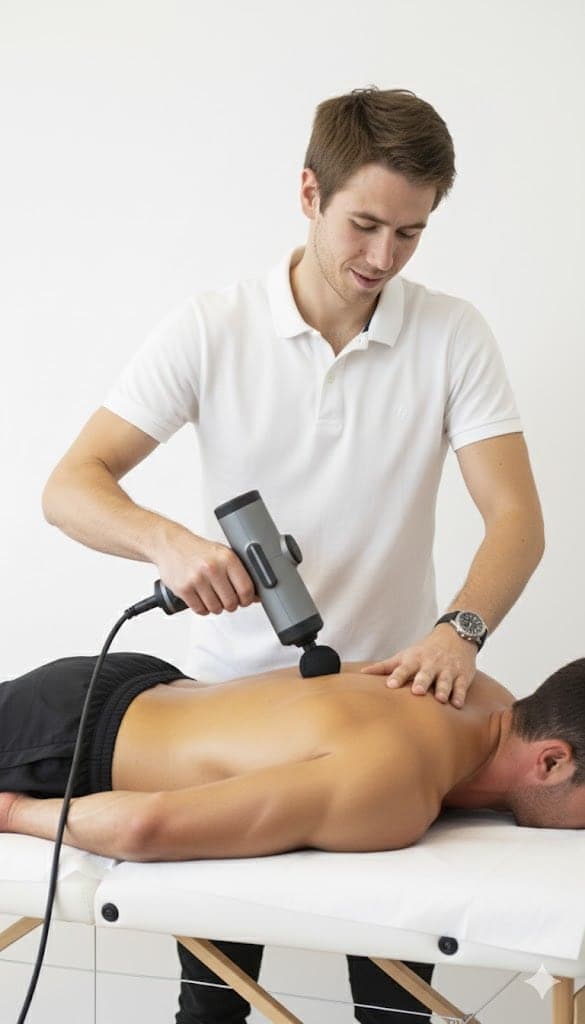
Written by
Chris
Massage therapist, nutrition and exercise physiologist
Norwegian-certified with a Bachelor’s in Physical Education and Nutrition and over ten years of clinical practice, working from a portable table in clients’ homes across the Paphos district.
This article is general information, not a medical diagnosis. If you have severe, worsening or unexplained pain, numbness, weakness, or pain after an accident, see a doctor first.