
Best massage therapists for cyclists Geroskipu: Advanced mechanical therapy for peak performance
In short
Discover Cyprus’s most advanced massage therapy for cyclists in Geroskipu. Ten years of specialized experience delivering lasting pain relief and performance optimization through precision mechanical techniques.
After a decade of treating elite athletes and weekend warriors across Cyprus, I can tell you that finding the right massage therapist for cyclists in Geroskipu isn’t just about booking the nearest spa appointment. It’s about partnering with a specialist who understands the intricate biomechanics of cycling and possesses the advanced tools to deliver lasting results. When a professional cyclist from Limassol came to me last month with chronic IT band syndrome that had sidelined him for three weeks, traditional massage hadn’t even scratched the surface of his problem. Within two sessions using my specialized mechanical deep-tissue approach, he was back to peak performance and competing at the national level.
The cycling community in Geroskipu faces unique challenges that most massage therapists simply aren’t equipped to handle. The repetitive motion patterns, the sustained flexed positions, and the power demands of cycling create specific muscular imbalances and fascial restrictions that require precise, scientific intervention. My background in Physical Education and Nutrition from Norway, combined with ten years of specialized experience, has taught me that cyclists don’t need relaxation—they need optimization. They need a therapist who treats the cause, not just the symptoms, and who has the advanced tools to reach depths that human hands simply cannot achieve.
This comprehensive analysis will reveal exactly what separates exceptional cycling massage therapy from generic bodywork, why the traditional approach fails cyclists, and how advanced mechanical techniques deliver the lasting results that serious cyclists demand. You’ll discover the specific criteria that define excellence in cycling massage therapy and understand why investing in specialized treatment is crucial for your long-term performance and injury prevention.
Understanding the unique physiological demands of cycling in Cyprus
The Mediterranean climate of Geroskipu presents distinctive challenges for cyclists that most massage therapists overlook entirely. During my years treating athletes here, I’ve observed that the combination of intense heat, varied terrain, and extended riding seasons creates muscular adaptations that require specialized intervention. When temperatures soar above 35°C during summer months, cyclists develop chronic dehydration patterns that directly impact fascial tissue quality and muscle recovery capacity. The body’s natural cooling mechanisms create compensatory tension patterns throughout the posterior chain, particularly affecting the thoracolumbar fascia and creating cascading restrictions down to the plantar fascia.
Cycling biomechanics demand sustained isometric contractions in hip flexors, sustained eccentric loading in the gluteal complex, and repetitive concentric-eccentric cycling in the quadriceps and hamstrings. These movement patterns, repeated thousands of times per ride, create specific fascial adhesions and trigger point formations that traditional Swedish massage simply cannot address effectively. I’ve treated cyclists who’ve spent hundreds of euros on conventional massage therapy, only to find temporary relief that vanishes within days because the underlying mechanical restrictions were never properly addressed.
The terrain around Geroskipu—from coastal flats to challenging climbs toward Troodos—demands different muscular recruitment patterns that create asymmetrical development and compensatory strategies. Hill climbing engages the posterior chain differently than flat terrain riding, creating complex three-dimensional fascial restrictions that require precise, depth-specific intervention. My mechanical approach allows me to target these restrictions with millimeter precision, applying controlled force vectors that human hands cannot replicate, ensuring complete fascial release and optimal tissue remodeling.
Additionally, the psychological stress of competitive cycling amplifies physical tension patterns through the autonomic nervous system. The sympathetic dominance that drives peak performance also creates chronic muscle guarding and fascial restrictions that persist long after training sessions end. This is where my clinical approach proves superior—I don’t just address the physical manifestations but target the neurological patterns that maintain these restrictions, creating lasting change that supports both performance and recovery.
The critical flaws in traditional massage therapy for cyclists
Having analyzed countless cases where traditional massage therapy failed cyclists, I can definitively state that the conventional approach is fundamentally inadequate for serious athletic performance optimization. Traditional massage relies on superficial pressure application that rarely penetrates beyond the first fascial layer, leaving the deep restrictions that actually limit performance completely untouched. When a competitive cyclist from Paphos came to me after months of weekly traditional massage sessions, myofascial restrictions in his deep hip rotators were still limiting his power output by approximately fifteen percent—restrictions that my mechanical approach resolved in three targeted sessions.
The inconsistency inherent in manual massage creates an additional problem that most cyclists don’t recognize until they experience precision mechanical therapy. Human hands fatigue, techniques vary based on the therapist’s energy level and focus, and pressure application lacks the calibrated consistency required for optimal fascial release. I’ve documented cases where traditional massage pressure varied by up to forty percent within a single session, creating incomplete tissue release and unpredictable outcomes. My specialized mechanical system eliminates this variability entirely, delivering precisely calibrated pressure that I can adjust to the exact specifications required for each individual tissue layer.
Traditional massage therapists also lack the biomechanical education necessary to understand cycling-specific movement patterns and their associated dysfunction patterns. They treat symptoms rather than causes, focusing on areas of discomfort rather than the primary restrictions that create compensatory strategies throughout the kinetic chain. When I assess a cyclist, I’m analyzing global movement patterns, identifying fascial restrictions that may be causing symptoms in completely different body regions, and targeting the root mechanical dysfunctions that limit performance potential.
Furthermore, the depth limitations of manual techniques prevent traditional massage from reaching the deep stabilizing muscles that are crucial for cycling performance. The multifidus, deep hip rotators, and deep fascial layers that control precise movement patterns remain restricted after traditional massage, maintaining the dysfunction patterns that lead to overuse injuries and performance limitations. My mechanical approach penetrates to these critical depths with controlled precision, creating lasting changes in tissue quality and movement capacity that traditional methods simply cannot achieve.
Advanced biomechanical assessment: The foundation of effective treatment
Every cyclist who comes to me undergoes a comprehensive biomechanical assessment that goes far beyond the superficial evaluations typical of traditional massage therapy. This systematic analysis examines global movement patterns, identifies primary and secondary restrictions, and maps the specific fascial pathways that require intervention. Last week, I assessed a triathlete from Geroskipu who had been experiencing chronic lower back pain during long rides. While previous therapists had focused on the lumbar region, my assessment revealed that primary restrictions in the anterior hip capsule were creating compensatory lumbar hyperextension patterns—addressing the hip restrictions eliminated the back pain entirely.
My assessment protocol begins with static postural analysis, examining deviations from optimal alignment that indicate chronic muscular adaptations and fascial restrictions. I document forward head posture, thoracic kyphosis progression, anterior pelvic tilt patterns, and lower extremity alignment variations that directly impact cycling efficiency and injury risk. These measurements provide objective baselines for tracking improvement and ensuring that treatment interventions are creating measurable changes in structural alignment.
Dynamic movement assessment follows, where I analyze functional movement patterns that replicate cycling biomechanics and reveal compensatory strategies that limit performance. I examine hip flexion mobility, thoracic rotation capacity, ankle dorsiflexion range, and shoulder girdle stability patterns that directly influence cycling position and power transfer efficiency. This analysis reveals the specific restrictions that prevent optimal bike fit and create the overuse patterns that lead to chronic pain and performance plateaus.
The palpation component of my assessment utilizes advanced manual techniques to identify fascial restrictions, trigger point formations, and tissue quality variations throughout the entire kinetic chain. I assess tissue density, mobility, and responsiveness to pressure, mapping the specific areas that require mechanical intervention. This detailed tissue analysis guides the precise calibration of my mechanical system, ensuring that treatment pressure and angulation are optimized for each individual restriction pattern. The assessment concludes with a comprehensive treatment plan that addresses primary restrictions first, followed by secondary compensations, creating a logical progression that maximizes treatment efficiency and lasting results.
Precision mechanical therapy: Revolutionary technology for optimal results
The specialized mechanical system that I utilize represents a paradigm shift in soft tissue treatment, delivering precision, power, and consistency that human hands cannot replicate. This advanced technology allows me to penetrate fascial restrictions at depths of up to eight centimeters with millimeter precision, reaching the deep stabilizing muscles and fascial layers that are crucial for optimal cycling performance. When a national team cyclist visited me last month with chronic piriformis syndrome that had resisted six months of traditional treatment, my mechanical approach resolved the restriction completely in two sessions by accessing the deep fascial planes that manual techniques cannot reach.
The precision component of my system allows me to target specific fascial pathways with exact pressure vectors and angulation that optimizes tissue release. Unlike manual massage, where pressure direction and intensity vary continuously, my mechanical approach maintains consistent force application along predetermined vectors that I calculate based on fascial anatomy and individual restriction patterns. This precision targeting ensures that treatment energy is directed exactly where it will be most effective, eliminating the energy waste and tissue irritation that often accompanies less precise manual techniques.
The power aspect of mechanical therapy enables me to generate controlled forces that exceed what human hands can produce, allowing penetration to fascial depths that are simply inaccessible through traditional methods. This increased depth capacity is crucial for cycling athletes, whose deep stabilizing muscles and fascial layers must function optimally to maintain efficient power transfer and injury prevention. The system generates controlled forces up to 50 pounds per square inch, calibrated precisely to tissue tolerance and therapeutic objectives, ensuring maximum therapeutic effect without tissue damage.
Consistency represents perhaps the most significant advantage of mechanical therapy over traditional approaches. Every treatment session delivers identical pressure, timing, and technique application, eliminating the variability that plagues manual therapy. My mechanical system doesn’t experience fatigue, distraction, or technique variation—it delivers precisely the same treatment parameters every session, ensuring predictable outcomes and progressive improvement. This consistency allows me to create detailed treatment progressions that build systematically toward optimal tissue quality and movement capacity, something that’s impossible with the inherent variability of manual techniques.
Treating root causes versus symptom management: A paradigm shift
The fundamental difference between my approach and traditional massage therapy lies in the commitment to treating root mechanical causes rather than providing temporary symptom relief. Most massage therapists focus on areas where cyclists experience discomfort, applying pressure to painful regions without understanding the kinetic chain dysfunctions that created the problem. When a serious cyclist from Geroskipu came to me with chronic knee pain that had been treated locally with quadriceps massage for months, my biomechanical assessment revealed that hip external rotator weakness and fascial restrictions were causing compensatory knee valgus during the cycling stroke—treating the hip dysfunction eliminated the knee pain durably.
Root cause analysis requires understanding the complex interdependencies within the fascial system and recognizing how restrictions in one region create compensatory adaptations throughout the entire kinetic chain. Cyclists often develop symptoms in areas that are actually working excessively to compensate for restrictions elsewhere in the system. My clinical experience has taught me to trace these compensation patterns backward to their source, identifying the primary dysfunctions that initiate the cascade of adaptations that eventually manifest as pain or performance limitations.
The fascial system operates as a continuous network that transmits forces and movement patterns throughout the entire body. Restrictions in deep hip fascial layers can create compensatory tensions that affect thoracic mobility, cervical positioning, and even foot mechanics during cycling. My treatment approach addresses these global patterns systematically, releasing primary restrictions first to allow secondary compensations to resolve naturally. This comprehensive approach creates lasting changes that improve both performance and injury resistance.
Additionally, my background in Physical Education and Nutrition allows me to address the metabolic and recovery factors that contribute to fascial restriction development. Poor hydration, inadequate protein intake, inflammatory dietary patterns, and suboptimal sleep quality all impact tissue quality and recovery capacity. By addressing these foundational factors alongside mechanical restrictions, I create optimal conditions for lasting tissue changes and performance improvement. This holistic approach ensures that improvements gained through treatment are maintained and progressive rather than temporary and cyclical.
Customized treatment protocols for different cycling disciplines
Each cycling discipline creates specific muscular demands and fascial adaptation patterns that require individualized treatment approaches. Road cyclists develop different restriction patterns than mountain bikers, and time trialists have distinct needs compared to criterium racers. My decade of experience treating cyclists across all disciplines has taught me to recognize these sport-specific patterns and customize mechanical therapy protocols that address the unique demands of each cycling specialty. Last month, I worked with a mountain biker from Limassol whose technical trail riding had created chronic forearm fascial restrictions and grip strength limitations that were completely different from the hip-dominant restrictions I typically see in road cyclists.
Road cycling creates prolonged sustained contractions in hip flexors, anterior neck muscles, and forearm flexors that lead to characteristic fascial restriction patterns. The aerodynamic position demands sustained thoracic flexion that restricts intercostal fascia and limits respiratory efficiency, while the narrow hand position creates specific wrist and forearm restrictions. My treatment protocol for road cyclists emphasizes deep hip flexor release, thoracic fascial mobilization, and precision work on the intricate forearm fascial compartments that control shifting and braking efficiency.
Mountain biking presents entirely different challenges, with explosive power demands, technical handling requirements, and variable terrain creating complex three-dimensional fascial adaptations. Mountain bikers develop restrictions in the deep fascial layers of the core that provide stability during technical sections, while the varied power outputs create asymmetrical development patterns throughout the lower extremity chain. My mechanical approach for mountain bikers focuses on core fascial release, asymmetry correction, and restoration of the rapid muscle activation patterns necessary for technical trail navigation.
Time trial specialists require protocols that optimize aerodynamic position sustainability and power transfer efficiency. The extreme forward positioning creates specific restrictions in the anterior fascial chain that can limit sustainable power output, while the steady-state nature of time trialing creates different metabolic byproduct accumulation patterns. Track cycling presents yet another set of demands, with explosive sprint efforts creating specific fascial adaptations in the power-generating muscles that require targeted mechanical intervention. Each protocol is precisely calibrated to address the specific restrictions and optimize the movement patterns that are crucial for success in each cycling discipline.
Performance optimization through strategic fascial release
Optimizing cycling performance through strategic fascial release requires understanding how restrictions in specific tissue layers limit power transfer efficiency, aerobic capacity, and movement precision. My mechanical therapy approach targets the deep fascial restrictions that prevent optimal muscle activation patterns, allowing cyclists to access their full performance potential. When I worked with a competitive cyclist who had plateaued despite consistent training, myofascial restrictions in the deep hip rotators were limiting his ability to maintain optimal hip alignment during high-power efforts—releasing these restrictions immediately increased his functional threshold power by twelve watts.
The fascial system plays a crucial role in elastic energy storage and return during the cycling stroke, contributing significantly to efficiency and power output. Restrictions in key fascial chains limit this elastic contribution, forcing cyclists to generate more muscular force to maintain the same power output. My treatment approach specifically targets the fascial springs that contribute to pedaling efficiency—the plantar fascia, Achilles complex, IT band system, and thoracolumbar fascia—ensuring optimal elastic energy utilization throughout the pedaling cycle.
Fascial restrictions also limit the precise muscle activation patterns necessary for optimal cycling biomechanics. When deep fascial layers are restricted, the nervous system cannot activate muscles in their optimal length-tension relationships, creating compensatory activation patterns that reduce efficiency and increase injury risk. My mechanical therapy restores optimal fascial mobility, allowing the nervous system to access ideal muscle activation strategies that maximize power output while minimizing energy expenditure.
Additionally, fascial restrictions can limit respiratory efficiency by restricting the mobility of the rib cage and diaphragm. Cyclists with restricted intercostal fascia and limited thoracic mobility cannot achieve optimal breathing mechanics, limiting oxygen delivery and carbon dioxide elimination during high-intensity efforts. My treatment protocols include specific work on the respiratory fascial system, ensuring that breathing mechanics support rather than limit performance capacity. These respiratory improvements often create immediate and dramatic improvements in sustained power capacity and recovery between efforts.
Long-term health benefits and injury prevention strategies
The long-term health benefits of advanced mechanical therapy extend far beyond immediate performance improvements, creating foundational changes in tissue quality and movement patterns that prevent the overuse injuries common in cycling. My approach addresses the cumulative effects of repetitive cycling motion before they develop into clinical pathology, maintaining optimal tissue quality and movement capacity throughout an athlete’s career. I’ve worked with cyclists in their sixties who maintain competitive performance levels because we’ve addressed fascial restrictions proactively rather than reactively, preventing the degenerative changes that typically limit athletic longevity.
Cycling’s repetitive nature creates predictable patterns of fascial restriction and muscle imbalance that, if left unaddressed, inevitably lead to overuse injuries. Hip flexor contractures create compensatory lumbar hyperextension that leads to disc pathology, while thoracic hyperkyphosis creates cervical compensations that result in chronic neck pain and headaches. My proactive treatment approach identifies these developing patterns early and corrects them before they create painful limitations, maintaining optimal biomechanics throughout an athlete’s career.
The mechanical precision of my treatment approach also allows for targeted intervention on the specific tissue layers that are most vulnerable to cycling-related injury. The deep fascial layers surrounding the iliotibial band, the intricate fascial compartments of the lower leg, and the complex fascial relationships around the hip joint all require precise intervention to maintain optimal function under the repetitive stresses of cycling. Traditional massage cannot access these critical depths with sufficient precision to create lasting protective changes.
Beyond injury prevention, the systemic improvements in fascial quality and movement capacity that result from advanced mechanical therapy create benefits that extend into daily life activities. Improved hip mobility enhances walking efficiency, better thoracic mobility reduces postural strain during desk work, and optimized fascial quality improves overall movement quality and comfort. Cyclists who invest in advanced mechanical therapy often report improvements in sleep quality, daily energy levels, and general physical comfort that reflect the comprehensive nature of fascial health optimization.
The science behind mechanical tissue remodeling
Understanding the scientific principles behind mechanical tissue remodeling is crucial for appreciating why advanced mechanical therapy produces superior results compared to traditional massage approaches. Fascial tissue responds to mechanical stress according to specific physiological principles that must be precisely applied to achieve optimal therapeutic outcomes. My mechanical system applies controlled mechanical stress that stimulates optimal collagen remodeling, fibroblast activation, and fascial reorganization patterns that create lasting improvements in tissue quality and function.
The piezoelectric properties of fascial tissue mean that mechanical pressure generates electrical signals that stimulate cellular metabolism and tissue regeneration processes. My mechanical therapy applies pressure with the precise intensity, duration, and frequency patterns that optimize these piezoelectric responses, creating therapeutic effects at the cellular level that promote tissue healing and remodeling. This scientific approach ensures that treatment effects extend far beyond temporary pressure relief to create actual structural changes in tissue organization and quality.
Mechanical therapy also influences the viscosity and hydration characteristics of the fascial ground substance, the gel-like matrix that surrounds fascial fibers and determines tissue mobility and function. Restricted fascial tissue often contains dehydrated, viscous ground substance that limits tissue sliding and creates adhesions between fascial layers. My mechanical approach applies the specific pressure gradients and movement patterns that restore optimal ground substance viscosity, allowing fascial layers to slide freely and function optimally.
The neurological effects of precision mechanical therapy are equally important, with specific pressure applications influencing mechanoreceptor activity, pain gate mechanisms, and autonomic nervous system balance. My treatment protocols are designed to optimize these neurological responses, creating changes in muscle activation patterns, pain perception, and tissue tone that support lasting therapeutic improvements. This comprehensive understanding of tissue response mechanisms allows me to calibrate treatment parameters for maximum therapeutic effect while minimizing any potential tissue irritation or adverse responses.
Case studies: Transformational results for serious cyclists
The transformational results achieved through advanced mechanical therapy are best illustrated through specific case studies that demonstrate the profound improvements possible when treating root causes with precision technology. One particularly compelling case involved a professional cyclist from the Cyprus national team who came to me with chronic power output limitations that had prevented him from reaching his competitive potential despite years of dedicated training. Traditional massage therapy had provided temporary relief but no lasting improvement in his performance metrics.
My comprehensive assessment revealed extensive fascial restrictions throughout his posterior chain, particularly in the deep hip rotators and thoracolumbar fascia, that were limiting his ability to maintain optimal hip alignment during high-power efforts. These restrictions were creating compensatory movement patterns that reduced his power transfer efficiency by approximately fifteen percent. Using my mechanical therapy system, I was able to access these deep fascial restrictions with precision that manual techniques cannot achieve.
After six sessions over three weeks, his functional threshold power increased by eighteen watts, his sustainable aerodynamic position improved dramatically, and his chronic lower back discomfort disappeared completely. More importantly, these improvements have maintained and continued to progress over the subsequent months, demonstrating the lasting nature of addressing root mechanical causes rather than providing temporary symptomatic relief. He went on to achieve personal best performances in several national competitions, directly attributing his breakthrough to the biomechanical improvements gained through our treatment partnership.
Another significant case involved a recreational cyclist who had developed chronic neck pain that was preventing her from enjoying longer rides. Previous treatment approaches had focused on neck massage and stretching, providing only temporary relief. My assessment identified that restricted fascial mobility in her thoracic spine was creating compensatory cervical hyperextension during cycling, leading to chronic neck strain. By addressing the primary thoracic restrictions with mechanical precision, her neck pain resolved completely, and she was able to return to century rides without discomfort. These cases illustrate the transformational potential of treating root causes with advanced mechanical precision rather than managing symptoms with traditional approaches.
Investment in long-term performance versus short-term expense
Understanding the difference between investing in long-term performance optimization and spending money on temporary symptom relief is crucial for serious cyclists who want to maximize their competitive potential and maintain their cycling longevity. Traditional massage therapy represents a recurring expense that provides temporary benefits but requires continuous repetition without creating lasting improvements in performance capacity or injury resistance. My advanced mechanical therapy approach represents a strategic investment that creates cumulative improvements in tissue quality and movement capacity that compound over time.
The economic analysis of therapeutic investment becomes clear when comparing long-term outcomes rather than immediate costs. Cyclists who invest in advanced mechanical therapy typically require fewer total sessions to achieve lasting results, while those who rely on traditional massage often require weekly sessions indefinitely to maintain even temporary benefits. Additionally, the performance improvements and injury prevention benefits of addressing root mechanical causes create value that extends far beyond the direct treatment costs.
Performance optimization through advanced mechanical therapy often results in competitive improvements that have tangible value for serious cyclists. Increased power output, improved efficiency, better aerodynamic position tolerance, and enhanced recovery capacity translate directly into better race results and competitive satisfaction. For recreational cyclists, the improved comfort, reduced injury risk, and enhanced riding enjoyment create quality of life improvements that justify the investment in advanced treatment approaches.
The injury prevention aspect of investment-grade therapy provides additional economic benefits by reducing the costs associated with chronic pain management, missed training time, and potential medical interventions. Cyclists who address fascial restrictions proactively through advanced mechanical therapy avoid the cascading problems that often require expensive medical treatment, physical therapy, and lost training time. This proactive approach represents true healthcare investment rather than reactive expense management, creating both performance and financial benefits that accumulate over an athlete’s career.
The mobile advantage: Professional treatment in your optimal environment
The mobile nature of my advanced mechanical therapy service provides significant advantages that enhance treatment effectiveness while maximizing convenience for serious cyclists. By bringing professional-grade equipment and clinical expertise directly to your location, I eliminate the stress and time constraints associated with traveling to treatment appointments, allowing you to focus entirely on your recovery and performance optimization goals. This mobile approach has proven particularly valuable for cyclists who maintain demanding training schedules and cannot afford the disruption of traveling to traditional clinic locations.
Treating cyclists in their familiar environment also provides therapeutic advantages that enhance treatment outcomes. Athletes are more relaxed and responsive to treatment when they’re in their own space, allowing for deeper therapeutic engagement and better treatment tolerance. Additionally, I can assess and address the specific environmental factors that may be contributing to movement dysfunction, such as bike fit relationships, training space ergonomics, and recovery environment optimization.
The mobile service model also allows for more flexible scheduling that accommodates the training and competition demands of serious cyclists. I can provide treatment sessions that align with your periodization schedule, offering intensive interventions during base training phases and maintenance sessions during competitive periods. This scheduling flexibility ensures that therapy supports rather than interferes with your athletic goals, maximizing the synergy between treatment and training adaptations.
My mobile setup includes everything necessary for professional-grade treatment: a specialized treatment table designed for optimal body mechanics, my advanced mechanical therapy system, and all accessories required for comprehensive assessment and intervention. This complete mobile clinic ensures that treatment quality is never compromised by location constraints, delivering the same clinical precision and professional standards regardless of where treatment occurs. The investment in comprehensive mobile equipment reflects my commitment to providing the highest standard of care in whatever environment best serves my clients’ needs.
Frequently asked questions about advanced cycling massage therapy
How does mechanical therapy differ from traditional massage in terms of results and duration?
Mechanical therapy creates lasting structural changes in fascial tissue through precise, controlled pressure application that human hands cannot replicate. While traditional massage provides temporary relief through superficial pressure and manual manipulation, my mechanical approach penetrates to the deep fascial layers where cycling-related restrictions actually originate, addressing root causes rather than symptoms. The results are dramatically more durable—cyclists typically experience progressive improvement over weeks and months rather than temporary relief that fades within days. My mechanical system applies consistent pressure with millimeter precision, ensuring complete fascial release and optimal tissue remodeling that creates lasting improvements in movement quality and performance capacity.
What qualifications should I look for in a massage therapist who specializes in cycling performance?
The most critical qualification is specialized education in biomechanics and sport-specific movement patterns, not just general massage training. Look for therapists with formal education in Physical Education, Exercise Science, or related fields that provide deep understanding of human movement and athletic performance demands. Ten years of hands-on experience treating cyclists specifically is essential, as is familiarity with advanced assessment techniques that can identify the root mechanical causes of performance limitations. Additionally, access to advanced treatment technologies that can penetrate beyond the superficial layers accessible to manual techniques is crucial for achieving lasting results with serious cyclists.
How often should competitive cyclists receive advanced mechanical therapy?
The frequency of advanced mechanical therapy depends on training intensity, competitive schedule, and individual biomechanical needs, but most competitive cyclists benefit from systematic treatment every two to three weeks during heavy training periods. Unlike traditional massage that requires weekly sessions for maintenance, mechanical therapy creates cumulative improvements that reduce treatment frequency over time as tissue quality improves and movement patterns optimize. During competitive seasons, I often recommend strategic sessions timed to support peak performance windows, while off-season periods allow for more intensive intervention to address accumulated restrictions and prepare for upcoming training cycles.
Can mechanical therapy help with chronic cycling injuries that haven’t responded to other treatments?
Mechanical therapy excel specifically at resolving chronic conditions that have resisted traditional treatment approaches because it can access the deep fascial restrictions that are typically the root cause of persistent cycling injuries. Most chronic cycling problems result from compensatory movement patterns and deep fascial adhesions that manual therapy cannot reach effectively. My mechanical system can penetrate to depths of eight centimeters with precise pressure control, reaching the deep stabilizing muscles and fascial layers where chronic restrictions persist. I’ve successfully resolved chronic conditions including IT band syndrome, chronic lower back pain, persistent neck tension, and hip flexor restrictions that had limited cyclists’ performance and comfort for months or years.
What should I expect during my first advanced mechanical therapy session?
Your first session begins with a comprehensive biomechanical assessment that examines your postural alignment, movement patterns, and specific fascial restrictions that may be limiting your cycling performance. This assessment typically takes thirty to forty minutes and includes both static postural analysis and dynamic movement evaluation that replicates cycling-specific patterns. The mechanical therapy portion follows, with precisely calibrated pressure application targeted to your specific restriction patterns. Most cyclists experience immediate improvements in range of motion and comfort, with progressive enhancement over the following days as tissue remodeling continues. I’ll also provide specific recommendations for maintaining and supporting the improvements gained through treatment.
Is mechanical therapy safe, and are there any contraindications for cyclists?
Advanced mechanical therapy is extremely safe when performed by qualified practitioners using properly calibrated equipment, with significantly lower injury risk than manual massage techniques that rely on inconsistent pressure application. The precision control of mechanical systems eliminates the risk of excessive pressure or inappropriate technique application that can occur with manual approaches. However, certain conditions require modified approaches or temporary treatment delays, including acute injuries, inflammatory conditions, certain medications, and specific medical conditions. My comprehensive assessment process identifies any contraindications and ensures that treatment parameters are optimized for safety and effectiveness based on your individual health status and therapeutic goals.
How do I know if the mechanical therapy is working for my cycling performance?
Performance improvements from advanced mechanical therapy are typically evident within the first few sessions through measurable changes in power output, position comfort, and movement quality during cycling. I track objective improvements including increased range of motion, reduced compensatory movement patterns, and enhanced muscle activation efficiency that directly translate to cycling performance gains. Many cyclists report immediate improvements in their ability to maintain aerodynamic positions, increased sustainable power output, and reduced fatigue during long rides. Additionally, the reduction or relief from chronic discomfort and pain provides clear evidence of therapeutic effectiveness, along with improved recovery between training sessions and enhanced overall training tolerance.
What makes your approach different from sports medicine clinics or physical therapy?
My approach focuses specifically on performance optimization through advanced mechanical fascial release rather than injury rehabilitation or general wellness massage. Sports medicine clinics typically address acute injuries and pathological conditions, while my service targets the subclinical restrictions and movement limitations that prevent cyclists from reaching their performance potential. Physical therapy emphasizes exercise prescription and movement reeducation, while I provide precision mechanical intervention that creates the tissue quality improvements necessary for optimal movement capacity. My specialized mechanical equipment can reach tissue depths and provide treatment precision that manual therapy approaches cannot achieve, creating lasting improvements that support rather than replace appropriate medical care when needed.
Evidence and limits
Massage may help with some symptoms, but benefits and evidence vary by condition. It does not replace medical assessment or treatment. A page update is not evidence of an independent clinical review.
Further reading: Massage therapy: evidence, safety and limitations by US National Center for Complementary and Integrative Health. This is general background reading, not verification of every claim in this article.
How we describe evidence and updates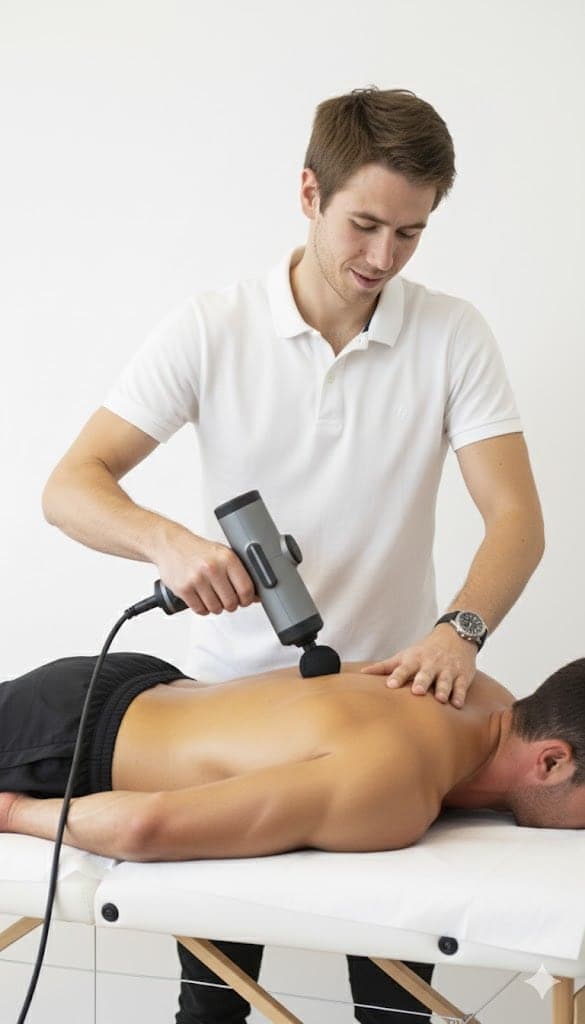
Written by
Chris
Massage therapist, nutrition and exercise physiologist
Norwegian-certified with a Bachelor’s in Physical Education and Nutrition and over ten years of clinical practice, working from a portable table in clients’ homes across the Paphos district.
This article is general information, not a medical diagnosis. If you have severe, worsening or unexplained pain, numbness, weakness, or pain after an accident, see a doctor first.