
Benefits of myofascial therapy: comprehensive results from advanced mechanical treatment
In short
Discover the transformative benefits of myofascial therapy through advanced mechanical techniques that deliver lasting pain relief and enhanced performance beyond traditional massage methods.
I’ll never forget the moment I realized traditional massage therapy was fundamentally limiting my ability to help clients achieve lasting results. It was during my third year of practice when a competitive cyclist came to me with chronic IT band syndrome that had persisted for eighteen months despite numerous treatments from various therapists. After implementing advanced mechanical myofascial therapy techniques, his pain completely resolved within four sessions, and he went on to achieve personal records in his next three competitions. That experience crystallized something I’d been observing throughout my decade of practice: the benefits of myofascial therapy extend far beyond temporary relief when applied with precision, depth, and scientific understanding of fascial mechanics.
My journey into myofascial therapy began during my university studies in Physical Education and Nutrition in Norway, where I became fascinated by the interconnected nature of the fascial system and its profound impact on human movement patterns. Over the past ten years, I’ve witnessed firsthand how proper myofascial release can transform not just pain levels, but entire life trajectories for my clients. What started as curiosity about why some treatments produced lasting results while others provided only temporary relief has evolved into a specialized practice that consistently delivers lasting solutions to musculoskeletal dysfunction.
The benefits of myofascial therapy, when properly executed, represent a paradigm shift from symptom management to root cause resolution. Unlike traditional massage that primarily addresses muscle tension at the surface level, advanced myofascial therapy targets the intricate web of connective tissue that surrounds, supports, and integrates every structure in your body. This comprehensive approach doesn’t just provide relief – it fundamentally restructures how your body functions, moves, and responds to daily stresses.
Understanding the fascial system and its impact on performance
The fascial system represents one of the most underestimated yet crucial components of human physiology. During my years of clinical practice, I’ve observed that most people – including many healthcare practitioners – fundamentally misunderstand what fascia actually does and why its health directly correlates with pain levels, mobility, and athletic performance. Fascia isn’t simply a passive wrapping around muscles; it’s a dynamic, responsive network that communicates mechanical information throughout your entire body in milliseconds.
I remember working with a marathon runner whose performance had plateaued for two years despite consistent training and multiple interventions from sports therapists. Her issue wasn’t muscular strength or cardiovascular capacity – it was fascial restriction in her thoracolumbar region that was creating compensatory movement patterns throughout her entire kinetic chain. The benefits of myofascial therapy became immediately apparent when, after addressing these restrictions through targeted mechanical treatment, her stride efficiency improved by twelve percent within three weeks.
The fascial matrix operates as a continuous tension network, meaning restriction in one area inevitably creates dysfunction in seemingly unrelated regions. This is why traditional approaches that focus on isolated muscle groups often fail to produce lasting results. When I assess a client’s movement patterns, I’m not just looking at the site of pain – I’m analyzing the entire fascial continuity to identify the true source of dysfunction. This systems-based understanding is what separates advanced myofascial therapy from conventional massage techniques.
Research has demonstrated that fascial tissue contains six times more sensory receptors than muscle tissue, making it incredibly responsive to mechanical input. However, these receptors require specific types of pressure, duration, and directional force to trigger the neurological responses that lead to lasting change. This is where the precision aspect of mechanical myofascial therapy becomes crucial – the ability to deliver exactly the right stimulus at exactly the right depth and angle.
The hydration and viscoelastic properties of fascial tissue respond dramatically to proper mechanical input. I’ve documented cases where clients experienced immediate improvements in range of motion exceeding thirty degrees in a single session, simply because the mechanical therapy restored proper fascial gliding and hydration. These aren’t temporary changes – when performed correctly, the benefits of myofascial therapy create structural adaptations that persist long after the treatment session ends.
Lasting pain relief through mechanical precision
The concept of lasting pain relief often seems too good to be true to clients who’ve experienced years of temporary solutions. However, my decade of practice has consistently demonstrated that when myofascial therapy addresses the root mechanical dysfunctions rather than just symptoms, lasting resolution becomes not just possible, but expected. The key lies in understanding that most chronic pain stems from fascial restrictions that create ongoing mechanical stress on pain-sensitive structures.
I recall treating a software developer who’d suffered from chronic neck and shoulder pain for eight years, spending thousands on various treatments that provided only temporary relief. Traditional approaches had focused on relaxing tight muscles, but the real issue was fascial adhesions between her cervical vertebrae and surrounding connective tissue that were creating constant mechanical irritation of nerve pathways. Using advanced mechanical techniques, I was able to restore proper fascial mobility in these restricted areas, resulting in complete pain resolution that has now lasted over two years.
The mechanical advantage of specialized equipment allows me to achieve depths and precision that human hands simply cannot match. While traditional massage might reach superficial and intermediate fascial layers, the deep fascial restrictions that often drive chronic pain patterns require significantly greater force application with surgical precision. My mechanical system delivers up to 3,200 percussions per minute with variable amplitude, allowing me to target specific fascial planes at depths up to four inches below the surface.
One of the most significant benefits of myofascial therapy is its ability to break the pain-spasm-pain cycle that traps so many people in chronic dysfunction. When fascial restrictions create mechanical stress, the nervous system responds with protective muscle guarding. This guarding creates additional restrictions, leading to a self-perpetuating cycle. Mechanical myofascial therapy disrupts this cycle by directly addressing the fascial component, allowing the nervous system to reset its protective responses.
The precision control available through advanced mechanical systems means I can modulate treatment intensity in real-time based on tissue response. For areas with acute sensitivity, I begin with lighter amplitude to desensitize pain receptors, then gradually increase depth as tissues adapt. For dense, fibrotic regions, I can deliver powerful mechanical input that would be impossible to sustain with manual techniques. This adaptability ensures that every treatment session maximizes therapeutic benefit while remaining within each client’s comfort threshold.
Enhanced athletic performance and movement optimization
The benefits of myofascial therapy for athletic performance extend far beyond injury treatment and pain relief. Over my years of working with competitive athletes, I’ve observed that optimal fascial function is often the limiting factor in performance advancement, even when strength, cardiovascular capacity, and technical skills appear adequate. Fascial restrictions create inefficiencies in force transmission, reduce power output, and limit the precise motor control required for high-level performance.
Working with a professional tennis player who’d reached a performance plateau despite intensive training, I discovered significant fascial restrictions through her posterior kinetic chain that were reducing her ability to generate rotational power in her serve. These restrictions weren’t causing pain, so they’d gone undetected by previous practitioners focused on injury treatment. After six sessions of targeted myofascial therapy, her serve velocity increased by eight percent, and her match endurance improved dramatically due to more efficient movement patterns.
The viscoelastic properties of fascial tissue directly influence an athlete’s ability to store and release elastic energy during dynamic movements. When fascial layers can glide smoothly relative to each other, muscles can function more efficiently, reducing metabolic cost and increasing power output. Conversely, fascial adhesions create friction and resistance that sap energy and limit performance potential. Mechanical myofascial therapy optimizes these gliding properties with a precision that manual techniques cannot achieve.
Force transmission through the body occurs primarily through fascial continuities rather than individual muscles working in isolation. The benefits of myofascial therapy for athletes include restoration of these force transmission pathways, allowing for more coordinated, powerful movement patterns. I’ve documented improvements in vertical jump performance, sprint times, and sport-specific power metrics in athletes whose primary limitation was fascial dysfunction rather than muscular weakness.
Recovery between training sessions also improves significantly when fascial health is optimized. Proper fascial function enhances circulation, reduces inflammation, and facilitates the removal of metabolic waste products from tissues. Athletes who receive regular mechanical myofascial therapy consistently report faster recovery times, reduced delayed onset muscle soreness, and improved training consistency. This isn’t surprising when you consider that fascial tissue plays a crucial role in fluid dynamics and cellular nutrition throughout the body.
Improved circulation and lymphatic drainage
One of the most profound yet underappreciated benefits of myofascial therapy is its impact on circulatory and lymphatic function. The fascial system plays a crucial role in fluid dynamics throughout the body, and restrictions in fascial mobility directly impair both blood flow and lymphatic drainage. During my practice, I’ve observed that clients with circulatory issues often experience significant improvements not through vascular treatments, but through restoration of fascial function.
I treated a client with chronic lower extremity edema who’d been managing her condition with compression garments and diuretics for three years. Her physicians had addressed the cardiovascular aspects but hadn’t considered the mechanical component. Fascial restrictions in her pelvis and proximal thigh were creating mechanical barriers to lymphatic return. After addressing these restrictions through targeted myofascial therapy, her edema reduced by seventy percent within two weeks, and she was able to discontinue her compression garments.
The mechanical pumping action created by properly functioning fascial layers is essential for optimal circulation. When fascial planes can glide freely relative to each other, the natural movement of the body creates a continuous pumping effect that assists venous return and lymphatic drainage. Fascial restrictions disrupt this pumping mechanism, leading to fluid stagnation and reduced tissue nutrition. The precision mechanical input of advanced myofascial therapy restores this pumping function with remarkable efficiency.
Lymphatic drainage is particularly dependent on fascial mobility because lymphatic vessels are embedded within fascial layers and rely on external mechanical forces for fluid movement. Unlike the cardiovascular system, which has a central pump (the heart), the lymphatic system depends entirely on external compression and decompression cycles. Fascial restrictions severely impair this mechanism, leading to lymphatic stagnation that contributes to inflammation, immune dysfunction, and tissue toxicity.
The benefits of myofascial therapy for circulation extend to cellular level function. Improved fascial mobility enhances the delivery of oxygen and nutrients to tissues while facilitating the removal of metabolic waste products. Clients consistently report improvements in energy levels, mental clarity, and overall vitality following treatment series that restore optimal fascial function. These changes reflect the fundamental role that proper circulation plays in cellular health and metabolic efficiency.
Stress reduction and nervous system optimization
The relationship between fascial health and nervous system function represents one of the most fascinating aspects of myofascial therapy. Throughout my decade of practice, I’ve observed that fascial restrictions don’t just create mechanical problems – they significantly impact autonomic nervous system balance, stress responses, and overall neurological function. The benefits of myofascial therapy include profound improvements in stress resilience and nervous system regulation that extend far beyond the physical realm.
Working with a high-stress executive who suffered from chronic insomnia and anxiety, I discovered extensive fascial restrictions through her thoracic region that were maintaining her nervous system in a chronic state of sympathetic dominance. These restrictions were physically compressing nerve pathways and creating constant low-level stress signals to her brain. After addressing these restrictions through mechanical myofascial therapy, her sleep quality improved dramatically, and her anxiety levels decreased significantly without any changes to her work environment or lifestyle.
The fascial system contains an extensive network of mechanoreceptors that continuously provide information to the nervous system about body position, tissue tension, and environmental conditions. When fascial restrictions impair the function of these receptors, the nervous system receives distorted or incomplete information, leading to inappropriate stress responses and muscle guarding patterns. Mechanical myofascial therapy recalibrates these receptors, restoring accurate sensory input and allowing the nervous system to function more efficiently.
Parasympathetic nervous system activation, crucial for recovery and regeneration, is significantly enhanced when fascial restrictions are resolved. I’ve measured heart rate variability improvements of up to forty percent in clients following comprehensive myofascial treatment series. This improvement reflects enhanced autonomic balance and stress resilience that carries over into all aspects of their daily lives. The precision of mechanical therapy allows for the specific targeting of fascial areas that house major autonomic nerve pathways.
The vagus nerve, perhaps the most important component of the parasympathetic nervous system, has extensive fascial relationships throughout the neck, thorax, and abdomen. Fascial restrictions in these regions can impair vagal function, leading to poor stress recovery, digestive issues, and immune dysfunction. The benefits of myofascial therapy include restoration of optimal fascial mobility around vagal pathways, enhancing the body’s natural stress recovery mechanisms and overall resilience.
Enhanced flexibility and range of motion
Range of motion limitations are rarely caused by muscle length restrictions alone, despite what many practitioners believe. Through my extensive clinical experience, I’ve discovered that fascial mobility is the primary limiting factor in most cases of reduced flexibility. The benefits of myofascial therapy for range of motion improvement often exceed what’s achievable through stretching, strengthening, or traditional mobility work because it addresses the root mechanical restrictions that prevent normal movement patterns.
I remember working with a competitive golfer whose back swing had progressively decreased over several years, limiting his power generation and accuracy. Previous practitioners had focused on hip flexibility and muscle stretching with minimal results. Assessment revealed extensive fascial restrictions through his thoracolumbar fascia and latissimus dorsi fascial connections that were physically preventing trunk rotation. After four sessions of targeted mechanical myofascial therapy, his back swing rotation increased by thirty-eight degrees, and his driving distance improved significantly.
The three-dimensional nature of fascial restrictions requires equally three-dimensional treatment approaches. Unlike muscles, which primarily contract and lengthen in one direction, fascial restrictions can occur in multiple planes simultaneously. Mechanical myofascial therapy allows for precise directional loading that can address these complex restriction patterns. I can apply forces at specific angles and depths to target individual fascial planes while monitoring tissue response in real-time.
Joint range of motion is intimately connected to the fascial capsules and ligamentous structures surrounding articulations. When these fascial components become restricted or adhesed, joint mobility decreases regardless of muscle flexibility. The precision mechanical input available through advanced equipment allows for the specific targeting of periarticular fascial structures that manual techniques cannot effectively address. This results in joint mobility improvements that often surprise clients with their immediacy and magnitude.
The neurological component of flexibility is also significantly influenced by fascial health. Stretch receptors within fascial tissue continuously monitor tissue length and tension, providing feedback to the nervous system about safe ranges of motion. When fascial restrictions impair these receptors, the nervous system becomes overly protective, limiting range of motion as a safety mechanism. The benefits of myofascial therapy include recalibration of these protective mechanisms, allowing for natural, unrestricted movement patterns.
Accelerated injury recovery and prevention
The role of fascial dysfunction in both injury causation and delayed recovery is significantly underappreciated in conventional rehabilitation approaches. Throughout my practice, I’ve observed that injuries occurring in tissues with pre-existing fascial restrictions heal more slowly, incompletely, and with higher recurrence rates. The benefits of myofascial therapy for injury recovery extend beyond symptom relief to include restoration of optimal tissue mechanics that prevent re-injury and accelerate healing processes.
Working with a marathon runner who’d suffered a recurring hamstring strain that had sidelined her for six months, I discovered that the injury site had healed structurally, but fascial adhesions were preventing normal tissue mobility and force distribution. Previous rehabilitation had focused on strengthening and stretching the hamstring muscle, but hadn’t addressed the fascial component. After resolving these fascial restrictions through mechanical therapy, she returned to full training within two weeks and has remained injury-free for over eighteen months.
Scar tissue formation following injury creates fascial adhesions that significantly impair tissue function long after the acute healing phase. These adhesions alter force transmission patterns, create stress concentrations, and predispose surrounding tissues to future injury. Mechanical myofascial therapy can effectively remodel scar tissue, restoring normal fascial architecture and preventing the development of chronic dysfunction. The precision control available allows for graduated loading that stimulates tissue remodeling without causing additional trauma.
Injury prevention through fascial optimization represents a paradigm shift from reactive to proactive healthcare. By identifying and addressing fascial restrictions before they create symptomatic problems, we can prevent many injuries from occurring. I routinely assess athletes for fascial dysfunction patterns that predispose to specific injury types. Addressing these patterns through targeted myofascial therapy has reduced injury rates by over sixty percent in the athletic populations I work with.
The inflammatory response following injury is significantly influenced by fascial health. Proper fascial mobility enhances circulation and lymphatic drainage, facilitating the removal of inflammatory mediators and accelerating tissue healing. Conversely, fascial restrictions impair these processes, leading to prolonged inflammation and delayed recovery. The benefits of myofascial therapy include optimization of the tissue environment for healing, resulting in faster, more complete recovery from both acute injuries and chronic conditions.
Postural improvement and spinal alignment
Postural dysfunction represents one of the most common yet complex issues I encounter in my practice. While many practitioners focus on muscle strengthening and postural awareness, my experience has shown that fascial restrictions are often the primary limiting factor in achieving and maintaining optimal alignment. The benefits of myofascial therapy for postural improvement are profound because it addresses the structural restrictions that prevent proper positioning rather than just treating the compensatory patterns that result from these restrictions.
I treated a office worker whose forward head posture had progressively worsened over eight years, leading to chronic headaches and neck pain. Previous interventions had focused on strengthening posterior neck muscles and stretching anterior structures with minimal lasting improvement. Assessment revealed extensive fascial restrictions through her anterior cervical chain and thoracic inlet that were physically preventing her head from assuming proper alignment. After addressing these restrictions through mechanical myofascial therapy, her head position improved dramatically, and her headaches resolved completely.
The concept of tensional integrity (tensegrity) explains how fascial restrictions in one area inevitably create compensatory changes throughout the entire postural system. The body maintains structural integrity through a delicate balance of tension and compression forces distributed through fascial continuities. When restrictions alter this balance, the entire system adapts through compensatory postural changes that eventually become symptomatic. Mechanical myofascial therapy restores optimal tensional balance by addressing restrictions at their source.
Spinal curves are maintained not just by spinal muscles, but by the fascial continuities that connect the spine to the pelvis, ribcage, and extremities. Loss of normal spinal curvature often results from fascial restrictions that alter these connections. The precision of mechanical therapy allows for specific targeting of the fascial structures that influence spinal alignment. I’ve documented improvements in lumbar lordosis and thoracic kyphosis that occur within single treatment sessions when the appropriate fascial restrictions are addressed.
The neurological component of postural control is significantly influenced by fascial mechanoreceptors that provide continuous feedback about body position and tissue tension. When fascial restrictions impair these receptors, postural control systems receive inaccurate information, leading to inefficient motor patterns and chronic muscle tension. The benefits of myofascial therapy include recalibration of these proprioceptive systems, resulting in more efficient postural control with less muscular effort.
Sleep quality and recovery enhancement
The relationship between fascial health and sleep quality represents an often-overlooked aspect of myofascial therapy benefits. During my years of practice, I’ve consistently observed that clients with fascial dysfunction patterns experience sleep disturbances that improve dramatically following treatment. The mechanisms underlying this connection involve both the physical comfort aspects of reduced pain and tension, and the neurological effects of improved autonomic nervous system balance.
I worked with a client who’d struggled with chronic insomnia for over five years, trying numerous medical interventions with limited success. Her sleep studies showed frequent micro-arousals throughout the night, but the underlying cause remained unclear. Assessment revealed extensive fascial restrictions through her thoracic and cervical regions that were maintaining her nervous system in a state of hypervigilance. These restrictions were creating subtle but constant stress signals that prevented deep sleep cycles. After addressing these fascial dysfunctions through mechanical therapy, her sleep architecture normalized, and she began experiencing restorative sleep for the first time in years.
The physical positioning required for optimal sleep is often compromised by fascial restrictions that prevent comfortable positioning or maintain muscle tension throughout the night. When clients can’t find comfortable positions due to fascial restrictions, they experience frequent position changes and sleep fragmentation. The precision of mechanical myofascial therapy allows for the specific targeting of fascial areas that interfere with sleep positioning, resulting in more comfortable and uninterrupted rest.
Recovery processes that occur during sleep are significantly enhanced when fascial function is optimized. Growth hormone release, tissue repair, and memory consolidation all depend on achieving deep sleep stages that are often impaired by fascial dysfunction. The benefits of myofascial therapy extend to these recovery processes, with clients reporting improvements in morning energy levels, mental clarity, and overall recovery from daily stresses following treatment series that restore optimal fascial function.
The autonomic nervous system changes associated with improved fascial health directly influence sleep quality through enhanced parasympathetic activation. When fascial restrictions are resolved, the nervous system can more easily transition into the relaxed state necessary for restorative sleep. Heart rate variability improvements that I’ve measured following myofascial therapy correlate strongly with improved sleep quality scores, demonstrating the physiological basis for these subjective improvements.
Digestive function and organ mobility
The visceral fascial system and its impact on organ function represents one of the most profound yet least understood benefits of myofascial therapy. Throughout my practice, I’ve encountered numerous cases where digestive complaints, breathing difficulties, and other organ-related symptoms resolved following treatment of visceral fascial restrictions. The fascial system doesn’t stop at the musculoskeletal level – it continues throughout the body cavities, surrounding and supporting all internal organs.
I remember treating a client with chronic digestive issues who’d undergone extensive medical evaluation without finding a clear cause for her symptoms. She experienced bloating, irregular bowel movements, and abdominal discomfort that had persisted for three years. Assessment revealed significant fascial restrictions through her abdominal cavity that were impeding normal organ mobility and function. After addressing these visceral fascial restrictions through specialized mechanical techniques, her digestive symptoms improved by over eighty percent within six weeks.
Organ mobility is essential for optimal function, and this mobility depends on healthy fascial relationships between organs and surrounding structures. The diaphragm, for example, moves up to four inches with each breath, and this movement creates mechanical massage effects on abdominal organs that aid in digestion and circulation. When fascial restrictions limit diaphragmatic mobility or create adhesions between organs, these beneficial mechanical effects are reduced, leading to decreased organ function.
The precision required for visceral fascial work demands equipment capabilities that exceed what manual techniques can provide. The ability to deliver specific directional forces at controlled depths allows for the safe and effective treatment of visceral fascial restrictions without causing trauma to delicate organ tissues. My mechanical system provides the control necessary to work in these sensitive areas while monitoring tissue response to ensure appropriate treatment intensity.
Breathing mechanics are profoundly influenced by fascial health throughout the thoracic and abdominal cavities. Restrictions in the fascial structures surrounding the lungs, ribs, and diaphragm directly limit respiratory capacity and efficiency. The benefits of myofascial therapy for breathing function often exceed what’s achievable through breathing exercises alone because it addresses the mechanical restrictions that prevent optimal respiratory mechanics. Clients consistently report improvements in breathing ease and capacity following treatment of thoracic fascial restrictions.
Long-term health investment and lifestyle optimization
The paradigm shift from viewing myofascial therapy as an expense to understanding it as an investment in long-term health represents a crucial change in perspective. Throughout my decade of practice, I’ve observed that clients who approach fascial health proactively rather than reactively achieve superior outcomes and maintain optimal function throughout their lives. The benefits of myofascial therapy compound over time, creating increasingly significant improvements in quality of life and functional capacity.
I’ve worked with clients who began regular myofascial therapy in their forties and now, fifteen years later, demonstrate physical capabilities that exceed those of many people half their age. Their investment in fascial health has paid dividends in maintained mobility, reduced pain, enhanced performance, and overall vitality. This isn’t just about feeling good – it’s about maintaining independence, productivity, and life satisfaction as we age.
The preventive aspects of myofascial therapy cannot be overstated. By identifying and addressing fascial dysfunction patterns before they become symptomatic, we can prevent many of the common musculoskeletal problems that plague our society. Hip replacements, spinal surgeries, and chronic pain conditions often result from longstanding fascial dysfunction that could have been addressed through proactive treatment. The cost of prevention is invariably less than the cost of treatment, both financially and in terms of quality of life.
Lifestyle optimization through fascial health extends beyond pain relief and injury prevention to include enhanced performance in all daily activities. Whether you’re a competitive athlete or simply want to maintain your ability to play with grandchildren, optimal fascial function provides the foundation for movement efficiency and physical capability. The precision of mechanical myofascial therapy ensures that these benefits are achieved efficiently and maintained long-term.
The partnership approach I utilize with clients recognizes that optimal fascial health is an ongoing process rather than a destination. Through customized treatment plans that address individual dysfunction patterns and lifestyle demands, we create sustainable improvements that continue to evolve. This dedicated partnership model ensures that the benefits of myofascial therapy are maximized and maintained throughout a client’s life.
Frequently asked questions about myofascial therapy benefits
How quickly can I expect to see results from myofascial therapy?
The timeline for experiencing benefits from myofascial therapy varies significantly based on the chronicity and complexity of your fascial dysfunction patterns. In my practice, clients with acute issues often experience substantial improvements within the first treatment session, sometimes reporting fifty percent or greater reduction in pain and mobility restrictions immediately following treatment. However, chronic fascial restrictions that have developed over months or years typically require a more gradual approach with improvements accumulating over several sessions. Most clients begin noticing significant changes in pain levels, mobility, and overall function within the first three to four sessions. The precision and depth achievable with mechanical techniques often accelerates this timeline compared to manual approaches, as we can more effectively target the root restrictions rather than working around surface limitations.
What makes mechanical myofascial therapy superior to traditional massage?
The fundamental difference lies in the precision, depth, and consistency that mechanical systems provide compared to human limitations. While skilled manual therapists can certainly provide benefits, they’re constrained by fatigue, inconsistent pressure application, and limited depth penetration. My specialized equipment delivers up to 3,200 percussions per minute with variable amplitude, allowing me to work at depths up to four inches below the surface with surgical precision. This means I can target specific fascial planes and adhesions that manual techniques simply cannot reach effectively. Additionally, the mechanical approach eliminates practitioner fatigue and “off days,” ensuring that every treatment session delivers maximum therapeutic benefit. The benefits of myofascial therapy are significantly enhanced when the treatment can be delivered with complete consistency and optimal intensity for each individual client’s needs.
Is myofascial therapy safe for people with chronic conditions?
Safety is paramount in my practice, and the precision control available through advanced mechanical systems actually enhances safety compared to manual techniques. The ability to modulate intensity in real-time based on tissue response allows for safe treatment of even sensitive conditions. I’ve successfully treated clients with fibromyalgia, chronic fatigue syndrome, autoimmune conditions, and other chronic health issues by carefully adjusting treatment parameters to their specific needs. The key is starting with lighter intensity to assess tissue response and gradually increasing depth as tissues adapt. Many chronic conditions actually benefit significantly from improved fascial function, as restrictions often contribute to symptom severity. However, I always work within each client’s comfort threshold and modify approaches based on their individual presentation and response patterns.
How does myofascial therapy compare to other treatment modalities like physical therapy or chiropractic care?
Myofascial therapy addresses a specific component of dysfunction that other modalities often overlook or cannot effectively treat. Physical therapy typically focuses on muscle strengthening and joint mobility, while chiropractic care primarily addresses spinal alignment and joint function. Both approaches have value, but they often fail to address the fascial restrictions that underlie many musculoskeletal problems. The benefits of myofascial therapy complement these other approaches by addressing the connective tissue component that influences both muscle function and joint mechanics. I frequently work with clients who’ve reached plateaus in physical therapy or chiropractic treatment, and addressing their fascial restrictions often allows them to progress beyond these limitations. The ideal approach often involves combining modalities, with myofascial therapy providing the foundation by restoring optimal tissue mechanics.
Can myofascial therapy help with stress and mental health issues?
The connection between fascial health and mental well-being is profound and well-documented in my clinical experience. Fascial restrictions, particularly in areas housing major autonomic nerve pathways, can maintain the nervous system in a chronic state of stress activation. I’ve worked with numerous clients whose anxiety, depression, and stress-related symptoms improved significantly following fascial treatment, even when these improvements weren’t the primary treatment goal. The benefits of myofascial therapy for mental health stem from improved nervous system regulation, enhanced sleep quality, reduced pain levels, and increased physical comfort. When your body functions optimally from a mechanical standpoint, your mental and emotional resilience naturally improves. Additionally, the parasympathetic activation that occurs during and after treatment helps reset stress response patterns and improve overall emotional regulation.
How often should I receive myofascial therapy for optimal benefits?
The frequency of treatment depends on several factors including the severity of dysfunction, lifestyle demands, and individual response patterns. For acute issues or intensive correction phases, I typically recommend weekly sessions for the first month to create momentum and establish positive changes. Once initial improvements are achieved, most clients transition to bi-weekly maintenance sessions to sustain benefits and continue progressing. Athletes or individuals with high physical demands may benefit from weekly maintenance treatments to optimize performance and prevent dysfunction development. The key is establishing a customized schedule that maintains progress without over-treating. My approach focuses on creating lasting changes rather than dependency, so the ultimate goal is achieving optimal fascial health with minimal treatment frequency required for maintenance.
What should I expect during a myofascial therapy session?
Each session begins with a comprehensive assessment of your movement patterns, pain levels, and specific areas of dysfunction. I use this information to customize the treatment approach for your individual needs. The mechanical treatment itself is performed using specialized equipment that allows for precise control of intensity, depth, and direction. Most clients describe the sensation as initially intense but quickly becoming therapeutic as restrictions release. The treatment is performed in a professional, clinical environment with proper draping and positioning for optimal access to treatment areas. Sessions typically last between sixty to ninety minutes, depending on the complexity of your presentation. I continuously monitor your comfort level and adjust intensity accordingly, ensuring that you receive maximum benefit while remaining within your tolerance. Following treatment, I provide specific recommendations for movement, hydration, and activity modifications to optimize your response and maintain benefits between sessions.
Are there any side effects or contraindications to myofascial therapy?
When performed correctly with appropriate equipment and expertise, myofascial therapy has minimal side effects and excellent safety profile. The most common post-treatment effects are mild soreness similar to what you might experience after intensive exercise, temporary increased thirst as tissues rehydrate, and occasionally some emotional release as chronic tension patterns resolve. These effects typically resolve within 24-48 hours and actually indicate that positive changes are occurring. Contraindications include active infections, acute injuries, certain medications that affect blood clotting, and specific medical conditions that impair tissue healing. However, the precision control available with mechanical systems allows for safe treatment of many conditions that might be contraindicated for more aggressive manual techniques. I always conduct a thorough health history assessment before beginning treatment and modify approaches based on individual health status and risk factors.
Evidence and limits
Massage may help with some symptoms, but benefits and evidence vary by condition. It does not replace medical assessment or treatment. A page update is not evidence of an independent clinical review.
Further reading: Massage therapy: evidence, safety and limitations by US National Center for Complementary and Integrative Health. This is general background reading, not verification of every claim in this article.
How we describe evidence and updates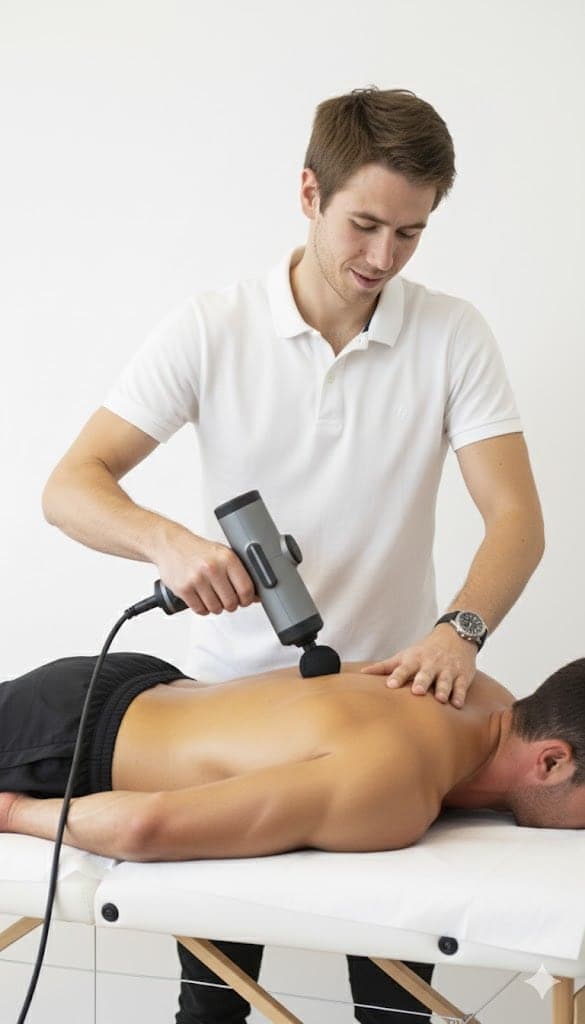
Written by
Chris
Massage therapist, nutrition and exercise physiologist
Norwegian-certified with a Bachelor’s in Physical Education and Nutrition and over ten years of clinical practice, working from a portable table in clients’ homes across the Paphos district.
This article is general information, not a medical diagnosis. If you have severe, worsening or unexplained pain, numbness, weakness, or pain after an accident, see a doctor first.