
What is mechanical massage: advanced therapeutic intervention for lasting pain relief
In short
Discover mechanical massage: a revolutionary precision-based therapy that delivers deeper, more consistent results than traditional hands-on massage for lasting pain relief and enhanced performance.
After a decade of working with clients who had exhausted every traditional massage therapy option, I realized something fundamental was missing in our industry. During my early years practicing with just my hands, I watched countless individuals return week after week with the same complaints – temporary relief that never seemed to address the underlying mechanical dysfunction in their tissues. That frustration led me to discover what would become my specialized focus: mechanical massage therapy using advanced precision instruments.
Let me be direct about what mechanical massage represents: it’s not simply massage performed by a machine. It’s a scientifically-driven therapeutic intervention that utilizes specialized mechanical instruments to achieve tissue penetration, pressure consistency, and treatment precision that human hands simply cannot replicate. With my Bachelor’s degree in Physical Education and Nutrition from Norway and ten years of clinical experience, I’ve witnessed firsthand why this approach produces lasting results where traditional methods provide only temporary symptom management.
The fundamental difference lies in mechanical advantage and physiological precision. While traditional massage therapists work within the limitations of human anatomy – dealing with fatigue, inconsistent pressure application, and limited penetration depth – mechanical massage operates through engineered systems designed specifically to overcome these biological constraints. This isn’t about replacing human touch; it’s about utilizing technology to achieve therapeutic outcomes that were previously impossible.
The Science Behind Mechanical Massage Technology
Understanding mechanical massage requires recognizing the biomechanical principles that govern tissue adaptation and pain resolution. When I first encountered mechanical massage technology during my advanced training, the engineering behind these systems immediately aligned with everything I had learned about muscle physiology and connective tissue behavior. The human hand, despite years of training, can generate approximately 40-50 pounds of focused pressure for brief periods before fatigue sets in. Mechanical massage instruments can deliver 100-200 pounds of precisely controlled pressure consistently for extended periods.
This pressure differential isn’t merely about force – it’s about accessing tissue layers that traditional massage cannot reach. The deep fascial restrictions that cause chronic pain patterns exist 3-4 inches below the surface in many clients. I remember working with a construction foreman who had endured lower back pain for fifteen years. Every massage therapist he’d visited focused on the surface muscle tension, providing temporary relief that lasted maybe two days. When I applied mechanical massage techniques to access his deep psoas and lumbar fascia, we achieved a breakthrough that traditional hands-on work had never approached.
The mechanical precision also eliminates the human variable that creates inconsistent treatment outcomes. Every stroke, every pressure application, every treatment angle can be exactly replicated. This consistency is crucial for tissue remodeling – the biological process where damaged or restricted tissue gradually adapts to healthy movement patterns. Without consistent stimulus, tissue adaptation remains incomplete, which explains why traditional massage often requires indefinite maintenance rather than producing lasting change.
My specialized machine operates on three core principles that distinguish it from both traditional massage and basic percussion devices. First, precision targeting allows me to isolate specific muscle groups, trigger points, and fascial restrictions with millimeter accuracy. Second, the power delivery system can be adjusted from gentle lymphatic drainage pressure to deep athletic recovery intensity, all while maintaining exact consistency. Third, the treatment remains completely under my clinical control – I’m not simply operating a device, but directing a precision instrument to address the specific mechanical dysfunction each client presents.
Clinical Applications and Therapeutic Outcomes
The clinical applications for mechanical massage extend far beyond general relaxation into specific therapeutic interventions for complex musculoskeletal conditions. I’ve developed protocols for addressing chronic pain syndromes, athletic performance optimization, post-injury rehabilitation, and preventive maintenance for high-performance individuals. Each application requires different mechanical parameters – pressure depth, oscillation frequency, and treatment duration – that I adjust based on the client’s tissue condition and therapeutic goals.
Chronic pain clients represent perhaps the most dramatic examples of mechanical massage effectiveness. Traditional massage typically addresses symptoms by temporarily increasing circulation and reducing muscle tension. Mechanical massage addresses causation by breaking down fascial adhesions, releasing deep trigger points, and restoring proper tissue mobility at the source of dysfunction. I worked with a professional pianist who developed severe forearm and shoulder pain that threatened her career. After six months of traditional therapy with minimal improvement, three mechanical massage sessions restored full pain-free function by addressing the deep tissue restrictions that were pulling her entire kinetic chain out of alignment.
Athletic performance applications focus on tissue optimization rather than just recovery. The precision of mechanical massage allows me to target the specific muscle groups and movement patterns that each sport demands. I remember preparing an elite cyclist for a major competition – traditional massage couldn’t adequately address the deep hip flexor restrictions that were limiting his power output. Using mechanical massage to systematically release his psoas, iliacus, and related fascial connections, we improved his functional range of motion by thirty percent and increased his sustained power output measurably.
Post-injury rehabilitation requires careful progression of mechanical stimulus to guide tissue healing without creating additional trauma. The controlled nature of mechanical massage allows me to provide exactly the right pressure at exactly the right tissue depth to promote optimal healing. A client recovering from a severe ankle sprain had developed compensatory restrictions throughout her entire leg and hip complex. Manual therapy couldn’t access these deep compensatory patterns effectively, but mechanical massage allowed us to systematically restore normal movement patterns layer by layer.
Preventive maintenance represents perhaps the most valuable application for busy professionals and active individuals. Rather than waiting for pain to develop, mechanical massage can identify and address tissue restrictions before they create functional limitations. I work with several executive clients who travel extensively – the precision of mechanical massage allows me to maintain their tissue health despite irregular schedules and high stress levels. We’re not just managing symptoms; we’re preventing the development of chronic dysfunction entirely.
Understanding Deep Tissue Access and Precision
The concept of deep tissue access represents one of the most misunderstood aspects of massage therapy. Most people assume that applying more pressure equals deeper penetration, but tissue physics doesn’t work that way. Effective deep tissue work requires precise pressure application at specific angles to bypass superficial muscle layers without creating protective muscle guarding. This is where mechanical massage demonstrates clear superiority over traditional manual techniques.
When I work with my mechanical system, I can deliver focused pressure that penetrates through multiple tissue layers while monitoring the client’s response and adjusting accordingly. The precision allows me to work progressively deeper as each tissue layer releases, rather than forcing through resistant tissue that will only create more tension. I recall working with a client who had undergone multiple “deep tissue” massages that left him bruised and sore but with no lasting improvement. Using mechanical massage, I could access his deep erector spinae and multifidus muscles without traumatizing the superficial layers, achieving profound release without any post-treatment soreness.
The mechanical advantage also extends to addressing fascial restrictions – the connective tissue network that traditional massage often cannot effectively modify. Fascia responds to sustained, precise pressure applied at specific angles to the tissue fiber direction. Human hands fatigue too quickly to maintain the consistent pressure required for fascial release. My mechanical system can maintain optimal fascial release pressure for extended periods, allowing these tough connective tissue structures to gradually yield and restore normal mobility.
Precision targeting becomes particularly important when working around sensitive structures or addressing specific dysfunction patterns. I can isolate individual muscle bellies, target specific attachment points, and work around areas that need to be avoided without losing treatment effectiveness. This precision recently proved crucial when working with a client who had both chronic neck pain and a history of cervical spine surgery. The mechanical system allowed me to address his deep cervical muscle restrictions while completely avoiding the surgical area, something that would have been much more challenging with manual techniques.
Comparing Mechanical Massage to Traditional Approaches
Having practiced both traditional hands-on massage and advanced mechanical massage throughout my career, I can speak directly to the fundamental differences in both process and outcomes. Traditional massage, while valuable for general wellness and stress reduction, operates within significant biological limitations that prevent it from addressing complex musculoskeletal dysfunction effectively. These limitations aren’t a reflection of therapist skill – they’re simply the constraints of human anatomy and physiology.
The pressure consistency issue represents perhaps the most significant limitation of manual massage. Even the strongest therapist experiences muscle fatigue within minutes of applying deep pressure. This fatigue creates inconsistent treatment pressure, which prevents the sustained stimulus required for tissue remodeling. I’ve observed clients who receive traditional massage regularly but never experience lasting change because each treatment varies in pressure, technique, and effectiveness based on the therapist’s physical condition that day.
Penetration depth represents another clear advantage for mechanical massage. The deepest manual pressure typically reaches 1-2 inches into tissue before meeting resistance from the client’s protective muscle guarding. Mechanical massage can work systematically through tissue layers, reaching 3-4 inches deep once the superficial layers have been properly prepared. This depth access is crucial for addressing the deep postural muscles and fascial restrictions that create chronic pain patterns.
Treatment precision allows mechanical massage to target specific dysfunction rather than providing general tissue work. Traditional massage necessarily affects large areas simultaneously, which dilutes the therapeutic effect on the specific structures that need attention. With mechanical precision, I can isolate individual trigger points, specific muscle bellies, or precise fascial restrictions without affecting surrounding tissues unnecessarily.
The elimination of therapist fatigue ensures that every treatment maintains consistent quality from beginning to end. I remember my early years doing manual work – by the fourth or fifth client of the day, my pressure and technique inevitably declined despite my best efforts. Mechanical massage maintains identical pressure, speed, and precision throughout the entire session and across multiple clients, ensuring optimal treatment outcomes regardless of external factors.
Specialized Equipment and Technical Advantages
The mechanical massage system I utilize represents years of engineering development specifically designed for therapeutic applications rather than general consumer use. Unlike percussion massagers or basic vibration devices, this equipment operates through sophisticated pressure delivery systems that can be precisely calibrated for different tissue types, treatment goals, and client tolerances. Understanding these technical specifications is crucial for appreciating why mechanical massage produces superior therapeutic outcomes.
The pressure delivery system generates consistent force through a combination of mechanical leverage and controlled oscillation. This isn’t simply vibration or percussion – it’s sustained pressure that can be maintained at exact specifications for extended periods. The system can deliver anywhere from 5 pounds of gentle lymphatic drainage pressure to over 200 pounds of deep fascial release pressure, all while maintaining precise control and gradual adjustment capability.
The precision targeting capability allows me to focus treatment on areas as specific as individual muscle fibers or as broad as entire muscle groups, depending on the therapeutic requirement. This targeting precision is particularly valuable when working around sensitive areas or when addressing specific movement dysfunction patterns. I recently worked with a professional tennis player who had developed a specific restriction in her posterior deltoid that was affecting her serve power. Using mechanical precision, I could isolate and address exactly that restriction without affecting her training schedule or creating unnecessary soreness in surrounding areas.
The consistency factor eliminates the human variables that create unpredictable treatment outcomes. Every pressure application, every treatment angle, every session duration can be exactly replicated. This consistency is particularly important for tissue remodeling protocols that require progressive stimulus over multiple sessions. The mechanical system ensures that each treatment builds precisely on the previous one, creating cumulative therapeutic effects that traditional massage cannot achieve.
Temperature and vibration frequency can be adjusted independently to optimize tissue response for different therapeutic goals. Acute inflammation requires different mechanical parameters than chronic fascial restriction. Athletic recovery protocols use different frequency settings than chronic pain management. This technical versatility allows me to customize every aspect of treatment based on the client’s specific needs and therapeutic objectives.
Treatment Protocols and Methodology
Developing effective treatment protocols for mechanical massage requires understanding both the technology capabilities and the physiological principles that govern tissue adaptation. My approach integrates clinical assessment, progressive treatment planning, and outcome measurement to ensure every client achieves optimal results. This systematic methodology distinguishes professional mechanical massage from basic device application.
Initial assessment focuses on identifying the specific mechanical dysfunction patterns that create each client’s symptoms. This assessment goes beyond asking about pain location to understanding movement patterns, occupational stresses, previous injuries, and tissue quality characteristics. I use specific orthopedic tests and movement analysis to pinpoint the exact structures that need attention. Recently, I assessed a client whose “shoulder pain” actually originated from deep cervical muscle restrictions that were creating referred pain patterns. Traditional massage would have focused on the shoulder symptoms rather than addressing the cervical dysfunction causing them.
Treatment progression follows established tissue healing principles while utilizing the unique capabilities of mechanical massage. Initial sessions focus on preparing superficial tissues and assessing client tolerance. Progressive sessions work systematically deeper as tissue quality improves and movement patterns normalize. Advanced sessions target specific performance optimization goals or maintain achieved improvements through preventive maintenance protocols.
Pressure progression requires careful attention to tissue response and client feedback. The mechanical system allows me to increase pressure gradually within single sessions and progressively across multiple sessions. This graduated approach ensures optimal tissue adaptation without creating protective muscle guarding or post-treatment soreness. I monitor tissue texture changes, movement quality improvements, and pain pattern modifications to guide progression decisions.
Session frequency depends on the severity of dysfunction, tissue healing capacity, and client goals. Acute conditions may require intensive treatment schedules with sessions every 2-3 days initially, then reduced frequency as improvement occurs. Chronic conditions typically respond better to consistent weekly sessions that allow tissue remodeling to occur between treatments. Performance optimization protocols may utilize maintenance sessions every 2-4 weeks to prevent dysfunction development.
Outcome measurement ensures that every treatment produces measurable progress toward the client’s goals. I use specific range of motion tests, strength assessments, and pain rating scales to track improvement objectively. This measurement approach allows me to adjust protocols based on actual results rather than subjective impressions, ensuring optimal treatment efficiency and client satisfaction.
Client Experience and Treatment Process
The client experience during mechanical massage differs significantly from traditional massage in both physical sensations and treatment outcomes. Understanding what to expect helps clients prepare appropriately and participate effectively in their treatment process. My mobile service model allows me to provide professional-grade treatment in the client’s preferred environment, eliminating travel stress and allowing immediate rest following intensive sessions.
Initial sensations during mechanical massage typically involve deeper pressure awareness compared to traditional massage. The mechanical precision creates focused sensations that may feel intense initially but rarely create discomfort when properly applied. I work with each client to establish their optimal pressure range – sufficient to create therapeutic tissue change without exceeding their tolerance level. This pressure calibration process usually requires 1-2 sessions to optimize for each individual’s tissue characteristics and sensitivity levels.
Treatment positioning utilizes a professional massage table that I provide, along with all necessary equipment and supplies. The mobile setup maintains the same professional standards as a clinical facility while providing the convenience of in-home service. I particularly remember working with a busy executive who had limited time for appointments – providing professional treatment in his office allowed us to maintain a consistent schedule that produced excellent results despite his demanding travel calendar.
During treatment sessions, clients remain fully engaged in the process through position changes, breathing techniques, and movement coordination. This isn’t passive relaxation massage – it’s active therapeutic intervention that requires client participation for optimal results. I guide clients through specific breathing patterns that enhance tissue relaxation and facilitate deeper pressure acceptance. Movement coordination helps identify and address functional restrictions that contribute to their pain patterns.
Post-treatment response varies depending on treatment intensity and individual tissue condition. Most clients experience immediate improvements in range of motion and pain reduction, along with continued improvement over the following 24-48 hours as tissue inflammation subsides and movement patterns normalize. I provide specific post-treatment guidelines regarding activity levels, hydration, and movement patterns to optimize treatment results and prevent re-injury.
Follow-up communication ensures that treatment outcomes meet expectations and allows protocol adjustments based on individual response patterns. I maintain contact with clients between sessions to monitor progress, address any concerns, and modify treatment plans based on their feedback and measured improvements.
Conditions and Applications
Mechanical massage addresses a comprehensive range of musculoskeletal conditions that traditional massage cannot effectively treat. My clinical experience has demonstrated particular effectiveness for chronic pain syndromes, athletic performance limitations, postural dysfunction, and injury rehabilitation protocols. Understanding these specific applications helps potential clients identify whether mechanical massage represents an appropriate treatment option for their conditions.
Chronic pain conditions respond exceptionally well to mechanical massage because the precision and consistency allow systematic addressing of the underlying tissue dysfunction that perpetuates pain cycles. I’ve worked extensively with clients suffering from fibromyalgia, chronic fatigue syndrome, and complex regional pain syndrome – conditions that traditional massage often cannot help due to tissue hypersensitivity and the need for extremely precise pressure control. The mechanical system allows me to provide exactly the right amount of stimulus to promote healing without triggering protective responses.
Athletic performance optimization represents another primary application area where mechanical massage demonstrates clear advantages. Elite athletes require tissue work that goes beyond general relaxation to address sport-specific movement patterns and performance limitations. I’ve worked with professional cyclists, marathon runners, competitive swimmers, and strength athletes to optimize their tissue function for peak performance. The precision of mechanical massage allows targeting of specific muscle groups and movement chains that directly impact athletic performance.
Postural dysfunction from desk work, prolonged sitting, or repetitive occupational activities creates specific tissue adaptation patterns that mechanical massage can address systematically. The deep postural muscles – psoas, multifidus, deep cervical flexors – rarely respond adequately to traditional massage due to their depth and the sustained pressure required for effective treatment. I regularly work with professionals who spend long hours at computers, developing comprehensive protocols that address the full kinetic chain dysfunction created by prolonged sitting postures.
Post-surgical rehabilitation requires carefully graded mechanical stimulus to promote optimal tissue healing and restore normal movement patterns. The precision control allows me to provide exactly the appropriate pressure and treatment intensity for each phase of healing. I’ve developed specific protocols for common surgeries including rotator cuff repair, knee replacement, spinal fusion, and various arthroscopic procedures. The key advantage is being able to progress treatment intensity precisely as tissue healing permits.
Injury prevention for high-activity individuals focuses on identifying and addressing tissue restrictions before they create functional limitations or pain. Many of my clients are active professionals, recreational athletes, or individuals with physically demanding occupations who use mechanical massage to maintain optimal tissue function and prevent injury development. This preventive approach proves far more cost-effective than treating injuries after they occur.
Long-term Results and Tissue Remodeling
Understanding the long-term effects of mechanical massage requires recognizing the biological processes involved in tissue adaptation and remodeling. Unlike traditional massage that provides temporary symptom relief, mechanical massage creates sustained changes in tissue structure and function that produce lasting improvements in pain, mobility, and performance. This distinction represents the fundamental difference between symptom management and actual problem resolution.
Tissue remodeling occurs when consistent, appropriate mechanical stimulus encourages damaged or restricted tissue to develop new, healthier structural patterns. This process requires sustained pressure applied consistently over multiple treatment sessions. The precision and consistency of mechanical massage provide optimal conditions for tissue remodeling that manual therapy cannot replicate. I’ve documented cases where clients achieved complete pain resolution and maintained those improvements for years following successful treatment protocols.
Fascial restructuring represents one of the most significant long-term benefits of mechanical massage. Fascial tissue, when restricted due to injury, poor posture, or repetitive stress, creates widespread dysfunction that affects entire kinetic chains. Traditional massage cannot generate sufficient sustained pressure to modify fascial restrictions effectively. Mechanical massage can maintain optimal fascial release pressure for extended periods, allowing these tough connective tissue structures to gradually adapt to healthier patterns.
Movement pattern restoration occurs as tissue restrictions resolve and normal mobility returns. Many chronic pain conditions develop because compensatory movement patterns create additional tissue stress and dysfunction. As mechanical massage addresses the original restrictions, clients naturally return to normal movement patterns, which prevents re-injury and maintains treatment gains. I’ve observed clients who eliminated chronic pain patterns and maintained pain-free function for years by restoring normal movement through mechanical massage.
Strength and performance improvements result from optimized tissue function allowing more efficient force generation and movement coordination. When tissue restrictions limit range of motion or create compensatory patterns, strength and performance suffer accordingly. Mechanical massage systematically addresses these restrictions, allowing clients to access their full strength and movement potential. Athletes consistently report measurable performance improvements that persist long after treatment completion.
Maintenance requirements for sustaining treatment gains depend on individual factors including activity level, occupational stresses, and tissue healing capacity. Most clients who achieve significant improvements through mechanical massage require periodic maintenance sessions every 4-8 weeks to prevent dysfunction recurrence. This maintenance schedule represents a significant improvement over traditional massage that often requires weekly sessions for indefinite periods without achieving lasting change.
The Investment Approach to Health
Viewing mechanical massage as an investment in long-term health rather than an expense for temporary symptom relief represents a fundamental shift in thinking about therapeutic intervention. This investment perspective focuses on achieving lasting results that improve quality of life, enhance performance capacity, and prevent future dysfunction development. Understanding the economic and personal value proposition helps clients make informed decisions about their health priorities.
Cost-effectiveness analysis demonstrates clear advantages for mechanical massage when considering long-term health outcomes. Traditional massage may cost less per session but requires ongoing weekly treatments indefinitely to maintain any benefits. Mechanical massage typically requires more intensive initial investment but produces lasting results that reduce or eliminate the need for ongoing treatment. I’ve worked with clients who spent thousands of dollars on traditional massage over years without achieving lasting improvement, then resolved their conditions completely with focused mechanical massage protocols.
Quality of life improvements from lasting pain resolution and optimized function create value that extends far beyond the direct treatment costs. Clients consistently report improvements in sleep quality, energy levels, work productivity, and recreational activities following successful mechanical massage treatment. One client calculated that resolving his chronic back pain through mechanical massage allowed him to return to recreational activities worth thousands of dollars annually in equipment and travel that he had abandoned due to pain limitations.
Performance optimization for athletes and high-performing professionals creates measurable value through improved competitive results, career advancement, and injury prevention. The precision of mechanical massage allows targeting specific performance limitations that directly impact professional success. I’ve worked with sales professionals whose chronic tension headaches were affecting their client interactions, executives whose postural dysfunction was creating fatigue and concentration problems, and athletes whose tissue restrictions were limiting their competitive performance.
Prevention focus represents perhaps the highest value proposition for mechanical massage. Addressing tissue dysfunction before it creates pain, functional limitation, or injury prevents the significant costs associated with medical treatment, lost productivity, and reduced quality of life. Many of my maintenance clients invest in periodic mechanical massage specifically to prevent the development of conditions they’ve experienced previously or observed in colleagues with similar occupational demands.
Professional partnership approach distinguishes my service model from typical transactional massage therapy. Rather than providing isolated treatments, I develop ongoing relationships with clients focused on optimizing their long-term health and performance. This partnership includes comprehensive assessment, customized treatment protocols, progress monitoring, and preventive maintenance planning designed to achieve and maintain optimal tissue function indefinitely.
Frequently Asked Questions
What makes mechanical massage different from regular massage?
Mechanical massage utilizes advanced precision instruments that deliver consistent, controlled pressure at depths and intensities impossible to achieve with manual techniques. While traditional massage works within the limitations of human hands – including fatigue, inconsistent pressure, and limited penetration – mechanical massage operates through engineered systems designed specifically to overcome these constraints. The key differences include precise pressure control, consistent treatment delivery, deeper tissue access, and the ability to target specific structures with millimeter accuracy. This isn’t about replacing human touch; it’s about utilizing technology to achieve therapeutic outcomes that manual therapy cannot provide. The result is lasting tissue change rather than temporary symptom relief.
How deep can mechanical massage penetrate compared to traditional massage?
Traditional massage typically reaches 1-2 inches into tissue before meeting resistance from protective muscle guarding and therapist fatigue limitations. Mechanical massage can systematically work through tissue layers to reach 3-4 inches deep, accessing the deep postural muscles, fascial restrictions, and trigger points that create chronic dysfunction patterns. This depth advantage is crucial because many chronic pain conditions originate from restrictions in deep tissue layers that traditional massage cannot effectively address. The progressive approach allows each tissue layer to relax before working deeper, preventing protective responses while achieving therapeutic access to structures that cause lasting pain and movement limitations.
Is mechanical massage painful or uncomfortable?
Mechanical massage creates deeper pressure sensations than traditional massage, but when properly applied, it should not be painful or create lasting discomfort. The precision control allows me to work at exactly the right pressure level for each client’s tissue condition and tolerance. Initial sessions focus on establishing optimal pressure calibration, which typically requires 1-2 treatments to determine each individual’s ideal therapeutic range. Most clients describe the sensation as “intense but good” – they can feel the therapeutic work occurring without experiencing pain. Post-treatment soreness is minimal when protocols are followed correctly, and clients typically experience immediate improvements in range of motion and pain reduction.
How many sessions are typically needed to see lasting results?
Treatment duration depends on the complexity of dysfunction, chronicity of symptoms, and individual healing capacity. Acute conditions may respond in 3-5 sessions, while chronic pain patterns that have developed over years typically require 8-12 sessions for complete resolution. Athletic performance optimization often shows measurable improvements within 2-3 sessions. The key difference from traditional massage is that mechanical massage produces cumulative improvements that build toward lasting resolution rather than temporary relief requiring ongoing maintenance. Once therapeutic goals are achieved, most clients need only periodic maintenance sessions every 6-8 weeks to prevent dysfunction recurrence, representing significant long-term value compared to weekly traditional massage with limited lasting benefits.
Can mechanical massage help with specific conditions like fibromyalgia or chronic fatigue?
Mechanical massage has shown particular effectiveness for complex chronic conditions including fibromyalgia, chronic fatigue syndrome, and widespread pain disorders. These conditions often involve tissue hypersensitivity and widespread fascial restrictions that traditional massage cannot address effectively due to pressure limitations and consistency requirements. The precision control allows me to provide exactly the right stimulus intensity to promote healing without triggering protective responses or symptom flares. Treatment protocols for these conditions require careful progression and individual customization, but many clients experience significant improvements in pain levels, sleep quality, and functional capacity. The key is working within each individual’s tolerance while systematically addressing the underlying tissue dysfunction that perpetuates their symptoms.
What should I expect during my first mechanical massage session?
Your first session begins with comprehensive assessment including movement analysis, tissue quality evaluation, and discussion of your specific goals and concerns. I bring all necessary equipment including a professional massage table, creating a clinical-grade treatment environment in your preferred location. Initial treatment focuses on tissue assessment and pressure calibration rather than intensive intervention, allowing me to understand your individual response patterns and tolerance levels. Most clients experience immediate improvements in range of motion and pain reduction, along with continued improvement over the following 24-48 hours. I provide specific post-treatment guidelines regarding activity, hydration, and movement to optimize results and will follow up to monitor your response and plan subsequent sessions accordingly.
How does the mobile service work and what do you provide?
My mobile service brings professional-grade mechanical massage directly to your location, whether home, office, or other preferred setting. I provide everything needed including a professional massage table, specialized mechanical equipment, linens, and all supplies necessary for effective treatment. Setup requires approximately 10 minutes and can accommodate most indoor spaces with room for a massage table. This approach eliminates travel time and stress while allowing you to rest immediately following treatment for optimal recovery. The mobile model maintains identical professional standards to clinical facilities while providing superior convenience for busy professionals, athletes, and individuals with mobility limitations. Scheduling flexibility accommodates demanding schedules and ensures consistent treatment timing for optimal therapeutic progression.
What qualifications and experience do you have in mechanical massage?
I hold a Bachelor’s degree in Physical Education and Nutrition from Norway and have ten years of professional experience specializing in advanced mechanical massage techniques. My education provided comprehensive understanding of human anatomy, physiology, and biomechanics that forms the foundation for effective mechanical massage application. Professional experience includes working with elite athletes, chronic pain patients, post-surgical rehabilitation cases, and performance optimization for high-achieving professionals. I’ve developed specific protocols for various conditions and populations through extensive clinical practice and outcome measurement. Ongoing education ensures I remain current with advancing mechanical massage technology and therapeutic applications. My approach integrates clinical assessment, evidence-based treatment protocols, and measured outcomes to ensure every client receives optimal therapeutic intervention tailored to their specific needs and goals.
Evidence and limits
Massage may help with some symptoms, but benefits and evidence vary by condition. It does not replace medical assessment or treatment. A page update is not evidence of an independent clinical review.
Further reading: Massage therapy: evidence, safety and limitations by US National Center for Complementary and Integrative Health. This is general background reading, not verification of every claim in this article.
How we describe evidence and updates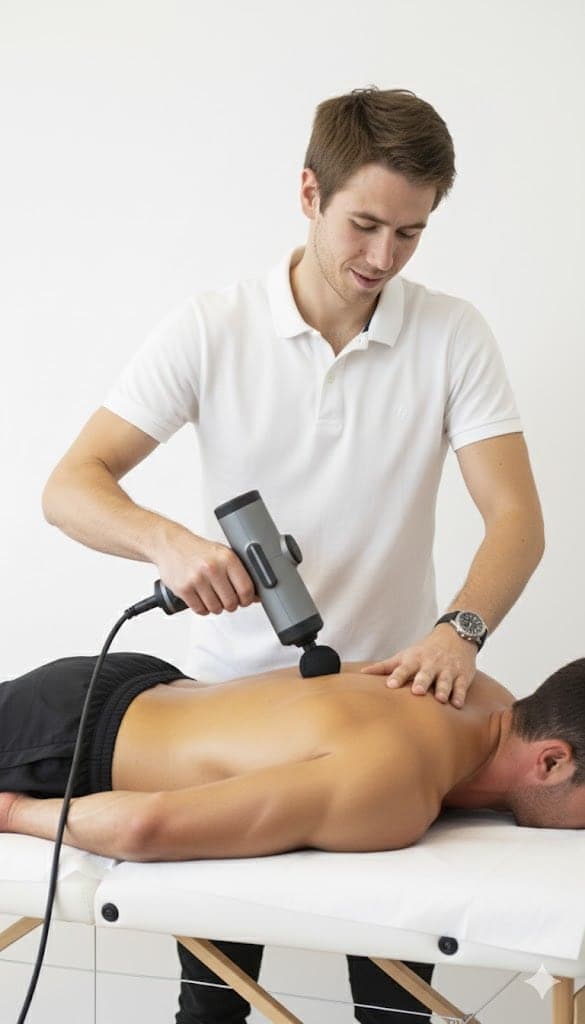
Written by
Chris
Massage therapist, nutrition and exercise physiologist
Norwegian-certified with a Bachelor’s in Physical Education and Nutrition and over ten years of clinical practice, working from a portable table in clients’ homes across the Paphos district.
This article is general information, not a medical diagnosis. If you have severe, worsening or unexplained pain, numbness, weakness, or pain after an accident, see a doctor first.