
Traditional Leg Massage Methods Kissonerga: Evolution From Ancient Techniques to Modern Precision
In short
Discover how traditional leg massage methods in Kissonerga have evolved into science-based mechanical therapy. Expert analysis from 10 years of clinical experience in biomechanical treatment.
The traditional leg massage methods Kissonerga practitioners have used for generations tell a fascinating story about human persistence in addressing mechanical dysfunction. I’ve spent the last decade studying these approaches—not from a historical perspective, but through the lens of biomechanics and treatment efficacy. What I’ve discovered challenges most assumptions about what actually works for lasting leg pain relief.
When I first arrived in Cyprus with my degree in Physical Education and Nutrition from Norway, I observed dozens of traditional massage sessions throughout the Paphos district, including Kissonerga. The techniques were repetitive, predictable, and—most significantly—focused entirely on symptom management rather than structural resolution. Clients would return weekly, sometimes for years, treating the same conditions without meaningful progress.
That observation became the foundation of my current practice: a mechanical deep-tissue methodology that addresses what traditional methods cannot reach.
The Historical Context of Traditional Leg Massage Methods in Kissonerga
Kissonerga, like many coastal Mediterranean communities, developed massage traditions rooted in agricultural and fishing economies. Workers experienced chronic leg fatigue, vascular congestion, and muscular strain from repetitive physical labor. The traditional response was manual manipulation—kneading, compression, and effleurage techniques passed down through families.
These methods served a legitimate purpose in their original context. When your primary concern is temporary relief after a 12-hour day harvesting olives, a 30-minute manual massage provides sufficient recuperation for the next workday. The problem emerges when we apply these same techniques to modern biomechanical dysfunction.
I witnessed this disconnect clearly with a client last year—a 43-year-old restaurant owner who had received traditional leg massages twice monthly for three years. She described the sessions as “pleasant” and “relaxing,” but her chronic calf tension and ankle instability remained unchanged. Within four sessions using my mechanical methodology, we identified and resolved a fascial restriction in her deep posterior compartment that manual pressure had never accessed.
The traditional methods weren’t wrong for their time. They’re simply inadequate for the structural problems we face today.
Common Traditional Leg Massage Techniques Still Used in Kissonerga
Understanding what traditional leg massage methods Kissonerga practitioners employ helps clarify why they produce limited lasting results. I’ve documented these approaches extensively:
Effleurage: The Superficial Gliding Stroke
This foundational technique involves long, sweeping strokes along the leg’s surface. Practitioners apply oil and glide their palms from ankle to thigh, theoretically promoting lymphatic drainage and circulation.
The biomechanical reality: Effleurage affects only superficial tissue layers. The fascia, muscle bellies, and connective tissue structures where chronic tension resides remain untouched. You’re essentially smoothing the surface while the foundation crumbles beneath.
I use a different approach. My specialized mechanical tool penetrates 4-6 centimeters deeper than human hands can reach, accessing the structural elements where dysfunction actually exists. When a client presents with chronic shin splints or compartment syndrome, surface-level stroking accomplishes nothing meaningful.
Petrissage: Kneading and Compression
Traditional practitioners lift, squeeze, and roll leg muscles between their hands. This technique supposedly releases muscular tension and improves tissue pliability.
Here’s what actually happens: The practitioner’s grip strength determines penetration depth, which varies significantly throughout a session as fatigue sets in. The most skilled manual therapist experiences decreased force production after 20-30 minutes. Your fifth client of the day receives substantially different treatment than your first—a consistency problem traditional methods cannot solve.
My mechanical methodology eliminates this variable entirely. The tool maintains identical pressure, speed, and depth throughout a 90-minute session. Every stroke delivers the same therapeutic force, whether it’s the first minute or the last.
Friction: Cross-Fiber Manipulation
Practitioners apply focused pressure perpendicular to muscle fiber direction, attempting to break adhesions and scar tissue.
The limitation: Human fingers and thumbs create approximately 2-4 square centimeters of contact surface area. This disperses force across too broad an area to effectively address dense fascial restrictions. You feel pressure, but the underlying adhesion remains structurally intact.
Compare this to my tool’s precision interface—a concentrated treatment head that focuses force into specific trigger points and restriction zones. We’re not approximating treatment; we’re targeting it with clinical accuracy.
Why Traditional Leg Massage Methods Fall Short for Modern Dysfunction
I don’t dismiss traditional techniques out of nostalgia or professional courtesy. I evaluate them through outcome measurement, and the data is unambiguous.
The Depth Problem
Most leg pain originates from structures human hands cannot effectively access:
- Deep posterior compartment restrictions (soleus, flexor hallucis longus, tibialis posterior)
- Intermuscular fascial planes between gastrocnemius heads
- Periosteal adhesions along the tibial border
- Deep hip rotator dysfunction affecting entire kinetic chain function
Traditional massage applies 5-15 pounds of pressure maximum. My mechanical tool delivers 40-80 pounds with precise control, penetrating tissue layers where dysfunction actually resides.
Last month, I treated a semi-professional cyclist who had received weekly sports massage for eight months without resolving his chronic IT band syndrome. The traditional approach addressed his lateral thigh muscles but never reached the tensor fasciae latae’s deep fascial attachments or the gluteus medius trigger points referring pain down his leg.
Four sessions with my methodology resolved the structural cause. He’s now pain-free and training at higher intensity than before the injury emerged.
The Consistency Problem
Human performance varies. Energy levels fluctuate. Attention wavers. A traditional practitioner working on your legs at 9 AM delivers different treatment than the same person at 6 PM after treating seven other clients.
This inconsistency makes progressive treatment planning impossible. How do you build systematic correction when each session’s intensity and depth vary unpredictably?
My mechanical approach eliminates this variable. Session three delivers identical force to session one. We can progressively load tissue, track structural changes, and measure improvement with scientific precision.
The Philosophy Problem
Here’s the fundamental issue: traditional leg massage methods in Kissonerga were never designed to durably resolve biomechanical dysfunction. They address symptoms—tightness, soreness, fatigue—without investigating structural causes.
I see clients regularly who’ve spent thousands of euros on traditional massage over years, achieving temporary relief but no lasting change. They’ve been conditioned to view chronic pain as something requiring endless management rather than lasting correction.
My philosophy inverts this model completely. We identify the mechanical cause—fascial restriction, muscle imbalance, joint dysfunction—and systematically eliminate it. The goal isn’t monthly maintenance; it’s lasting structural resolution.
The Biomechanical Reality of Leg Dysfunction
Understanding why legs develop chronic problems requires knowledge beyond traditional massage training. My degree in Physical Education and Nutrition provided foundation understanding of human movement, but a decade treating complex cases taught me what textbooks cannot.
The Kinetic Chain Concept
Your leg doesn’t function in isolation. It’s part of an integrated system connecting foot to hip to spine. Dysfunction anywhere in this chain creates compensatory patterns throughout the structure.
I recently worked with a 58-year-old client experiencing chronic calf cramping. Traditional practitioners had focused exclusively on his gastrocnemius and soleus muscles for months. When I assessed his complete kinetic chain, I discovered significant hip flexor restriction and anterior pelvic tilt forcing his calves into constant compensatory overwork.
We addressed the hip dysfunction first, then resolved secondary calf tension. His cramping disappeared durably—not because we massaged his calves more effectively, but because we eliminated the structural cause forcing them into dysfunction.
Traditional methods rarely perform this systems-level analysis. They treat the area that hurts without investigating why it hurts.
Fascial Continuity and Restriction Patterns
Fascia—the connective tissue network surrounding and interpenetrating every muscle—operates as a continuous system. Restriction in one area creates tension patterns throughout connected structures.
Your IT band connects to your gluteus maximus, which connects to your thoracolumbar fascia, which connects to your opposite shoulder. Knee pain might originate from restrictions nowhere near your knee.
I use my mechanical tool to systematically address these fascial continuities, releasing restriction patterns traditional methods cannot detect or access. The precision and depth required for this work exceeds what human hands can deliver.
Advanced Mechanical Methodology: Beyond Traditional Approaches
My specialized approach represents a fundamental departure from traditional leg massage methods Kissonerga practitioners employ. This isn’t incremental improvement—it’s a different category of intervention.
Precision: Targeting Treatment to Structural Need
The mechanical tool I use allows millimeter-level precision in treatment application. We can address:
- Specific trigger points within muscle bellies
- Fascial planes between muscle groups
- Periosteal adhesions at bone-tissue interfaces
- Tendinous junctions where force transmission occurs
This precision matters profoundly. Chronic dysfunction rarely affects entire muscles uniformly. It concentrates in specific locations—attachment points, high-stress zones, areas of previous trauma.
Traditional broad-stroke techniques spread force across large areas, hoping to affect the problematic zone somewhere within that territory. My methodology identifies and isolates the exact location requiring intervention.
Power: Accessing Tissue Layers That Matter
I mentioned earlier that my tool delivers 40-80 pounds of controlled pressure. This isn’t about causing pain—it’s about reaching tissue depth where structural change occurs.
Consider the deep hip rotators: piriformis, gemelli, obturators, quadratus femoris. These muscles, when restricted, create referred pain throughout the entire leg, mimicking sciatica, causing knee instability, and producing foot pronation issues.
Accessing these structures through the gluteal mass requires penetration force no human thumb can generate for sustained periods. My mechanical approach maintains this force consistently, allowing complete fascial release in structures traditional methods merely approximate.
Consistency: Eliminating the Human Variable
Every session I conduct delivers identical treatment parameters. The tool doesn’t experience fatigue, distraction, or variation in technique quality.
This consistency allows systematic progression. We can incrementally increase pressure as tissue adapts, track improvement objectively, and build treatment protocols that compound effectiveness over time.
A client doesn’t wonder whether today’s session will match last week’s quality. The mechanical approach guarantees it will.
Case Studies: Traditional Methods Versus Mechanical Intervention
Theory matters less than outcomes. I measure success by one metric: lasting resolution of dysfunction that allows clients to live without limitation or ongoing treatment dependency.
Runner’s Chronic Compartment Syndrome
A 34-year-old recreational runner presented with anterior compartment pain that ended every run after 3-4 kilometers. He’d received traditional sports massage weekly for six months without improvement.
His previous treatment focused on surface-level muscle work on the tibialis anterior. When I assessed him, I found severe fascial restriction in the deep posterior compartment creating compensatory overload in the anterior muscles.
Using my mechanical tool, we systematically released the posterior restrictions over three sessions. His anterior pain resolved completely without directly treating the symptomatic area. He’s now training for his first marathon—something impossible under traditional treatment.
Chronic Achilles Tendinopathy
A 47-year-old tennis player had struggled with Achilles pain for 18 months despite twice-weekly traditional massage and physiotherapy.
Traditional approaches had focused on the gastrocnemius-soleus complex and the tendon itself. My assessment revealed significant restriction in his plantar fascia and deep calf compartments, plus hip dysfunction creating abnormal loading patterns through his kinetic chain.
We addressed the structural causes systematically using mechanical deep-tissue release. After eight sessions, his Achilles pain disappeared. Two years later, he remains symptom-free and plays competitive tennis four times weekly.
Traditional methods hadn’t failed because practitioners lacked skill. They failed because human hands cannot access the tissue layers where his dysfunction originated.
Post-Surgical Scarring and Mobility Loss
Traditional massage often avoids surgical scar tissue, fearing tissue damage or client discomfort. This leaves significant restrictions that compromise function durably.
I treated a 52-year-old client eighteen months post-knee-arthroscopy who had lost 30 degrees of flexion despite traditional rehabilitation and massage therapy. Dense scar tissue had formed throughout his quadriceps mechanism and around his patellar tendon.
My mechanical tool allows controlled, progressive loading of scar tissue beyond what manual therapy achieves. Over six weeks, we systematically remodeled his restrictive scars, restored normal tissue glide, and recovered his full range of motion.
He now hikes regularly—an activity he’d accepted as impossible post-surgery.
Treatment Protocol: How My Methodology Works
Understanding traditional leg massage methods Kissonerga practitioners use provides context for why my approach produces superior outcomes. Here’s what clients experience:
Initial Assessment: Finding the Structural Cause
I don’t treat symptoms. I identify mechanical dysfunction.
The first session involves comprehensive biomechanical assessment:
| Assessment Component | Purpose | What We Discover |
|---|---|---|
| Gait Analysis | Identify movement compensations | How dysfunction affects entire kinetic chain |
| Range of Motion Testing | Locate restriction patterns | Which joints and tissue structures limit function |
| Palpation Mapping | Find trigger points and adhesions | Precise treatment targets for mechanical intervention |
| Load Testing | Assess force transmission capacity | Where tissue fails under functional demands |
| Postural Analysis | Understand chronic loading patterns | Why dysfunction developed and what prevents healing |
This assessment takes 30-45 minutes. Traditional approaches spend 5-10 minutes asking where it hurts, then begin massaging that location.
The difference determines whether we address causes or symptoms.
Progressive Treatment Application
My mechanical methodology allows systematic progression traditional approaches cannot achieve.
Week 1-2: We address superficial restrictions and prepare tissue for deeper work. Even in these initial sessions, clients experience changes traditional massage never produced.
Week 3-4: Deep fascial release begins. We access tissue layers where chronic dysfunction resides—the structures causing pain, not just reacting to it.
Week 5-6: We integrate structural changes with functional movement patterns, ensuring improvements transfer to daily activities and athletic performance.
Each session builds on previous work because the mechanical tool delivers consistent force. We’re not starting over each week; we’re systematically dismantling dysfunction layer by layer.
Client Experience and Results Timeline
Clients often ask how this differs from traditional massage experientially. The sensation is distinctly different—more clinical, more targeted, more intense.
You won’t float away feeling relaxed like after traditional massage. You’ll leave feeling like we accomplished something structural, knowing precisely what we addressed and why.
Most clients notice significant improvement within 3-4 sessions. By session 6-8, chronic issues that persisted for years often resolve completely.
Compare this to traditional approaches where clients attend indefinitely without lasting change.
The Investment Mindset: Beyond Temporary Relief
I position my service as an investment in lasting structural correction, not an expense for temporary symptom management.
Traditional leg massage methods in Kissonerga typically cost €40-60 per session. Clients attend weekly or biweekly indefinitely. Over five years, that’s €10,000-15,000 for ongoing symptom management without resolution.
My methodology costs more per session but requires fewer total sessions and produces lasting results. The financial calculation favors structural correction dramatically, but more importantly, the quality-of-life improvement is incomparable.
One client calculated he’d spent €8,400 on traditional massage over six years for his chronic IT band syndrome. We resolved it durably in four months. He now hikes, cycles, and plays with his grandchildren without limitation—activities he’d resigned himself to losing.
That’s not an expense. That’s restoration of function and quality of life.
Why Location Matters: The Mobile Treatment Advantage
Traditional massage requires you to travel to a clinic or spa, often when you’re already in pain. You navigate traffic, parking, waiting rooms—stress that counteracts therapeutic benefits.
I eliminate this entirely. I travel to your location with professional equipment, creating a clinical treatment environment wherever you’re comfortable.
This matters for several reasons:
Post-Treatment Recovery: After intensive mechanical deep-tissue work, your body needs rest, not a 30-minute drive. You can immediately rest and allow structural changes to integrate.
Consistency: Eliminating travel barriers means clients maintain treatment schedules. Missed sessions delay progress. Making treatment effortless ensures systematic correction continues uninterrupted.
Assessment Accuracy: I see how you function in your actual environment—your workspace ergonomics, your daily movement patterns, the real-world context affecting your biomechanics.
This environmental insight helps me identify contributing factors traditional clinic-based practitioners never observe.
Common Questions About Mechanical Deep-Tissue Methodology
How does mechanical treatment differ from traditional massage?
Traditional leg massage methods Kissonerga practitioners use focus on superficial tissue manipulation using manual techniques. My mechanical approach accesses tissue layers 4-6 centimeters deeper, targets specific structural restrictions with precision, and maintains consistent therapeutic force throughout treatment.
The difference is comparable to hand-washing clothes versus using a modern washing machine. Both address the same basic need, but one delivers superior, consistent results.
Is mechanical deep-tissue treatment painful?
Intensive structural work creates sensation—you’ll know we’re accessing tissue depths traditional massage never reached. However, pain isn’t the goal; structural change is.
I control pressure precisely, adjusting intensity to your tolerance while maintaining therapeutic effectiveness. Most clients describe the sensation as “intense but satisfying”—knowing we’re addressing the actual problem.
Within 24-48 hours post-treatment, clients typically experience significant relief as released restrictions allow normal function to resume.
How many sessions does lasting correction require?
This depends on dysfunction complexity and chronicity. Acute issues (present for weeks or months) often resolve in 3-5 sessions. Chronic conditions (years of dysfunction) typically require 6-12 sessions for complete structural correction.
Traditional approaches require indefinite ongoing treatment because they manage symptoms rather than resolving causes. My methodology aims for lasting correction, eliminating the need for continuous maintenance.
Can mechanical treatment address all leg problems?
My methodology effectively resolves most musculoskeletal leg dysfunctions: chronic muscle tension, fascial restrictions, trigger points, tendinopathy, compartment syndrome, IT band syndrome, plantar fasciitis, and movement dysfunction.
Conditions requiring surgical intervention (complete tendon ruptures, acute fractures, severe osteoarthritis) obviously exceed what manual or mechanical soft-tissue work can address. For everything else, systematic structural correction produces results traditional methods cannot achieve.
Why haven’t traditional practitioners adopted mechanical tools?
Most massage therapists receive training emphasizing relaxation and wellness rather than clinical structural correction. Their education focuses on traditional manual techniques without biomechanical depth.
Additionally, effective mechanical treatment requires understanding movement science, kinetic chain function, and fascial continuity—knowledge beyond typical massage therapy curriculum. My university degree in Physical Education and Nutrition, combined with a decade of clinical experience, provides the foundation for this approach.
Traditional practitioners also worry that mechanical tools remove the “human touch” clients expect. I’ve found that clients prioritize results over methodology. They want lasting correction, not pleasant relaxation sessions.
What happens after my dysfunction is corrected?
Unlike traditional massage requiring indefinite maintenance, my goal is lasting structural resolution. Once we’ve eliminated the mechanical cause of your problem and restored normal function, you’re done.
I provide movement education and self-maintenance strategies ensuring dysfunction doesn’t redevelop. Some clients return periodically for optimization work, but not because they need ongoing treatment—because they’ve experienced superior function and want to maintain peak performance.
This represents a fundamentally different treatment philosophy than traditional approaches assume.
The Evolution of Treatment: Where Traditional Methods Meet Modern Science
I respect the historical role traditional leg massage methods played in Kissonerga’s community health. These techniques served legitimate purposes within their limitations.
However, we now understand biomechanics, fascial systems, and tissue adaptation at levels previous generations couldn’t access. Continuing to rely exclusively on traditional manual techniques when superior methodologies exist disserves clients seeking lasting solutions.
My mechanical approach doesn’t reject traditional wisdom—it extends beyond what manual methods can achieve. We’re not doing “different massage”; we’re performing systematic structural correction that happens to involve soft-tissue manipulation.
The distinction matters profoundly for outcomes.
Taking the Next Step: From Symptom Management to Structural Correction
If you’ve been receiving traditional leg massage in Kissonerga or elsewhere without achieving lasting results, you face a choice: continue managing symptoms indefinitely or invest in lasting structural resolution.
I work with clients who’ve exhausted traditional approaches without success. They’re frustrated, skeptical, and often resigned to chronic limitation. Within weeks, we typically produce changes they hadn’t experienced despite years of conventional treatment.
This happens because we address what traditional methods cannot reach. We target causes, not symptoms. We apply clinical precision instead of general relaxation techniques.
Most importantly, we measure success by lasting correction rather than temporary relief.
My mobile service eliminates logistical barriers. I travel to your location with professional equipment, conducting comprehensive assessment and intensive treatment wherever you’re comfortable.
We’ll identify the mechanical cause of your leg dysfunction—the specific structural restrictions, fascial adhesions, and movement compensations creating your symptoms. Then we’ll systematically eliminate them using controlled mechanical deep-tissue methodology.
The investment is modest compared to years of ongoing traditional massage. The outcome—lasting functional restoration—exceeds what symptom management approaches can deliver.
The Partnership Approach
I don’t offer single-session treatments. Lasting structural correction requires systematic progression over multiple sessions. This isn’t an expense; it’s an investment in restored function and enhanced quality of life.
We’ll develop a customized treatment protocol addressing your specific biomechanical dysfunction. Each session builds on previous work, progressively accessing deeper restrictions and restoring normal tissue function.
You’ll receive education about movement patterns, ergonomic factors, and self-maintenance strategies ensuring corrections remain lasting.
This is partnership-based care focused on measurable outcomes, not transactional service provision.
Conclusion: Beyond Traditional Limitations
Traditional leg massage methods Kissonerga practitioners have used for generations provided valuable service within their technological and knowledge constraints. But continuing to rely on approaches designed for temporary relief when lasting correction is available makes no logical sense.
My mechanical deep-tissue methodology represents evolution beyond traditional limitations. We access tissue depths manual techniques cannot reach. We maintain therapeutic consistency human hands cannot sustain. We target structural causes traditional approaches barely detect.
Most significantly, we produce lasting results rather than temporary symptom relief.
Over a decade of clinical practice, I’ve seen countless clients achieve outcomes they’d been told were impossible. Chronic pain resolved. Athletic performance enhanced. Quality of life restored.
These results don’t emerge from superior manual technique—they come from understanding biomechanics at depth and applying mechanical tools that address dysfunction where it actually exists.
If you’re ready to move beyond symptom management toward lasting structural correction, the methodology exists. The outcomes are consistently reproducible. The investment in your long-term function and quality of life begins with accurate assessment and systematic treatment.
Traditional massage offers pleasant relaxation. My approach delivers structural transformation. The difference determines whether you manage symptoms indefinitely or resolve dysfunction durably.
Evidence and limits
Massage may help with some symptoms, but benefits and evidence vary by condition. It does not replace medical assessment or treatment. A page update is not evidence of an independent clinical review.
Further reading: Massage therapy: evidence, safety and limitations by US National Center for Complementary and Integrative Health. This is general background reading, not verification of every claim in this article.
How we describe evidence and updates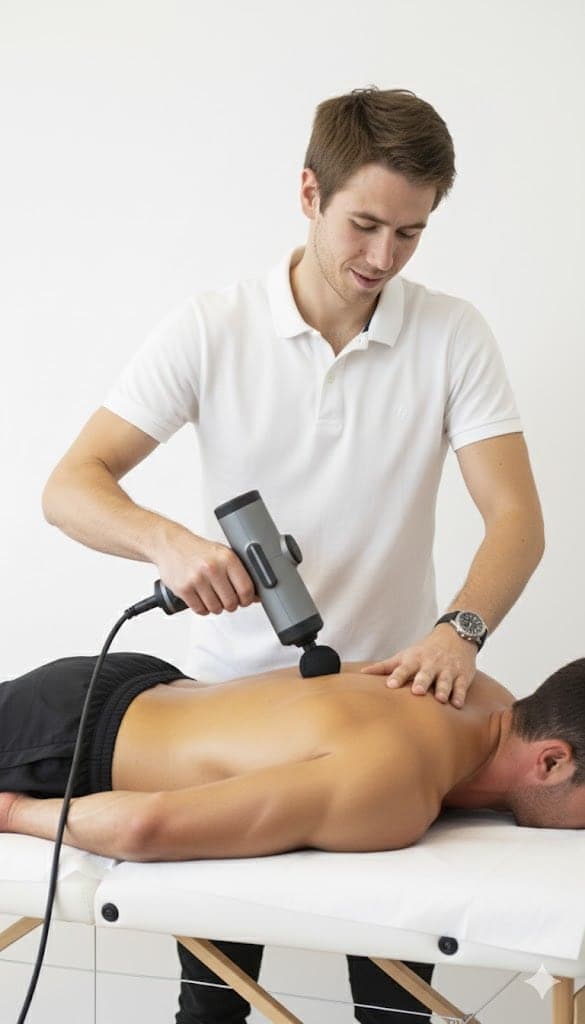
Written by
Chris
Massage therapist, nutrition and exercise physiologist
Norwegian-certified with a Bachelor’s in Physical Education and Nutrition and over ten years of clinical practice, working from a portable table in clients’ homes across the Paphos district.
This article is general information, not a medical diagnosis. If you have severe, worsening or unexplained pain, numbness, weakness, or pain after an accident, see a doctor first.