
Therapeutic Massage Kato Pafos: Advanced Deep-Tissue Treatment for Lasting Pain Relief
In short
Discover therapeutic massage in Kato Pafos that treats the root cause of pain, not just symptoms. Expert mechanical deep-tissue therapy with proven results for stress relief and muscle recovery.
After a decade of working with bodies—from chronic pain sufferers to elite athletes—I’ve learned one fundamental truth: most people seeking therapeutic massage in Kato Pafos are asking the wrong question. They ask, “Where can I get a relaxing massage?” when they should be asking, “Who can durably resolve the mechanical dysfunction causing my pain?”
Let me be direct with you. If you’re reading this because your shoulder has been tight for months, your lower back aches after a day at the beach, or you wake up with neck tension that no amount of stretching seems to fix, you’ve likely tried traditional massage already. And if you’re still searching, it didn’t work. Not because massage therapy is ineffective, but because the approach was fundamentally flawed.
I provide therapeutic massage in Kato Pafos using a method that differs radically from what you’ll find at hotel spas or wellness centers. With a Bachelor’s degree in Physical Education and Nutrition from Norway and ten years of specialized practice, I’ve developed an approach that combines biomechanical understanding with advanced mechanical deep-tissue therapy. This isn’t about relaxation—though that’s a pleasant side effect. This is about lasting resolution of the muscular and fascial restrictions that create your pain.
Why Traditional Therapeutic Massage in Kato Pafos Falls Short
I remember a client who came to me last summer—a British expat who’d been living in Pafos for three years. She’d visited seven different massage therapists for persistent shoulder pain. “They all feel nice during the session,” she told me, “but two days later, I’m back where I started.” This is not an isolated case. It’s the rule, not the exception.
The limitation isn’t the therapist’s intention or effort. It’s the tool. Human hands, no matter how skilled, face three fundamental constraints:
- Depth limitation: Even the strongest hands cannot consistently penetrate through multiple layers of dense fascial tissue to reach the restriction’s origin point.
- Inconsistency: Manual pressure varies with the therapist’s fatigue, hand position, and dozens of other variables. Your third session won’t replicate your first.
- Imprecision: Broad hand pressure disperses force across too large an area, missing the specific adhesions and trigger points that perpetuate your pain pattern.
This is why you experience temporary relief followed by symptom return. The superficial tension is addressed, but the deep mechanical dysfunction—the root cause—remains untouched. You’re treating symptoms, not causes, and that’s an expensive cycle that never resolves anything durably.
The Science Behind Effective Therapeutic Massage for Stress and Muscle Tension
When we discuss stress-related muscle tension or chronic muscular discomfort, we’re actually describing a complex biomechanical process. Stress activates your sympathetic nervous system, increasing cortisol and triggering sustained muscle contraction—particularly in the neck, shoulders, and lower back. Over time, this creates fascial adhesions: areas where the connective tissue matrix becomes dense, restricted, and hypersensitive.
These adhesions don’t release through surface-level manipulation. Think of fascial restriction like a knot in thick rope. Rubbing the surface doesn’t untie it. You need targeted, sustained pressure applied at the precise location and depth where the fibers have bound together.
My therapeutic approach in Kato Pafos addresses this reality through mechanical precision. The specialized tool I use delivers consistent, controlled pressure that can be calibrated from gentle surface work to intensely deep fascial release—far beyond what hands can achieve. This allows me to:
- Identify the exact location of fascial restriction through palpation and biomechanical assessment
- Apply sustained pressure at the necessary depth to mechanically separate adhered tissue layers
- Maintain that pressure with absolute consistency until the tissue releases
- Progress systematically through the entire kinetic chain, not just the painful area
This is clinical therapeutic massage. It’s based on understanding anatomy, physiology, and the biomechanics of how your body compensates for dysfunction. And it works because it addresses causation, not just sensation.
How Machine-Assisted Therapeutic Massage Delivers Superior Results
Let me share something I learned in my fourth year of practice. I was working with a competitive cyclist who had chronic IT band syndrome. Using traditional manual techniques, I could provide temporary relief, but he’d return within two weeks with the same complaint. I realized the limitation wasn’t my technique—it was the inherent constraint of using my thumbs and elbows against tissue that had been compressed and restricted for years.
That recognition led me to develop a method using a specialized mechanical tool that revolutionized my practice and, more importantly, my clients’ outcomes. This isn’t a massage gun or percussion device—those tools provide neurological distraction but minimal structural change. This is a precision instrument designed for deep fascial work.
Precision: Targeting the Exact Source of Dysfunction
The tool’s narrow contact point allows me to focus force on specific adhesions, trigger points, and restricted fascial planes. While hands spread pressure across several square centimeters, this method concentrates it on the precise millimeters that matter. When I’m treating a chronic subscapularis restriction—a common cause of shoulder pain—I can position the tool at the exact angle and depth needed to reach that muscle, something impossible to achieve consistently with manual pressure.
Power: Penetrating Beyond Surface Tissue
This is where the fundamental difference becomes obvious. Human thumbs, even from a therapist with exceptional strength, deliver perhaps 15-20 pounds of sustained pressure before fatigue sets in. The mechanical tool I use can deliver up to 80 pounds of controlled, sustained pressure without variation or fatigue. This isn’t about causing pain—it’s about reaching the tissue depth where change actually occurs.
For athletic clients or those with dense muscle mass, this depth is essential. I’ve worked with powerlifters, construction workers, and former military personnel whose tissue density simply cannot be effectively treated with manual techniques. The mechanical advantage allows me to provide the therapeutic intensity they need without compromising precision or control.
Consistency: Eliminating the Variable of Human Limitation
Here’s a reality that few manual therapists acknowledge: every therapist has off days. Fatigue, minor injury, or simply the cumulative toll of performing deep-tissue work affects treatment quality. Your fifth session might not match your first, not because the therapist cares less, but because biology has limits.
Mechanical assistance eliminates this variable entirely. The tool performs identically in session one and session fifty. The pressure, angle, and duration remain precisely calibrated to your needs without degradation. This consistency is critical for progressive treatment—each session builds on the last without regression, creating compound improvement over time.
Therapeutic Massage Benefits for Stress Reduction and Muscle Recovery in Kato Pafos
Let’s address what brings most people to seek therapeutic massage in Kato Pafos: stress and muscle tension. Living in a resort area like Pafos presents unique stressors—whether you’re managing a business in the tourism industry, adapting to expat life, or dealing with the physical demands of activities in Cyprus’s climate.
| Condition | Typical Duration Before Treatment | Expected Improvement Timeline | Long-Term Outcome |
|---|---|---|---|
| Chronic neck tension from desk work | 6+ months | Significant relief within 3-4 sessions | Resolution with maintenance every 4-6 weeks |
| Lower back pain from compensatory patterns | 1-3 years | Noticeable improvement after 5-6 sessions | 80-90% reduction maintained with quarterly sessions |
| Shoulder impingement/restriction | 3-12 months | Range of motion gains visible in 2-3 sessions | Full function restored with proper progression |
| Athletic recovery and performance optimization | Ongoing management | Immediate improvement post-session | Enhanced performance maintained with regular treatment |
These aren’t hypothetical timelines. They’re based on documented outcomes from clients I’ve treated in Kato Pafos and throughout my career. But they depend entirely on one factor: treating the mechanical cause of the problem, not just massaging the area that hurts.
The Neurological Dimension of Stress Relief
When I work on someone carrying chronic stress patterns, something remarkable happens within the first session. As we release deep fascial restrictions—particularly in the neck, jaw, and thoracic region—I can see the shift in their nervous system in real time. Breathing deepens. Facial tension softens. Sometimes they fall asleep mid-session, which never happens when pain is being superficially addressed.
This isn’t mystical. It’s neurophysiology. Chronic muscular tension maintains your sympathetic nervous system in a state of activation. By mechanically releasing that tension at its source, we interrupt the feedback loop. Your nervous system receives the signal that the perceived threat has resolved, allowing the parasympathetic response—rest, digest, and heal—to dominate.
This is why clients consistently report not just physical relief, but improved sleep, reduced anxiety, and better stress management after a series of treatments. We’re not just working on muscles. We’re recalibrating your entire neuromuscular system.
Why Location Matters: Therapeutic Massage Delivered to Your Space in Kato Pafos
Here’s a practical reality that significantly impacts treatment outcomes: the environment matters. I’ve conducted treatments in clinic settings, and I now exclusively provide therapeutic massage by traveling to my clients’ locations in Kato Pafos. This isn’t a convenience service—it’s a strategic decision that enhances results.
After a genuinely therapeutic deep-tissue session—one that has released significant fascial restriction and reset neuromuscular patterns—your body is in a temporarily vulnerable state. You’re slightly dehydrated. Your blood pressure may have dropped. Your muscles are in a state of reorganization. The last thing your body needs is to navigate traffic, maintain postural control while driving, or expose yourself to stress immediately after treatment.
When I travel to your home, apartment, or hotel in Kato Pafos, you can transition directly from the treatment table to rest. This allows your body to integrate the work without interference. The nervous system shift we’ve created isn’t disrupted by environmental stress. You can hydrate properly, rest if needed, and allow the therapeutic changes to consolidate.
I bring everything required: a professional-grade treatment table, all necessary equipment, and the specialized mechanical tool that makes this work possible. Your only requirement is space equivalent to a yoga mat and the commitment to follow the treatment plan we’ve designed together.
The Investment Model: Why Therapeutic Massage Should Be Approached as Health Optimization
I need to challenge a prevailing misconception directly. If you’re viewing therapeutic massage as an occasional luxury or stress-relief treat, you’re categorizing it incorrectly. Proper therapeutic bodywork—the kind that creates lasting structural change—is a health investment, not an expense.
Consider the actual costs of leaving muscular dysfunction untreated. A client came to me last year after spending eighteen months managing chronic lower back pain. He’d purchased an ergonomic office chair (€600), seen three different physiotherapists for assessment and exercises (€800+), taken numerous NSAIDs, and was considering an MRI. His pain hadn’t improved. Within six weeks of dedicated therapeutic treatment—eight sessions total—his pain had resolved by approximately 85%, and he understood the movement patterns that had created the problem.
The financial comparison isn’t the primary point, though it’s relevant. The crucial distinction is outcome. Ergonomic equipment, anti-inflammatory medication, and generic stretching protocols address symptoms. They don’t resolve the mechanical dysfunction that generates those symptoms. Proper therapeutic massage, approached systematically and with adequate intensity, does.
What a Dedicated Partnership Looks Like
I don’t offer single sessions to new clients. This isn’t a business preference—it’s an ethical position. One session of deep therapeutic work can provide relief, but it cannot create lasting change in tissue that has been restricted for months or years. That requires a structured approach: assessment, progressive treatment, education about the biomechanics of your specific dysfunction, and a maintenance plan.
When we begin working together, I conduct a comprehensive biomechanical assessment. Where is the pain? More importantly, what compensatory patterns have developed around that pain? What postural habits, movement restrictions, or strength imbalances are perpetuating the problem? We’re not just addressing your shoulder—we’re examining your entire kinetic chain to understand why your shoulder became dysfunctional in the first place.
From there, we design a treatment plan. For acute issues in someone with generally good tissue quality, this might be four to six sessions. For chronic conditions or athletic optimization, it could be eight to twelve initial sessions followed by maintenance intervals. Each session builds on the previous one, progressively addressing layers of restriction and compensation.
Understanding the Experience: What to Expect During Treatment
Let me set appropriate expectations, because therapeutic deep-tissue work of this caliber is distinctly different from the massage most people have experienced. This is not a relaxation session with ambient music and aromatic oils. This is clinical bodywork focused entirely on structural change.
The initial assessment typically takes twenty to thirty minutes. I need to understand your pain history, observe your movement patterns, palpate tissue quality throughout your body (not just where it hurts), and identify the primary restrictions and compensations we’ll address. This information determines our treatment strategy.
The treatment itself involves sustained pressure at depths that may initially be uncomfortable. I say “uncomfortable,” not “painful,” deliberately. There’s a critical difference between therapeutic discomfort—the sensation of restricted tissue being released—and pain, which signals tissue damage. You will always be within your tolerance threshold, and intensity is continually adjusted based on your feedback and tissue response.
Most clients describe the sensation as “hurts so good”—an intensity that clearly indicates work is occurring, but that simultaneously feels like exactly what their body needs. As tissue releases, which often happens suddenly during sustained pressure, the discomfort immediately decreases. This release is palpable for both of us—I feel the tissue soften and lengthen, and you feel the tension dissipate.
Sessions typically last sixty to ninety minutes, depending on the areas being addressed and tissue complexity. Post-session, most clients report feeling simultaneously energized and deeply relaxed. You may experience mild soreness for 24-48 hours as your body adapts to the structural changes—similar to post-exercise soreness. This is normal and indicates that significant fascial reorganization has occurred.
Who Benefits Most from Advanced Therapeutic Massage in Kato Pafos
While virtually anyone with muscular tension can benefit from proper therapeutic work, certain populations see particularly dramatic results. Understanding whether you fall into these categories helps set appropriate expectations.
Chronic Pain Sufferers Who’ve Exhausted Other Options
If you’ve been managing ongoing pain for more than six months, tried conventional physiotherapy, adjusted your ergonomics, and still wake up with the same discomfort, you’re an ideal candidate. Chronic pain nearly always involves deep fascial restriction that hasn’t been adequately addressed. The intensity and precision of mechanical deep-tissue work can access these restrictions where other methods have failed.
Athletes and Active Individuals Seeking Performance Optimization
Athletic performance is limited by fascial restriction more than most athletes realize. When your hip flexors are bound with adhesions, your stride length decreases. When thoracic fascia is restricted, your breathing efficiency drops. When shoulder capsule mobility is compromised, your swimming stroke or tennis serve loses power. I work with everyone from competitive cyclists to recreational golfers, and the performance improvements following systematic fascial release are consistently measurable.
Desk Professionals and Digital Workers
If you spend six or more hours daily at a computer, you’re developing predictable compensation patterns: forward head posture, rounded shoulders, thoracic kyphosis, and hip flexor shortening. These aren’t minor postural quirks—they’re structural changes that create pain and dysfunction. Regular therapeutic work, combined with education about movement correction, can completely reverse these patterns before they become lasting.
Expats and Newcomers to Cyprus Adapting to Environmental Changes
Relocating to Kato Pafos often involves increased physical activity—more swimming, walking, outdoor recreation—combined with different climate conditions and sometimes different stress patterns. Your body adapts to these changes, but not always optimally. Proactive therapeutic work helps manage the transition, preventing the development of overuse injuries or compensation patterns as your activity level changes.
The Biomechanics of Common Issues I Treat in Kato Pafos
Allow me to explain several conditions I see repeatedly, because understanding the mechanism helps you recognize whether your issue fits this pattern.
Chronic Shoulder Tension and Restricted Range of Motion
True shoulder dysfunction rarely originates in the shoulder. In nine out of ten cases, the shoulder pain you’re experiencing is a symptom of thoracic spine restriction, scapular dyskinesis (abnormal shoulder blade movement), or cervical compensation. When the muscles that stabilize your shoulder blade—the rhomboids, lower trapezius, and serratus anterior—are weak or inhibited by fascial restriction, your shoulder joint compensates by overusing the upper trapezius and levator scapulae. These muscles become chronically overworked, creating the “tight shoulders” sensation that won’t release with stretching.
Treatment requires releasing the fascial restrictions throughout your entire shoulder girdle and upper back, then re-educating proper scapular movement patterns. Surface massage of the upper trapezius provides temporary relief but changes nothing structurally. Deep work into the scapular stabilizers, combined with thoracic mobility restoration, resolves the root cause.
Lower Back Pain from Postural Compensation
Your lower back hurts, so you assume the problem is in your lower back. Usually, it isn’t. Lower back pain in the absence of acute injury or disc pathology typically results from hip flexor and anterior chain tightness forcing your lumbar spine into excessive extension, or from gluteal weakness causing your lumbar extensors to compensate for inadequate hip stability.
I had a client—a property manager who walked between sites daily—with debilitating lower back pain. Every treatment she’d received focused on massaging her lower back muscles, which were indeed tight and painful. But those muscles were tight because they were compensating for restricted hip flexors and weak glutes. We spent three sessions working exclusively on her hip flexors, TFL, and anterior thigh fascia, never touching her lower back. Her pain decreased by 70%. That’s the difference between treating symptoms and addressing causes.
Neck Pain and Tension Headaches
Tension headaches originate from sustained contraction in the suboccipital muscles—a group of four small muscles connecting the base of your skull to your first two cervical vertebrae. These muscles become hypertonic (chronically contracted) due to forward head posture, visual strain, and stress-related jaw clenching. The resulting tension refers pain throughout your head, creating the “vice grip” sensation many describe.
Manual treatment of the suboccipitals is possible but extremely demanding for the therapist and often inadequately deep for someone with chronic restriction. The mechanical tool I use can maintain the sustained pressure necessary to release these small, deep muscles while I precisely control the angle and intensity. Combined with work on the associated cervical and upper thoracic fascia, this approach typically resolves tension headaches within three to four sessions—durably, assuming the postural causes are also addressed.
Practical Information: How to Begin Therapeutic Treatment in Kato Pafos
If the approach I’ve described resonates with your needs and you’re committed to addressing your pain or dysfunction at its source, here’s how we proceed.
Initial Consultation and Assessment
We begin with a discussion about your history. How long has this condition existed? What have you tried previously? What makes it better or worse? What are your goals—pain elimination, performance improvement, or both? This conversation, combined with movement assessment and palpation, allows me to determine whether my method is appropriate for your situation and what treatment progression will be required.
I’m direct about this: if I believe you need medical imaging, different intervention, or that your condition isn’t appropriate for deep-tissue work, I’ll tell you. My reputation depends on outcomes, not on accepting every potential client regardless of fit.
Treatment Frequency and Duration
For chronic conditions, I typically recommend sessions twice weekly for the first two weeks, then weekly for four to six weeks, followed by maintenance sessions every three to six weeks depending on your activity level and tissue response. Acute issues or athletic optimization might follow different protocols, but the principle remains: consistent, progressive treatment that allows tissue adaptation between sessions.
Your Commitment to the Process
Therapeutic outcomes require partnership. I bring expertise, technique, and the mechanical capability to create structural change. You bring commitment to the treatment schedule, implementation of movement corrections I prescribe, adequate hydration, and patience with the process. Fascia that has been restricted for years doesn’t reorganize instantly—it requires progressive treatment and your body’s natural healing response.
Some clients see dramatic improvement within two sessions. Others require eight sessions before the compound effect becomes obvious. This variation depends on tissue density, condition chronicity, and your body’s individual healing capacity. What remains constant is that systematic, properly executed therapeutic work creates change that surface-level treatment cannot.
Frequently Asked Questions About Therapeutic Massage in Kato Pafos
How is this different from regular massage I can get at a spa?
Spa massage is designed for relaxation and stress relief through superficial muscle work and nervous system calming. It’s pleasant and has value for general wellness. What I provide is clinical therapeutic treatment designed to durably resolve biomechanical dysfunction. The intensity, depth, precision, and systematic progression are completely different. Most clients who’ve experienced both describe the difference as “night and day.”
Will it hurt?
You will experience therapeutic discomfort during deep fascial release—the sensation of restricted tissue being mechanically separated and lengthened. This is distinctly different from pain indicating tissue damage. Most clients describe it as intensely relieving despite the discomfort. I continuously adjust pressure based on your feedback and tissue response. You’re always in control of intensity through direct communication.
How quickly will I see results?
Most clients notice some improvement after the first session—reduced pain, increased range of motion, or better sleep. However, lasting structural change requires progressive treatment. Acute conditions (present less than three months) typically respond within four to six sessions. Chronic conditions (present longer than six months) usually require eight to twelve sessions for substantial resolution. Athletic optimization is ongoing, with each session contributing to enhanced performance.
Can you work with serious conditions like herniated discs or arthritis?
I work within a defined scope. Herniated discs, severe arthritis, acute inflammation, and certain other conditions require medical management, and I’ll refer you appropriately if these are present. However, many people with these diagnoses also have significant muscular compensation and fascial restriction that therapeutic work can address. We can often work around structural pathology to improve function and reduce pain, but always in coordination with your medical care.
Do I need to do anything special before or after sessions?
Hydrate well before your session—at least one liter of water in the hours leading up to treatment. After your session, continue drinking water to support fascial rehydration and metabolic waste removal. Avoid intense exercise for 24 hours post-session to allow tissue adaptation. Some clients benefit from heat application (hot shower or bath) 12-24 hours after treatment to reduce any soreness. Beyond this, simply allow your body to rest and integrate the work.
How do I know if this will work for my specific condition?
The honest answer is that we won’t know with complete certainty until we try, but I can provide a realistic assessment during initial consultation based on your condition history and tissue response. Conditions that involve mechanical restriction, compensation patterns, and fascial adhesion respond predictably well. Issues with nerve pathology, systemic inflammation, or structural damage beyond soft tissue may require different intervention. I’m direct about expected outcomes and will tell you if I believe another approach is more appropriate.
Why don’t you offer single sessions to new clients?
Because single sessions cannot create lasting change in tissue that has been dysfunctional for extended periods. I could take your money for a one-time session, provide temporary relief, and you’d return in two weeks with the same complaint. That’s not therapeutic—it’s transactional. Real resolution requires systematic progressive treatment, which means commitment to a series. I’d rather decline a client than provide a service I know won’t achieve their actual goal of lasting improvement.
Is this covered by insurance?
Insurance coverage varies significantly by policy and provider. Some international health insurance plans cover therapeutic massage with proper documentation. I provide detailed receipts that include treatment codes and descriptions you can submit to your insurance company. However, most clients pay directly and view this as a health investment rather than relying on insurance coverage, which often limits session frequency and treatment intensity.
The Philosophy Behind Lasting Results: Why This Approach Works
Let me conclude by sharing the perspective that has guided my practice for ten years. The human body is an adaptive system of remarkable sophistication. When you develop a restriction, injury, or painful area, your body doesn’t ignore it—it compensates. Surrounding muscles take on additional load. Movement patterns shift to avoid the painful range. Fascia thickens to provide stability where muscle function has been compromised.
These adaptations are intelligent in the short term. They allow you to continue functioning despite dysfunction. But they create a cascade of secondary problems. The compensation becomes chronic. The substitution patterns become your new normal. Pain migrates from the original site to the areas now overworked. Eventually, you have widespread dysfunction with no clear origin point.
This is why conventional treatment so often fails. You address the pain in your neck, but it keeps returning because the underlying thoracic restriction forcing your neck into compensation hasn’t been resolved. You treat your knee pain, but it persists because the hip mobility limitation causing altered gait mechanics remains.
My approach is different because it’s systemic rather than symptomatic. I don’t just work on where it hurts. I assess your entire kinetic chain, identify the primary dysfunction creating the compensation cascade, and address that root cause with sufficient intensity and precision to create actual structural change. Then we progressively work through the chain of compensations that developed around the primary dysfunction.
This is why results are lasting when the approach is followed properly. We’re not temporarily relaxing tight muscles—we’re resolving the mechanical restriction that caused those muscles to tighten in the first place. We’re not just reducing pain—we’re eliminating the biomechanical dysfunction generating that pain.
This requires time, intensity, expertise, and the right tools. It requires your commitment to the process and trust in the method. But it works. Consistently. Measurably. Durably.
If you’re ready to stop managing symptoms and start resolving causes, therapeutic massage in Kato Pafos delivered through this advanced mechanical approach offers a solution that actually changes your structural reality. It’s not the easiest path—genuine therapeutic work demands more than passive relaxation. But if your goal is lasting resolution rather than temporary relief, it’s the only path that consistently delivers.
Your body has been compensating long enough. It’s time to address what’s actually wrong.
Evidence and limits
Massage may help with some symptoms, but benefits and evidence vary by condition. It does not replace medical assessment or treatment. A page update is not evidence of an independent clinical review.
Further reading: Massage therapy: evidence, safety and limitations by US National Center for Complementary and Integrative Health. This is general background reading, not verification of every claim in this article.
How we describe evidence and updates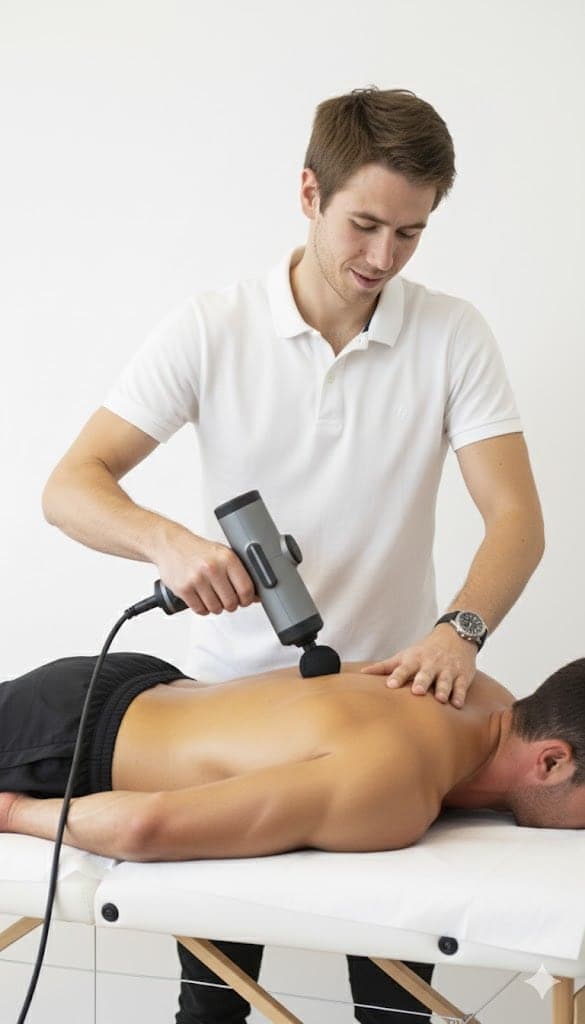
Written by
Chris
Massage therapist, nutrition and exercise physiologist
Norwegian-certified with a Bachelor’s in Physical Education and Nutrition and over ten years of clinical practice, working from a portable table in clients’ homes across the Paphos district.
This article is general information, not a medical diagnosis. If you have severe, worsening or unexplained pain, numbness, weakness, or pain after an accident, see a doctor first.