Pain Management Massage Kato Paphos: Advanced Deep-Tissue Treatment for Lasting Relief
In short
Discover specialized pain management massage in Kato Paphos using precision mechanical deep-tissue techniques. Expert treatment targeting root causes, not symptoms, for lasting results.
After a decade of working with clients who’ve tried everything—from traditional massage to physiotherapy, painkillers to cortisone injections—I’ve witnessed a consistent pattern: most pain management approaches in Kato Paphos address symptoms rather than causes. That’s precisely why people continue suffering, returning for the same treatments month after month, year after year.
My approach to pain management massage in Kato Paphos differs fundamentally from what you’ll find at spas, wellness centers, or even most clinical settings. With a Bachelor’s degree in Physical Education and Nutrition from Norway and ten years specializing exclusively in advanced mechanical deep-tissue massage, I’ve developed a method that targets the biomechanical root of chronic pain. This isn’t about temporary relief or relaxation—it’s about lasting resolution.
The difference lies in understanding body mechanics at a sophisticated level and having the tools to work deeper, more precisely, and more consistently than human hands allow. When someone approaches me with chronic shoulder pain, lower back issues, or athletic performance limitations, I’m not looking at isolated symptoms. I’m analyzing movement patterns, fascial restrictions, muscular compensation strategies, and neurological feedback loops that have developed over months or years.
Understanding Chronic Pain: Why Traditional Massage Fails in Kato Paphos
Let me share something most massage therapists won’t tell you: the majority of pain management massage offered in Kato Paphos simply cannot address deep-seated muscular and fascial restrictions effectively. Human hands, no matter how skilled, have physical limitations in terms of pressure depth, precision, and endurance.
I learned this early in my career. During my first two years practicing manual deep-tissue massage, I noticed something troubling. On days when I was fresh—early morning, after rest—I could work effectively on clients with severe restrictions. But by my fourth or fifth appointment, my hands fatigued. The pressure became inconsistent. The precision suffered. My clients were experiencing variable results based purely on when they booked their appointment.
This realization drove me to seek a better solution. Not a shortcut, but a superior method that would allow me to deliver consistent, powerful, precisely controlled treatment to every client, regardless of their condition severity or my physical state that day.
The Biomechanical Reality of Chronic Pain
Chronic pain develops through a predictable progression. Initially, acute injury or repetitive stress creates localized tissue damage. The body responds with inflammation, muscle guarding, and protective tension patterns. If the underlying cause isn’t addressed properly, these protective mechanisms become lasting adaptations.
Fascia—the connective tissue surrounding muscles—begins to adhere and thicken. Muscle fibers develop trigger points where sarcomeres remain contracted even at rest. Neural pathways reinforce pain signals, creating chronic sensitization. The body compensates by recruiting secondary muscle groups, creating cascading dysfunction throughout the kinetic chain.
This is why someone with chronic lower back pain often presents with restrictions in their hip flexors, hamstrings, thoracolumbar fascia, and even their neck and shoulders. The body is an interconnected system, and pain management massage in Kato Paphos must address this systemic reality, not just the location where pain is felt.
My Specialized Approach to Pain Management Massage in Kato Paphos
My method centers on advanced mechanical deep-tissue massage using specialized equipment that delivers three critical advantages over traditional manual techniques: precision, power, and consistency. This isn’t a massage gun or percussion device you can buy online. This is professional-grade equipment designed specifically for clinical fascial release and deep muscular work.
Precision: Targeting the Exact Source of Dysfunction
When I assess a client, I’m identifying specific fascial planes, individual muscle bellies, and particular fiber orientations that require release. The mechanical tool I use allows me to work with millimeter-level precision, following fascial lines and addressing restrictions at their exact anatomical location.
Traditional massage spreads pressure across the entire hand surface—approximately 50-70 square centimeters. My specialized tool concentrates controlled force through contact points of less than 2 square centimeters. This focused application allows penetration to deep muscular layers without causing surface tissue trauma or excessive discomfort.
I’ve treated clients in Kato Paphos with chronic piriformis syndrome who had received dozens of traditional massage sessions with minimal improvement. Using precise mechanical application along the piriformis attachment points and through the sciatic notch, we achieved significant pain reduction within three sessions because we could finally reach the actual restricted tissue.
Power: Reaching Depths Manual Techniques Cannot Access
The human hand can generate approximately 10-15 kilograms of sustained pressure before fatigue sets in. Deep stabilizing muscles—the multifidus, rotator cuff, deep hip rotators—often require significantly greater force for effective release, particularly when chronic adhesions have developed.
My mechanical approach delivers controlled, sustained pressure ranging from light (for sensitive areas or initial assessment) to powerfully deep (for athletes or severe restrictions) without the physical limitations that constrain manual therapy. This capability allows me to work through multiple fascial layers systematically, releasing restrictions in the precise order necessary for optimal results.
I recently worked with a competitive cyclist experiencing chronic IT band syndrome and lateral knee pain. Manual foam rolling and traditional massage had provided only temporary relief. By applying deep, sustained mechanical pressure along the entire lateral fascial line—from the tensor fasciae latae through the IT band to the tibial attachment—combined with active movement protocols, we resolved the underlying restriction pattern. He’s now training pain-free and achieving personal best times.
Consistency: Eliminating Treatment Variability
Perhaps the most significant advantage of my pain management massage approach in Kato Paphos is consistency. Every session delivers identical quality. There are no “off days” where my physical condition affects treatment efficacy. The mechanical tool performs exactly as programmed, session after session.
This consistency matters enormously for treatment outcomes. Effective fascial remodeling and neurological reprogramming require repeated, consistent stimulus. When treatment quality varies—as it inevitably does with purely manual techniques—the body receives inconsistent signals, slowing or preventing adaptation.
With my method, we establish the precise treatment parameters that work for your specific condition during the first session, then replicate those parameters exactly in subsequent sessions. This allows for systematic progression and predictable improvement rather than the frustrating variability many people experience with traditional pain management approaches.
Pain Management Massage Kato Paphos: Conditions I Treat
My specialized approach addresses a comprehensive range of chronic pain conditions and performance limitations. I don’t work with acute injuries requiring medical intervention, but once you’re cleared for manual therapy, I can typically achieve results where other methods have failed.
Chronic Lower Back Pain and Sciatica
Lower back pain represents the most common condition I treat in Kato Paphos. The typical presentation involves years of recurring episodes, multiple healthcare provider visits, various treatments with temporary results, and increasing frustration.
My assessment examines the entire posterior chain: lumbar erectors, quadratus lumborum, thoracolumbar fascia, hip flexors (particularly psoas), hamstrings, and gluteal complex. Most chronic lower back pain involves fascial restrictions and muscular imbalances across multiple areas, not just the location where pain is experienced.
Treatment targets identified restrictions systematically, working from superficial to deep layers, releasing adhesions and restoring normal tissue mobility. We combine mechanical deep-tissue work with movement education and postural correction strategies. The goal isn’t temporary relief—it’s lasting resolution by addressing the biomechanical causes driving your pain.
Shoulder Pain, Rotator Cuff Issues, and Frozen Shoulder
Shoulder dysfunction typically develops from one of two patterns: acute trauma (sports injury, fall) that wasn’t rehabilitated properly, or chronic repetitive stress from work activities, sports, or daily movement patterns.
The shoulder’s complexity—involving the glenohumeral joint, scapulothoracic articulation, acromioclavicular joint, and the coordinated function of 17 muscles—means effective treatment requires sophisticated understanding of movement mechanics and precise intervention.
I’ve successfully treated frozen shoulder (adhesive capsulitis) cases that conventional physiotherapy struggled to resolve. By applying deep mechanical work to the joint capsule, releasing restrictions in the subscapularis, addressing fascial limitations in the pectorals and latissimus dorsi, and reprogramming scapular stability patterns, we restore functional range of motion and relieves pain.
Neck Pain, Tension Headaches, and TMJ Dysfunction
Cervical spine issues often involve multiple contributing factors: forward head posture from desk work, jaw clenching or grinding, upper trapezius hypertonicity, suboccipital tension, and thoracic spine restrictions.
My treatment addresses the entire cervicothoracic region, releasing restrictions in the deep neck flexors, scalenes, upper trapezius, levator scapulae, and suboccipital muscles. For TMJ-related pain, I work externally on the masseter, temporalis, and associated fascial structures while providing movement strategies to reduce habitual clenching patterns.
Many clients in Kato Paphos who’ve suffered tension headaches for years experience dramatic improvement once we address the underlying muscular and fascial restrictions creating excessive neural input to pain-processing centers.
Hip Pain, IT Band Syndrome, and Piriformis Issues
Hip complex dysfunction manifests in various presentations: lateral hip pain, groin discomfort, piriformis syndrome with sciatic nerve compression, or IT band syndrome causing knee pain.
Effective treatment requires working through dense fascial structures—the tensor fasciae latae, iliotibial band, gluteal complex, deep hip rotators, and hip flexors. These tissues often develop severe restrictions that manual therapy simply cannot adequately address.
My mechanical approach excels with these conditions. The deep, sustained pressure necessary to release chronic IT band adhesions or piriformis restrictions can be delivered comfortably and effectively, producing results that clients describe as “finally getting to the actual problem.”
Athletic Performance Optimization
Beyond pain management, I work extensively with athletes seeking performance enhancement. Fascial restrictions and muscular imbalances limit power output, reduce movement efficiency, and increase injury risk even when they’re not causing obvious pain.
By systematically identifying and releasing restrictions throughout the kinetic chain, we optimize force transmission, improve movement quality, and enhance recovery capacity. Athletes report improvements in strength, flexibility, endurance, and movement efficiency following treatment.
I’ve worked with runners, cyclists, tennis players, and triathletes in Kato Paphos, helping them achieve personal records and compete without the limitations they’d accepted as normal. When your body moves efficiently, without compensatory patterns and fascial restrictions, performance improves dramatically.
The Treatment Process: What to Expect from Pain Management Massage in Kato Paphos
My approach differs fundamentally from traditional massage sessions. This is clinical work aimed at lasting results, not temporary relaxation. Understanding the process helps you make an informed decision about whether this method suits your needs.
Initial Assessment and Treatment Planning
Your first session begins with comprehensive assessment. I evaluate movement patterns, perform orthopedic tests, palpate tissue quality, and discuss your pain history in detail. I’m identifying not just where you hurt, but why—the biomechanical causes driving your symptoms.
This assessment informs a customized treatment plan. Everyone’s body presents differently. Movement patterns, tissue density, pain tolerance, healing capacity, and lifestyle factors all influence treatment approach and expected timeline.
I provide honest projections about expected results and necessary session frequency. Simple cases—acute issues without chronic compensation patterns—may resolve in 3-5 sessions. Complex cases—years of chronic pain with multiple compensatory patterns—typically require 8-12 sessions for comprehensive resolution.
Treatment Session Structure
Each session follows a systematic approach. We begin with areas identified during assessment as primary restrictions. Using the specialized mechanical tool, I work progressively through fascial layers, releasing adhesions and restoring tissue mobility.
The sensation differs from traditional massage. It’s deeper, more intense, more focused. Most clients describe it as “productive discomfort”—you feel that we’re working directly on the restricted tissue causing your problems. This isn’t the pleasant, relaxing sensation of spa massage. It’s clinical work producing mechanical changes in tissue structure and neurological function.
Session duration typically ranges from 60-90 minutes, depending on the number of areas requiring treatment and tissue density. I work methodically, ensuring each area receives adequate treatment before progressing.
Post-Treatment Response and Progression
After your first session, expect some soreness. We’ve created mechanical changes in tissues that have been restricted for months or years. Your body needs time to adapt, clear metabolic waste products, and establish new movement patterns.
Initial soreness typically subsides within 24-48 hours, replaced by improved mobility and reduced pain. Subsequent sessions build on these improvements, systematically addressing remaining restrictions and reinforcing positive adaptations.
I provide specific movement recommendations between sessions. Maintaining improvements requires supporting new movement patterns through daily activities. This isn’t complicated—simple awareness practices and occasional stretches—but it’s essential for lasting results.
Why Mechanical Deep-Tissue Massage Produces Superior Results
The question I’m asked most frequently: “Why is your method better than traditional massage?” The answer lies in understanding what’s actually required to create lasting change in chronically restricted tissue.
Depth and Duration of Pressure Application
Research on fascial remodeling demonstrates that effective release requires sustained pressure of sufficient depth for adequate duration. Specifically, we need approximately 90-120 seconds of continuous pressure to trigger mechanoreceptor-mediated relaxation responses in muscle tissue and begin plastic deformation of fascial restrictions.
Human hands fatigue. Maintaining 12-15 kilograms of pressure for two minutes is physically demanding. Doing this repeatedly throughout a 60-minute session is exhausting. Therapists naturally reduce pressure as they fatigue, even unconsciously.
My mechanical approach maintains precise, consistent pressure for exactly the duration required, regardless of treatment session length or number of areas addressed. This consistency produces reliable, predictable results.
Precision Reduces Collateral Discomfort
Paradoxically, the more focused and precise the pressure application, the less overall discomfort clients experience. When manual therapy attempts to work deeply, pressure spreads across the entire hand, affecting multiple tissue layers and creating more widespread soreness.
Mechanical precision targets exactly the restricted tissue requiring release. Surrounding tissues experience minimal stress. Clients frequently express surprise at how comfortable the treatment feels given the depth of work being performed.
Consistent Quality Drives Neurological Adaptation
Chronic pain involves neurological sensitization—the nervous system becomes hyperresponsive to inputs from affected areas. Resolving this requires consistent, repeated stimulus that trains the nervous system to interpret sensations from previously painful areas as normal rather than threatening.
When treatment quality varies—deep one session, lighter the next—the nervous system receives inconsistent input, slowing desensitization. My method delivers identical quality session after session, accelerating neurological reprogramming and producing faster pain relief.
Pain Management Massage Kato Paphos: Investment in Long-Term Health
I position my service explicitly as an investment, not an expense. This distinction matters. Expenses are costs you accept repeatedly for temporary benefits. Investments generate lasting returns that improve your situation durably.
Traditional pain management approaches—regular massage sessions, chiropractic adjustments, pain medications—represent ongoing expenses. You feel better temporarily, then require repeated treatment. The underlying problem persists.
My approach targets lasting resolution. We invest time and resources upfront to address the biomechanical causes of your pain. Once resolved, you maintain improvements through normal activity and occasional maintenance work, not weekly or monthly treatment sessions.
The True Cost of Chronic Pain
Consider what chronic pain costs beyond treatment expenses: reduced work productivity, limited recreational activities, compromised sleep quality, decreased exercise capacity, medication side effects, and diminished quality of life.
Clients tell me they’ve adjusted their entire lives around pain—avoiding activities they love, accepting limitations as inevitable, planning their days around discomfort levels. This isn’t living fully. It’s managing disability.
When we successfully resolve chronic pain, you reclaim capabilities you’d resigned yourself to losing. You sleep properly. You exercise effectively. You play with your children or grandchildren without limitation. You travel comfortably. You work productively. These improvements represent value that far exceeds treatment investment.
Maintenance Requirements After Resolution
After achieving treatment goals, most clients require minimal ongoing work. I typically recommend maintenance sessions every 4-8 weeks to address minor restrictions before they develop into problems. Some clients need nothing beyond occasional sessions when they’ve been particularly active or stressed.
This maintenance requirement contrasts sharply with traditional approaches requiring weekly or biweekly sessions indefinitely. The long-term cost differential becomes substantial—thousands of euros saved over years.
The Mobile Advantage: Pain Management Massage That Comes to You
I travel throughout Kato Paphos, bringing professional equipment and expertise directly to your location. This mobile service provides significant practical advantages beyond mere convenience.
Optimal Recovery Environment
After intensive deep-tissue work, your body requires rest and hydration to process treatment effects and establish improvements. Immediately driving home, especially if you’ve traveled significant distance, interrupts this recovery process.
When I come to you, treatment ends in your own space. You can rest immediately, hydrate properly, apply heat or ice as needed, and allow your body to adapt comfortably rather than navigating traffic and stairs in a post-treatment state.
Professional Standards at Your Location
I provide everything required for professional treatment: specialized mechanical equipment, professional massage bench, appropriate lubricants, and complete setup. You need only provide space—bedroom, spare room, even a large living area works perfectly.
The quality of treatment delivered at your location matches or exceeds what you’d receive at any clinic facility. Actually, it often exceeds clinic treatment because you’re relaxed in your own environment, which enhances treatment effectiveness.
Scheduling Flexibility
Mobile service allows scheduling that fits your life. Early morning before work, midday breaks, evening sessions—we arrange treatment when it’s optimal for you, not limited by clinic operating hours.
For clients with demanding schedules or mobility limitations, this flexibility makes the difference between receiving necessary treatment or continuing to suffer.
Common Questions About Pain Management Massage in Kato Paphos
How does mechanical deep-tissue massage differ from traditional massage?
Traditional massage uses manual techniques—hands, forearms, elbows—to manipulate soft tissue. While skilled therapists achieve good results, they’re limited by physical constraints: hand fatigue, pressure depth limitations, and session-to-section variability. My mechanical approach uses specialized professional equipment delivering deeper, more precise, and more consistent treatment than manual techniques allow. This produces superior results for chronic pain conditions and fascial restrictions.
Is mechanical massage painful?
The sensation is best described as “productive intensity” rather than pain. We’re working on restricted tissue that has been problematic for months or years, so you feel the treatment. However, pressure is precisely controlled and adjusted to your tolerance. Most clients describe it as “exactly what my body needs”—deep enough to address the actual problem, but not overwhelming. Post-treatment soreness similar to workout fatigue is normal and subsides within 24-48 hours.
How many sessions will I need?
Treatment requirements vary based on condition severity, chronicity, and individual healing capacity. Simple cases with recent onset may resolve in 3-5 sessions. Complex chronic conditions with multiple compensatory patterns typically require 8-12 sessions for comprehensive resolution. I provide honest assessment after your first session, outlining expected timeline and progression. Most clients experience significant improvement within 3-4 sessions, with continued gains through the complete treatment course.
What conditions respond best to your treatment approach?
My method excels with chronic pain conditions involving fascial restrictions and deep muscular dysfunction: lower back pain, sciatica, shoulder dysfunction, neck pain, hip pain, IT band syndrome, tension headaches, and athletic performance limitations. Conditions requiring deep, precise, sustained pressure—where manual therapy has limitations—respond particularly well. I don’t treat acute injuries requiring medical intervention, but once cleared for manual therapy, I can typically achieve results where other methods have struggled.
How quickly will I see results?
Most clients notice improved mobility and reduced pain immediately after their first session, though some initial soreness may temporarily mask improvements. Significant, sustained results typically emerge by sessions 3-4 as cumulative tissue changes and neurological adaptations take effect. The timeline depends on your specific condition, but I provide clear expectations based on initial assessment. If we’re not seeing appropriate progress by session 4, we reassess approach and expectations.
Do I need to prepare anything for a mobile session?
Preparation is minimal. I need approximately 2×3 meters of space with reasonable privacy—bedroom, spare room, or living area works well. The floor should be relatively level. I bring all professional equipment including the treatment bench, mechanical tools, and supplies. You simply provide the space. Wearing comfortable clothing that allows access to treatment areas is helpful, though I provide appropriate draping for privacy.
What makes your approach different from physiotherapy?
Physiotherapy typically focuses on exercise rehabilitation, movement re-education, and manual therapy techniques. These approaches work well for many conditions. My specialty is specifically advanced mechanical deep-tissue work for chronic fascial restrictions and severe muscular dysfunction—conditions where standard physiotherapy manual techniques may not provide sufficient depth or precision. Many clients come to me after physiotherapy has plateaued, seeking the deeper mechanical release that my specialized equipment provides. I view the approaches as complementary rather than competing.
Is this treatment suitable for athletes?
Absolutely. Athletes represent a significant portion of my client base in Kato Paphos. Athletic performance depends heavily on optimal movement mechanics and fascial mobility. Even without obvious pain, restrictions limit power output, movement efficiency, and recovery capacity. I work with runners, cyclists, tennis players, triathletes, and other athletes to identify and release restrictions that compromise performance. The mechanical precision and depth of my approach make it particularly effective for athletic populations requiring maximum tissue quality and movement capability.
Comprehensive Pain Management Solutions in Kato Paphos
| Treatment Aspect | Traditional Massage | My Mechanical Approach |
|---|---|---|
| Pressure Depth | Limited by hand strength (10-15kg) | Adjustable from light to 25kg+ |
| Precision | Broad contact area (50-70 sq cm) | Focused contact (<2 sq cm) |
| Consistency | Varies with therapist fatigue | Identical every session |
| Session Duration | Quality declines after 45 minutes | Maintains quality 90+ minutes |
| Treatment Goal | Symptom relief, relaxation | Lasting resolution of cause |
| Results Timeline | Temporary, requires ongoing sessions | Progressive improvement, lasting results |
| Chronic Restrictions | Difficult to address adequately | Specifically designed for severe cases |
My Philosophy: Treating Causes, Not Symptoms
Throughout my decade of specializing in pain management massage, I’ve developed a philosophy that guides every client interaction: we must address causes, not merely manage symptoms. This principle sounds obvious, yet most pain treatment in Kato Paphos and globally focuses on symptom suppression rather than cause resolution.
When someone presents with chronic lower back pain, the symptom is clear. But the cause might involve restricted hip flexors pulling the pelvis into anterior tilt, weak deep core stabilizers failing to support the lumbar spine, thoracolumbar fascia adhesions limiting movement, or hamstring tightness altering gait mechanics. Treating only the painful lower back—the symptom—without addressing these underlying causes produces temporary relief at best.
My assessment process identifies the biomechanical chain of dysfunction creating your pain. Treatment systematically addresses each component, working from primary restrictions through secondary compensations. This comprehensive approach requires more initial effort than simply massaging the painful area, but it produces lasting results rather than temporary relief.
The Dedicated Partnership Model
I don’t offer “one-off” massage sessions. My service model is built around dedicated partnerships with clients committed to resolving their pain durably. This requires mutual commitment: you commit to the complete treatment course, and I commit to achieving the results you need.
This partnership approach produces superior outcomes compared to sporadic sessions. We establish clear goals, implement systematic treatment progressions, monitor adaptation, and adjust strategies as needed. You’re not just receiving treatments—you’re engaging in a structured program designed specifically for your situation.
Many clients initially resist this model, accustomed to booking individual massage sessions as desired. However, those who commit to the partnership approach consistently achieve results they couldn’t obtain through conventional methods. The commitment level directly correlates with outcome quality.
Advanced Techniques: Beyond Standard Deep-Tissue Work
My specialization extends beyond simply applying deep pressure. Over ten years, I’ve developed advanced protocols integrating multiple therapeutic principles for optimal results.
Fascial Line Integration
Fascia doesn’t exist as isolated structures—it forms continuous lines of tension transmission throughout the body. The superficial back line runs from plantar fascia through Achilles tendon, gastrocnemius, hamstrings, sacrotuberous ligament, erector spinae, and epicranial fascia. Restriction anywhere along this line affects the entire chain.
My treatment approach considers these fascial continuities. When addressing chronic neck tension, I assess and often treat the entire posterior chain from feet to head. This comprehensive approach resolves restrictions more completely than isolated area treatment.
Neurological Release Protocols
Chronic pain involves neurological components beyond simple tissue damage. The nervous system develops protective patterns—increased muscle tone, altered movement strategies, pain sensitization—that persist even after tissue healing.
I integrate neurological release techniques that address these patterns. Specific sustained pressure protocols trigger neurological reflexes that release protective muscle tension. Combining mechanical tissue work with neurological input optimization accelerates improvement and enhances permanence of results.
Movement Pattern Correction
Tissue treatment alone isn’t sufficient for lasting results. If the movement patterns that created your restrictions continue unchanged, problems recur. I provide specific movement education integrated with treatment, teaching you to recognize and correct dysfunctional patterns.
This isn’t complex rehabilitation—simple awareness practices that you incorporate into daily activities. Learning to activate deep core stabilizers during daily movement, recognizing postural habits that stress tissues, understanding proper lifting mechanics. Small corrections that prevent restriction recurrence.
Real Results: What Clients Experience in Kato Paphos
The measure of any pain management approach is simple: does it produce lasting results that improve clients’ lives? After ten years and hundreds of clients, I’m confident stating that my mechanical deep-tissue approach delivers outcomes that exceed what most people thought possible.
I’ve worked with individuals who hadn’t slept properly in years due to chronic pain, who modified their entire lives around limitations they’d accepted as lasting. After completing treatment, they report sleeping through the night, resuming activities they’d abandoned, and reclaiming quality of life they’d resigned themselves to losing.
Athletes who’d plateaued in performance or struggled with recurring injuries achieve personal bests and train consistently without the limitations they’d considered normal. Professionals who’d lost work productivity to pain and discomfort regain focus and capability.
These aren’t modest improvements or temporary relief—they’re transformative changes in daily function and quality of life. This is what’s possible when you address pain’s underlying causes with sufficient precision, depth, and consistency.
Taking the Next Step Toward Pain-Free Living
If you’re reading this, you likely understand what chronic pain costs. You’ve tried various treatments. You’ve adjusted your expectations and your lifestyle. Perhaps you’ve begun accepting limitations as inevitable.
I’m telling you directly: that acceptance is premature. With proper assessment, appropriate treatment depth, systematic progression, and commitment to addressing causes rather than symptoms, most chronic pain conditions can be resolved. Not managed—resolved.
My specialized pain management massage in Kato Paphos provides the tools, expertise, and dedication necessary to achieve these results. The mechanical precision, treatment depth, and consistent quality that my approach delivers addresses restrictions that conventional methods simply cannot reach adequately.
This requires investment—time, resources, and commitment to the complete treatment course. It requires experiencing productive discomfort during sessions as we work on tissues that have been restricted for months or years. It requires patience as your body adapts and establishes new patterns.
But the return on that investment is reclaiming your body’s full capability. Moving without limitation. Sleeping without pain. Performing athletically at your potential. Living without the constant background noise of chronic discomfort that’s become so normal you barely notice it—until it’s gone.
I’ve spent a decade refining this approach specifically because I witnessed too many people suffering unnecessarily with pain that could be resolved if only someone applied sufficient knowledge, precision, and commitment to addressing the actual causes. That’s exactly what I provide through my specialized service in Kato Paphos.
If you’re ready to stop managing symptoms and start resolving causes, if you’re prepared to invest in lasting results rather than temporary relief, then this approach will serve you well. The question isn’t whether your pain can be resolved—it’s whether you’re ready to commit to the process that will resolve it.
Your body has remarkable capacity to heal, adapt, and optimize function when given appropriate stimulus and conditions. My role is providing that stimulus with the precision, depth, and consistency required for transformation. Your role is committing to the process and supporting your body’s adaptation through the treatment course.
Together, we can achieve results you may have thought impossible. Pain-free movement, optimal function, and the quality of life you deserve aren’t unrealistic goals—they’re entirely achievable with the right approach. That’s what I offer through specialized pain management massage in Kato Paphos: not hope, not temporary relief, but systematic resolution of the biomechanical causes creating your pain.
The choice is yours. Continue with approaches that provide temporary relief while underlying causes persist, or invest in comprehensive treatment that addresses those causes directly. I know which choice serves your long-term interests. The question is whether you’re ready to make it.
Evidence and limits
Massage may help with some symptoms, but benefits and evidence vary by condition. It does not replace medical assessment or treatment. A page update is not evidence of an independent clinical review.
Further reading: Massage therapy: evidence, safety and limitations by US National Center for Complementary and Integrative Health. This is general background reading, not verification of every claim in this article.
How we describe evidence and updates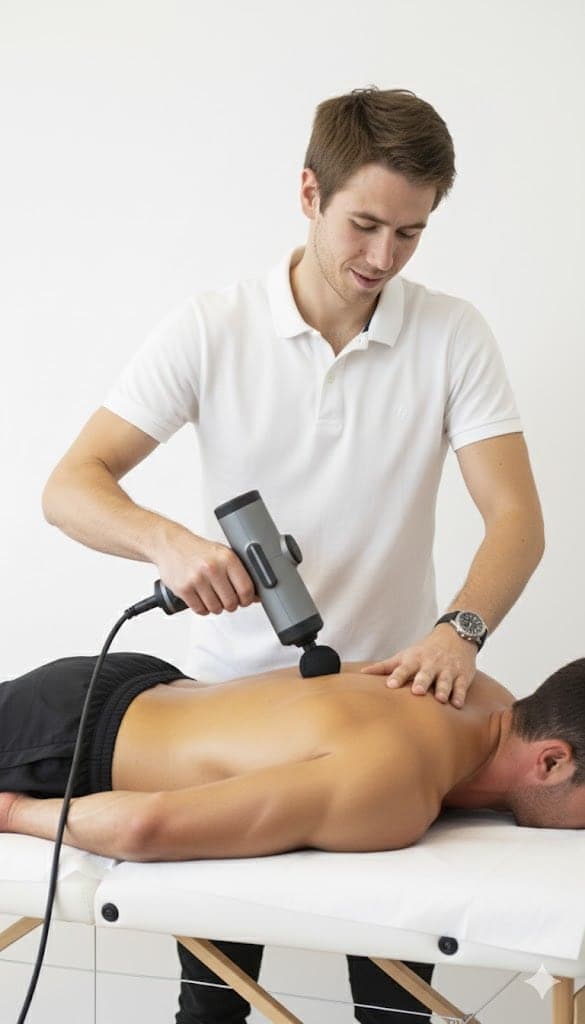
Written by
Chris
Massage therapist, nutrition and exercise physiologist
Norwegian-certified with a Bachelor’s in Physical Education and Nutrition and over ten years of clinical practice, working from a portable table in clients’ homes across the Paphos district.
This article is general information, not a medical diagnosis. If you have severe, worsening or unexplained pain, numbness, weakness, or pain after an accident, see a doctor first.