Thai Massage Kato Paphos: Advanced Mechanical Deep-Tissue Treatment That Actually Works
In short
Discover why traditional Thai massage falls short and how advanced mechanical deep-tissue therapy in Kato Paphos delivers lasting pain relief through precision, power, and consistency.
When people search for Thai massage in Kato Paphos, they’re typically looking for temporary relief from chronic pain, sports injuries, or muscular tension. What they don’t realize is that traditional Thai massage—while culturally rich and temporarily relaxing—rarely addresses the biomechanical root causes of their discomfort. After a decade of working with clients who’ve tried everything from spa treatments to conventional physiotherapy, I’ve learned that most people are asking the wrong question. They’re not seeking “massage.” They’re seeking lasting solutions to mechanical problems in their bodies.
I don’t offer Thai massage in the traditional sense. What I provide in Kato Paphos is something fundamentally different: advanced mechanical deep-tissue therapy that treats dysfunction at its source. With a Bachelor’s degree in Physical Education and Nutrition from Norway and ten years of specialized experience in body mechanics, I’ve developed a method that combines scientific precision with consistent, measurable results. This isn’t about relaxation sessions or cultural experience. This is about fixing what’s broken and optimizing what works.
Why Traditional Thai Massage in Kato Paphos Doesn’t Solve Your Problem
Let me be direct: traditional Thai massage techniques have severe limitations when it comes to addressing chronic musculoskeletal dysfunction. The human hand, regardless of training, can only apply limited pressure to a limited depth. When your problem exists in the deep fascial layers or involves chronic adhesions in muscle tissue, manual techniques simply cannot reach the tissue planes where the dysfunction originates.
I’ve worked with countless clients in Kato Paphos who’ve spent months—sometimes years—receiving regular Thai massage treatments without lasting improvement. They describe temporary relief that fades within 24 to 48 hours. This isn’t a failure of the therapist’s skill. It’s a fundamental limitation of the method itself.
The issue is straightforward: most chronic pain and restricted mobility stem from mechanical problems in deep tissue structures. These require sustained, precise pressure at specific angles and depths to release properly. Traditional manual therapy cannot consistently deliver this level of mechanical intervention. The therapist fatigues, pressure varies session to session, and the depth of treatment remains superficial relative to where the actual dysfunction exists.
The Mechanical Deep-Tissue Difference: Precision, Power, and Consistency
My approach to therapeutic bodywork in Kato Paphos eliminates the variables that make traditional massage unpredictable. I use a specialized mechanical tool that delivers three critical advantages no human hands can match:
Deeper Than Hands: Accessing the Root Cause
The mechanical system I employ works at tissue depths that are simply inaccessible through manual techniques. When you have chronic tension in your thoracolumbar fascia, or adhesions between muscle layers in your rotator cuff, surface-level pressure accomplishes nothing meaningful. My tool penetrates to these deep structures, applying sustained mechanical force that breaks down fibrotic tissue, releases fascial restrictions, and restores normal tissue sliding.
I’ve treated competitive athletes in Kato Paphos with injuries that ended their seasons—problems that conventional physiotherapy and massage couldn’t resolve. In one case, a cyclist with chronic IT band syndrome had undergone six months of treatment elsewhere without improvement. After three sessions using my mechanical method, we identified and released the actual restriction: a deep fascial adhesion in his vastus lateralis that was creating referred tension down the entire lateral chain. His pain disappeared completely, and he finished the season without recurrence.
Complete Control: Precision-Calibrated Intensity
Every body is different. Every injury presents unique characteristics. Every client has different pain thresholds and tissue tolerance. The mechanical system allows me to adjust pressure intensity with absolute precision—from gentle therapeutic work for acute injuries to powerfully deep interventions for chronic conditions in athletes or manual laborers.
This level of control is impossible with hands. Human force application varies with fatigue, positioning, and countless other factors. My tool maintains exactly the pressure I set, at exactly the angle required, for exactly as long as necessary. When I’m working on a calcified trigger point in someone’s trapezius, I can apply sustained pressure at the precise threshold that promotes tissue remodeling without causing trauma. This precision is what separates temporary relief from lasting resolution.
Consistent Results: Eliminating the Variable of “Off Days”
Perhaps the most significant advantage of mechanical therapy is consistency. I don’t have “off days.” The treatment you receive on Tuesday is identical in quality and effectiveness to what you receive on Friday. The tool doesn’t fatigue. It doesn’t lose focus. It delivers exactly what your tissue needs, every single session.
This consistency matters enormously for treatment outcomes. Healing chronic conditions requires progressive tissue remodeling over multiple sessions. If each session delivers variable mechanical input—as inevitably happens with manual therapy—the tissue receives inconsistent signals. Progress becomes erratic. With mechanical precision, each session builds systematically on the previous one, creating predictable, measurable improvement.
What Actually Happens During Advanced Mechanical Deep-Tissue Treatment
When you work with me in Kato Paphos, the process is fundamentally different from what you’ve experienced with traditional massage. This isn’t a relaxation session. It’s a clinical intervention designed to identify and resolve mechanical dysfunction.
The Assessment Phase: Understanding Your Biomechanics
Every client begins with a comprehensive biomechanical assessment. I need to understand not just where you hurt, but why you hurt. What movement patterns are dysfunctional? Which muscle groups are overactive or inhibited? Where do fascial restrictions exist? What compensatory patterns has your body developed?
I spend considerable time in this phase because incorrect diagnosis leads to incorrect treatment. Many clients come to me seeking treatment for shoulder pain when the actual problem originates in their thoracic spine. Others present with “sciatica” that’s actually piriformis syndrome or referred pain from sacroiliac dysfunction. Without accurate assessment, treatment becomes guesswork.
The Treatment Protocol: Systematic Tissue Remodeling
Once I’ve identified the mechanical problems, treatment follows a systematic protocol designed to restore normal tissue function and movement patterns. This isn’t random pressure on sore spots. It’s strategically applied mechanical force to specific tissue structures in a specific sequence.
For a typical case of chronic lower back pain in Kato Paphos—something I treat frequently—the protocol might involve:
- Releasing superficial fascial restrictions in the lumbar region
- Addressing deep paraspinal tension and trigger points
- Treating quadratus lumborum adhesions
- Releasing hip flexor restrictions that create anterior pelvic tilt
- Rebalancing the entire posterior chain to prevent recurrence
Each step requires precise pressure at specific depths for specific durations. The mechanical tool makes this level of systematic treatment possible.
The Sensation: Therapeutic Discomfort, Not Pain
I need to be honest about what this treatment feels like. It’s not gentle. It’s not relaxing in the conventional sense. When we’re breaking down chronic adhesions or releasing deep fascial restrictions, there’s significant therapeutic discomfort. However, this is fundamentally different from pain.
Clients describe the sensation as “intense but good”—a feeling of pressure reaching exactly where the problem exists, followed by noticeable release and relief. The discomfort is purposeful, controlled, and productive. It’s the sensation of tissue that’s been dysfunctional for months or years finally receiving the mechanical input it needs to heal.
Who Benefits From Mechanical Deep-Tissue Therapy in Kato Paphos
This method isn’t for everyone. If you’re seeking a spa experience or gentle relaxation, this isn’t the right service for you. But if you fall into any of these categories, mechanical deep-tissue therapy is likely what you actually need:
| Client Type | Common Problems | Treatment Outcomes |
|---|---|---|
| Competitive Athletes | Overuse injuries, restricted ROM, performance plateaus | Full recovery, enhanced performance, injury prevention |
| Manual Laborers | Chronic work-related strain, repetitive stress injuries | Return to full function, reduced chronic pain, improved work capacity |
| Office Workers | Postural dysfunction, neck/shoulder tension, lower back pain | Corrected posture, eliminated chronic pain, increased energy |
| Post-Surgery Recovery | Scar tissue adhesions, limited mobility, compensatory patterns | Restored normal movement, reduced adhesions, functional recovery |
| Chronic Pain Sufferers | Long-term conditions unresolved by conventional treatment | Significant pain reduction, improved quality of life, renewed hope |
The Investment: Why This Isn’t an Expense
People often ask about the cost of my services in Kato Paphos. I don’t frame this as an expense—I frame it as an investment in your long-term functionality, performance, and quality of life. Consider what chronic pain actually costs you:
Lost work productivity. Reduced athletic performance. Inability to play with your children. Dependence on pain medication. Declining quality of life. Emotional stress from unresolved physical problems. When you calculate these real costs, the economics of effective treatment become clear.
I don’t offer single sessions that provide temporary relief. I offer dedicated partnerships with customized treatment plans designed to resolve your condition durably. This might involve three sessions, or it might require eight. The timeline depends on the severity and chronicity of your condition. But the goal is always the same: complete resolution, not temporary management.
The Mobile Advantage: Professional Treatment at Your Location
I travel to your location in Kato Paphos with a professional treatment bench and all necessary equipment. This eliminates the stress and physical discomfort of traveling to appointments—particularly important when you’re already dealing with pain or mobility issues. You receive clinical-quality treatment in the comfort and privacy of your own space.
Common Conditions I Treat in Kato Paphos
After ten years of specialized practice, I’ve developed particular expertise in several conditions that conventional treatment often fails to resolve:
Chronic Lower Back Pain and Sciatica
Lower back dysfunction is rarely about the lower back itself. It’s usually a symptom of hip restriction, poor core activation, fascial adhesions, or compensatory movement patterns. I don’t just treat where it hurts—I identify and correct the mechanical dysfunction causing the pain. Most clients experience significant improvement within three to four sessions, with complete resolution typically achieved within six to eight weeks.
Shoulder Impingement and Rotator Cuff Issues
Shoulder problems are mechanically complex because shoulder function depends on proper scapular mechanics, thoracic mobility, and balanced rotator cuff activation. Manual therapy can’t adequately address the deep subscapularis restrictions or infraspinatus adhesions that typically underlie these conditions. Mechanical treatment can. I’ve helped clients avoid surgery by resolving the actual mechanical problems causing their symptoms.
IT Band Syndrome and Runner’s Knee
Runners in Kato Paphos frequently present with lateral knee pain they attribute to “IT band syndrome.” The IT band itself is fascia—it doesn’t contract or stretch meaningfully. The pain comes from dysfunction in the tensor fascae latae, vastus lateralis, or gluteal complex creating abnormal tension through the IT band. Treating these deep tissue restrictions eliminates the problem at its source.
Plantar Fasciitis and Foot Dysfunction
Foot pain is almost never just about the foot. It’s the terminal point of dysfunction that usually originates in the calf, hip, or even lumbar spine. I treat plantar fasciitis by addressing the entire posterior chain—releasing deep calf restrictions, correcting ankle mechanics, and rebalancing the kinetic chain. Surface-level foot treatment misses the actual problem.
Postural Dysfunction and Desk-Related Pain
Office workers develop predictable patterns: forward head posture, rounded shoulders, anterior pelvic tilt, thoracic kyphosis. These aren’t just aesthetic problems—they create mechanical stress that leads to chronic pain. Mechanical therapy can release the deep pectoral restrictions, thoracic erector tension, and hip flexor adhesions that maintain these dysfunctional patterns.
Why My Method Works When Others Fail
I’ve treated hundreds of clients in Kato Paphos who arrive frustrated after months or years of unsuccessful treatment elsewhere. They’ve tried physiotherapy, chiropractic, conventional massage, medications, and various alternative therapies. Nothing provided lasting relief. When I ask what changed with my treatment, they consistently identify the same factors:
Depth of Treatment: For the first time, something reached the tissue layers where their problem actually existed.
Precision and Control: The treatment targeted exactly what needed to be addressed, without the randomness of manual techniques.
Consistency: Every session delivered the same quality of intervention, allowing progressive improvement rather than erratic results.
Comprehensive Approach: Treatment addressed the entire kinetic chain, not just isolated symptoms.
Results-Focused Partnership: The goal was lasting resolution, not temporary symptom management.
These aren’t minor differences. They represent a fundamentally different philosophy of treatment.
The Science Behind Mechanical Tissue Remodeling
What happens at the tissue level when mechanical force is properly applied? Understanding this helps explain why this method produces lasting results rather than temporary relief.
Chronic musculoskeletal dysfunction typically involves several tissue-level problems:
- Fascial adhesions between tissue planes that should slide independently
- Fibrotic tissue replacing normal muscle fiber after injury or chronic overuse
- Trigger points (hyperirritable spots in muscle) creating referred pain and dysfunction
- Shortened, contracted muscle that’s lost normal resting length
- Inhibited, weak muscle that’s stopped firing properly due to compensation
Mechanical deep-tissue therapy addresses these problems through several mechanisms:
Mechanical disruption of adhesions: Sustained pressure breaks down fibrotic tissue and restores normal tissue sliding.
Improved local circulation: Mechanical pressure creates reactive hyperemia—increased blood flow that brings healing resources to the area.
Neurological reset: Proper pressure on trigger points causes a neurological response that releases the sustained contraction.
Fascial remodeling: Progressive mechanical loading signals fascia to remodel and reorganize along lines of functional stress.
Restored proprioception: Treatment reestablishes normal sensory input from the area, allowing proper motor control.
This isn’t mystical. It’s applied biomechanics and tissue physiology.
What Makes Kato Paphos Clients Unique
Working in Kato Paphos, I encounter a particular client profile. Many are expatriates or long-term residents who’ve relocated for the climate and lifestyle but struggle to find clinical-quality therapeutic services comparable to what they had access to in Northern Europe or other developed regions. They’re sophisticated consumers who understand the difference between spa massage and clinical intervention.
I also work with a significant number of athletes—runners, cyclists, swimmers, and fitness enthusiasts who take advantage of Cyprus’s year-round training climate. These clients demand results-oriented treatment because their performance depends on optimal physical function. They can’t afford weeks of ineffective therapy while an injury worsens or becomes chronic.
Frequently Asked Questions About Mechanical Deep-Tissue Therapy
How is this different from regular massage in Kato Paphos?
Regular massage primarily affects superficial tissue and provides temporary relaxation. Mechanical deep-tissue therapy reaches deep structural tissue where chronic dysfunction originates. It’s a clinical intervention, not a relaxation service. The goal is lasting resolution of mechanical problems, not temporary symptom relief.
Will it hurt?
There’s significant therapeutic discomfort when we’re releasing chronic restrictions or breaking down adhesions. However, this is controlled, purposeful discomfort—fundamentally different from pain. Clients describe it as “intense but productive.” You’re always in control of intensity, and I adjust based on your tissue tolerance and feedback.
How many sessions will I need?
This depends entirely on the severity and chronicity of your condition. Acute injuries might resolve in 2-3 sessions. Chronic conditions that have existed for years typically require 6-10 sessions for complete resolution. I provide an honest assessment after the initial evaluation and adjust the plan as treatment progresses.
Do you accept insurance?
I provide detailed receipts that many clients successfully submit to private insurance. However, I don’t bill insurance directly. Payment is made at the time of service, and you handle any insurance reimbursement independently.
Can you fix my problem if other treatments haven’t worked?
Many conditions that don’t respond to conventional treatment respond extremely well to mechanical deep-tissue therapy because we’re finally addressing the actual mechanical dysfunction rather than just managing symptoms. However, I need to evaluate your specific situation before making promises. Some conditions require medical intervention, and I’ll refer you appropriately if that’s the case.
What should I expect during my first session?
Expect a thorough biomechanical assessment that takes 20-30 minutes. I need to understand your movement patterns, identify restrictions, and determine the root cause of your symptoms. Treatment follows, typically 45-60 minutes of targeted mechanical intervention. You’ll likely feel significant changes immediately, though some soreness is normal for 24-48 hours as tissue remodels.
How long do results last?
When we’ve properly addressed the mechanical dysfunction causing your symptoms, results are lasting—assuming you maintain reasonable movement patterns and don’t create new injuries. Some clients return quarterly for “maintenance” sessions, but this is optimization, not dependency. The goal is to fix the problem, not create ongoing need for treatment.
What do I need to prepare?
Just comfortable clothing and adequate space for my professional bench. I bring all necessary equipment. If you have relevant medical imaging (MRI, X-rays) or previous treatment records, these are helpful but not required. Stay well-hydrated before and after sessions to support tissue recovery.
The Reality of “Thai Massage Kato Paphos” Searches
When people search for Thai massage in Kato Paphos, they’re usually expressing a need they don’t fully understand. They know they need help with pain or dysfunction. They’re familiar with massage as a treatment category. So they search for massage services. But what most of these searchers actually need isn’t massage at all—it’s clinical intervention that addresses biomechanical dysfunction.
I’ve built my practice on delivering what clients actually need rather than what they think they’re looking for. This requires educating people about the difference between relaxation services and clinical treatment. It requires explaining why traditional methods fail for chronic conditions. And it requires demonstrating, through results, that a different approach works.
My Commitment to Clients in Kato Paphos
I don’t take your time or money lightly. When you work with me, you’re making an investment in your long-term health and functionality. My commitment is to justify that investment through measurable, lasting results.
This means being honest when I evaluate your condition. If your problem doesn’t require my specialized approach, I’ll tell you. If you need medical attention rather than therapeutic bodywork, I’ll refer you appropriately. If I believe I can help you, I’ll explain exactly what’s wrong, what the treatment plan involves, and what outcomes you can reasonably expect.
I travel to your location in Kato Paphos because I believe convenience shouldn’t be a barrier to receiving quality treatment. I provide clinical-quality intervention in the comfort of your home or accommodation.
My goal isn’t to create dependency—it’s to create independence. I want to fix your problem so thoroughly that you don’t need me anymore. Some practitioners build business models on endless “maintenance” sessions. I build mine on solving problems durably and earning referrals from satisfied clients.
Taking the Next Step
If you’re dealing with chronic pain, restricted movement, sports injuries, or musculoskeletal dysfunction that hasn’t responded to conventional treatment, mechanical deep-tissue therapy might be exactly what you need. The question isn’t whether you can afford to try this approach—it’s whether you can afford not to.
Every day you spend in pain or dysfunction is a day subtracted from your quality of life. Every athletic performance compromised by injury is an opportunity lost. Every work day struggled through because of physical discomfort is productivity you’ll never recover.
I offer a fundamentally different approach to musculoskeletal treatment in Kato Paphos—one based on scientific principles, precise mechanical intervention, and unwavering focus on lasting results. This isn’t traditional Thai massage. It’s advanced therapeutic bodywork that actually works.
The clients who benefit most from my services share certain characteristics: they’re tired of temporary fixes, they understand that real solutions require real intervention, and they’re willing to invest in their long-term health rather than continuing to manage symptoms indefinitely.
If that describes you, let’s have a conversation about your specific situation and whether mechanical deep-tissue therapy can help. I’ll give you an honest assessment, a clear treatment plan, and realistic expectations about outcomes. What I won’t give you is false hope, temporary relief disguised as treatment, or another disappointing experience with ineffective therapy.
Your body is a mechanical system. When mechanical systems malfunction, they require mechanical solutions. That’s what I provide in Kato Paphos—and that’s why it works when other approaches fail.
Evidence and limits
Massage may help with some symptoms, but benefits and evidence vary by condition. It does not replace medical assessment or treatment. A page update is not evidence of an independent clinical review.
Further reading: Massage therapy: evidence, safety and limitations by US National Center for Complementary and Integrative Health. This is general background reading, not verification of every claim in this article.
How we describe evidence and updates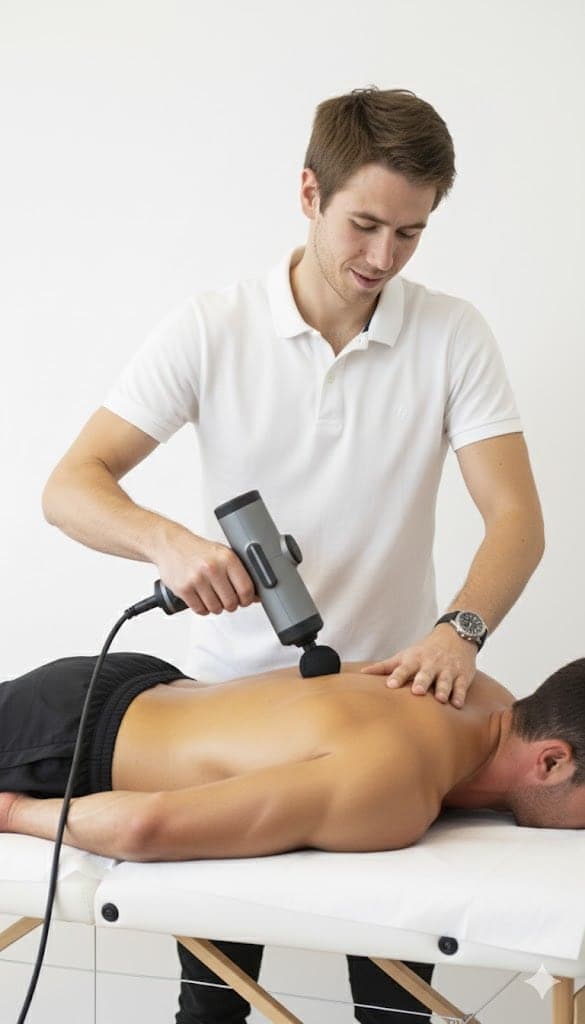
Written by
Chris
Massage therapist, nutrition and exercise physiologist
Norwegian-certified with a Bachelor’s in Physical Education and Nutrition and over ten years of clinical practice, working from a portable table in clients’ homes across the Paphos district.
This article is general information, not a medical diagnosis. If you have severe, worsening or unexplained pain, numbness, weakness, or pain after an accident, see a doctor first.